Friday, the day after Thursday, generally falling before Saturday, and a mere two days before Sunday. Having now solidified my grasp of the obvious…
Fragmentia Sacra. Holy fragments. Sanctified readings. Portions of goodness, set aside to be special. Sexy snippets. I think you get the idea.
Sometimes I can get too laborious and stifling when writing about the large hadron collider of complexity that is my life. In the midst of constructing further installments of my journey-to-sobriety story, among other stuff, I give you these…yummy tidbits (okay, now I’m just trying too hard).
It’s a playground bully, unsatisfied unless fists are drawn and blood flows. The drunken uncle whose continuous taunts to pull his finger are more about his self-satisfied laughter than ours. It’s the immature dink in the office who is incomplete until he gets the final word, no matter how pernicious or insecure.
Trust me, it’s much more subtle than that. It’s the trickster fox, practiced at setting up a ruse to capture his prey. It’s the wild west gambler, poker faced, eyeing his opponents, cards held close, planning his next move. It’s the chameleon – deathly still, changing, adaptable, morphing effortlessly into its surroundings in self-preservation.
Writing about my first sober-wagon experiencebrought unassailable freedom. Alongside it came personal power, relief, even fluffy-headed joy. The first few months were characterized by a pink cloud of giddiness.
I told my story to whomever would listen. Upon closer inspection, cornering them at the entrance to the gas station toilets probably was inadvisable. It’s hard to tell a good story when someone keeps hopping around with forced grin, wide-eyed in panic.
I rode that cloud for awhile, yippee ki-yaying in sober delight over the bronc now under my sway. Skies were bluer, food tasted better, sitting at a desk seemed less toilsome, assholes were less ass-holier. The world in general was a happier place and I was a part of it.
I returned to my passion for running, and by ‘returned’ I mean completely embedded myself in it. Three months later and almost sixty pounds lighter and some didn’t even recognize me. I ran almost every day, rain or shine.
Mostly rain. It was Oregon after all.
I was out and proud (no, not that one) and wanted the world to know.
But (come on, you knew this was coming), most recently, a closet door, busting at the seams, alcohol demons whining lustily behind it, finally split wide open. Out they spilled, like eavesdroppers pressed against the honeymooners’ door. They piled out with impunity, bent on destruction.
Thankfully, it was short-lived.
Demons, once out of their cells, tend to lose their bluster. Their muscles aren’t as impressive in daylight. They’re just naughty little boys good at hoodwinking, lying, and swindling us into places we’d rather not go. They’re mythic monsters only when we turn to give eye contact.
Fair enough. But, why were they still there in the first place? Hadn’t they been scolded and sent packing years ago? Here’s my discovery.
I fell prey to what is sometimes called Post Alcohol Withdrawal Syndrome (PAWS), or simply “dry drunk syndrome.” The problem has been recognized. The booze is gone. New habits are forming. But, at the inside of this Oreo isn’t yummy cream filling. It’s the allure of the addict quick-fix to all of life’s problems. When left unchecked, it will soon prove itself more powerful than ever.
“This term [dry drunk] is obviously an oxymoron as it implies that a person is drunk without ingesting alcohol.
Dry Drunk Syndrome is a condition where an alcoholic retains mental and behavioral traits associated with drunkenness even when he or she is not drinking alcohol.
Surely, one would think that the “dry” state is a critical objective for alcoholism treatment regimen. Unfortunately, the presence of this syndrome is actually an indication that an individual is in danger of alcohol relapse. He or she remains emotionally disturbed, mentally unstable and spiritually skewed despite quitting alcohol.
Thus, as an alcoholic, nothing significant has been achieved under a dry drunk condition aside from stopping the habit of drinking alcohol. In fact, the manifestation of typical signs of dry drunk syndrome is a red flag that should concern a recovering alcoholic.”
Um, ouch.
It appears that I may not have been as sober as I’d imagined. Not drinking? Sure. But, sober in the textbook sense? Perhaps not.
As any A.A. veteran will tell you, unless you’re actively pursuing a program of sobriety, you will not outpace the disease. It is still pursuing you. Relentlessly. You may not be drinking, but you can be damn sure it is still doing you, quietly biding its time until walls go down, the dam bursts, and you drown in a pressure-mounted swell of issues left untended.
How did I get here? What happened to almost fourteen years of sobriety? What was my brain telling the rest of me? Put another way, what the hell was I thinking?
In a nutshell, I stopped telling my story. And, when we stop telling our stories, we simply stop – growing, learning, being.
Our stories are equally descriptive and prescriptive of us. They help put shape to the varied experiences with which we struggle to find meaning. In a way, they are the foundation to a high-rise. They illustrate to the world what tickles our fancies, pokes our ribs, and gets our goats.
They can be our fairytales, falsities, nightmares, whitewashed witticisms, personae donned or doffed, big jokes, still bigger lies, the sob-stories – they all count. They are all bits and bobs of our total picture.
But, told often and well, our stories are prescriptive, too. They form buttresses, act as protective sheaths, and even offer advice. Who am I? Who am I not? What are my fears and how do I overcome them? How far will I go but no further? Who should I ignore (kidding…kinda)? To tell one’s story is to be reminded of one’s personhood, of what matters.
The twelve-steps of Alcoholics Anonymous are revealing on many levels. The hardest steps are the early ones – admit our powerlessness over alcohol and believe that something/one greater than ourselves could restore us to sanity.Many never make it. I did make it, but then, over time, forgot that I’d made it, and had to make it there all over again.
Recent events reveal that any previous sense of empowerment wasn’t ever going to be enough. In fact, anything at all other than constant awareness of the disease in humble surrender to a Higher Power, is an accident waiting to happen (demons in the closet, remember?).
“Let’s get this over with. I gotta pee.”
So then, how exactly does a dry drunk dry out? The same way every other alcoholic does: Don’t drink.
But, just as central to this via negativa is the positive power of story-telling, even when that story doesn’t glimmer around the edges. My story, like any other, has a “once upon a time.” But, if I would see a “happily ever after” I must keep telling this tale to whomever will listen.
Recently, I spent words lamenting my egregious fall from grace. It was egregious in the sense that I had all the tools at my disposal for such a thing not to happen. And it still did. Fall because I ended up face first in my own stink. Grace, not in the heavenly sense, but in the way a person views his or her personhood held up to the light.
In this instance, it didn’t look as shiny anymore. In fact, the worst part of any alcoholic’s misery is the glowing reality that self-respect has left the building. And when one lose’s self-respect they lose the ability to adequately respect others as well.
And so the question remains, what now? What steps lie ahead for this newly sober, recovering alcoholic?
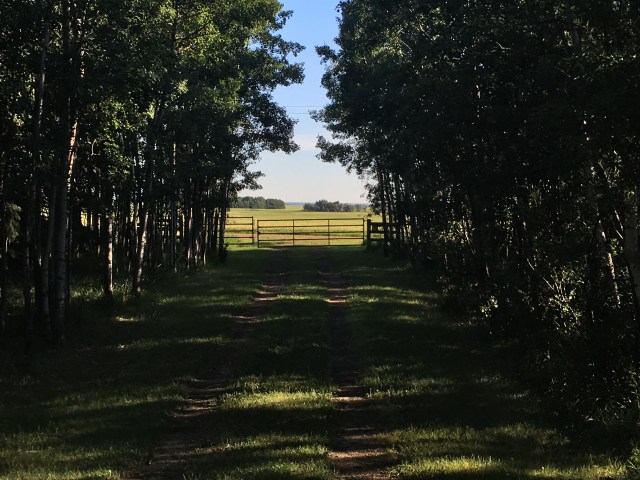
The first part of that is the convergence of two things: my vacation and, more importantly, some of that vacation spent at my Mom’s. I’m here in part helping plan papa Sam, her husband’s, celebration of life service. Hence, I begin with words penned among the whispery poplar and birch that stand guard around their mini-ranch in central Alberta.
Alberta trees keep me companyThe home Mom and Sam built togetherGolden Spur RanchettaThe guesthouseQuonset-ville
* * *
It would be easy to lose all track of time up here. Imagine a place so quiet that the ticking of the wall clock becomes almost intrusive. I can hear the blood race through my veins. Even the creaks of my aging bones become deafening in a place almost averse to sounds other than the rustling trees and the occasional lowing of happy cattle.
Such is life on a central Alberta ranch, or so it seems to a late middle-aged, suburban white guy on vacation. A guy could get used to this pace. Well, so says the man unaccustomed to the accompanying rigours and harshness of Canadian prairie life.
One’s vacation experience of a place is usually quite different from those doing the heavy lifting to help produce that experience. So, I suppose I should, more rightly, consider myself a prairie homestead consumer. A few days spent at Golden Spur Ranchetta being waited on hand and foot by my own mother. Home cooking, and the full package, magazine-ready, prairie experience. To be fair, I washed the dishes last night. That counts for something, right?
It would be perfection indeed if it wasn’t also the context in which I’m helping Mom lay her best friend to rest. It tends to bring some shadow to an otherwise sun-bright living room where I pen these words.
This is Mom’s place. It has her touch at every turn. Like stepping back in time, there are, everywhere, reminders of my own childhood. But this is also Sam’s place. A house that boasts numerous guitars, banjos, fiddles, mandolins, amps, gear, and tools of the luthier’s trade. He loved his old-time cowboy music and did the tradition proud with his devotion both to the music and the lifestyle it portrays.
Most of all, this is their place. Sam and Doris. Mom and “Papa Sam.” Here is a life woven lovingly together with strands of two in a single tapestry. It boasts the simplicity and industry expected of prairie home companions. A picture, painted not by Thomas Kincaid’s dishonesty or Norman Rockwell’s wishful thinking, but by two hardy souls better suited to the task.
Golden Spur is a paint by number where God does the math. Two souls plus one hope plus one God’s watchful presence, now one less.
One less. But somehow, none the less for it. Sam’s spirit lives on here. In Mom. In the legacy of his hard work.
In me.
The quiet hours spent here among the poplar and birch give me ample room to stretch my rumpled, but healing, soul. I am faced head on with the unwelcome task of returning to normal life with a lot of relational work to do.
Addicts of any kind are profoundly self-serving. We need to be in order to keep and nurture our dirty little secret. Maintaining addiction comes at a high price. Our lust for euphoria takes prisoners. There is a desperation afoot that causes us to do things we otherwise wouldn’t do. We hurt those closest to us in ways we can’t imagine, and usually can’t even remember.
Certainly for me, I become a man I do not know. Someone I do not like. I’m forced to live in a dark corner of my head that lacks judgement, wisdom, compassion, or boundaries. I latch onto whomever happens to be in the way and, like a rottweiler on a kitten, drag them under the water with me. It forces everyone into codependency, slaves with me to a burden not theirs to bear.
Then, morning after regret. The addict looks back over a smouldering wreckage with their name on it. Reputations, relationships, respect, sometimes even families, all lie in ruins – taken captive by someone blissfully unaware of the carnage that ensues through his inebriated wizardry.
Now, before this begins to sound like little more than addiction to self-pity, let me put on the brakes and reveal what is emerging in me. And, this time spent at Mom’s provides perfect respite for doing just that. In this gift of silence I have seen that the truest me, despite having lost its lustre, remains unblemished. Kicked around and battered a little, but largely intact.
For reasons known only to my Higher Power I have been continually surrounded by those who love me. They’ve stayed, even through my worst days. Few truths are more life-changing than to awake from addiction and see, through the smoke and chaos, the faces most precious, best known, eyes cast down and hurt, but still present.
Their faithfulness lends new life to one whose heavy lifting now is a daily return to sobriety with tools ready to rebuild wherever possible. Earning trust and respect, even if from scratch. So be it.
Mom, I wish I could be here under circumstances different than these. Nevertheless, I take these days, each and every one, as pure gift. In them I reconsider a life. My life. My one and only life. This great, albeit fragile, life in which I live, move, and have my being.
So, what now?
I lift up my head, newly clear and seeing far, and say in a loud voice: “Hi, I’m Rob, and I’m an alcoholic.” Better still, I’m a man beloved and embraced.
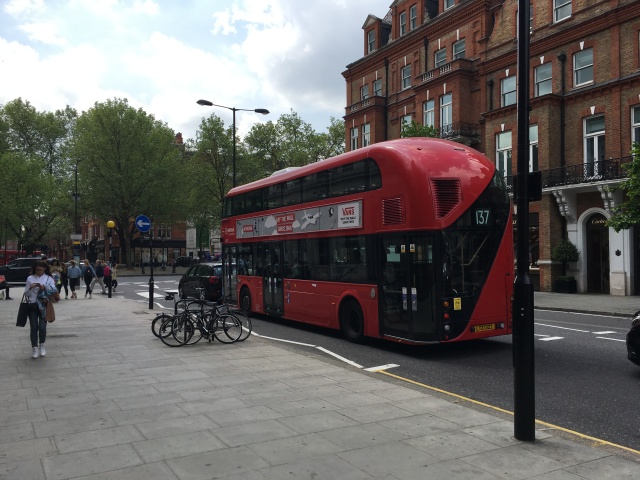
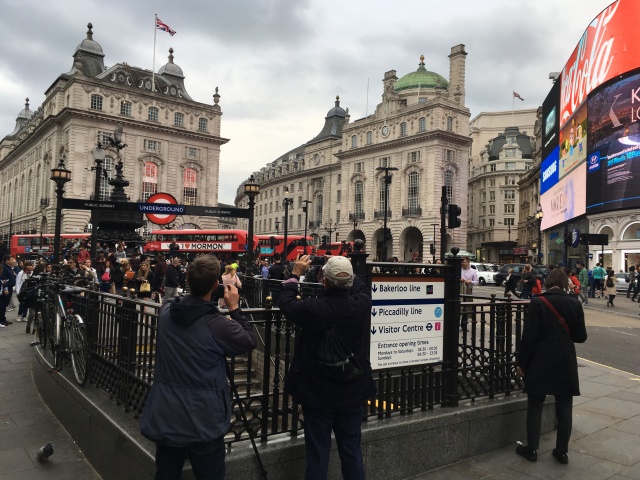
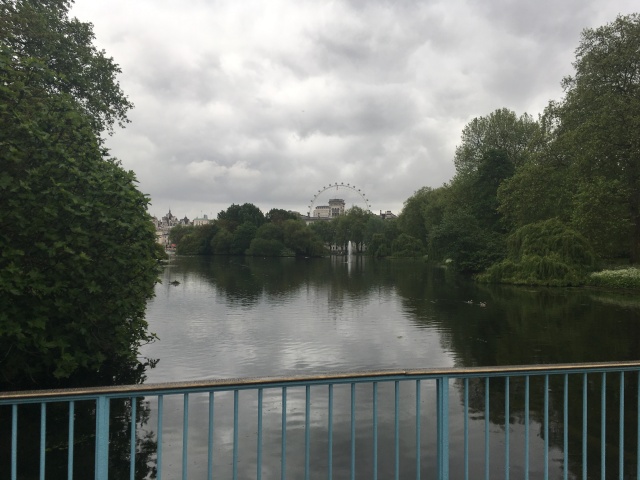
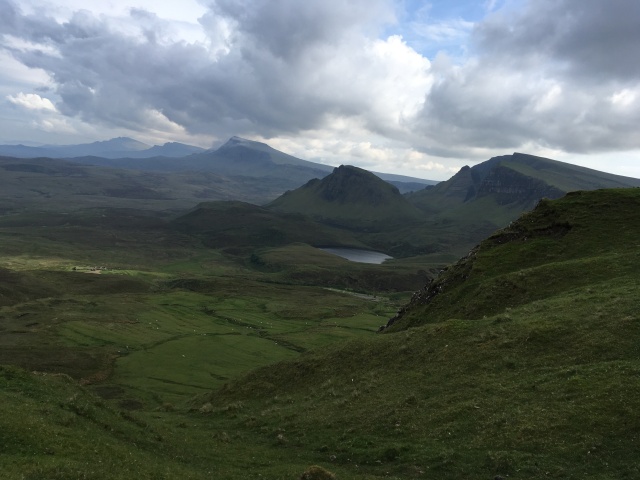
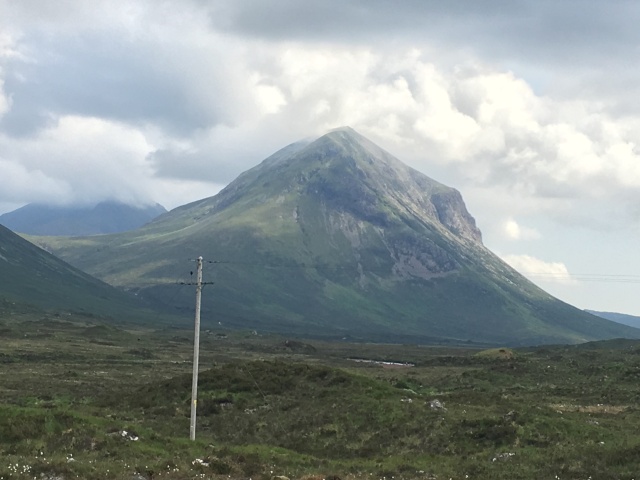
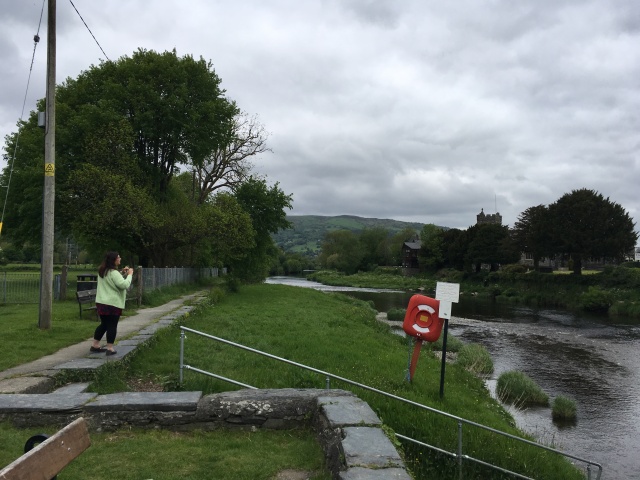
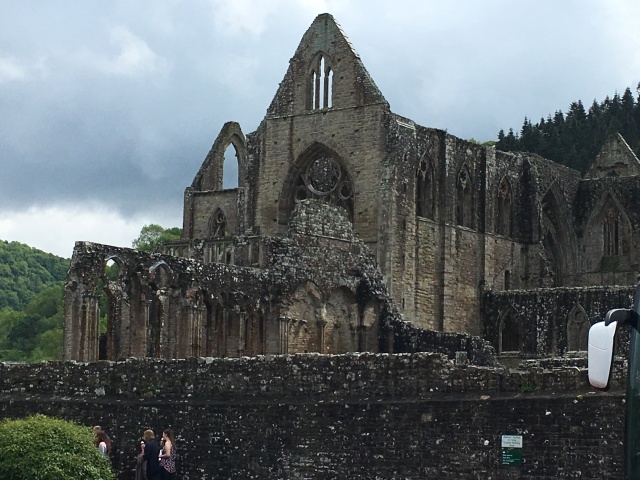
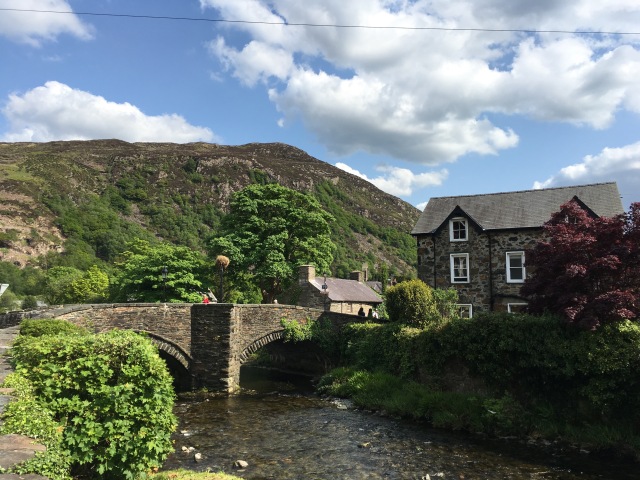
This time last year, my wife and I were photo-whoring and shaking fairy dust out of our heads. We had just returned from a head-spinning trip to the UK, and readjusting to life squeezed uncomfortably into North American shoes. That, and relearning to drive. Five weeks in the UK had given us sore, flat feet from miles of trudging London’s pavement skeleton. It meant over-worked iPhones bulging with pictures, heads full of Skye and oddly named places like Tu-Hwnt-I’r Bont, Llanthony, and Beddgelert, many pages of writing, and the faces of loved ones.
Red, double-decker buses. How totally London.In Trafalgar SquareSt. James ParkInto the mystic…SkyeThe Cuillin Hills, SkyeOutside Ty hwnt yr bontLlanthony PrioryBeddgelert
Our hearts pulsated wildly, aglow in fresh memories.
One is surely blessed to be found by adventures of this kind even once in a lifetime. This was our fourth trip, but arguably our best. Like the others, this hop across the pond had under it a built-in rationale to guide it. For Rae, it was largely book research – this bridge, that pub, this street corner, that tube station. For me, I was in search of something. I like to think it was maturity, but one can only expect so much in five weeks.
I had some vague notion that a trip of this kind was what I needed for my ongoing pursuit of an even more vague notion – home. No small feat for anyone, let alone one as prone as I to internal homelessness. My extensive writing on the subject had produced a better understanding, but few certainties. Frankly, it just whetted my appetite to learn more. Besides, it’s a high-sounding reason to spend thousands of dollars traipsing around Britain. Rather noble, don’t you think?
For now, at least, such interior matters can wait for another time. A much more ominous discovery needs some attention. With that primer, I’ll just put it out there.
After fourteen years of sobriety, Britain and I sat down for a drink, or ten.
Well before our trip, a wispy, but persistent voice, had begun planting a series of tempting ideas in my head:
“Rife, you’re not an alcoholic, you simply lack self-control.”
“It’s been fourteen years, that was then. This is now.”
“Dude, relax, you’re on holiday. Splurge a little.”
I’m generally a good guy (unless people tell me that just to get me off their lawn). But, annoyingly, a complex maze of dark veins courses through the ore of my otherwise rich life. I smile, knowing full well something isn’t quite right.
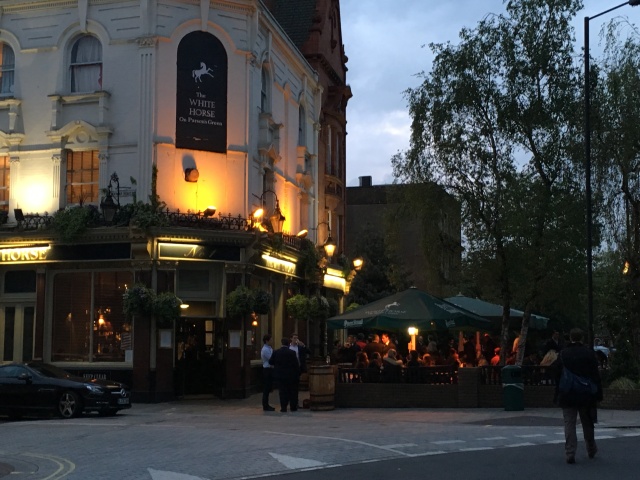
To be in Britain is to be awash in street-lit, woody pubs, full of friendly chatter, darts, and tumblers of frothy beer otherwise known as pints. Scotland boasts famous distilleries on every bank and brae, in which is made the amber dew that bears her name. It is woven into the very cultural DNA of the places I love most.
So much community happens here
It proved too much of a temptation. And I dove back in, head first, into a world that knew me well and had, apparently, been watching and waiting for my return.
Could you say no? I didn’t think so.
It was simple enough at first. A gift shop on Lindisfarne sold various types of mulled wine, or mead. They handed out samples of the stuff like cocktail weenies at Costco. I would not discover until later how sharp its teeth would be as it slunk like a sweaty pole-dancer down my lusty throat. “See how I love you?” it said. “See how you’ve missed this?” it said. “See how you’ve grown?” it goaded, like the serpent from the tree.
Lindisfarne Mead
For an alcoholic, to say yes to the booze gods, is to remove one’s clothing of pride, oil up the pole of self-respect, climb on, and plummet to the bottom of the pit known as despair. Most insidious of all is that we won’t see any of it this way.
“No, it’s all good”, we tell ourselves.
“I’ve got this,” we say.
“I’m not ‘one of those’ drinkers,” we boast.
“I just need to be discerning and exercise self-control,” we convince ourselves.
And, the whole time, our pants are at our ankles and a noose tightly around our necks. Even as we speak the words, we choke them out, while losing all remaining respectability.
The days following our return were met with rapidly deteriorating self-control. Almost like magic, beer left the fridge faster than I could replenish it. I bought bottles of wine in twos and threes for ‘us’ to enjoy. How thoughtful of me. I began drinking before, during, and after routine tasks convinced that it was merely heightening my pleasure, or calming my nerves, or congratulating me on a work day finished.
I began losing any sense of appropriateness, propriety, reason, even common sense. I had jumped into a vat of snakes and looked up, smiling, as they coiled around me.
* * *
Now, after much heartache, a shit load of counselling, a brief sojourn with friends, a lot of books, and a good support network, I am sober once more. And, in that sobriety, I gaze back into the past year and ache at the smouldering wreckage I’ve left behind. A wake of carnage, stupidity, and shame lays in heaps, along with my self-respect. And I begin again the arduous journey back to sanity; back to the reality of life without the crutches of inebriation and forgetfulness.
Despite my fallacious foray into the forest of dumb-fuckery, the shimmer of this journey has stayed with us, even if our feet feel a bit more planted on familiar, and yet somehow foreign, soil. Home is where the heart is say the poets. Home is where the mortgage is say the realists.
Home is your heart say the mystics.
And that home for me must be a sober one. It is deceptively easy looking up at the sky for answers when the ground is quicksand. My attention has harpooned itself too quickly in less than helpful directions. What I think my heart wants is rarely what it needs. And, I guess, my heart has been my quest all along.
This receding shoreline of self-awareness can be wearisome at best, downright haunting at times. But, while we’re busy gawking at life through the viewfinder, the truly panoramic views are found in the small, easy to miss things. In the dull, routine things. The faces of friends. The laughter at one’s own shitty jokes. How watering roses in my garden can’t keep up with the raw heat of a Yakima summer. Or, just staying sober because you love all of it.
Now, I’m challenged to add my wilderness wandering to my expanding story and pray that it helps buttress my inner fortress. That it makes me wiser, a better man, a truer friend, a more attentive lover, a more insightful guide to others in similar peril. All this and more makes for the skeleton of a life. We get to place the meat on the bones with every smile given, every embrace, every mistake or triumph, every tear released to its rightful owners.
It’s all of a piece. And, some of the time, all of a peace.
I’m new to Julia Cameron’s idea of Morning Pages. Her best-selling book, The Artist’s Way, has changed many lives and continues to do so. Lately, it seems to be the case for me as well. Through so much of what I write or compose, I am seeking to link the deepest places of my soul to the creative spaces in my head. To put it another way, I am happiest whenever my deepest longings meet my best gifts (thank you Frederick Buechner!).
But Ms. Cameron does this so much better, so here we are. I love the idea that art can create wonder from boredom, peace from turmoil, full from empty. It’s supposed to be that way with our spiritual practice as well. Creating light from dark is what the gospel intends to do in all of us.
But we so easily entangle ourselves in all that is quick, convenient, or potentially euphoric. We shelf the best stuff for the fast stuff. It robs us of what our creative and spiritual selves want to share, with us, and with the world.
My interest in Cameron’s book has been piqued for many years now, but only got taken off the book shelf recently. Procrastinator you ask? Um, hell yeah! Nevertheless, we’re there now and she is guiding me into my own well by means of writing as meditation. It remains my intention to write my book from this well.
But, I gotta find it first, relearn how to lower the bucket, and not be afraid to see what comes up. So, here goes. These were my Morning Pages from today, Friday, June 30th. Hopefully they find you whole and happy.
* * * * *
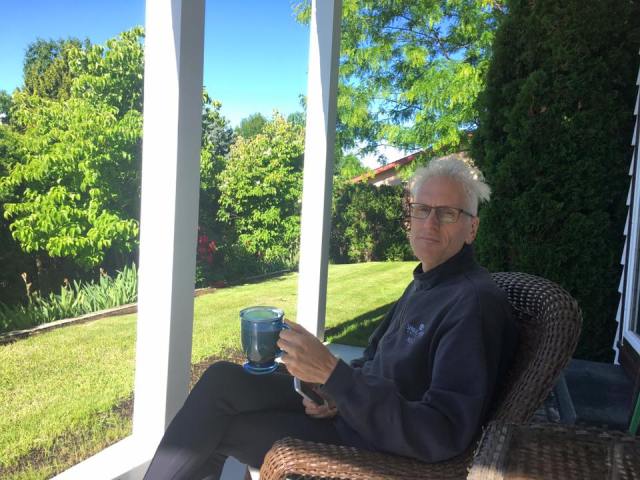
My typical morning spot. It totally works.
Morning has again crept with typical stealth onto the broad, brown land. This is a hopeful time of day for me. It’s as though I’ve been granted another twenty-four hour run at this thing. Life may have been a jolly cock-up yesterday, but morning comes again and says “Fuck it. Let’s give this another go, shall we?”
For someone like me, prone to shadow, turbulence, and chaos, this comes as welcome invitation indeed. The equally broad landscape of my life needs this daily reimagining. They are little reawakenings as it were to all the yummy goodness just below the surface of things.
Typical of our regional semi-arid hills and dales
In this desert, although appearing brown and dusty dry on the outside, there holds within it all the possibilities of the world’s first day. If God can step back, clap His/Her hands, and with a smile proclaim, “it is good,” then surely I can do the same.
That should be a regular meditation for each new morning to which I have the good fortune to see. Step outside, listen, take a deep breath of its newness, and, together with my Creator proclaim, “it is good.” Perhaps with such an outlook, every day can be experienced for the next-chance-to-grow it really is.
Besides, if God could create something new every day and say these words at every one, then it behooves me to do the same. Even if I can’t quite get to that level of optimism, sometimes it is enough to say “well, I fucked up a lot less this time. That’s good, right?” The icing is to rest at the end with feet up, heart full, proverbial Gin and tonic in hand (well, tonic water for this problem drinker!)
What could be better?
One can hardly be surprised then to know that St. Augustine’s favourite passage of Scripture was the creation narrative. He elucidates upon it in depth in his Confessions in a way only a genius philosopher can (beautifully unintelligible). He sees things in the creation not readily available to mere mortals like you or me. But, in my ongoing pursuit of contemplative creativity, there is here a wonderful challenge; a holy dare.
I have before me then a challenge to see, truly see, what lies right in front of me. Where I see a sparrow, God sees the perpetual renewal of all things. Where I see a rose, God sees something magnificent from humble beginnings. Where I hear a crow caw, God hears a virtuoso in training. I taste dirty water, God tastes the banquet, spread out with delights borne of its nourishing goodness.
In the brooding darkness that so often smothers me, a good long look at a morning like this one acts as reminder that it is truer than me. It is the darkness that is askew. The brilliance, colour, and cacophony of sound is the real. And it is before me now, insistently mocking all sadness and doubt.
If God is so capable of seeing perfection in the imperfections and incoherence of each new day, then that is what I am called to see. What we are all welcomed into.
So then, step outside with me, stretch, yawn, blink, breathe in deeply, and stare into the day. Then, together, with He/She who built it, say…it is good.
French writer and poet, Antoine de Saint-Exupéry, said: ““If you want to build a ship, don’t drum up people to collect wood and assign them tasks…rather, teach them to long for the endless immensity of the sea.”
Anna is on her death bed. She has battled Alzheimer’s disease for almost 10 years. She hasn’t recognized her family for quite some time and this reality has left her terrified, confused. She is often angry. She believes a host of people are trying to trick her. Every unknown day arises again the next with all the same complexity and uncertainty. As her caregiver assists her in preparing for sleep, she hears Anna sing just outside her door: “then sings my soul, my Savior God to thee, how great thou art, how great thou art…”
She has forgotten every sermon she ever heard.
Every bible verse she ever memorized.
Every note she ever took in every bible study.
Every family member’s name.
But she remembers all the verses, word for word, of this great hymn. Why?
A young man in his late twenties battles with a choice. In his circle of friends, he has made the acquaintance of several lovely young women. He dates regularly. These women are delightful, intelligent, captivating. He looks forward to a time when home and family give him better reason to traipse to and from a busy downtown office day after day. A better life picture.
Erin is a Princeton post-doc student. Her dirty blond hair, cheerful demeanour, razor-sharp mind, and engaging repartée have been his regular experience of her. He’s reminded regularly by family and friends just how perfect she is for him. All the “pieces” fit together in a game too big to lose.
Brynne is girl-next-door pretty. Slightly chunky, but still shapely, and full of energy with a quick wit and uproarious sense of humour. Although not as book smart, she is equally intelligent. She is loud, often abrasive but never mean-spirited. She is funny, usually in embarrassingly public ways; opinionated, inadvertently pitting people against one another. She is clumsy and goofy and forgetful and messy and dangerous to his professional reputation.
And he can’t stop thinking about her.
What is happening here? All the facts line up in such a way as to present Erin as the obvious choice for a long-term relationship. Everything “fits.” She fills well the checklist on any relationship course he’s ever taken. Against his better judgment and flying in the face of the facts, Brynne rises to his mind continually. Something about her haunts him, chases him, wants him.
In our current church culture, we usually pose as the primary question of Christian discipleship “what do you believe?” And, pursuant to that question is the presupposition that you need all the facts before you can make an informed decision. I’d like to suggest however that an even more fundamental question is “what do you want?”
James K. A. Smith in his book “You Are What You Love: The Spiritual Power of Habit” suggests that we are what we want. “Our wants and longings and desires are at the core of our identity, the wellspring from which our actions and behavior flow. Our wants reverberate from our heart, the epicenter of the human person…”
What we often generate in our churches is a fill-in-the-blanks doctrinal checklist that amounts to a legal transaction. It is more Descartian: “I think, therefore I am,” than biblical.
Our young man in question will of course do well to know his own heart to navigate whatever his future relationships hold. But in his inexplicable desire for Brynne over Erin, despite appearances to the contrary, we find a key to how God seeks to relate to us.
“Discipleship [then] is more a matter of hungering and thirsting than of knowing and believing.” Even the demons believe and shudder. Knowing facts is easy. Retooling the human heart and its longings is not. But, it is our truest path. That is my call: to work in the Spirit’s process of forming a kingdom people by means of the gathered community in worship.
St. Augustine is quoted as saying, “Love God and do whatever you please: for the soul trained in love to God will do nothing to offend the One who is Beloved.” Our discipleship is less about information than it is transformation.
We don’t instruct people deeper into kingdom life. We inspire them. The heart knows what it loves and that is what forms the foundation of our actions and our habits. Our journey is one of inspiring and shaping our heart’s deepest desires, bending them ever more toward Christ and his kingdom.
Our journey is to discover the beauty and holy peril, oddly comforting, of being adrift with God on the vastness of life’s open sea.
Lord, Saint Augustine once said we’re created by God and our hearts are restless until they find their rest in you. Sometimes the way to you can seem cloudy, or grown over with thistles and weeds. We thank you for our longings. We love because you first loved us. You’ve built it into our DNA. Help us not to be afraid of what most deeply moves us, even if that isn’t lofty or what we typically think of as holy. Instead, grab hold of our hearts and shape them, Lord. Form in us a new and undeniable passion for life with God and others. And that, Lord, will be our truest joy. Amen.
A hotel bathroom mirror struggles to squeeze in both of us – primping, priming, prepping. The struggle ensues to strike the balance between post-modern cool and age appropriateness (whatever the hell that means). Final touches, a stupid-slow elevator, and an underground tram ride find us deep in the heart of Washington State’s coolest city. Her oceanside tongue beckons us deeper down her salty throat.
In a quirky irony, a street preacher screeches through a megaphone, “REPENT AND BE SAVED FROM THE COMING WRATH.” Frankly, he seems mad enough for all of us. He shouts himself hoarse, pointing us to some tiny, angry “god” – while we wait to hear from a different God – In the name of love.
We are perched high above a stage that renders everything on it no bigger than our thumbs. From this height, everything seems atomic. Only the stadium is large. There is a palpable expectancy in the aether. Other grey hairs like me mix with kids much younger than our own – a testament to artistic legacy.
The stage is dark except for a few peripheral lights. What seems like hours for an event we’ve waited a lifetime to experience dispels in smoke as a tiny figure makes an appearance. He walks slowly, deliberately and sits at his drum kit. The crowd numbering in the gazillions boils over the brim in collective excitement. A kick drum and snare shots with military precision thunder in the dark. It is one of the most recognizable riffs of a generation. Sunday, Bloody Sunday. I weep in gratitude…
This day is ours, it is our Sunday, blessed Sunday.
May 14, 2017.
The wife of my youth.
Twenty-nine years married.
Seattle.
U2.
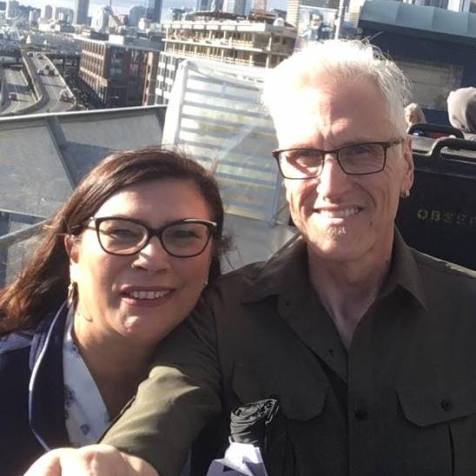
With Rae Kenny, my fellow lover for 29 years and fellow U2 fan
It is a small handful of events or experiences that earn the well-used primer: “I remember where I was when…” I remember where I was when the Berlin Wall became a gate, the Soviet Union became just a bad dream, when the U.S. dumped “shock and awe” on Iraq. When twin towers of glass and steel crumpled like paper on 9/11.
And I remember the first time I heard the mythic cries of Bono. Raw and pleading. He preached heaven and justice to the world’s hell and woe.
I would never be the same.
Every person can point to at least one thing, one person, book, place, experience that has so deeply touched them they’d not be the same person were it not for that thing. To describe, we use words like impactful, influential, unforgettable, foundational, formative. We say, “I am the person I am today, because of….” Our hearts brim at every remembrance. Conversations always veer in that direction. We return to it again and again rebooting it in our emotional hard-drives.
As a musician and writer, my influences bleed, albeit imperceptibly, onto every page or song I write. Words get strained through my inspirations: Gerard Manley Hopkins, John O’Donohue, Mary Oliver, Thomas Merton, Kathleen Norris – even as I sing in the shadows of Bruce Cockburn, The Chieftains, Dan Fogelberg, Stan Rogers, Paul Simon, and – you guessed it – U2.
Centurylink Field, Seattle – The Joshua Tree Tour, 2017
Their musical impact is undeniable. Masters of melody, nuance, and the prophetic power of poetic art done well, I am pried open, exposed. Their un-theology is more impassioned activism than easy-to-swallow hallmark messages wrapped in bumper-sticker Christianity. I am the hungry canvas, they my nourishing paint.
Precious few cultural icons are so readily accessible as U2. But they represent much more than memorable music. Their message is not for the faint of heart. It yearns for the alternate reality of what is possible in a red letter arena; the dangerous stage of self-sacrificial love. They are wick to a candle burning brightly in praise of peace and justice, one that cannot blow out. They are cornerstone of a movement that pictures a world better than the one into which we were born.
This is not just the message of a generation played on guitars. This is a message for all time; ever new, always fresh, never-ending – Good News as it was always intended. My throat, tightened from tears, hoarse from singing anthems to peace, will only find rest when I find what I’m looking for. With my life partner beside me, the girl whose heart-strings are also touched by these same forces, I am closer than ever before.
Until then, I want to run in the name of love, in God’s country, where the streets have no name.
The more I read the Gospels, the more I am convinced that we would be the first to condemn Jesus and pin him to a cross all over again. That, in spite of two thousand years of knowledge, and canon, and religious conversations, and catacombs, and persecutions, and the dawn of “Christ-ianity.”
To read the Gospels honestly is to place oneself in dangerous places indeed. It is the readiness to identify as a sheep or a goat; as a disciple or a Pharisee or a religious teacher or a widow or wheat or weeds. We have so objectified the good news into our neat, neo-Platonic categories that we’ve rendered ourselves incapable of being seekers; the very posture required by Jesus to see – God, others, even oneself.
If the Gospels tell us anything they tell us how easy it is to build an impenetrable club of pretense and walls of preconception around our faith. The Pharisees did it and Jesus was forever pissed off with them. The biggest challenge to conversion is the belief that one is already converted and without any further need. It becomes poisonous to the very humility that would otherwise find us deeper in grace and living more abundantly.
It is the great proclamation of the convinced.
Richard Rohr calls this what it is: idolatry. It is the worship and protection of the means to an end rather than the journey toward the beginning. He tells us, “religions should be understood as only the fingers that point to the moon, not the moon itself” (Everything Belongs, p. 51). He believes, and has built a career upon, the notion that all true spirituality is about seeing and letting go in order to see still more.
I have found that it is often to my benefit that I am both A.D.D. and a mystic. That way, when I begin to ramble (a common occurrence!) and someone tells me to “just get to the bottom line,” I can retort with the same refusal Jesus used in such instances. He cared little for such things and besides, it is the misguided idol of a success-driven culture built on information and accumulation rather than instruction and awareness.
I’m aware how much this frustrates my type A friends. For naysayers however, more often than not, they don’t ask again!
Says Rohr, “preoccupation with exchange value and market value tends to blind us almost totally to inherent value…Everything becomes priceless if it is sacred. And everything is sacred if the world is a temple” (Ibid, p. 56). To expect life to produce some kind of “bottom line” is the demand for Jesus to offer a sign. Like the Pharisees, we insist, “just get to the point” and do so in a way that impresses me, asks nothing of me, gives me answers rather than better questions, perpetuates my misguided presuppositions, assures me I’m in and you’re not, and never invites me to step out and journey. Moreover, it promises more darkness and blindness and no actual change. I will still see what and how I want complete with all my preexisting opinions and skepticism.
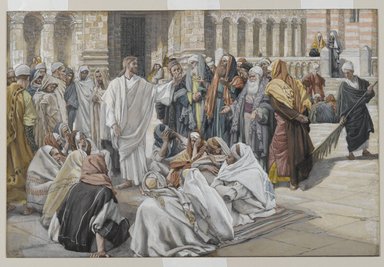
The Pharisees Question Jesus – James Tissot (1836-1902)
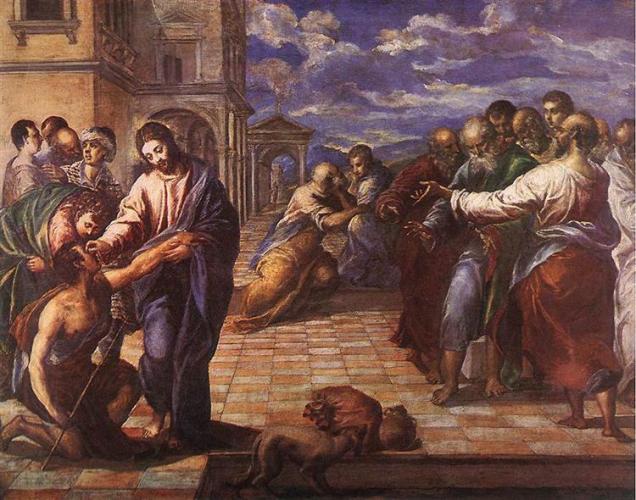
To see is the one great gift of all true spirituality. Jesus spent a lot of time healing blind people and a lot of time blinding self-proclaimed seers. When all we crave are answers, solutions, and the pragmatics of control, then it is we who stand in need of a raised voice from Jesus. We become the gatekeepers. We become those who, alone, claim to know the Way, the Truth, the Life. We are those possessing the Words of life but in restrictive, mechanical ways upheld in our own Sanhedrins.
Christ healing the blind man – El Greco, 1560
And that is what makes us the most ready to feel we need nothing more. We, the converted, stand most in need of conversion. Jesus spent a lot of time in an already protracted ministry window healing blindness. This I believe was no accident. He was particularly drawn to this because of it’s wonderfully metaphorical teaching platform. And I’m sure that someone healed of their blindness would be most deeply grateful; most readily loving.
To see therefore, is to love. And to love is the heart of the Gospel message. Until we love as Jesus loved, we may yet stand in need of conversion. To say otherwise reveals a spiritual smugness, a theological self-satisfaction bent more on winning arguments than whispering prayers.
These days, I rest secure in the knowledge that the same grace offered to the pimps, whores, and swindlers is offered to the converted and the righteous. Jesus spent more time arguing with one and partying with the other.





 I told my story to whomever would listen. Upon closer inspection, cornering them at the entrance to the gas station toilets probably was inadvisable. It’s hard to tell a good story when someone keeps hopping around with forced grin, wide-eyed in panic.