Forest Conversations

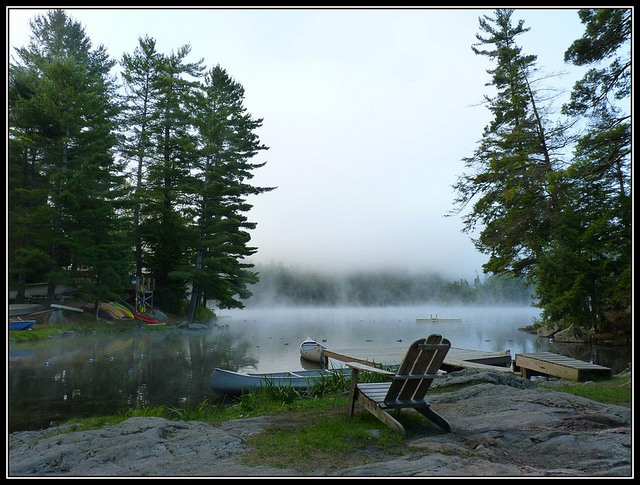
I love Oregon. Whenever I come here from my home in Washington state I instantly feel at home. The following short poem is intended as a word picture of my conversations with God in, through, around and because of, the Oregon forest.


Forest Conversations

Darkling and twisted in orgiastic biospherean splendor,

the forest tweaks the shoulders of the mountain

and turns her head to speak of things unknown.

The hump-ed shoulders of mornings’ mild and misty manner,

spreads like green butter before the feet of day.

I can hear her whispers, stirrings on the woodland floor

where creatures run and leavings left behind from

windy hollows and sapling’d soldiers standing still

in disciplined ranks en-mossed in jade

and rustic, ruined wonder.

Had I been here before, there might not have been

these turning, tree-worn thoughts of a day

fit for sharing.


Come, and live

Oh, that I might dwell in translucence,

opaque in wonder for what might yet come.

My soul whispers

those words I most long to hear:

come, and live.


For merely ingesting the sting of this,

the hope of that

is no guarantee of learning the good,

the acceptable,

the perfect.

Instead, let no other respite, nor peace askew

nor eye askance deter from the goal:

to will but one thing.


“Come, and live.”


Glimpses, part II – the spirituality of place.

Where a person is can be as important to one’s spiritual development as what they believe. Long have spiritual masters proclaimed the benefits of sacred places. The Hebrew scriptures are replete with God’s directions to Israel to mark out territories prescribed by God that would both demonstrate God’s faithfulness and Israel’s special role in God’s redemptive economy. From the irrigated, verdant hills dotting the landscape around his hometown of Galilee, Jesus would spend countless hours with his Father. From such wilderness haunts he would find nurture, tenacity, strength, succor, and, frankly…answers.

So much of who we are and what we are becoming is directly attributable to the places that have graced us (rhyme subliminal but entirely intentional). In the comparative spiritual laissez faire of Constantine’s newly Christianized Rome, Abba Antony of Egypt started a mass exodus into the deserts of Egypt, those who would become known as the Desert Fathers and Mothers. The barrenness and desperation of the desert mimicked a similar cry deep within the hearts of these enigmatic souls. What is the obvious lesson? When there isn’t anything to titillate the senses, one might as well deal with the soul!

As a result of their foray into geographical nothingness, they became everything. They became the fullness that lies beneath the surface of what one misses when only seeing the desert sand.

The Celts, well known for their keen kinship with their environment, made much of this desire. Not unlike the Native populations of the US and Canada, not a feather of wing-ed bird, nor bark of tree, nor single trickle of rainwater escaped their notice. All carried within it some morsel of meaning for them.  Because everything received notice, nothing got wasted and this outer kinship found expression through inner resolve and great spiritual creativity.

My own holy places, the cairns of my wanderings, are generally old, rather solid, often drafty and poorly insulated, but full of the memory of stones that have long cried out to their Maker. Long have I had an historical and spiritual affinity for those stuffy, rarely air-conditioned chapels that never cease to draw me elsewhere…to the great Other. Let me share just a few.

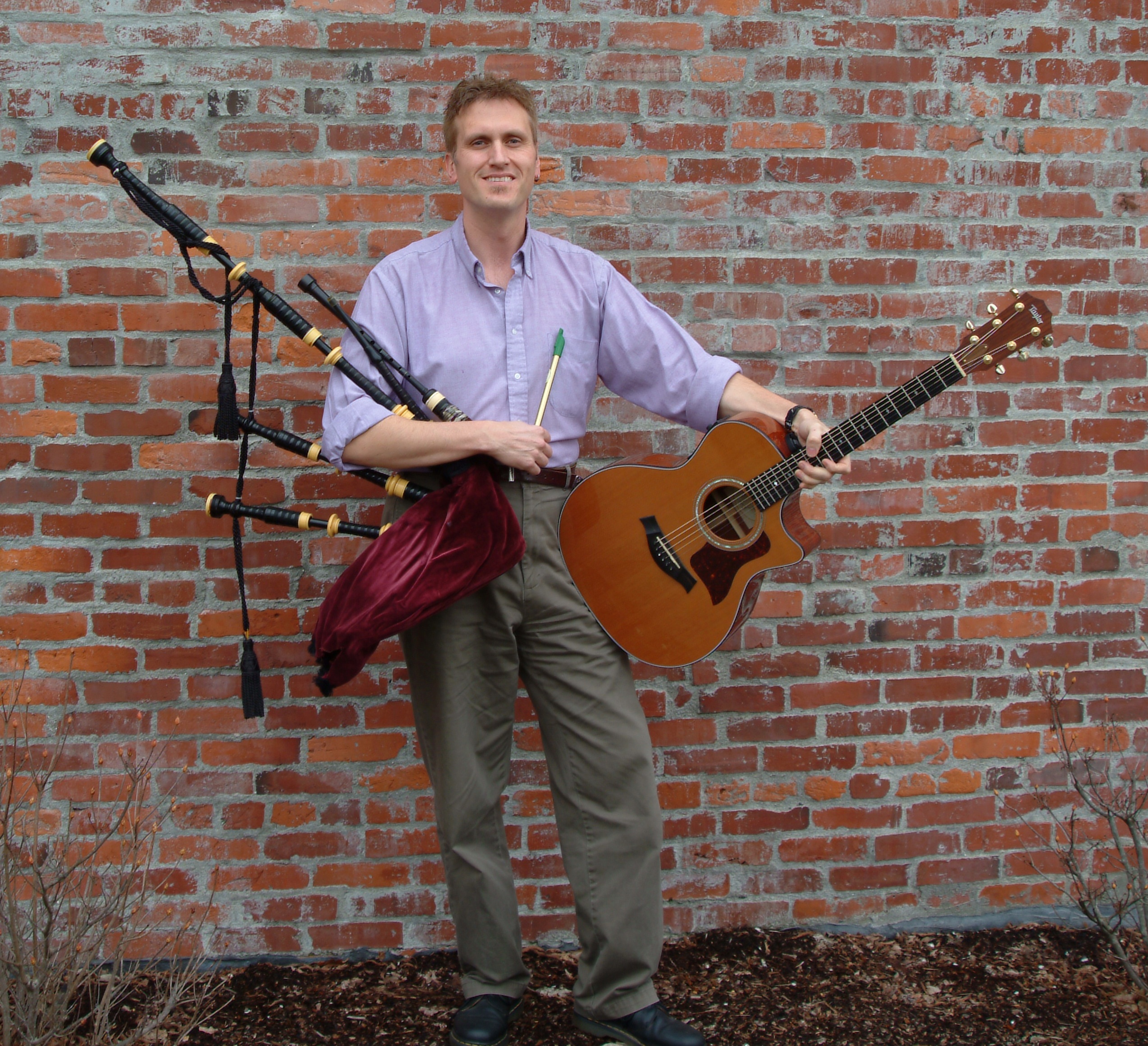
St. Saviour’s Anglican Church sanctuary in Nelson, British Columbia where for a number of years I taught at a Highland Bagpiping School (a place where other strange souls like myself learn to tame a five-legged creature designed to rouse neighbors and destined to arouse suspicions). Connections in the community opened the door figuratively and, in this case, literally, to spend as much time as I wanted in the church sanctuary after everyone else had gone home. I was given a key and carte blanche run of the place.

Most evenings after a long day of bagpipe students, some whiny, some lazy, all of them noisy, I would retire to the sanctuary with my pipes. For an hour or so I would simply play, enjoying the epic reverberance of the sound bouncing off the hard stone walls, and finding no sonic respite from the hardwood floor. It was, for me, the closest I had yet been to what I might have then described as heaven. At times it was 2:00 am before finally getting back to my room.

The hospital chapel in the same city was another such place. I was falling apart after a recent break-up with a girl to whom I had been engaged. My shattered interior was gradually reintegrated in that little chapel where I would weep and pray for hours, listening to John Michael Talbot, or the Monks of the Weston Priory sing beautifully doleful refrains. It was for me, through gallons of heart-crushing tears, the perfect requiem to my stubbornly elusive peace of mind. It would become the Introit to a new place of healing and restoration, albeit gradually.

Tintern Abbey in Wales, the place I believe could be boasted by angels as heaven’s waiting room, the lobby to eternity. My first experience of this roofless wreck of holiness was following a six month sojourn as a missionary to youth in Edinburgh’s rough Pilton district with my new wife of a year. We were tired and needed time to traipse about the land of our ancestors (and her relatives) before returning to Canada, unsure of what awaited us there. The warm, lazy day infused with the angular light of Fall caressed the ancient stone walls easily visible from almost anywhere. The pointed gables of apse and nave bespoke a darker but simpler time. All we could do was sit and pray.

Less than two years later a picture of Tintern Abbey would help pull her through a terrible first pregnancy with our son, Calum. The same photo performed this function five years later as our second son, Graeme, reluctantly succumbed to womb-ed pressure and left his humble abode to make his premier. However, it is difficult to compete with William Wordsworth whose words best complete this picture:

While with an eye made quiet by the power

Of harmony, and the deep power of joy,

We see into the life of things…

And somewhat of a sad perplexity,

The picture of the mind revives again:

While here I stand, not only with the sense

Of present pleasure, but with pleasing thoughts

That in this moment there is life and food

For future years. And so I dare to hope…(Wordsworth on Tintern, 1798)

Everyone can point to at least one place where something important, even seminal occurred and they sense something is different. There it is that our life has been forever changed, perhaps only incrementally, but transformed just the same.

I believe it is God’s way of playing spatial peek-a-boo.

Think deeply of a place or two that have been places of rest and reconstruction. Picture that place in your mind. Now let that picture juggle your heart.

As you do so, re-member the pieces of you that may have been broken or lost in that place. Quietly give thanks to the God who loves to find us where we’re least looking or at least looking the other way.

words…

July 23, 2009


these time-rushed blips like panicked squirrels

refuse submission to

my lesser purposes; partnered anti-coagulants of

time and chance

pursue this restless memory till

soul tames mind

and sanded feet remind salted nostrils

of their richer fare

Glimpses, part I: awakening to the indescribable

I want to take a stab at describing what cannot adequately be described. As a contemplative and a musician, I have met, from time to time, with mystical experiences that beggar explanation. I do not have anything close to adequate categories or temporal understanding for such things. In seeking them out, I must simply share and hope for the best.

I will be doing so in a short series of posts under the general heading, “Glimpses.” A little unoriginal I admit. However, I trust that my faltering attempts at self-revelation will prompt your own journeys of inner discovery and that, together, we may find God’s deep reservoir of grace.

At the foundation of Christian spirituality (and others) is the very basic principle of awakening or awareness. It comes in many different packages, under numerous ideologies, representative of a host of approaches, all with practices that lend themselves to one’s emerging spiritual life.

To become aware is to wake from some form of slumber, sleep or sloth. One of the mysteries of spiritual awareness is that one does not awaken naturally. We are prodded awake by the loving work of God upon the sleeping soul. It requires this nudge from God upon our shoulder before any meaningful process of receptivity and relationship can occur. In order for us to embrace this work, basically to ‘awake to our awakening’, we must intuit God’s whisper, speaking grace into the spiritual ear of our understanding.

I do not speak so much of the prophetic proclamation to “arise, shine; for your light has come.” No, before we can be so attuned to the prophet’s voice calling us to faithfulness and righteousness, we must first hear the voice of the Lover calling us to succumb to this wooing for which our only response can be, “I am my beloved’s and my beloved is mine.”

As comforting and romantic as that sounds, however, upon awakening to the first primal strains of the song of God, there comes a dissonance amidst the lilting notes. We awaken to beauty and begin to see that for which we have always yearned but of which we were unaware; blind. This, however, can often be a fearful and groggy experience. Cobwebs invade our minds unaccustomed to such sharpness of color. Ears that have been plugged up suddenly pop as our inner altitude changes. It is as disorienting as it is invigorating.

I remember places, glimpses into…something; an awareness that hints at a proximity to the indefinable, numinous presence of God. These are never easy things to describe, but there is a delight in the attempt for, in so doing, I am taken back to some of those places. For me, it was often some old, stone church or monastery; most often at night, alone.

Yet, not alone.

As I have since come to believe, they were, as the Celts called them, thin places where a barely perceptible sheath surrounds the holy otherness of God and where comes a mystical awareness of God so immanent that one feels she can literally smell God’s breath, touch God’s skin. These experiences have often made the hair on the back of my neck stand up.

Ironically, they used to happen often when I was a boy, long before I had any faith lexicon or tidy systematic theology with which to scrub them up and describe them away. I recall one particular time as I lay on our living room floor. I was probably eight or nine years old and, as I did every year, was watching the first snowfall of winter. Enormous frozen flakes dove in random, disciplined lines, dancing past the streetlight that stood outside our home. The glistening goodness provided a panacea against which the world was complete and all was one, if only for a time. In those moments, gilded and encased in childhood wonder, I became curiously aware of a haunting peace that arrested my sensibilities and held me spellbound in what I can only describe as ‘rightness.’ The cosmos and I were one. God, as I now understand God, was lying beside me on the living room floor that night, whispering wordless words to me, convincing me of my place in it all, be it ever so miniscule.

This is a story best left unfinished…

This week, consider quietly and prayerfully, the ways in which you may have heard these awakening whispers of God.

Journal them. How did they occur? Under what circumstances? What, if anything, changed in you as a result?

What are ways you may be invited by God to enter even more deeply into these places of awakening and transformation? Agree, humbly and with resolve, to enter into them with the God of grace to guide you.

Feel free to share what you and God have been up to in your journey together.

Triangle Poems VI

Knowing

Seldom have I felt this low,

my voice, still stuck inside.

A soul, left alone,

reveals its need

to suffer,

rejoice;

be.

Old for New

Let’s trade our foreign cargo:

our death, oblique and strange,

tagged for redemption,

but stirred to know

the story,

re-lived,

new.

Gift

Satisfaction guaranteed

to broken hearts that need

all that sorrow brings;

a song to sing,

promising

death to

death.

Presence

Let’s walk on distant shorelines,

ragged, rough and romping;

nuanced as the night

for we should not

assume that

we’re not

there.

Breakfast

I ask you, “do you love me?”

You tell me that you do.

I ask you twice more.

You answer me.

My answer?

Broiling

fish.


More Haiku for you

Below is the universal symbol for Longing in Chinese, Japanese Kanji, and Korean Hanja

Where else should I be,

but in this sacred presence;

to find my way here?


Once you did find me,

a broken, tear-sodden wretch;

and still you loved me.


One thing I have seen,

an onomatopoeia

has brandished this scene.


Once upon a time,

there shines a glittering light,

then and now and then.


When night is falling

into day from night before,

day has truly come.


Feed me on your flesh,

nourish’d from still deeper veins

and my soul starves not.


Still strings vibrating,

filling the air with sad songs,

and still we’re singing.


I can see your face,

time and space interrupted…

Can you see my face?


Mystic reverie

of clouds, unknowingly, pass.

Entranced in longing.


Satisfied am I

in a Eucharistic haze

of understanding.


My wife always tells me where to go

For guys like me who suffer from severe, chronic directional retardation, Diana Ross contributes the quintessential song, “Do You Know Where You’re Going To?” It is an appropriate question for me since, as previously mentioned, I get lost easily. There’s an even more embarrassing reality here…

My wife is a professional cartographer.

She makes maps.

I know! How crazy is that, right? I like to kid her that, not only does she tell people where to go, but then gives them detailed directions as well. In my unredeemed moments when I’m tempted to tell some self-congratulatory stuffed shirt to go to hell, I know where to go for tips on the quickest way there. My wife is an expert in helping people get from A to B and back again. In this way she is a kind of geographical shepherdess, guiding the unwary soul away from the rocks of potential disaster to the still harbor front where rest and Daiquiris await (or tonic and lime in my case).

I’ve been a “professional” church music director for many years. Anyone who does what I do will likely share a similar scenario. When introducing oneself at parties or potlucks, the customary question aimed at one’s spouse is always the same, “and what instruments do you play?” The assumptions here are many, not the least of which is the very 1950s idea that to hire a man for ministry is to hire his wife and family as well. I’m the main guy, she the piano-playing-kid’s-choir-directing-always-polite-and-fashionable-dutiful-wife sidekick; a role for which she is rarely recognized and never paid. Once, while at a party with friends, a certain insistent lady kept pushing for more information on her singing abilities since “that’s what music minister’s wives do.” True to form, Rae replied with the astute comment, “is that the same for you since your husband is a carpenter?”

Well played, my dear. Well played.

She used to be bothered by this presumption. Thankfully, the perception of a thinly-veiled evaluation has worn even more thin over the years. Now we simply chuckle about it.

People have often asked me, why didn’t you marry another musician? I recognize that to be the accepted pattern. In actual fact, she knows a great deal about music and is a passable pianist and organist. We both share a widely eclectic musical palette; everything from Bach and The Chieftains to Sara Bareilles and Death Cab for Cutie. Tellingly however, our younger son, Graeme, once told her she had the singing voice of a goat and that even auto-tune is out of its league here. Dude…nice.

One must understand that musicians, or at least I, swim in a veritable sea of self-referentialism. Ironically, it’s what makes us good at what we do. Artists are generally brooding, too self-aware and then, pushy about it. I’m at the head of that parade. Don’t get me wrong, I love my artsy kindred spirits but, seriously, you really don’t want more than a handful in the same room at any given time, trust me. It’s simply too much Bohemian smug for most church potlucks to accommodate.

No, I’m quite pleased to have met someone who, instead, shares other deep passions of mine – history, geography, old languages, and rain. My undergraduate degree is a B.A. in Music with a major in Vocal/Choral Performance. Hers is a B.A. in History with a minor in Geography. In this curious mix, at least in our better moments, we have seen a much fuller, rounder, doubly satisfying concoction of passions and traits. It means that I can be the king of music, she the queen of history under the same roof. Instead of vying for attention, as artists are wont to do, we have the choice of being each other’s biggest fan.

Granted, this sounds great in theory. It doesn’t always work in reality. But, the lesson is clear. In our darker moments, a poem, joke or song from me can bring hope and cheer to an otherwise bleak situation. She reminds me that men and women have struggled with such darknesses for centuries and that safer shores were never that far away.

Now, when asked why I didn’t marry a musician I can simply say that I needed someone who would tell me where to go, how to get there and, in so doing, help this lost soul be found again.

I know of Someone else who does such things.

Feast of quotidian delights


Swollen palettes, satiated on mystery meat, bread and corn

husked beside the red swing-set after splish ‘n splash at noon.

Summer’s silly sprinkler dance anoints the day

with laughter fit for kings’ tables finely festoon’d.


Checkers played with pennies and monopoly pieces,

and, later, fake dollar bills found buried in the car seats.

Dinner table taunts from Mom and Auntie June

to remove from there our sad and smelly feet.


Now when moon and sun compete for sky,

I chuckle one last sigh before I hit the hay.

My buddy’s fresh, new farts remind me

how soon, in restful sleep, he’ll pay.


Sometimes, when pompous stars have fin’lly come and gone,

and, creeping on the ledge beside my window, at this height,

I wonder when, once more we might revel in  

this feast of quotidian delights.

Jars of Clay – A Prayer

Lord, you have exalted your name above the heavens.

Your name means grace and peace and wonder to all who speak it in faith and love.  You have chosen to use weak and broken vessels to be your eyes and hands and feet in this world.  It seems, Lord, that you love to pour out your glory through

the ordinary, the fragile, the imperfect.

In this, Lord, we are honored – but humbled.

You ask us to mirror grace, love and faithfulness to the world – the very grace, love and faithfulness so eloquently portrayed in Jesus Christ.  Through him, you promise to give us all we need to live rich and holy lives in our communities, our families and in this world.

Mysterious God, so great a salvation!

We sinned, you forgave.

We turned away, you gave chase.

We rebelled, you paid for it.

We forgot, you remembered.

We are often faithless, you are ever faithful.

We complain, you are patient!

Lord, do not allow us to make excuses for ourselves, hiding as we do in the limits of our humanness.  Although we are perfectly aware of how inadequate we are to the task, help us to see ourselves as you do, as reconcilers, as peacemakers, as redeemed kingdom builders.  If we are dull, make us shine.

Lord, take these imperfect jars of clay and make them holy cups of pure grace, forged in your desires for us.

May it be so, Lord.

May it be so.