What follows is my Goodreads review of this book. The amount of eclectic material that crosses my desk and ultimately finds its way to my GR ‘to-read’ pile can feel overwhelming at times, dizzying even. So much of it follows the same old patterns, character and story arcs both predictable and tired, tropes emerging like prairie calf-ruts can leave one wanting more.
In this case, my spirit just drank heaven from a garden hose. This post-evangelical, Celtic mystic sits in dust and ashes akin to a post-coital haze after mounting this treasure of a book (sorry, too much?).
My rating: 5 of 5 stars (6, but I was only given the option of 5)
I read a lot of books. Fewer than some. More than others. I’ve come to expect certain things – peaks and troughs, mounting action and denouement, savages routed, heroes touted, love lost and regained, bad guys, good guys, undetermined guys; sometimes cliché, sometimes quaint, tropes and gropes and the like all tumbling together to form what eclectic fare has become my Goodreads history.
I’m no literary expert, nor do I pretend to have anything more than a reasonable grasp of specificities or requirements of genre. But I know what I like.
From time to time comes a book so beautifully crafted, so nuanced and unashamed to go to those deeper, unexplainable places of angst and ache, anger and anxiety, passion and purity. Alistair Moffat’s “Islands of the Evening” was, for me, that book. Part memoir, part travel blog, part history and hagiography, Moffat takes one on a truly remarkable journey into Scotland’s distant past. It is carved equally in stone and moss as it is blood and devotion of those white martyr saints intent on braving the elements in pursuit of union with their God.
Perhaps most notable is how powerfully a man who claims no discernible faith or even belief in any God can write about the God he claims not to embrace. I leave this here where you can decide for yourself.
“Even though churches are emptying and prohibitions are being dismantled, there is an enduring consensus across Europe, in the Americas and elsewhere about decency, good behaviour, about what constitutes right and wrong. Overwhelmingly that consensus was formed by the centuries of Christianity. As doctrine and belief evolved, and as far too much blood was spilled, the Church largely formed our morality…the teachings of the Church have been enormously determinant in the operation of a generally accepted code of conduct both in private and public life.”
An atheist wrote this. So, for God’s sake (or yours, whatever), read this beautiful book.
“All through my life I have embraced and questioned the night, and loved its random light: the aurora borealis, the starry reaches of the cosmos, streetlight ricochet off car metal and darkened windowpanes…the light of friends and lovers.
We are on a great journey, through darkness and dawn, across time, though sometimes I fear that our journey is about to end. We must not succumb to fear or avarice; we must continue to embrace life, seek light, and gather in the charity of night. This is what God wants from us and for us. Mirrors of the past shine with the hue of unborn days, just as stars glitter in the dark night to light our way.”
I love metaphor. I appreciate the multitudinous ways it invites us to consider really big stuff. Night and day, dark and light, doorways and highways – all of it in pursuit of understanding that which can be never be fully understood.
Longing, as I’ve written many other places, is a condition most endemic of the hungry human spirit. If we are anything as humans, we are spiritually starving. Like the blessing of pain to a body out of joint is that of longing to the soul under duress, or even just at rest. We long not because we’re broken necessarily, but because we want either to be unbroken, or, in my case, to experience the proximity of God as God when last I WAS broken.
However, there’s a danger implicit in longing for its own sake. It can easily become an obsession, a drug without which we feel we can never really be whole. For too many years, in the name of contemplation, I lived in what could only be described as wallowing. It was often a cottage industry of self-pity in the guise of discerning depth; “look at me suffer and enjoying it” rather than the healthier pursuit of gratitude-in-darkness while praying for light. Persona incognito.
I’ve learned since then to notice the subtle differences which exist between genuine longing and a self-imposed spiritual subterraneanism posing as such. Nowadays, whenever longing arises within me, a few questions arise with it. First, where is this coming from? Why is it there and what is it telling me? Is this genuine heartsickness or just indigestion? Does my spirit need something or am I falling into addictive thinking once again?
As beautiful, daring, mystifying, and thirsty as the human soul can be, it is also fickle and will play tricks on us. What presents as darkness might just be ennui, the listlessness which is part of being human. What presents as sadness might better be described as an insufficient attention to the light of Christ always burning in our deepest places.
The Bible and, by extension, the great tradition of Christian spirituality have aligned the parallel barrels of mystery and metaphor as their formational crosshairs. The immense enterprise of God’s program of cosmic reclamation remains unsuited to the quaint and glib prognostications of “systematic theology”, or as I like to see it, the detached mechanics of straining eternity through an eye-dropper. Protestantism in general, evangelicalism in particular, are guilty of this diminution.
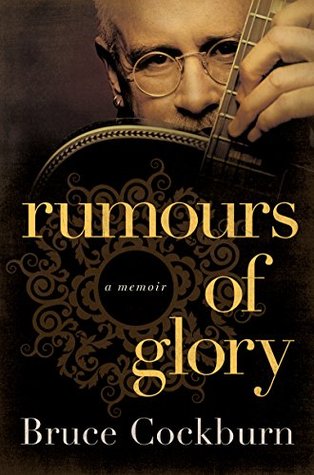
All of the above has been the experience of my hero, Bruce Cockburn. I recently finished his memoir. A favourite person. My favourite genre. The chance to devour, even absorb, the fascinating lives of fascinating people. My life grows from the experience, every time. What’s not to love? Ah, but this is not just any memoir.
It is impossible to understate the impact Cockburn has had on me. My music. My approach to the guitar. My songwriting. My ongoing love for literature and words. Especially, my spirituality, infused with longing as it has been. Even my personality exudes a certain whiff of Cockburnesque mystique, much of it intentional.
He doesn’t know it (yet), but I credit him in large measure for my career in music, songwriting, and for my journey of faith. While he was still pursuing something beyond the pale for himself, he speaks of “the speech of stones.” It was probingly pagan but sufficiently poetic to peak my interest. There was something out there worthy of seeking.
Bruce (may I call you that?), if it’s good enough for you, it’s good enough for me.
To read a memoir is to sit in someone’s living room drinking beer and eating Cheetos as someone outlines plans to save the world, or at least make it a little less shitty.
Except for a few cases, their stories are rarely intended for their own self-aggrandizement. Instead, they act as a window, a prism of sorts that divide up a fully lived life into its constituent parts for our amusement and awe. Once we happen upon these parts, it is for us to find ourselves within them.
Although not entirely without a modicum of gravitas, I am embarrassingly unknown. A small-town guy writing for other little guys, but with a tale to tell. What I can offer is a fireside tale told by a friend you just haven’t met yet. A regular guy with a story for other non-luminaries out there.
For my part, there’s an unquenchable thirst to read the journals of other next-door Joe’s like me. Those who put in writing what had previously been stuck in memories, photo albums, iPhones, shoe boxes, or desk drawers. Ordinary people become extraordinary through telling their story. We become greater than the sum of our parts as we are willing to share something of the remarkable, the redemptive, the road made a little straighter, the discoveries we’ve made along the way. Memoir is the result of someone’s self-discovery in writing.
These stories invite me to ask, how am I also the statesman? The conqueror? The activist? The poet? The World War II code breaker? The rock star? Can it be that my horizons grow in reading the exploits of those great ones of whom I can only dream? Do their larger-than-life stories strike a chord, even a strident one, with folks-next-door like me? Like you? What is it about their stories that make us buy the books, makes women sigh and men jealous?
When I first dove into The Seven Storey Mountain,
Thomas Merton (1915-1968)
was surprised to discover Thomas Merton, an artsy intellectual, Trappist contemplative who, on his worst day, was hipper and smarter than I will ever be. I’ve read, jaws agape, of the jaw-dropping exploits of British navy explorer Ernest Shackleton. I soil myself at the notion of being anywhere near the same impossible scenario. I get lost in parking lots, let alone a frozen continent significantly larger than the country of my birth.
To read of Mahatma Ghandi, Martin Luther King, Jr., even Steve Jobs, requires a suspension of disbelief since I’m normally polishing off a chapter in between building retaining walls, preening what’s left of my hair or pealing potatoes for dinner. But then I discovered something, or rather, someone(s).
A good memoir is one in which a writer who, although more famous and established than myself, can bring themselves closer to my ilk. They are just regular folks, or see themselves that way (even if their bestseller status denies them the qualification). They are “small,” but with big stories. Anne Lamott for example, whose disarmingly genuine and authentically humorous depictions of her coming to faith give courage to those like me who would venture to do the same.
Kathleen Norris, whose writing and teaching career places her in a broader orbit, still writes for artsy-fartsies like me; those who consider themselves “thinking contemplatives” and a little rough around the edges. Another example might be naturalist philosopher, poet-academic and farmer, Wendell Berry. Now, there’s a guy I can relate to – a farmer who writes poetry – good poetry, and novels that bespeak our common life and run-of-the-mill experiences that hold within them the hearty smell of dung in the boots and the glint of heaven.
The idea that someone with whom I might share the frozen food aisle at Safeway has written a personal retrospective, complete with spiritual ups and downs, relationships won and lost and the polished and buffed exteriors that don’t always line up with their guts, is tacitly satisfying. Taken together, these individuals have emboldened me to see my own journey, a little pedestrian and squishy by most standards, as still mineable for universal truths, frequent tears and the occasional belly laugh. They encourage me to find out who I am becoming and write in the process.
And this is the end of my beginning. I may not be famous enough to dwell among whomever is the star du jour. I may not be old enough to be particularly interesting – unless you ask my boys for whom I am an animated skeleton with opinions. I may not be young enough to be on the cutting edge of anything. Most anything sharp about my edges has long ago been dulled to a coffee spoon. I’m smart, but not quite smart enough to produce those clever turns of phrase about the deep stuff destined for the thick books sold in packs of two, the other being a dictionary.
Courageous? Perhaps, but not quite brave or selfless enough to reach out quivering hands into a crying world like those grand souls whose hands have done so before, often at their peril. Their tales provide the templates from which I glean my own courage.
Smart and edgy like Merton? Working on it. Leader with bravery and character like Shackleton? Um, sure, let’s go with that. Articulate, and passionately dedicated like King or Ghandi? I do good, I guess.
They say the devil’s in the details (whomever they is). But, ultimately, God authors the story. I get to put together the puzzle. And who doesn’t love a good puzzle?
I love to write. Whether it loves me back is not for me to decide. The jury’s still out on that one. No matter. It doesn’t change the fact that I am compelled to tell people my story. Well, bits of my story. Bits of my unfolding story.
Why, you may ask? Because stories unite us. Jesus loved them. He had a particular attachment to stories. Parables to be exact. Parables are simultaneously beguiling and didactic. They amuse as they teach. They are immediate in their images and settings. It’s like we get to be in on the joke. And, their disarming specificity is surprisingly universal.
Once a story is rooted in the ground, where we all walk; once there is an address, a face, names, insider talk, maybe a joke or two, it becomes magnetic. They bring us together in ways few other things can. They are the campfire songs of our childhood, the foolish dares of youth, our first kiss, or broken heart, our first-child elations, the decimation of loss. All this and more is common to us all.
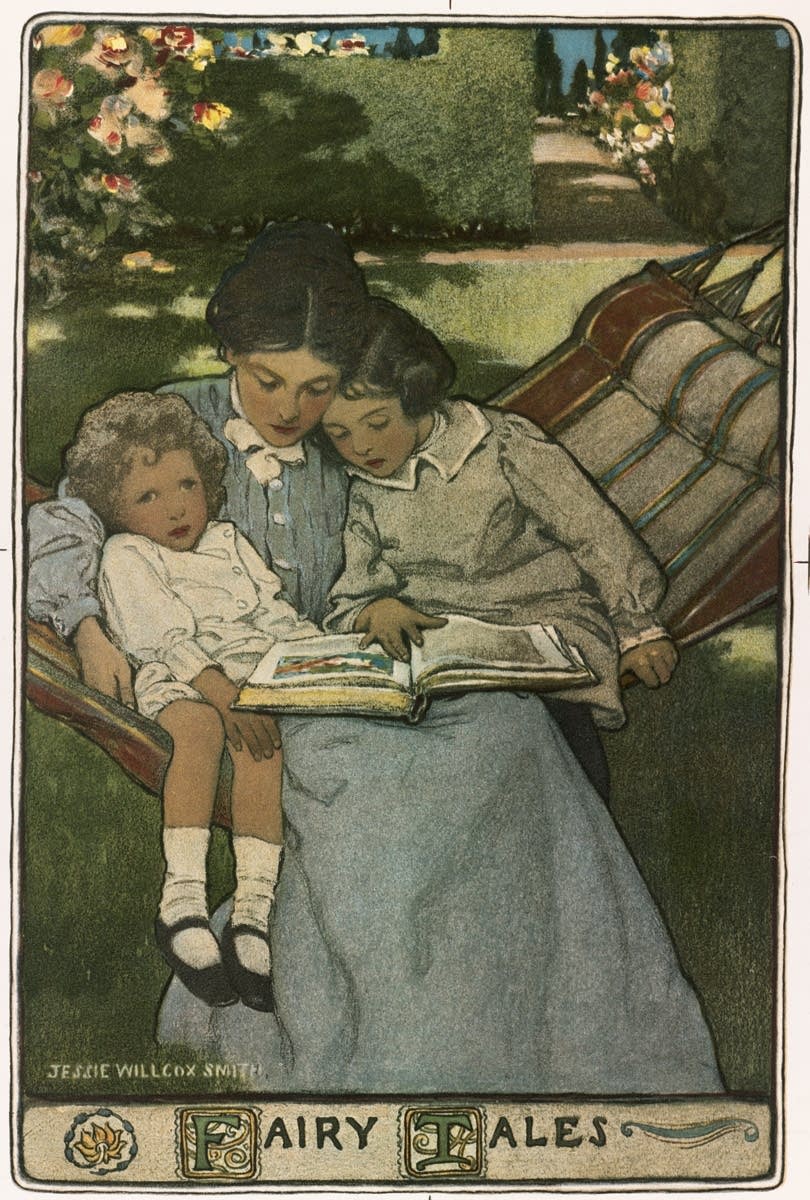
Postcard depicting a mother and children reading stories. Smith, Jessie Willcox, 1863-1935 (artist); L. Prang & Co. (publisher); Boston Public Library, Print Department
It is for these reasons I love memoir. It’s like someone letting you rummage through their sock drawer. There’s always a gem or two to be found in the oddest places.
And I think I’ve got one (or more) in me somewhere. It’s been floating around for years trying to find its way out. But, in order to do so with authenticity and putting my best foot forward, I need your help.
I’m so thankful to all of you, my readers, for your ongoing support of this blog. It’s gratifying to know that my emerging soul, rife as it is with the bullet holes of life, is of enough interest to draw in an onlooker or two!
My invitation remains open. Join me in the journey toward a story on paper? Share with me your impressions. What has moved you? Delighted you? Disgusted or enraged you? Your thoughts mean everything to me. As do you.
So, dear friends, I need your help. I’ve had a book percolating in me for some time now. But I need your help in pulling it out and getting it down. I’m inviting you, my dear readers, to help guide me on this journey.
Many of you have faithfully followed along with my often random, esoteric ramblings, with grace and dedication. I am utterly gratified to be in this with you. Truly.
Of the pieces you’ve read, what has struck you most? Deepest? What are the bits and bobs that have most touched you, made you laugh, or cry, or angry? I mean, the kinds of bits you’d read more of were they to find themselves between covers? So, this is an open invitation to you, my beloved readers, to walk with me toward some as yet undetermined goal of a memoir.
I appreciate you all so much. Your input is invaluable in the discernment process for this little project. Whaddya say? Can ya help a guy out?”
Another Sunday opens her eyes, damp from night sweat, or the river of dreams. Sunrise, like incandescent eyelashes blinks away the previous day and lets dawn stretch her legs. The miniature Big Ben mantle clock I inherited from my Dad ticks stoically, chipping away the seconds that have become, inexplicably, piles of years; a woodpile of time-chopped memories too easily fuel for the fire. And ashes are but the monochrome of memory – something once hot, bright, robust.
I suppose writing is to throw another log on the fire. The words crackle and spit themselves out as the heat rises. Those are the welcome fires of tin-foil wrapped delicacies, roasted and rich, softer by the second.
Now, this day, here in my writing chair, I can serve up a few morsels, ready to taste. Two. Years. Two full years since an adventure got tucked away, folded inward to await the fires of remembrance. And, in that time, the process, not of decay, but of marination has occurred. Like a good chili, always better the next day.
And I’m starving!
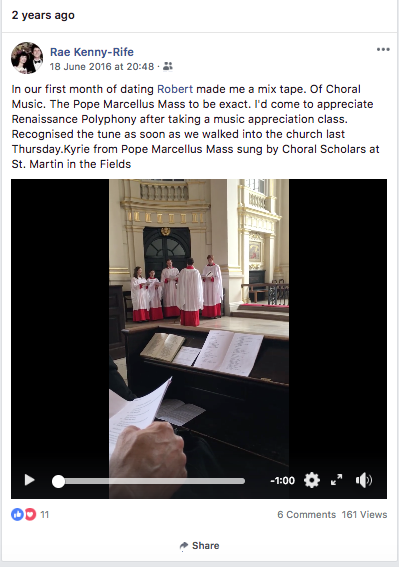
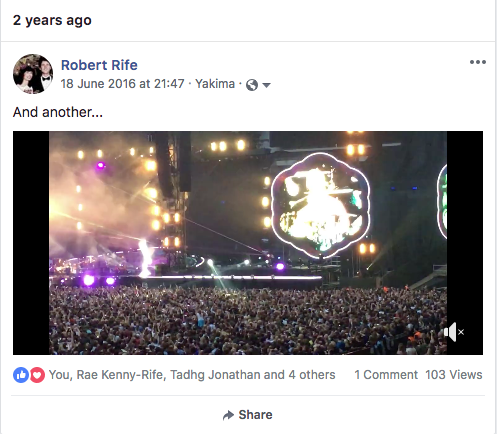
Facebook memory pop-ups are a blessing and a curse. They can bring a happy smile of recognition; reminders of good times past with good people. A “curse” inasmuch as those reminders pinch the inner optic nerve with the liminal colour of what is no longer now, but then – sweet, savoury, overpowering.
Never is “a picture is worth a thousand words” truer than when reviewing pictures of magical moments, inaccessible by the senses; only through memory. The existential replaces the experiential and a tear is born.
Two years.
Just seeing those words side by side is unnerving. This time, two years ago, Rae and I had just returned from galavanting around the U.K., filling our boots with shenanigans of every sort. It was our fourth such journey. 1989. 1991. 2004.
Then, a 2016 whirlwind whack-a-mole through salad-bowl Welsh valleys, pulsating London streets, book-studded villages, swarthy Scottish Highlands, tidy bed ‘n breakfast cottages, seaside adventures, writing (always lots of writing); family and friends both old and new. I think my legs still hurt from trudging downtown London and rural Skye, lost much of the time (of course).
Time heals all wounds.
Only time will tell.
Just give it time.
It’s about time.
Time-out.
All in good time.
Running out of time.
We had a great time.
Time gets a lot of press, both good and bad. Likely because of its annoying persistence, an impatient ubiquity. It tick-tocks us into corners or shows up as an ally, all in the same day. We even honour it with a face and hands, and then entrust to it lists about which it cares little. And, just when we think we’ve earned its respect, it barfs in our lap the other side of the page we didn’t see coming.
To attend to these memories respective to our journey to the UK is to approach the unapproachable. I don’t believe rose-coloured glasses are involved here. Nor do I think it a distance-makes-the-heart-grow-fonder kind of thing. It’s much more than that.
I think the greatest impact of our time there wasn’t the allure of tourist traps or the necessary bling that accompanies them. It was, on one level, a homecoming. For Rae it was genuinely geographic. She was born there after all. Wales to be exact. For me? Existential.
As I’ve recently discovered, my very DNA hearkens from Scotland/Ireland. Ancestry and companies like it parade around biological allurements to family origin hungry types like me. I fell prey. In doing so, I discovered my patrimony, a host of living relatives, and the certainty of my own personal ancestry rooted deep in Celtic soil.
Given all that I’ve written, spoken, and warily discerned on the subject – a holy hunch, if you will – I was more surprised than I should have been. Apparently, it is one thing to guess at one’s place in the world. It is quite another to actually discover as much. Like the dog who catches the cat. So, what now?
More on that ride soon.
Reminiscing can take more than one form. Time is friend to one, foe to another. When we’re younger it’s common for us to remember everything in vivid detail and easily recount as much. Time is our friend.
But, as I grow older (along with everyone else), time grows restless. Not yet foe, but starting to act a little shifty – less trustworthy. And, like hair, teeth, balance and bladder control, memories disappear. They thin. Those garnishing details, enhancements, indispensable at the time, begin to drop away.
Once it begins, the connections between head and heart grow more tenuous. Colours fade to pastels, then to black and white, finally to retreat into a palette of grey ooze. Faces slip further back from the front of pictures until they disappear altogether and, soon, they become just another “somebody that I used to know” (thank you, Gotye).
Llanthony Priory, Wales
That is why I write. It is especially why I memoir. When memory ceases to recall details, setting, faces, connections, passions, tears, laughter, even rationale, there will be on paper at least one thread of a life lived. That life had adventure and discovery, not just existence. Proof of significance, a justifiable place in the world. A reminder not just to me, but to everyone that I was here. I had something to say. I had people I loved, who loved me back.
A journey, two years hence. I remember. One day I may not. That is why I write – to remember not to forget that one day I won’t remember.


 To read a memoir is to sit in someone’s living room drinking beer and eating Cheetos as someone outlines plans to save the world, or at least make it a little less shitty.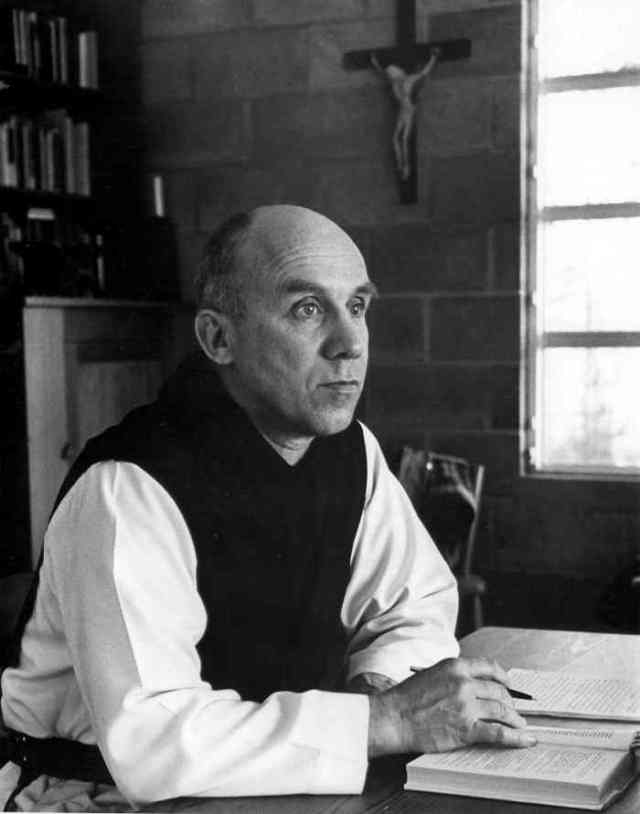





 Once it begins, the connections between head and heart grow more tenuous. Colours fade to pastels, then to black and white, finally to retreat into a palette of grey ooze. Faces slip further back from the front of pictures until they disappear altogether and, soon, they become just another “somebody that I used to know” (thank you,
 innerwoven