Monday, April 29, 2019

It may have been just
a glimpse, a shadow that died
as night became day.

Monday, April 29, 2019
It may have been just
a glimpse, a shadow that died
as night became day.
1st Sunday of Easter, April 28, 2019
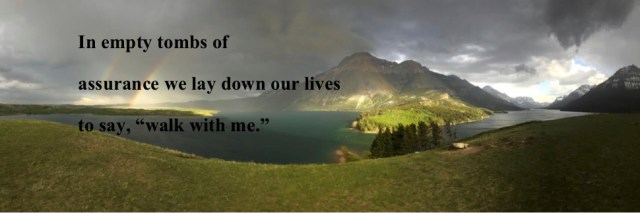

Friend, fellow poet, and generally inspiring person, Kelly Belmonte, supplies today’s poetry offering. Read, share, like…the works.
That feeling after
you read a poem
by Mary Oliver
and you think,
“I’ll never write again,”
but then you do.
*****
Photo by Doug Robichaud on Unsplash
National Poetry Month is almost over! Today, I leave aside my daily Haiku to offer this one. A meditation of post-resurrection curiosity.
After the tomb
When blood, still damp, soaked through
the sleeves of shrug-shoulder’d men,
did you cry for their laughter?
Were your accusers held in sleep
when Mary’s shaking hands
held fast your plundered feet?
How long before bewildered men
and doting women find again
their reasons for remonstrance?
Will a miracle suffice
to fill the gaps in minds too young
not to lust for proof?
Were the angels surprised
to find their silenced songs
reignited for their fittest subject?
Did you know these walls would
only remind you of this one, unending breath?
This one effortless act for one so bored of death?
Thursday, April 25, 2019

My daily offering for National Poetry Month is from a young colleague of mine, Anneliese Myers. She is a talented, up and coming poet and writer.

Read. Read again. Like, share, the works!
___________________________
Some nights I find you
Some nights I find you
tucked into the corner
of a dream,
like you were something
so dear, that I put you
some safe place
where I might chance
upon you every so often
to love you and
to smile at you again.
Like the photograph
in my silver locket,
like the dog-eared page
in my favorite book.
Like that.
Tuesday, April 23, 2019
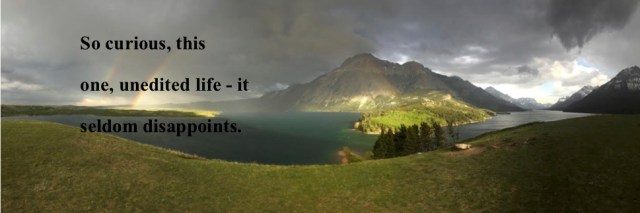
A guest post today from my wife, Rae Kenny. Her pen name is Wren Kenny and you can expect to see her debut novel sometime next year.
_______________________
Easter Sunday 2019 marked my turn to be Liturgist. That’s the person who leads the Prayers of People. It is where we pray for the world, our nation, our community, and needs within our own congregation. Each time it’s my turn, I pray, write, and edit for weeks. Why? Because praying for the leaders of the world, and particularly our nation, is a daunting task in these divided times. Thankfully, my heart ends up in a different place than where I started weeks before.
Without doubt being born in Britain and raised in Canada has formed by views. Every time, God challenges my heart on whether my politics are influencing my Christianity or my Christianity is influencing my politics. Trust me that my spirit was prompted to remove a lot of words my sense of humour found utterly delicious, but were not edifying for congregational prayer! And even after I finished the final draft and my heart had an adjustment, I was sitting at my desk eating my lunch and laughing at political cartoons (from all sides). My co-worker pointed this out and I was embarrassed at how easy I fall into the trap of coping with humour and becoming a mocker.
Below is the redacted version without our congregational needs.
Risen Lord, we thank you for your covenant with all living things, and our obligation to be good stewards of the gifts you have provided. As we care for the Creation, may we make wise choices in the actions we take to care for our planet.
The Bible tells us in 1 Timothy 2:1-2 that: “all…petitions, prayers, intercessions, and giving of thanks, be made for all men: 2 for kings and all who are in high places; that we may lead a tranquil and quiet life in all godliness and reverence.” In this shifting world order, let us pray for the nations and peoples of the world, that the powers that oppress and destroy may decline, and that justice, peace, and prosperity be lifted up.
Let us pray for the people of Sri Lanka who were killed or injured in the bombings of churches and hotels. Let us also pray for the perpetrators because Jesus tells us to pray for our enemies, even those who bring us harm.
At Yakima Covenant Church, it is part of our theological ethos to allow for a diversity of opinions. And, we follow the Scriptures’ directive to pray for our leaders. We live in the red part of a blue state. The people standing next to you might identify as red, or blue, or purple, or not at all.
During the last administration some of you struggled to pray for the Black man from the Blue Party. If you searched into the dark and dusty corners of your heart, you found it much easier to tear him down. Now, in 2019, some of you eagerly pray for the Orange man from the Red party, while others of you haven’t been able to muster ‘thoughts and prayers.’
I have been heartened lately by the words of J.R.R. Tolkien from the Fellowship of the Ring. Gollum is obsessed with the ring of power, and Bilbo struggles with wishing ill on Gollum. Gandalf tells Bilbo, “it is not right to be too eager to deal out death in judgment. Even the very wise cannot see all ends. My heart tells me that Gollum has some part to play in it, for good or evil, before this is over.”
So, let us pray now that God will steady his hand on history and lead our elected leaders in whatever role He will have them play. We pray for President Trump, Governor Jay Inslee, Congressman Dan Newhouse, and State Representative Curtis King. We pray for our county commissioners, our mayor, our city representatives, and members of our school boards. We pray as the Bible commands us in 1 Timothy 2 that they may lead in ways which promote a tranquil and quiet life in all godliness and reverence. We pray they do not stir up division. We pray they choose truth instead of falsehoods. We pray especially that they govern as if they only have one term to serve and give it their all to leave a legacy of good that benefits all people.
In the third installment of the Star Wars trilogy, Luke Skywalker is encouraged by the Evil Emperor to kill Darth Vader and give into the Dark side. He tells Luke to use his aggressive feelings and let the hate flow through him, because his hate has made him powerful.
Let us remember as we approach a never-ending, constant-spending election season that, on all sides of the political spectrum, cable and talk radio opinion shows and comedy shows designed to mock, exist for the sole purpose of making money and dividing souls. Let us remember they get paid to let the hate flow through them, and they grow more powerful when we allow them to incite our own aggression. Let us choose instead, to read and listen widely to all sides and be unifiers in our homes, our church, and community.
Let us think of the devastation of Notre Dame Cathedral in flames and picture ourselves as that vessel of God.

Let us remember the picture of the fire destroying the cathedral is precisely what we do to our witness in the world when we scapegoat the other side and do not love the neighbour who doesn’t look like us, pray like us, love like us, or vote like us. Let us stop tearing down the other side’s goat and choose instead to love our neighbour, as Jesus commanded.
Let us also remember as Easter people the picture of the cross shining among the wreckage, a beacon of hope, persistence, resurrection that Christ can and will rebuild us if we let him.
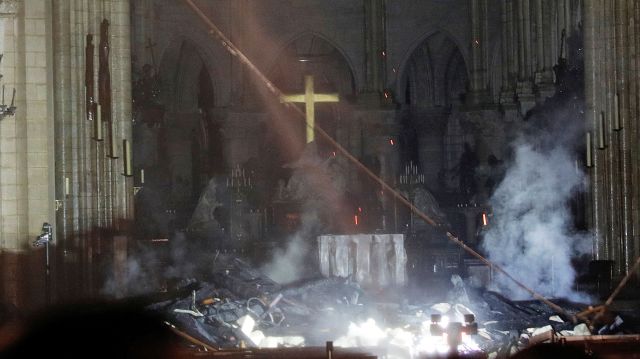
There is devastation and there is hope. We are sinners and we are saints. We give you permission, Risen Lord, to resurrect the right attitudes and relationships in us.
May all blessing and honour and glory and power be to Him who sits upon the throne. Amen.
Today’s beautifully arresting poem comes from the hand of our Celtic soul friend, Tadhg. Drink deeply friends.

It’s Eastertide, and for some it’s a long weekend holiday, a time to ‘recharge’ those ‘batteries’, to relax and enjoy the first blooms of Spring, as temperatures rise.
Here’s a poem, a prayer, a blessing just for you – because I care, and welcome you as you faithfully read my blog. And so, the following words are penned so that you and yours might enjoy this Spring season, this time of new life, hope and renewal
In the busy-ness of life,
may you find the quiet repose of the Source of All,
and be blessed.May the love of Life itself
fill your soul
with the energy of a thousand flowing streams.May the love of Mary, the archetypal Mother,
pervade every gentle activity
of yours today.May the Sun’s smile
reside in your heart, the hearth of your being
to seal you as one of His own.And, may…
View original post 15 more words
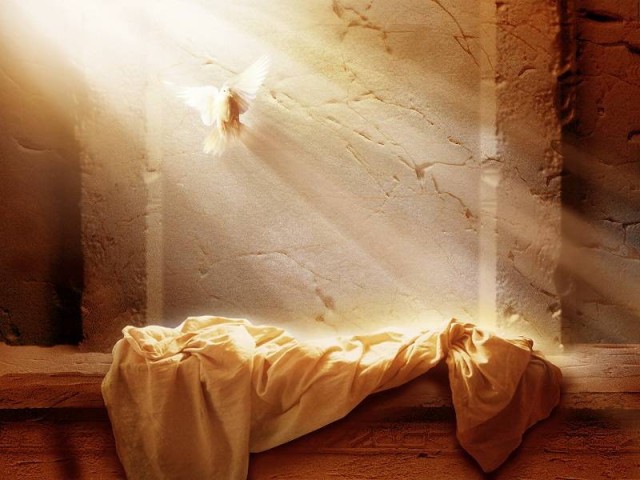 Today is, for many, a day without irony. It is a day one can see not just daylight through cracks in tomb doors, but can look back into what was their tomb from the satisfying light of a new dawn.
These patterns of light and dark, day and night, life and death happen so regularly that they’re almost not worth mentioning. Except, they are.
The ancients call it Paschal Mystery. A repeating pattern of living and dying and renewing that, through the eternal Christ, is everywhere present, everywhere accessible.
Faith is merely the God-given sight necessary to awaken to it. And Easter is the primal, archetypal key that opens that door.
Today is Easter. Resurrection. All that was dark, dead, hopeless, and not, is brought back into glorious harmony with God and the cosmos. Through Christ, today, we feel its warmth. Today, we know its hope.
Today is for all todays until all tomorrows are todays.
Alleluia and good morning.
_______________________
Picture found here
If we are made in God’s image and God sings, then we should be singing, too.
Ancient Wisdom for Modern Seekers
Spiritual Direction for Integrated Living
From liquid courage to Sober Courage
an anamcara exploring those close encounters of the liminal kind
Collaborating with the Muses to inspire, create, and illuminate
...in such kind ways...
"That I may publish with the voice of thanksgiving, and tell of all thy wondrous works." Psalm 26:7
Blog for poet and singer-songwriter Malcolm Guite
…in the thick of things
REFLECTIONS & REVIEWS
Seeking that which is life giving.
… hope is oxygen
Homepage of Seymour Jacklin: Writer - Narrator - Facilitator
If we are made in God’s image and God sings, then we should be singing, too.
Ancient Wisdom for Modern Seekers
Spiritual Direction for Integrated Living
From liquid courage to Sober Courage
an anamcara exploring those close encounters of the liminal kind
Collaborating with the Muses to inspire, create, and illuminate
...in such kind ways...
"That I may publish with the voice of thanksgiving, and tell of all thy wondrous works." Psalm 26:7
Blog for poet and singer-songwriter Malcolm Guite
…in the thick of things
REFLECTIONS & REVIEWS
Seeking that which is life giving.
… hope is oxygen
Homepage of Seymour Jacklin: Writer - Narrator - Facilitator


