Holy tidbit for Saturday. Live faithfully, and be brave, dear ones.
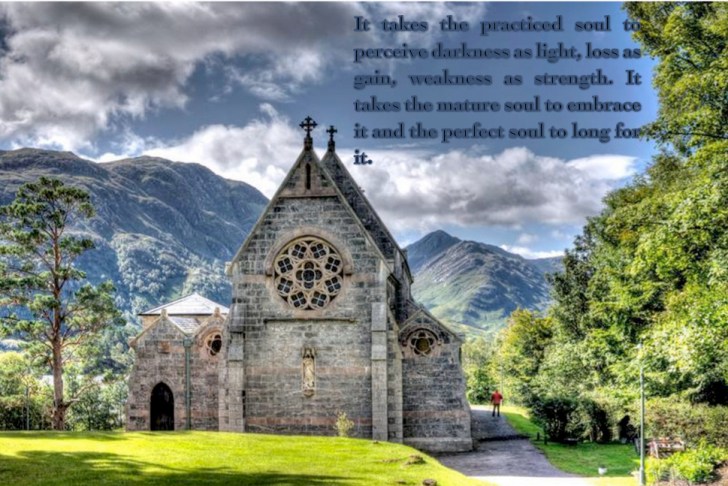

Holy tidbit for Saturday. Live faithfully, and be brave, dear ones.
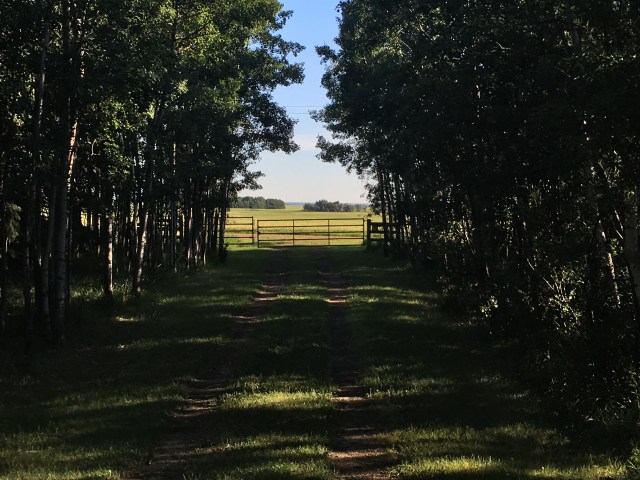
Recently, I was reintroduced to the wonder that is Alberta.
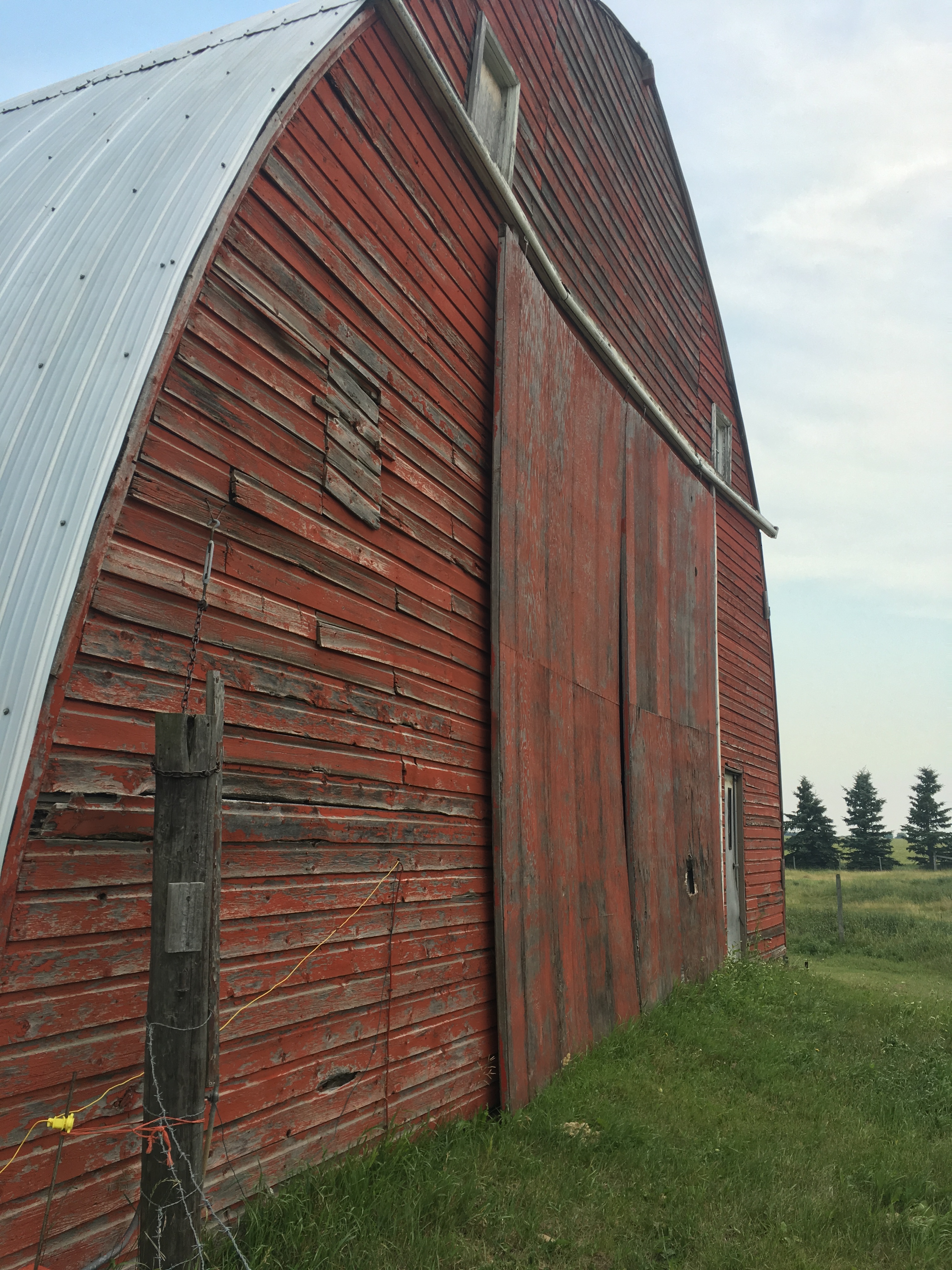
I spent some quality time with Mom and friends, albeit under rather sad circumstances, camped atop Alberta’s green waistline near Camrose. Life is slower here, although bearing the weight of a daily regimen of tasks that would shame a comfy city dweller like myself. Folks are simple, genuine; their politics bespeak as much. I need these types in my life to remind me of life before the city, before we traded green for grey, heart for hurry.
Calgary, that sprawling spray of suburbanism, welcomed me back into her bosom. It is the visual race-for-more set deceivingly in the beauty of rolling foothills climbing their way upward into the Rocky Mountains to the west. She eyed me closely however, untrusting of the broader perspective, gleaned from years of life elsewhere.
The bare shoulder that is Cochrane, held aloft against the Rocky Mountains to the west, provided some jogging (more slogging really) at nearly a mile above sea-level. It was backdrop to a spacious visit with my sister and her husband.
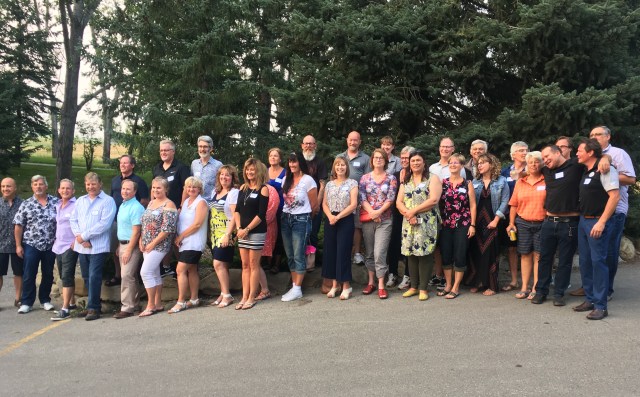
Okotoks. A once-proud cowboy town among the lemon-lime valleys south of Calgary, now Boho-wannabe with more yoga pants and boutiques than boots and hankies. She played host to the auspicious (suspicious?) occasion of my wife’s 35th High School Reunion. As much as an event aimed at aging 50-somethings could be described as ‘epic,’ I’m willing to give us the benefit of the doubt.
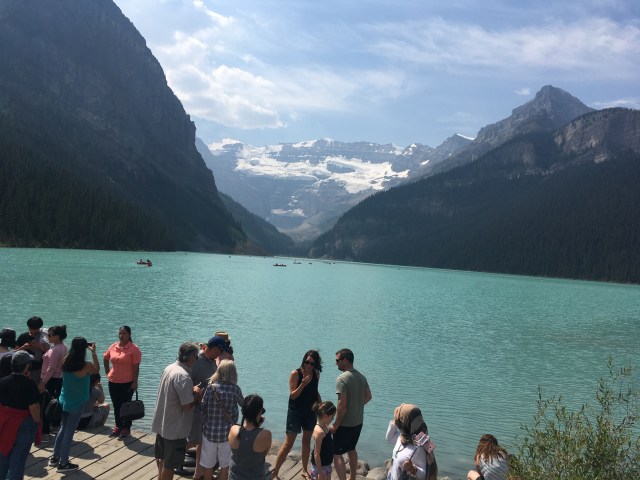
The unattainable majesty of Lake Louise, made impenetrable by the ant colony of one-eyed, phone-clicking tourists. Paradise through a view screen.

I’m surprised, even shocked, at my close and immediate affinity with the place. There is much more of me here than I ever suspected. My guts tighten a little whenever my senses get re-assaulted with the pungency of rape seed and peas. My eyes widen at the foothills, frolicking, green with spruce, poplar, birch and aspen, or the salutary pomposity of the Rocky Mountains. My ears still cringe a little at the old crone call of the magpie. My heart swells with memories clamouring for space.
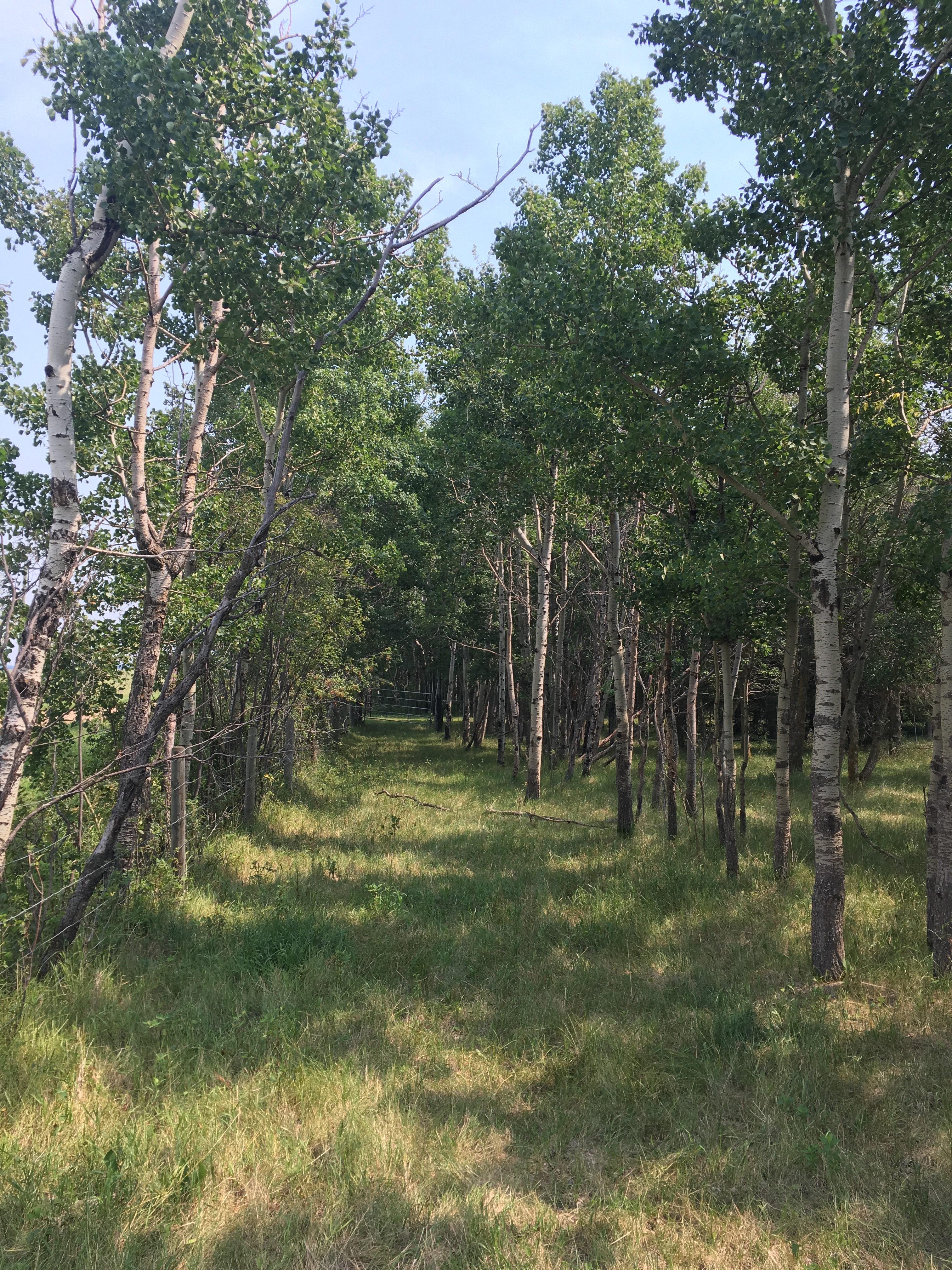
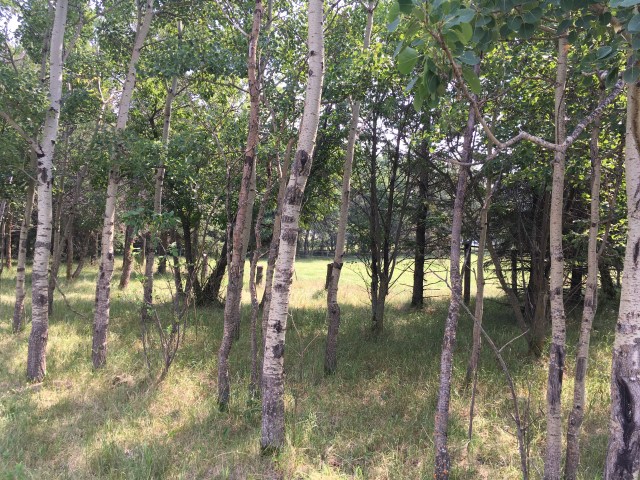 There is a regal order, a persistent danger to this place, in equal measure to its complete lack of pretention. It sits in your lap, comfortable and familiar, like an old farm dog. But, treat her with due respect or she’ll reveal her strength.
It’s easy to forget the relative wealth of the place. Alberta practically drowns in money, choking at times on oil vomited from her broad, black belly. It has made her insanely rich and her people a little myopic with respect to the rest of the world. The furious pace of new construction and the larger-than-life cars, hardly suggests the unforgivable economic downturn so bewailed by her inhabitants. But, lest I come across as ungrateful, that same controversial landscape made for an upbringing much of the world would crave. I am as thankful as I am uncomfortable. It’s an uneasy tension I live with to this day.
The folks here are as big-hearted as the landscape – expansive and verdant – looking for something to grow. But decades of oil and gas revenues have created a monster that lives below, quietly snoring, biding her time. Have the best steak and potatoes of your life one day – cigars, laughter, and foot-stomping music in tow – and all is well. Dance to the beat of the oil drum and they’ll give you their shirts and a layer of skin to boot (cowboy style, that is). But, reveal yourself, even casually, as someone uncomfortable with fossil-fuel damage, global warming, and the need for alternatives and you throw in your lot with the cattle headed to be your own supper. They are a strong and proud folk, duly protective of their fossil-fed way of life.
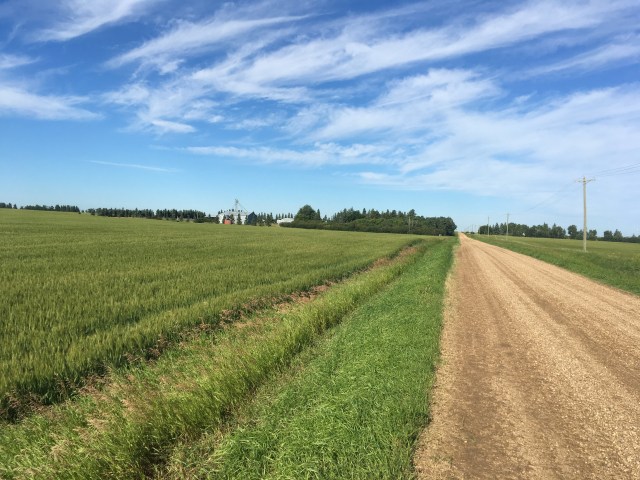
So, conversations stay safest where family starts. They wander in and out of the calf-pens holding the warm and grazing words of easy strangers who feel like friends. These are those whose unadorned view of the world around them makes them quick to laugh, quicker still to pray for rain. Their hopes are found tucked in saddle bags and blue jean pockets or Esso attachés, and slumbering in the subterranean black. Their hands, farmer’s tans, truck culture, and souls are of a piece; indistinguishable parts of a whole.
It’s me through a macro-lens. It may not meld perfectly with the bio-me, but it is the stuff of who I am nonetheless. Born and raised an Alberta boy, now with complicated Celtic-progressive overlay, I can’t deny it any more than run from it. Who I am today, even this very moment, is still the product of wheat and soil, mountains and laughter, horses and magpies, oil and prairie tornadoes.
And, it’s good.
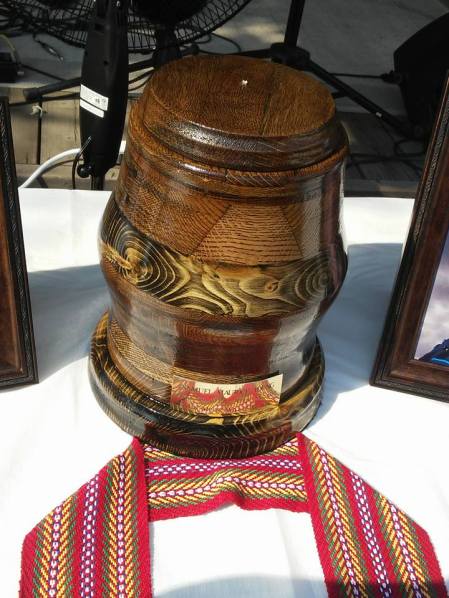
Saturday, July 29, 2017
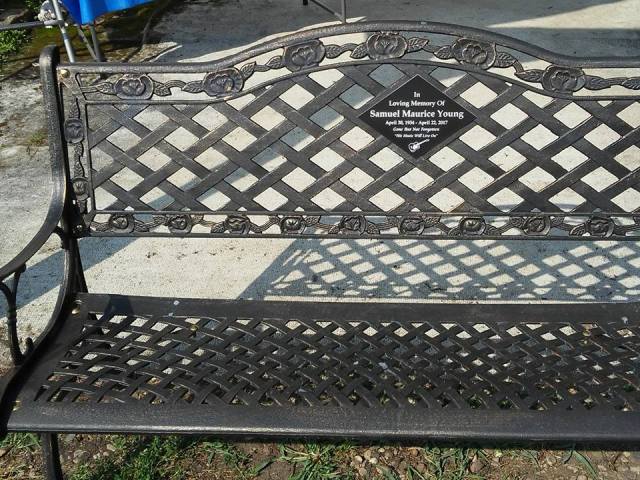
Today, we laid a good man to rest. And we did it just how papa Sam would have wanted – with belts ‘n boots, hats ‘n hoots, songs ‘n roots. Today, we celebrated him even as he celebrated us.
Friends (to Sam that was pretty much everyone), family (to whom he gave himself unreservedly), and lovers of music (Sam was a magnet to these types) all gathered in the heat and humidity of an Alberta-in-July afternoon to remember. Not just remember, but tell stories, maybe a joke or two, and sing songs – often at the same time.


I was honoured to act as host to an event rightly called “A Celebration of Life.” There are those who would be aghast at the idea of such revelry at an event generally reserved for more sombre fare. “Funerals are for closure,” they tell us. Unless we can see the cross and communion table, and sing In the Garden, it’s just not right.
“They’re welcome to it,” says Sam. “I prefer to have all my friends a-cross from the picnic table, communing together in God’s garden. For me, it’s just right.”
I acted as host, as I often do at these things. Beaming like high-beam headlights, Mom introduced us all as her family, as Moms do. This was to be a day for all of us, anyone even remotely related to Sam. It was an open door party. There were few expectations. Perhaps a love for tapping toes, sharing a humid afternoon with horseflies, and a belt with enough holes to allow for a belly full of pulled pork and potato salad.

Small price to pay for a heavenly hootenanny. And this affair was that, a gathering of fellow sojourners with happy hearts and hungry guts. This was Sam’s world, where the two always go together. And this celebration was designed to satisfy both.
To know this man was to celebrate in general. If Sam was in the vicinity, a gathering would soon follow. He attracted musicians like Alberta mosquitoes. Just more welcoming. It was best if you knew a song or two. Play an instrument? Not to worry, you were always welcome. If so, that much better.

All those gathered here in this place did both. Very well. And, their voices held the weight of grief borne of cheer-filled music and laughter. The Willows would be our home for the day – nestled in a little aspen grove carved out of the broad, Alberta landscape.


Sam Young. Papa Sam. He was a man of surprising talent, energy, industry, kindness, and complexity. Mom might have called it chaos. She’s gonna miss the bugger, as are we all.
This little man of a big heart kept her in the happies for over twenty years. In fact, I have observed a pre and post-Sam woman. The former was much more anxious, uncertain, ambivalent. The latter, engaged, hopeful, courageous, a risk-taker; a woman fully alive.

Sam never lived life from the periphery. The edges were much too flimsy, too safely suburban to support his wild west spirit.
No, Sam was a deep-sea diver, plunging off the bow head first, wrestling sharks and singing them songs all the way down. It’s likely why he never drowned. Life was his rodeo. Saddle up, cinch up, shut up, and giddy up. He sang songs to soothe the ornery beast that tossed him to and fro.
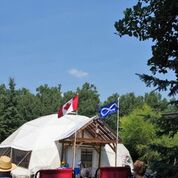

But, mostly, for Sam, life was a campfire – a gathering around a welcome heat and light for friend and stranger alike. He’d kickstart countless singalongs and jam sessions, enough to cheer us all and then some.
A single hour with Sam at the ranch promised at least two things: evidence of the trade in every corner of the house. It would be easy to step on musical instruments, strewn about from stem to stern. He was always boasting some new guitar, mandolin, banjo, or other.

But, the second thing one encountered at papa Sam’s was jovial conversation. Lots of it.
Lots and lots of it.
Get Sam going on a topic and he was a wind-up doll. Best to just let him run with it. Otherwise, you would only encourage another pull of the string and off he’d go again. Short visits were rare.
But they were good. Very good. At least a song or two found its way into every one of those visits. Or, perhaps some new insights on resetting a fiddle bridge, restringing a mandolin, or shimming a bone saddle. He had taught himself the luthier’s trade. I wish we’d spent more riding that horse together.
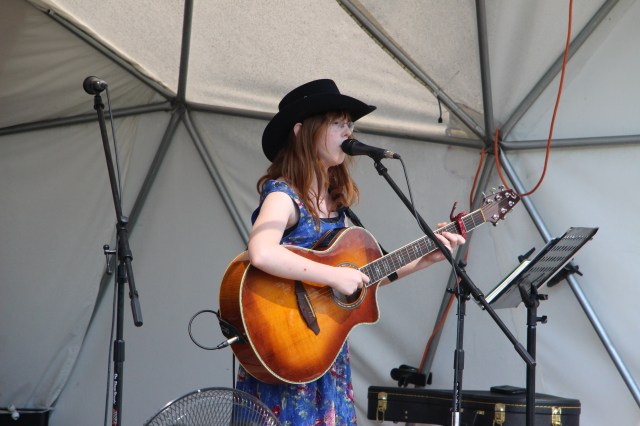
I generally consider myself to be reasonably conversant in the physics of stringed instruments. That is until any visit with Sam. Then, I discovered just how little I actually knew. Much of what I called know-how was often just a lot of pretentious bullshit.
But, regardless of poorly veiled lack of insight into the topic, the time spent was always worth the time spent. I value every moment and, whenever it is I go to join him, we can pick up where we left off. Besides, Jesus will need a break from Sam talking his ear off.


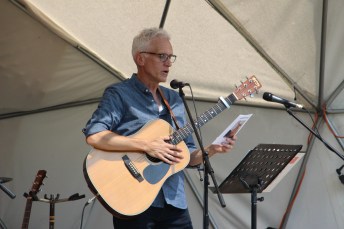
“Good, you’re finally here…can you take over for awhile?”
“Lord, isn’t patience a virtue?”
“Of course. But, the Baptists ran out of potato salad, the Pentecostals are squabbling over something, and I need to break up the Presbyterians – they’re starting another sub-committee.”
“No worries. I got this. We’ve got more songs to write anyway.”
“Thanks. While I’m gone, I’ll ask Pop where my fiddle is.”
“Perfect. When you find it, meet us back here, we’ll be singing ‘Back to the Mountain’ with Peter, Gabe and the boys at the campfire.”
“Just don’t encourage Barnabas. He thinks he’s being funny when he sings ‘Stairway to Heaven.’ Oh, by the way, Peter’s on probation. He’s been hitting on the female angels.”
“He won’t be a problem. I’ll just tell papa Sam that he loves stringed instruments. That’ll keep ‘im busy for awhile. But, hey, we’ve got nothin’ but time on our hands…”
My gut tells me he’s already broken up a squabble and tricked the Presbyterians into singing “Blue Eyes Cryin’ in the Rain.” If nothing else, with Sam pluckin’ and singin’, heaven won’t be stuffy, and eternity will seem like half an hour.
Have a listen to Back to the Mountain
Recently, I spent words lamenting my egregious fall from grace. It was egregious in the sense that I had all the tools at my disposal for such a thing not to happen. And it still did. Fall because I ended up face first in my own stink. Grace, not in the heavenly sense, but in the way a person views his or her personhood held up to the light.
In this instance, it didn’t look as shiny anymore. In fact, the worst part of any alcoholic’s misery is the glowing reality that self-respect has left the building. And when one lose’s self-respect they lose the ability to adequately respect others as well.
And so the question remains, what now? What steps lie ahead for this newly sober, recovering alcoholic?
The first part of that is the convergence of two things: my vacation and, more importantly, some of that vacation spent at my Mom’s. I’m here in part helping plan papa Sam, her husband’s, celebration of life service. Hence, I begin with words penned among the whispery poplar and birch that stand guard around their mini-ranch in central Alberta.


* * *
It would be easy to lose all track of time up here. Imagine a place so quiet that the ticking of the wall clock becomes almost intrusive. I can hear the blood race through my veins. Even the creaks of my aging bones become deafening in a place almost averse to sounds other than the rustling trees and the occasional lowing of happy cattle.
Such is life on a central Alberta ranch, or so it seems to a late middle-aged, suburban white guy on vacation. A guy could get used to this pace. Well, so says the man unaccustomed to the accompanying rigours and harshness of Canadian prairie life.
One’s vacation experience of a place is usually quite different from those doing the heavy lifting to help produce that experience. So, I suppose I should, more rightly, consider myself a prairie homestead consumer. A few days spent at Golden Spur Ranchetta being waited on hand and foot by my own mother. Home cooking, and the full package, magazine-ready, prairie experience. To be fair, I washed the dishes last night. That counts for something, right?
It would be perfection indeed if it wasn’t also the context in which I’m helping Mom lay her best friend to rest. It tends to bring some shadow to an otherwise sun-bright living room where I pen these words.
This is Mom’s place. It has her touch at every turn. Like stepping back in time, there are, everywhere, reminders of my own childhood. But this is also Sam’s place. A house that boasts numerous guitars, banjos, fiddles, mandolins, amps, gear, and tools of the luthier’s trade. He loved his old-time cowboy music and did the tradition proud with his devotion both to the music and the lifestyle it portrays.
Most of all, this is their place. Sam and Doris. Mom and “Papa Sam.” Here is a life woven lovingly together with strands of two in a single tapestry. It boasts the simplicity and industry expected of prairie home companions. A picture, painted not by Thomas Kincaid’s dishonesty or Norman Rockwell’s wishful thinking, but by two hardy souls better suited to the task.
Golden Spur is a paint by number where God does the math. Two souls plus one hope plus one God’s watchful presence, now one less.
One less. But somehow, none the less for it. Sam’s spirit lives on here. In Mom. In the legacy of his hard work.
In me.
The quiet hours spent here among the poplar and birch give me ample room to stretch my rumpled, but healing, soul. I am faced head on with the unwelcome task of returning to normal life with a lot of relational work to do.
Addicts of any kind are profoundly self-serving. We need to be in order to keep and nurture our dirty little secret. Maintaining addiction comes at a high price. Our lust for euphoria takes prisoners. There is a desperation afoot that causes us to do things we otherwise wouldn’t do. We hurt those closest to us in ways we can’t imagine, and usually can’t even remember.
Certainly for me, I become a man I do not know. Someone I do not like. I’m forced to live in a dark corner of my head that lacks judgement, wisdom, compassion, or boundaries. I latch onto whomever happens to be in the way and, like a rottweiler on a kitten, drag them under the water with me. It forces everyone into codependency, slaves with me to a burden not theirs to bear.
Then, morning after regret. The addict looks back over a smouldering wreckage with their name on it. Reputations, relationships, respect, sometimes even families, all lie in ruins – taken captive by someone blissfully unaware of the carnage that ensues through his inebriated wizardry.
Now, before this begins to sound like little more than addiction to self-pity, let me put on the brakes and reveal what is emerging in me. And, this time spent at Mom’s provides perfect respite for doing just that. In this gift of silence I have seen that the truest me, despite having lost its lustre, remains unblemished. Kicked around and battered a little, but largely intact.
For reasons known only to my Higher Power I have been continually surrounded by those who love me. They’ve stayed, even through my worst days. Few truths are more life-changing than to awake from addiction and see, through the smoke and chaos, the faces most precious, best known, eyes cast down and hurt, but still present.
Their faithfulness lends new life to one whose heavy lifting now is a daily return to sobriety with tools ready to rebuild wherever possible. Earning trust and respect, even if from scratch. So be it.
Mom, I wish I could be here under circumstances different than these. Nevertheless, I take these days, each and every one, as pure gift. In them I reconsider a life. My life. My one and only life. This great, albeit fragile, life in which I live, move, and have my being.
So, what now?
I lift up my head, newly clear and seeing far, and say in a loud voice: “Hi, I’m Rob, and I’m an alcoholic.” Better still, I’m a man beloved and embraced.
What could possibly be better?
This time last year, my wife and I were photo-whoring and shaking fairy dust out of our heads. We had just returned from a head-spinning trip to the UK, and readjusting to life squeezed uncomfortably into North American shoes. That, and relearning to drive. Five weeks in the UK had given us sore, flat feet from miles of trudging London’s pavement skeleton. It meant over-worked iPhones bulging with pictures, heads full of Skye and oddly named places like Tu-Hwnt-I’r Bont, Llanthony, and Beddgelert, many pages of writing, and the faces of loved ones.
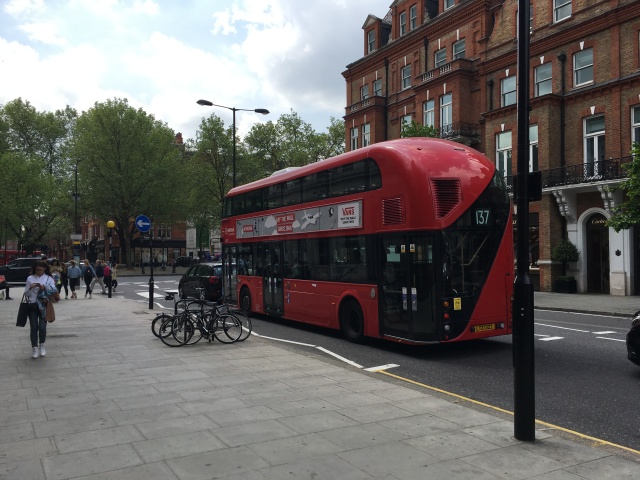
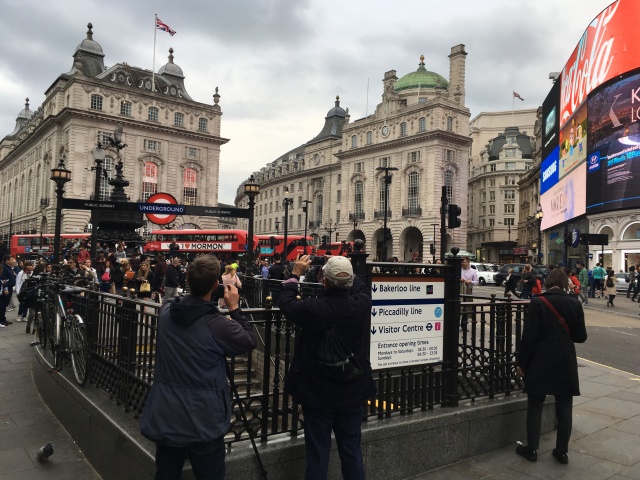
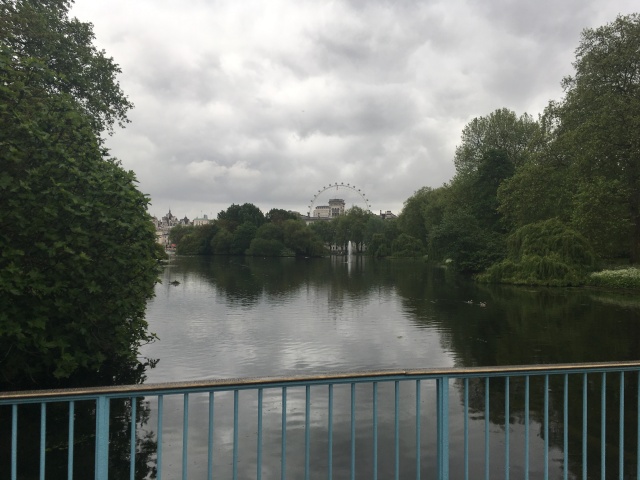
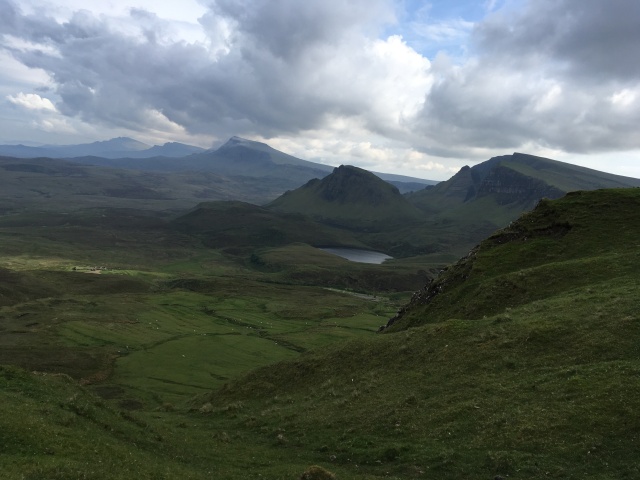
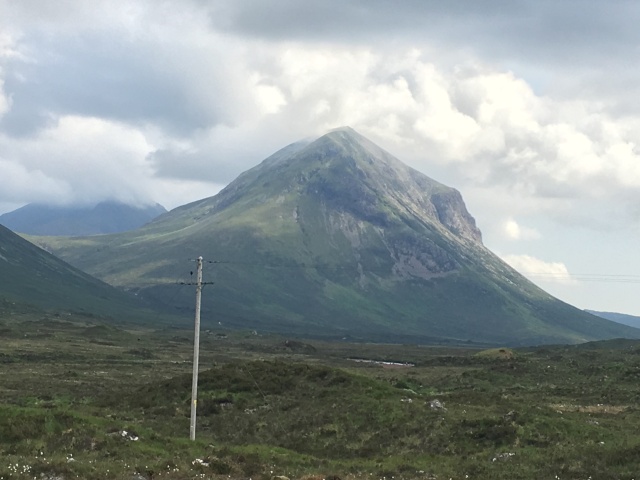
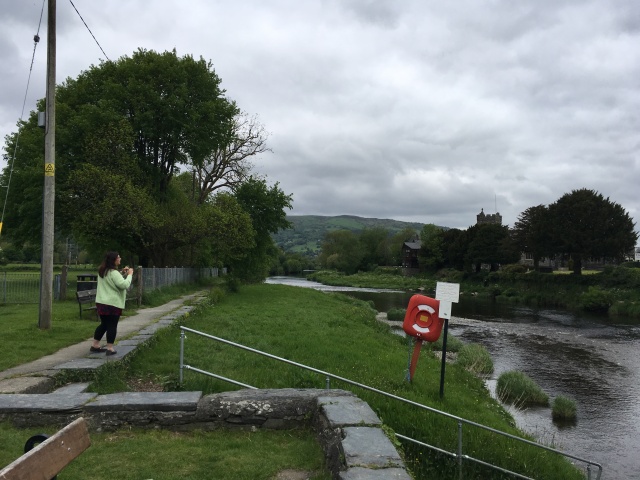
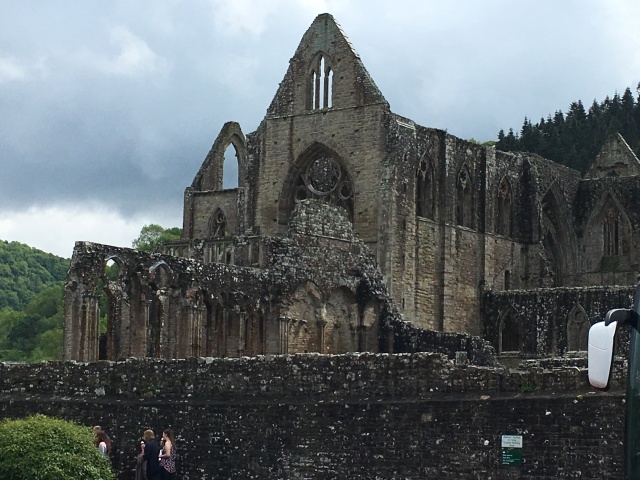
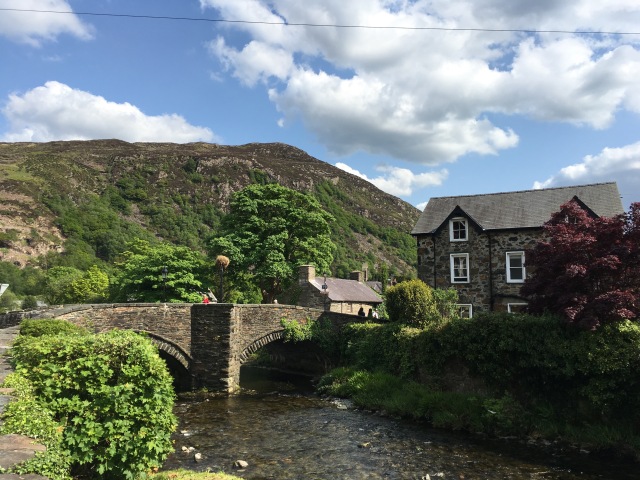
Our hearts pulsated wildly, aglow in fresh memories.
One is surely blessed to be found by adventures of this kind even once in a lifetime. This was our fourth trip, but arguably our best. Like the others, this hop across the pond had under it a built-in rationale to guide it. For Rae, it was largely book research – this bridge, that pub, this street corner, that tube station. For me, I was in search of something. I like to think it was maturity, but one can only expect so much in five weeks.
I had some vague notion that a trip of this kind was what I needed for my ongoing pursuit of an even more vague notion – home. No small feat for anyone, let alone one as prone as I to internal homelessness. My extensive writing on the subject had produced a better understanding, but few certainties. Frankly, it just whetted my appetite to learn more. Besides, it’s a high-sounding reason to spend thousands of dollars traipsing around Britain. Rather noble, don’t you think?
For now, at least, such interior matters can wait for another time. A much more ominous discovery needs some attention. With that primer, I’ll just put it out there.
After fourteen years of sobriety, Britain and I sat down for a drink, or ten.
Well before our trip, a wispy, but persistent voice, had begun planting a series of tempting ideas in my head:
“Rife, you’re not an alcoholic, you simply lack self-control.”
“It’s been fourteen years, that was then. This is now.”
“Dude, relax, you’re on holiday. Splurge a little.”
I’m generally a good guy (unless people tell me that just to get me off their lawn). But, annoyingly, a complex maze of dark veins courses through the ore of my otherwise rich life. I smile, knowing full well something isn’t quite right.
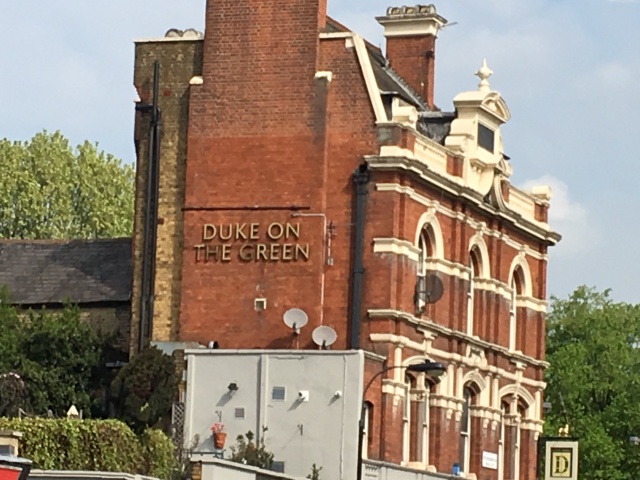
To be in Britain is to be awash in street-lit, woody pubs, full of friendly chatter, darts, and tumblers of frothy beer otherwise known as pints. Scotland boasts famous distilleries on every bank and brae, in which is made the amber dew that bears her name. It is woven into the very cultural DNA of the places I love most.
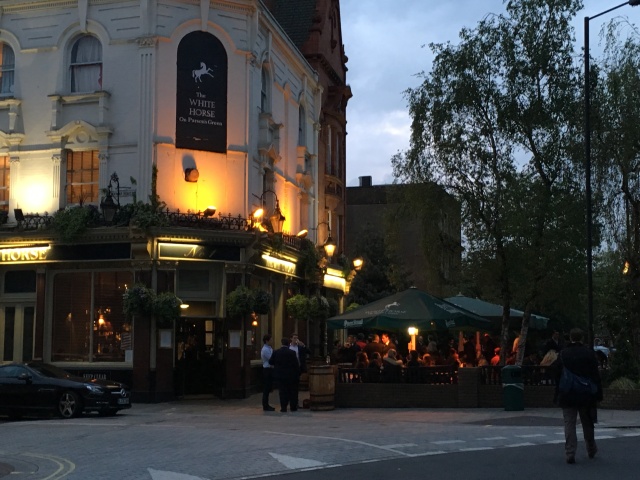
It proved too much of a temptation. And I dove back in, head first, into a world that knew me well and had, apparently, been watching and waiting for my return.
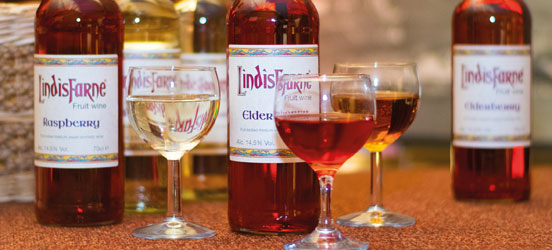
It was simple enough at first. A gift shop on Lindisfarne sold various types of mulled wine, or mead. They handed out samples of the stuff like cocktail weenies at Costco. I would not discover until later how sharp its teeth would be as it slunk like a sweaty pole-dancer down my lusty throat. “See how I love you?” it said. “See how you’ve missed this?” it said. “See how you’ve grown?” it goaded, like the serpent from the tree.
For an alcoholic, to say yes to the booze gods, is to remove one’s clothing of pride, oil up the pole of self-respect, climb on, and plummet to the bottom of the pit known as despair. Most insidious of all is that we won’t see any of it this way.
“No, it’s all good”, we tell ourselves.
“I’ve got this,” we say.
“I’m not ‘one of those’ drinkers,” we boast.
“I just need to be discerning and exercise self-control,” we convince ourselves.
And, the whole time, our pants are at our ankles and a noose tightly around our necks. Even as we speak the words, we choke them out, while losing all remaining respectability.
The days following our return were met with rapidly deteriorating self-control. Almost like magic, beer left the fridge faster than I could replenish it. I bought bottles of wine in twos and threes for ‘us’ to enjoy. How thoughtful of me. I began drinking before, during, and after routine tasks convinced that it was merely heightening my pleasure, or calming my nerves, or congratulating me on a work day finished.
I began losing any sense of appropriateness, propriety, reason, even common sense. I had jumped into a vat of snakes and looked up, smiling, as they coiled around me.
* * *
Now, after much heartache, a shit load of counselling, a brief sojourn with friends, a lot of books, and a good support network, I am sober once more. And, in that sobriety, I gaze back into the past year and ache at the smouldering wreckage I’ve left behind. A wake of carnage, stupidity, and shame lays in heaps, along with my self-respect. And I begin again the arduous journey back to sanity; back to the reality of life without the crutches of inebriation and forgetfulness.
Despite my fallacious foray into the forest of dumb-fuckery, the shimmer of this journey has stayed with us, even if our feet feel a bit more planted on familiar, and yet somehow foreign, soil. Home is where the heart is say the poets. Home is where the mortgage is say the realists.
Home is your heart say the mystics.
And that home for me must be a sober one. It is deceptively easy looking up at the sky for answers when the ground is quicksand. My attention has harpooned itself too quickly in less than helpful directions. What I think my heart wants is rarely what it needs. And, I guess, my heart has been my quest all along.
This receding shoreline of self-awareness can be wearisome at best, downright haunting at times. But, while we’re busy gawking at life through the viewfinder, the truly panoramic views are found in the small, easy to miss things. In the dull, routine things. The faces of friends. The laughter at one’s own shitty jokes. How watering roses in my garden can’t keep up with the raw heat of a Yakima summer. Or, just staying sober because you love all of it.
Now, I’m challenged to add my wilderness wandering to my expanding story and pray that it helps buttress my inner fortress. That it makes me wiser, a better man, a truer friend, a more attentive lover, a more insightful guide to others in similar peril. All this and more makes for the skeleton of a life. We get to place the meat on the bones with every smile given, every embrace, every mistake or triumph, every tear released to its rightful owners.
It’s all of a piece. And, some of the time, all of a peace.

French writer and poet, Antoine de Saint-Exupéry, said: ““If you want to build a ship, don’t drum up people to collect wood and assign them tasks…rather, teach them to long for the endless immensity of the sea.”
Anna is on her death bed. She has battled Alzheimer’s disease for almost 10 years. She hasn’t recognized her family for quite some time and this reality has left her terrified, confused. She is often angry. She believes a host of people are trying to trick her. Every unknown day arises again the next with all the same complexity and uncertainty. As her caregiver assists her in preparing for sleep, she hears Anna sing just outside her door: “then sings my soul, my Savior God to thee, how great thou art, how great thou art…”
She has forgotten every sermon she ever heard.
Every bible verse she ever memorized.
Every note she ever took in every bible study.
Every family member’s name.
But she remembers all the verses, word for word, of this great hymn. Why?
A young man in his late twenties battles with a choice. In his circle of friends, he has made the acquaintance of several lovely young women. He dates regularly. These women are delightful, intelligent, captivating. He looks forward to a time when home and family give him better reason to traipse to and from a busy downtown office day after day. A better life picture.
Erin is a Princeton post-doc student. Her dirty blond hair, cheerful demeanour, razor-sharp mind, and engaging repartée have been his regular experience of her. He’s reminded regularly by family and friends just how perfect she is for him. All the “pieces” fit together in a game too big to lose.
Brynne is girl-next-door pretty. Slightly chunky, but still shapely, and full of energy with a quick wit and uproarious sense of humour. Although not as book smart, she is equally intelligent. She is loud, often abrasive but never mean-spirited. She is funny, usually in embarrassingly public ways; opinionated, inadvertently pitting people against one another. She is clumsy and goofy and forgetful and messy and dangerous to his professional reputation.
And he can’t stop thinking about her.
What is happening here? All the facts line up in such a way as to present Erin as the obvious choice for a long-term relationship. Everything “fits.” She fills well the checklist on any relationship course he’s ever taken. Against his better judgment and flying in the face of the facts, Brynne rises to his mind continually. Something about her haunts him, chases him, wants him.
In our current church culture, we usually pose as the primary question of Christian discipleship “what do you believe?” And, pursuant to that question is the presupposition that you need all the facts before you can make an informed decision. I’d like to suggest however that an even more fundamental question is “what do you want?”
James K. A. Smith in his book “You Are What You Love: The Spiritual Power of Habit” suggests that we are what we want. “Our wants and longings and desires are at the core of our identity, the wellspring from which our actions and behavior flow. Our wants reverberate from our heart, the epicenter of the human person…”
What we often generate in our churches is a fill-in-the-blanks doctrinal checklist that amounts to a legal transaction. It is more Descartian: “I think, therefore I am,” than biblical.
Our young man in question will of course do well to know his own heart to navigate whatever his future relationships hold. But in his inexplicable desire for Brynne over Erin, despite appearances to the contrary, we find a key to how God seeks to relate to us.
“Discipleship [then] is more a matter of hungering and thirsting than of knowing and believing.” Even the demons believe and shudder. Knowing facts is easy. Retooling the human heart and its longings is not. But, it is our truest path. That is my call: to work in the Spirit’s process of forming a kingdom people by means of the gathered community in worship.
St. Augustine is quoted as saying, “Love God and do whatever you please: for the soul trained in love to God will do nothing to offend the One who is Beloved.” Our discipleship is less about information than it is transformation.
We don’t instruct people deeper into kingdom life. We inspire them. The heart knows what it loves and that is what forms the foundation of our actions and our habits. Our journey is one of inspiring and shaping our heart’s deepest desires, bending them ever more toward Christ and his kingdom.
Our journey is to discover the beauty and holy peril, oddly comforting, of being adrift with God on the vastness of life’s open sea.
Lord, Saint Augustine once said we’re created by God and our hearts are restless until they find their rest in you. Sometimes the way to you can seem cloudy, or grown over with thistles and weeds. We thank you for our longings. We love because you first loved us. You’ve built it into our DNA. Help us not to be afraid of what most deeply moves us, even if that isn’t lofty or what we typically think of as holy. Instead, grab hold of our hearts and shape them, Lord. Form in us a new and undeniable passion for life with God and others. And that, Lord, will be our truest joy. Amen.
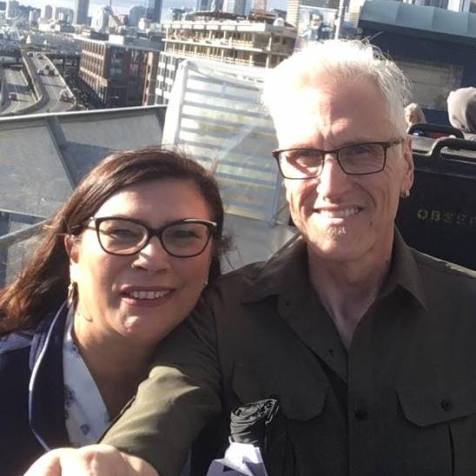
A hotel bathroom mirror struggles to squeeze in both of us – primping, priming, prepping. The struggle ensues to strike the balance between post-modern cool and age appropriateness (whatever the hell that means). Final touches, a stupid-slow elevator, and an underground tram ride find us deep in the heart of Washington State’s coolest city. Her oceanside tongue beckons us deeper down her salty throat.
In a quirky irony, a street preacher screeches through a megaphone, “REPENT AND BE SAVED FROM THE COMING WRATH.” Frankly, he seems mad enough for all of us. He shouts himself hoarse, pointing us to some tiny, angry “god” – while we wait to hear from a different God – In the name of love.
We are perched high above a stage that renders everything on it no bigger than our thumbs. From this height, everything seems atomic. Only the stadium is large. There is a palpable expectancy in the aether. Other grey hairs like me mix with kids much younger than our own – a testament to artistic legacy.
The stage is dark except for a few peripheral lights. What seems like hours for an event we’ve waited a lifetime to experience dispels in smoke as a tiny figure makes an appearance. He walks slowly, deliberately and sits at his drum kit. The crowd numbering in the gazillions boils over the brim in collective excitement. A kick drum and snare shots with military precision thunder in the dark. It is one of the most recognizable riffs of a generation. Sunday, Bloody Sunday. I weep in gratitude…
This day is ours, it is our Sunday, blessed Sunday.
May 14, 2017.
The wife of my youth.
Twenty-nine years married.
Seattle.
U2.
It is a small handful of events or experiences that earn the well-used primer: “I remember where I was when…” I remember where I was when the Berlin Wall became a gate, the Soviet Union became just a bad dream, when the U.S. dumped “shock and awe” on Iraq. When twin towers of glass and steel crumpled like paper on 9/11.
And I remember the first time I heard the mythic cries of Bono. Raw and pleading. He preached heaven and justice to the world’s hell and woe.
I would never be the same.
Every person can point to at least one thing, one person, book, place, experience that has so deeply touched them they’d not be the same person were it not for that thing. To describe, we use words like impactful, influential, unforgettable, foundational, formative. We say, “I am the person I am today, because of….” Our hearts brim at every remembrance. Conversations always veer in that direction. We return to it again and again rebooting it in our emotional hard-drives.
As a musician and writer, my influences bleed, albeit imperceptibly, onto every page or song I write. Words get strained through my inspirations: Gerard Manley Hopkins, John O’Donohue, Mary Oliver, Thomas Merton, Kathleen Norris – even as I sing in the shadows of Bruce Cockburn, The Chieftains, Dan Fogelberg, Stan Rogers, Paul Simon, and – you guessed it – U2.

Their musical impact is undeniable. Masters of melody, nuance, and the prophetic power of poetic art done well, I am pried open, exposed. Their un-theology is more impassioned activism than easy-to-swallow hallmark messages wrapped in bumper-sticker Christianity. I am the hungry canvas, they my nourishing paint.
Precious few cultural icons are so readily accessible as U2. But they represent much more than memorable music. Their message is not for the faint of heart. It yearns for the alternate reality of what is possible in a red letter arena; the dangerous stage of self-sacrificial love. They are wick to a candle burning brightly in praise of peace and justice, one that cannot blow out. They are cornerstone of a movement that pictures a world better than the one into which we were born.
This is not just the message of a generation played on guitars. This is a message for all time; ever new, always fresh, never-ending – Good News as it was always intended. My throat, tightened from tears, hoarse from singing anthems to peace, will only find rest when I find what I’m looking for. With my life partner beside me, the girl whose heart-strings are also touched by these same forces, I am closer than ever before.
Until then, I want to run in the name of love, in God’s country, where the streets have no name.

“One” meme courtesy of my wife.
Perhaps the most unwelcome passage through which all ships must pass is that of death. To be the impotent observer at the bedside of someone in the throes of death can seem the greatest of all insults. One must fight the battle between a desire to see wellness return with the growing awareness that such a return might not be either possible or in the person’s best interests. It is as poignant as it is horrifying.
“I’m afraid there’s nothing more we can do.” Lonelier words were never spoken.
I too have faced this burden of human experience with grandparents and my own father who died from complications to his cancer treatment. Most recently, on Saturday morning, April 22nd at 3:00am, my step-father drifted into eternity. The lasso keeping him tethered to the dusty ground released him into much bigger pasture. One without fences.
Papa Sam was a cowboy, Métis (may-tee)* to be exact. Born Samuel Maurice Young in the austere, rambling flatlands around Birch Hills, Saskatchewan he was quick to adapt to the rough and tumble ways of the Canadian prairies. The youngest of three boys with a younger sister, they were the bluegrass version of the von Trapps. His brother Stan on fiddle, another brother, Gordon, on banjo, together with Sam on guitar would join their Dad or uncle, both fiddle players, to fill the house on prairie nights with the music of the farm.
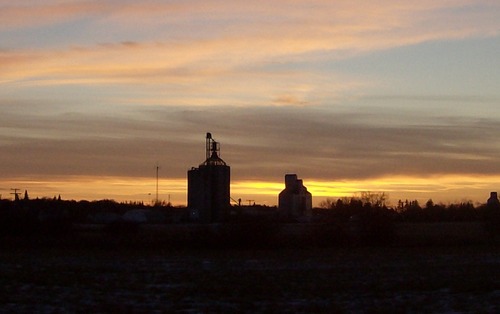
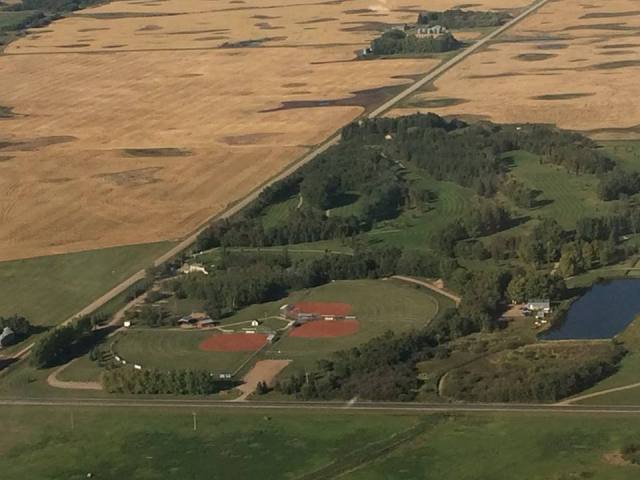
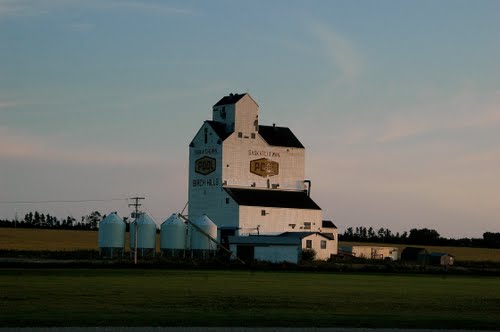
A young farm hand, Sam, at the green age of 10, played his first dance with his Dad, promptly returning his earnings of a quarter to the Red Cross. A similar largesse would follow him for his next 72+ years.
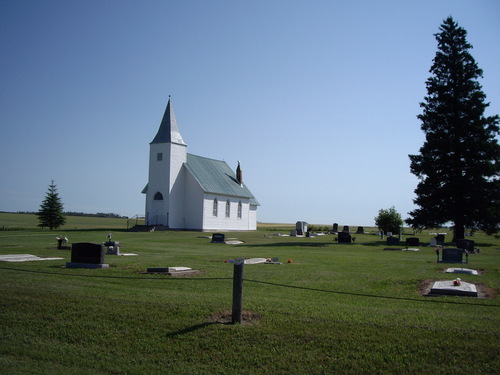

Sam was inseparable from the cowboy fare he loved. A cowboy action shooter for many years, he collected guns and formed an indissoluble connection to the frontier life of the wild West. Old-time country dance music, played the old-time way on old-time instruments characterized the spirit of this small, big-hearted man. Numerous dance bands, including his own, The Calgary Playboys (fitting, given his rep as a ladies’ man), made the rounds in the Calgary scene for over 30 years. It would provide the context in which he would first meet Doris, his beloved wife – my mother.
Her life had not exactly been characterized by rose petals and wine. She lost her husband, my father, in September of 1985 when he was merely 55 years old; her senior of 13 years.
Mom was a widow at 42.
She played the role of dutiful wife and mother well, shuttling us hither, thither, and yon with tireless dedication and far too little gratitude. She shouldered the biting loneliness of a stolid, unflinchingly reserved man in my dad while acting as umpire to our numerous family squabbles, many of which revolved around my own self-centered peccadillos.
Dad’s passing kicked her feet out from under her. Even for one as strong and independent as she, the shock of being alone in the world was overwhelming. Nights full of angry tears eventually settled into steely resolution to reintegrate and reenergize by doing what she loved best, serving.
Much of the time, that meant some part to play in the Royal Canadian Legion, an organization to which our entire family had been attached for many years. One such role was in working as president of the senior’s dances at Ogden Legion in southeast Calgary. She helped plan the weekly dances and hired the bands for these events. Sam’s band was one of those.
It was 1997.
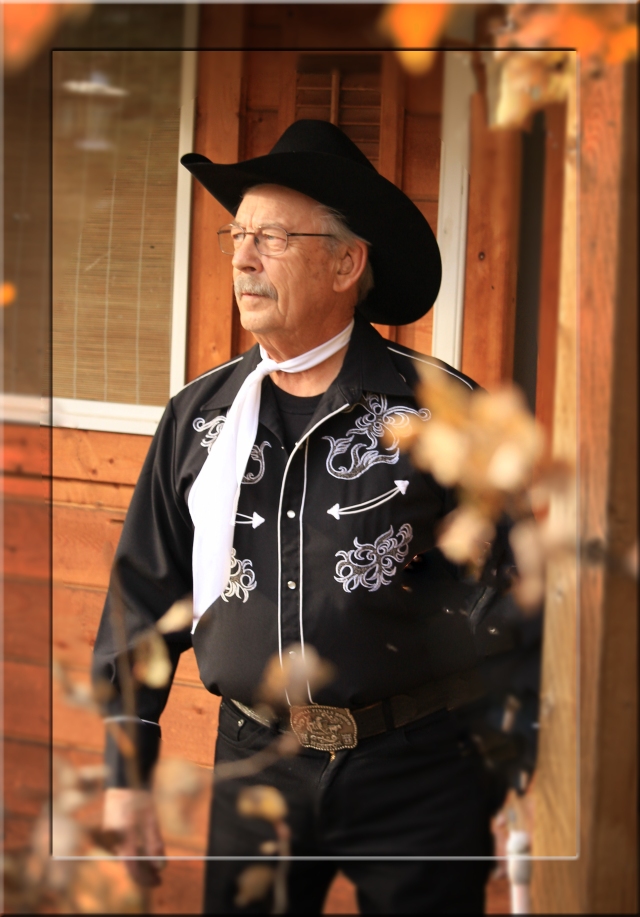
A major surgery pulled Mom out of commission for a while. Sam was quick to notice her absence and asked about her regularly. He’d call her just to talk and to check on her well-being. Upon her return to the Legion, she was the lucky recipient of a big hug and rather public kiss. His charm, cowboy swagger, and crooning country voice ultimately proved too much to resist and Mom and Sam moved in together.
For the next 3 years, they lived happily side by side in my childhood home in Calgary. But the draw to the country proved too urgent to ignore. In October 2000, they sold the house and moved into their idyllic new digs near the hamlet of Kelsey, Alberta. Golden Spur Ranchetta, as they named it, became their new home and, together, they made the dream of Canadian frontier life their reality.
Long days spent clearing land, pulling out wayward trees, retooling outbuildings, dealing with renters in an adjoining house, nurturing horses, cattle, cats, and dogs, was their daily lot. It fit them like a hand in a glove. I had never seen my mother so alive, so full of vigorous determination, so…happy.
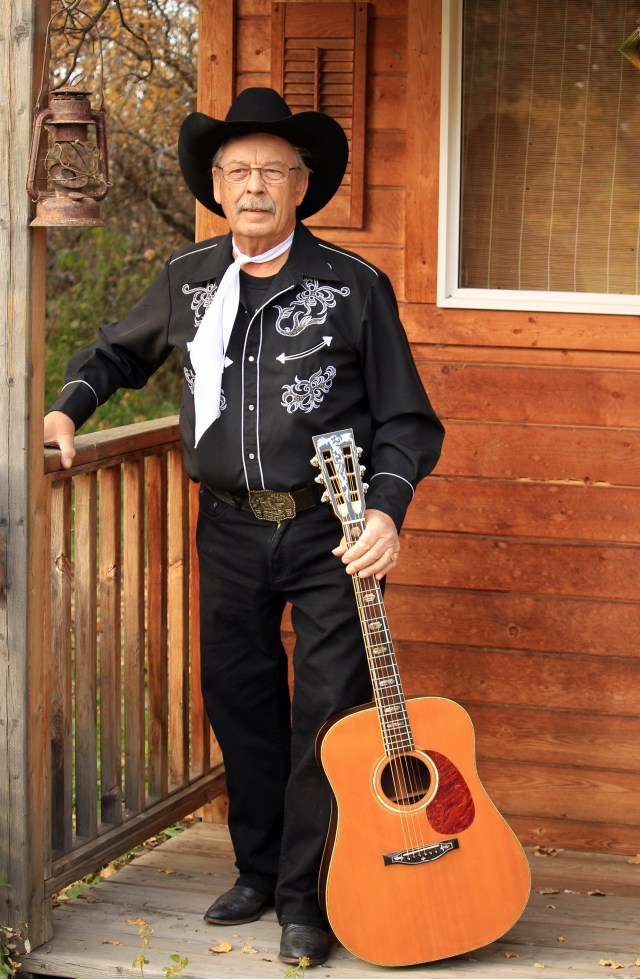
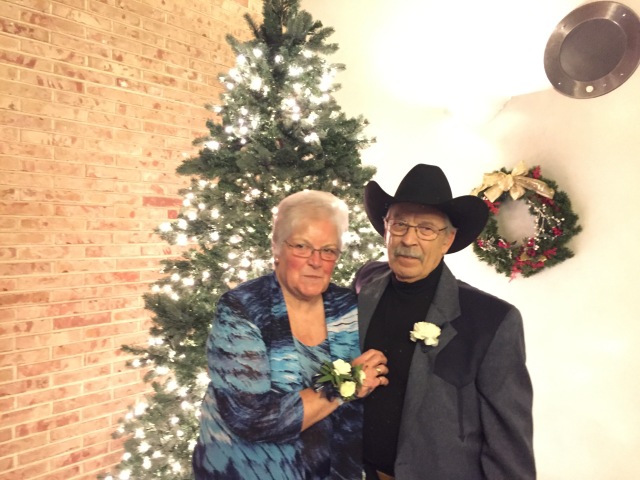
In October 2005, they were returning from Calgary, along Highway 21. Sam turned to her, saying rather baldly, “I think we should. I think it’s time.” In as matter of fact and unpretentious a manner as one can expect from a Canadian prairie cowboy, he had just asked my mother to marry him. This they did in a small ceremony held in Forestburg, Alberta on New Year’s Eve, 2005. For the first time since she had become a Rife over 40 years earlier, my mother had a different name.
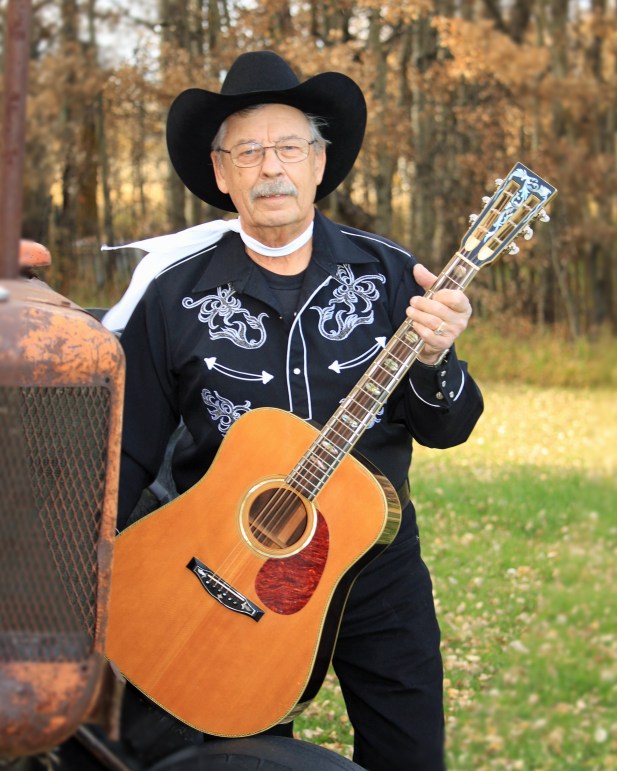 Together, Mom and Sam weathered well the uncertainties of ranch life in an often-harsh central Alberta landscape. They made many new friends, most of them musicians of one kind or another. Like a loose belt, their lives spread out amid country music jams, reenactment wild West gun shootouts, mosquito-laden summers, and fireside nights under the vast Alberta stars. I watched my mom transform from an anxiety-laden, late-middle-age housewife into a buoyant, self-confident woman. It was delightfully disconcerting.
Ten years later, in December 2015, I was blessed to offer a renewal of vows service at Yakima Covenant Church. I had never done such a thing before and was proud that this event, of all things, was my first.
In May of last year, a combination of doctor’s visits, followed by unwelcome phone calls sharing even less welcome news became their lot. The ‘C’ word had taken root as infidel in Sam’s lungs. It would ultimately have the last word.
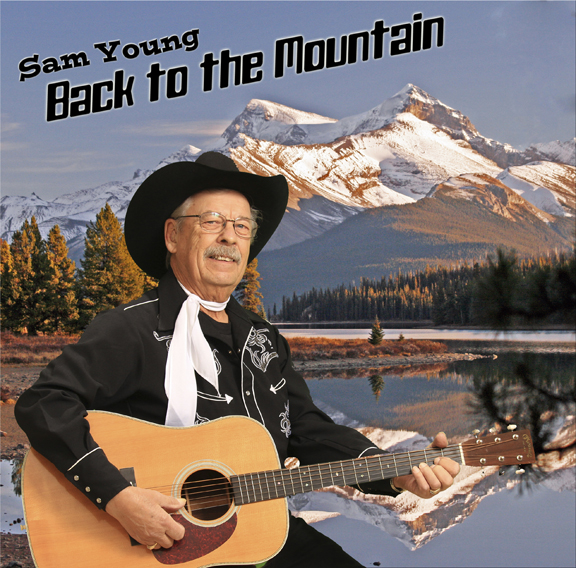
But the final notes were always his to sing. He lives on in memory and song. His CD, Back to the Mountain, released when he was 80, reminds us that music never grows old. It pulls us along our dusty trails on wooden wheels of hope. It is a small part of a big legacy, served up fresh, and ever new.
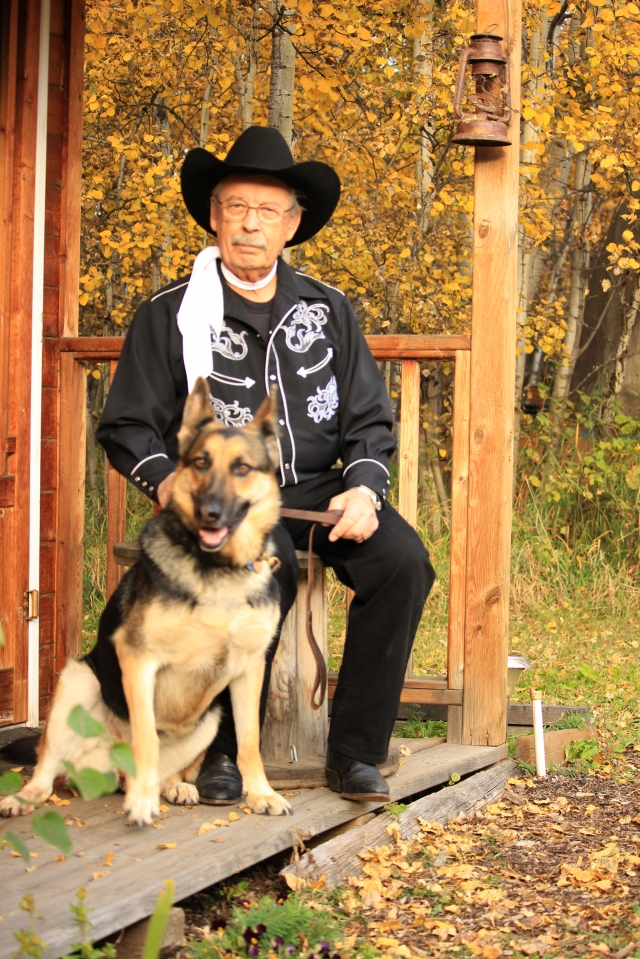
Now, Papa Sam sings harmony with his ancestors, leaning up against heaven’s gate – rough-sawn, split pine, and barbed wire in his case – playing his favourite guitar. The Great Spirit (Jesus to me) sits nearby in plaid shirt, jeans and a ball cap, playing spoons and a washboard. A gentle country waltz fills the perfect air, and bristles with the high-stepping joy of heaven’s jamboree.
Farewell, cowboy. Farewell.
___________________
*Métis originally referred to Francophone and Cree-speaking descendants of the French-Catholic Red River Métis in Manitoba. They are one of three recognized aboriginal peoples of Canada, descendants of marriages of Cree, Ojibwa, Saulteaux, and Menominee aboriginal people with French-Canadians, Scots, and English settlers.
This is a recording of Sam’s title track, Back to the Mountain, a song I was blessed to co-author.
The more I read the Gospels, the more I am convinced that we would be the first to condemn Jesus and pin him to a cross all over again. That, in spite of two thousand years of knowledge, and canon, and religious conversations, and catacombs, and persecutions, and the dawn of “Christ-ianity.”
To read the Gospels honestly is to place oneself in dangerous places indeed. It is the readiness to identify as a sheep or a goat; as a disciple or a Pharisee or a religious teacher or a widow or wheat or weeds. We have so objectified the good news into our neat, neo-Platonic categories that we’ve rendered ourselves incapable of being seekers; the very posture required by Jesus to see – God, others, even oneself.
If the Gospels tell us anything they tell us how easy it is to build an impenetrable club of pretense and walls of preconception around our faith. The Pharisees did it and Jesus was forever pissed off with them. The biggest challenge to conversion is the belief that one is already converted and without any further need. It becomes poisonous to the very humility that would otherwise find us deeper in grace and living more abundantly.
It is the great proclamation of the convinced.
Richard Rohr calls this what it is: idolatry. It is the worship and protection of the means to an end rather than the journey toward the beginning. He tells us, “religions should be understood as only the fingers that point to the moon, not the moon itself” (Everything Belongs, p. 51). He believes, and has built a career upon, the notion that all true spirituality is about seeing and letting go in order to see still more.
I have found that it is often to my benefit that I am both A.D.D. and a mystic. That way, when I begin to ramble (a common occurrence!) and someone tells me to “just get to the bottom line,” I can retort with the same refusal Jesus used in such instances. He cared little for such things and besides, it is the misguided idol of a success-driven culture built on information and accumulation rather than instruction and awareness.
I’m aware how much this frustrates my type A friends. For naysayers however, more often than not, they don’t ask again!
Says Rohr, “preoccupation with exchange value and market value tends to blind us almost totally to inherent value…Everything becomes priceless if it is sacred. And everything is sacred if the world is a temple” (Ibid, p. 56). To expect life to produce some kind of “bottom line” is the demand for Jesus to offer a sign. Like the Pharisees, we insist, “just get to the point” and do so in a way that impresses me, asks nothing of me, gives me answers rather than better questions, perpetuates my misguided presuppositions, assures me I’m in and you’re not, and never invites me to step out and journey. Moreover, it promises more darkness and blindness and no actual change. I will still see what and how I want complete with all my preexisting opinions and skepticism.
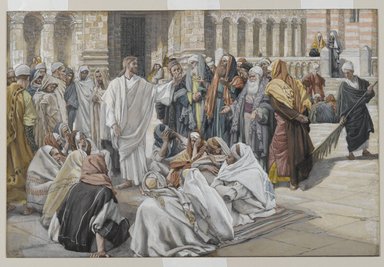
To see is the one great gift of all true spirituality. Jesus spent a lot of time healing blind people and a lot of time blinding self-proclaimed seers. When all we crave are answers, solutions, and the pragmatics of control, then it is we who stand in need of a raised voice from Jesus. We become the gatekeepers. We become those who, alone, claim to know the Way, the Truth, the Life. We are those possessing the Words of life but in restrictive, mechanical ways upheld in our own Sanhedrins.
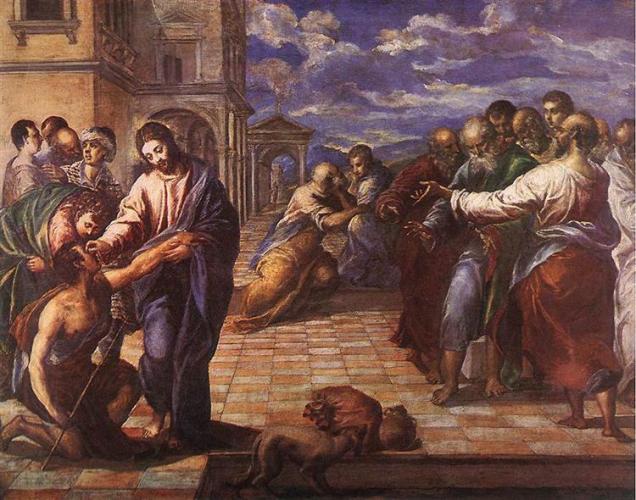
And that is what makes us the most ready to feel we need nothing more. We, the converted, stand most in need of conversion. Jesus spent a lot of time in an already protracted ministry window healing blindness. This I believe was no accident. He was particularly drawn to this because of it’s wonderfully metaphorical teaching platform. And I’m sure that someone healed of their blindness would be most deeply grateful; most readily loving.
To see therefore, is to love. And to love is the heart of the Gospel message. Until we love as Jesus loved, we may yet stand in need of conversion. To say otherwise reveals a spiritual smugness, a theological self-satisfaction bent more on winning arguments than whispering prayers.
These days, I rest secure in the knowledge that the same grace offered to the pimps, whores, and swindlers is offered to the converted and the righteous. Jesus spent more time arguing with one and partying with the other.
I hope I am always the latter.
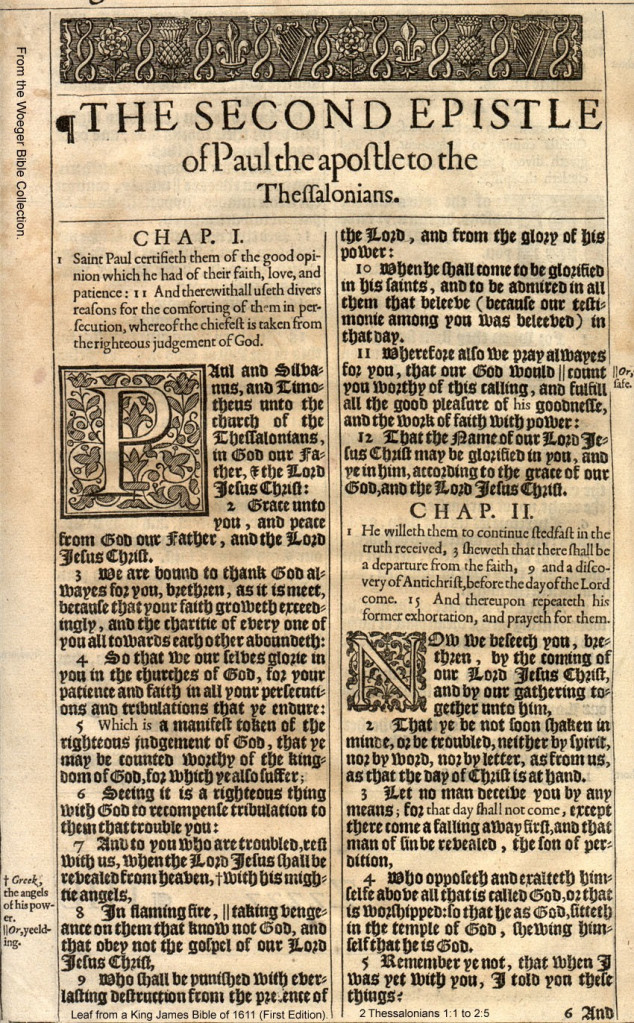
As I’ve shared elsewhere, I have a “star-crossed lovers” relationship with the written word. A young Capulet and Montague stare with longing at one another from across the room, and wonder what the next step is. We’ve always managed to work things out, but not without long and moody periods of dust and dearth. It’s always advisable, and spiritually healthy, to change up our routines from time to time if only to shake off the cobwebs of inactivity or apathy. But, my relationship with holy writ often stands in contradistinction to their typical handling.
Throughout all ages, the most common topic which has occupied singers, philosophers, poets, and people in general has been…love, of course. The sheer ubiquity of love songs, poetry, painting, sculpture, and pining readily attests to its centrality in our human experience. If you can easily describe your first kiss, the appearance of your first child, the terror of a dead spouse, or pride at the accomplishments of your spawn, you have yet to truly experience love.
Similarly, if you can easily and with absolute confidence ascribe hermeneutical perfection and interpretational clarity to a collection of writings such as the Bible, you are either deluded, or you’ve been reading something else. It is a library with which to contend because, in it, are found treasures worth the battle. The Covenant Community Bible Experience has, for me at least, drawn me to the scriptures in some new and alluring ways; ways that have helped reinvigorate my intention to let them find me and turn me up once more like clotted soil.
We lost as much at the Reformation as we gained. The bible as story is one of those. Against Luther’s best intentions, we ended up with a bible widely available (eventually) but indistinguishable from any other field of inquiry. Bible in the brain, rather than Christ in the soul. The forces set in motion even before the Reformation poured ideological gasoline over centuries of Christian reflection and practice.
To many in contemporary evangelicalism today the church started not at Pentecost, but at the Reformation. Hence, we are given the unfortunate impression that God was somehow completely lost and confused for fifteen hundred years. Suffice it to say, the corrections that needed to be made in the existing church occurred, but in ways impossible to foresee or worse, control. The scriptures came to be seen in ways even they would shudder to contemplate. As the freight train of reforms reached fever pace, it outstripped the ability of people to embed the scriptures into their own lives. Right belief trumped right behaviour. Theology and spirituality parted company.
The Reformed Tradition and, more recently, Evangelicalism, claim that sola scriptura saved the church from the ecclesiastical clutches of a vast hierarchical juggernaut which had all but replaced the bible with magisterium. This has some merit, but they further claim that, with the bible safely in the hands of all, knowledge derived from those same scriptures is readily available and plentiful.
I beg to differ.
The saints of the Medieval Ages and Renaissance knew more, not less, scripture than those who followed. Why? Because their entire lives, their holy-days, their ecclesiastical feasts, their communities, their families, and their places of gathering swam in the stories, prophecies, and songs of the Bible. It was not the absence of the Scriptures in the hands of the common folk that saw them suffer in the almost guaranteed poverty of subjugated peoples. It was that much of the poverty they experienced was because of a church in league with the halls of power.
Merely having the Scriptures in our possession does not guarantee their power in our day to day lives. At times, it may well be the opposite. There is a sense in which familiarity has bred contempt. Or at least apathy. We chose control over wonder, intellectual mastery over mystical formation, trading a holistic library of inspired writing for a flat, rational document for our ownership and dissection. As the church has become increasingly fractured, the possibility of common worship experiences built upon shared and regular experiences of listening and participation in those same Scriptures it so ardently defends has become challenging indeed.
Our buddy Jesus, complete with graphic t-shirt, sleeve tats, skinny jeans, and sideways ball cap points to a similarly cavalier handling of the book in which is enshrined his coming, character, teaching, and sacrifice. We need to recomplexify the Scriptures, not in order to obfuscate, but for the purpose of elevating them to the mystical, existential, literary heights in which it was conceived.
All that to say, I have warmed to the written word once again, largely because of this most recent biblical encounter undertaken by our congregation and denomination. And now that a reintroduction has taken place, we can stop peeking at one another across the Junior High school dance floor, shuffling and coughing. We can take steps across the room toward each other.
We may even dance.
If we are made in God’s image and God sings, then we should be singing, too.
Ancient Wisdom for Modern Seekers
Spiritual Direction for Integrated Living
From liquid courage to Sober Courage
an anamcara exploring those close encounters of the liminal kind
Collaborating with the Muses to inspire, create, and illuminate
...in such kind ways...
"That I may publish with the voice of thanksgiving, and tell of all thy wondrous works." Psalm 26:7
Blog for poet and singer-songwriter Malcolm Guite
…in the thick of things
REFLECTIONS & REVIEWS
Seeking that which is life giving.
… hope is oxygen
Homepage of Seymour Jacklin: Writer - Narrator - Facilitator
If we are made in God’s image and God sings, then we should be singing, too.
Ancient Wisdom for Modern Seekers
Spiritual Direction for Integrated Living
From liquid courage to Sober Courage
an anamcara exploring those close encounters of the liminal kind
Collaborating with the Muses to inspire, create, and illuminate
...in such kind ways...
"That I may publish with the voice of thanksgiving, and tell of all thy wondrous works." Psalm 26:7
Blog for poet and singer-songwriter Malcolm Guite
…in the thick of things
REFLECTIONS & REVIEWS
Seeking that which is life giving.
… hope is oxygen
Homepage of Seymour Jacklin: Writer - Narrator - Facilitator
 innerwoven