What follows is my sermon from Sunday, March 4th. And, of course, it reads more like a sermon than a blog post. But, you’re a forgiving crowd.
Mark 6:1-6 (NRSV)
He left that place and came to his home town, and his disciples followed him. On the sabbath he began to teach in the synagogue, and many who heard him were astounded. They said, ‘Where did this man get all this? What is this wisdom that has been given to him? What deeds of power are being done by his hands! Is not this the carpenter, the son of Mary and brother of James and Joses and Judas and Simon, and are not his sisters here with us?’ And they took offence at him. Then Jesus said to them, ‘Prophets are not without honour, except in their home town, and among their own kin, and in their own house.’ And he could do no deed of power there, except that he laid his hands on a few sick people and cured them. And he was amazed at their unbelief.
Where the other gospels begin backstage as a whisper and slowly crescendo, Mark’s gospel enters like a Quentin Tarantino movie: graphic, fast-paced with both barrels blazing. There’s a certain breathlessness to Mark’s gospel that heightens urgency. The pace holds our attention. It entertains as it teaches and is all about bold pronouncements, big miracles, immediate actions, and expected responses.
So, here are a few highlights, the prequel as it were, to Mark 6:
Jesus heals and forgives a guy let down from torn out ceiling tile.
Increasingly, teachers and scribes question Jesus’ character and ministry decisions, creating added tension.
He chooses the motley crew, otherwise known as the disciples.
He speaks of a house divided against itself followed by his own family trying to “shush” him by calling him away (he was likely becoming a little embarrassing).
He teaches about sowers and seeds and lamps and bushel baskets; grain and sickles, and mustard seeds.
He stills a storm with a couple words tossed out over the waves.
He sets free a crazed, demon-possessed man at the expense of some poor bugger’s herd of pigs who hurl themselves into the sea. You know, as pigs do.
He raises a synagogue leader’s daughter from the dead, all while indirectly healing a desperate woman’s lifelong hemorrhage.
And that’s only the first 5 chapters. The guy’s just getting warmed up.
But then he shows up in his home town. One would think that a particular type of reception would be forthcoming. What he receives instead is a collective, “who the hell does he think he is?!” And a bone-crushing flurry of amazing feats of heavenly daring-do come to a screeching halt on his own front door.
I’m sure we can all think of times when social gatherings didn’t work out in desirable ways. For example, high school reunions. They’re always fun.
Right?
After many years, we reassemble, all of us wondering whether we’ll be able to pick up where we left off. We all know the ropes. And, we have a shared language, a certain unspoken understanding of things.
Will Bobby still be a science geek?
Will Audra still be the quiet, awkward girl stigmatized for her weight?
Will Matt still be the annoyingly self-referential football star the girls loved and boys loved to hate?
Will Alistair still be the class clown?
Will Skye still be the hippy girl who was good at writing and photography?
Romy and Michelle break it down for us
Most importantly, how will I be perceived?
To some degree, how could anyone compete with the likes of Jesus? He’s one of their own, a meagre carpenter no less, claiming equality with God and performing the coolest party tricks ever to substantiate it.
I love stand-up comedy (I know, big surprise). Comedian, Brian Regan, highlights this socio-pathology. In short, party-talk one-upmanship. At every party, there’s at least one loud mouth, self-identified socialite sophisticate whose story is always so much better than anyone else’s.
How many of you have experienced this? Maybe it was you!?
This is mine, not Mr. Regan’s (the lesser quality should be a giveaway).
You: “I climbed Mt. Adams last year.”
Mr. Better-Than-You: “Aw, how sweet. That’s when I was in Africa, climbing Mt. Kilimanjaro.”
You: “Well, I finally did it. I finished my bachelor’s degree.”
Mr. Better-Than-You: “Hey, that’s great. I’m getting a publishing deal for my post-doctoral work.”
You: “After four years of frustration and fertility drugs, we’re finally pregnant!”
Mrs. Better-Than-You: “Congratulations! We decided not to have a fourth and are going to Cambodia to adopt. We may stay for a year or two and work among the poor.”
Regan continues setting up his punch line. While Mr. Big Man in the room is doubling down on his own greatness:
“Last quarter, I managed to bring our company out of its slump and produce the highest quarterly earnings in its history. My wife’s been such a trooper, taking on all the extra responsibility while I taught in Prague. So, I took her and kids to Thailand for a month. Then, on the return trip we rented a Bucatti and drove the Autoban. It. Was. Fabulous.”
At the other end of the table sitting quietly and without pretense, is an unknown guest, whose response is simple, unadorned and genuine: “I walked on the moon,” says the guest, Neil Armstrong.
All the air leaves the room. No one will ever have a better story.
We resent feeling upstaged. We resent whenever we’re not the most interesting person in a room. But, it’s so much more than just that.
I believe Mark 6 tells us many things. It speaks to the irritation of being confronted by the unexpected, especially if something is demanded of us.
Jesus was a home-boy done good and, had he returned in his nicest Sunday School clothes with Bible under one arm, flag under the other, kissing seniors and babies, and preaching white bread ‘n gramma’s apple pie, he’d have been welcomed with open arms.
“Just look how wonderful Joseph and Mary’s boy has become. You know he made Helen’s china cabinet, right. Yes! He’s making Bob and Edna’s patio furniture. That boy is going places.”
But Jesus returns to his hometown as a prophet. He’s been saying big things that don’t stay within the party line. He’s messing with convention. And, friends, let’s be honest, nothing spoils a party faster than someone who sees our failings, our deepest sins, and our most persistent needs…and can quote them publicly.
I had a radical conversion experience in 1981 while touring as a musician. I’d experienced miracles while on the road, made lots of new and strange friends, started carrying around a big Bible, hung out downtown at the Mustard Seed Street Church, gave away half my clothes, most of my record albums, and gave my Mom $50 just for doing my laundry.
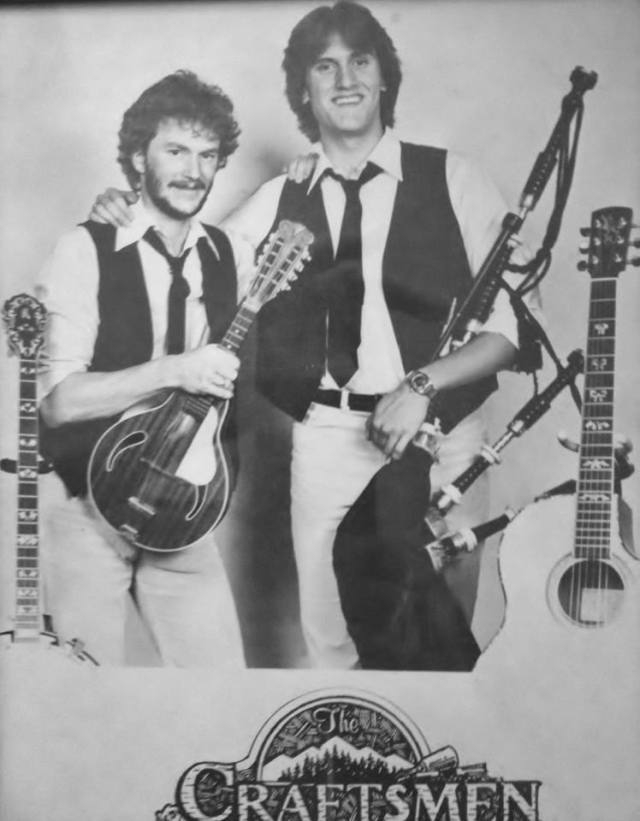
“The Craftsmen” – one iteration of my touring career. I think I was 17 here.
And my family loved me.
Well, in theory. My reentry into my family of origin was anything but easy. What I saw as beautiful, persuasively formative changes in my life often came across as threats and condemnation to them. I recall my sister, in casually caustic manner, telling me to just go away and sell flowers at the airport (that’s actually quite funny). My brother threw a pair of scissors at me and my poor mother just thought I was abandoning her and everything they had taught me as parents.
Frankly, I was new in faith and just being an immature dink. So, perhaps this is not the best analogy. But, it was still deeply disconcerting.
We resent perceived changes to our status quo.
We resent that with which we have easy familiarity. It can in fact breed contempt.
We resent whatever pulls us out of a stream of consciousness flowing comfortably in one direction.
We resent reminders that we are not called to be power-brokers, but prophets.
We resent being told that we’re somehow on the wrong side of history if we think ourselves winning some culture war.
We resent being reminded that the last shall be first and the first, last.
Jesus was too well known in his home town for anyone to actually listen and be moved to repentance and change. They had traded their wonder for revulsion. What many non-Jewish, non-conformist, non-“correct” outsiders were experiencing – forgiveness, healing, emancipation – his own townies found offensive.
I’ve been drawn back to the prophets of late. I once hated reading them. Grumpy buggers, the lot of ’em. With the sorry state of our national life these days, primarily the church, they are offering much encouragement. A number of things become apparent when one honestly reads the OT prophets.
First, those most in need of God are God’s people. Judgement always starts where one would assume kingdom truth to be self-evident. Friends, if there’s anyone who needs to hear the gospel all over again, it’s us, the church; those most familiar with him.
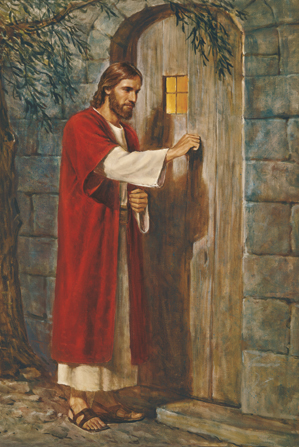
Jesus stands at the door and knocks, trying to get back into his own church; a church too in love with political agenda, and worshiping a fabricated Jesus, rather than following the red-letter Jesus of the New Testament.
Second, God’s people can be surprisingly smug and dismissive about kingdom life as we become overly familiar with it. When it ceases to be a radical way of life and becomes instead our politics and our sub-culture; a “worldview” rather than the missio dei, it has lost its allure.
Third, God is most unwelcome among those who do not want to be reminded of their failings. And, if the scriptures tell us anything, that happens often with insiders. Us.
However, God NEVER gives up. God is a jealous lover who will pound at our door again and again and again until we reawaken to see what has never left us.
Painting by Del Parsons
Friends, when we become too “familiar” with what we think the gospel to be, we can become offended at that which once amazed us. Resentment poisons humility, denies teachability and robs us of childlike wonder.
When truth begins to hit too close to home, we retreat back to the safety of our shared prejudice rather than face the withering scrutiny of God’s transforming word.
You see, to rediscover Jesus is to rediscover wonder. Gospel as way of life, not just some political platform, the trumpet section for our culture parade. Jesus, the lover of our souls, not the name on our bumper stickers, the picture on our t-shirts, or our regrettable church-sign slogans.
Church, I hear Jesus knocking at our door. Let us allow him back in. Let’s rediscover Jesus, the real Jesus…and let our wonder be rekindled.
To those dear souls for whom this level of honesty is awkward: grab your inhaler, a pillow or two, and Just. Look. Away. What follows are a few thoughts outlining my slow, daily march of sobriety.
And, never one to mince words, it’s been (insert happy superlative, or expletive, of choice) awesome. Like, so way much more awesomer than usual. I’m choosing to call it a time of sobrioteousness.
It is an awkward and wonderful marriage of sobriety, riotous joy, and deeper righteousness. The result has been a clearer head. It has scuttled out some pretty confusing stuff and ushered in a season of newness and productive self-reflection.
And, as one who has spent inordinate amounts of time in the swirling eddies of his own head, this would otherwise be dangerous, even inadvisable.
But times they are a’changin’ as someone once said. Thank you, Mr. Dylan.
I am presently experiencing that which those like me most avoid but for which we most long:
wait for it…
a normal life.
I know!
Just a few years ago such a prognosis would have struck terror in me. I mean, the very thought that I was anything less than stage-ready remarkable would have been an unthinkable travesty. Like Madonna with no marketing plan. Kanye West, the guy, not the god. Taylor Swift without the whining. Or the Kardashians, at all.
Much of our lives are lived in pursuit of that which we possess already – acceptance and love. It has certainly been the case for me.
Upon honest reflection, my life has often aimed itself at two primary goals: self-knowledge, and the safety found in praise and adulation. It can be hard to know the difference. It has prompted many, including myself, to ask the question, will the real Rob please stand up?
Of course, I don’t think it either right or prudent to simply write off all pursuits as efforts toward attaining acceptance and the praise of others. There will always be those things to which we naturally aspire.
For example, it would be hard to disattach from me all things Celtic. The skirl of bagpipes, the wild scuttle of Celtic music and the dark, mystical history that weaves it all together. This is the cut of my jib.
And, words. Long have they held sway over me, sometimes in euphoric, hypnotic ways. To read words placed well, taste them under the tongue, swallowing them raw and whole is genuinely nourishing. Those occasions when I feel I’ve written well leave me breathless. I’m seldom out of breath, but trying all the same.
I’ve always loved laughter and the humour that takes me there. I love whatever is funny and however I can be funny. From distant memory I recall possessing the ability to make people laugh.
That makes me happy.
I love to run. To some degree it has become every bit the addiction alcohol was, although with more respectable results. It too has defined how I see myself. How others see me. How I want to be seen.
All of this and more lines up to take its place in the panoply of influences, pursuits, passions, and proclivities that have come to represent, Rob.
Ironically, the older I get, and the deeper I move into the blessing of sobriety, the less interested I am in being unique and remarkable.
I do not spend as much time and energy looking for the wow factor, and that relieves the constant pressure to be unforgettable, memorable. Not dull or without significance or ability in my own right. Just part of something bigger; something beyond myself in which I can play a small part.
My part.
Instead of rejoicing in all the ways I am unique, I now find considerable comfort in all the ways I am just like everyone else. And, to my surprise, I’m no longer lonely.
Go figure.
I’m calling this phase of life, sobrioteous. I’m clean and sober, happily, riotously normal. And all of that may, in some small way, contribute to righteousness or the Bible’s description of “the good life.”
‘A day late and a dollar short’ as they say and we pull up to the front door of Michindoh Conference Center. The air is brisk, although not as might be expected on a winter day in mid-January Michigan. The quiet here jumps out of the bushes and sings from the frozen trees. The lake, too, is frozen; seemingly dead, unmoving. It shivers under its own weight of wet and white.
There are hints of voices, of faces and laughter and prayers afoot; the gift of extended family burnt into the very carpet and walls. Memory serves well here and I am struck by its power. For this place represents something far beyond itself, a kind of knowing – the embrace of God through the embrace of friends. And I still feel that embrace like a long look down a hallway full of portraited eyes, the well-known smiles of those who truly know me, who long to be known.
For me, Spring Arbor University’s MSFL (Master of Spiritual Formation and Leadership) program was the end of a long search and the beginning of the best journey. And its demise demands a few words said in remembrance; both lament and praise.
In a sad twist of irony, this final Residency finished early. The annual sojourn to varied points around the country over more than a decade formed the unifying core of people, process, and prayer. With still another day to go that included a mini-concert to which I was looking forward (my modesty remains unchanged, despite God’s efforts), we had an early lunch and, with hardly a word, stepped into a travel van and barreled down Michigan back roads toward Detroit Metropolitan Airport.
The short but transformative ride of the Spring Arbor University Master of Spiritual Formation and Leadership comes to an ignominious , gently uncelebratory end. Twelve (or was it thirteen?) years were bundled up tight, held together by the prayers and pain, tears and triumphs of those who benefited from all it gave.
I remember its early years as clearly as mirrored sunlight. Filling the air was the visceral scent of a journey about to unfold. It hummed under our feet like standing on a factory floor. Seismic shiftings of spiritual earth began to crack open our darkness, but wide enough to drink deep the new wine of God’s quaking Spirit. Tangible expectation akin to those deliciously hopeful moments before physical touch sat enthroned in hungry hearts. It was erotic in the holiest sense.
With MSFL, it felt like I’d finally stumbled onto something worth surrendering to fully. Through all my academic career, wed to a curious soul, the answer waited agonizing years before its fruition in this MSFL program.
I had already attended seminary at the Canadian Southern Baptist Seminary (a veritable cascade of uncomfortable ironies in the title alone). I enrolled at Regent College, twice, and then at George Fox Seminary, twice. Nothing seemed to fit just right. Like settling for one thing because the thing hadn’t shown up yet.
MSFL was a clarion call to suckle the teet of God. That, indeed, I did, along with dozens of others over as many years. To hang out online with people who are not freaked out at your language, one’s love for weird stuff like darkness, light, candle-fed shadow, the deafening silence of the God who sings – a language that includes words like lectio divina, hesychasm, apophatic theology, theosis, and dark night of the soul is better than anything I can name.
Friday, January 12
Travel day. I sip my radically sub-par coffee made from suspicious-looking water. The sounds of the hotel are awake, humming with the activities of a morning, also awake. The gym calls but so does my bed, comfortable as hotel beds go.
My journal won the mental coin toss. My thoughts turn once more to the MSFL era, now winding down like a beautiful car that apparently just ran out of gas on the long and winding road of enlightenment. Stranded now, it awaits the buzzards of time and urgency to bear it away into the great garage in the sky. It is full of the rusty, dusty and musty ideas of days gone by. Ones that never got on the road but, like MSFL, simply ran into the ditch somewhere. Others never had the right parts, so they never got going in the first place. Still others raced out the door, speeding like bullets down the road to success but, ill-prepared for the dangers of that road, flung itself wildly into tailspin, crash and burn.
Besides the study itself, much of my time was spent in writing and facilitating liturgy for our annual January Residencies. It was a job in which I happily splashed about like a precocious little piggy. Moreover, I enjoyed having done so from the very beginning of the program when dozens of us sardined into a large classroom on the campus of Spring Arbor University to dream, pray and wonder at what the future might hold.
Leading communal songs at Michindoh while trying desperately to remain current.
MSFL was a good idea. It still is, despite its demise. The irresistible gravitas of this program combined with the unassailable depth and quality of what it was designed to offer make this a profound loss indeed. What beautiful audacity to dream of a program uniquely constructed for the soul; for the benefit of shaping better lives and, together, a better world. As Tony Campolo says, quoting I know not who, “we seek to build a world where it is easier to be good.”
This was the aim and continual hope of MSFL. It was aimed directly at our humanity in all its complexities. It sought to embrace the heart in the arms of Jesus in order that we learn to do likewise. The very idea was captivating; not only for me but for numerous others as well.
Moreover, it held great appeal to others like me for whom the ideas, culture and practices of contemporary evangelism no longer tantalized. It titillated one’s spiritual hunger and curiosity, daring to use the pre-Reformation language of soul, sacrament, and sanctus of God. It presumed to challenge a rational, punitive, positional, scientific Christianity with a relational, transformative, restorative, mystical one. It sought to assert with insistence and intentionality that, to aim at the soul is, by extension, to aim at the world in which it finds context, meaning, and mission. It trumpeted life in proximity to the Divine dance that is Father, Son, and Spirit, spurning (or at least questioning) a hobby faith.
MSFL energized our reaching for union with God
These claims were adopted and adored by the courageous (foolhardy?) folks tasked with leading us. Their commitment to formation, not just education, put it at odds with the academic establishment. Those for whom education consists primarily in growing heads, overstuffed and heavy, atop weary bodies and thirstier hearts, could still find something here. The program was often as intellectually rigorous as it was personally challenging. As such, it stood squarely against the prevailing dualism housed generally in the west, most specifically in evangelicalism.
With Richard Foster, upon whose paradigm for Christian spirituality the program is based
Learning to think deeply is hard. Learning to live deeply is horrifying. The discipleship moniker is not “come and learn.” It is “come, and die.” No wonder it was a marketing impossibility. Shiny brochures, sleek websites and leading figures were one thing. Faithfully portraying the inherent dangers of communal vulnerability – and charging for it – was nigh impossible! Like a dead guy receiving his doctor’s bill.
MSFL was also an experiment in hybrid-learning experience. A primarily online degree, it asked the fair question, “can spiritual community, predicated upon spiritual development, be accomplished online?” Could a program erected on the belief that the spiritual formation enterprise is, at root, a relational-narrative one be successful in an isolated chat room?
The answer? Abso-freakin’-lutely! The cohort with whom I was blessed to journey, we lovingly dubbed “Conspirators”, ratified in seconds what we’d already experienced. The depth of our online life spilled over naturally in our face to face reconnaissance. Our first meeting wasn’t even love at first sight. That had already occurred previously in weeks of close-knit cyber-chat.
It was a consummation.
“Conspirators”
Now, with the double-edged sword of sadness and gratitude, I turn my head away from Master of Spiritual Formation and Leadership to the ongoing sojourn of My Slowly Forming Life. The former gave me inspired tools for the latter. The former gave me memories with which to build the former. With words certain to reveal my age, “we have the technology; we can rebuild him.” That was MSFL.
ligament [lig´ah-ment] 1. a band of fibrous tissue connecting bones or cartilages, serving to support and strengthen joints.
Already a few days in, we butt up against the tail-end of one year and make our way into another. A tail yet to wag. A tale yet to be written. This was a task best left until all the days of 2017 had been fully harvested and I could start bundling them into manageable piles.
For now, I am compelled to say that, in ways that matter most, I am grateful for 2017. On one level, I’m glad to escort its ass out the door, holding it open as it leaves (the door, that is!). However, it is gratitude that wins out over any other, lesser thing. And, as many have said so much better than I, to be grateful is to be always happy or, at least hopeful that happy will return soon enough.
This has been a year of returnings, of homecoming. I am drawn back to previous iterations of my self, albeit with the benefit of failure-bought wisdom. The overweening esotericism of the past few years is moving aside for a much more sensory guy. Less soul and more smell, feel, carry, see…hold.
I’m beginning to think our souls are much more rooted in our feet, hands, nostrils, eyes, and tastebuds than some airy-fairy nexus untouched and untouchable by we mortals. There is no division of labour. We don’t leave the world and our bodies behind in order to attend to our souls. Similarly, in a full-on, head-first dive into our world, waist-deep in shit and woe, we don’t have to leave our souls behind. They’ll get there first.
There is, simultaneously, a greater depth and immediacy to a life lived in one place at a time as a total and complete entity: body, soul, heart; sweat and spit. It buys back from the bleak, divided landscape of dualism, an holistic sense of peace and unity.
I reflected recently Jesus’ little visit to Sheol where he encouraged the prisoners, stuck in limbo, to look up for “their redemption draweth nigh.” A very physical Jesus went to the disembodied not to tell them that some ghostly, spiritual paradise awaited. The opposite actually. A great banquet with Jesus and friends in a great city was being prepared. Their souls would cough up new bodies, not the other way around.
Advent and its fruition at the Christ Mass says something utterly unique, a truth so utterly transfixing, that all the earliest characters in the drama found themselves winging it. Just a lot of gawking, and fear, and shivering with stuttered awe and wonder. In such circumstances, I dare say we would do the same.
The Christmas story says many things. But, at the front of the line is the simple idea that God is, more than anything else, profoundly physical, actual. Not just ideas to think. Right stuff to say or do. God is with us. God IS us. Conversely, it means we are like God.
There are many out there who, like me, are constantly seeking to nurture something mystical and otherworldly within ourselves as though God were somehow uninterested in the messy little details of our tiny lives. This is not to suggest that we ignore “spiritual” matters in favour of “earthly” ones. It is the growing belief that those are not two sides of the same coin. They ARE the coin. God cares as much about my health, relationships, and the overall physicality of my existence as he does the height of my goosebumps when I pray.
In Jesus, God came not to save our souls. He came to save US. You and me. Body, soul, spirit. In Jesus, God came to realign our past, present, and future into one single unity. He religamented (re-ligion) the disembodied and as such disempowered parts of our humanity. Jesus came that we might become MORE human, not less. And, contrary to what contemporary evangelicalism might have us believe, he came not with some revivalist message of the sweet by ‘n by.
He came to heal our bodies, our memories, our broken bits. To remind us of what we truly are: beloved but broken, loved but lost. Why?
I’ve been stung. Poisoned. Nothing flora or fauna. By a book. The Poisonwood Bible by Barbara Kingsolver. It’s got me thinking again about our notions of ‘home.’
Tuesday, December 26th. Boxing Day. It’s strange, just saying those words can produce such intense homesickness. A progressive, Canadian family living in a regressive, Trumpian America. Similarly, Nathan and Orleanda Price and their children, Rachael, Leah, Adah, and Ruth May – in equal measure, a family displaced; a little collective of courage and fear, lived in a world of nothing but frontier. Their only certainties were the uncertainties of daily survival in a world that cared little either way.
Their meager, not even daily, meals of eggs or mash, perhaps some chicken if someone took pity on them, removed any vestiges of the stolen or manufactured expectations as whites in a black world. They were equals among those who typically served their every whim, seen or unseen; an unexpected balance that would save them from their own extinction. Hmm, something to heed here I think.
Were they there because of some high calling of the gospel? Was it their great Christian frontier where, in their own stumbling way, they could add to the Roll Called Up Yonder? Or, was it something deeper, more primal? Were they there to befriend the enemy? To make peace with the devil? With their devils? With their gods? With God?
The complexities of their call beckon me to consider my own. Like the Prices, I am a man equally displaced, despite possessing a shared border and the lack of intermediary ocean. I have asked the question, precariously and ad nauseam, where do I fit? We all do at some point.
With no small shame, I spent an entire childhood fearing and hating this place, giant land of giants. America, the baffling. In my estimation, she never lived up to her own press. But she sure loved to talk about herself, unendingly, all with a suspicious eye on the unprepared listener’s awaited response of teary-eyed gratitude. Anything less was travesty or treason. For what exactly? Was I the lucky recipient of her gracious light or should I hide with the others in her long shadow cast over a pathetic world who, apparently, needs her?
Now, some seventeen years later – a generation, a lifetime, and I am faced with questions the answers to which would have been clearer back then. Frankly, I don’t know that I ever really knew the answers. Hell, I don’t think I remember the questions. And, even if I did, to have answers at all render such questions glib and facile.
Instead, I’m left trying to decide whether my “answers” are to be found in the questions themselves. Perhaps I am meant to find better questions? Like that one. Perhaps the answers to any question is the the readiness to ask anything at all? How thoroughly cliché. How unsatisfying.
Perhaps.
Like the Prices’ life in Kilanga, Congo, do we follow whatever calling, intuition, demons, indigestion, lead us to believe in anything beyond ourselves? How pure is anyone’s rationale in the final analysis? At times even the animals seem well beyond us. No complaining. No seeking, and therefore, no disappointments. Just Live. Survive. Reproduce. Die. Repeat.
Simpler, but rather bleak, don’t you think?
The Price’s, like everyone, made decisions birthed of the complex hubris of their psyches. The geography of soul can be most difficult to navigate at the best of times. They discovered this in as many ways as there are opportunities to offset obstacles. Their choices reflect the long, disjointed road that seems to lead nowhere. But, in the end, leads right back to who they are, who they became. Who they never were.
After the ignominious cross, Jesus even dwelt among the dead in Hades, not to gloat over their bad choices, but to boast of their good fortunes. To give a two-thumbs-up where one might not have expected as much. If it were a movie, it was that moment when the dungeon door flew open and a rescuer reaches out a hand, “come with me if you want to live.” Or something like that.
They were as much ‘home’ as all the lucky buggers still topside and playing cards. Their long, grey waiting room had more than old magazines to keep them company. It had their own journals in which had been written, “all is well, my good grace always wins over bad living.” What’s more inviting than that? Perhaps if we remain small enough, with hearts like sponge, minds like children, and souls in tattered need, Love will meet us even in our worst places?
The mystics, who swim here, would shit to hear me speak in such ways. I think I hear them whispering under their breath, “This is good. We ask these same questions every day. But, isn’t life that much richer for asking them in the first place? The gospel has shown us that everywhere is equally our home. We just don’t know it yet.”
In times past, my life here in the land of win-at-all-costs would have felt much more Poisonwood than promise. But, in the growing light of age and calmer spiritual water it is no longer an exile. It is merely my environment in which I internalize my experience. That alone is so much more than those among whom the Prices lived knew, where surviving and thriving meant the same thing.
Now, whenever I’m tempted to bemoan my sad disenfranchisement, I consider the ramifications of the gospel of freedom. The Price. We’re all in God’s living room, which is everywhere seen and unseen.