At the corner of validation and forgot


At this drunken shoreline, patterns return, in

quilted quiet. I can revel again in spiced hours,

deaf to the biker-ghosts, bad-mouthing

this demure, paper posture.

Thoughts are a little rumpled, like the sea,

what with these ferocious memories; un-manacled,

like cottonwood dreams, blown out into the world.

This world I am watching.

* * * * *

She walks down the street, locking

every wandering glance; stolen stares from

other hungers. Sad limbs, built for laughing strolls,

carry instead their weight in

desperation, the roll call gestures of

fragmentary magnetism. To look down is to invalidate,

the one thing that renders such creatures immobilized.

She never looks straight on. Being seen but

unknown has honed a peripheral awareness

to a hawk-like precision. It’s the hollow

look of the lonely.

* * * * *

That’s a tiny dog for such an imposing guy.

It must have something to do with an ill-

fitting black t-shirt. I still love AC/DC, too. But

the designer sunglasses match the grey goatee and flip

flops well enough to doubt the bravado, question

the impartial coarseness; his language just color-

ful enough to hide the deeper grey.

The fear of more.

* * * * *

Her weighty eyes climb his rusting frame; a gaze

made full in the weight of familiarity. His jaw-

line, thin, like his tired neck, perches on

shoulders, stooped, but unburdened by

neat and tidy, pressed, quick, or stoic. Endless pages

pass between their easiness, two souls in single,

unflinching presence. He remembers less

than the love she feels, spoken through his

wrinkled palm in hers, their fingers entwined.

The tapestry of their years.

* * * * *

The penny arcade discoveries of wide-mouthed boys –

more magic through a cheap telescope than my pretense of self-

imposed juxtapositions. Their cocky, self-

assured swagger breathes the new air, heedless of my

artless anxiety in their art of care-less play. Can voices

really be that loud? So much more gets spoken in

the repetitions of unpracticed

wisdom. Their code is a skateboard sculpture. Life

on a flat, four-wheeled universe. Soon,

when fearful complexities begin to gnaw

through the ropes that tether youth to

moments and days, will they remember

this foolish display of seaside

time, gloriously wasted?

* * * * *

This guy has no story to tell. At least

that’s what is suggested in the gymnastic

dodging of eyes and steps from

that hand. Oh, that hand, weary, upturned for

that drop of grace found in spare quarters, lost

among our Visa receipts. Well-rehearsed

well-wishing will never match the possibility of just

one good conversation. His stench, reminder of loss,

friendship’s nemesis, gift of forgottenness,

taunts him. It’s one more reason to avoid him.

He owns nothing.

Well, except a checker board. But, that’s designed 

for company.

* * * * *

A tide and a thousand waves later, a laptop

overheats my knees. It reads 17%, the same possibility

I’ll remember their faces by the weekend. I am

like them – just another stigma.

Or, maybe another story waiting to be written.

Unwritten.

Rewritten.

Here at the corner of

validation and forgot.

 homeless-man


Images found here and here, respectively

A Celt in a kilt and the beautiful mundane

This was originally posted as a guest post on a favorite website of mine, Abbey of the Arts (thank you Christine Valters-Paintner!). What a delight to be given opportunity to share one’s life among kindred spirits in the grand dance that is our eternal redemption.

Please, please, please, if you haven’t already done so, be sure to visit Christine and the rest of us Monk-Artists at the Abbey. Come visit/like the Facebook page as well. You’ll be so glad you did. I promise.

__________________________________________________________

A Celt in a Kilt and the Beautiful Mundane

I-You-Holy Ground
By Robert Alan Rife

I am the dusty ground, low and dry
thirsty for the imprint of holy feet.
Despoil with radiant prints, this virgin ground.

You are the rain, falling deftly
upon my brown soil. Now is left
your footprint on this ground.

I am the ashen leaves, curling and broken
awaiting but a whisper. For only then
can I fall on solid ground.

You are the soundless wind, howling, still.
You creep up behind me and
exhale me to the ground.

I am the snow, disembodied worlds of cold
and chance encounters with hand, or tongue,
eye-lash or palm needing ground.

You are the frozen air in which I am held
aloft, drawn slowly down
to meet with others on the frozen ground.

I am the waning autumn death
soon to give way to the long silence-when one Voice
becomes the loudest ground.

You are the Voice that speaks
heard best in dying, power given for
rising from this shivering ground.

I am the distant hours, the midnight passing-
the refusing minutes, trapped in hours,
running from the years of ancient ground.

You are the many, and the one, and all time
and nothing and everything from nothing
where time has no ground.

I am the weeping, the squalid groaning,
the unrequited miseries of misery’s company
laying crippled and diffused in the ground.

You are the end of tears and years, the question
and the answer, the sutured nerve of joy, not suggested
but present, here, on this Holy Ground.

________________________________________

For me, the term ‘monk’ used to mean ‘one safely cloistered away from the cares of normal life in dimly lit, echoing stone hallways where hooded men sing hauntingly beautiful music and basically float just a bit off the ground. A single, piercing glance from their crystalline eyes means healing, they have superpowers, can read your thoughts, never need to eat, and speak once a year whether they need to or not.

Since leaving behind my roots in evangelicalism for headier waters elsewhere I’ve since discovered that monks often have the sauciest senses of humor, the bawdiest stories and, not surprisingly, the deepest delight in the world around them. My kinda fellas. They’re as non-dualistic as they come; a life to which I aspire. Apophatic meditation one moment. Bodily noises the next. Welcome to my world.

I am a dreamer; a philosopher-poet capable of romanticizing even the most mundane banalities. To a guy like me, cutting the grass has the potential to be a portal into the nether regions of the universe, awash in liminality, where mythic faeries ride unicorns on their way to Celtic slumber parties. But, I’ve been known to overstate a little.

Clearly, I’m a favorite among type-A corporate headhunters (tongue super-glued to cheek). Rather, stereotypical songwriters, tree-huggers, poets, unfocused A.D.D. artsy-fartsies, and contemplatives love to love me. They’re my peeps. My homies. They know my psychic address.

These overly romanticized sensibilities haven’t always promised smooth sailing for me. In fact, more often than not they’ve brought more than their fair share of woe and disillusionment. The world has precious little patience for those like me, preferring instead the multi-tasking, power-doers with ambitions larger than the moon upon which they hang their coats (but generally not their egos). It’s a challenge in our super-charged, winner-take-all culture to prove real value in lighting candles and pursuing silence when time is money and money is god and god keeps shrinking or running away.

My earliest recollections of spiritual awareness contained the following simple elements: surprised by joy moments, generally unasked for and seldom expected; a sudden awareness that the world was not really as it seemed – that from God’s perspective all was well. Specifically, I was drawn to all things ancient, mystical and Celtic. As a bagpiper/Irish whistle player who has toured extensively it makes sense that, for me, the world is seen through green colored glasses, smells just a little peaty, telephone poles were meant for tossing, and “ladies” is misspelled on the restroom door (insert look of shock and consternation here).

Although a mystic from a very early age, despite a decided lack of language to articulate such things, my fate was forever sealed when, for the first time I heard the Great Highland Bagpipe. I was seven years old. I was gobsmacked. Mere weeks later, in the basement of St. Andrews Presbyterian Church, I started learning to play the pipes. I have played ever since.

Something else happened however. It christened a liminal journey of my inner mystic and forever sealed my fate as a lover of all things Celtic, monastic and artistic. It also began an almost unassuagable thirst for the monastic realities of thin-place living. Puddles become holy water. All time, whether singing, snoring or snacking, can be wrapped up in a ball of quivering holiness. It is the essence of Celtic spirituality. It is my essence (especially if we had haggis the night before).

Now, a gazillion years and as many prayers later, to be an artist, a mystic and a monastic-wannabe is for me to see myself less as a dreamer and more as a waking dream. Life is to find the holy in the banal; the glorious mundane. The perfect, daily moments of nothing-special that, simply by virtue of noticing them, become possibilities of inherent wonder. The greatest gift I’ve received in the past few years, something particularly attributable to the Celts, is that of awakening to these shimmering possibilities in the blasé and dull. How brightly they shine under the light of the God of order and magnificent delights.

I suppose

horizons

I suppose I thought that, once the days had shaken themselves loose of the encumbrances of motion, and the menace of time, the twittering sky could finally waffle, untethered, under piecemeal clouds to consider her options. 

I suppose I thought that, given the distance involved, someone might be better off to find oneself caught in the dilemma of giving up uncaring responses to caring questions than not to answer at all.

I suppose I thought that, with that last bitter twinge of guilt, not so hidden but buck-toothed and fuscia-brimm’d against the waiting whiteness, the notes might be in tune.

I suppose I thought that, underneath the quivering madness of illusion, hiding behind curtains in a living room full of misapprehensions, would come the smallest sigh, the narrowest glance.

I suppose I thought that, without a second thought, mysteries caught up in stubborn embrace of tired stories pinned to old trees never well-planted might actually find bards to sing their praises.

I suppose I thought that, with enough poetry strung out on lines of hopeful thought, and enough poets, kindling together those lines, breath might swell again into a coughing history.

I suppose

First and Last

Whenever it seems like a day asks more than it should

from one, hollowed out and worm-ed through,

remind yourself, though morning’s light came first,

the first word is yours.

Haiku Prayers II

lily pads

 Caught deep in my throat

Are songs too light for singing

You sing them instead


My senses stutter

My ears unfit to listen

And yet, still, you speak


Dark clouds come sighing

But shadows run from daylight

Light too raw for words


In communion, come

To taste the bread of freedom

And brandish a cup


Like apple blossoms

Fallen from their lonely place

Are we, so planted


Sever, now, my tongue

And replace it with silence

Then, alone, I sing


Gift of paradox

Understanding brings little

Freed in conundrum


Sweet breath of Mary

Mother to all, then as now

Speak the name of God

Nanaimo

A little piece from a trip to Nanaimo, B.C.

robertalanrife's avatarRob's Lit-Bits

Nanaimo at night Nanaimo at night. Photo: Rae Kenny-Rife

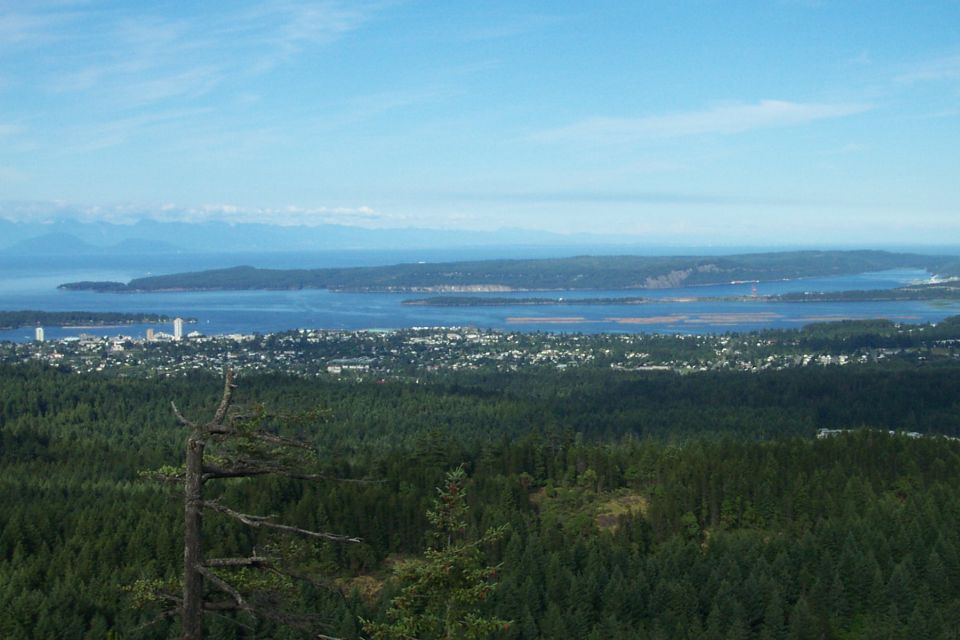
Layers of green-backed mountains muscle their way through bruised-blue ocean. Hovering always beside us, they serve as our constant reminder to look this way, west, when lost (an hourly occurrence with me at the wheel). The air is grey, merging as one with the sky that frames it. Those, like us, whose weather experience is unyielding, unnecessarily hot, desert sun, often boast of the abundance of light. But, unlike the pushy, insistent sunlight of eastern Washington, the light here is complex, nuanced, shy and non-committal, like a teenage girl not quite ready for a boyfriend’s advances. Colors and textures are more discernible; faces, buildings, and backgrounds more sophisticated, not blanched and obvious from the brash directness of a boastful sun. This light is earned and, as such, even more deeply appreciated for its whimsical scarcity.

Rain here is currency, making this a rich place…

View original post 489 more words

Nanaimo

Nanaimo at night
Nanaimo at night. Photo: Rae Kenny-Rife

Layers of green-backed mountains muscle their way through bruised-blue ocean. Hovering always beside us, they serve as our constant reminder to look this way, west, when lost (an hourly occurrence with me at the wheel). The air is grey, merging as one with the sky that frames it. Those, like us, whose weather experience is unyielding, unnecessarily hot, desert sun, often boast of the abundance of light. But, unlike the pushy, insistent sunlight of eastern Washington, the light here is complex, nuanced, shy and non-committal, like a teenage girl not quite ready for a boyfriend’s advances. Colors and textures are more discernible; faces, buildings, and backgrounds more sophisticated, not blanched and obvious from the brash directness of a boastful sun. This light is earned and, as such, even more deeply appreciated for its whimsical scarcity.

Rain here is currency, making this a rich place indeed. Its presence is more than just expected. Its certainty brings with it a comfort akin to the smug knowledge that umbrellas bring in clearly delineating tourists from townies. It’s dotage, over-eager but well-meaning, comes like a cleansing of the palette as it were for the hardened but friendly inhabitants who call this home. Anything more than about a ten percent chance of rain means, well, rain. Whatever ‘showers’ means elsewhere, in this place it is code for, Build ark and prepare thyself for an unforgiving shitload of vertical water and avoid umbrellas at all costs.

Tucked beneath the busy sky, layered mountains, and hungry sea lives a population reminiscent of a suburban Woodstock. Hippy loggers. Polite revolutionaries. Sidewalk artist news-junkies. Bag-ladies and street-dwellers with decent grammar. All of the above and us, the lone, traitorous Canadians living in Washington State trying to stumble our way around. That, with downtown streets twisting in corkscrew fashion in and out of side streets that double as alleyways that double as thoroughfares that smirk at our lostness. The roads, having been laid by drunken blind men in oneupmanship sprawl out like some wild, yet picturesque, game of snakes and ladders. Where the hell are those mountains anyway?

downtown-nanaimo-from-roberts-roost02Those Canadians, famed for politeness, are the same ones who, upon noticing our Washington State license plate, find every way possible to angrily tailgate us into next week, regardless of our fifteen miles per hour over the speed limit. A worthwhile risk, apparently, to he who must teach a valuable lesson to these wayward American ne’er-do-wells. “But wait,” I inwardly screech, “I’m one of you.” To no avail. This is what Canadian “aggression” looks like. I meet the same guy at a red light and he’s all smiles and waves. Here in Canada, polite is but shorthand for passive-aggressive, a set-up for the inevitable near-clash of non-words.

The reason for this ascent into the murky badlands of Vancouver Island rainforest otherwise known as Nanaimo? To deposit (or abandon, depending on your perspective) our youngest son into the fray where he will begin Jazz Studies at Vancouver Island University (not an oxymoron, I assure you) and a new life figuring out the politics of labyrinthine Canadian niceties. He may have been born in Vancouver but he has spent fourteen of his eighteen years in America’s Pacific Northwest. He is the most American of anyone in our family, a family more Canadian than most Canadians.

The long love we’ve harbored (yes, I went there) for screeching gulls alighting on fishing boats, grumpy clouds bobbing over bouncing buoys, and a permanent smell of pulp laden damp help us navigate the darker waters of parentalisms. Small comfort indeed in the face of driving hundreds of miles away, the face of one’s youngest in the rearview mirror. Good thing I’m given neither to melodrama nor self-pity or I might find myself writing about it.

God forbid.

Photo found here


Slip shod past The Wimplebee…Schloop was shloshed at Schniffery’s

Woodriff Schloop
Woodriff Schloop
Slip shod past The Wimplebee
goes Woodriff Shloop, at half past three.
This Shlizzmagora found his way
to Littleman’s Wharf, or so they say.
Then Woodriff’s portulimpical arc
sat still while still he could be park’d
at Donegal’s the story goes
to drink eleventy more of those.
Now, the dishlee, Griff Labasherimm
found Woodriff Schloop and asked of him
to kindly wait till half past three,
to slip shod past The Wimplebee.
* * * * *
Half a day and half again
since Donegal’s had seen the man
who trundled round the farberquim-
the porter claimed he’d not seen him.
And grumpy Griff Labasherimm
insisted he’d seen nowt of him.
Then near to half past quarter ten,
a-spied he was near Quibulen,
with characters of shifty sort
and women, or so they report.
His coat in tatts, his trousers torn
his nose a’blooded, face forlorn.
with scuffed up shoes and smudged up knees,
for Shloop was shloshed at Schniffery’s.

Grief, Observed

Today, August 16, 2014, marks the twenty-eighth anniversary of the death of a woman I never met, my mother-in-law, Nina Barkus. That event, combined with the death of my father almost one year earlier, sparked the meeting, the love affair, and subsequent twenty-six years of marriage (so far) between my wife and I.

This is for her and her mother (mam), Nina Barkus.


Rae and her mom, Nina

Grief changes a person. Grief, along with it’s drinking buddies: pain, shame, anger, betrayal – they have a way of reducing a person to his most elemental place, her lowest common denominator. A human being stripped to that bare minimum of barely surviving/survivable raw material. It can push us to become someone we don’t even recognize.

Like a persistent toothache on steroids comes grief; some unimaginable carnivore of light, a predator of hope. It is no respecter of persons. It makes its entrance like a bull in a china shop, impolitely and destructively unexpected. All one can do is stand by, hide somewhere they think to be safe from the onslaught, and observe the damage unfolding before them.

Grief is shameless. It cares not how it comes, undressed and brazenly free of restraint. Like being forced to watch one’s own daughter perform a pole dance, grief strips itself and its participants to places well beyond their own humanity, well below self-defined limits of propriety. It can haunt our conscience as much as our consciousness.

Grief is the chameleon of human experience. It lays in the center of our lives, taking the shape of its container, the color of its environment, so that it becomes maddeningly insouciant, invisible to either scrutiny or even identification. Once identified it shape-shifts again, leaving us now both to grieve and shrink from the exhausting process it is in the first place. It is the never-ending injury to its own insult.

Unlike hope, which, like water, undergirds our elusive oil refusing to mix with the more delicate undergrowth, grief kneads itself into the dough of our lives, leaving us to bloat and swell but with no vision of what might arise in its place. It is a ruthless bully, intent on bruising the softest places where lasting scars are most likely.

Grief most often accompanies a death: of a loved one, a lover, friendships, self-confidence – the list is long. It offers little other than the ominous sense that someone is watching from the shadows, leaving us unnerved as we fumble for the car keys. Just when it seems we’re safely inside, a hand grabs us from behind, refusing us the safety of ‘elsewhere.’ We do not run from it. It runs to us. We do not hide from grief because we end up hiding right behind it. Grief hears our labored breathing every time and quickly finds us out.

Grief is the Goliath of our inner experience. It stands, boasting and blethering on impudently as we soil ourselves before its not inconsiderable size and bully demeanor. “It has killed others greater than I”, we say, as we look way up to find the faceless monster bearing down in full strength upon our pitiable frame.

One could speak as well of the pitiful awakening to one’s own flawed behaviors; ways of seeing things that hurt others and oneself. Poured on top of this kind of grief is the scalding gravy of shame. It is perhaps the worst grief of all since it is often accompanied by a raking internal self-awareness of the negative kind that is seldom polite and never constructive. In fact, it generally becomes the self-fulfilling prophecy.

Nothing shapes our grief quite like the knowledge that we may have been the cause of it in another. It has a baldness about it, a merciless fait accompli that, if not well discerned and graciously attended to, becomes our very demise. It flattens the soul, kicking the air out of our spiritual gut in ways we never thought possible.

Having lost my father and both in-laws to cancer (among any number of friends and colleagues) I can confidently attest to the groaning maw of emptiness that accompanies such an ignominious demise. ‘Tis true faith indeed to smile into the great oblivion, unfairly bestowed, and sing.

Well, that was dark, one might fairly say. And they’d be correct. Is there any corrective?

Indeed there is. Having one’s heaviest grief tossed into the lap of another, whose measure of personal pain could never be fully known, but whose faith, unflinching; whose love, unwavering, produces the only known antidote: hope. Grief, be gone, for (s)he who has hope, has everything.

And that hope has a name…

The bricks in our walls – chapter 2

brickwall1

Her name was Susan. She was my first “official” girl friend. I was 13. She was tall and shapely and smart with the sexiest braces I’d ever seen. Her reddish brown hair careened off her shoulders like a gentle waterfall. She, like me, was caught in that strange vortex of too-smart-to-be-cool-but-too-cool-to-be-a-nerd. It made her good company. Besides, she was as awkward as I at this whole “going steady” thing. Our conversations were peppered by silences and repeated questions, more silence, then making out. I mean, what better to fill a gaping Junior High School silence? Our romance lasted an epic five weeks.

His name was Rob. That’s where the commonalities ended. He and his family had moved from somewhere in South Dakota to Calgary, into a house a couple blocks from us. He was a rough and tumble kinda guy. I hated how he could always get me to do stuff I wouldn’t normally do. Egg houses. Give wedgies. Terrorize neighborhood pets. Pull out plants and bushes. All manner of man-boy evil. He holds the record for most days missed from any school year at our Junior High. In twelve years of public education, I skipped school, on purpose, twice. I was caught both times. Both times were with Rob. I kind of miss the silly bastard.

It was my first practice with the Beaumont Pipe Band in Calgary. I saw her from across the gymnasium among a crowd of her peers. Her blue-green eyes could have split atoms and her gentle curves, spiky blond hair, and pointy, Joe Jackson shoes (it was 1982) settled that this was a girl to know. I guess I had been staring a little too long and she looked up and saw me. A gleaming smile framed in blood red lipstick against her pale, white skin sealed the deal. I was smitten. We knew then we’d be close. Close enough that, four years later, we were engaged and poised to send out our wedding invitations.

We didn’t. Her name was Vanessa. She died of bone cancer in 1992.

I always thought he had the coolest name. Lazarus Cornelius was East Indian. He was a dapper ladies man and an amazing guitarist. We were friends at College where we sought to study both of the former along with regular classes we stuffed in the cracks of our busy social calendars. He came from numerous generations of pastors from Mussoorie in the northern Indian province of Uttarakhand. Even though he was thoroughly Canadianized (meaning primarily he was a hockey fan, knew the lingo, cared little for politics and bitched about Americans) I thought it cool to have an Indian friend. It made me feel…cosmopolitan and a little chic.

And when you lived in a cow town like Calgary, that was saying something.


Picture found here