
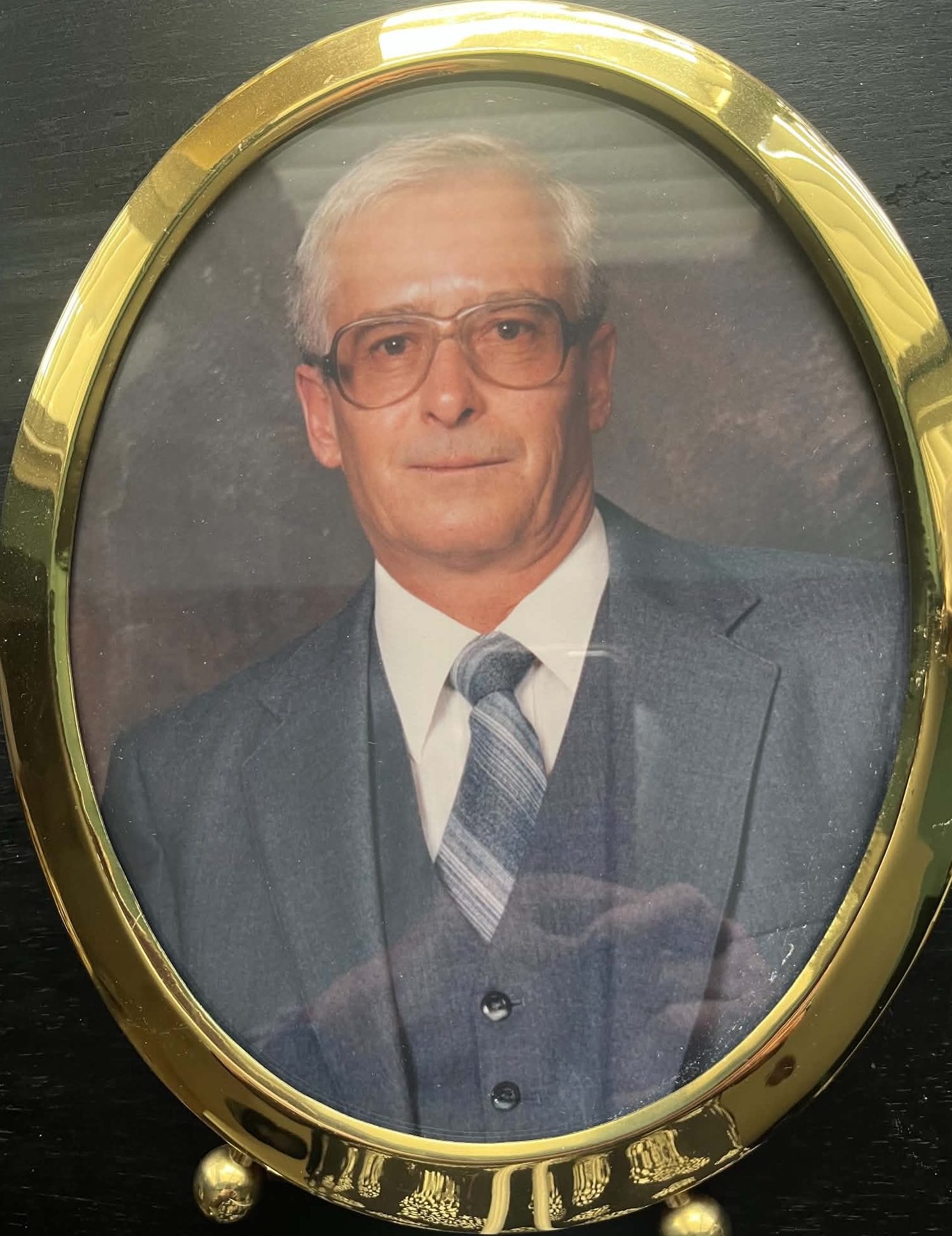
Father-son relationships are complex. A glorious thing, but often fraught with chaos, a touch of fear, and much misunderstanding. My own father was a quiet, unassuming man. He was kind and a wonderful provider. I wanted for nothing. Ever. But we struggled to really understand one another. He hailed from a large farm family from Maple Creek, Saskatchewan. His education, incomplete. His struggle, real. When I was an often fear-filled youngster, he always seemed a bit sad to me. I never knew how best to connect with him on a personal level. No one’s fault, just the way it was.
1985. I went with him to the hospital to retrieve results from recent tests. The blank expression on his face as he emerged with the unwelcome news is forever emblazoned in my memory. His words portrayed both fear and denial: “Well, it looks like I’ve got a touch of the cancer.” Those words made our blood run cold. 1985 would be marked by many doctors’ visits, tests, treatments at Calgary’s Tom Baker Cancer Center, and ultimately, his death on September 15th of that same year.
His passing hit me on numerous levels. The normal experience of devastating loss was mine as it was everyone’s. However, I was impacted by something more sinister: regret. At 22 years of age, it occurred to me how little I ever told him what he meant to me—his constancy and dependability, his care and generosity. Because the relationship hadn’t been “easy” in my estimation, I had allowed my father to disappear from my life having never told him the important stuff, the awkward but necessary stuff. Now, he was gone. That regret has followed me every day of my 63 years.
Concurrent with my dad’s passing, I had met Rae, the girl who captivated me and would eventually become my wife. Her own mother succumbed to cancer the following year, August 16th, 1986. Rae and I bonded over the pain of loss. We married in May of 1988. A few weeks later, I was apprenticing with her father, Jim Kenny, as a painter-decorator. He was a “Geordie,” born and raised in hardscrabble, mid-century Newcastle, England.
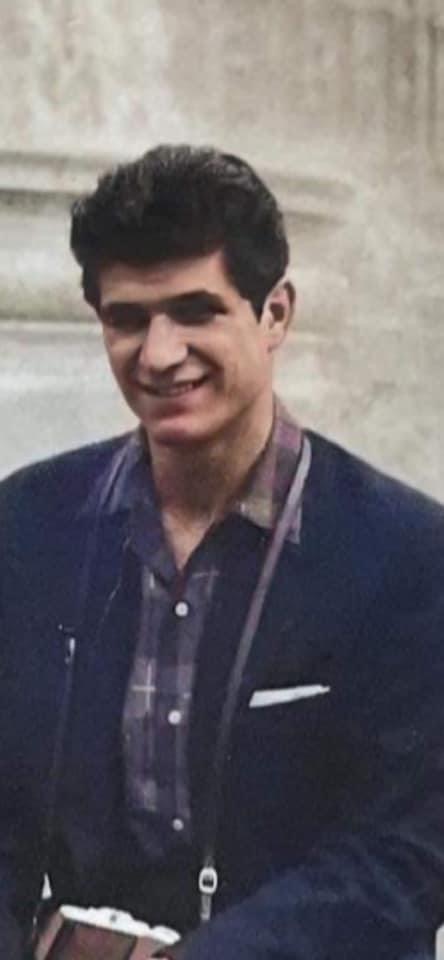
Jim Kenny, Pop as I called him, was a force of nature (shown here as a young man in Newcastle). His short stature was dwarfed by his immense courage, energy, mental acuity, humour, and magnanimity. He was a poorly educated, but street-smart guy—an inventor and entrepreneur of the first order. From all of that, I benefited profoundly. He looked past my flighty eccentricity and windswept philosopher-poet weirdness and trusted me enough to work alongside him, learning the painting trade.
He opened his profession and himself to me, usually over jugs of draft beer at the Royal Canadian Legion after a hard day’s work. It was the relationship I didn’t have with my own father. Again, not his fault, but mine. I loved this emerging partnership—dare I say, friendship. It roused in me a commitment: never again would I allow special souls who impact me to go from this world without sharing with them “the stuff,” the things that matter most.
Mere weeks before the world-altering events of 9/11, my family moved from Kelowna, British Columbia, to McMinnville, Oregon. The debris and fallout from crashing buildings ranged all the way to our own situation, in which we were now confronted by many added layers of security and scrutiny in our pursuit of permanent residency in the US. Added to this unfolding gloom were two more life-altering events: our stepbrother, Bryce, had broken his neck in a freak accident, rendering him a quadriplegic, and, secondly, Pop was diagnosed with colon cancer again. We risked defaulting on our permanent residency were we to leave the country to tend to these disasters. We were, in a word, stuck.
I drank myself half to death in those days and have written of that elsewhere. However, I first got sober in McMinnville, Oregon in 2002. The following year, I was inspired to write a song that acted as a story and (unknown to me at the time) memorial in one—something to celebrate the great man I had grown to love and admire. A man born in Newcastle who, refusing to accept the poverty he had endured as a boy, emigrated to Calgary in 1968. I finished the entire song in less than an hour.
On a visit to us with his wife, Judy, I sat them down on the sofa, took my guitar, and gulped down my pride. I looked him square in the eye and sang “Newcastle”. In so doing, I remained faithful to my personal commitment never again to let loved ones pass me by without telling them “the stuff.” Newcastle, for Jim Kenny, is that stuff.
Listen here and remember: tell those dear ones in your life how you feel before the opportunity passes you by and you’re forced to suffer the regret I have for decades.
Say all “the stuff.”
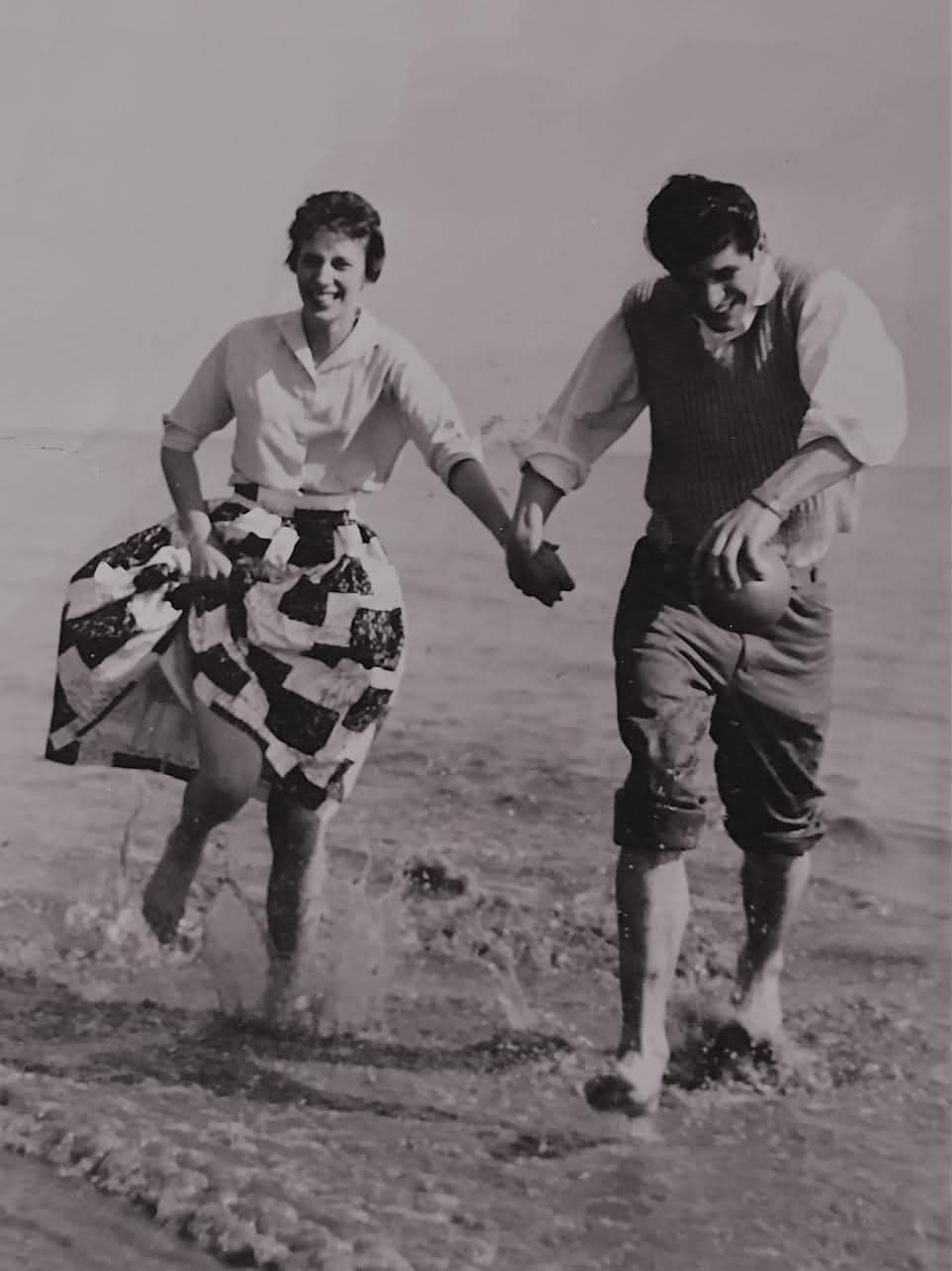
Pop and Nina who would become his wife and mother to my own wife, Rae. Sadly, Nina would succumb to cancer herself in August, 1986.
Pop and Rae. A favourite picture of mine, for obvious reasons.
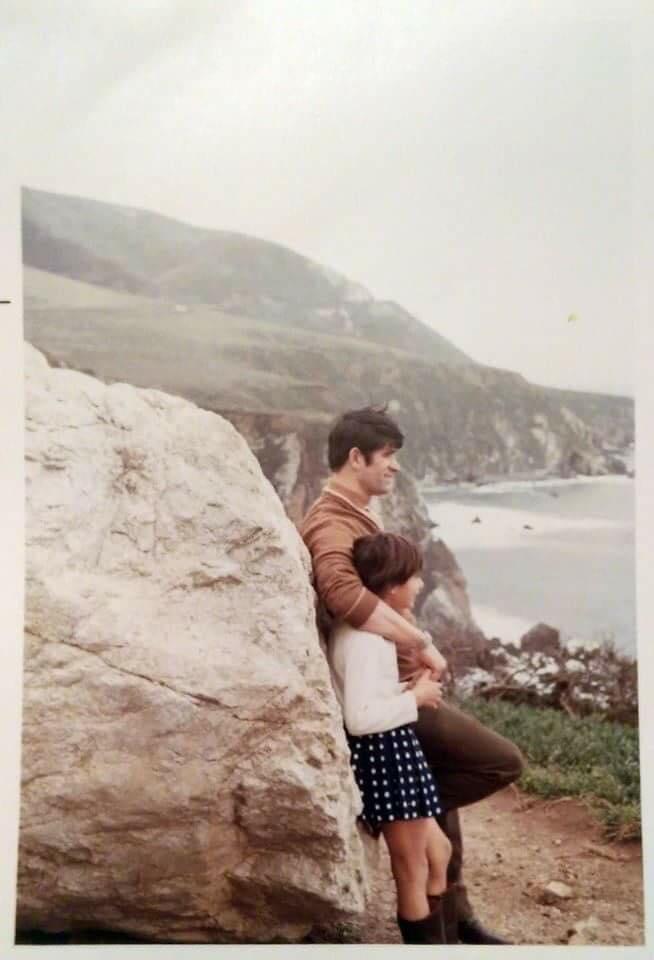
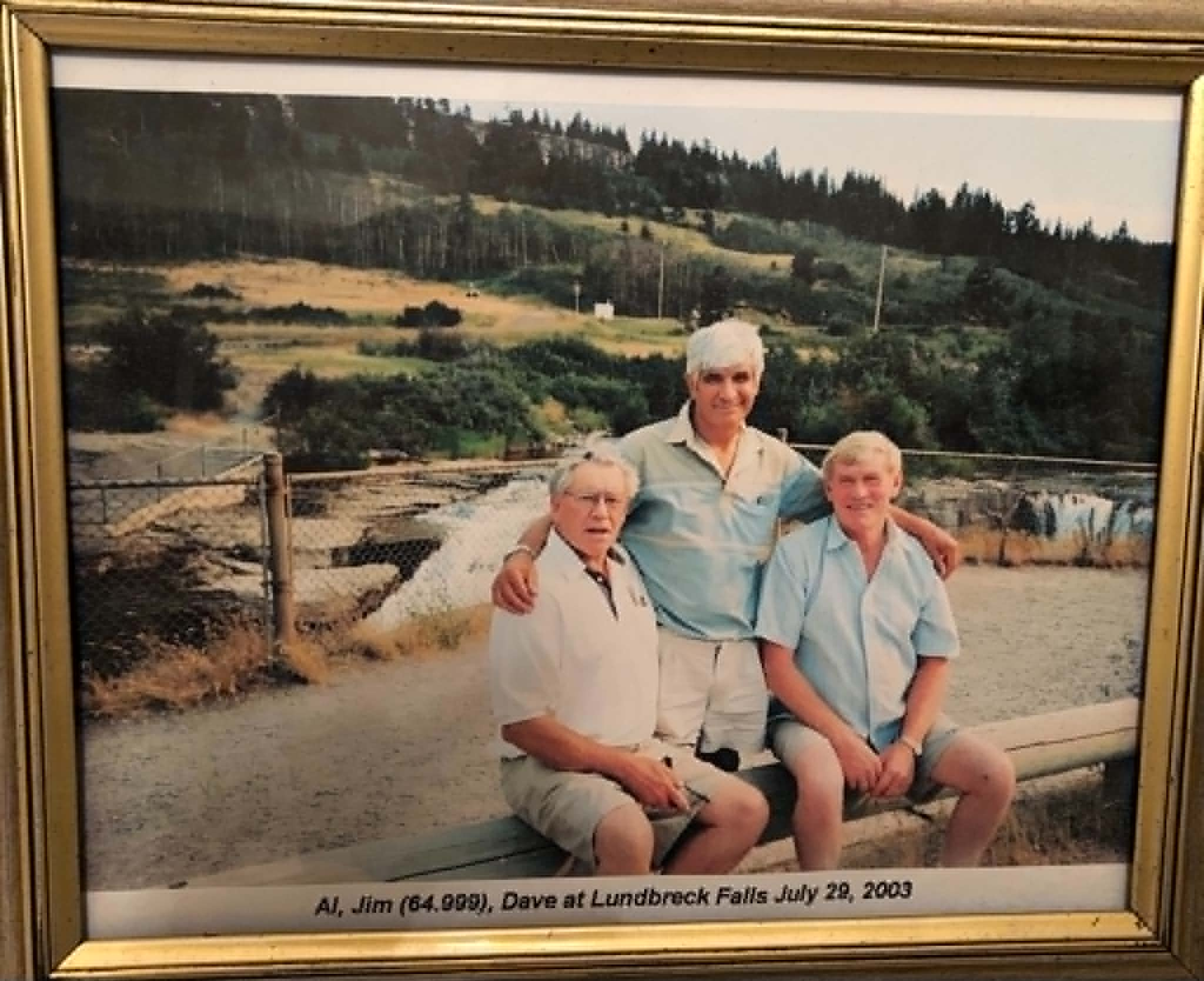
Pop, 2 years before his passing, with his 2 best pals.

