Alas, our journey to the headwaters of Advent and Fragmentia – Adventia – has reached its glorious end. The beginning of new hope, a new road; the way of peace, grace, love, forgiveness. All of it hidden consequentially, but stealthily, in a shivering child born in the trailer park of ancient Israel. To such an inauspicious entrance for grandiose purpose, I think this piece by Cecil Day-Lewis a fitting conclusion to our spiritual and literary sojourn.
Merry Christmas, dear friends…
The Christmas Rose
What is the flower that blooms each year In flowerless days, Making a little blaze On the bleak earth, giving my heart some cheer?
Harsh the sky and hard the ground When the Christmas rose is found. Look! its white star, low on earth, Rays a vision of rebirth.
Who is the child that’s born each year — His bedding, straw: His grace, enough to thaw My wintering life, and melt a world’s despair?
Harsh the sky and hard the earth When the Christmas child comes forth. Look! around a stable throne Beasts and wise men are at one.
What men are we that, year on year, We Herod-wise In our cold wits devise A death of innocents, a rule of fear?
Hushed your earth, full-starred your sky For a new nativity: Be born in us, relieve our plight, Christmas child, you rose of light!
Cecil Day-Lewis was once the Poet Laureate England. He was only child of Rev. F. C. Day-Lewis and father of Daniel Day-Lewis. He was born in 1904 in Ballintubbert House, County Queen’s in Ireland (now Co. Laois). When Cecil was four, his mother died and the family moved to England. This poem is from “C. Day-Lewis, The Complete Poems,” Stanford University Press, Stanford, CA (1992).
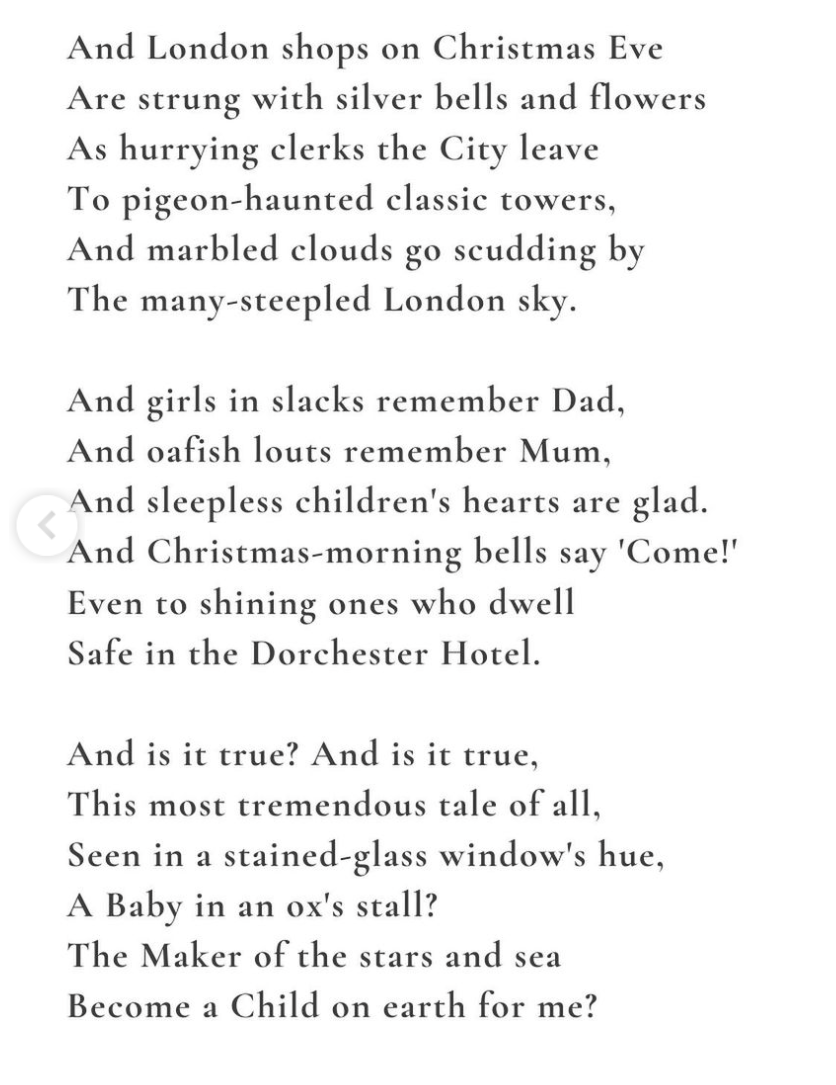
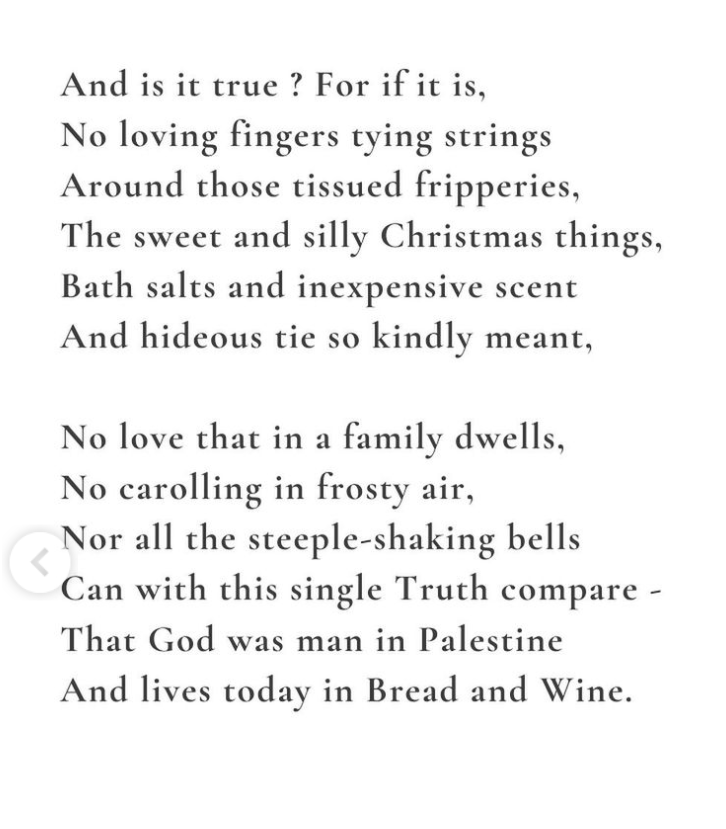
Advent reaches its apex on Christmas Eve. The waiting world, pregnant with longing, grudgingly welcomes a pregnant teenager who will surrender to that world a Saviour, and light is restored to all that is dark. For this, I offer you:
“Christmas” by Sir John Betjeman.
Thanks for sharing this journey with me, and…Merry Christmas!
We have just now passed the Winter Solstice, when light compresses, forced to kneel inside a box less than seven hours long (at least in Edinburgh!), I welcome you to lighten your day and warm yourself with this lovely wee poem by R. S. Thomas, “Song.”
One of the most evocative songs ever. Shane MacGowan’s growly, barroom voice actually adds to the earthiness of this modern day classic. Adventia, day 22 brings you Fairytale of New York by The Pogues.
It was Christmas Eve babe In the drunk tank An old man said to me, won’t see another one And then he sang a song The Rare Old Mountain Dew I turned my face away And dreamed about you
Got on a lucky one Came in eighteen to one I’ve got a feeling This year’s for me and you So happy Christmas I love you baby I can see a better time When all our dreams come true
They’ve got cars big as bars They’ve got rivers of gold But the wind goes right through you It’s no place for the old When you first took my hand On a cold Christmas Eve You promised me Broadway was waiting for me
You were handsome You were pretty Queen of New York City When the band finished playing They howled out for more Sinatra was swinging All the drunks they were singing We kissed on a corner Then danced through the night
The boys of the NYPD choir Were singing Galway Bay And the bells were ringing out For Christmas day
You’re a bum You’re a punk You’re an old slut on junk Lying there almost dead on a drip in that bed You scumbag, you maggot You cheap lousy faggot Happy Christmas your arse I pray God it’s our last
The boys of the NYPD choir Still singing Galway Bay And the bells are ringing out For Christmas day
I could have been someone Well so could anyone You took my dreams from me When I first found you I kept them with me babe I put them with my own Can’t make it all alone I’ve built my dreams around you
The boys of the NYPD choir Still singing Galway Bay And the bells are ringing out For Christmas day
Songwriters: Jem Finer / Shane Patrick Lysaght Macgowan
George Herbert (1593 – 1633) was a Welsh-born poet, orator, and priest of the Church of England. He hailed from a wealthy family and his poetry is recognised as some of the greatest in the Christian devotional canon.
The radically counter-cultural nature of the Advent narrative demands poetry of equal heft and teeth. Few are better positioned to contribute such as Óscar Arnulfo Romero y Galdámez (15 August 1917 – 24 March 1980). Catholic prelate and later Bishop of El Salvador became a martyr in his outcries against the social injustice and violence amid the escalating conflict in his homeland. He perished by gunshot while serving Mass. His spirit is the very spirit of Advent itself: love invading hate, light invading darkness, righteousness invading chaos.
No, the above is not meant as some cheap attempt at a New Joizy accent with the word adventure. Let’s just call it the purposeful amalgamation of Advent and Fragmentia. Let it be a place where the illumination of God’s in-breaking into our world found in the Advent narratives unites with the fragments of literature and faith and life seeking to bring us to deeper understanding of it all.
Advent is upon us once more. With it comes a barrage of books and practices all aimed at helping us get the most from the experience. Last year I chose to post a daily poetic reflection on my poetry website. This year I’d like to do something similar here on innerwoven. It gives me opportunity to dive deep into some of the best words about the best time of the year; the beginning of the church’s calendar at Advent. These poems are both old and new and are found in various places.
For Advent, day 1 we begin with a gorgeous piece by Sally Thomas, which I saw first on a favourite Instagram channel, #realpoetsdaily
Here is “First Sunday” by Sally Thomas ( @sallytnnc )
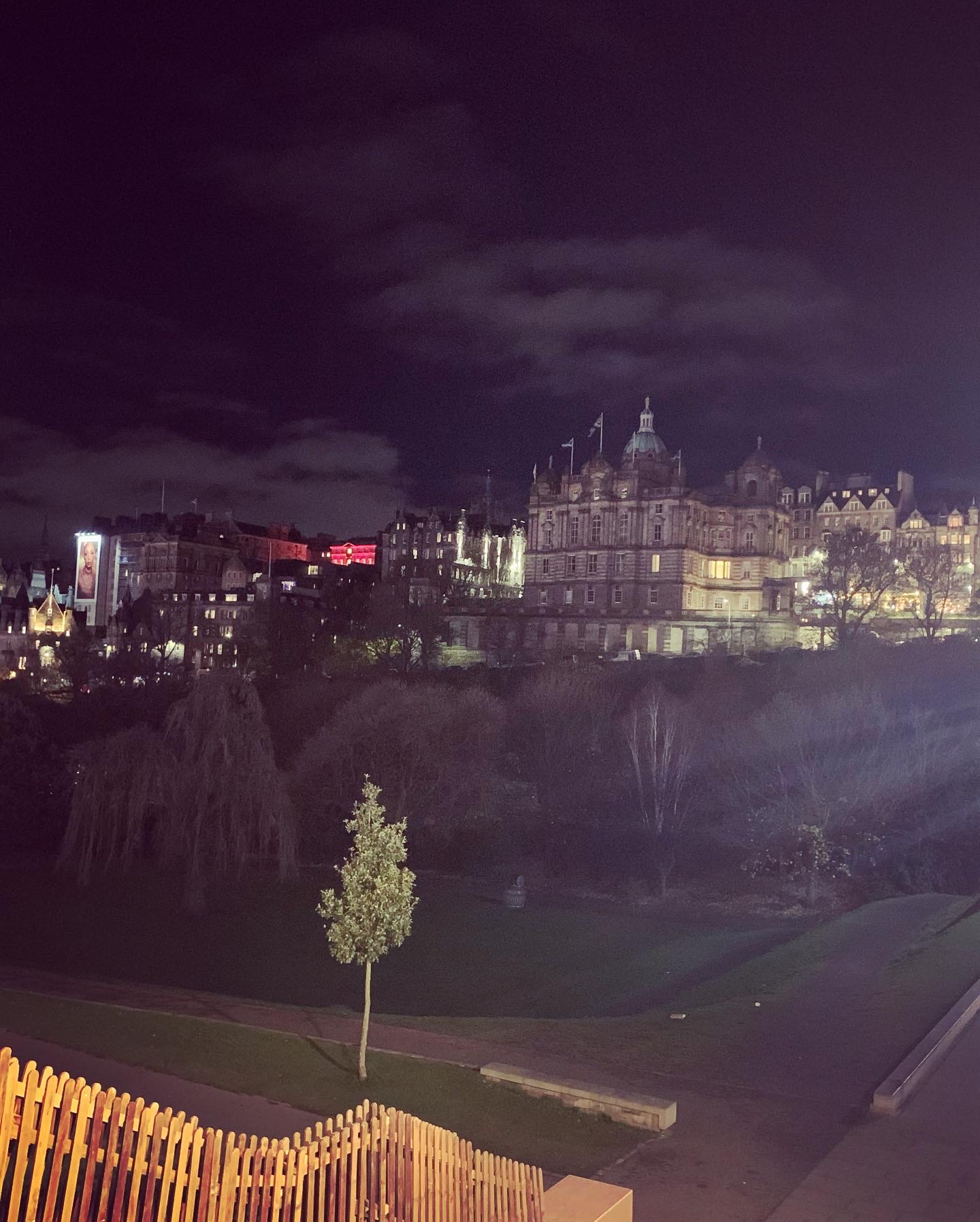
Looking out from the Christmas Festival on Prince’s Street
The air feels sharp. Like a paper cut on dry skin. The same air that is moderated by the sea is also saturated with it so that the wind denies however many layers one can throw at its defence.
It’s a good thing this city is so photogenic. She blushes with feigned humility at every turn, dipping her shirt to reveal her grey-stone breasts just enough to draw you to her. But, as you draw near, her manner reminds you that you’re a mere stone’s throw from the North Sea.
In early Winter.
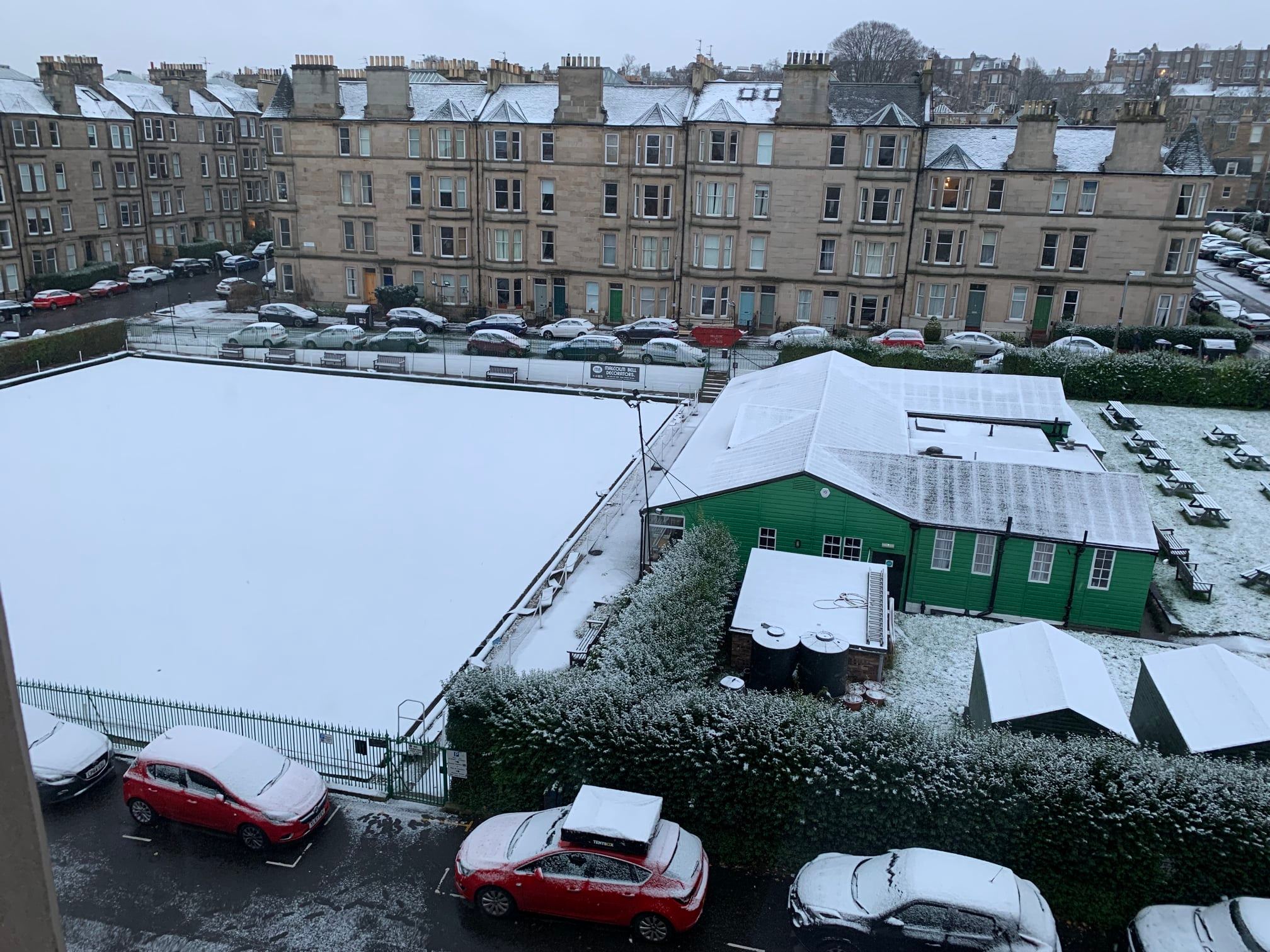
As seen from our window, snow comes wistfully to Comely Bank.
Anyone who follows us on social media, or has been within camera or earshot of us in the past few weeks, is already aware that my wife and I live now in Edinburgh, Scotland. We haven’t stopped talking about it. You ever hang around new parents and they never quit talking about their newborn? Yeah, it’s kinda like that.
Everything is new. We have new UK phone numbers almost impossible to memorize (memorise). We are learning to write dates day/month/year. We’ve traded a five-number zip code for a postal code with two caps, a number, another number, and two more caps. We’re learning what it’s like to shop for days of food at a time rather than weeks. We’re learning the complexities of laundry in the UK, a process not unlike rebuilding a laptop.
Thanks to the relative compactness of Edinburgh streets, we’ve taken like pros to something we would never have done in North America, ride a bus. We walk everywhere else. Living in the relatively central district of Stockbridge I call this the “one-mile zone.” We can walk almost anywhere we need to be, including downtown (uptown as the locals call it).
The glaring lack of any formal Thanksgiving tradition here is regrettable in one way, given the many memorable observances we’ve enjoyed over the years with family, friends, and one unlucky turkey. But, it is also a wonderful thing not having to engage in the inevitable, often heated, debates about Christmas decorating starting “too early.” Despite its lack of liturgical credibility, “too early” for me would be mid-October, not American Thanksgiving which just happens to fall less than a month from Christmas.
Edinburgh loves her Christmas decorating. She does it well, with a voracious thoroughness that causes Mrs. Claus to blanche at the sight. Is it thoroughly secular? Yeah, pretty much. Is it beautiful and welcoming? Absolutely. Which, as you will recall from my earlier post on the Enneagram 4, is my love language.
Beauty is next to godliness.
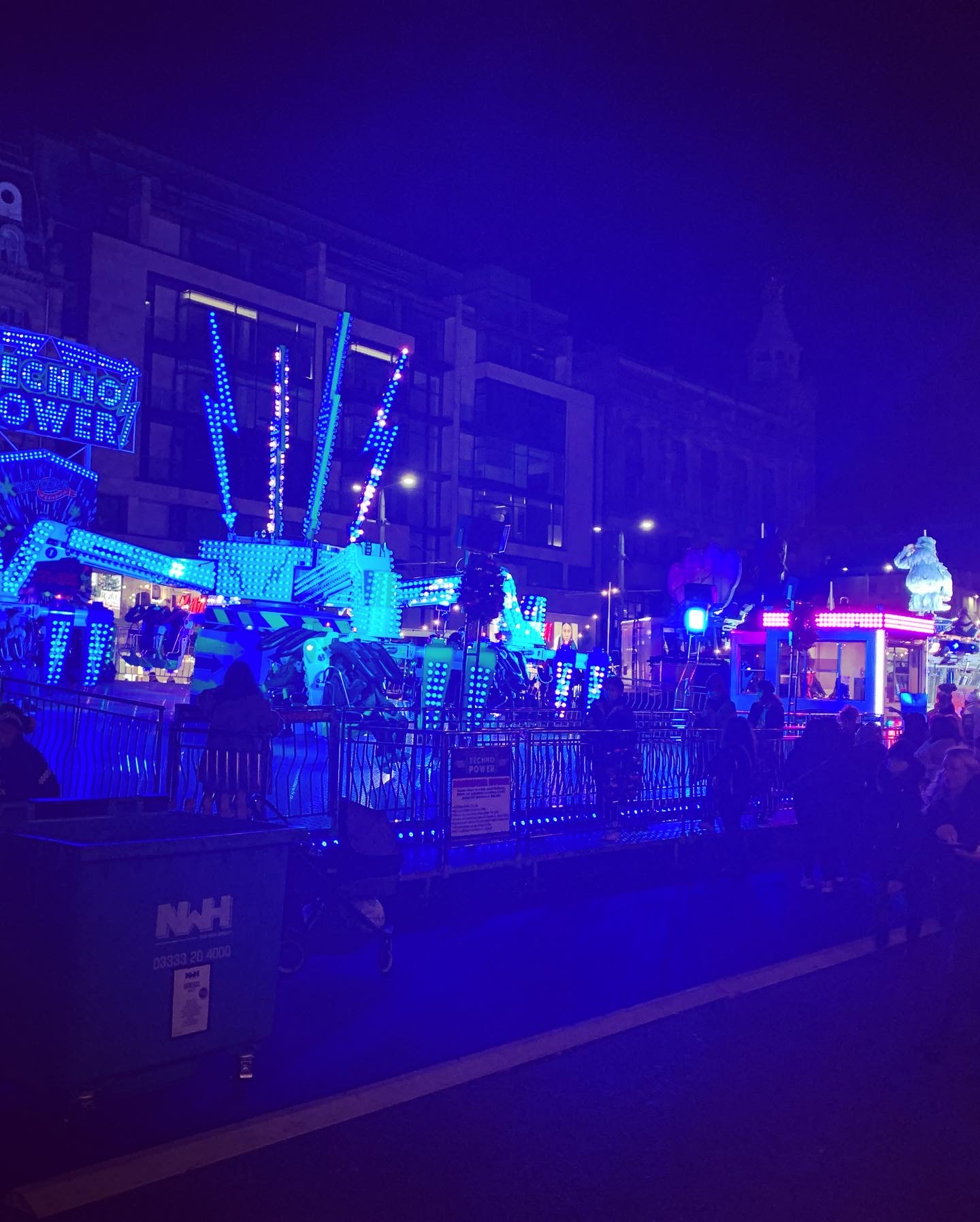
Blue Christmas
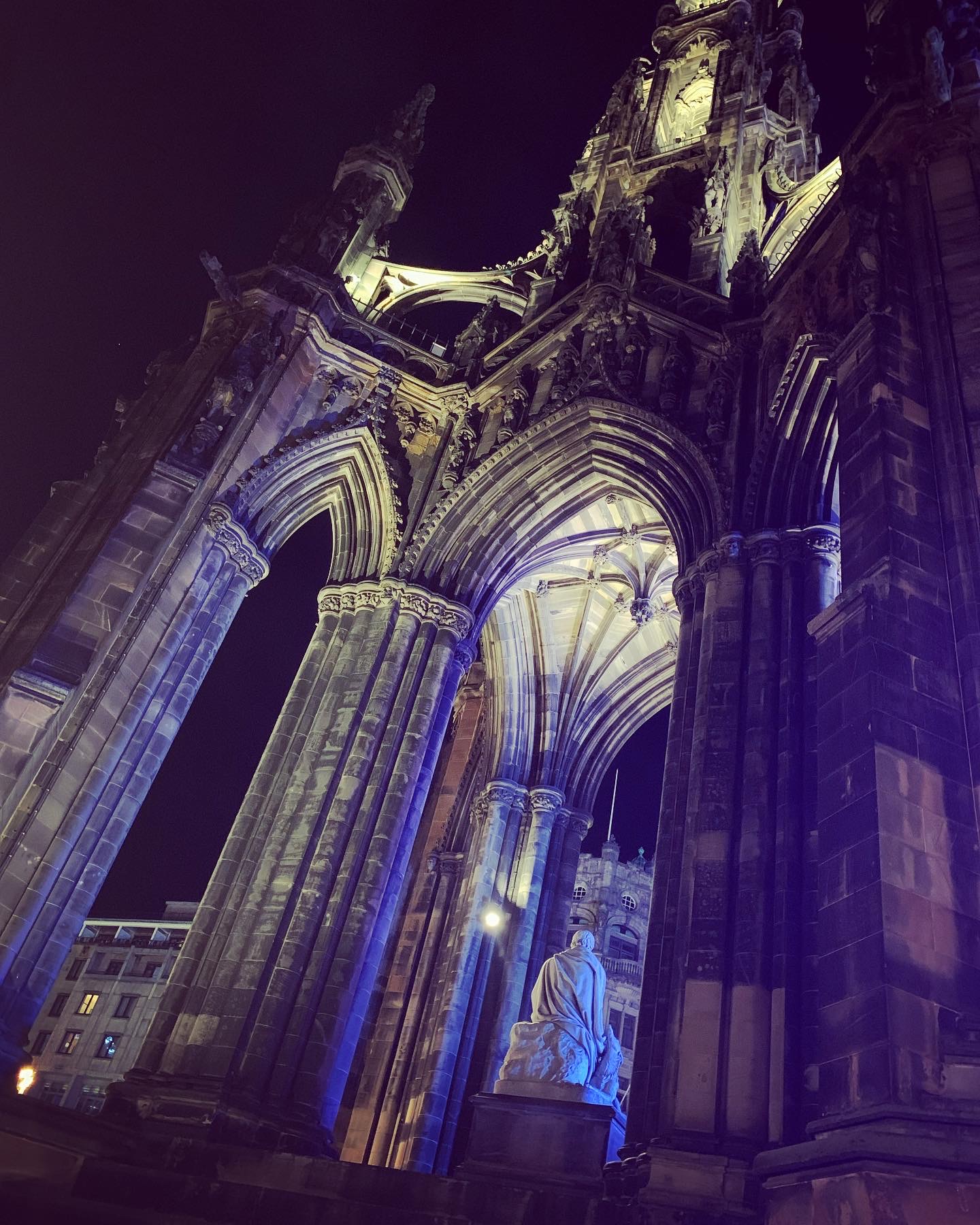
The Walter Scott Memorial
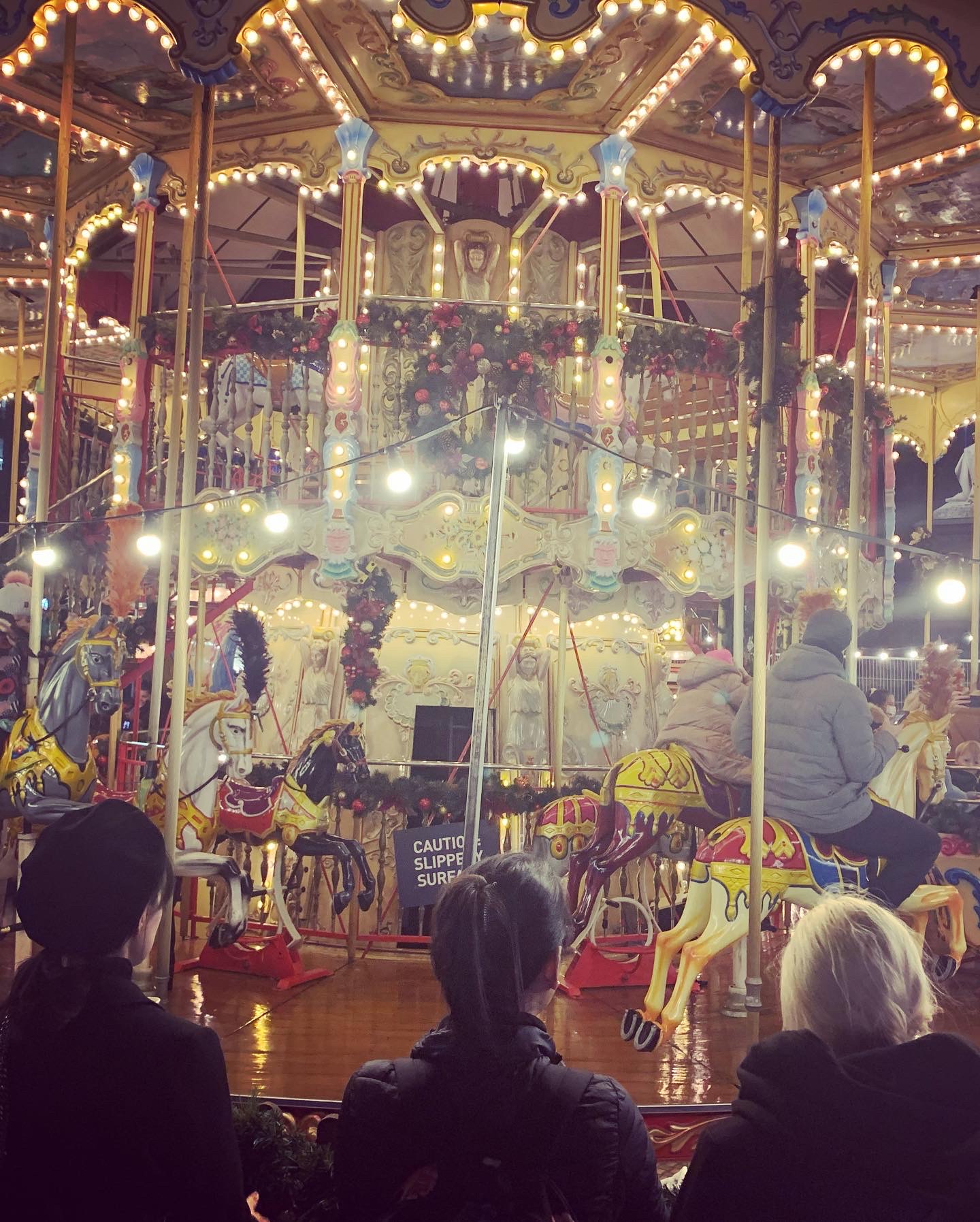
Merry-go-Round
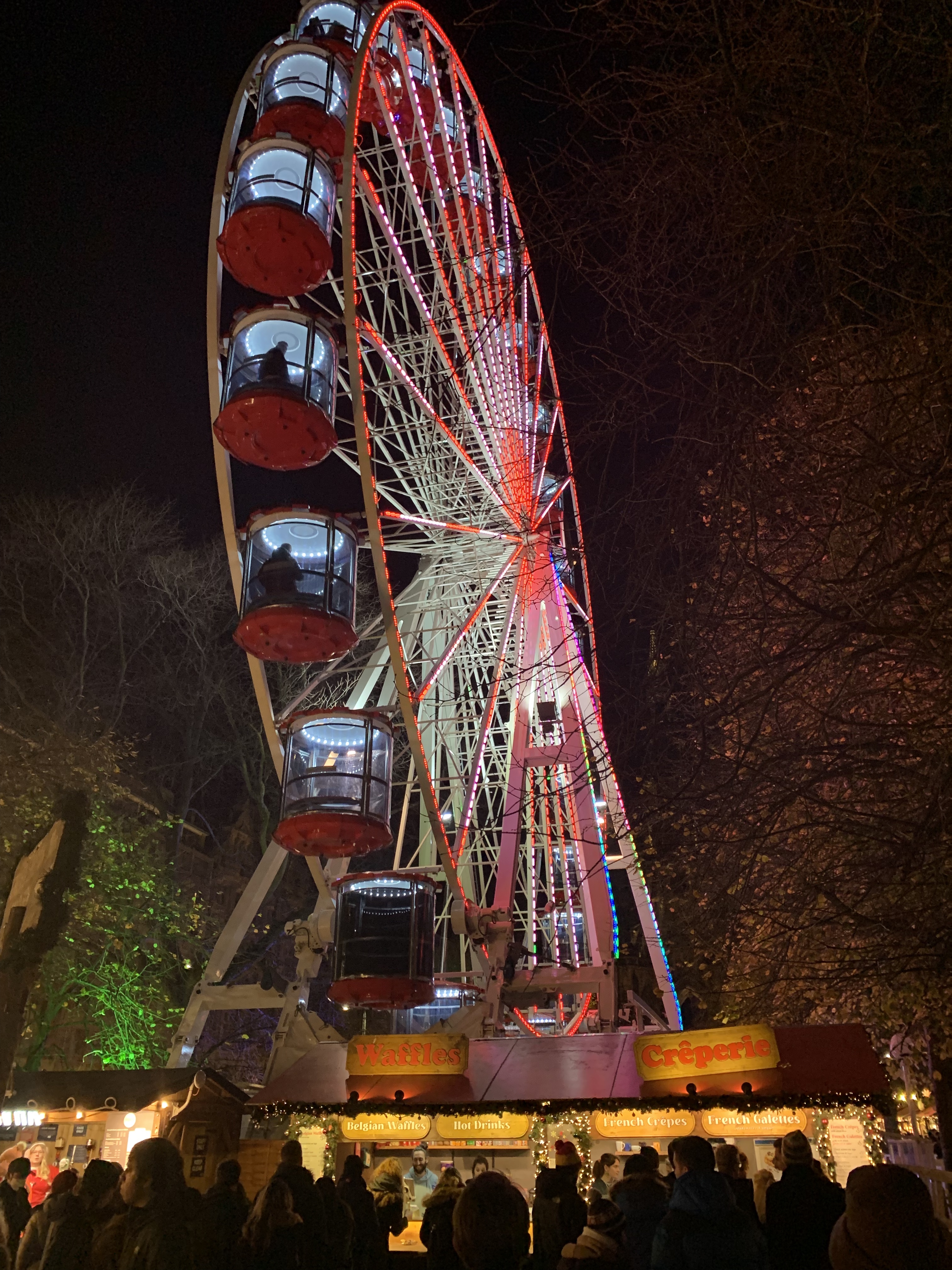
Big wheel keep on turnin’
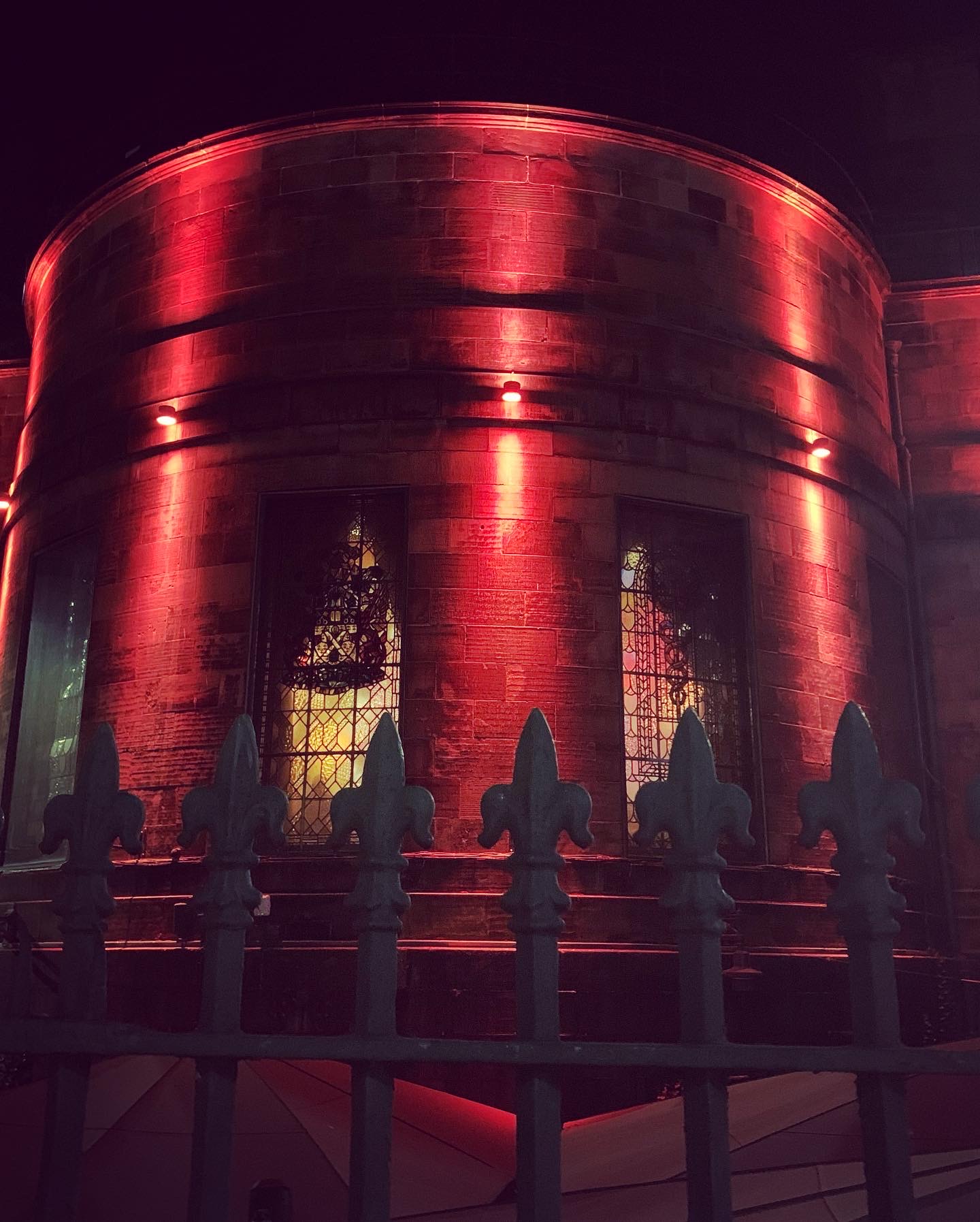
Edinburgh has lighting down to an art.
More Edinburgh lights
The door’s the thing.
I’ve often questioned artists who claim their particular geography to have the “best light” when they live where there’s nothing but an abundance of it, washing out all colour and nuance. When light is involved, “most” does not equal “best.” My soul prefers its light at a premium; where it changes much, leaves me alone for long periods of time, and is therefore, precious.
Granton Harbour in morning light, shrewdly shrouded
For me, Edinburgh in winter is that place.
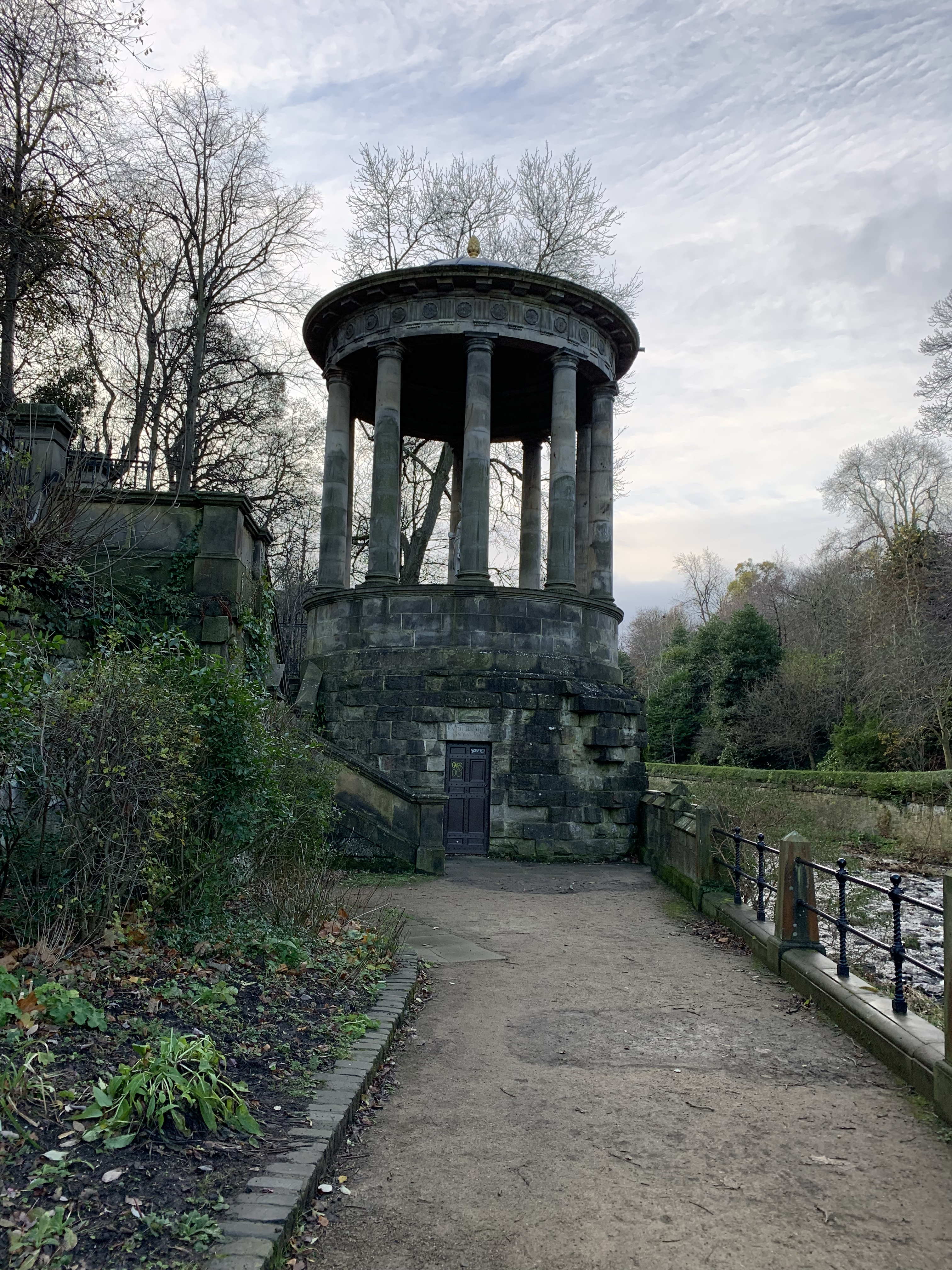
Pathways beckon
St. Bernard’s Well, Leith Parkway
A runner for many years, I confess that the best pathways for moving contemplation are these damp corridors of green-framed stone and shadow. It is something about subtleties where colours can pop because they’re not constantly blanched by direct sunlight. There’s an existential complexity to it utterly lacking in sun-drenched regions.
I have the opposite of seasonal affective disorder (S.A.D.) I’m depressed in constant sun. Nothing changes. It’s like trying to drink from a fire hydrant…all the time. It’s too much, too often, for no reason.
The breadth of human experience requires more than the cheap seats at a bad movie. It needs emotional distance, space to laugh and hurt and question and doubt and start all over again. The heart needs lament; needs thoughtfulness, discernment, the tepid wondering for which it is engineered. I agree with Pàdraig Ó Tuama’s review of Dunez Smith’s amazing poem, “I’m going back to Minnesota where sadness makes sense.” where he states, “not everyone needs to live in perpetual summer.”
Yes. That.
Gravestones at St. Cuthbert’s Kirk
St. Cuthbert’s
2021. This will be our first Christmas away from our boys. Either one or the other, or both, were always with us for the holidays. However, given the weight of God’s call upon us to love and serve Edinburgh, it seems not so high a price to pay, given the great returns we’ve already enjoyed from this incredible place. Besides, our laddies are squarely in God’s hands every bit as much as we, or anyone else.
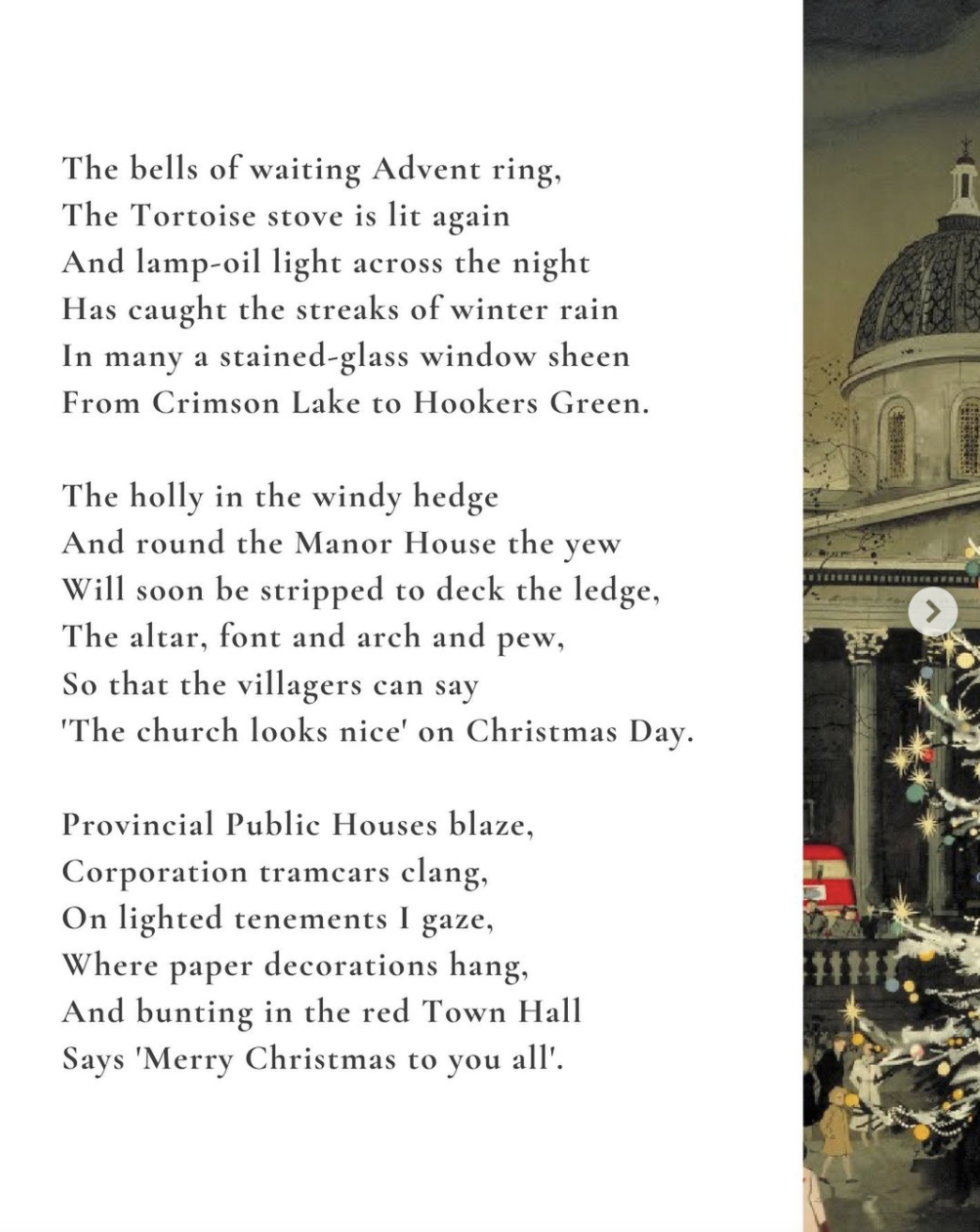
Advent reaches its apex on Christmas Eve, pregnant with longing, when a pregnant teenager will surrender to the world a Saviour and light is restored to all that is dark. For this, we offer you this poem by Sir John Betjeman entitled simply, “Christmas.”
Thanks for sharing this journey with me, and…Merry Christmas!

















 innerwoven