Glimpses IV: the spirituality of home

With this topic I enter through a small door into a big room. I do so on tip-toes so as not to awaken any sleeping giants. Home, like love is a word deceptively larger than its meager 4 letters suggests. In my 48 years post-womb I have been many people to many people with many people. A social chameleon, I guess I thought it best to live vicariously through anyone other than myself. Their stories were better, more invigorating or inspiring, or more inclined to win female attention or male praise.

As a result, home, both as place and idea, hasn’t always had the centrifugal force it is supposed to have. From time to time, life has felt a bit disjointed, like a balance with an ill-positioned fulcrum. It’s always a little off. Move it enough and one forgets where the center was to begin with.

Most folks enjoy at least a minimal sense of who they are and when their boundaries are breached. Whenever something foreign or unnecessary storms the walls of their identity they have a means of objective detachment whereby to judge their suddenly unfamiliar surroundings. I, apparently, lack this essential characteristic.

Why?

Is it my artistic, non-logical, non-empirical sensibilities? Perhaps the fact that I’m adopted? Could it be my “progressive” sensibilities (think protest songs, Kumbaya group hugs and flannel shirts), my piss poor memory or some unseen psychological malady(s)? Bad gas? It is as baffling and frustrating as it is intriguing.

The result is the fact that home needs redefining for me – renaming even; something broad enough to encompass my complexities (annoyances to those who know me best), focused enough to provide sufficient context for who I am becoming and “Jesusy” enough (thank you, Anne Lamott) to be honest, self-sacrificial and have lasting trajectory with ultimate meaning…oh, and perhaps a hint of compassion.
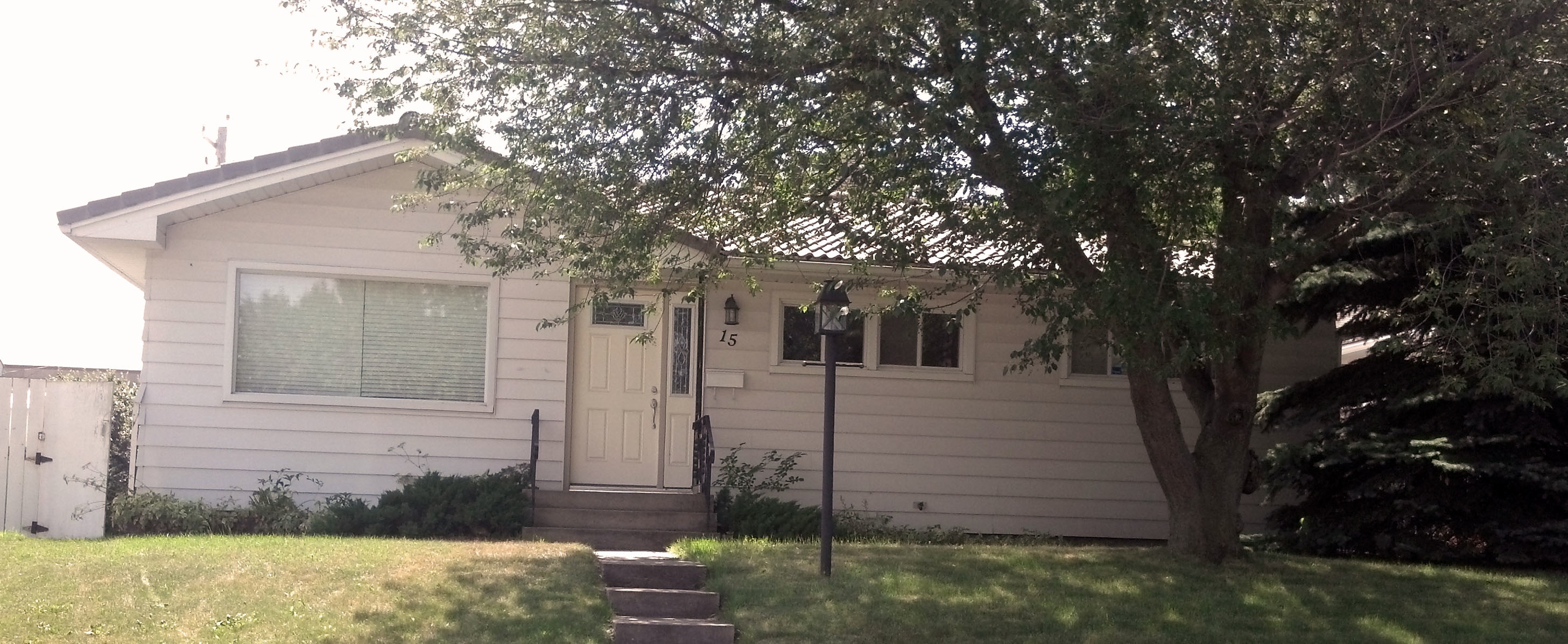
(The 950 square foot bungalow in Calgary where I grew up)

A recent trip to my home-turf of southern Alberta left me with these thoughts:

Home is not geographical as much as spatial. It involves an awareness, a familiarity as it were; that place “where everybody knows your name.” I know it and it knows me. There is no awkwardness or second guessing. I understand the politics, the inside jokes, the acceptable or unacceptable faux pas. The prevalent bigotries, hip views, “in” restaurants, “now” looks. The shortcuts and back roads to places only I know or care to know.

In other words, home is where we know and are known. It is about who we spend our lives with and why. We are most home when surrounded by those with whom we share life, both good stuff and bad. We are home when someone cares enough to be pissed off at us or play practical jokes on us. Or cry with us.

Here is the challenge however. As good as all that sounds, it’s still an unsure footing for something as untamed and uncertain as the spiritual life. It makes a ton of assumptions, many of which grow from our home-grown, Western world, Waltons mentality. What if I’m blind and cannot see the above gifts? Deaf and cannot hear the words of familial comfort or humor? Comatose and cannot experience them? Mentally incapacitated so as to deny full involvement in it all? Incarcerated or worse? Where, then, do I find “home”?

If anyone stood well outside the comfortable, normal or expected, it was Jesus. His was not a simple move across the country or even the globe. The journey he undertook landed him amid the harassed mass of fallen humanity of which he was now a shareholder. Where once he enjoyed the benefits of Trinitarian dwelling and the benefits thereof, he passes through a birth canal into the cold world, created for, through and by him. Jesus’ example and presence makes home possible even in the least likely locations.

Why?

He gave up his “home” in order to give us ours. And that’s good enough for me.
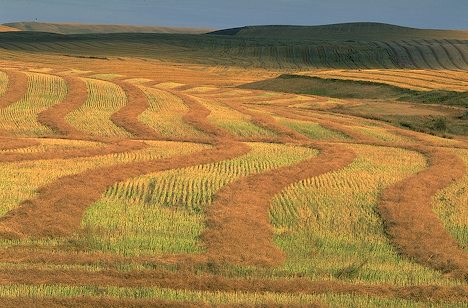
Wheatland


In supine repose she reaches out

with verdant arms of brown and yellow-green,

to clasp her bony fingers in sensuous release

with the vertical horizon.

Skies, gray and whole, play ninety degree tug-o’-war

with grass, prickly hay and knobby-need shrubbery –

rough ‘n tumble farm stubble.

Short shacks and weathered barns

pimple her broad back

alive with promise of more.

Suggesting we but see,

she insists upon her miles-wide self.

Sometimes she sleeps and forfeits life,

longing for heaven’s lusty drool.

This long land has much to speak,

her hard, crusted lips pursed

to kiss only those who see her –

and hold their breath.


Mosquitoes

Buzzing here and floating there,

No conscience, heart, nor tether.

You fill your guts on all my guts

And love this perfect weather.

You bob and weave, you little wretch

To seek your bloody booty.

Your little pin-prick savag’ry,

Your loathsome call of duty.

To squash and maim and flatten you,

‘tis all my heart’s desire.

But conquer one and ten more come

With no plans to retire.

And when I stand at heaven’s gate

My journey to unravel,

Says God, the Lord, the judge of all,

“mosquitoes were my gavel.”


The song of poplars

My previous poem, Waiting was the first of the series. Here is the second in an oncoming barrage of poetry culled from my recent vacation back to my home stomping grounds in and around Calgary, Alberta.


These stands of poplar stand,

alone and stolid and sure;

rejecting all

but light and warm and good.

Their sullen song, languid and low,

lulls my mind from sure to still,

from still to rest,

from rest to rise once more –

to stand.

Their hands upraised, entwining fingers

united in their thoughts;

committed to their cause.

Here, no injustice nor impatience find –

only singing.


Waiting…

Shoulders, steeped and round,

massaged by sun of warming, come.

Toward a future point of reference

a heart sits still, its mourning not yet done.

Below deck, crouched in the basement

of this soul, a candle flickers, reluctantly warm,

the only light in this small room.

Crouched, alone in this auditory poise,

tired muscles quiver, weary from waiting,

taut from this long and painful silence,

outrageously shouting their demands –

“be still

and still, be.”

Glimpses, part III – thin places

Two people stand on either side of a white bed sheet suspended from a clothesline. As it billows and blows this way and that, you are given a passing glimpse of someone standing on the other side. The image never stays long enough for you to determine its shape or identity. Your curiosity is piqued enough however to move closer to the sheet. The breeze stops momentarily and you place a tentative hand upon the sheet, now still and waiting. Your hand feels cool fabric, thin and light to the touch.

To your surprise at first and then to your delight, a hand presses against yours from the other side, the side that hinted at an image impossible to confirm with your eyes, untrained for such visions. Two hands touch, finger to finger, palm to palm and there is recognition. It is the realization that something holy is transpiring. The sacredness of it hangs in the air like a heavy mist. You stand, breathless, waiting, uncertain – yet somehow…sure.

That is what the Celts have called, a thin place.

Peering out my hotel window onto the suburban Portland landscapes, a collaboration of grey sky with green horizon conspires against my equally somber mood and confirms that this overstatement of beauty is underrated. It is a melancholy scene uniquely designed for creatives and mystics like myself. It doesn’t parade itself, shouting in one’s face like the endless, overly peppy summer days my fellow Yakimanians insist upon.

No, this multilayered beauty lets me seek for it. There is the obvious beauty one sees immediately with the eyes. But there exists an indirectness, hinting at something still deeper, under the skin, as if to say, “if you think this is beautiful, just keep looking…” Here it is that Hopkins’ “dearest freshness deep down things”, for me, makes the most sense. One feels that to plumb the depths of one level of this spongy flora is merely an epidermis covering the heart of the matter many floors down where every living thing converges, colliding to become itself all over again.

See the following poetic inspiration from this same journey from Yakima to Portland.

The green of Oregon. A thin place.

I always say in such heavily wooded areas, as I do near the ocean, that the air has a finished quality to it. It lacks for nothing. As a family, we loved to spend a great deal of time on the beach when we lived in Oregon. Along with our two boys, our dog and a Frisbee, it was not uncommon for us to take lawn chairs and a host of reading materials, planting ourselves confidently on our tiny plot of sand. From there the wind, waves, body surfers, gulls, joggers and beachcombers would teach us of the God who makes sense of the small and great, loud and quiet, still and quick. One of those many times garnered the following poetic triptych posted elsewhere.

Thoughts from the beach…

To commemorate a beach walk with my wife.

1

Beauty.  Random squalor in effortless

wave deposits her treasure.

In our efforts to build that which

hand could never grasp we trade

Quintessential.  Queer.  Quiet for

Quantifiable.  Quick.  Casual.

Oh, such grand wordless words-

wonder, world-watched prayers

waiting…waiting.

That which is unseen – now

I see.

2

Wind-soaked beach-stained

dark; darker still where waves

kiss the sand of my imagination.

Flat boards float on round earth

playing with my finitude and finer still,

fill my earthen breath with

deeper wind.

3

Dare she flit on so light a wing,

fading into vastness, blue-

the sky and water, one;

where one defines what much cannot

in so many syllables contain-

the vast smallness of it all.

May 12, 2003

The ocean. A thin place.

Forest Conversations

I love Oregon. Whenever I come here from my home in Washington state I instantly feel at home. The following short poem is intended as a word picture of my conversations with God in, through, around and because of, the Oregon forest.


Forest Conversations

Darkling and twisted in orgiastic biospherean splendor,

the forest tweaks the shoulders of the mountain

and turns her head to speak of things unknown.

The hump-ed shoulders of mornings’ mild and misty manner,

spreads like green butter before the feet of day.

I can hear her whispers, stirrings on the woodland floor

where creatures run and leavings left behind from

windy hollows and sapling’d soldiers standing still

in disciplined ranks en-mossed in jade

and rustic, ruined wonder.

Had I been here before, there might not have been

these turning, tree-worn thoughts of a day

fit for sharing.


Come, and live

Oh, that I might dwell in translucence,

opaque in wonder for what might yet come.

My soul whispers

those words I most long to hear:

come, and live.


For merely ingesting the sting of this,

the hope of that

is no guarantee of learning the good,

the acceptable,

the perfect.

Instead, let no other respite, nor peace askew

nor eye askance deter from the goal:

to will but one thing.


“Come, and live.”


Glimpses, part II – the spirituality of place.

Where a person is can be as important to one’s spiritual development as what they believe. Long have spiritual masters proclaimed the benefits of sacred places. The Hebrew scriptures are replete with God’s directions to Israel to mark out territories prescribed by God that would both demonstrate God’s faithfulness and Israel’s special role in God’s redemptive economy. From the irrigated, verdant hills dotting the landscape around his hometown of Galilee, Jesus would spend countless hours with his Father. From such wilderness haunts he would find nurture, tenacity, strength, succor, and, frankly…answers.

So much of who we are and what we are becoming is directly attributable to the places that have graced us (rhyme subliminal but entirely intentional). In the comparative spiritual laissez faire of Constantine’s newly Christianized Rome, Abba Antony of Egypt started a mass exodus into the deserts of Egypt, those who would become known as the Desert Fathers and Mothers. The barrenness and desperation of the desert mimicked a similar cry deep within the hearts of these enigmatic souls. What is the obvious lesson? When there isn’t anything to titillate the senses, one might as well deal with the soul!

As a result of their foray into geographical nothingness, they became everything. They became the fullness that lies beneath the surface of what one misses when only seeing the desert sand.

The Celts, well known for their keen kinship with their environment, made much of this desire. Not unlike the Native populations of the US and Canada, not a feather of wing-ed bird, nor bark of tree, nor single trickle of rainwater escaped their notice. All carried within it some morsel of meaning for them.  Because everything received notice, nothing got wasted and this outer kinship found expression through inner resolve and great spiritual creativity.

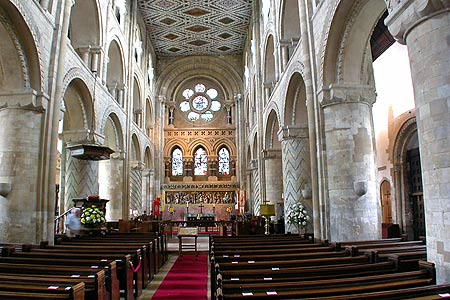
My own holy places, the cairns of my wanderings, are generally old, rather solid, often drafty and poorly insulated, but full of the memory of stones that have long cried out to their Maker. Long have I had an historical and spiritual affinity for those stuffy, rarely air-conditioned chapels that never cease to draw me elsewhere…to the great Other. Let me share just a few.

St. Saviour’s Anglican Church sanctuary in Nelson, British Columbia where for a number of years I taught at a Highland Bagpiping School (a place where other strange souls like myself learn to tame a five-legged creature designed to rouse neighbors and destined to arouse suspicions). Connections in the community opened the door figuratively and, in this case, literally, to spend as much time as I wanted in the church sanctuary after everyone else had gone home. I was given a key and carte blanche run of the place.

Most evenings after a long day of bagpipe students, some whiny, some lazy, all of them noisy, I would retire to the sanctuary with my pipes. For an hour or so I would simply play, enjoying the epic reverberance of the sound bouncing off the hard stone walls, and finding no sonic respite from the hardwood floor. It was, for me, the closest I had yet been to what I might have then described as heaven. At times it was 2:00 am before finally getting back to my room.

The hospital chapel in the same city was another such place. I was falling apart after a recent break-up with a girl to whom I had been engaged. My shattered interior was gradually reintegrated in that little chapel where I would weep and pray for hours, listening to John Michael Talbot, or the Monks of the Weston Priory sing beautifully doleful refrains. It was for me, through gallons of heart-crushing tears, the perfect requiem to my stubbornly elusive peace of mind. It would become the Introit to a new place of healing and restoration, albeit gradually.

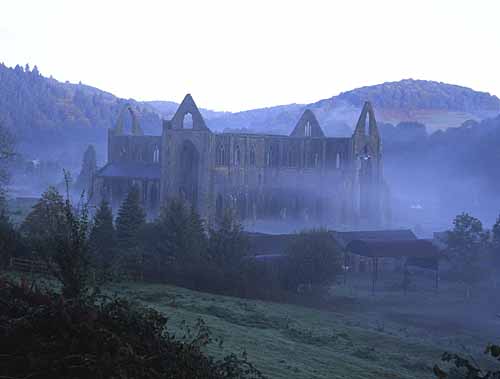
Tintern Abbey in Wales, the place I believe could be boasted by angels as heaven’s waiting room, the lobby to eternity. My first experience of this roofless wreck of holiness was following a six month sojourn as a missionary to youth in Edinburgh’s rough Pilton district with my new wife of a year. We were tired and needed time to traipse about the land of our ancestors (and her relatives) before returning to Canada, unsure of what awaited us there. The warm, lazy day infused with the angular light of Fall caressed the ancient stone walls easily visible from almost anywhere. The pointed gables of apse and nave bespoke a darker but simpler time. All we could do was sit and pray.

Less than two years later a picture of Tintern Abbey would help pull her through a terrible first pregnancy with our son, Calum. The same photo performed this function five years later as our second son, Graeme, reluctantly succumbed to womb-ed pressure and left his humble abode to make his premier. However, it is difficult to compete with William Wordsworth whose words best complete this picture:

While with an eye made quiet by the power

Of harmony, and the deep power of joy,

We see into the life of things…

And somewhat of a sad perplexity,

The picture of the mind revives again:

While here I stand, not only with the sense

Of present pleasure, but with pleasing thoughts

That in this moment there is life and food

For future years. And so I dare to hope…(Wordsworth on Tintern, 1798)

Everyone can point to at least one place where something important, even seminal occurred and they sense something is different. There it is that our life has been forever changed, perhaps only incrementally, but transformed just the same.

I believe it is God’s way of playing spatial peek-a-boo.

Think deeply of a place or two that have been places of rest and reconstruction. Picture that place in your mind. Now let that picture juggle your heart.

As you do so, re-member the pieces of you that may have been broken or lost in that place. Quietly give thanks to the God who loves to find us where we’re least looking or at least looking the other way.

words…

July 23, 2009


these time-rushed blips like panicked squirrels

refuse submission to

my lesser purposes; partnered anti-coagulants of

time and chance

pursue this restless memory till

soul tames mind

and sanded feet remind salted nostrils

of their richer fare