There you will find me

dust


In the spaces between the leaves,

in that breath of less than more,

in pieces of air, which stand

among the ruins of our yesterdays;

there you will find me.

* * * * *

In the hours between the seconds,

the seconds beyond the years,

the minutes of our days;

there you will find me.

* * * * *

In the sediment of memories,

in the pale, blueness of tomorrows,

in the spoken, unsaid goodbyes;

there you will find me.

* * * * *

In the palm of our hopes,

in the inward grope of our fears,

in the flight from our grey to green;

there you will find me.

Photo at www.adlib.blogs.com 

Follow me…a litany

images


How good it is whenever we leave all false agendas, desires, plans, schemes, thoughts –

our very selves behind and obediently follow the Master without hesitation.

…and he said to him, “Follow me.”

How good to imagine a world where those without hope are given hope

because the community of Jesus follow the leading of their Master and Teacher

and bring this hope in all they say and do.

…and he said to him, “Follow me.”

How good it is to host the Presence, keeping company with sinners, tax collectors, lepers and the outcasts.

…and he said to him, “Follow me.”

How good to have ears to hear the voice of Jesus calling to us,

urging us to follow him wherever he goes,

participating with him in bringing the new wine of God’s kingdom to light around us.

…and he said to him, “Follow me.”

How good to live before God every moment with godly sorrow for our sin,

fully embracing our brokenness in honesty and authenticity.

…and he said to him, “Follow me.”

How good to celebrate with all whose repentance brings new life

and an accompanying deep life change even when such celebration causes raised eyebrows.

…and he said to him, “Follow me.”

How good never to allow ourselves to succumb to religious peer pressure

that traps one in the smothering flames of imposed, restrictive faith life

and thereby lessen the gospel message in compliance with it.

…and he said to him, “Follow me.”

How good never to succumb to the same judgmental spirit which produces and perpetuates religious peer pressure.

“Father forgive them, for they know not what they do.”

…and he said to him, “Follow me.”

How good to taste the old, complexly rich and fragrant wine of our forebears

while working in the vineyard alongside our Master Winemaker.

…and he said to him, “Follow me.”

How good to be in our places of work, looking left and right

to find those of ill repute and the despised with whom to drink new wine.

…and he said to him, “Follow me.”

How good to stand in the place where others are,

be the voice of Jesus calling to them, saying “follow me”

and teach them how to catch others in the net of grace.

…and he said to him, “Follow me.”

How good to be those who hold the redemptive instruments of grace

at the bedsides of the broken together with our great Physician.

…and he said to him, “Follow me.”

How good to bring encouragement to all whose “bridegroom” has been taken from them

either by sickness, death or malfeasance.

…and he said to him, “Follow me.”

How good…

How good, indeed.

Praise be to the Lord of all lepers, losers, limpers and lovers.

…and he said to him, “Follow me.”

Photo from www.sermonreflections.blogspot.com

Psalm 1:1-3, a litany of confession

awesomestories.com


Photo found at www.awesomestories.com


In humility and faith, let us confess our sins to God and neighbor.

Kyrie

©2008 by Robert A. Rife

Kyrie eleison, eleison;

Christe eleison, eleison;

Kyrie eleison, eleison.

(repeat)


Lord, have mercy, have mercy on us;

Christ, have mercy, have mercy on us;

Lord, have mercy, have mercy on us.


Psalm 1:1 Happy are those who do not follow the advice of the wicked,

God of holiness, goodness and light,

forgive us for our wanton disregard

of all that is good, acceptable and perfect: your perfect will.

Forgive those times we willingly submit

to that which is beneath our humanity and less

than your expectation, design and desire for our lives.

…or take the path that sinners tread,

Lord of grace,

many have walked the easy and dark road of hate, sin and neglect.

Forgive the ease with which we, too, walk such roads.

…or sit in the seat of scoffers;

Holy One,

if we stay long enough in places less than

our creation, our calling, our creed,

we succumb to skepticism, unbelief and eventually

cynical denial of truth, beauty and goodness.

Guide us away from such horrifying places and open our eyes

to the glory of life-giving love encased in the tenderness of grace.

2 but their delight is in the law of the Lord, and on his law they meditate day and night.

Lord, you are all our delight and the one in whom we revel and rejoice!

3 They are like trees planted by streams of water,

which yield their fruit in its season,

and their leaves do not wither.

In all that they do, they prosper.

Let this life yield its fruit in us, O Lord;

revive all that is dead in us, restoring us to greatness in your name.


Singing together:

Lord, have mercy, have mercy on us;

Christ, have mercy, have mercy on us;

Lord, have mercy, have mercy on us.


Kyrie eleison, eleison…

Beside

Beside the chair is a table too small for books,

books too small to read long enough,

in light too bright to hide the inconsistencies;

words too many to possibly live well.


Beside my memory is a tabloid soul

too flirtatious for dining room company,

pureed too finely to enjoy the chunks of life

strewn about the perimeters.


Beside the stumps in the yard

sleep the bones of last year’s plans,

the prickly needles fallen from the curious trees,

the crunch of old promises under feet, newly shorn.


Beside the evening, falling from the grace of day

lie mischievous hints of tomorrow, come too soon

but late enough to collect itself anew

in the hands of another.


Reflections on faith and art – Stop in the Name of Love: Fermata’s Gift of Pause

It was a strange time in his life. He had been many things, experienced many things, perceived many things in as many ways, fought and lost many battles, won still others. But, never in all that time would he ever have used the term, stable. Young, handsome, energetic? Maybe, once. Bright, eager? Still, albeit tempered. Passionate? Sure, but with a more nuanced meaning. Confident? Perhaps, maybe…not sure. Focused? Well, let’s not get ahead of ourselves.

Stable is an odd word, one best used to describe a table or toilet seat sufficient to the task of supporting their respective burdens with certainty and ease. Give them your worst and what comes out bruised is ego, not the thing itself. They’re…trustworthy.

Trustworthy! Eeeww, how unsexy. He had hoped for a word more like solid or chill. Probably, the word that best illustrated his present life was rest. The overwhelming feelings of inadequate job performance, deadline anxiety, friendship uncertainties, identity questions, and fears of many kinds, including those of “right” doctrine or “biblical” theology (whatever that means) were all beginning to fade into the background.

The experimental days of project du jour held less fascination for him than previously. Instead, the growing appeal of quieter, simpler ventures held sway over the quickly passing days. He yet harbored dreams and aspirations, the hopes of any person with a heartbeat. However, they were rather less…insistent, less bothersome somehow, full of timeline-laden expectation and anxiety.

bluemassgroup.comHis trajectory fifteen years earlier had been one of skyrocketing up the ecclesiastical ladder of success (you better believe there’s such a thing). He had begun this upward career-clamoring by means of big, glittery, evangelical worship leadership. His growing bevy of names to drop, gloat-able experiences, and boast-able accomplishments all kept astride his equally rising ego…and the accompanying stress.

But there was a problem. His thirsty soul was getting in the way. When it appeared there was nowhere to go but up, his soul shouted Stop! in the name of love; let’s go down instead. It was barking louder every day, refusing to be ignored. A spiritual thirst had taken hold coupled with a theological crisis of epic proportions, denying the upward mobility to which his career seemed to be pointing.

In a few short years, he had gone from the music staff of a large, well-healed, hard to ignore big-box church in a wealthy, resort town to a much smaller, über-educated, College town church to a still smaller but diverse one stuck in a semi-arid, fruit growing valley in the middle of, quite literally, nowhere. Here there were no names to drop because people with “names” tended not to live there. Gone were the multiple monthly, high profile gigs that promised regional notoriety and decent pocket cash. Gone was the euphoric environment proffered by the diversity, youthful panache, ideological smorgasbord, and creative playground of a College town. Gone were the long, rainy days so conducive to his creative process and emotional make-up.

Taking its place was residence in a small city known more for its slow drivers, monster truck rallies, poverty, gang violence, county fair, and conservative politics. Where would such a man as he find kindred spirits in such a place? God’s faithfulness however, even in an environment seemingly hostile to his personal mode de vie seemed to emerge serendipitously as a fine dust collecting on the windshield of his spiritual bus.

In his ever-mutating thoughts on the matter one thing occurred to him as a central feature of his life over the past few years. He had learned to stop. If ever there was a singular gift to a healthy spiritual life it is Shabbat, Sabbath, holy pause.

The idea is beautifully mirrored in the fermata. rogerbourland.comLooking a bit like a beady-eyed Cyclops with bad hair it is the musical symbol that, like the crossing guard, tells all ongoing traffic to pause indefinitely while other, more important matters, may be addressed. It holds things back, avoiding danger and confusion.

To pause suggests a willingness to stop indefinitely and count one’s steps. The days of our lives (no relation) hurtle through time and space at a frightful tempo. We are often blind to this fact (as was he) largely because we become hypnotized by how much momentum and power we pick up along the way. But, despite their apparent beauty and order, without sufficient space for pause, they begin to sound more like an unwieldy stampede of bucking, snorting notes headed for unseen cliffs of cacophony (think Lucille Ball after too much Scotch singing Schubert).

The fermata is the Sabbath of music. It shows up not as regularly but performs a similar function. In music, as in life, are surprise, delight, order, disorder and angst…beauty. As any composer will tell you however, music is made even more magnificent against the backdrop of its own silences. Rests are the music of silence. The fermata is the rest of exhalation. It holds things in place, defusing the potentially damaging effects of kinetic energy. Rather than something wonderful ending up a steam train careening over a cliff, the musical Sabbath of fermata puts the brakes on. theoildrum.comSabbath secures us to the manuscript where the Composer’s grace and skill can adjust potential weak spots and lovingly dote on us. Our music can cool down, let off some steam, and regroup before beginning its forward movement again. Music is made more beautiful through its silences, its pauses. God makes us more beautiful in exactly the same way. As we pause long enough to take care of overused musical sentences, our emerging symphony is writ large across our life manuscript where all may experience its beauty.

He yearned to say that advancing age had brought the wisdom he craved. He’d had his moments. But ironically, some of his most egregious errors, lapses in judgment and felony mishaps had occurred smack dab in his late middle age. Chronos is never a guarantee of kairos. boards.cruisecritic.comSubsequent time and reflective pauses however had brought a sense of perspective that fanned out behind him like an ever-growing wake, revealing his course, in a sea more than half traveled. The music was slowly beginning to make sense.

These considerations allowed him pause (pun intended) to reflect on some of the reasons for his place in life. Although not without pain and challenge, the idea of stability no longer seemed so…tedious. No, it was a gift, a grace lovingly massaged into the music of his life.

Maybe it wasn’t such a strange time after all.


Photos courtesy of www.bluemassgroup.com, www.rogerbourland.com,

www.theoildrum.com, and www.cruisecritic.com, respectively.


Seeds

tangled roots

Like pervasive, unwanted seeds, words find cracks and root in places where gardens are meant to be…


*

Words, cold and brittle, cast out like seeds

lay in heaps on a warm, tender earth.

*

One sinks lower than the others and

pushes roots down, cracking open forbidden soil,

*

wrapping itself around innocent roots

like the tendrils of some old, persistent tale.

*

Vines grow where magnolias were before.

They boast their unwelcome appearance,

*

and find unseen cracks, where gardens are meant to be;

places reserved for the fragrant beauty of silent afternoons.

*

Where once the healthy stalk whispered her delights

into laughing ears, ready for the rest of the story,

*

now she lay choked, emaciated.

For want of sun, flowers, once taut and certain

*

cry out against their wanton pursuers.

“This is not life!” they cry.

*

Pull me from this place of shame

and replace these bony fingers of macabre intent

*

with a throat renewed, a deeper breath,

and pause to stretch and sigh once more.

Picture thanks to www.spinningspokes.com

Pilfered

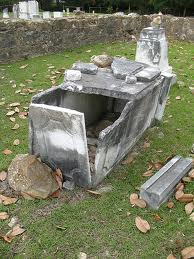
A poetic hymn celebrating Easter’s promise.

empty grave


Pilfered by such crimson stains

un-ruin of lost passion’s gaze.

We see, although with borrowed eyes,

the ways of marrow’d bones that cry

and heed tomorrow’s empty plans,

still grasped are we by steady hands.

Once-sceptered race, too weak to sing,

hums strained refrains, the note’s the thing

that begs to be so firmly placed

beside heav’ns door, to see our face.


Pilfered, now, the empty tombs

of prison-ing stone that left no room

for breath, nor sight, life’s dividend

so oft ignored, yet without end.

The beating heart in longing chest

can speak no lies, at love’s request

when barrenness no longer reigns

and God above sees not a stain.

Sorrow’s nest, our broken lot,

lies strewn about, dark chains forgot.


Pilfered, now, once seeing eyes,

which, seeing, saw but only lies

and in such blindness, seeing sought

to see once more what love forgot.

The heart bursts open, warm and full

and knows the place from whence it’s pull:

paraded by heav’ns stunning grace,

now heav’nward, sure, it finds its place.

Secured by love, in hope, transformed

salvation’s gift: the cold heart, warmed.


Spring on Ash Wednesday

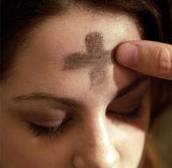
Ash Wednesday has come round again to spill forth her penitent goodness. I first posted this last year on Ash Wednesday. Let’s walk the Lenten road together.

 ash wednesday


Begins again this Springward journey;

rebirthing all that once lived.

Trickle again once fickle brook and stream

sickle sighs yet in repose, sleeping still.

Earth, sore and Winter-stiff, seeks, sighs

stretches out skinny arms of want.

Her cold, hard bosom births not what soon will come

e’er the Sun’s hungry mouth suckles,

fills his lusty gut on hopeful barrenness

feasting on milk of timeworn, weary passage.

* * * * * * * * *

She forgets not the suddenness of late

and sooner dark, splayed upon a fine, greenness

come for to spite the buds of transforming light

bidding death where life has yet to emerge.

Warmly insistent she speaks, sharing her story

poured out over the long-shadowed land.

Bring such bothersome beauty to branchier speech,

fall around us, spilling, foaming such fury

and fermenting our soon-drunk wine of promise;

earthen spirit’s Eucharistic prayer.

* * * * * * * * *

Hush now, silence yourself bold coldness and spare not

freedom’s great gift only taken this once year’s-life.

Steep instead in warmness, worried not for lack

but bubbling and birthing bold words lightly spoken.

Remind us, refresh and reframe what is still rooting,

routing sad night-hood to don the new, the now, the never again;

only to return, restored and restoring,

regenerated, reborn.

Give us again your beauty for our ashes.

Wednesday speaks your secrets.

All in time

All was time.

There it goes, once it had come.

It went past as it was going.

Now, I see it like I did then.

But then, it had not yet come.

So now, I wait.

Reflections on faith and art – Addicted to Melancholy: Life as a Major Seventh Chord

The impossibly orange morning sky mocks my melancholy and seeks to repeal my commitment to a sober day. The feathered fingers of precocious light embroider a morning otherwise condemned to generous helpings of over-thinking and under-living. Like passive-aggression to a psyche better suited to hiding than fighting, I brace myself for the full welcome of morning and, coffee in hand, steep in my self-righteous adherence to less than full inclusion in the happy chatter. If another somber, artsy day of writing and pain-mining was truly what I was after, then why the open laptop at the center table of my local Starbucks? Dear God, am I becoming “that guy”- the artsy, Mac-toting, liberal coffee snob?

at the coffee shop

Those like me are typically well-versed in the finer points of self-pity and overwrought, dilapidated prisons of Freudian fear wed to Jungian collective consciousness, albeit devoid of the intended mutuality to which it points (or much consciousness for that matter, either). The artistic temperament, housed in most musicians, writers, painters and the like, excels at emotional dumpster diving for those occasional jewels found at the bottom of a whole lot of shit. For some strange reason, it contributes to the creative process, for me at least. The smelly job of wading through my fly infested felch gives a certain twisted pleasure if the reward is a gleaming bit of writing or lyric or melody.

Even as I write these words I can’t help thinking to myself, is it any wonder type-As generally hate guys like me?! Growing up, I was that kinerdsd who was either so preoccupied with his own swirling world of imagination that I could just as easily walk into walls as find my desk or whose swashbuckling stories of whim and woe – many of them stolen – regaled whatever girl was most likely to buy into it. In fact, a gift with words (my parents and friends called it bullshit) from an early age made finding friends an easy task, especially girls. This was not because I was particularly good-looking but more so because I was a skilled navigator of whatever self-projections were the most captivating. One might say I was a bit like a buzzard who scavenged tidbits of social detritus suitable to any given moment but who prettied them up with the fineries of clever, droll turns of phrase.

There’s a problem with this however. It has meant that a pleasant, even-tempered melancholy, peppered liberally with witty banter instead of good, old-fashioned hard work and embracing failures, have propped up my life artificially. I’m smart enough to have talked my way out of being wise. And now, at nearly 50, I realize just how little I really know; how little I’ve truly lived. It would have been better to shut-up until I actually had something worthwhile to say!

Now, lest I begin wallowing in self-pity and regret, let me assure you that this demeanor, although prevalent, is not an entirely accurate picture of my modus operandi. I suppose the most apt metaphor I can find for my life is that of the Major Seventh chord.

The Major Seventh chord is non-definitive, unlike the Dominant Seventh chord that pushes its way around until it gets what it wants: resolution. The Dominant Seventh chord is the spoiled child that has never had a need go unmet. Ever. And we get to hear about it regularly and insistently. It needs ground zero to be happy and is pissed off when it must hang around for any length of time without that resolution. It’s like the guy standing at the urinal but forgetting to put stuff away before walking out of the restroom. It’s unsightly, largely unnecessary (unless you’re from Australia) and, well, kinda stupid.

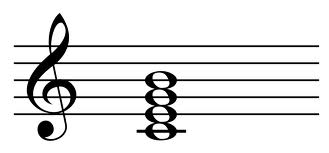
In musical terms, the Major Seventh chord has a raised seventh degree of the scale. She has moved past the standard seventh to a higher plane of consciousness less impacted by the need to settle everything but still yearning after something else. It is still built on a good foundation of a root, followed by a strong and happy major third, and another minor third on top of that. All the building blocks are in place to produce something of strength and beauty. To add the seventh is to add something uncertain, even unstable. The number of notes begins to feel crowded like too many people on a bus after taco night at the pub. Something has to give.

The Dominant Seventh says, in essence, fuck you, this is my show and you bloody well better serve up my demands for a trip back to home plate. The Major Seventh chord has a higher sensibility about it. She never demands anything. She suggests something, something angst ridden and indefinable. Her top note signifies searching, longing. The seventh note of an eight-note diatonic scale is what musicians call a leading tone because it’s leading us back “home” wherever “home” happens to be. However, in her case, there is a kind of contentment with the in-between liminality of a bossy Dominant and a restful Tonic. A quaint story of dubious origin tells of Mozart’s father, Leopold who, in his final attempt to get Wolfie out of bed, went to the piano and played the first seven notes of a diatonic scale, leaving it unresolved. Within seconds, feet were heard flying down the stairs to play the final note. To a musician, it’s a sin akin to lighting the curtains on fire and then walking away.major 7 chord

Major Seventh chords practically defined the 1970s’ Adult Contemporary music scene. Artists such as Bread, America, Gordon Lightfoot and Don MacLean built entire careers on them. They’re perfect for songs about lover’s triangles with the loser singing. They reek of the melancholy I’m so in love with.

And that is my point. Those of us condemned to live in the spongy greyness of our own articisms can ill afford too fine a definition of who we are. We don’t want to be too pinned down, boxed up or, God forbid, understood. And yet, deep within, there remains a fervent longing for just that: to be known, heard, experienced. If I am to find my best self, I’ll have to settle for the delicate balance of sadness and hope enshrined in the Major Seventh chord. It is life in the rain, an honest addiction to melancholy.

Frankly, it has served me well.