What follows is an excerpt from a piece that was part of a Lenten blog series I hosted a few years ago on how to introduce the mysteries and beauty of Christian spirituality to everyone, even “the least of these?” How do we make these principles reachable for everyone?
Eyes in the Alley: God’s Beauty for Our Ashes She fumbled through her purse for her phone. Its unnecessarily loud ring matched the other bells and whistles blasting in her head. They were the kind that told her old lies, played old tapes.
Lipstick, business cards, flash cards for her Spanish class, gloves, make-up mirror…where the hell is that damn thing? she cursed. Out loud apparently. The pastor, full-robed, full-throated, and in full-sermon, rebuked her with a glare. She’d seen it before. Often. It would have been less humiliating to slap her.
She was flustered and wound up tight as a bedspring. And, she was frustrated at her own lack of discernment. Why the hell didn’t I turn this thing off? Who’d be calling now? It’s Sunday, they shouldn’t even be open today she thought, half angry, half relieved. After dropping almost everything, she fingered the noisy culprit. Sliding sideways past her pew neighbors, she answered just in time to catch the call she wished she hadn’t. “Your test results are in, ma’am. Can you meet with the doctor tomorrow?”
Ashes.
He fell backwards against the brick wall, his guts, freshly emptied of the remains of fish-dinner-a-la-dumpster. His head, swimming in too much cheap wine, conspired with his stomach against all lucidity and balance, let alone self-respect. He smelled of piss, puke and pain. These days, only shame kept him alive and the dull remembrance of a life once lived, once alive with the common promise of…well, promise.
Was it only yesterday that he’d felt the warm body of a wife sleeping next to him? She had stayed with him through the final merger, the one he’d promised would bring them financial freedom. She muscled through his two affairs and the drinking that bridged them both. Now, two years, a foreclosure, divorce, and bankruptcy later, he thought he smelled her hair, the fragrance of mint intermingled in aching reminiscence. But it was only the smell of loss mixed with dog shit on his one remaining shoe. He’d lost the other earlier that day foraging for what was left of his meal, now part of his concrete pillow. And, as it began to snow, he blacked out.
Ashes.
She was desperate. It had been too long between hits and her most regular but equally violent trick had just buzzed to be let in. She frantically ravaged through her regular places searching for her small bag of white, powdered courage. If she could get high enough quick enough, perhaps he would get enough soon enough and leave her just enough to start the whole process again.
He pounded on the buzzer. Now, he wasn’t just horny but pissed off and, most likely, more violent as a result. Her lust to forget competed with his to be remembered and a battle ensued as to whose needs would be met first. She gave up. This time, a paying customer in person overruled her quest to be absent. After safely shoeing her daughter away in a back room, yelling for her to lock the door, with quivering hand she buzzed him in.
He stormed and swore his way up the four flights of stairs. It was a distance not her friend when it came to her chances of getting through this unscathed. Her door flew open, along with his zipper and a stream of obscenities. Everything aligned in a perfect storm, conspiring against her and sealing her fate. She lucked out this time and suffered only one punch before he got down to business. Through a left eye, now starting to swell, she toughed it out through one more indignity.
Ashes.
Ash Wednesday. Ashes indicate something. They tell us something has been used up, finished. There is nothing left. Any fuel that had provided light or heat no longer exists. It is rendered useless. Ashes are basically meaningless and, at one level, can provide a bleak picture of what many of us feel about our lives. Sometimes, life offers little more than the used up fodder of someone else’s fire.
In the Gospel however ashes become something more than foul smelling carbon. Jesus reveals to us how the ashes of death are turned to the fertilizer of new life. In his name, we trade our ashes for God’s beauty. Death and dying for life and living.
An anxiety-ridden woman receives the call; a washed-up businessman is now one with the streets; a hooker walks a tightrope of addiction and fear to survive the only lifestyle she knows.
All of us are only a hair’s breadth away from ruin or reward, disaster or dream, life or lies. We’re in this together. And wherever our lives may be in ruins, God can bring about beauty from our ashes.
Some of my favourite poetry is that which wrestles, dances with the rich imagery at work in the Bible. It doesn’t preach. It simply tells a story. It helps us picture what the original authors might have been aiming for. This is a poem written as part of a homework assignment for a theology course I’m taking.
It plays around a bit with Psalm 8. Let’s dance. It’s always God’s idea.
8
God, you have scattered your way
among stars, heaped about in the easy
wonders of your winking eye.
Our small and stuttered stance, hands
perched on brows, we squint against
the brilliance and tuck our ignorance
inside curiosity, piqu’d at your
grand and noble gesture.
We shine bright inside your shadow.
From there, at your behest, we are noblesse oblige.
It is in the suppler clay of faces you
do your best work –
the weary eyes of fawning mothers,
the stretching yawns of nipple-fed wains,
tossed high by fathers and friends,
and high school herds, stalwart tribes
trumpeting tales of borrowed conquest.
Foe, fallow-field, and fission –
all made from the same stuff.
What careless shrug dares dismiss so noble a kiss?
The nature of this blog has been primarily to share matters of spirituality, the shared concerns of our common journey in and toward the Divine. I make no apology for this emphasis. It impacts us all. Equally.
Everyone of us is on a journey of one kind or another. Some feel stuck in unhealthy feedback loops, the shrill noise of everything threatening their peace daily. Others may be in a fog of doubt or uncertainty or cynicism. Still others feel like a young puppies, wagging happy tails, ears perched to hear all the new joys a day will bring forth.
In recent years, my journey has brought me out of a long, dark hallway of faith deconstruction, a general cynicism about most things, and a cottage industry in unrequited longing into more broad and spacious lands. This is how it goes with most lives. Light is only light when understood against darkness. And shadows, for all their nuanced grey, make things interesting. We learn best this way.
Or, so it would seem.
Again, no apologies. Just an honest assessment of my lay of the land, spiritually speaking. “I believe that I shall see the goodness of the Lord in the land of the living.”
I suppose I mention this here because, contrary to what I might normally post here for you dear folks, what follows will feel more…conventional. A step into the great pastoral P.R. as it were!
This is gleaned from our most recent Mailchimp newsletter. We send it about once a month and it outlines where we’re at in our pursuit of ministry in the UK. I hope you don’t mind. Better still, I pray you find here something of benefit to your souls, despite this bald advertisement of new things on our horizon.
Come, walk with us, will you?
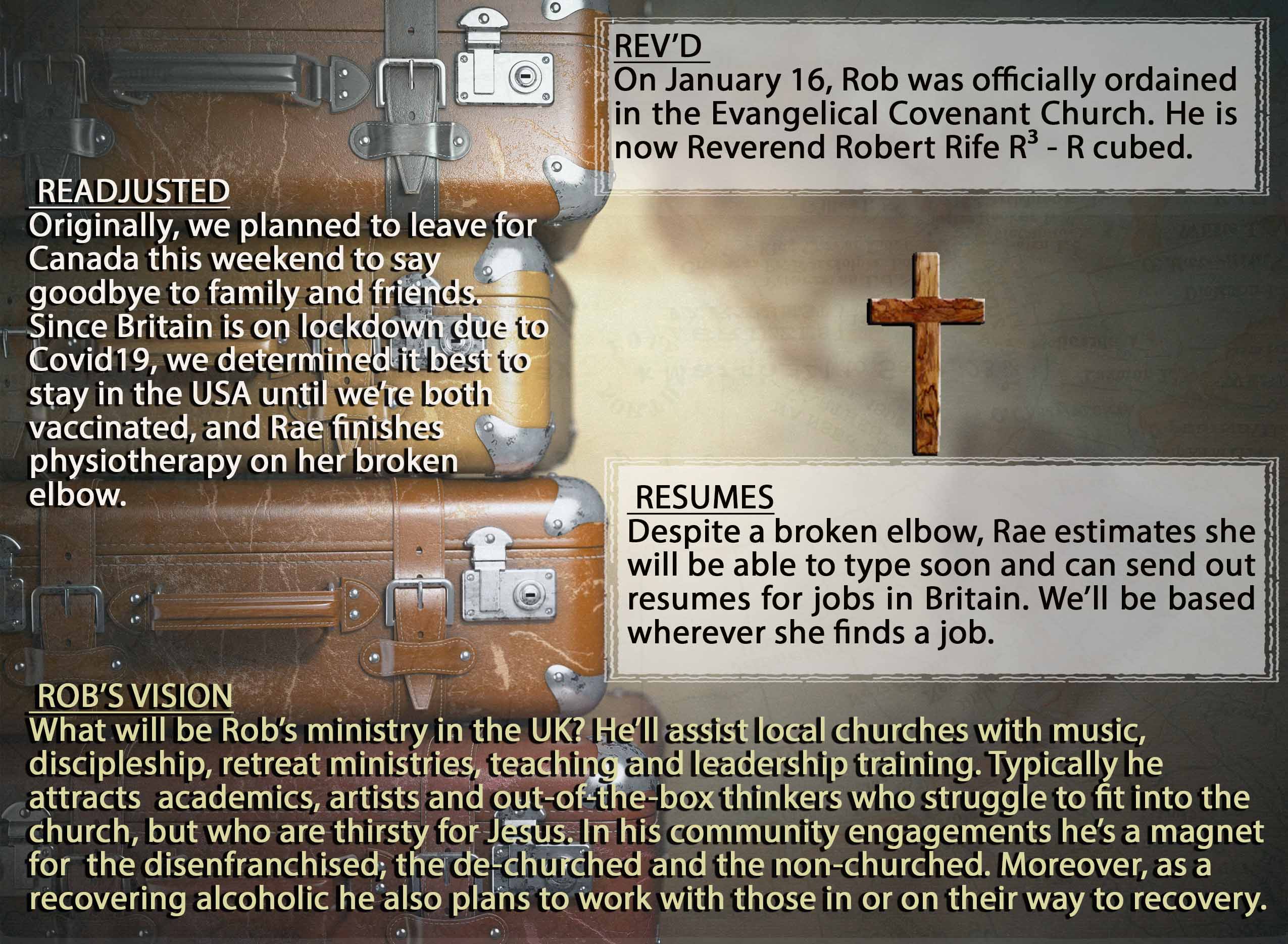
*We’re participating in the upcoming Serve Globally Europe team retreat, Washington State edition, in mid-April.
*Rae honed her resumé and has begun sending them out. At our age, that’s always a faith venture! I will develop my ministry from wherever Rae finds work – most likely somewhere near London or Edinburgh.
*Given the state of affairs globally with the pandemic, we’ve decided to stay put until after we’re vaccinated. Then, we’ll head to Canada for a few weeks to visit family and friends and continue raising prayer/financial support.
Rae and I share a heart for the disenfranchised, especially millennials, and we’re passionate about sharing Jesus in non-conventional, contextual ways. My goal is to weave together contemporary liturgies, the arts, and spiritual formation in developing creative ways to reach agnostics, “exvangelicals,” the de-churched, and the un-churched.
Our current donor initiative is “Project 21 – Coffee Money Gospel.” We invite you to become a sustaining member of our community by contributing only $21 (or more) per month. Three dollars, seven times a month (or the opposite if you’re given to more uptown drinks) – coffee money!
For all of those who have joined our community as partners in ministry, thank you! But, we still have a long way to go before we can get to the mission field. With enough of you joining us, we’ll be there in no time. Then, we’ll share a coffee in your honour!
We invite you sign up for our newsletter. Email me anytime at robert.rife@covchurch.org. For details on how to give, see our page on the ECC website.
We love you all. We are ever grateful for your friendship, support, and laughs. Come and join us to be part of what God is doing in post-Christian Britain.
At this point, to suggest we’re living in stressful, chaotic times would be insulting, even obscene. One can hear the collective groan, “Duh. Just get on with it, writer dude.” Therefore, rather than grasping at the low-hanging fruit of current tensions, already glaringly obvious, I draw our attentions instead to possible solutions.
Others are better at that than I. To help us find a way forward is friend and colleague Janet C. Hanson. Besides the clarity of writing wed to ample humility, she brings a depth, wisdom, grace, and unified consciousness to the fore. In her own generous way, she pulls us back from the heat of flames that would otherwise consume us toward the cooler, gentler twilight of shared consideration.
Better still, she takes us for a walk through the biblical narrative – a template for life well suited to the jostle and grind of anxious disagreements and the division they so easily bring.
Join me as I share her words of comfort and conviction, kindness and kairos, welcome and whimsy.
“Our lives begin to end the day we become silent about things that matter.” Martin Luther King Jr.
Benjamin Franklin warned, “As we must account for every idle word, so we must account for every idle silence.” If this is true, how do we avoid erring on either side?
Lately, I feel a bit like William Faulkner, weighed down by the utter futility of it all. “Talk, talk, talk; the utter and heartbreaking stupidity of words,” he lamented. Has there ever been a time when truth was so silenced and outrage indulged for the most petty of reasons?
Collectively haunted by a year no one wanted, shouldn’t we pause for a moment? Shouldn’t we admit our fondness for slander, and self-righteous pander to the cruel and coarse–is there room for remorse? And just one day to pray and then say “I’m sorry?”
It seems hopeless. As sure as the sun will rise tomorrow, someone will do something apparently WRONG, and others will make certain I know it.
And should I respond? Are only cowards quiet? Am I complicit with madness if I don’t speak against it?
Well, perhaps.
But I’ve good reason to be wary. Too often, my righteous rancor and your irked indignation point in opposite directions. Which leaves us both trapped in the crossfire.
Not Silent Enough
The current fascination with IMO (“in my opinion”) should alarm us. For, when stuck in “constant comment” mode, we’re deaf to the cries of more timid voices, to hidden need, to God’s concern for the unnoticed and unloved.
The wisdom found in Ecclesiastes 3 reminds us there is a time to resign from being the squeaky wheel and just listen. In the 11th verb of our Alphabet of Life series, we address the question, “At this moment, with this audience, do I speak or do I keep silent?”
Keep Silent, Until
Even when flooded with well-earned affront, our most helpful thoughts are never found “off the top of our heads.” Where anger is concerned, it’s not the cream that rises to the top, but the grease, the oily residue of visceral emotion, rather than the profound.
So, there’s a time to be patient and wait, if only to reconnect with deeper, more reasonable thought. Perhaps we should all tape this reminder to our bathroom mirror:
Try reading that aloud a few times and feel your heart slow.
Wisdom doesn’t demand a vow of silence, nor benign banality, but to “keep your tongue from evil, and your lips from speaking [or repeating] lies,” (Psalm 34:13). For, if we don’t resist the addictive impulse to “bite and devour one another” (Galatians 5:15), we will all end up feeling like chewed-up remains.
“Let no unwholesome words come out of your mouths, but only what is helpful for building others up according to their needs, that it may benefit those who listen” (Ephesians 4:29). We deceive ourselves if we think our times are so remarkable we are exempt from the command to speak benediction, not condemnation over others.
So, before I speak up, I must ask,
Do my words shed some light, or simply give free publicity to darkness?
Do my words reflect God’s love for all people, or merely people I approve of?
Will my words be worth quoting in my obituary?
The Last Word
Orchestral conductor Benjamin Zander tells the storyof a friend who, on a train bound for Auschwitz with her 8 year old brother, scolded him quite harshly for losing his shoes. Those were the last words she ever spoke to him. Her brother died, but she, miraculously, survived, emerging from that evil place with new, compelling vow:
“I will never say anythingthat couldn’t stand as the last thing I will ever say.”
Words matter. Your thoughts (whether mute, or muttered, or typed in a comment) can discourage and destroy. But when patiently crafted and delivered in love, your words just might heal the world.
Thank you for joining us here! You can subscribe to this series by scrolling to the very bottom of her site (see below). Next time, in An Alphabet of Life: Wisdom learned in the verbs: L is for Love.
* * * * *
Janet is a graduate of Fuller Seminary, and she and her family are fellow Covenanters living in California. Here’s a snapshot from her website to introduce you.
“Welcome to my blog, where I tinker with the nuts and bolts (and apparently useless pieces too) of faith, culture, art, and ordinary life, and hold them up to the light of Christ.
I typically publish my thoughts (questions, doubts, opinions, observations, self-therapy, flawed but sincere conclusions) every other week, or when life allows. I LOVE it when you share yours back.”
Don’t be shy. Pop onto her blog, say hello and share a comment or two to keep this conversation going!
A favourite Psalm of mine proclaims the following, “I will lift up mine eyes unto the hills, from whence cometh my help. My help cometh from the Lord, which made heaven and earth.” The simple act of looking to the hills does not, of itself, bring promise. It is an act of desperation, the longing for salvation wrought of shared hopeful faith. In the end, our help doesn’t come from looking to the hills, but from the hand of God whose hills they are.
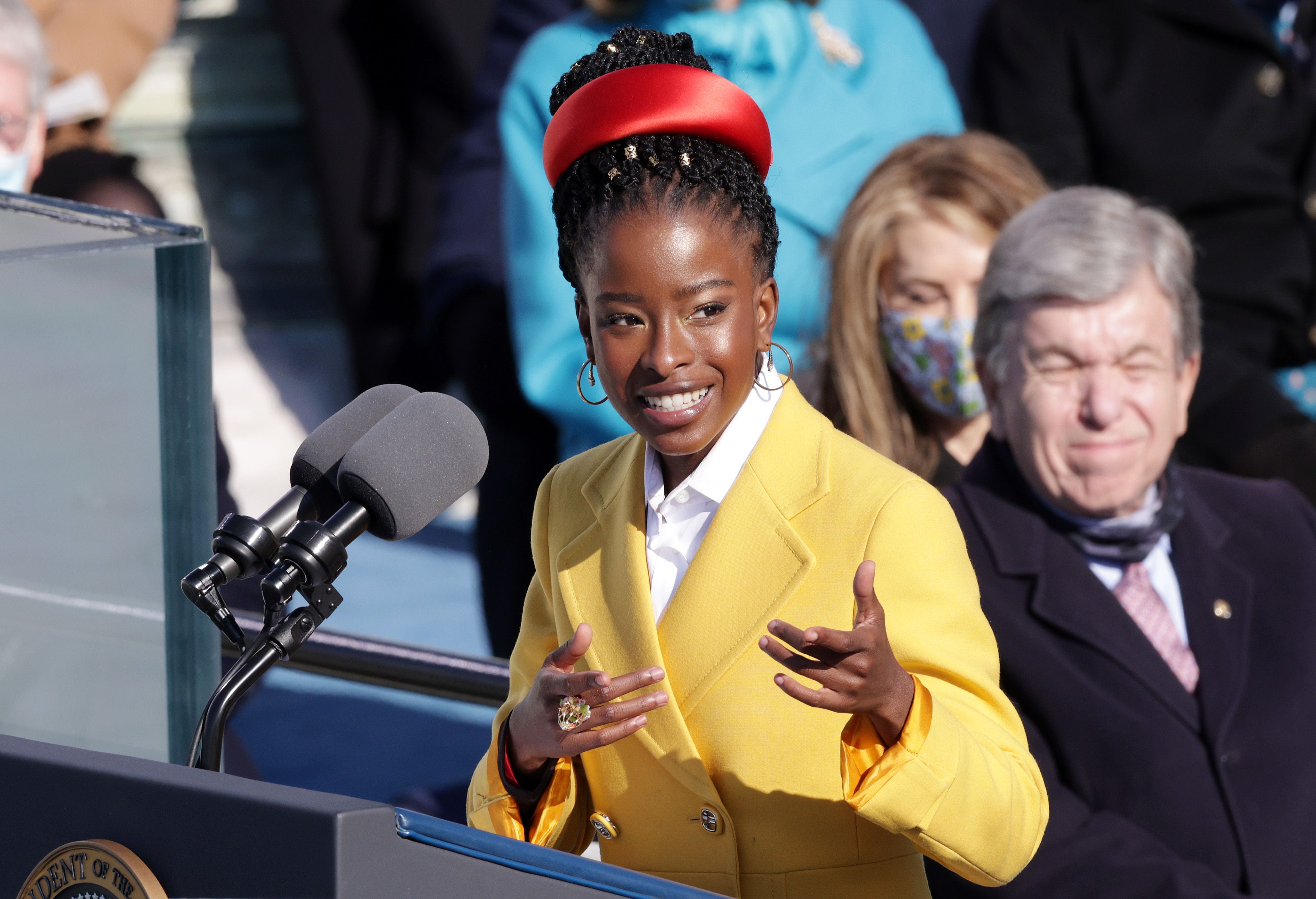
President Joseph R. Biden, Jr. and Vice President Kamala Harris will have their work cut out for them. We are in times of unprecedented division, delusion, decrepitude, and chaos. But, in all the good and hopeful things coming out of the Inauguration yesterday, none was so moving than this from young poet laureate, Amanda Gorman.
Normally I post poetry on my LitBits site. I felt it required…
A favourite Psalm of mine proclaims the following, “I will lift up mine eyes unto the hills, from whence cometh my help. My help cometh from the Lord, which made heaven and earth.” The simple act of looking to the hills does not, of itself, bring promise. It is an act of desperation, the longing for salvation wrought of shared hopeful faith. In the end, our help doesn’t come from looking to the hills, but from the hand of God whose hills they are.
President Joseph R. Biden, Jr. and Vice President Kamala Harris will have their work cut out for them. We are in times of unprecedented division, delusion, decrepitude, and chaos. But, in all the good and hopeful things coming out of the Inauguration yesterday, none was so moving than this from young poet laureate, Amanda Gorman.
Normally I post poetry on my LitBits site. I felt it required a spiritual center stage. Enjoy, and enter in with all who seek a better future; all who look to the hills and cry for help.
The Hill We Climb by Amanda Gorman
When day comes, we ask ourselves,
Where can we find light in this never-ending shade?
The loss we carry,
a sea we must wade
We braved the belly of the beast.
We’ve learned that quiet isn’t always peace
And the norms and notions
of what just is
Isn’t always just-ice.
And yet the dawn is ours
before we knew it
Somehow we do it
Somehow we weathered and witnessed
a nation that isn’t broken
but simply unfinished
We the successors of a country and a time
where a skinny black girl
descended from slaves and raised by a single mother
can dream of becoming President
only to find herself reciting for one.
And yes we are far from polished,
far from pristine
But that doesn’t mean that we are
striving to form a union that is perfect.
We are striving to forge our union with purpose
To compose a country committed to all cultures, colours, characters and
conditions of man.
And so we lift our gaze not to what stands between us
but what stands before us
We close the divide because we know to put our future first
We must first put our differences aside
We lay down our arms
So we can reach out our arms
to one another.
We seek harm to none and harmony for all.
Let the globe, if nothing else, say this is true:
That even as we grieved, we grew
That even as we hurt, we hoped
That even as we tired, we tried.
That we’ll forever be tied together, victorious.
Not because we will never again know defeat
But because we will never again sow division.
Scripture tells us to envision
That everyone shall sit under their own vine and fig tree
And no one shall make them afraid.
If we’re to live up to our own time
Then victory won’t lie in the blade
But in all the bridges we’ve made
That is the promise to glade
The hill we climb
If only we dare.
Because being American is more than a pride we inherit
It’s the past we step into
And how we repair it.
We’ve seen a force that would shatter our nation
Rather than share it
Would destroy our country if it meant delaying democracy.
And this effort very nearly succeeded.
But while democracy can be periodically delayed,
it can never be permanently defeated.
In this truth,
in this faith we trust
For while we have our eyes on the future,
history has its eyes on us.
This is the era of just redemption.
We feared at its inception
We did not feel prepared to be the heirs
of such a terrifying hour
but within it we found the power
to author a new chapter.
To offer hope and laughter to ourselves.
So while once we asked,
how could we possibly prevail over catastrophe?
Now we assert
how could catastrophe possibly prevail over us?
We will not march back to what was
but move to what shall be.
A country that is bruised but whole,
benevolent but bold,
fierce and free.
We will not be turned around
or interrupted by intimidation
because we know our inaction and inertia
will be the inheritance of the next generation.
Our blunders become their burdens.
But one thing is certain;
if we merge mercy with might,
and might with right,
then love becomes our legacy
and change our children’s birthright.
So let us leave behind a country
better than the one we were left with.
Every breath from my bronze-pounded chest,
we will raise this wounded world into a wondrous one.
We will rise from the gold-limbed hills of the west,
We will rise from the windswept northeast
where our forefathers first realized revolution.
We will rise from the lake-rimmed cities of the midwestern states,
Once more have we turned a page 365 days long to another, unwritten, unstained, unknown – and more than a little uncertain. Our faith does not banish uncertainty as much as it buttresses it with courage and the certain hope of God’s presence within it. With all we do not know, we do not have to be alone. And the One who walks alongside us understands our common plight.
More than we do.
Let us take our cue from Jesus himself who once shared with equally uncertain disciples, “I have told you these things, so that in me you may have peace. In this world you will have trouble. But take heart! I have overcome the world.”*
The well known song “Auld Lang Syne” is one we sing often. But, it is not one we usually understand. Those pesky Scots! I pray it brings you just a hint of peace and warmth after a year of strife and division.
Much has been written about this period of the holy story the church has called Christmastide. We hear words like waiting, longing, anticipation, inbreaking, birthing, hoping, emmanuel, and sing of shepherds and sheep, angels, alleluias and announcements, mangers and mangy stables and , all in voices bright sing gloria in excelsis deo (glory to God in the highest).
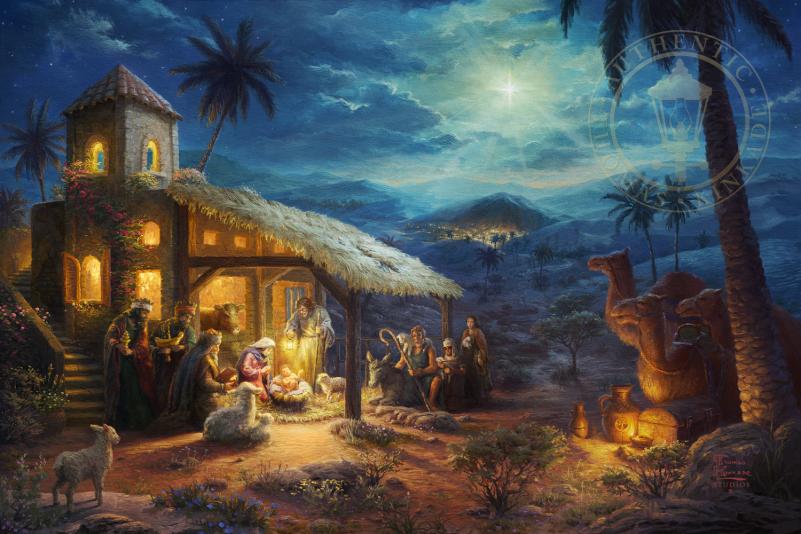
Consumer culture rides its coattails toward a bloated bottom line. Corporate culture plays with its nuances to encourage warmth of feeling and brand vibes. Christian culture uses it to battle their annual “war on Christmas.” Cancel culture uses it to remedy the former. And, Hallmark culture uses it to sell Thomas Kinkade paintings (I have nothing against him, I promise!). Such a tangle of ideas and emotions, all running rampant…at Christmas.
Thomas Kinkade, “The Nativity”
Even in an arguably post-Christian culture, it is challenging to share anything particularly new about a story this well known. For those of us tasked with its telling it can be especially difficult to reverse the potential for a familiarity-bred contempt, both in the church, and in the culture at large. But tell it we do. Every year.
The stultifying caprice of our COVIDays, coupled with unparalleled political farcity seems to have diminished our ability to see any hopeful horizons and consequently, ravage our capacity to dream. One wonders if one can ever again, wonder. As the writer of Proverbs once observed, “Hope deferred makes the heart sick, but a longing fulfilled is a tree of life” (13:12).
But, dare we think ourselves alone to be the hope-starved? Those to whom the heavenly babe first came were far more so.
Read appropriately, in its original context, the birth narrative of Jesus would have sounded incredulous. A questionable yarn akin to UFO talkies or gu’rmint conspiracy theories in the local version of Bethlehem’s National Enquirer. ‘Twould have been anything but a family-friendly, consumer-ready tale fit for animated movie screens and glittering holiday bling.
Instead, the Hebrew nation fixated on their lot as Roman-branded religious fanatics and kicked against the goads of military occupation. And, theirs was an occupation not just politically by the Romans, but theologically and morally by religious leaders pretending to follow Torah but largely interested in political safety and the biggest voice at the table (sound familiar?).
Long had they given up hope that anything would actually change. That their station might somehow improve. That, in great, great grandpa’s memory was something about messiah, the line of David, and covenant promises, among other fantastical things. They had done what almost every other conquered people has always done – settled into the long night of mediocrity and acceptance. Their survival mode button was stuck in the ‘on’ position.
Oh, there were outliers for sure. History is replete with them. There are always a remnant of stalwarts who refuse such resigned demeanour.
For example, Anna, whose long and lonely life had been given to prayerfulness and presence. Simeon, similarly, happy just to die having seen the fulfillment of a promise. Zechariah, whose priestly advocacy over Israel was well-known and whose doubts equalled his dedication. Elizabeth was giddy just to be pregnant in old age (God rather fancies such stunts), let alone with the New Testament’s resident off-the-grid hippy. And, of course, Mary. Aw, Mary – sweet but strong, young but wise, believing but thoughtful. Mary, perhaps more than anyone, understood the full importance and impact of what was told her by the angelic messenger. Apparently yes, she did know. ; )
“My mind is blown and my heart is full. Okay, so if I’m hearing you correctly, God’s finally doing something? Not just anything, but making the cosmic statement that the lesser is the more, the small leads the great, the poor rule over the rich. It’s all been upended, and you remembered everything that you’ve ever promised to me and my people? I’m in!”*
Danylo Movchan (Ukrainian, 1979–), “Nativity,” 2015. Tempera and gilding on board, 32 × 24 cm. Descending down into death. In icons, the cave of the nativity is meant to recall Christ’s tomb.
It is on the one hand a strength that such a story resides deep in our shared memory and finds revered place in our common consciousness. But, sometimes the familiarity of character, plot, and setting can sublimate the luminous mysteries at work under the surface. We kinda know the story but it doesn’t move us anymore. The aha! has been lost in the constant retelling that lacks reliving.
We can attribute much that is warm and good and beautiful to our affixation with the Christmas story. We still value the notion, however vague, that love lies at its heart, that forgiveness has at least something to do with all this, that family and community somehow matter, and that God doesn’t mind getting his hands (and diapered backside) dirty.
In our cynical moments, if nothing else, it keeps us looking for good deals at Walmart and happily arguing over Starbucks cups. And who doesn’t love that after fighting winter traffic for two hours?
But, upon reflection, guided by the Spirit who guided the star who guided the wise men who guides us still, we confess Christmastide to be a picture of heavenly surprise. To retell such a treasured tale should be of all things, an exercise in practicing surprise.
And everyone loves surprises.
A happy and surprising Christmastide to each and every one of you!
*Rob’s take on Luke 1:46-55, often called “The Magnificat” or simply “Mary’s Song of Praise.”













 innerwoven