Christmas in Edinburgh

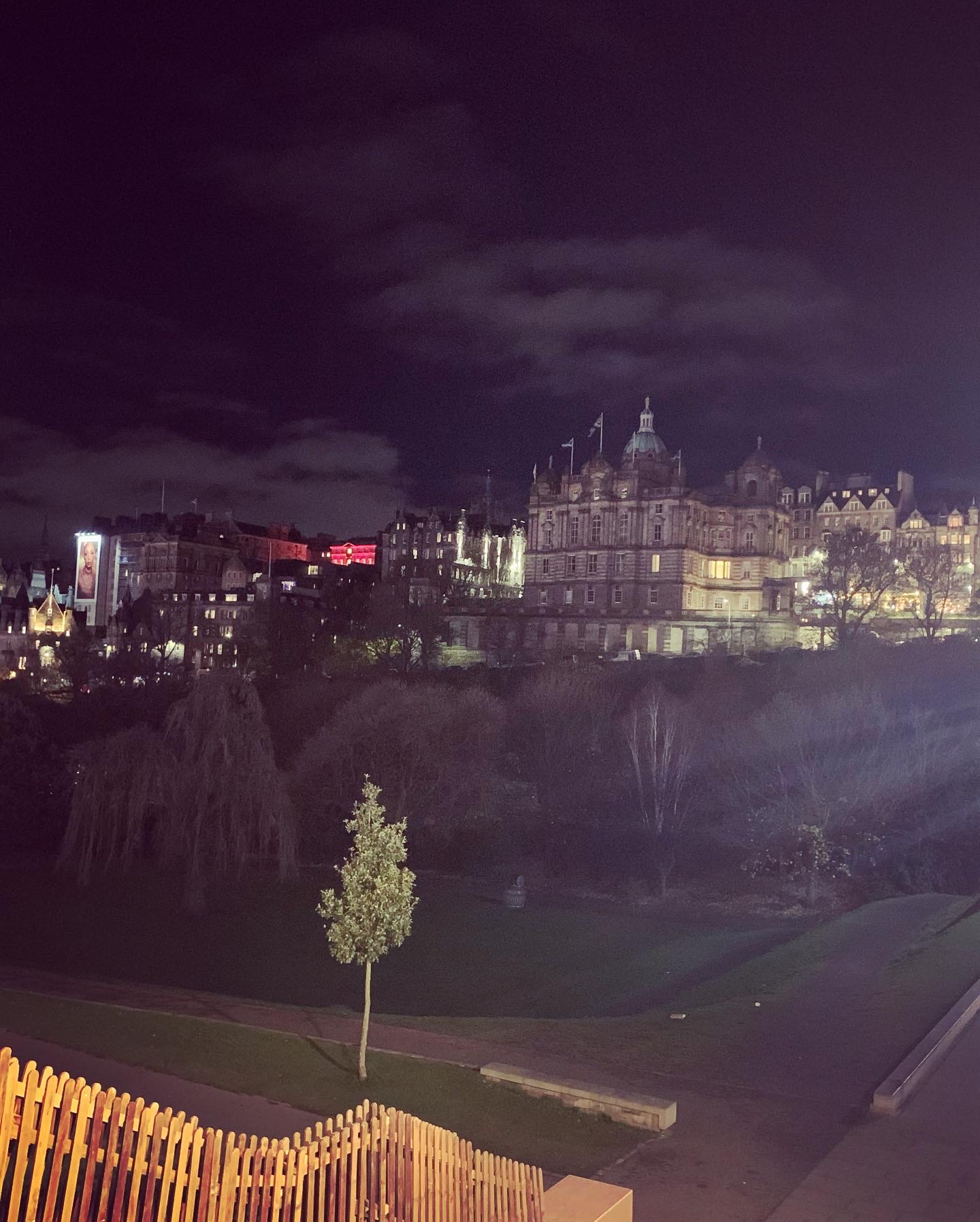
Looking out from the Christmas Festival on Prince’s Street

The air feels sharp. Like a paper cut on dry skin. The same air that is moderated by the sea is also saturated with it so that the wind denies however many layers one can throw at its defence.

It’s a good thing this city is so photogenic. She blushes with feigned humility at every turn, dipping her shirt to reveal her grey-stone breasts just enough to draw you to her. But, as you draw near, her manner reminds you that you’re a mere stone’s throw from the North Sea.

In early Winter.

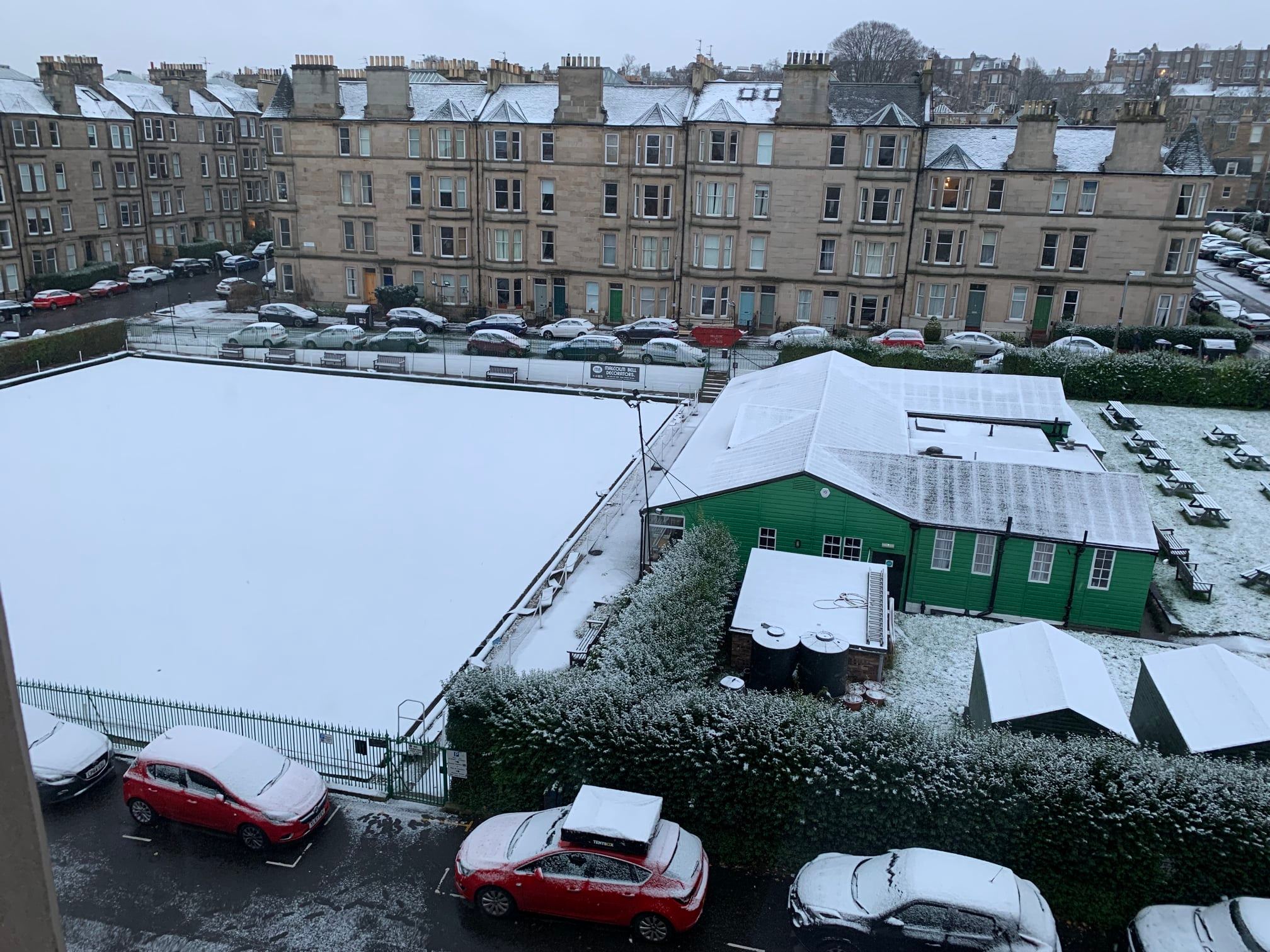
As seen from our window, snow comes wistfully to Comely Bank.

Anyone who follows us on social media, or has been within camera or earshot of us in the past few weeks, is already aware that my wife and I live now in Edinburgh, Scotland. We haven’t stopped talking about it. You ever hang around new parents and they never quit talking about their newborn? Yeah, it’s kinda like that.

Everything is new. We have new UK phone numbers almost impossible to memorize (memorise). We are learning to write dates day/month/year. We’ve traded a five-number zip code for a postal code with two caps, a number, another number, and two more caps. We’re learning what it’s like to shop for days of food at a time rather than weeks. We’re learning the complexities of laundry in the UK, a process not unlike rebuilding a laptop.

Thanks to the relative compactness of Edinburgh streets, we’ve taken like pros to something we would never have done in North America, ride a bus. We walk everywhere else. Living in the relatively central district of Stockbridge I call this the “one-mile zone.” We can walk almost anywhere we need to be, including downtown (uptown as the locals call it).

The glaring lack of any formal Thanksgiving tradition here is regrettable in one way, given the many memorable observances we’ve enjoyed over the years with family, friends, and one unlucky turkey. But, it is also a wonderful thing not having to engage in the inevitable, often heated, debates about Christmas decorating starting “too early.” Despite its lack of liturgical credibility, “too early” for me would be mid-October, not American Thanksgiving which just happens to fall less than a month from Christmas.

Edinburgh loves her Christmas decorating. She does it well, with a voracious thoroughness that causes Mrs. Claus to blanche at the sight. Is it thoroughly secular? Yeah, pretty much. Is it beautiful and welcoming? Absolutely. Which, as you will recall from my earlier post on the Enneagram 4, is my love language.

Beauty is next to godliness.

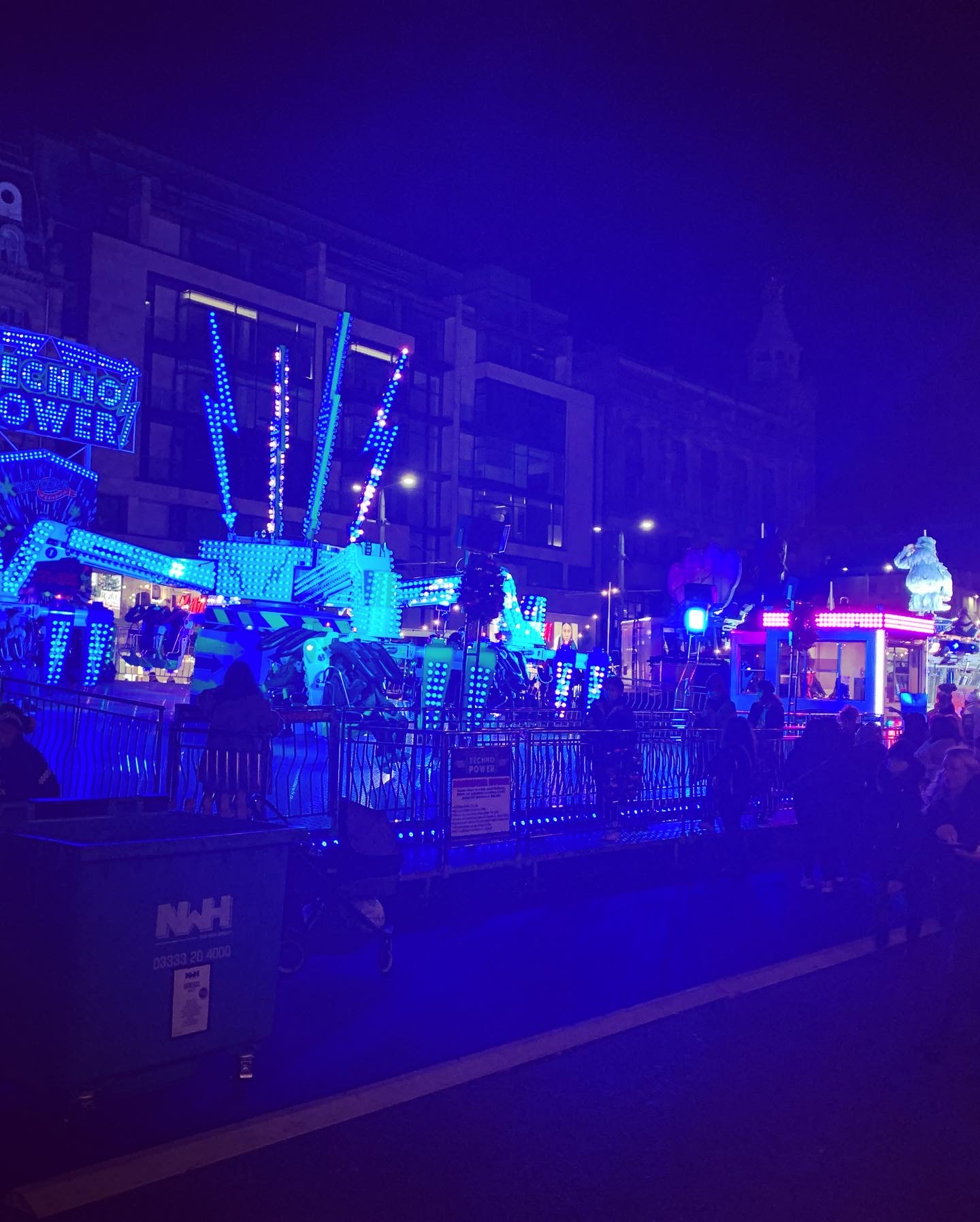
Blue Christmas
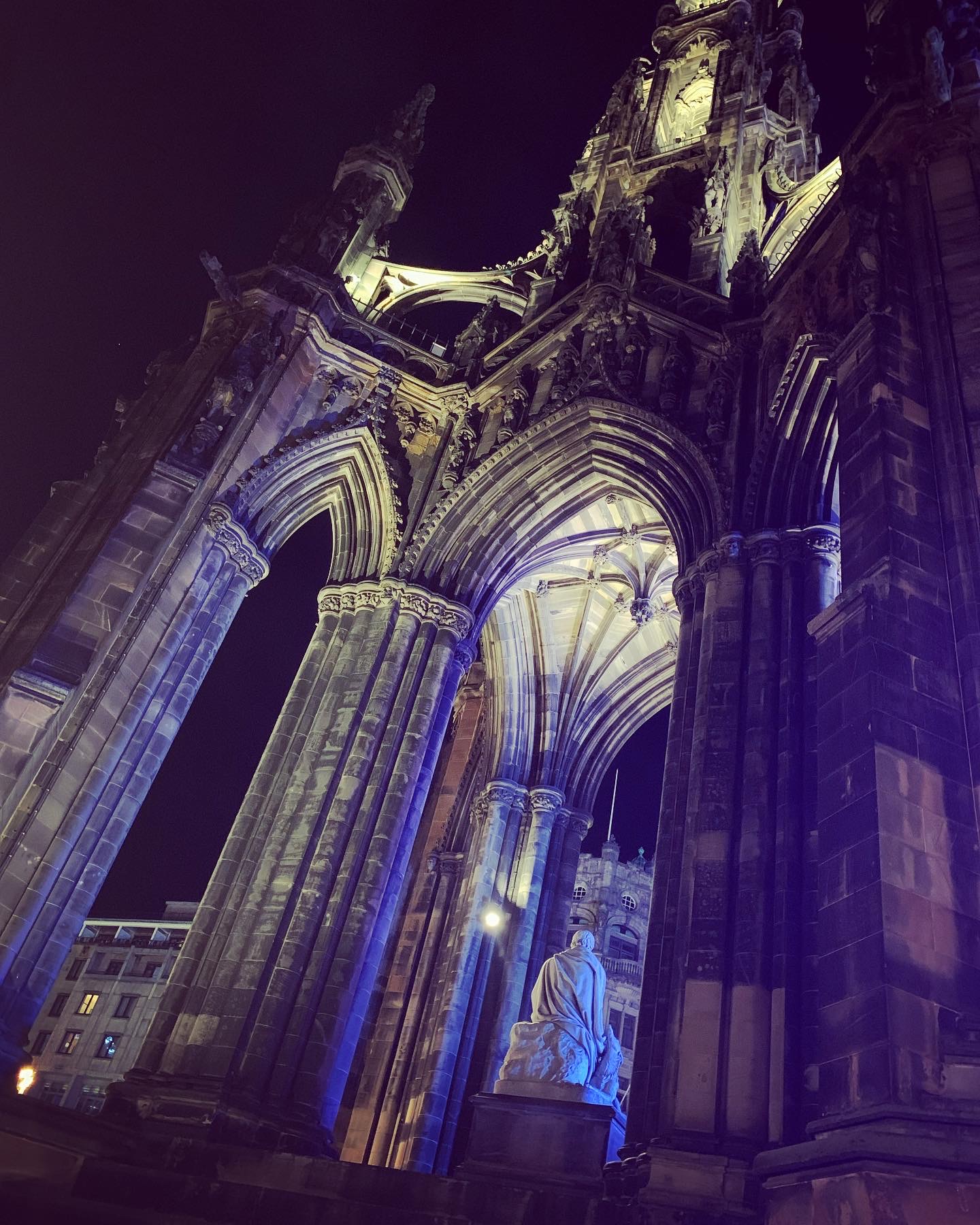
The Walter Scott Memorial
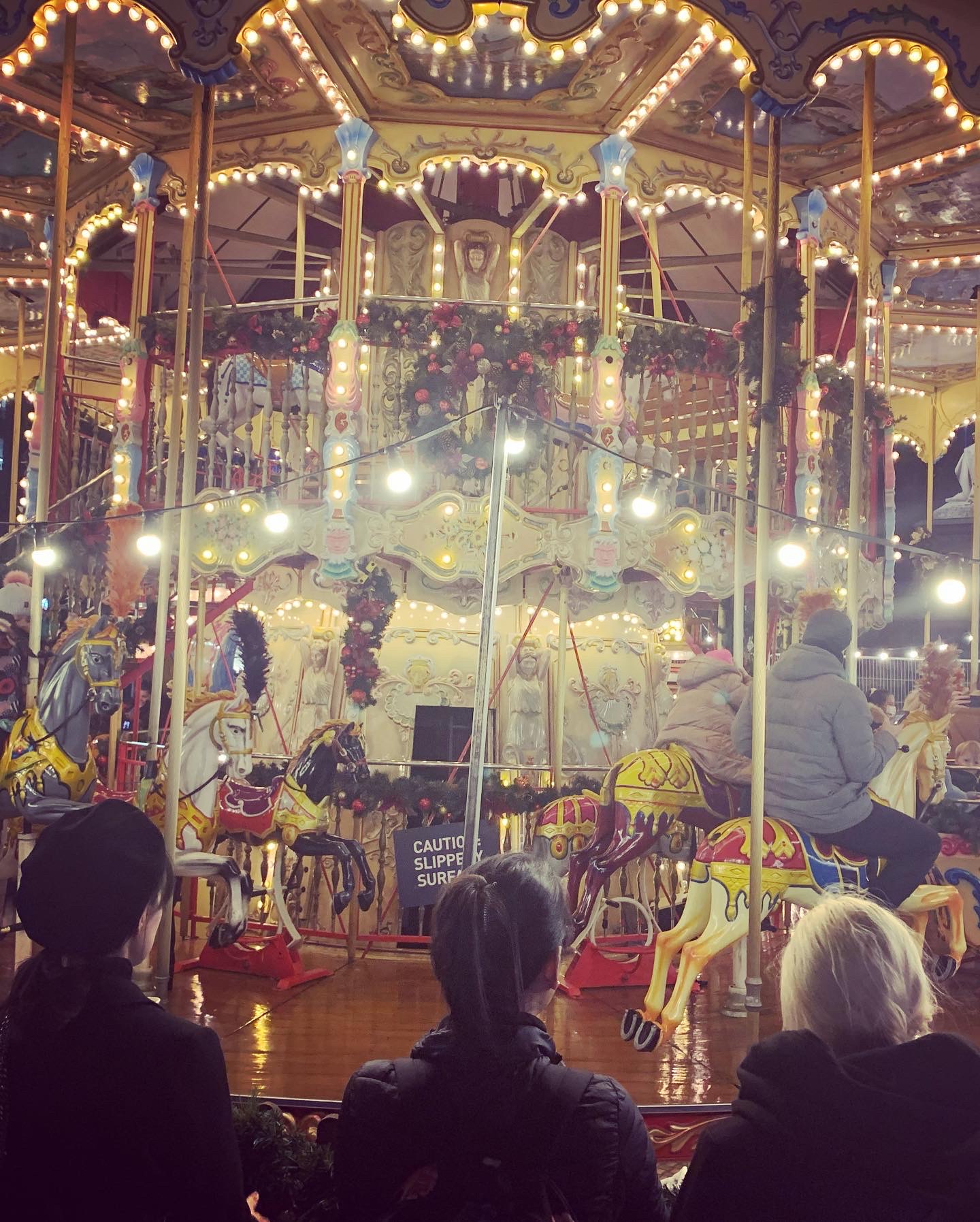
Merry-go-Round
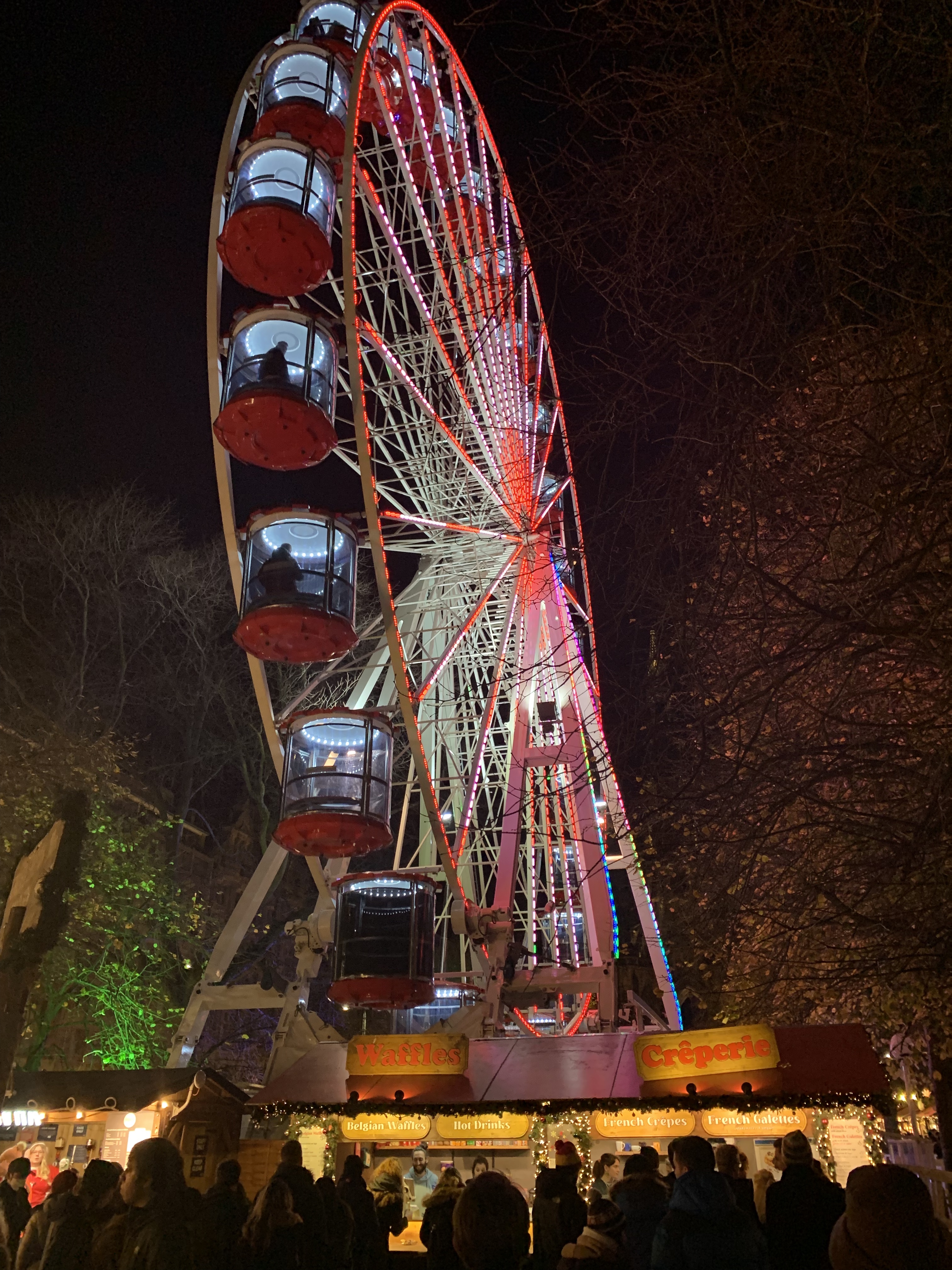
Big wheel keep on turnin’
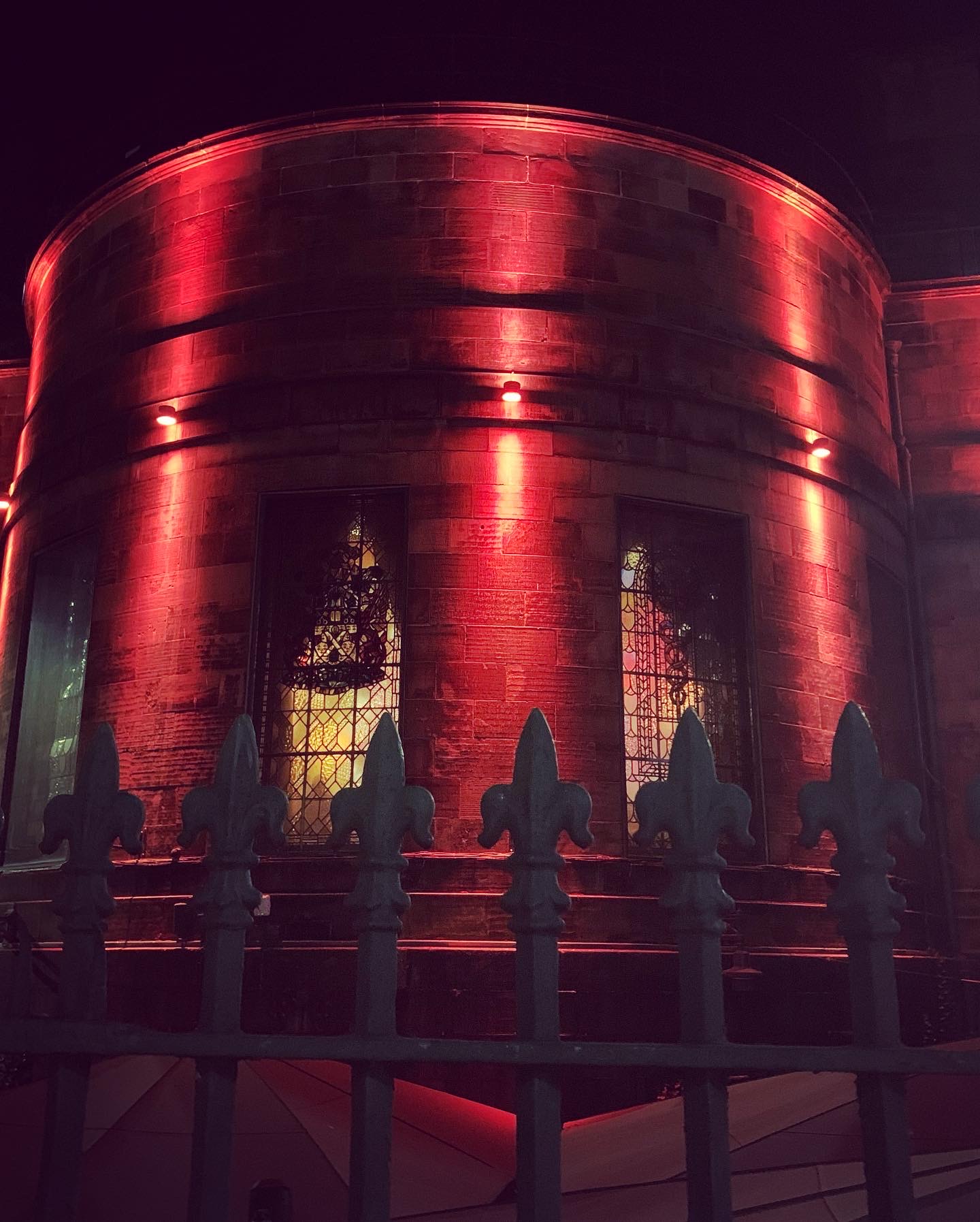
Edinburgh has lighting down to an art.
More Edinburgh lights
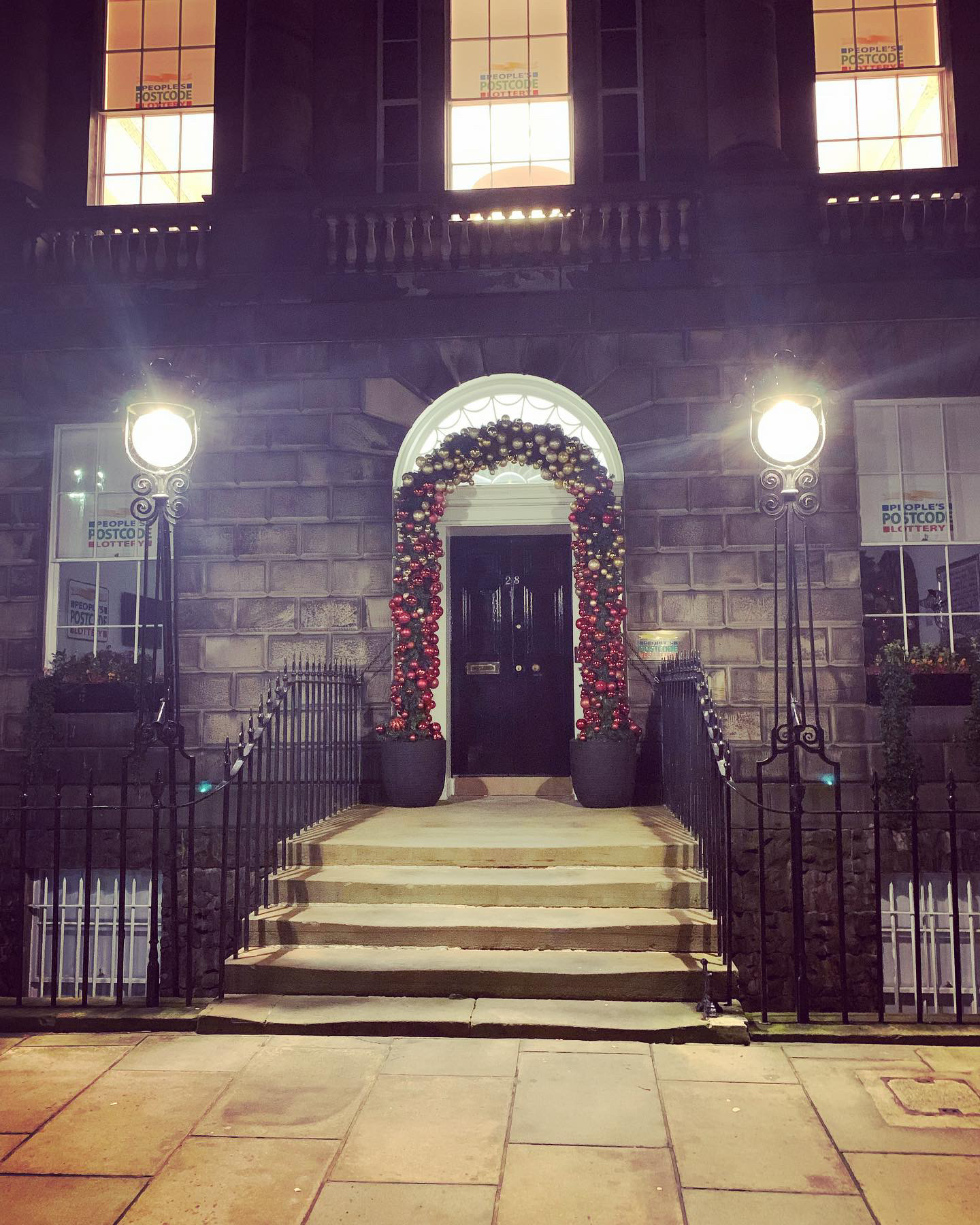
The door’s the thing.

I’ve often questioned artists who claim their particular geography to have the “best light” when they live where there’s nothing but an abundance of it, washing out all colour and nuance. When light is involved, “most” does not equal “best.” My soul prefers its light at a premium; where it changes much, leaves me alone for long periods of time, and is therefore, precious.

Granton Harbour in morning light, shrewdly shrouded

For me, Edinburgh in winter is that place.

Pathways beckon
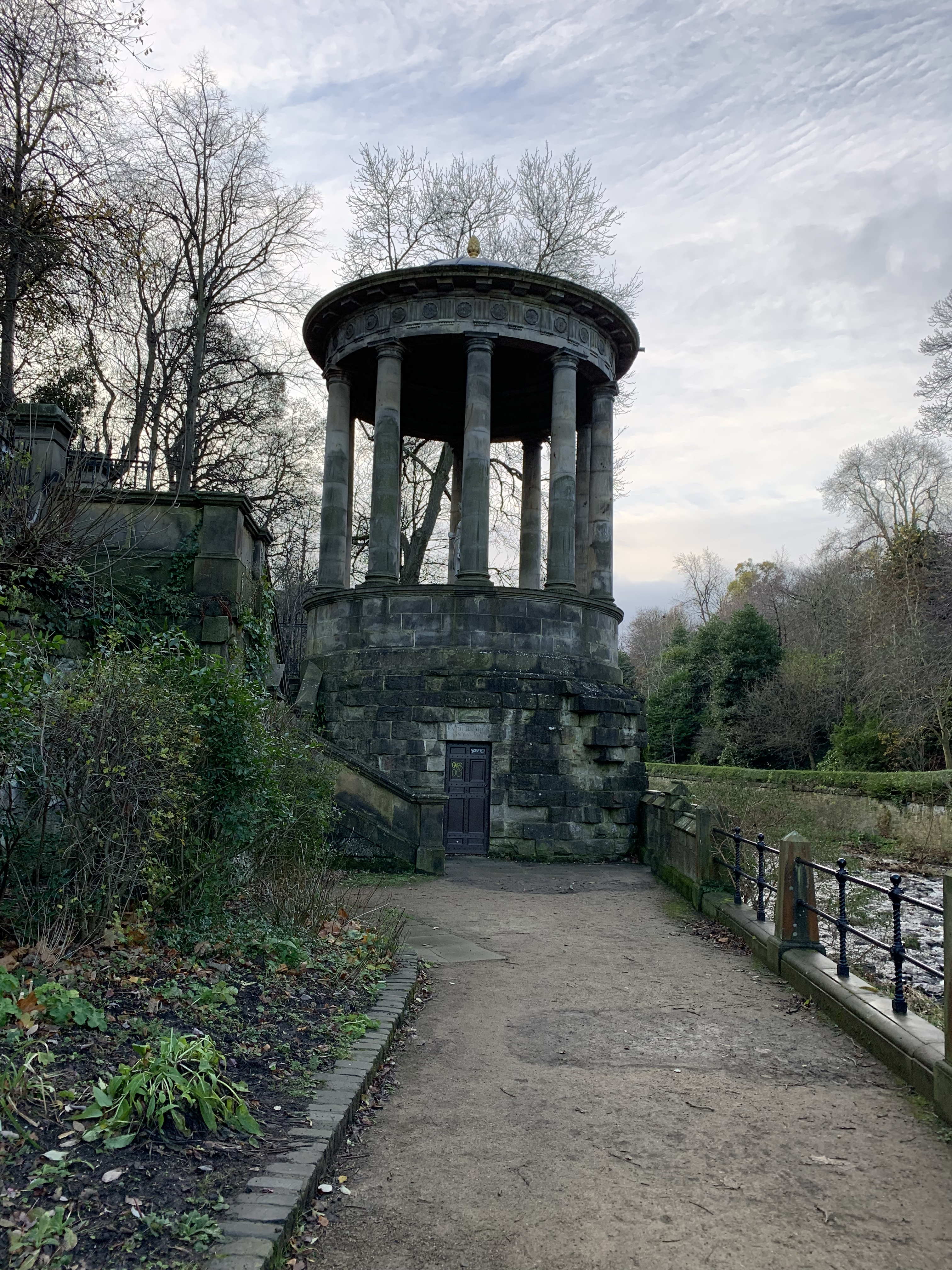
St. Bernard’s Well, Leith Parkway

A runner for many years, I confess that the best pathways for moving contemplation are these damp corridors of green-framed stone and shadow. It is something about subtleties where colours can pop because they’re not constantly blanched by direct sunlight. There’s an existential complexity to it utterly lacking in sun-drenched regions.

I have the opposite of seasonal affective disorder (S.A.D.) I’m depressed in constant sun. Nothing changes. It’s like trying to drink from a fire hydrant…all the time. It’s too much, too often, for no reason.

The breadth of human experience requires more than the cheap seats at a bad movie. It needs emotional distance, space to laugh and hurt and question and doubt and start all over again. The heart needs lament; needs thoughtfulness, discernment, the tepid wondering for which it is engineered. I agree with Pàdraig Ó Tuama’s review of Dunez Smith’s amazing poem, “I’m going back to Minnesota where sadness makes sense.” where he states, “not everyone needs to live in perpetual summer.”

Yes. That.

Gravestones at St. Cuthbert’s Kirk
St. Cuthbert’s

2021. This will be our first Christmas away from our boys. Either one or the other, or both, were always with us for the holidays. However, given the weight of God’s call upon us to love and serve Edinburgh, it seems not so high a price to pay, given the great returns we’ve already enjoyed from this incredible place. Besides, our laddies are squarely in God’s hands every bit as much as we, or anyone else.

So then, this year…it is Christmas in Edinburgh.

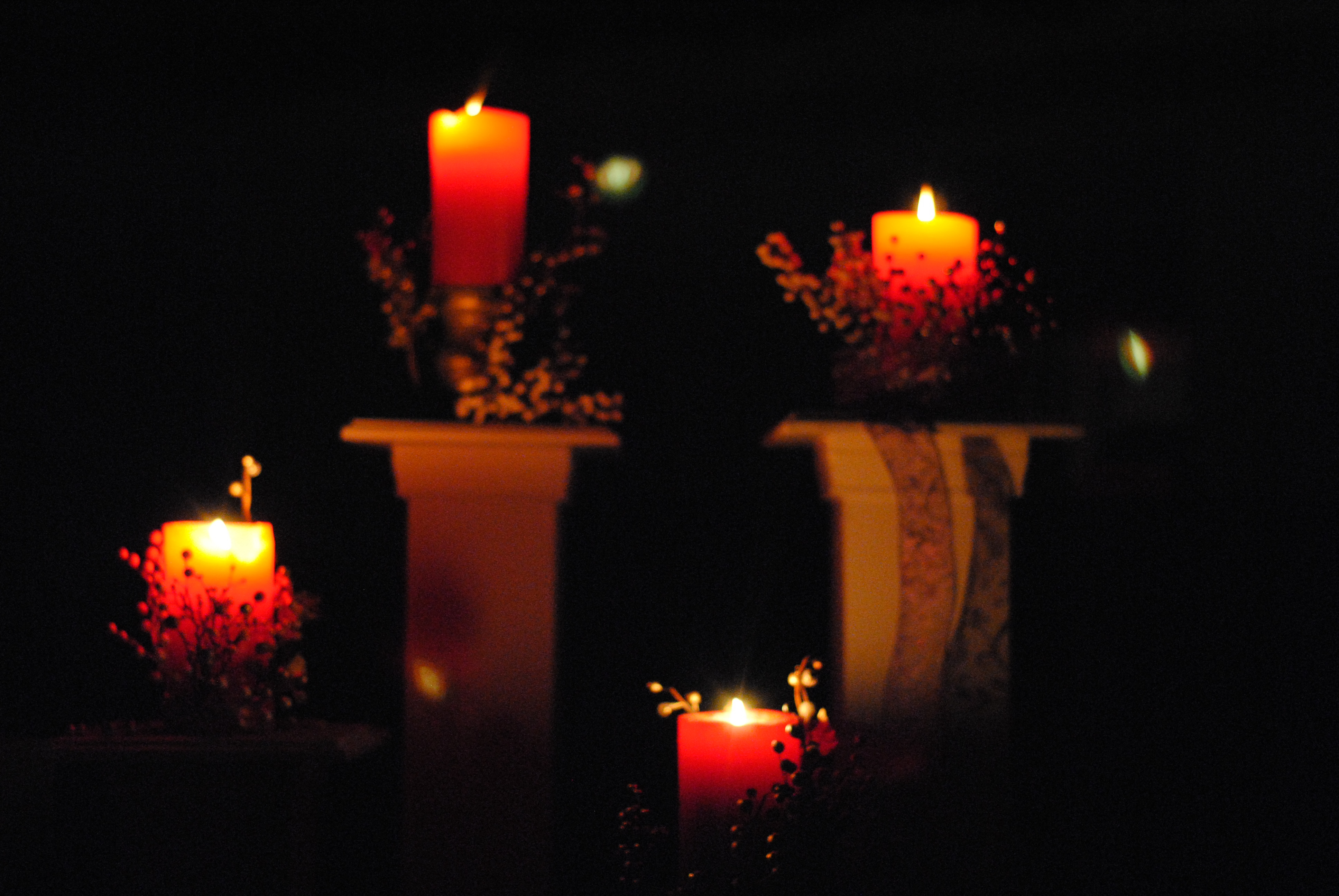
Adventia, last day

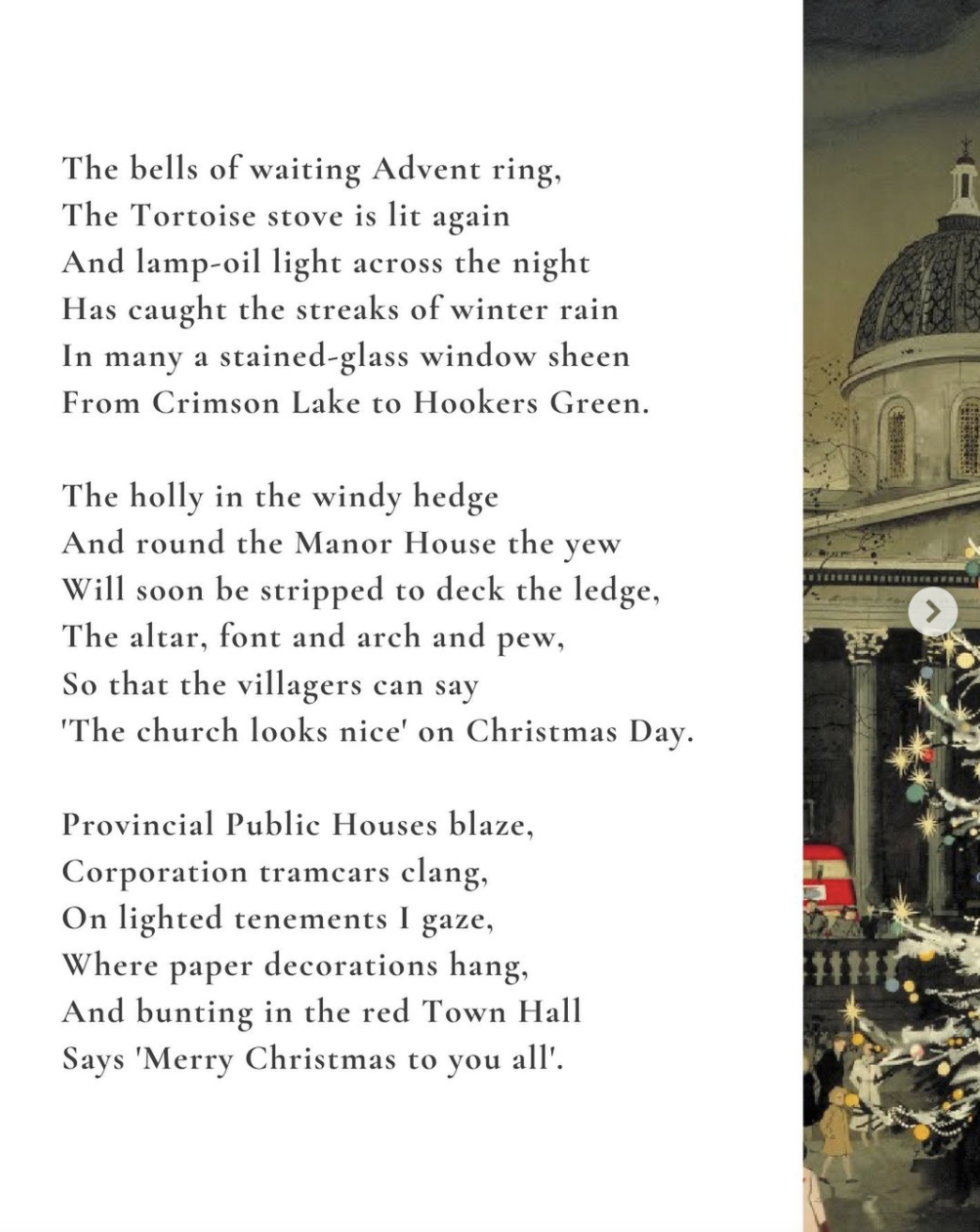
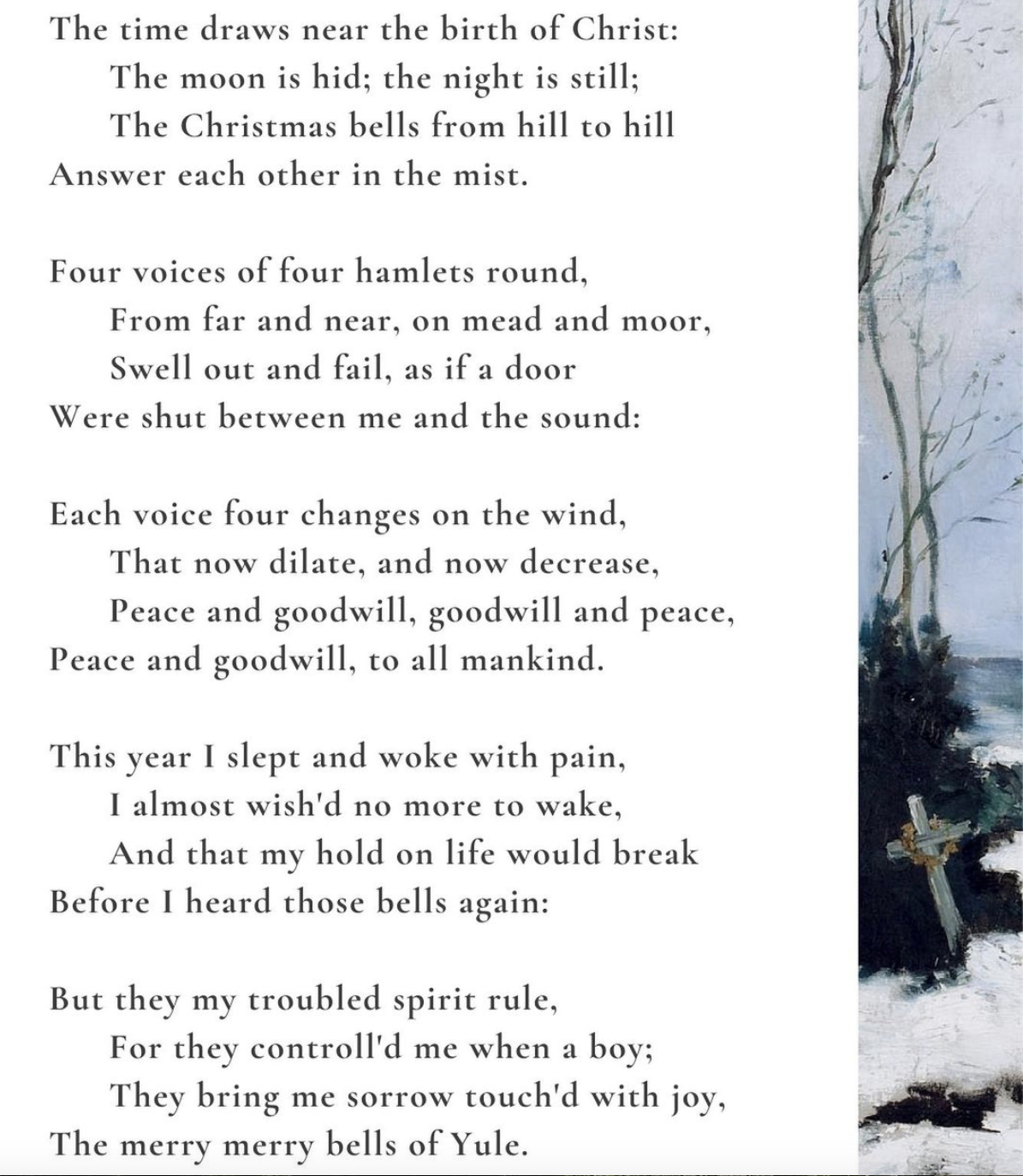
Advent reaches its apex on Christmas Eve, pregnant with longing, when a pregnant teenager will surrender to the world a Saviour and light is restored to all that is dark. For this, we offer you this poem by Sir John Betjeman entitled simply, “Christmas.”

Thanks for sharing this journey with me, and…Merry Christmas!

Thanks, Bruce…

67474583_10158586894473709_2369543928333467648_n.jpg

“All through my life I have embraced and questioned the night, and loved its random light: the aurora borealis, the starry reaches of the cosmos, streetlight ricochet off car metal and darkened windowpanes…the light of friends and lovers.
 
We are on a great journey, through darkness and dawn, across time, though sometimes I fear that our journey is about to end. We must not succumb to fear or avarice; we must continue to embrace life, seek light, and gather in the charity of night. This is what God wants from us and for us. Mirrors of the past shine with the hue of unborn days, just as stars glitter in the dark night to light our way.”
 

I love metaphor. I appreciate the multitudinous ways it invites us to consider really big stuff. Night and day, dark and light, doorways and highways – all of it in pursuit of understanding that which can be never be fully understood. 

Longing, as I’ve written many other places, is a condition most endemic of the hungry human spirit. If we are anything as humans, we are spiritually starving. Like the blessing of pain to a body out of joint is that of longing to the soul under duress, or even just at rest. We long not because we’re broken necessarily, but because we want either to be unbroken, or, in my case, to experience the proximity of God as God when last I WAS broken.

However, there’s a danger implicit in longing for its own sake. It can easily become an obsession, a drug without which we feel we can never really be whole. For too many years, in the name of contemplation, I lived in what could only be described as wallowing. It was often a cottage industry of self-pity in the guise of discerning depth; “look at me suffer and enjoying it” rather than the healthier pursuit of gratitude-in-darkness while praying for light. Persona incognito.

I’ve learned since then to notice the subtle differences which exist between genuine longing and a self-imposed spiritual subterraneanism posing as such. Nowadays, whenever longing arises within me, a few questions arise with it. First, where is this coming from? Why is it there and what is it telling me? Is this genuine heartsickness or just indigestion?  Does my spirit need something or am I falling into addictive thinking once again? 

As beautiful, daring, mystifying, and thirsty as the human soul can be, it is also fickle and will play tricks on us. What presents as darkness might just be ennui, the listlessness which is part of being human. What presents as sadness might better be described as an insufficient attention to the light of Christ always burning in our deepest places.

The Bible and, by extension, the great tradition of Christian spirituality have aligned the parallel barrels of mystery and metaphor as their formational crosshairs. The immense enterprise of God’s program of cosmic reclamation remains unsuited to the quaint and glib prognostications of “systematic theology”, or as I like to see it, the detached mechanics of straining eternity through an eye-dropper. Protestantism in general, evangelicalism in particular, are guilty of this diminution.

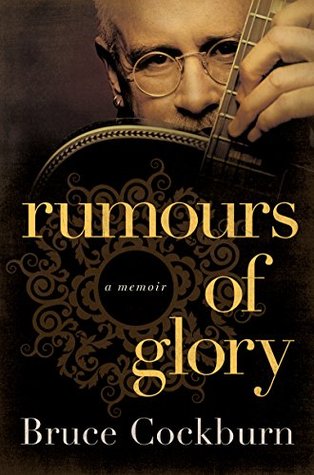
All of the above has been the experience of my hero, Bruce Cockburn. I recently finished his memoir. A favourite person. My favourite genre. The chance to devour, even absorb, the fascinating lives of fascinating people. My life grows from the experience, every time. What’s not to love? Ah, but this is not just any memoir. 

18498533

It is impossible to understate the impact Cockburn has had on me. My music. My approach to the guitar. My songwriting. My ongoing love for literature and words. Especially, my spirituality, infused with longing as it has been. Even my personality exudes a certain whiff of Cockburnesque mystique, much of it intentional.

He doesn’t know it (yet), but I credit him in large measure for my career in music, songwriting, and for my journey of faith. While he was still pursuing something beyond the pale for himself, he speaks of “the speech of stones.” It was probingly pagan but sufficiently poetic to peak my interest. There was something out there worthy of seeking.

Bruce (may I call you that?), if it’s good enough for you, it’s good enough for me.

It still is.

Adventia, day 26

We edge ever closer to the end of Advent and the beginning of Christmastide, or the season of Emmanuel. For today, we enjoy this gem from Alfred Lord Tennyson entitled, “In Memoriam XXVIII.”

Adventia, day 25

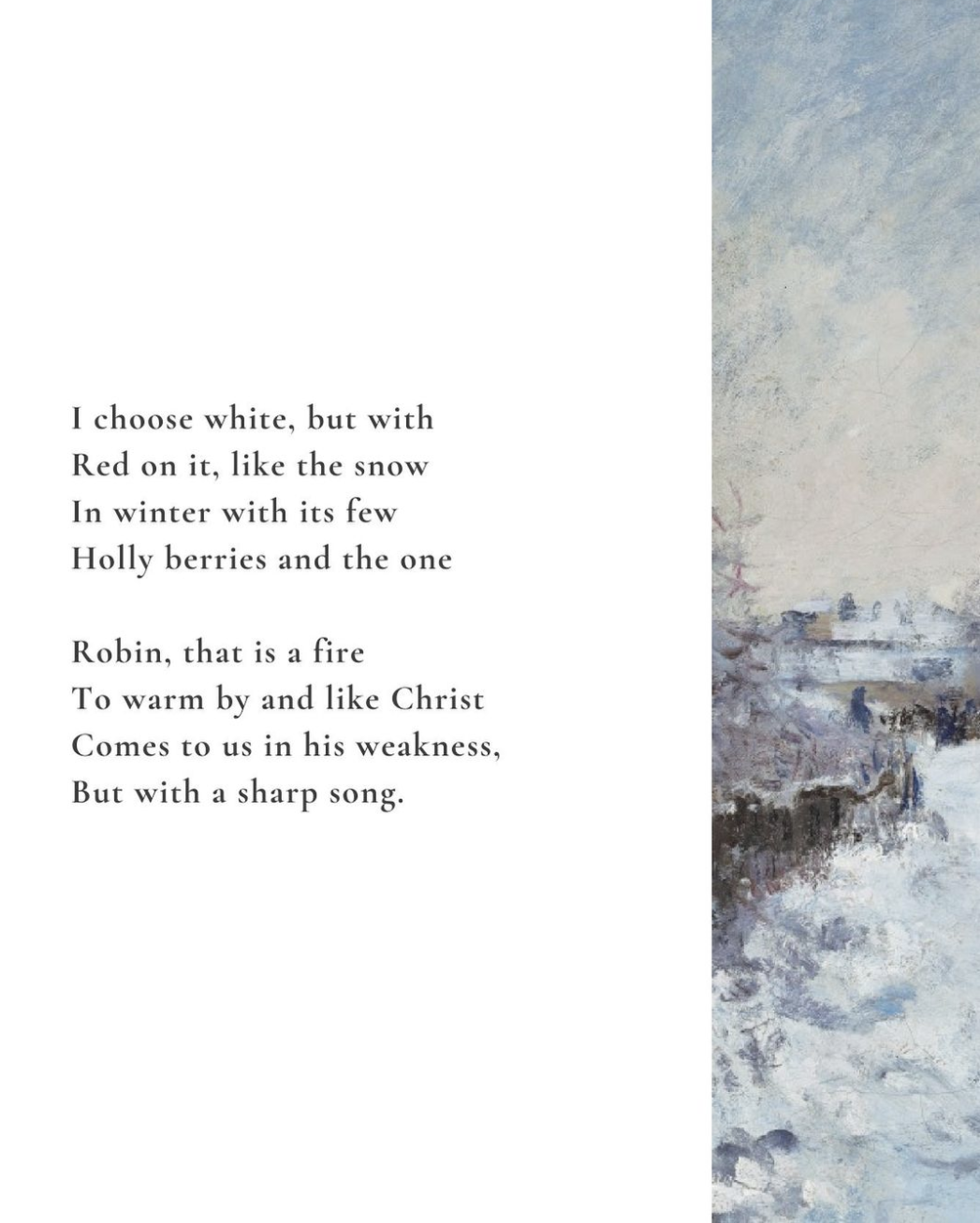
As now our days begin again to lengthen, I welcome you to this Adventia journey, day 25, with this lovely wee poem by R. S. Thomas, “Song.”

Adventia, day 24

On this Winter Solstice where, in Edinburgh at least, sunrise isn’t until 8:42am and sunset close on its heels at 3:39pm, I give you…

“The Nativity” by C. S. Lewis

Adventia, day 23

British philosopher, theologian, literary and art critic, G. K. Chesterton (1874-1936) was a man large of stature and imagination. He was the creator of the much-loved “Father Brown” stories. Today, I’m featuring his marvelous poem, “The House of Christmas.”

Adventia, day 22

Despite being an Epiphany more than Advent poem, this is worthy of the time. This is “Bethlehem” by Charles Williams. Williams published many poems for his small parish magazine during his life. This one appeared in 1920.

Adventia, day 21

Our poem today comes to us from none other than George MacDonald. The influence of this man on the great C. S. Lewis was well-known. He died before Lewis was born, but he still looked upon him as a spiritual father and referred to the great Scotsman as “my master.”

The poem is entitled, “A Christmas Carol For 1862: The Year of the Trouble in Lancashire.”

Adventia, days 19/20

For both today and tomorrow I am posting one of the most remarkable, strangely comforting, but deeply subversive prophetic passages in the entire Scripture. These words, from the mouth of a young, pregnant Mary are as powerful now as they ever were. For those who think the Gospel nothing more than one’s personal ticket to heaven with little social impact, these words easily challenge such erroneous assumptions.

Today, I give you –

“The Magnificat” (Luke 1:46-55 NRSV)

And Mary said,
‘My soul magnifies the Lord,
47   and my spirit rejoices in God my Saviour,
48 for he has looked with favour on the lowliness of his servant.
   Surely, from now on all generations will call me blessed;
49 for the Mighty One has done great things for me,
   and holy is his name.
50 His mercy is for those who fear him
   from generation to generation.

51 He has shown strength with his arm;
   he has scattered the proud in the thoughts of their hearts.

52 He has brought down the powerful from their thrones,
   and lifted up the lowly;
53 he has filled the hungry with good things,
   and sent the rich away empty.
54 He has helped his servant Israel,
   in remembrance of his mercy,
55 according to the promise he made to our ancestors,
   to Abraham and to his descendants for ever.’

Um, wow.