
There was always enough time to dodge and weave among the silences where words hid themselves under innuendo It was a metaphor for communion drank from empty cups with stale bread crumbs Teeth never chatter in the heat of tall clear days except when one hasnt looked up yet to notice A thirteen year olds wishbone summer is no match for the real world It chants and whirls itself into rock star memories where pretend gets truer in the telling I guess one could say she should have known better All the signs said the same thing with different words So many taps on the shoulder whispers in the ear the kind you feel the need to silence with voices louder still But once water gets poured into the brown earth the satiated ground is loathe to give it up That is until heat and time force it back out bringing with it the green goodness of even better stories
Category: Words…always words
Under construction

Match-making in shared moments
the winter’s broken promises
feel so effortlessly serene.
–
There is a rapprochement in
the submarine sun, submerged
and safe as a summer sonnet.
–
But unwieldy and withered
like grandma’s warm hands,
one hour grasps another.
–
So, I chuckled to myself,
author and beneficiary to
my own private joke.
–
And, with trickles and trembles,
thoughts crawled impatiently beneath
the ice-ridden river.
–
Maybe this is a good time
to tell this pen of disconnections
requiring a poet’s attention.
Where truth and beauty meet
I’ve always been fascinated by all the intersections between truth and beauty. That exploration takes up much of my creative time. However, I give this one to a poet who says it better than most, Emily Dickinson.
I died for beauty, but was scarce
Adjusted in the tomb,
When one who died for truth was lain
In an adjoining room.
–
He questioned softly why I failed?
“For beauty,” I replied.
“And I for truth, – the two are one;
We brethren are,” he said.
–
And so, as kinsmen met a night,
We talked between the rooms,
Until the moss had reached our lips,
And covered up our names.
-Emily Dickinson
2014 in review
These are fun. I posted the same last year. I hope you enjoy.

Here’s an excerpt:
A New York City subway train holds 1,200 people. This blog was viewed about 4,200 times in 2014. If it were a NYC subway train, it would take about 4 trips to carry that many people.
How?
How does one begin, grace withheld, to keep,
with thunderous nonsense floating out
on nature’s blundering step,
one’s native senses stout?
How does one’s song, pretentious to the end,
regale a hall of witless whim,
and never reach what ne’er was sent,
the places best it’s warming, trim?
How long there lies within us all,
lies within us, all tightly tethered;
a mirror’s mirror to boon, enthralls,
while hearts lay scarred and feathered?
How still, the talk of soundless wind,
can still the talk of sound, less still,
and draw from death a life to find,
when all but hope has had its fill?
Advent II
Ah, little God, in an instant long in coming,
you broached to us this breachless veil,
bearing its weight in sullen flesh, and pulled aside
the cancerous curtain. Here, where once
we hid from the balm of healing touch, now
you lay fresh hope in scattered hay into which,
breathing lightly in cherubic light, has come
to rest, new life in an infant’s deep sleep.
From the poet’s ready pen

From the poet’s ready pen comes the
yawning stillness, leaking out
from linen thoughts, stretched
tight upon the hungry loom.
How dear these words come, dear soul,
trading green for our grey.
Like the pastiche of a late morning sigh,
our tough and torrid skin oft forbids
your trim veracity, always enough
to root it all in the insufferable lightness of song.
Tease out the rising tides,
their turning waves run amok.
Oh ready writer, graft our branch to seed,
your root to leaf and banish
all the rotted soil to its brown eternity.
Winnow out from worn whimsy,
with your willow-throated pen, our
long-faded hope. You set about
your task, anonymous to none but
the unseeing ears of deaf brutes.
Letters, cast adrift to their watercolor
harbors, dive down, down,
down from brushes, pinched
tight in fingers that point
with precision to everything that eludes.
Paint wide the foraging colors of
dimpling fragments of forest, new.
Tease out our trembling days, and release
what hides itself in the obvious.
Last of the summer, leaves
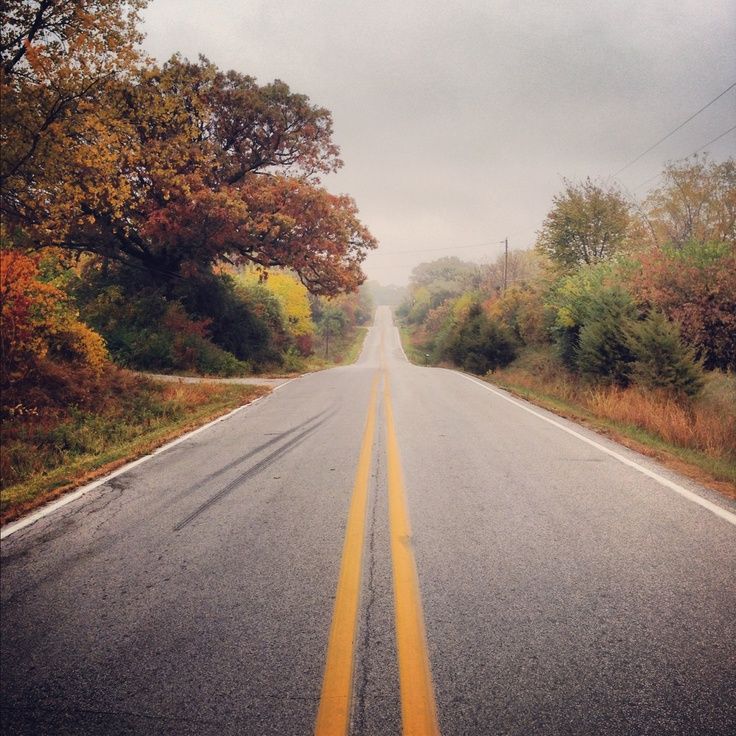
I watch while the last of the summer leaves
the last of the summer leaves,
cornered by color, bullied by wind,
pushed from their tenuous
one-finger perches. Dangling
from hope, they yet cling to what was.
To what can never be again.
Buttressed now by stealth and stain,
the trees hold their breath and, in bloated hues,
leave behind what could never have been kept.
The molten days of August, now
Eastward creeping, cannot match
the closer dawn of winter’s darker agenda.
Change waits for no one.
Our frightened but fawning fraternity,
grips the once-dangling inside jokes.
But our song-sick companionship, bends
to sight and chance and change.
Beyond the clutch and ken of
drowning dreams, old stories, made young
again in the telling, sleep in
the quiet choirs of shared experience.
Love, always trumpeting her own exploits,
is writ larger against the dim and shrinking page.
Huddling for warmth against the inevitability
of inevitability crouches the promise of the new,
ripped and wrapped in golden heaps of trust.
Grasp too tightly to the branch and nothing
comes to shape what shadow left behind.
Trading form for frame, green for gold,
gone for glow, tired specters of older
days return to their places to sleep,
and dream of dreams.
The pledge of change.
What is left after un-leaving
stays bleak but for a moment.
Soon, the barren skin of dawn
must shed to bear and bare what only
death could bring.
Everything.
I suppose

I suppose I thought that, once the days had shaken themselves loose of the encumbrances of motion, and the menace of time, the twittering sky could finally waffle, untethered, under piecemeal clouds to consider her options.
I suppose I thought that, given the distance involved, someone might be better off to find oneself caught in the dilemma of giving up uncaring responses to caring questions than not to answer at all.
I suppose I thought that, with that last bitter twinge of guilt, not so hidden but buck-toothed and fuscia-brimm’d against the waiting whiteness, the notes might be in tune.
I suppose I thought that, underneath the quivering madness of illusion, hiding behind curtains in a living room full of misapprehensions, would come the smallest sigh, the narrowest glance.
I suppose I thought that, without a second thought, mysteries caught up in stubborn embrace of tired stories pinned to old trees never well-planted might actually find bards to sing their praises.
I suppose I thought that, with enough poetry strung out on lines of hopeful thought, and enough poets, kindling together those lines, breath might swell again into a coughing history.
I suppose
Nanaimo

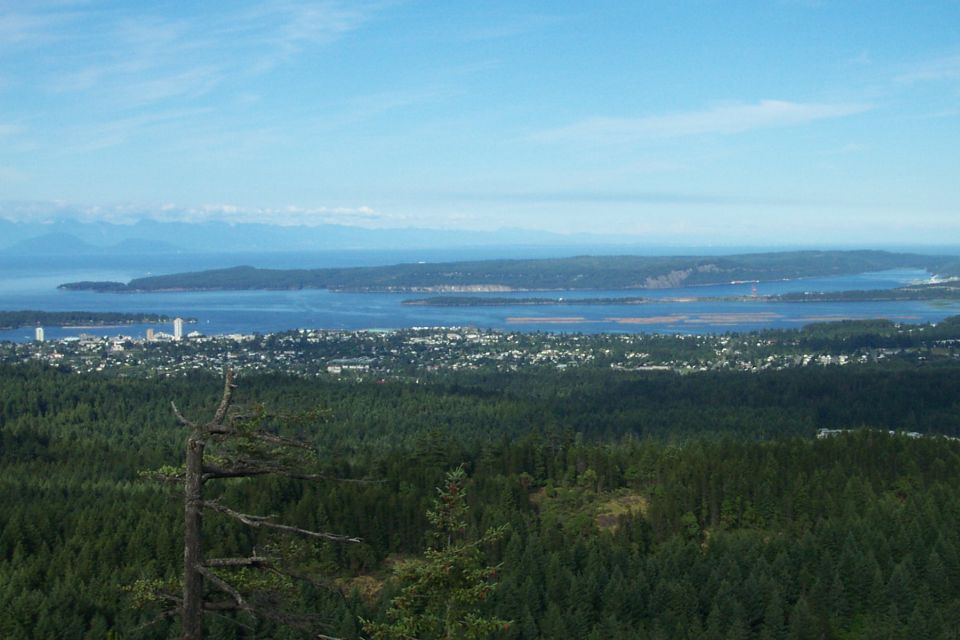
Layers of green-backed mountains muscle their way through bruised-blue ocean. Hovering always beside us, they serve as our constant reminder to look this way, west, when lost (an hourly occurrence with me at the wheel). The air is grey, merging as one with the sky that frames it. Those, like us, whose weather experience is unyielding, unnecessarily hot, desert sun, often boast of the abundance of light. But, unlike the pushy, insistent sunlight of eastern Washington, the light here is complex, nuanced, shy and non-committal, like a teenage girl not quite ready for a boyfriend’s advances. Colors and textures are more discernible; faces, buildings, and backgrounds more sophisticated, not blanched and obvious from the brash directness of a boastful sun. This light is earned and, as such, even more deeply appreciated for its whimsical scarcity.
Rain here is currency, making this a rich place indeed. Its presence is more than just expected. Its certainty brings with it a comfort akin to the smug knowledge that umbrellas bring in clearly delineating tourists from townies. It’s dotage, over-eager but well-meaning, comes like a cleansing of the palette as it were for the hardened but friendly inhabitants who call this home. Anything more than about a ten percent chance of rain means, well, rain. Whatever ‘showers’ means elsewhere, in this place it is code for, Build ark and prepare thyself for an unforgiving shitload of vertical water and avoid umbrellas at all costs.
Tucked beneath the busy sky, layered mountains, and hungry sea lives a population reminiscent of a suburban Woodstock. Hippy loggers. Polite revolutionaries. Sidewalk artist news-junkies. Bag-ladies and street-dwellers with decent grammar. All of the above and us, the lone, traitorous Canadians living in Washington State trying to stumble our way around. That, with downtown streets twisting in corkscrew fashion in and out of side streets that double as alleyways that double as thoroughfares that smirk at our lostness. The roads, having been laid by drunken blind men in oneupmanship sprawl out like some wild, yet picturesque, game of snakes and ladders. Where the hell are those mountains anyway?
 Those Canadians, famed for politeness, are the same ones who, upon noticing our Washington State license plate, find every way possible to angrily tailgate us into next week, regardless of our fifteen miles per hour over the speed limit. A worthwhile risk, apparently, to he who must teach a valuable lesson to these wayward American ne’er-do-wells. “But wait,” I inwardly screech, “I’m one of you.” To no avail. This is what Canadian “aggression” looks like. I meet the same guy at a red light and he’s all smiles and waves. Here in Canada, polite is but shorthand for passive-aggressive, a set-up for the inevitable near-clash of non-words.
The reason for this ascent into the murky badlands of Vancouver Island rainforest otherwise known as Nanaimo? To deposit (or abandon, depending on your perspective) our youngest son into the fray where he will begin Jazz Studies at Vancouver Island University (not an oxymoron, I assure you) and a new life figuring out the politics of labyrinthine Canadian niceties. He may have been born in Vancouver but he has spent fourteen of his eighteen years in America’s Pacific Northwest. He is the most American of anyone in our family, a family more Canadian than most Canadians.
The long love we’ve harbored (yes, I went there) for screeching gulls alighting on fishing boats, grumpy clouds bobbing over bouncing buoys, and a permanent smell of pulp laden damp help us navigate the darker waters of parentalisms. Small comfort indeed in the face of driving hundreds of miles away, the face of one’s youngest in the rearview mirror. Good thing I’m given neither to melodrama nor self-pity or I might find myself writing about it.
God forbid.
Photo found here
 innerwoven