“Trip to Bountiful” – part 5


My writing perch Ambleside.jpg
My writing perch this morning, Ambleside

August, 1989. My wife and I were the grateful recipients of Scottish largesse and enjoying a robust, five-course meal at Edinburgh’s George Hotel. The meal was spectacular. The entertainment? Lounge cheese. Nevertheless, down went venison, roast vegetables, fresh salads of varying kinds, nips ‘n tatties, roast beef and, of course, haggis. We were by far the youngest at our table, mere months after celebrating our first anniversary on Culloden Moor. It was pure magic.

I suppose this added a bit to our sense of naïveté and childlike wonder. We had just completed our time at Granton Baptist Church, Edinburgh as youth ministry “missionaries” and were spending some ramble time in the Highlands and England. We were, as a result, the wrong people to hear the travesty of screw-the-world chest-puffing comments that followed.

Seated across the table from us were two of the most arrogant ass holes the world ever produced. God was in the toilet when these two popped up whole out of the ground somewhere. The husband made the ass-tute observation, “aaah, ya see one cathedral, ya’ve seen ‘em all.” Delightful. She went on to add, “good Lord, what a California developer could do in the Highlands. Glencoe absolutely needs condos.”

As I suspected, your reaction was the same as mine.

The Lake District 11 copy.jpg

Lake District 6 copy.jpg
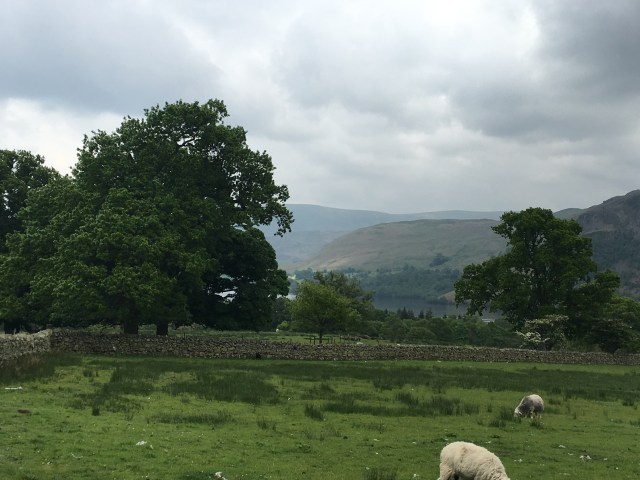
Grasmere, in the Lake District

I breathed in deeply trying not to portray my disgust, wondering to myself why it’s necessary for some people to reproduce when this is the best we can get. I consoled myself with the fact that they’d die before their time. Okay, so maybe I only thought it. I repented (kinda) and moved on.

In the lifelong pursuit of all that I’d call ‘home’, deep in the stone guts of a thousand-year-old cathedral or castle somewhere in Britain is as close as it gets. Even as a young boy my predilection toward all things old and musty presented itself regularly. This was constantly disappointed growing up in Canada. As deeply Canadian as I am, it was still never old enough to satisfy my longing for anything older still.

As I write I do so in a corner window overlooking the high street in Ambleside, one of many perfect Lake District towns. It is made to order for writers. It’s not much of a stretch to imagine why that has been the case for so many writers (real ones, that is): Beatrix Potter, William Wordsworth, Samuel Taylor Coleridge. It has inspired countless others since then, Shelley, Keats, and Robert Burns, to name but a few.

Ambleside 11.jpg
Near Ambleside

My point is, to find the deepest reserves of one’s creative and spiritual taproot, one must be willing to explore and discern what that actually means. The whole point of the spiritual enterprise is to be ‘home’ everywhere. It is to be completely comfortable in all places at all times under all circumstances. Says St. Paul, “I have learned to be content in all circumstances.”

My wife and I have come to Britain for a host of reasons. Hers are similar but different to my own. I am here to reconnect with my spiritual DNA. My helix is uniquely interwoven with that of the ancient, storied hills of Scotland. The latter part of our journey allows me some alone time, with the rental car, in the Highlands and then to Skye. I shall suffer this unbearable burden with God’s abiding strength (stupid emoticon here). I shall also offer more pontifications then.

Until then, I pray you never suffer the indignity of meeting the toilet-water-buffoons with whom we shared a table in Edinburgh.
“Trip to Bountiful” – part 4

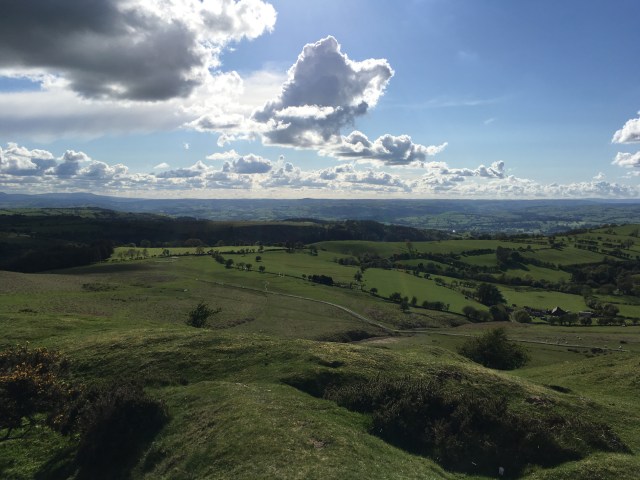
The view to end all views.jpg
Hay, Monmouthshire – the view I’ve been waiting for

I have, for the first time, truly experienced the devastating wonder that is Wales. It is as though God made Britain first and then, everything else from spare parts (not that I can speak from context, or experience, or knowledge of any kind really). From the broad-shouldered Brecon Beacons, to the literary orgasm that is Hay-on-Wye, the city of bookshops.

Hay-on-Wye bookstore:cafe.jpg
A bookshop. A café. In Hay-on-Wye. What’s not to love?

From the Cistercian monastery ruins at Tintern Abbey to equally haunting and beautiful Llanthony Priory. From the seaside riches of Harlech and Llanbedr to the rough ‘n tumble Dolgellau.
From a fifteenth century teahouse in Ty Hwnt I’r Bont near Llanwrst to Snowdonia National Park in Beddgelert, Wales is a place of countless treasures. 

I’ve been here before, but not this close to the bone. I’ve learned what it means not just to drive a car but navigate it like a big ship through a tiny canal. I’ve heard horror stories of those possessing significantly superior driving skills to myself pissing themselves from stress on the very Welsh “highways” I’ve just driven. Now, to be fair, I changed before writing this and how would you know anyway?

More Welsh countryside copy.jpg
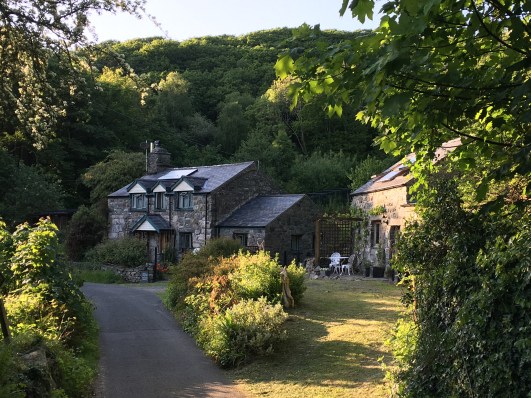
Beudy Bach, our perfect stay in Llanbedr, near Harlech

In addition, to drive a car in a place so utterly complex is to forego any certainty of directions, ETAs, the logical movement of traffic, expectation of driver largesse, and frequency of toilets. Throughout the UK, the puritan American spirit must learn to contend with the lack of excretory euphemisms.


Llanthony Priory 18.jpg
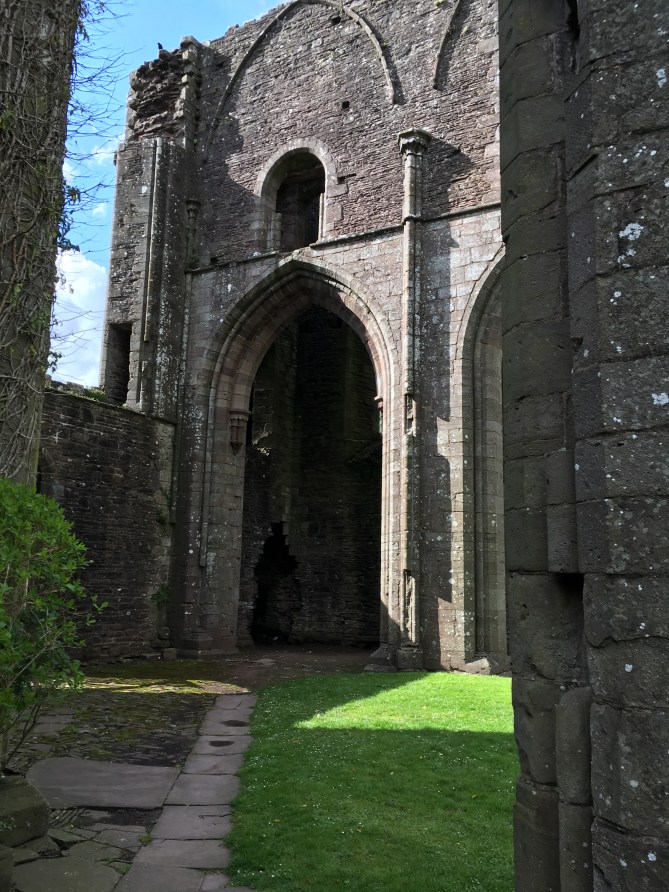
Llanthony Priory


A tiny thumbnail of a country it boasts as long a history as anywhere in Europe. Today, we said goodbye to Wales, and find ourselves in another enchanting part of Britain – Ambleside, in the Lake District. We stop here to catch our breath, drink a ton of coffee and write.

In the days that follow, our travels will take us east and north to Dunbar and Edinburgh. The deep connection I have to Scotland will require a host of other blog posts. Hence, for now, with Wales in our rearview mirror, I think poetry is the only song that will work. I hope you enjoy, and thanks for joining us on this ride.

Down in the throat of Wales

In the throat of Wales,

where light is sparse, then it is best.

This land of green trousers with grey hat,

hair coiffed in bluebells, tulips,

and yellow daffodils.

She is held in frames of arbour, where bristle-faced hills

are bred for poetry – Coleridge, Thomas, Wordsworth.

Down in the throat of Wales.


In the throat of Wales,

we pass the standing stones, God’s elder brothers,

and their eyes follow us.

Rain falls like sweat from the coal miner’s brow

while praying hands of hedgerow herald peace on every side.

A bleating sheep choir beckons eyes up to the watching hills.

Down in the throat of Wales.


In the throat of Wales,

down, down the Brecon Beacons beckon, swallowed down

where the green things live – down in the throat of Wales.

At the Blue Boar Pub, regulars and weekend

intellectuals hold out town secrets.

Practiced tongues wag in dark corners, breathing out suds

and gossip and recycled stories with fresh laughter.

Down in the throat of Wales.


In the throat of Wales,

at Hay-on-Wye – these streets are full of pages,

ten thousand dog-eared voices

tucked away on shelves and tables,

under arms and coat pockets.

American streetlights bow to clock towers, cheery pubs,

and weary stones. Long-drawn lines of primogeniture sing

the songs everyone still knows. And, the many-throated

happy-hour jubilee of a thousand years gone by

still steeps in the glow of candles,

wine-bright eyes, and cell phones.

Down in the throat of Wales.


In the throat of Wales,

the hills stand guard, where stone and memory bleed

the colours of the ancestors,

drawing their long and bloody shadows over Beddgelert.

The River Colwyn, host to muddy boots and hooves and paws –

I pause to imprint her banks of sleep.

Down in the throat of Wales.


In the throat of Wales,

Harlech’s stiff-shouldered castle juts out a jarring face

into Cardigan Bay, catching salt kisses

blown from the cold, grey sea.

Oh, where to wander in this wild and brooding land,

where friend is stranger – stranger, friend –

and all that ever wrung true hangs tightly

to the soft skeleton of a land made

from the stoutest stone, the strongest sheep, the swollen stories

of hearts that glow brighter than the smiles of children?

Down in the throat of Wales.


In the throat of Wales,

I place my ear next to her breast

to hear the consonantal tongue

make love to songs as old and wise as she –

where still, of all sad souls,

the blind man is poorest.


Down in the throat of Wales.


“Trip to Bountiful” – part 3


13238898_10208106960346130_397416527787693528_n.jpg
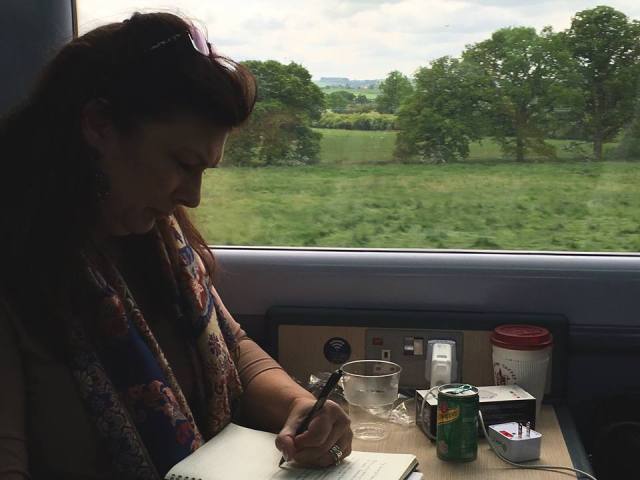
Rae and I on the train to Wales

Here, in the lavish, lazy valleys of South Wales one can smell the old, taste the green. To the mystic’s palette it is chateau briand for the soul. The harmonious voices of stocky, Welsh coalminers blend with the buoyant tongue of an ancient language to stoke the most experienced fires.

Too bad they drive like shit. Well, one can’t have everything.

Our brief foray in the UK takes a turn from the sleek, overly preened mien of London to the clumpy, sodden town of Newport, Gwent, South Wales. It is a place as equally devoid of panache as it is pretention. The people are as unremarkable as they are genuine. Note to self: read that line again later.

River Usk.jpg
The muddy banks of the Usk

The River Usk upon which this town is built looks like one long bowel movement running through the center of town. To hear them speak with pride for something so utterly un-notable is in equal measure quaint and unnerving. The last time we were here a few years ago, I joked with my wife, for whom this is her birthplace, that Newport was the only ugly place in all of Wales.

Beyond the obvious revitalization enjoyed by this city, I repent of such ignorant, North American bluster. Besides, the passing years have replaced my previous eyes with new ones. I see now something quite different. The grey, spongy demeanor of the place is easily eclipsed by a deep and knowing spirit – a kind of relaxed ennui, without a hint of self-pity.

I must learn from this.

When the soul moves past its incessant need for the spiritual X-factor, it then can see the better coal beneath the monochromatic surface of its own shallow intentions. The beauty of Newport isn’t found in its breathless joie-de-vivre, the jaunty rollercoaster of soulish affixations we often call spirituality. It is somewhere down under. It lies beneath all of that, in the bedrock of older soil breeding nourishment over luxuriance.

In exploring here, I am struck by how difficult it is to amuse the over-stimulated American psyche. By contrast, the British are delighted by small pleasures. The sheer joy of a few hours before the fire with a stiff cup of tea, a biscuit and conversation is all they require to feel human and whole. As our spirits chase after ever more lusty extravagances, Newport reminds me that the best things come in the unbidden grace of simple, genteel moments.

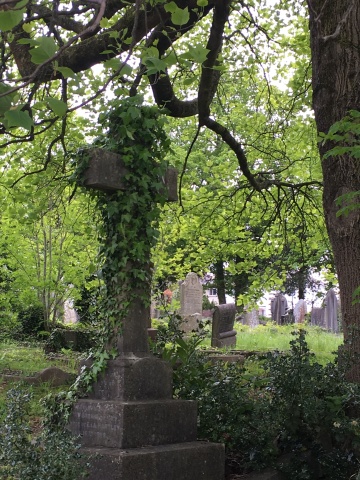
Cemetery 3
A visit to the St. Woollos Cemetery

Today, I am a tourist in the most non-tourist town I’ve yet seen. Better still, I’m a pilgrim where once I was a tourist.

And, I am seeing the beauty that lies beneath.


“Trip to Bountiful” – part 2

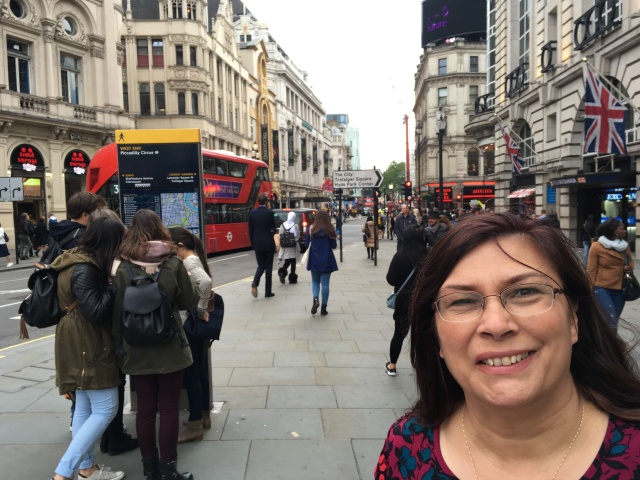
As endless underground tube stops, countless footsteps to and from every possible sight, packed unimaginably into what amounts to an hourglass on my wife’s schedule I am, of course, café bound. Two very full days of touristing the hell out of London with a view to advancing my wife’s novel descriptors has left me washed out. She’s a veritable whirlwind in a thimble, a human hurricane of never-ending activity and world-wonder.

My wife, the human hurricane.jpg
My wife, the human hurricane

As a self-described artsy, bookish mystic, I’m sure you understand my reasons for writing. Besides, I’m sure she’s glad to be rid of me for a few hours. Who needs a needy poet on their back when there’s a world to conquer?

The morning started with a leisurely walk along the Thames through, first, an industrial district and later, through rows of prim, stately flats. Every time I see the Thames I am instantly reminded of how contextual our histories are. To hear Londoners speak of “the mighty Thames” after having lived beside the Columbia for a few years is quaint to the point of hyperbole.

It is however a river that has seen more history in a lunch hour than many others in their long, sweeping careers. At once lazy and overworked, her rippled, brown back shoulders international industry and commerce hard to rival.

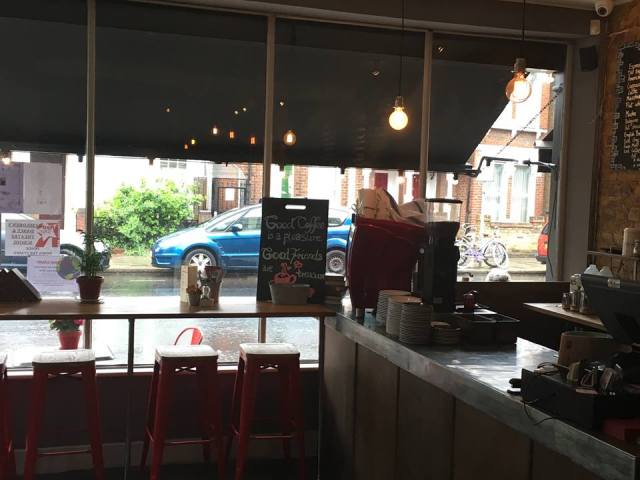
It also makes for a lovely morning walk; a walk that has landed me in this very café.

Putney Cafe.jpg
The Putney Café, Wansworth

My wife’s novel, now on perhaps its fourth title, provides much of the backdrop for this journey. She began writing this story almost four years ago. It has gone through many iterations, edits, rewrites, lapses – a great working metaphor for our lives generally.

As described in my first piece of this series I am here for reasons hard to name, hence the elusive title of “Trip to Bountiful.” If ever a story points well to the Celtic idea of hiraeth, it is this one. Contextualized in twentieth century Houston, it is in many ways a timeless tale of escape from an unpleasant present to the friendlier familiar where one hopes to find a reality more amenable to the longings of the heart. It is both escape and discovery. It is reality versus perception of reality. 

The broken places of my present seek out the healing that can come from places connected to my psyche even deeper than my own short history. In the play, an aging Carrie Watts, living unhappily with family, dreams of escape from a claustrophobic Houston existence back to spacious Bountiful where she was raised. 

The longer I explore this idea of ‘home’ and ‘longing’ and ‘be-longing’ the more I am skeptical of easy answers. The incarnational realities of daily existence in our physicality are demeaned by an over-spiritualized romanticism. We are a rooted people. We have a ‘where’ as much as a ‘why’ or ‘how.’ Conversely, the unnameable yearnings resident in every soul are never fully realized by placement in easy familiarities of youth and proclivity.

As ‘hiraeth’ suggests, we may at once long for what can never be again. But, as the even broader, more pervasive gospel narrative insists, in Christ we are everywhere, fully, ‘at home’ – even as exiles in a strange land – the often stifling realities of temporary displacement, geographically or otherwise. 

Hence, even as I gaze out the window of this quaint café onto the rain-washed streets of London I do so sad that I must soon return to a familiar geography with an unfamiliar spiritual DNA, but do so completely happy.

Besides, it’s raining, and the coffee’s good here.

“Trip to Bountiful” – part 1

mobile_h_photo.jpg

The words I’m about to write are the first I’ve written about this. Not because I am ashamed of it. Nor am I trying to hide anything. Quite simply, I’m still trying to understand it all.

I had an emotional breakdown early in the new year. I hit a wall that would have intimidated Goliath. I was wiped out, gutted; truly at the end of my emotional capital. I laid curled up in a ball, weeping uncontrollably on a hotel room floor, a tsunami of thoughts raging in my skull. My soul was in a vice, and my interior life was squeezed beyond recognition.

Quite simply, I had nothing left.

In the middle of that I received a text from a close friend and colleague. Rather cryptically (and not without humor), it said, “what the f**k is up with you? I keep getting woken up to pray for you.”

Okay God, you have my attention.

In the space of an hour, I went from despair to utter calm. The room remained dark and cheerless. My soul however felt swept somehow. Not elated. Not blissful per se. Just quiet and pensive. I was for the first time in distant memory, without anxiety. It was a state I would enjoy for about twelve days.

And, although the anxiety would return, in the window of time gifted to me I made numerous life decisions that have offered great riches ever since. What I discovered in that time was remarkable. When anxiety is removed one becomes surprising lucid, focused, confident, and decisive. 

I put my ordination process on hold. Ordination is the right decision. It’s just the wrong time. I removed myself from a number of writing projects, if only for a time. I gave up my music students (shamefully, I only teach for the money anyway). I felt a desire to perform more often and to dig into gardening (the pun is easier than the gardening). I had an overwhelming desire to turn my sights toward fixing things around our home. I saw more clearly the necessity of relationships and the blessing of stability (thank you, St. Benedict).

Most importantly, it became clear to me that I must join my wife on what was originally her, not our, vacation. 

By God’s grace and if the creek don’ rise, my wife and I board an aircraft for Britain on Saturday evening. It’s been twelve years since we last stood on this sacred ground. The archaeology of our lives readily reveals itself at these moments; moments ripe with joyful anticipation, with curiosity, small misgivings of varying kinds, and simple impatience.

2016-03-26 16.32.40.jpg
Rae and I

We are grateful in such deep ways. We are aware that as we depart, we do so with people and responsibilities we leave behind. In God’s loving hands they are held. But, as everyone knows, the best thing to fix a computer is usually a simple restart. Although we go for different reasons, my requirements are 1) to flush my mental hard drive, 2) to restart my emotional computer, 3) upload fresh life experiences to enhance my spiritual monitor, and 4) set foot again on holy ground.

Ultimately, I am unsure what all of this will mean to me, to us. But, I am a man squarely in a mode of rebuilding my mental-emotional infrastructure. May God have mercy. And, may God go before us on this, our trip to bountiful.

Pix found here and my iPhone!