Glimpses VII: the blessing of obscurity

I’m a musician. A fairly good one I suppose, if I believe my own press. I’ve had at least nominal success at performing, writing, recording, arranging…the gamut really. It feels good whenever someone notices my ability. Really good. I have learned how to revel in a good compliment without either sidestepping it to the embarrassment of the one offering it or, by contrast, basking in it to the chagrin of those who then have to live with me.

I am (or so I’m led to believe) an Enneagram FOUR. The Individualist. Fours, when describing ourselves, are compelled to do so with more articulation, wit, sophistication and joie de vivre than the last FOUR who just described herself. We have to make a splash, an entrance of swishing haberdashery, groove, and devil may care cool that at once attracts attention but with just a hint of nonchalance to avoid inauthenticity or scorn. That way, we get both the notice of the entrance and the respect in spite of it. I call it the spirituality of swagger. It is the spiritual equivalent of the hip, there-to-be-seen, Starbucks cultural attaché. And it is temptingly indispensable for we artsy types.

Professional music ministry has figured into my journey for a number of years now. And, despite frequent boatloads of stress, they have been a gift beyond all telling. They have not, however, been the shiny, mist-around-the-edges trip to bountiful I’d hoped they might be. Probably for the best since, to know the truth ahead of time would pretty much empty the ministry of other foolish mortals such as I.

Since I’m waxing personal here, I am forced to admit that, rooted deep in much of my early ministry, was ambition pure and simple; a lust for high profile face time (places everyone, jazz hands, show me some sizzle). Of course, I would choose other language to describe it (I’m humbled to use my gifts in praise to God, and yes, I’ll sign that CD). The paid ministry gig would often pose as a front for whatever ambitious projects I was hungrily involved in that might otherwise guarantee even greater notice. In retrospect, ministry, at times, laundered my budding recording-performing career. That’s not to say that I was some kind of narcissistic monster. I performed the tasks of my call to the best of my ability and with as much love to which I was then privy.
While I was busily involving myself in as many satisfying ‘yeses’ as I could, God was pulling back the covers from my spirit, hitherto hidden and insufficiently tended. I was exploring my talent for music, creating, writing and leading alongside of God, insistently laying bare the deep wounds of my soul, a process yet ongoing.

The last few years have been (not entirely unwanted) a descent into obscurity, deconstruction, geographical isolation, and, to quote Henri Nouwen, “downward mobility”…and a boat-load of healing.

This has meant many things; concessions of a sort to the broader context of God’s work on my interior life. For example, I love overcast skies, rain, damp, shiny streets on dark mornings when, jogging, I can see my breath and smell the biosphere.

We live in the desert.

I love to gig and have done so for decades. Yakima has a tiny, struggling Indie music scene barely within anyone’s peripheral vision. I love all things eclectica; the strange, the eccentric, the anything wannabes and the rigorous interplay of opposing cosmo-political entities. We dwell in a town with few international restaurants of note and a rather simple demographic of whites and Hispanics.

I love the jaunty tête-à-tête so readily available in more left-bank Bohemian locales. I live and move among honest, hard-working, conservative, salt-of-the-earth types who could care less about my recent forays into metaphysical ontology, apophatic theology or Dostoevsky (apparently, I’m a socialist, a moniker I only half-heartedly deny). They have served me and my family tirelessly, supporting me in spite of my innumerable eccentricities. That is better than all the fame one can own.
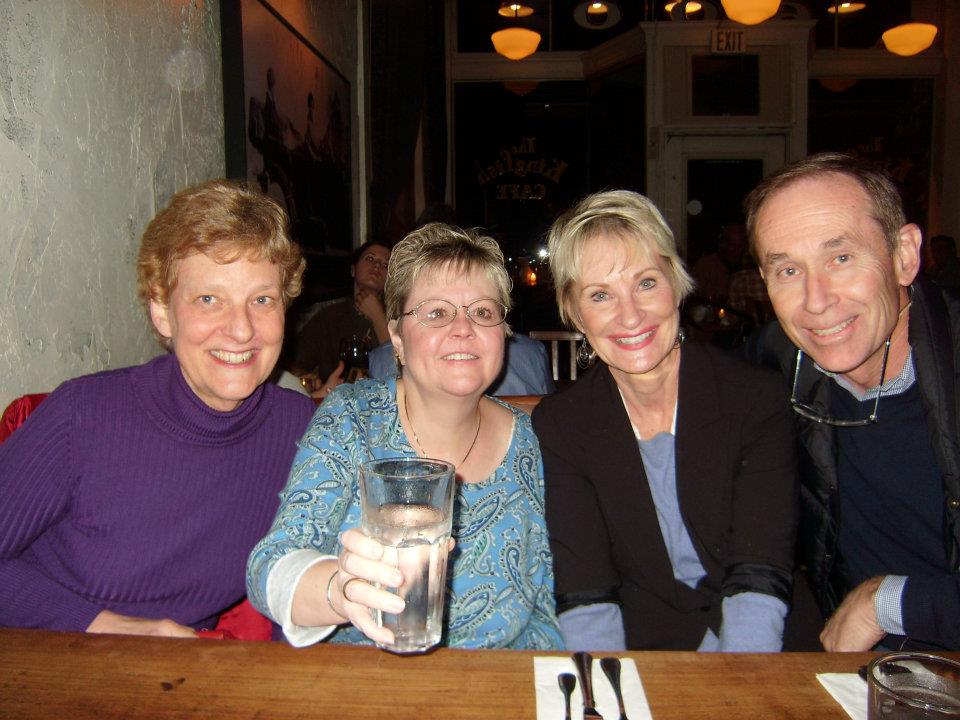
(A few precious friends)>

That which has postured as my life – panting, and out of breath – is slowly giving way to the more subtle, softly glowing embers of God’s gentle fire. I cannot in good conscience suggest that I no longer strive after validation or acclaim. Any shreds of real confidence, lasting relationships and consistency in my life have been attained through profound pain, multiple failures, (I add for emphasis: multiple) and forgottenness. These have been God’s preferred tools in adding leaven to the dough of my expanding soul.

Ambition and notoriety are deadly to the spiritual life. Exaltation is never to be our goal. Jesus promised it only through the more difficult way of humility, a path better defined by wood and nails than monitors and stage make-up. The restfulness and routine of life in obscurity I have embraced these days, gratefully. Nowadays, I’m plenty happy reading, writing or composing in my living room chair than I am anywhere more grandiose. For from here, I can hear…sacred whispers, most of which make no sense to me, but which shadow me everywhere and, rather strangely, guide me. I can honestly say that, this blessing of smallness has revealed the face of God and it is horrifying in its beauty.

Now, I must excuse myself. I need to check my blog stats…; –  ]
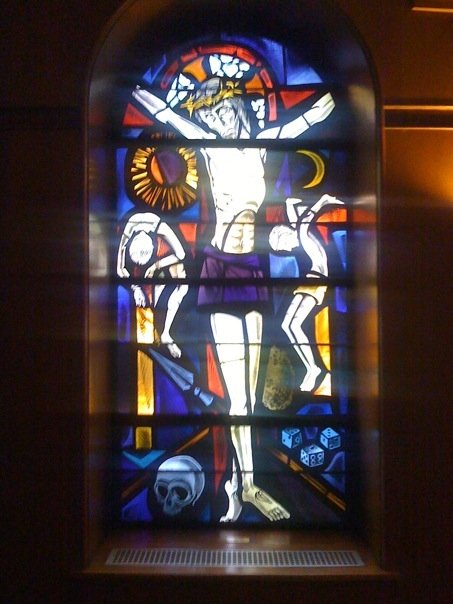
Commissioning prayer

I moved with my family from Kelowna, British Columbia to McMinnville, Oregon a month before the infamous events of 9/11. I’m not generally known for great timing! The move was for the purpose of assuming my role as Minister of Worship and Music at First Baptist Church. My short, 3 year tenure there was challenging and exciting and growing for me. A congregant, Densley Palmer, was a wonderful hymn text writer and poet. The following is a commissioning prayer he composed for the occasion of my coming to FBC.

Commissioning

Densley and Joyce Palmer ©October, 2001

For the commissioning of Robert Rife as Minister of Worship and Music

First Baptist Church, McMinnville, Oregon, October 14, 2001


Let all earth dance and sing in the presence of the eternal God.

Let us blend distinct voice and individual song in praise and thanksgiving

to God who makes all things one.

Let us worship God with our voices,

on the organ, and on the pipe and drum.

Be still, and await God’s voice in the pregnant moments of silence.

Calm the erratic cadence of daily life and move to the rhythm of the eternal.

Through worship, glimpse God’s infinite breadth, eternal length,

and encounter the intimate presence of the holy.

Wherever we worship God, let it be with a sense of awe and expectation,

a spirit of joy, and an awareness that,

through worship, we encounter the sacred

and stand barefoot on holy ground.


Let all earth dance and sing in the presence of the living God.


Newcastle

Seven years ago today, I said goodbye to a good man. His name was James (Jim) Kenny. He was (is) my father-in-law. This song was a tribute I wrote and sang for him before he died. Why? Because I didn’t want to happen what happened with my own father where, even on his death bed, we really had nothing to say to each other. My loss. Not twice.

Newcastle

Words & Music by Robert A. Rife ©March 1/03


Somewhere, calling out into a dark, October sky

I think I can hear a grey gull cry – Newcastle.


Out there is a man who, if given half a chance,

Would no longer dance this dance – Newcastle.


Cold now, water dripping down upon the floor,

Can this be all there is in store? – Newcastle.


Some day in the matter of the twinkling of an eye

A dreamer will reach to kiss the sky – Newcastle.


And I kind of wonder what brighter vision holds for one

Whose spirit stretches far beyond these walls – Newcastle.


Newport and the year was 1964,

a 7 pound wonder at your door – Newcastle.


3 souls setting out for a far and distant land,

never look back with heart in hand – Newcastle.


Never, ever had it in your heart to say goodbye,

The faces at home, they wonder why – Newcastle.


And I kind of wonder what brighter vision holds for one

Whose spirit stretches far beyond these walls – Newcastle.


Sometimes ya gotta wonder why you’re giving up your best,

Smudge and toil for the rest – Newcastle.


Some men never imagine what it’s like to have it all,

To live and to die, to risk it all – Newcastle.


And I kind of wonder what brighter vision holds for one

Whose spirit stretches far beyond these walls,

And I kind of wonder what brighter vision holds for one

Whose spirit stretches far beyond these walls – Newcastle.


Newcastle…


Different Voices, Many Songs, One God

The great medieval feminist and Christian mystic, Hildegard von Bingen, composed a famous choral work, entitled “Ordo Virtutum.” It is really more of a musical narrative in which she weaves sublime choral and instrumental music punctiliously around ominous interjections of a sinister speaking voice, that of the devil, who utters hateful words towards the Almighty. As such she makes the metaphoric statement that all of God’s creatures were created to sing God’s praise.  However, only the enemy of God is denied the gift of song.  As God’s beloved creation, we are all a part of God’s redemption song in Jesus Christ.  Melody bespeaks our common humanity.  It defines our existence.  It narrates our story.  It proclaims God’s story.  It enshrines community and it is the food of glory.

Certainly, for many years choral music has played a central role in the worship life of the church.  It has been so in my own spiritual journey.  I credit Bach’s “Wedding Cantata”, his Brandenburg Concerto #2 and Anton Bruckner’s “Ave Maria” for creating the emotional backdrop for my own conversion.  As a young boy I enjoyed singing with the Children’s Choir of St. Andrew’s Presbyterian Church (the place I also learned to play the bagpipes – forgive them, they knew not what they were doing!).  I submit that a majority of folks on the faith journey would share similar sentiments regarding their own connection with music especially as it relates to worship.

I’m delighted to serve a rather odd Presbyterian church as music director; odd because we have determined not to divide ourselves up along preferential music lines based on consumerist ideology. Instead, for good or ill, we have journeyed together down the long and winding road of a single “convergence” worship service (I first heard this term used by Dr. Tom Long in his book, Beyond the Worship Wars). I actually prefer “eclectic” worship since “convergence” can feel a bit like someone hit the puree button on the music blender that spills out some indefinable ooze of congregational sludge.

We’ve sung everything from Bach to contemporary praise song arrangements to “Down to the River to Pray” from the movie, “Brother, Where Art Thou?”  We have sought to re-envision ourselves.  We have had many tough conversations together.  We have laughed and cried and prayed together in our quest to dwell under one roof, at one time, on one day, for one purpose: to bring honor to God by our common voice –  different voices, many songs, one God.

What this means is that we will never really be able to commit to the full on praise band since, to do so would immediately alienate those for whom such worship language would be far too big a challenge. It also means that our organist will always be under-utilized and over-anxious because she never gets to play as often as she would like and in ways that are most conducive to her own musical proclivities. Everyone sacrifices something to be together as a single family, albeit with a slightly higher baseline of discontent!

The joy and camaraderie of voices raised in harmonious praise is something that must be experienced for oneself. The shared sacrifice required to offer one another room for divergent but unique voices to be heard and appreciated is the true stuff of heaven. It is singularly Kingdom driven and really difficult to pull off. But it’s the best struggle I’ve been a part of thus far.

So, dear Hildegard, I’m inspired by your musical picture of God’s Kingdom. It is a Kingdom where everyone can sing together but where the enemies of God and God’s community are forced to bellow, grunt, wheeze and whine instead of joining that single, great choir called from every corner of the globe to worship this God. I leave you with these words from Hildegard: “Your Creator loves you exceedingly, for you are His creature, and He gives you the best of treasures.”

Music is just one of those.

Yakima to Ellensberg

In honor of National Poetry Month – April, 2012 – I repost a poem from a couple years ago…

Mottled and tustled blows

the Spring lint of fields;

hills blown dry in Summer’s bosom.

Little drunk parch-ed promise

whispers her secrets.

Moving over the gentle curves of

her brown back, full-breasted,

bloated not from watered spring

but gloating in perpetual want –

satisfied with less; less than satisfied

having drawn her drink from wells unseen.

I will lift up mine eyes unto the hills…

Finding my way with words…still

As I’ve shared before, I am one of those who cares deeply for words, big words, little words…words about words. I recently read Marilyn Chandler McEntyre’s brilliant tete a tete on language entitled Caring for Words in a Culture of Lies. In her book she offers some strategies by which those of us who make this claim can begin to reclaim the power, clarity and beauty of language from the many dangers both immanent and potential that beset it. She encourages us to become caretakers of language. At the top of that list is a simple but obvious one:  become a lover of words.

Check.

Language and all it represents is a gift worth fighting for. God uses it to create and recreate. God, in some mystical sense most of us will never understand, is language; is words – the Word. Hence there exists an inseparability of language from the One whose idea it was to speak all things into existence by means of it. From the first words we read in Genesis, “In the beginning…God created…and it was good” we get a picture of the dominance of speech in the totality of human life. God, as Word, speaks words by which all we are and have come to know now, exists.

Language seems like it’s a God-thing alone in the first broad brush strokes of God’s ex nihilo creative activity. It’s not until another comes, by God’s design and in response to God’s words, that language can be seen as the glue in communication between parties. It now acts as the bedrock of love, community and progress. As language that is beautiful, reliable and truthful disappears, so does the community it was meant to gather and nurture.

We’ve lost our trust in the reliability of language. Words change over time. In many ways this has always been true and, to a large extent, inevitable. The problem is, however, that the purest forms of speech that give voice to our deepest needs, desires and passions have become as distorted and bent as we who use it. Whatever is meant by “the fall” it took language right along with it.

It’s common for any collective to morph according to the will of the alphas in the group. Similarly, the shape and demeanor of our communication will bend to the loudest kid in the room; it will come to serve whatever happens to be the most influential force to which we pay homage.

English is the undisputed language of commerce worldwide. Because English is the language of so much conquest, it is well practiced in the macabre arts of dominance and privilege. The sheer volume of English words coupled with its global dominance make its destruction both troublesome and ominous. Language has, for too long, been lashed to the flagpole of corporate nationalism, the yardarm of the sinking ship of words for their own sake where form is function. This cross-pollination of words has left a confusing moral-linguistic morass. For example, to use the warm-hearted language of family and connectivity in corporate interests or sports gibber-gabber to describe the horrors of war, we are effectively removed from the wider, deeper concerns language begs to convey and possibly amend.

Conversely, since English is also the collected amalgam of the street-speak of vanquished foes and victims of such empire building, it is a language of unparalleled nuance and texture. It needs those who love it for the latter while seeking to undo the damages of the former. It needs caretakers.

For words to do the work for which they were intended and move beyond mere factual transmission at best to manipulation and domination at worst, we must re-tool ourselves to being lovers of community built upon communication with words at the deepest levels. Words are performance art over against utility, a dance instead of marching army or typing pool. Like discovering our enemies have fears and dreams like we do, words can be freed to promote beauty, friendship and good will.

At least I hope so.

Of Lent and Bagpipes: Lean Over Loud in the Spiritual Life

Lent is that time in the Church calendar historically set aside for an “under the hood” diagnostic of those things most needful for the optimization of our lives in Christ. It is a rich time, not for mere maintenance, but for the introspective dialogue with one’s own inner voice that, in concert with God’s voice, guides us to “practice resurrection” as Wendell Berry so eloquently advises.

Allow me to clarify with a story.

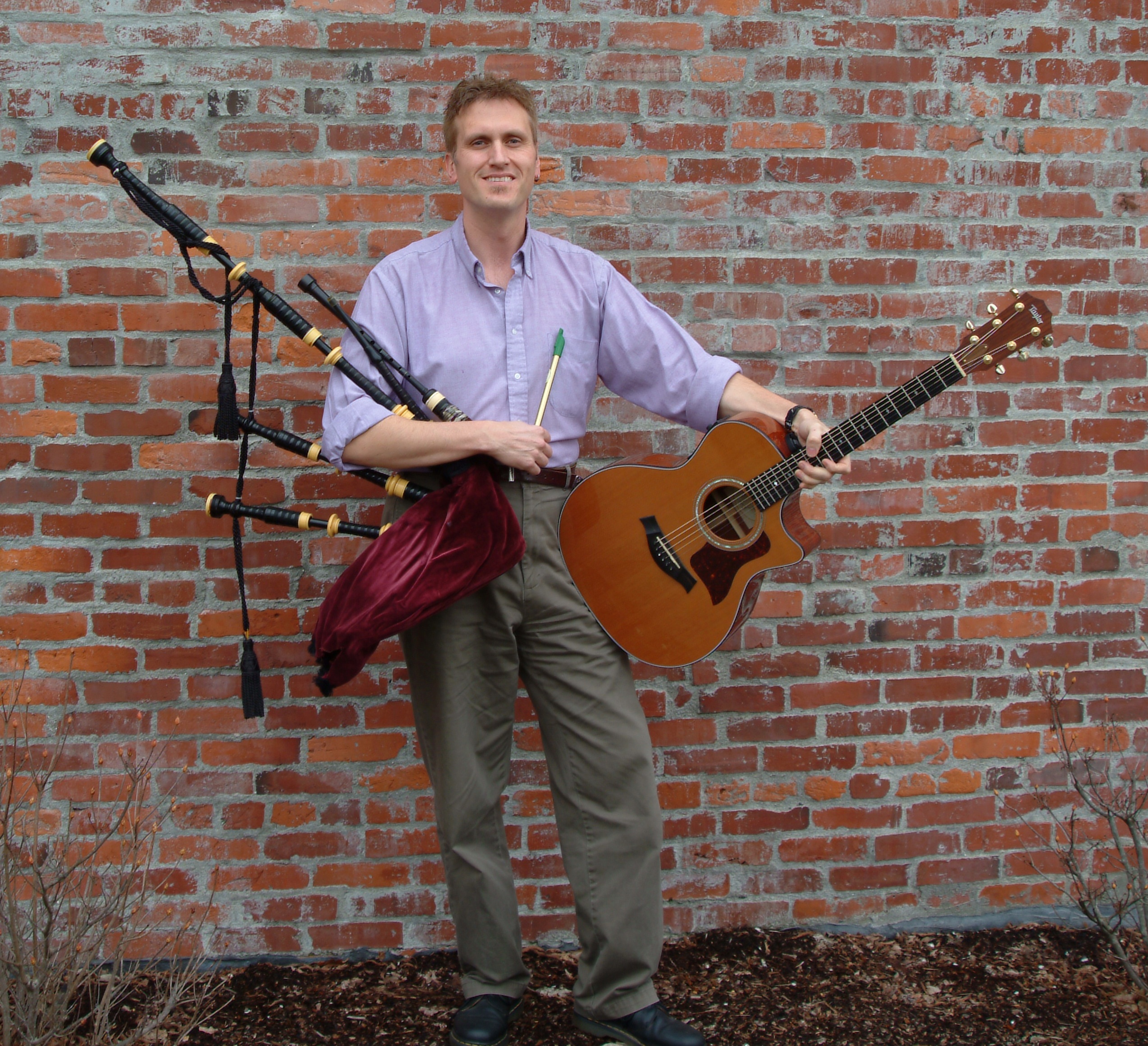
I’ll never forget the day I first told my bewildered parents that I wanted to learn how to play the bagpipes. I was seven. I had just watched a televised Edinburgh Military Tattoo replete with color-laden, swinging kilts, swashbuckling pipers, and swishing notes all clammering for attention under the bright lights of a night-lit Edinburgh Castle. From the first humming drone and pinched gracenote to the final cannon blast salute I was forever hooked. A seed was planted that has matured into a forty year career of performing, accompanying, competing, composing, judging and recording with this enigmatic instrument.

Under most circumstances, when one’s child shows even the slightest interest in music, it is generally accompanied by proud winks of acknowledgement, cackled whispers of “I always knew he had it in him” and blustery coffee room comments like “it was only a matter of time” or “our family has always been musical.”

At the risk of understatement, this was different.

Any parent hopes their groomed and dapper ten year old will be playing Chopin on the piano in the mall with the other bright and shining stars. With this announcement, those hopes were dashed. Instead, my parents (and poor, unsuspecting neighbors) would be forced to endure the long, loudly awkward learning curve the instrument promises all student comers. It most likely involved having to apologize to neighbors only pretending to be patient as some overly confident ten year old insists on playing, poorly, in the backyard.

On Sunday…night…late.

They did all this with patience and pride.

Similarly, a doting, jealous God waits like a holy panther ready to pounce on any sign of our awakening to God’s romances kissed in our direction. Patient and crouched, hopeful and proud, our Holy Parent, yearns for all that is best in our human lives. From first light of spiritual birth to the brighter light of eternity in us, God waits to discover, or uncover, our intentions toward God.

What does this mean? Will he stick with it only long enough to tire of it and move onto something else, despite the considerable expenditures of cash and time? Or will he seek to express a complex nature through an equally complex instrument designated for oatmeal-savage mystics whose love for center stage is well serviced here?

To parents, it simply does not matter.

For a bagpipe to function optimally it must have at least three things. It must be utterly airtight, with no chance whatsoever for the not-so-easily-blown instrument to lose any of its chief operating component, air. The only allowable air should be that in service to the four reeds dependent upon a steady stream of the same, and all at a highly regulated psi. Likewise, the best Lenten practices lend themselves to tightening up any holes in our spiritual lives, perceived or not. We must place ourselves willingly at the behest of a God who tugs at the cords holding our varied parts together in order to ensure the least “leakage” of the precious commodities of abundance and hope. In so doing, we relinquish our ownership over all we think to be primary for the singular goal of obtaining God alone. A heartily resonant helping of “lov[ing] the Lord your God with all your heart, with all your soul, and with all your strength” will do nicely here.

Secondly, it must possess the best reeds available (4 in all) in order for all energy expended to be done in service of a quality sound. It will only be as good as the weakest link in the complex chain of piping accoutrements. An unfortunate side effect of sin is our willingness to settle for counterfeit grace, for the short-term fix we think will provide quick, spiritual benefit but which, in the end, only multiplies our sorrows. All that we strive to do, at whatever level and for whatever reason in our pursuit of God will ultimately lead us astray unless we see it as pure grace; as gift. God’s purposes in us will always guide us to “whatever is true, whatever is honourable, whatever is just, whatever is pure, whatever is pleasing, whatever is commendable…any excellence and…anything worthy of praise” (Phil. 4:8).

Finally, all of its constituent parts of wood, bag and reeds are to be kept as impervious to excess moisture as possible – moisture that can foul the best reeds and, in worst-case scenarios, shut them down entirely. As with most mouth-blown instruments, outside influences of weather, barometric pressure, humidity and temperature have profound impact on whatever sounds are forthcoming. The via negativa of the spiritual life is to renounce anything that adversely affects one’s progress in the Way. John Calvin believed that self-denial lay at the heart of all spiritual transformation. To the degree we keep ourselves impervious, or at least well resourced, against the worst that life will most certainly throw at us, we will remain progressively more immune to outside influences that cause cracks to appear in our deepest parts where we need it to be well-contained and whole. The sage in Proverbs encourages us to “keep [our] heart with all vigilance, for from it flow the springs of life.”

It is a standard faux pas of pipers to assume that the biggest, fattest reeds will automatically proffer the biggest, fattest sound – an important and coveted feature of the instrument. At issue here is the fact that, the bigger the reed, the bigger the effort required in playing it.

The dilemma is one of physics. Sometimes trying harder with bigger than normal reeds simply forces a law of diminishing returns. In the young piper, less familiar with those physics and more inclined to early onset frustration with an already mystifying instrument, this can be daunting to say the least. As one grows in knowledge of bagpipe physics it becomes apparent that the best sound production isn’t merely one of effort. It is primarily one of the integrated and streamlined functioning of all the factors necessary to make the instrument the beautiful experience, and sound, it can be.

Similarly, the spiritual life, like the Highland Bagpipe, works optimally when we can see the big picture; how each element fits into the whole and, as a result, produces what we will ultimately become. God’s intentions in us include all elements of our existence, our choices, our conversations, relationships, experiences both good and bad, love gained and lost, anger welcomed and spurned, pain suffered and healed…everything.

The seasoned piper learns that a tightly-fitted, well-maintained, thoughtfully set up instrument makes for the best possible sound. Then, what at first can be a most, let’s say…unfortunate, sound ultimately becomes something of beauty that actually produces a bigger sound with greater resonance, nicer pitch and less energy. Good discernment and skill leads to something leaner that is, in turn, louder but also sweeter to the ear.

This is the magic of the Lenten gift of grace. We are better poised to usher a generally gangly, uncomfortable instrument into places of sweetness, strength and otherworldliness. That is how a bagpipe should sound. That is how I’ve heard it sound.

I think you know what I mean.

Finding my way with words

Finding my way with words…

What a strange thing, this struggle finding something to write. Life is never empty and always full of at least enough interest to fill a paragraph or two. It continually amazes me when someone can render readable jewels from the dungish fodder life tosses their way. I suppose such narrative prowess belongs to the realm of poets, novelists, troubadours and storytellers. I’ve been a willingly geeked-out participant in their literary entourage my entire life. Perhaps only as admiring onlooker, but from time to time venturing into their territory – cautiously, with reticence, but always possessing an eagerness to be acknowledged in their illustrious company.

Many journeys have I keenly undertaken as some writer, deft of phrase and swift of word, has led me into places both simple and strange, dark and macabre, airy and transforming. My own meager, quaint words are a stuttering effort toward unlocking similar doors for others to enter.

As I’ve stated elsewhere, I’ve had a love affair with language since I can remember anything at all. Words, like the clink of ice and water in a frosty glass, assuage my gnawing thirst for the beauty, passion, or meditative pause they offer. As chilled water rushes down a parched gullet cleansing and renewing along the way, words nimbly used bring similar rejuvenation to my spiritual throat.

I’ve had friends along the way who have helped nurture this love for language. The great poets have helped seal the deal in my pursuit of words and their meanings. John Donne with his inimitable “three person’d God” or the unforgettable Wordsworth, whose Romantic era pontifications opened to us the rooted origins of wisdom brought us
The Child is father of the Man;
And I could wish my days to be bound each to each by natural piety.
Emily Dickson holds second place to no preacher with such prophetic words as these:
Behind Me — dips Eternity —
Before Me — Immortality —
Myself — the Term between –
Gerard Manley Hopkins takes first place for me. It’s hard to top such lyrically perfect sentences as “He fathers forth whose beauty is past change” or “The world is charged with the grandeur of God.” Closest to many hearts might be “the Lord is my shepherd, I shall not want…”

I’m well aware that I’m not alone in this love. Many fellow writers and bloggers share the giddy, geeky excitement of a well-turned phrase, well-placed modifier, well-spoken sentence and well-written story. I am always challenged and delighted by the work of these friends on this journey of words (prepare for shameless plugs). Barbara Lane, whose approachable, touching and personal tales always delight, Lesley-Anne Evans, a fellow poet and Canadian, Christianne Squires, who writes deeply on the spiritual life, and Seymour Jacklin, poet and master storyteller introduced to me by Barbara, to name but a few. All of these and more have provided a backdrop full of letters, words and sentences that have moved me beyond all reckoning.

Marilyn Chandler McEntyre proffers intentional steps in reclaiming and reinvigorating language from its present morass in her book Caring for Words in a Culture of Lies. She asks all the right questions, premier among them being, why worry about words? Her answers have had me glued to this book as she butters my lexical toast with rich, creamy goodness (should I have chosen a different metaphor here?).

The reclarification and reinvigoration of language is necessary in order for it to once again communicate, heal, unite, instruct, and draw us into mystery. She even goes so far as to suggest that our protection of language is a moral issue in that it has become so entangled in corporate and war-speak as to be largely impotent in regular conversation. Language has been effectively retrofitted to serve the causes of dominance and conquest. Good conversation is like wool on the spinning wheel, creating something of warmth and substance, drawing us to comfort and community.

I will save the rest of my thoughts on Ms. McEntyre’s wonderful book for another time. Suffice it to say, words are my friends, or at least acquaintances with whom I hope to be on the waiting list to be invited into that great feast of letters, subtleties, and the whirling dervish of dancing metaphor – a veritable stew of yummy lingual goodness.

If I can get in the door, I’m hoping to get an autograph.

Haiku for you

Obviously, I’m on a big poetry kick right now. I suppose one strikes while the iron is hot creatively speaking. Lately, I’ve enjoyed the peacefulness and contemplative depth available through the simple little Haiku. For those unfamiliar with the Japanese poetry form it is composed of three lines, five syllables followed by seven followed by five. It is a seventeen syllable delight. I try not to think too long in writing them since the stream of conscious approach is so liberating and, well, fun really.

I give you, Haiku.

Here I sit, alone

Caged in public solitude

We are together


Never ending one

Sees what no one else can see

Subtle intrusion


Practicing sublime

Music, foraging in sounds

And every note counts


Dis-entangling

From places, wild, forbidden

Re-integrating


Come, save me, O God

Release me from my prison

That I might praise you


Severed like a limb

From life-giving tree and branch,

Awaiting our death


Felicitation

Birthing deeper happiness

Blest awakenings


Learning to reveal

What lies hidden and asleep

Reveals our learning


Now, with hearts, strangled

We wait, disembodied, blanched

Look, our tombstone rolls

St. Patrick’s Day – Why the world needs the Celts

Today is Saint Patrick’s Day. A guy has to be a press-ready, crowd-pleasing commodity to get his own day. But, perhaps I’m just jealous. Besides maybe Saint Columba, he’s our best known Celt. And, in honour of his Celtic lineage, I share the following.

When one thinks of the term Celt or Celtic what images spring to mind? Is it the Pictish war-paint donned by William Wallace in Braveheart as he prepares to take Scottish troops into yet another conflagration with England? Is it the Military Tattoo at Edinburgh Castle where hundreds of overly plumed peacock pipers and drummers march to and fro in a celebration of Scotland’s warring past?

Edinburgh Military Tattoo.jpg
Edinburgh Military Tattoo, Edinburgh Castle

Is it the drunken party at the local pub as it becomes abundantly apparent that you’ve walked into some secret society, all of whom are experts on their instruments, can drink more than any human should be capable of but with whom you feel completely welcome? Is it the great standing crosses of Ireland? Is it Larry Bird?

IMG_0902-1024x768.jpg
Picture found here

Whatever one may think of the Celts, one thing is sure: they were a people absolutely unique in history and centuries ahead of their time. They were an aural culture, a bardic people of story, song, poetry and mythology. As such there exists a great deal of misunderstanding regarding their exact history. In fact, they seem quite simply to have passed out of existence like a fisherman’s boat sailing into the morning mist.

One example of this relates to something many bagpipers, including myself, play on the bagpipes: Piobaireachd. Let us review that spelling, shall we?

P I O B A I R E A C H D.

It was never their intention to leave any letters for anyone else. Piobaireachd is the co-mingling of 2 Scots Gaelic words: piobaire, or piping with eachd, music. Hence, piped or piping music. Piobaireachd is the classical music of the highland bagpipe and is loosely based on the musical idea of a theme and variations. It was most likely developed by a highland clan dynasty of the MacCrimmons, ancestral pipers to the MacLeod clan on the Isle of Skye. But since there remains so little written evidence of the clan and their history, many believe them, and their development of piobaireachd, to be the fanciful fabrications of folklore.

There is plenty that we do know that can benefit us, however. The Christianity that emerged in Ireland, Cornwall, Brittany, Gaul, Isle of Man, Scotland and Wales possessed some valuable gifts. I list here but a few.

The Celtic Christianity that thrived, undivided, from roughly the fifth through the twelfth centuries, is as deeply influenced by the culture in which it was birthed as the culture that was transformed by it. It is the child of the pagan culture that preceded it. We rationalists squirm a little at this idea.

We need the Celts because of their love for the poetic imagination and artistic creativity, building on a rich tradition of bards who sang the shared stories and exploits of her kin.

We need the Celts because of their similar love for kinship, relations and the warmth of a hearth. Their love of hearth and kinship translated in spiritual terms to what they called “anam cara” or “soul friends”, those with whom they shared their deepest joys, fears, sins, hopes, dreams.

The Celts were forever at odds with Mother Rome. To my mind, this equates to a paradox or at least to a willing suspension of seeming opposites. On one hand they were as profoundly Catholic as any other sect of Medieval Christendom. They yearned to be part of the larger Christian family. That is the Celtic way. On the other, they ever marched to the beat of their own drum – a Catholicism swimming in the quasi-pagan, swarthier style of the brooding Celts. They were both in and out.

How quintessentially Celtic.

We need the Celts because they insisted on the equality of all people in the eyes of God. They celebrated an egalitarianism in everything even allowing women to perform the Mass, a heresy of the first order even in contemporary, post Vatican II Catholicism! While worshippers throughout Europe frequented any number of great cathedrals, the Celts preferred smaller, homemade altars around which they would celebrate a deeply intimate Eucharist. Especially irksome to Rome was their liturgical calendar taken more from Druidic astrology than the accepted Church calendar. Rogues to the core, what’s not to love?

We need the Celts because of the monastic communities that flowered in Britain and elsewhere that became centers of classical education and learning, even possessive of literature outlawed by the Holy Roman Empire. As such, it can be said without exaggeration that the Celts kept knowledge alive and growing throughout the Middle Ages.

We need the Celts for their great love for the natural world and for preaching a God who loved it, too. They attached particular significance to particular animals, numbers, places and natural objects. Their spirituality was mystical in character, bathed in silence and solitude but rooted squarely in the everyday. It was a rich blend of the immanence and transcendence of God.

Skye 57.jpg
Quiraing Ridge, Skye. With this as inspiration, who wouldn’t see the sacred everywhere?

We need the Celts because of their unquenchably adventurous spirits, well known as explorers and/or missionaries to many places. Some have suggested that they may have been some of the earliest explorers to South America where Peruvian artwork mimics Celtic knot work.

We need the Celts to broaden our sense of time. They had an understanding of time that was less chronological than kairotic. In other words, they were not especially linear in their approach to life, love, faith and relationships. They valued the cyclical dimension of time, believing that by immersing themselves in the seasons of the year and uniting their lives with the liturgical seasons of the church, they could more effectively celebrate their journey through the sacredness of time.

We need the Celts for a further distinctive, related to their concept of time; their appreciation of ordinary life. Theirs was a spirituality characterized by gratitude, and in their stories we find them worshipping God in their daily work and very ordinary chores. We, as they, can see our daily lives as a revelation of God’s love.

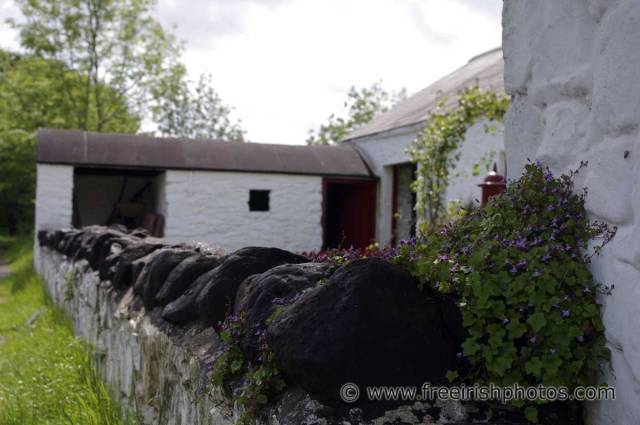
old_farm_2.jpg
Irish farm


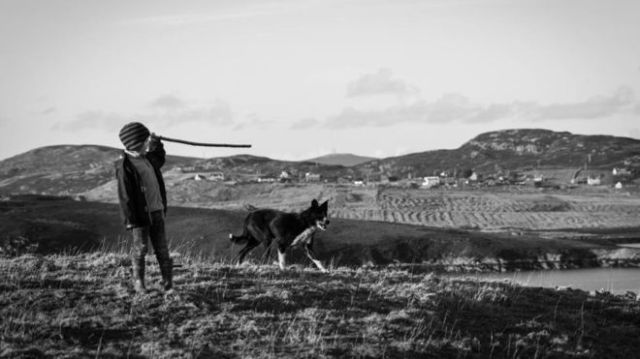
_76438198_croftrunnerup.jpg
Rural Celtic life. Picture found here.

We need the Celts since their spirituality has great ecumenical value, transcending the differences, which have divided Christians in the East and the West since before the Reformation.

We need the Celts because, unlike we who are often more interested in what to believe than Who to follow, their Christianity was a way of life, a spirituality lived gratefully each day, one day at a time.

Finally, we need the Celts because they give us reason and opportunity to party in the presence of the God who loves us.

I’m in!