Distance makes the heart grow…distant

I’ve begun lately to feel a bit murky, like the water in the fish bowl a little too dirty to support healthy fish. There is something rather insidious that goes on in our deep down parts. It’s a kind of conspiracy that sets itself up to deny what we most need when we most need it. The old saying that distance makes the heart grow fonder makes sense in the youthful infatuations of long distance love. In matters of the soul however, distance mostly gives birth to more distance.

Since graduating last year with an MA in Spiritual Formation my prayer has been generally rich and full of gooey spiritual goodness. But the past few weeks have been excessively busy – death to the spiritual life, and I’ve fallen victim to the demands of self-imposed urgency. I choose to get to work just a little earlier to get more things accomplished. I cram in just one more phone call, send one more email, tweak the calendar a tiny bit more, and then look back to find that the wake of my boat moving through sacred waters is no longer distinguishable. I’ve inadvertently floated out to sea because I haven’t been paying attention to my surroundings. I’m untethered and afloat somewhere with no land in sight.

This is what happens when we pay more attention to the deck chairs than the proximity of the water. We’re happily lounging but in a context rather hostile to doing so long term!

If I could give one piece of advice, mostly to myself, but to others who also long for depth, breadth, quality and meaning in their prayer it would be this: pray. That’s it. I can offer nothing more profound than that. Allow nothing to steal what rightfully belongs to the soul’s longing for union with God.

Distance breeds distance, which in turn breeds the greatest conspiracy against the spiritual life: apathy. I don’t care to write anything more…

I’m off to pray.

I reblog merely to invite your thoughts and comments on how God may be leading you in this post-Easter-pre-Pentecost time of learning and living with Jesus.

robertalanrife's avatarinnerwoven

Eastertide. It’s tempting to think that, after the resurrection of Jesus, all was done that needed doing; all the loose ends neatly tied, the t’s crossed and i’s dotted. The whole Easter pie had only to cool on the window sill and hungry people could dig in to its holy goodness.

Nothing could be further from the truth.

In fact, it was only the beginning. The fifty day period that followed the empty tomb, celebrated at Pentecost (which means fifty weeks) and with it the coming of the Spirit, saw Jesus’ daily planner more packed than ever. Facing him were a veritable army of quaking, heart-broken, soul-sick, emotionally shattered disciples. Probably no one in history ever needed an encouraging word more than they!

So, while the religious leaders happily gloated over their perceived victory over this Nazarene upstart, Jesus was re-ligamenting (the same root from which we get religion) the…

View original post 611 more words

Hope in the in between

Eastertide. It’s tempting to think that, after the resurrection of Jesus, all was done that needed doing; all the loose ends neatly tied, the t’s crossed and i’s dotted. The whole Easter pie had only to cool on the window sill and hungry people could dig in to its holy goodness.

Nothing could be further from the truth.

In fact, it was only the beginning. The fifty day period that followed the empty tomb, celebrated at Pentecost (which means fifty weeks) and with it the coming of the Spirit, saw Jesus’ daily planner more packed than ever. Facing him were a veritable army of quaking, heart-broken, soul-sick, emotionally shattered disciples. Probably no one in history ever needed an encouraging word more than they!

So, while the religious leaders happily gloated over their perceived victory over this Nazarene upstart, Jesus was re-ligamenting (the same root from which we get religion) the faith of his broken followers. While they busily politicked with the ruling Roman elite, further positioning themselves for power, prestige and pull, Jesus was subversively showing himself to his startled friends and laying the foundation for what would help to crumble the false one upon which had been built such a vast religio-political empire. These humble souls, gradually enlivened and encouraged in the presence of the one to whom they had so completely surrendered but who had so unimpressively left them, would eventually go on to change the face of the known world. It would change our world. Indeed nothing would ever be the same again.

In and through the whole debacle that we’ve come to know as Easter there comes a promise like no other. In a way, never before seen in time or eternity, here heaven and earth kissed. God had stooped to embrace this damaged, sinful and light-starved cosmos in the most unexpected way. God slipped in the back door as a baby, with parents and jobs and bills. He became a man; a man with a story, a life, and that life was the light of all.

If we can learn anything from this time in the great salvation narrative it’s that there is always hope in the in between. Those periods when the book of our lives has been slammed shut and everything from which we drew hope and inner sustenance has been blotted out like a solar eclipse are only precursors for what we cannot yet see. Matthew’s gospel has the first words from Jesus’ post-resurrection lips as simply, “greetings.” With precious little fanfare for one they would come to understand as the King of kings, he gives them a simple, howdy! It is almost as though he was playing some twisted game of life and death peek-a-boo and he’d just been found out.

For all the complexities of our mortal lives, Jesus ever comes in the simplicity of everyday conversation. Before we can piece it all together and make sense of the tangled liminality of this-world living Jesus pokes his head in the shower door and catches us completely unaware and vulnerable. But, for the joy of seeing the one face we most needed to see, we forego any shock or dismay and welcome anew the place he once held in our lives.

The joy of lovers reunited is all the sweeter following the pain of separation. Eyes are never happier to see than when they’ve lost all hope of ever seeing again. The heart’s deep pain is quickly forgotten in the realization of that which once held it captive so effortlessly.

Let’s allow ourselves to dig deeper into the Easter story, letting it dig deeper into us and become our story. Having journeyed through the penitence and preparation of Lent, the strange irony of Palm Sunday, the tense calm of the Last Supper with its eerie undercurrents of betrayal, the black forgottenness and despair of Good Friday, the deathly silence of Holy Saturday, for those first disciples, that was where it ended. No triumph and fanfare. Just hopelessness.

But it didn’t end there. For those who place their trust in the Nazarene carpenter, it never is. Like those before us, we are continually being reintroduced to the forgotten Savior, the one who left us alone, but the one who returns. And he returns with goodies.

Before they could receive what was promised at Pentecost, when eyes were opened, tongues loosed, lives renewed, they waited. That’s what disciples do in the in between. They wait.

We wait.

We listen.

We prepare.

Then, at the right time…hope springs eternal and, like the Spring we are…

reborn.

Different Voices, Many Songs, One God

The great medieval feminist and Christian mystic, Hildegard von Bingen, composed a famous choral work, entitled “Ordo Virtutum.” It is really more of a musical narrative in which she weaves sublime choral and instrumental music punctiliously around ominous interjections of a sinister speaking voice, that of the devil, who utters hateful words towards the Almighty. As such she makes the metaphoric statement that all of God’s creatures were created to sing God’s praise.  However, only the enemy of God is denied the gift of song.  As God’s beloved creation, we are all a part of God’s redemption song in Jesus Christ.  Melody bespeaks our common humanity.  It defines our existence.  It narrates our story.  It proclaims God’s story.  It enshrines community and it is the food of glory.

Certainly, for many years choral music has played a central role in the worship life of the church.  It has been so in my own spiritual journey.  I credit Bach’s “Wedding Cantata”, his Brandenburg Concerto #2 and Anton Bruckner’s “Ave Maria” for creating the emotional backdrop for my own conversion.  As a young boy I enjoyed singing with the Children’s Choir of St. Andrew’s Presbyterian Church (the place I also learned to play the bagpipes – forgive them, they knew not what they were doing!).  I submit that a majority of folks on the faith journey would share similar sentiments regarding their own connection with music especially as it relates to worship.

I’m delighted to serve a rather odd Presbyterian church as music director; odd because we have determined not to divide ourselves up along preferential music lines based on consumerist ideology. Instead, for good or ill, we have journeyed together down the long and winding road of a single “convergence” worship service (I first heard this term used by Dr. Tom Long in his book, Beyond the Worship Wars). I actually prefer “eclectic” worship since “convergence” can feel a bit like someone hit the puree button on the music blender that spills out some indefinable ooze of congregational sludge.

We’ve sung everything from Bach to contemporary praise song arrangements to “Down to the River to Pray” from the movie, “Brother, Where Art Thou?”  We have sought to re-envision ourselves.  We have had many tough conversations together.  We have laughed and cried and prayed together in our quest to dwell under one roof, at one time, on one day, for one purpose: to bring honor to God by our common voice –  different voices, many songs, one God.

What this means is that we will never really be able to commit to the full on praise band since, to do so would immediately alienate those for whom such worship language would be far too big a challenge. It also means that our organist will always be under-utilized and over-anxious because she never gets to play as often as she would like and in ways that are most conducive to her own musical proclivities. Everyone sacrifices something to be together as a single family, albeit with a slightly higher baseline of discontent!

The joy and camaraderie of voices raised in harmonious praise is something that must be experienced for oneself. The shared sacrifice required to offer one another room for divergent but unique voices to be heard and appreciated is the true stuff of heaven. It is singularly Kingdom driven and really difficult to pull off. But it’s the best struggle I’ve been a part of thus far.

So, dear Hildegard, I’m inspired by your musical picture of God’s Kingdom. It is a Kingdom where everyone can sing together but where the enemies of God and God’s community are forced to bellow, grunt, wheeze and whine instead of joining that single, great choir called from every corner of the globe to worship this God. I leave you with these words from Hildegard: “Your Creator loves you exceedingly, for you are His creature, and He gives you the best of treasures.”

Music is just one of those.

The bus to Emmaeus – a modern parable

For anyone who has ever had their deepest dreams dashed in an instant, the post-crucifixion story of Emmaeus can provide much hope in the midst of a paralyzing darkness. In this narrative, those who had spent everything, risked everything, left everything and hoped everything to follow the strange but alluring sage from Gallilee had watched him die. With that death came not merely the loss of he who had crystallized their emerging faith in a good, grace-giving God, but most likely any further vestiges of such faith in anything potentially like it in the future. Truly, for them, the world held no hope anymore. All was dark.

Unless you keep reading…

It was he who spoke first.  “Man, you guys look like someone died or something.  Is everything all right?” Pausing at first, but sensing that it was safe to speak, Randall replied, “Yeah, sure.  There’s nothing quite like following some guy for three years only to have his head blown off by some radical lunatic.”

“For sure”, Arvid added, “we finally find a cause that we can sink our teeth into and three years later my wife hates me, he’s carted off to a mock trial, crooked cops and a puppet judge.  Yeah, life’s just great.”

The man looked baffled.  Randall and Arvid looked incredulously at each other.  Then Randall said, “how is it possible that you haven’t heard what’s been happening in this town lately?”

The two men had been sitting gloomily together surveying the muddy streets from the vantage point of the Number 10 bus to down town.  They weren’t sure if it were possible to feel any more dejected.  For close to three years their world had revolved almost exclusively around one man and his revolutionary ideas.  Arvid had left behind a successful business, Randall the final year of grad school, to follow the allure of a leader whose keen sense of brotherly love, life, and justice had all but left them breathless.  He spoke of things that no one else ever had.  Arvid’s wife, June, could never figure out what the big deal was and the quaint little “group” that had formed around him seemed a little self-indulgent to her; no different than his Monday night poker pals. Grace, Randall’s wife, had taken up as a member from early on and was feeling as emotionally drained as he.

And now, the familiar bus ride to the group headquarters in a transformed office building provided about as much grief and confusion as they could stand.  Their silence had betrayed the many questions burning within them.  Why would this man mess with their lives, creating a rather large mid-life diversion for two guys who could ill afford one?  For someone who spoke so much about life, why was he now dead – shot executioner style by thugs that the tabloids were suggesting were hired by the Mayor himself?  Where was the promise of a new order?  Of a bold future?  The whole thing just seemed so ridiculous, so…pointless.

They had been revelling in their gloom, when this man to whom they now spoke, sat down, newspaper in hand, in the seat adjacent to theirs.  He seemed to be thinking.  Randall noticed it first.  His profile.  His demeanour.  Hadn’t they seen this guy before?

The conversation that followed would be the most radically transforming one they had ever had.  Not only did this guy know all the details but gave a very enlightened and revealing synopsis of the entire situation including all the reasons why.  Arvid and Randall sat dumbfounded and, for the first time since their dark weekend they sat in peace – reflective and hopeful.  They spoke excitedly among themselves for a few minutes more and as Arvid turned to speak to the man…he was gone.

Easter again – what’s the point?

In preparation for Easter…

It’s 4:00 P.M. and you suddenly remember that this was supposed to be the day that you were to leave work early to pick up your child from school at 2:45.  But instead you sit squashed up next to an overly chatty carpool neighbour with less than acceptable breath and one on the other side who insists on lighting up inside a car that could easily give birth it’s so full.  Your guts wrench tighter and tighter at every red light. You think horrible thoughts about the potential disasters which have befallen your child whose been doing who knows what on the school playground for well over an hour now.  You wonder, not so quietly, whether these drivers have ever gone so slowly.  You can just see the headlines: “Parents found negligent in child abuse case”.

All of those early morning prayer meetings, small group studies, extra services and church work you cram kicking and screaming into an already nightmarish schedule seem a mockery right now.  You had hoped that, if nothing else, by sheer good attendance God might tip the scales in your favour and perhaps cut you some life changing wisdom – the kind that would help you not to be so criminally absent minded!

To make matters worse you realize that it was your turn to type up the minutes from the last Strata Association meeting, which, coincidentally, was tonight, mere minutes after you’ll sweep up your cold, bewildered child off the playground.  Hopefully nobody suspects you for the insanely stupid person you feel like inside.  Driving home from the playground, a totally carefree child now safely in tow, you’re mentally cataloguing every microwaveable item you have in the house.  Perhaps if you linger for a few extra minutes in thanksgiving prayer God will add just a little food value to the popcorn (there‘s the vegetable), tater tots (the starch) and homemade milk shakes (and, there’s the dairy) your ecstatic children will ingest for their dinner.

Furthermore, to add insult to injury, wasn’t this going to be the year that, instead of blindly handing out the chocolate Easter eggs, you were going to read key Bible verses reminiscent of this season of Christ’s passion?  What a way to convey your passion for Christ and for your family, right?  You’d had such high Martha Stuart hopes for Easter time and yet you feel more like Erma Bombeck, or God forbid, Woody Allen.

It’s 12:10 A.M.  Exhausted, you turn out the lights from a day of self-inflicted mishaps and sociopathic anxiety.  A voice comes in the quiet just before sleep and whispers, “Behold, I stand at the door and knock.”  And it occurs to you, that’s the point isn’t it?

Easter.

Jesus came to seek out the weak, the forgetful, the exhausted, the worried, the chaotic.  The empty tomb means that God is loose in the world; loose in your crazy, mixed up world.  Can you hear the knocking, even over the din of your anxiety-ridden life? If so, answer the door.

God will most surely enter.

Same poem, different title. The original title belongs to T.S. Eliot alone. I back away slowly in fear and trembling…

robertalanrife's avatarinnerwoven

Ash Wednesday, February 22, 2012


Begins again this Springward journey;

rebirthing all that once lived.

Trickle again once fickle brook and stream

sickle sighs yet in repose, sleeping still.

Earth, sore and Winter-stiff, seeks, sighs

stretches out skinny arms of want.

Her cold, hard bosom births not what soon will come

e’er the Sun’s hungry mouth suckles,

fills his lusty gut on hopeful barrenness

feasting on milk of timeworn, weary passage.


She forgets not the suddenness of late

and sooner dark, splayed upon a fine, greenness

come for to spite the buds of transforming light

bidding death where life has yet to emerge.

Warmly insistent she speaks, sharing her story

poured out over the long-shadowed land.

Bring such bothersome beauty to branchier speech,

fall around us, spilling, foaming such fury

and fermenting our soon-drunk wine of promise;

earthen spirit’s Eucharistic prayer.


Hush now, silence yourself bold coldness…

View original post 69 more words

Of Lent and Bagpipes: Lean Over Loud in the Spiritual Life

Lent is that time in the Church calendar historically set aside for an “under the hood” diagnostic of those things most needful for the optimization of our lives in Christ. It is a rich time, not for mere maintenance, but for the introspective dialogue with one’s own inner voice that, in concert with God’s voice, guides us to “practice resurrection” as Wendell Berry so eloquently advises.

Allow me to clarify with a story.

I’ll never forget the day I first told my bewildered parents that I wanted to learn how to play the bagpipes. I was seven. I had just watched a televised Edinburgh Military Tattoo replete with color-laden, swinging kilts, swashbuckling pipers, and swishing notes all clammering for attention under the bright lights of a night-lit Edinburgh Castle. From the first humming drone and pinched gracenote to the final cannon blast salute I was forever hooked. A seed was planted that has matured into a forty year career of performing, accompanying, competing, composing, judging and recording with this enigmatic instrument.

Under most circumstances, when one’s child shows even the slightest interest in music, it is generally accompanied by proud winks of acknowledgement, cackled whispers of “I always knew he had it in him” and blustery coffee room comments like “it was only a matter of time” or “our family has always been musical.”

At the risk of understatement, this was different.

Any parent hopes their groomed and dapper ten year old will be playing Chopin on the piano in the mall with the other bright and shining stars. With this announcement, those hopes were dashed. Instead, my parents (and poor, unsuspecting neighbors) would be forced to endure the long, loudly awkward learning curve the instrument promises all student comers. It most likely involved having to apologize to neighbors only pretending to be patient as some overly confident ten year old insists on playing, poorly, in the backyard.

On Sunday…night…late.

They did all this with patience and pride.

Similarly, a doting, jealous God waits like a holy panther ready to pounce on any sign of our awakening to God’s romances kissed in our direction. Patient and crouched, hopeful and proud, our Holy Parent, yearns for all that is best in our human lives. From first light of spiritual birth to the brighter light of eternity in us, God waits to discover, or uncover, our intentions toward God.

What does this mean? Will he stick with it only long enough to tire of it and move onto something else, despite the considerable expenditures of cash and time? Or will he seek to express a complex nature through an equally complex instrument designated for oatmeal-savage mystics whose love for center stage is well serviced here?

To parents, it simply does not matter.

For a bagpipe to function optimally it must have at least three things. It must be utterly airtight, with no chance whatsoever for the not-so-easily-blown instrument to lose any of its chief operating component, air. The only allowable air should be that in service to the four reeds dependent upon a steady stream of the same, and all at a highly regulated psi. Likewise, the best Lenten practices lend themselves to tightening up any holes in our spiritual lives, perceived or not. We must place ourselves willingly at the behest of a God who tugs at the cords holding our varied parts together in order to ensure the least “leakage” of the precious commodities of abundance and hope. In so doing, we relinquish our ownership over all we think to be primary for the singular goal of obtaining God alone. A heartily resonant helping of “lov[ing] the Lord your God with all your heart, with all your soul, and with all your strength” will do nicely here.

Secondly, it must possess the best reeds available (4 in all) in order for all energy expended to be done in service of a quality sound. It will only be as good as the weakest link in the complex chain of piping accoutrements. An unfortunate side effect of sin is our willingness to settle for counterfeit grace, for the short-term fix we think will provide quick, spiritual benefit but which, in the end, only multiplies our sorrows. All that we strive to do, at whatever level and for whatever reason in our pursuit of God will ultimately lead us astray unless we see it as pure grace; as gift. God’s purposes in us will always guide us to “whatever is true, whatever is honourable, whatever is just, whatever is pure, whatever is pleasing, whatever is commendable…any excellence and…anything worthy of praise” (Phil. 4:8).

Finally, all of its constituent parts of wood, bag and reeds are to be kept as impervious to excess moisture as possible – moisture that can foul the best reeds and, in worst-case scenarios, shut them down entirely. As with most mouth-blown instruments, outside influences of weather, barometric pressure, humidity and temperature have profound impact on whatever sounds are forthcoming. The via negativa of the spiritual life is to renounce anything that adversely affects one’s progress in the Way. John Calvin believed that self-denial lay at the heart of all spiritual transformation. To the degree we keep ourselves impervious, or at least well resourced, against the worst that life will most certainly throw at us, we will remain progressively more immune to outside influences that cause cracks to appear in our deepest parts where we need it to be well-contained and whole. The sage in Proverbs encourages us to “keep [our] heart with all vigilance, for from it flow the springs of life.”

It is a standard faux pas of pipers to assume that the biggest, fattest reeds will automatically proffer the biggest, fattest sound – an important and coveted feature of the instrument. At issue here is the fact that, the bigger the reed, the bigger the effort required in playing it.

The dilemma is one of physics. Sometimes trying harder with bigger than normal reeds simply forces a law of diminishing returns. In the young piper, less familiar with those physics and more inclined to early onset frustration with an already mystifying instrument, this can be daunting to say the least. As one grows in knowledge of bagpipe physics it becomes apparent that the best sound production isn’t merely one of effort. It is primarily one of the integrated and streamlined functioning of all the factors necessary to make the instrument the beautiful experience, and sound, it can be.

Similarly, the spiritual life, like the Highland Bagpipe, works optimally when we can see the big picture; how each element fits into the whole and, as a result, produces what we will ultimately become. God’s intentions in us include all elements of our existence, our choices, our conversations, relationships, experiences both good and bad, love gained and lost, anger welcomed and spurned, pain suffered and healed…everything.

The seasoned piper learns that a tightly-fitted, well-maintained, thoughtfully set up instrument makes for the best possible sound. Then, what at first can be a most, let’s say…unfortunate, sound ultimately becomes something of beauty that actually produces a bigger sound with greater resonance, nicer pitch and less energy. Good discernment and skill leads to something leaner that is, in turn, louder but also sweeter to the ear.

This is the magic of the Lenten gift of grace. We are better poised to usher a generally gangly, uncomfortable instrument into places of sweetness, strength and otherworldliness. That is how a bagpipe should sound. That is how I’ve heard it sound.

I think you know what I mean.

There was this dog

Faced with the disturbing reality that, to end the painful, troubled life of the family dog is somehow still better than watching a once remarkable animal descend into incontinent, sorrowful chaos, to wit…

There was this dog

For Skittles


Sullen cries, all joy despise

when blind even All-Seeing eyes –

there was this dog.


Turbid seas, invited see

what men in better times might be –

there was this dog.


Gathered moss, a grey-green toss

of silt and muck and sun-less loss –

there was this dog.


Darkened days, all hope a haze

delight could spare no time or trace –

there was this dog.


When fortune called, new joy installed,

instead of dark, did grace befall –

there was this dog.


Unnerving sounds, made still hearts pound,

her swift, sharp sound brought courage found –

there was this dog.


Children’s songs, if one or thronged

her faithful joy to them belonged –

there was this dog.


Days alone, unwelcome won,

kisses, wet, when we got home –

there was this dog.


Time has come, when pipe and drum,

ne’er fully celebrates this one –

there was this dog.


There is this dog.

St. Patrick’s Day – Why the world needs the Celts

Today is Saint Patrick’s Day. A guy has to be a press-ready, crowd-pleasing commodity to get his own day. But, perhaps I’m just jealous. Besides maybe Saint Columba, he’s our best known Celt. And, in honour of his Celtic lineage, I share the following.

When one thinks of the term Celt or Celtic what images spring to mind? Is it the Pictish war-paint donned by William Wallace in Braveheart as he prepares to take Scottish troops into yet another conflagration with England? Is it the Military Tattoo at Edinburgh Castle where hundreds of overly plumed peacock pipers and drummers march to and fro in a celebration of Scotland’s warring past?

Edinburgh Military Tattoo.jpg
Edinburgh Military Tattoo, Edinburgh Castle

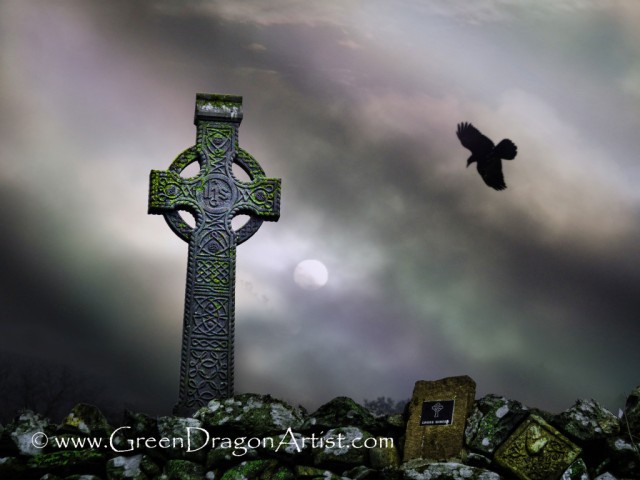
Is it the drunken party at the local pub as it becomes abundantly apparent that you’ve walked into some secret society, all of whom are experts on their instruments, can drink more than any human should be capable of but with whom you feel completely welcome? Is it the great standing crosses of Ireland? Is it Larry Bird?

IMG_0902-1024x768.jpg
Picture found here

Whatever one may think of the Celts, one thing is sure: they were a people absolutely unique in history and centuries ahead of their time. They were an aural culture, a bardic people of story, song, poetry and mythology. As such there exists a great deal of misunderstanding regarding their exact history. In fact, they seem quite simply to have passed out of existence like a fisherman’s boat sailing into the morning mist.

One example of this relates to something many bagpipers, including myself, play on the bagpipes: Piobaireachd. Let us review that spelling, shall we?

P I O B A I R E A C H D.

It was never their intention to leave any letters for anyone else. Piobaireachd is the co-mingling of 2 Scots Gaelic words: piobaire, or piping with eachd, music. Hence, piped or piping music. Piobaireachd is the classical music of the highland bagpipe and is loosely based on the musical idea of a theme and variations. It was most likely developed by a highland clan dynasty of the MacCrimmons, ancestral pipers to the MacLeod clan on the Isle of Skye. But since there remains so little written evidence of the clan and their history, many believe them, and their development of piobaireachd, to be the fanciful fabrications of folklore.

There is plenty that we do know that can benefit us, however. The Christianity that emerged in Ireland, Cornwall, Brittany, Gaul, Isle of Man, Scotland and Wales possessed some valuable gifts. I list here but a few.

The Celtic Christianity that thrived, undivided, from roughly the fifth through the twelfth centuries, is as deeply influenced by the culture in which it was birthed as the culture that was transformed by it. It is the child of the pagan culture that preceded it. We rationalists squirm a little at this idea.

We need the Celts because of their love for the poetic imagination and artistic creativity, building on a rich tradition of bards who sang the shared stories and exploits of her kin.

We need the Celts because of their similar love for kinship, relations and the warmth of a hearth. Their love of hearth and kinship translated in spiritual terms to what they called “anam cara” or “soul friends”, those with whom they shared their deepest joys, fears, sins, hopes, dreams.

The Celts were forever at odds with Mother Rome. To my mind, this equates to a paradox or at least to a willing suspension of seeming opposites. On one hand they were as profoundly Catholic as any other sect of Medieval Christendom. They yearned to be part of the larger Christian family. That is the Celtic way. On the other, they ever marched to the beat of their own drum – a Catholicism swimming in the quasi-pagan, swarthier style of the brooding Celts. They were both in and out.

How quintessentially Celtic.

We need the Celts because they insisted on the equality of all people in the eyes of God. They celebrated an egalitarianism in everything even allowing women to perform the Mass, a heresy of the first order even in contemporary, post Vatican II Catholicism! While worshippers throughout Europe frequented any number of great cathedrals, the Celts preferred smaller, homemade altars around which they would celebrate a deeply intimate Eucharist. Especially irksome to Rome was their liturgical calendar taken more from Druidic astrology than the accepted Church calendar. Rogues to the core, what’s not to love?

We need the Celts because of the monastic communities that flowered in Britain and elsewhere that became centers of classical education and learning, even possessive of literature outlawed by the Holy Roman Empire. As such, it can be said without exaggeration that the Celts kept knowledge alive and growing throughout the Middle Ages.

We need the Celts for their great love for the natural world and for preaching a God who loved it, too. They attached particular significance to particular animals, numbers, places and natural objects. Their spirituality was mystical in character, bathed in silence and solitude but rooted squarely in the everyday. It was a rich blend of the immanence and transcendence of God.

Skye 57.jpg
Quiraing Ridge, Skye. With this as inspiration, who wouldn’t see the sacred everywhere?

We need the Celts because of their unquenchably adventurous spirits, well known as explorers and/or missionaries to many places. Some have suggested that they may have been some of the earliest explorers to South America where Peruvian artwork mimics Celtic knot work.

We need the Celts to broaden our sense of time. They had an understanding of time that was less chronological than kairotic. In other words, they were not especially linear in their approach to life, love, faith and relationships. They valued the cyclical dimension of time, believing that by immersing themselves in the seasons of the year and uniting their lives with the liturgical seasons of the church, they could more effectively celebrate their journey through the sacredness of time.

We need the Celts for a further distinctive, related to their concept of time; their appreciation of ordinary life. Theirs was a spirituality characterized by gratitude, and in their stories we find them worshipping God in their daily work and very ordinary chores. We, as they, can see our daily lives as a revelation of God’s love.

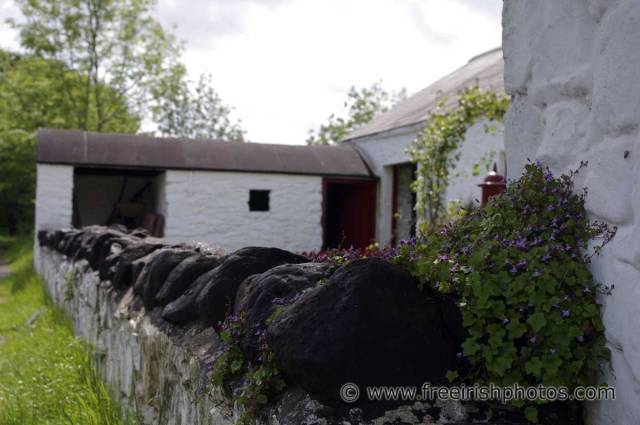
old_farm_2.jpg
Irish farm


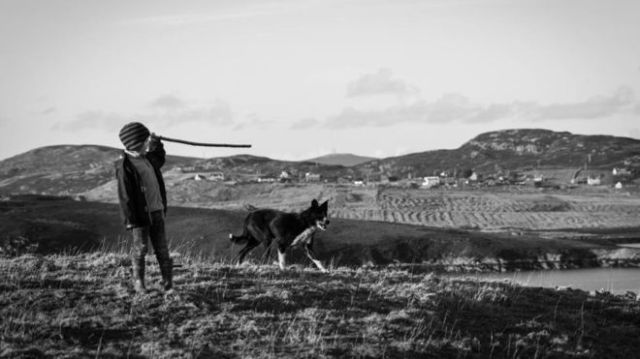
_76438198_croftrunnerup.jpg
Rural Celtic life. Picture found here.

We need the Celts since their spirituality has great ecumenical value, transcending the differences, which have divided Christians in the East and the West since before the Reformation.

We need the Celts because, unlike we who are often more interested in what to believe than Who to follow, their Christianity was a way of life, a spirituality lived gratefully each day, one day at a time.

Finally, we need the Celts because they give us reason and opportunity to party in the presence of the God who loves us.

I’m in!