
The show must go on

zimbio.comOnce upon a time, there was a wealthy theatre owner who said, rather inauspiciously, “well, the show must go on.” The actors had learned their lines. The sets were complete, dazzling in their allure and exactitude. The news was spread far and wide of the coming of this great spectacle. All was ready. But, if this was so, why the hint of shrugged shoulder skepticism in this phrase?

Anyone who has ever had the delight and electricity of live performance knows the unspoken pressures of day-to-day rehearsals against a backdrop of innumerable unseen dangers. What if the lead takes ill? What if her understudy also takes ill? What if the set designers or lighting coordinators or musicians’ union decides to picket the whole affair? What if the venue goes into receivership three days before opening curtain? What if? What if? What if…?

But then the lights dim. There is a moment of silence. The air is palpably more solid and we struggle to breathe, awaiting…something. Then, the orchestra swells with timpani crescendo as the first characters stride onto the stage. The thing we had been waiting so long to see unfolds before us in an explosion of color and swirl and dashing costumes. If only for an hour or two, we become pirates, animals of the forest or gods of mythology. For us, it is worth the wait just for these spine-tingling moments when our simple, cardboard lives are invited into a larger than life story.

As an enthralled audience, we often have little idea of the many strange and stressful tornadoes that beset the stories that move us. All we know is that we love what we see. We tell our friends. We are all a-twitter (yup, pun intended) about our experience that becomes ever greater in the telling thereof.

We are often spectators of our own lives. We give ourselves stage cues and arrange the sets for maximum impact. We choose our characters and assign actors carefully lest we become less than believable. We resign ourselves to a show-must-go-on attitude and then, against all odds, burst onto the stage where others get caught up in our orbit.

But we’re left empty somehow. Our post-performance lull in the backstage dressing room can boast nothing more than a tired, sweaty, makeup mess on a face we do not know. We’ve acted well. We know our lines. We’ve become one with our character. But the character has become symbiotic with what lies beneath it. The mirror shoves back a stranger in our face.

What kind of story have we constructed for our own audiences? Who have we hired to perform the most admirable parts of our stage-play characters? From where do we glean our deepest inspiration to shape our personas? A story is an ongoing pleasure, one meant to reveal ever-deeper treasures of delight, surprise, awe or fear with every turning page. But unless we have a commitment to unmask and expand our story beyond the stage and, with courage, risk the critics’ page, we never make it out of our dressing rooms.

A new year has dawned. The curtain has opened once more upon a new stage with different lights, an updated script, actors both old and new and an audience that awaits us. We alone are aShakespeareware of the maelstroms that have brought us to this place. We are the ones who now stand before our audience and decide whether or not to remove our makeup, leave our script behind and let the lights show us for who we really are. Said that greatest of all playwrights, Shakespeare, “All the world’s a stage, and all the men and women merely players: They have their exits and their entrances; and one man in his time plays many parts….”

But if we are willing participants in the Kingdom narrative, we’re given help with our lines, the cast has been selected to shape our character for maximum delight and impact, hope and excitement can replace dread of opening day and our only real audience already knows how great this performance will be. He has used us to write the script. We are in fact co-writers.

So, in spite of everything, let the show go on. Our audience of one will be cheering. The critics have little to say on this one.

Dates on a calendar do not determine our stories.

We do.

Stage pictures from www.zimbio.com
Christmas, a transforming chaos

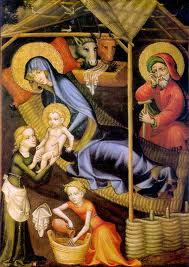
imagesA fire makes its heartening presence known, tucked under the hearth upon which hang individual stockings and an antique clock I inherited from my Dad. A delightfully chaotic looking tree, augmented with bobbles made by the growing dexterity of my boys’ fingers – the accumulated little-boy detritus of Christmas past – stands guard at another window gazing out on a trusted neighbor’s house. Snow falls without sound or pretense just past living room windows that shield us from the oblique, grey winter, and all I can think is this: if Christmas, I.e. the incarnation, God with us, means anything at all, it must mean more than the Thomas Kinkade painting I’ve just described. It must have the same insidious undercurrent, rife with danger, of the stable. It must reek of real life spread out over a table of ambiguity and hopelessness scrounging for scraps of hope. It must mean that God is longing to burst forth into our own souls, finding enough room to receive the gifts of our own inner Magi. It must be genuine, like the rough and tumble character of a once-upon-a-time, ramshackle stable.

It was messy and scary and uncertain, but the perfect crucible in which to illustrate all that is truly important: the broken, smelly manger of human hearts made ready to receive the only thing powerful enough to draw them out of pain and darkness, God himself. And, apparently, God loves children. Enough to become one.

Not a soldier.

Not a business man.

Not a political revolutionary.

A crying child laying somewhere so shocking that he would be handily removed from us by social services. Understand that this was God’s chosen means of getting our attention, then study the faces of your frail, trusting and needy children and read the story again.

Yeah, it’s like that.

O come, o come, Emmanuel…

Take a trip to any mall, watch how people behave in waiting lines and watch a movie or buy booze on Christmas day and our real gods are revealed quickly. I repost a poem I wrote at this time last year that crystallizes some of my thoughts.

robertalanrife's avatarRob's Lit-Bits

hear the crumpling rumbles, crown-starved lives, stumbling

through the hours, feigning breath for the stale air of hurry.

shops awhirl with tight shouldered pilgrims alert only to winking lights

and brandied windows that steal the real for the on sale deal, steals

for grubby graspers groping for this, grasping for that

filling carts with heartless bobbles of packaged numb –

soul, unknown to its owners, crouches still, hungry, waiting, gasping

thirsty for seasonal wading pool, the drink of tourists

blind to pilgrim feast just beyond the price tag contemplations of beggars.

empty promises, shiny and hollow, lure lusty eyes and hearts behooven

to unkempt desires of lesser men.

how insidious, how stealthy, this swollen debt of mall-booty

accumulating in attics, under porches, staircases, and blankets –

garage sale in the making.

still behind such trackless wastes, just out of sight

behind the aisle, under racks of unpeopled scarves, jackets and…

View original post 26 more words

Where earth meets sky – the beginning of the end of the beginning

It was quite possibly the longest, most awkward car ride either of them had ever endured. Pastor Kent drove him home from the conference and used it as an opportunity to voice, loudly and repeatedly,  his overwhelming sense of disappointment, hurt, humiliation, betrayal and just plain mess. Now, his would be the role of fielding nosy calls, inquiring as to the dramatic change in the music minister or “something I just heard.” His would be the task of chairing those ever-so-delightful follow up meetings with the church board at which his plan for healing and reconciliation would be mapped out. His would be the unwelcome experience of eating crow in the face of board members who were among those who voted not to hire him in the first place.

His anger was ripe, raw and very real. But, his victim willingly succumbed to the verbal whipping since he had already experienced life-changing realities too big to ignore; too broad to dampen his spirit. First of all, he still had a job. In spite of everything, he was returning to a place to call his own where he could begin working out the kinks of his new found sobriety. In community. With a paycheque. Secondly, for the first time in decades he had (re)discovered that he was actually gifted in his calling and that emotional resources already placed there by God were available on demand, without the added measure of drowning his desperation in drunkenness.

Like a heavy coagulation of rancid oatmeal, one thought remained in his psyche, however. He already knew to what he was returning. He was much less certain to whom. Would his wife and boys still be there? Had they chosen to jump ship, cut their losses and move back to Canada? Would he ever have opportunity to tell them of his first triumphant, alcohol free weekend? If so, would it make any difference this late in the game?

Though it was true that his situation hosted a complex set of factors that had contributed to his behavior over the years, insofar as the family was concerned, some key choices needed to be made. His lover had been the bottle, not her. His children had pop-tops and came in packs of six. His home was delirium and euphoria, not the cozy Oregon rancher that housed them all.

Her weekend journey had been anything but smooth or simple. There had been some resolution however to the gnawing questions she still harbored about their present situation. Although their lives outwardly were shrapnel, in order to have at least some peace of mind, she took Judy’s advice and drew up a family contract for him to read and sign when he got home.  The gist of it was simple. He could stay with the simple proviso that he must sign the contract stating his intention to change lovers. If he decided that alcohol would not be his mistress and willingly pursued every lifeline already tossed to him by family, colleagues and friends, then there was still a place for him. If not, then not. He would lose everything, including custody of their boys.

To the uninitiated it might sound harsh. To the ears of a broken man whose feet still had the smell of prodigal pig shit on them, it was a symphony of grace beyond all reckoning. That day was Sunday, October 20th, 2002. It was the beginning of the end of the beginning. There are no old beginnings. Only new ones.

Today, slightly more than twenty years later, that man sits in sobriety before his laptop sharing a tale that never gets easier with the telling. He has never had a drop of alcohol since that hideous week, the week he almost lost everything. Instead, he gained the whole world.

And the world tastes good…

Hi, I’m Rob and I’m an alcoholic.

Surprised by Healing

From time to time I am given the honor of guest blogger. This month I shared a piece with Conversations Journal on the crucial topic of healing and wholeness. It looks back to my accident of two and a half years ago with fresh eyes. I hope it is meaningful, especially to other skeptics.

http://conversationsjournal.com/2012/11/surprised-by-healing/

For prayers of thanks, we give thanks

Gracious God, giver of all good things,

for arising this day to draw breath, we give thanks.

For enough mental acuity to express gratitude, we give thanks.

For the sunrise’s early resplendent shout of morning, we give thanks.

For the passage of time, from then to now to then, we give thanks.

For a body capable of that which we consider essential, we give thanks.

For the car heater slowly blasting frost from the windshield, we give thanks.

For the car, a heater and a windshield, we give thanks.

For the long, protective arms of God, the windshield of our lives, we give thanks.

For the choice to wear clothing not made by little Filipino girls chained to a desk, we give thanks.

For the sight required to read what we write, we give thanks.

For the ability to read what we see, we give thanks.

For an education that teaches us both, we give thanks.

For access to readable materials from a host of perspectives, we give thanks.

For the eccentric, aging gentleman seated across from me, we give thanks.

For his freedom to wear a skirt and knee-high boots without fear of imprisonment, torture or death, we give thanks.

For the olfactory senses that bless our nostrils with the smell of our coffee, we give thanks.

For the ready availability of coffee and other non-essential niceties, we give thanks.

For those who work more hours than we can imagine to procure said niceties, we give thanks.

For those who wage spiritual warfare against the forces of hate and injustice, we give thanks.

For the choice to do the same, we give thanks.

For your sovereignty over both, we give thanks.

For your inexplicable love for those who wage war and injustice, we give thanks.

For your expectation of our similar love, we give thanks.

For your willingness to get us there, we give thanks.

For the attitude necessary to give thanks, we give thanks.

Where earth meets sky – a family on the brink

A bleak situation was rendered that much more so in the light of her frantic quest for answers. Anger and fear had morphed into a numbing pain. Like anyone faced with rocks and hard places, desperate measures become their moment by moment reality, and, caught in that place, she contemplated her options. “Do I stay with the boys but kick him out of the house? Is there a way for us to escape back to Canada where we at least know more people and have a support system?” she pondered fearfully.

She chose instead to call a counselor seeking…well, counsel. His advice offered a modicum of comfort. Their tenuous immigration situation denied quick and easy solutions, even in the face of such challenges as presently faced them. It was complicated. If she left and went back to Canada, she would throw away everything she had already endured through the whole arduous process.  Besides, “if I couldn’t return to see my Dad who’s diagnosed with cancer, I certainly won’t do so for a drunk” she agonized.

Some relief came by way of a phone call. Susie, his soprano confronter and close family friend called, offering her and the boys a weekend getaway to what she called, “Camp Susie.” It provided opportunity for long soaks in bathtubs of tears, still longer talks well into the night with an understanding soul. It was somewhere for their boys to play with hers blissfully unaware of the gravity of the situation.

* * *

Meanwhile, events were moving quickly for him. He had already met with his discernment team, was assigned a sponsor and, two hours later, still green and nauseous, sat in his first A.A. meeting. He would come to know that Methodist church basement intimately. There, in that cold but hopeful room that smelled of nicotine and bad coffee, he vocalized what would be the first of hundreds of similar introductions, “hi, I’m Rob, and I’m an alcoholic.”

He walked the twenty minutes home and sheepishly entered the front door. He showed her and his boys his first coin and then left for the conference he had been drinking all week to forget. Rather foolishly he had offered to sit on the steering committee in charge of his denomination’s annual regional gathering. It was his responsibility to organize and implement all plenary worship times complete with “special” music, technical requirements and liturgies. It was a job he knew well but with which he had never become totally confident. And, since Kent and entourage felt it important for him to carry on with present responsibilities as a path to healing, he turned and drove away. He had no idea what, if anything, might be awaiting him upon his return.

* * *

After a Friday evening drenched in heavy tears, she hauled herself reluctantly out of bed on Saturday in order for her to go home and check on their dog, Skittles. On the way, she discussed with Calum, their eldest, the very real possibility of them leaving the country, never to return.  She still waffled back and forth with what few options were available. As is so often the case, wisdom is held in the hands of its youth. Calum shared that he didn’t want to leave the country without paying a five-dollar debt he owed to a local record store merchant. She couldn’t help but think to herself, “wow, all this integrity from an eleven year old, in comparison to….”

As they walked into the house, she headed straight to the phone and called her Dad. The sound of his voice was more than she could handle. His strong and vibrant presence bespoke an unwavering commitment to her and hers, despite his weakened state. He sensed her call was urgent and paused to let her speak. He got tears instead. Lots of them. He knew immediately what was up and just let her cry. As her grief subsided enough to do so, he asked astutely, “it’s Rob isn’t it? He’s been drinking again.”  An overfull kettle of grief and despair spewed out as she retold the events of the last few days in wave upon wave of fresh tears.

Then Judy, his wife and their step Mother-in-law, on speakerphone prodded gently, “if alcoholism is really a disease, would you leave? If he had cancer would you leave him?”
“No.”
“If he had heart disease would you leave?”
“No”. If indeed it was true that this alcoholism was a disease, she couldn’t possibly leave one who is sick, even if every cell in her weary body begged otherwise.

Following an exhausting but cathartic conversation, the three of them arrived at some conclusions. Perhaps A.A. was the first time he would turn to honestly face this disease with some prospect of healing. Her Dad made it clear that they were always welcome home but strongly urged her to carry on. As an immigrant himself from England many years earlier, when Rae was four years old, no one understood better than he the high stakes of immigration.

That night, Rae and boys all slept together in their bed, she hurting and afraid but with a heightened awareness of grace, they with limited understanding and heightened need for a good cuddle. Graeme, their youngest, had overheard some of her conversation from earlier, something about Daddy lying. As she turned to kiss him goodnight, his words, revealing complete trust in his father, reopened the argument between her head and her heart. “Daddy would never lie to us, right?” he asked innocently. She thought it best not to answer and they fell fast asleep, exhausted.

* * *

He was discovering something as if for the first time. He could function at very high levels of wit, competence, creativity and responsibility…without alcohol. For most, this was called normal adulthood. For him, it was a welcome epiphany. He was flying, for completely different reasons. It felt like being born again. Again.

Where earth meets sky – into the tempest

To tell a tale of someone’s headlong rush into chaos is to open many doors at once. And doing so acknowledges the many conflicting winds that come from every direction upon a person; winds that create a chaotic, heady mixture of life lived in fear, doubt, suspicion, anger and pain. He had come to this one point at the convergence of many others. He was now the fly caught at the center of a complicated web of childish misfires. The swirling tempest that was his head found its root not so much in a life mis-lived, but more perhaps a life under-lived.

Adult life had never been especially easy for him. He took his cues from whoever was the most influential or interesting person in the room. This made him good at any party since he had already lived everyone else’s life and could draw on his social chameleon talents to woo and entertain. He had little to no knowledge, however, of his own. Such is a dangerous vacuum within one so predisposed to the inoculation of pain, the euphoria required to feel normal in a large, scary world.

Meanwhile back at home, pieces of an already piece-meal existence lay in shattered reminders on the kitchen floor of his inability to face his own reality. His wife had little reason to believe that hope was anywhere near this debacle. They had stood at this crossroads before. He had already been through at least one bout of drink, repent, drink, repeat. The incision of betrayal left on her soul was still red and raw. This, however, was a whole new level of betrayal and gut level disruption.

Her head spun round in a veritable tornado of disbelief and emotional turbulence. What now? was the question pounding in her mind so unrelentingly. She knew how tenuous was their circumstance here in Oregon. They had moved to this town one month before the horrific events of 9/11. And now, with American and, by association, world events in such turmoil, those poor bastards seeking permanent residency were indefinitely put out to pasture.

They were no strangers to upheaval having moved a total of eight times in just over fifteen years. It seemed the dust rarely settled, boxes remained packed, trinkets still stored was a family pattern. It had bored a restless hole in the center of things and left them feeling unmoored and afloat somewhere in the open ocean of discontented homelessness. The stakes were high with this one, and they knew it.

The move from Kelowna to McMinnville had been expedited the quickest by means of a Religious Worker Visa. These are considerably more rare than other more conventional ways of moving into the country. Hence, on advice that could never have been informed enough to provide adequate shelter from unforeseen events they drove their two busted down vehicles, their dog and two sons across the border.

Within three months of their arrival, his father-in-law had been diagnosed with colon cancer, his brother-in-law, an Edmonton city police officer, had sustained serious injuries in a foolish dive into his pool from a third story balcony leaving him a quadriplegic and planes had flown into buildings that crashed to the ground. They were living their own ground zero with no recourse of leaving the country for the comforts of extended family, now in profound suffering. To leave would mean forfeiting any hope of permanent residency. And too much was riding on this gig.

A border that had always meant freedom of movement and welcome was to become for a time a three thousand mile prison wall.

Where earth meets sky – looking for God in all the wrong places

His was to be a long and heavy road. But all roads that lead to healing places necessarily pass through fetid gardens of defeat before arriving at redemption’s fresh air. His head pounded with that most precise of head pains otherwise known as the hangover. His drinking had become so bad in recent months that such things were unheard of in his experience. Why “hang-over” when one was already leaning over the edge of insanity?

He met with Kent, Roger and Reed for what seemed like hours, his stomach and his head reminding each other of their shared misdeeds. Soon, a sense of clarity began to come. They would determine an appropriate date when he would tell his story to the church board. Later, with the board’s direction, he would do so with the congregation. In actual fact, the board later decided to deal with it behind closed doors rather than alert the whole congregation of his woes and perhaps deepen rather than lighten them. Just as well, since the very thought of pursuing such public exculpation was more than his fractured conscience could bear. There was to be nothing delicate about any of this. It was without opportunity to either titivate the sad truth or remove himself from its consequences. His mind reeled and boiled and he was drowning in the stew of his own making. And yet, on another level, he had secretly hoped for this. It meant freedom and, if he still remembered anything from theology 101 it was that true freedom comes through the shame of another.

Since beginning his ministry at the church slightly more than two years earlier, he had immersed himself in the work. Mostly, it helped remove him just a little from the overwhelming sense of exile and loneliness that had stormed his consciousness. It was an Apollo sized burden of inner cataclysm that had taken him quite by surprise. He was a Canadian boy through and through. He bled white and red, knew the ethos of the place by heart, understood the bad inside jokes, stupid politics, heady talk shows, social pariahs, and art house music scene inside and out. Often had he quipped, “you can take the boy out of Canada, but….”

He knew her and she knew him.

So then, why the hell had he thought it a good idea to pack up and leave for a call in Oregon? For years, his spiritual journey had been tottering on the brink of collapse, built on a thin, wispy and kitschy evangelicalism that no longer supported his increasingly dangerous questions. Or, at least, the shoes didn’t fit anymore. He needed to stretch his theological arms, raise his head above the crested waves in the wading pool and look for deeper water, or else find land and toss the whole thing.

But other voices had grown louder in him. Subtle but insistent voices calling him to dig deeper, or in other places more suited to his shovel. His was a spiritual spade meant to dig from the left that had been tending garden from the right. They seemed incompatible, at least from where he was then. His limited vantage point disallowed view of the whole garden in all its expansive glory. He had grown tired of snap peas and longed for the bitter taste of something new and fresh but still excitingly foreign to titillate his bone-dry palette.

For as long as he could remember he yearned for all things ancient, dark and mysterious, thoughtful and mystic; a poetic theology wed to an older spiritual language better fitted to who he had always been. That yearning had drawn him into the heady confines of orthodox and catholic spirituality which offered a context for a more sacramentally nourishing, liturgically demonstrative faith. It drew him to places where matters of social justice and peace-mongering weren’t just hip, new phrases but built in, irrevocable realities. It meant moving to live and work among a church community whose notoriety (accursedness to some) was for its inclusivity. More intriguing still were the twice yearly worship services with the local Catholic parish, Ash Wednesday and Pentecost.

He was hooked.

The diverse little community in this quaint Oregon college town, pastored by the man now sitting to his left (pun intended) had been that place; the only place whose centripetal force had provided sufficient gravitas to pull him out of his home and native land. The journey however would prove much more perilous than either of them could have imagined. The stress of that journey, coupled with a DNA predisposed to narcissistic, alcoholic self-destruction provided a primary reason for why he sat in this very room under such horrid circumstances. A long, serpentine road lay ahead, the end of which, only God knew.

For him, right now in this room, that was enough.

Where earth meets sky – memories best forgotten

She pulled into the driveway not four minutes later, her thoughts swirling in a cacophonous mixture of rage, confusion, and concern. Even in that short time, she had to crack the windows enough to coax out the insistent smell of his all-day intoxication. She was at the door long before him, slamming it open while he was still navigating the step, that endless step, out of the van to the ground somewhere far below. When he finally made it inside, her feelings of abandonment and emotional rape took over. A family picture found its way off the wall and lay demolished on the floor. It was a convincing sound that scared their eldest son, waking him up.

A family was coming apart at the seams and he knew it. He let her rant. What else was she to do in such a moment? His self-esteem was lodged somewhere in his lower intestine anyway. “Let’s finish it”, he thought carelessly. The minutes seemed like hours as his greatest fear in being found out had already, begun its slow work of building a reality, imperceptibly at first; a new reality that might include honesty and a projected-self deconstruction. Eventually, his nights would be spent in gratitude for what was occurring right here, right now.

These were not those moments.

She grabbed blankets, a pillow and him, tossing them all into their camper which was parked beside their small Oregon rancher home. It seemed to take forever for him to find the bunk where he would sleep that night. Everything spun as though he’d been tossed, shame and all, into a blender. What would be produced from this harrowing concoction no one would know for some time. He stumbled outside again long enough to void his stomach of a small percentage of the liquid hell he’d pounded down that day. The lawn received his offering without comment. With throat burning, stomach eased and spirit desecrated, he climbed back inside and fell asleep instantly.

In what seemed an insultingly short time, the camper door swung open. With a head that felt stuffed with yesterday’s newspapers and paraffin wax, he rose to hear a quaky voice, “time to face the music.” She’d been busy. The night before, despite the late hour, she’d made numerous desperate phone calls to what few trusted friends they had, seeking advice, weeping, yelling, whatever it took. Among them was one to his boss, their pastor. Kent was no stranger to life among alcoholics having led a church for years containing any number of them, some recovering, some not. His instructions were to bring him to the church office the next morning. There, along with other trusted colleagues, a plan for repentance and healing would be discussed. There was no way to know then the extraordinary significance of that repartee.

That meeting was thirty minutes from the moment she opened the camper door and the smell of sad desperation billowed out onto the street and into her frightened nostrils. They met with Pastor Kent in the relative calm of a neutral but comfortable room designed for meetings of civil, adult amusements. A space like this, having housed numerous Habitat for Humanity planning meetings, community events and senior’s teas was more conducive than the pastor’s office, sterile by comparison, and too easily stigmatized as the principal’s office where the bad ones go to get good.

Here, in this room, he was a broken person first, one in need of the face to face confrontation required for the cauldron of grace to begin the slow-cook process of nourishing repair. They spoke together at length, mining every nook and cranny of his troubled past, washing out the backrooms of forgotten and dark things, bent and sorry places that spoke of resentments and misery, choices made, unmade, never made; of lostness.

Given that he was both an alcoholic and a church employee, the situation dictated just the right collective into which he would be entrusted. This included Roger, a congregant whose recovering alcoholic status now reached into its third decade. With a word, he became his first “sponsor”, a term that was to become easily familiar. Also present was his dear friend and colleague, Reed, whose wife had called him out the previous night. Reed knew him intimately. He had provided a steadiness for his faltering steps as he struggled to find his way in a new church, a new community, a new country, a new theology. His family had freely lavished upon them guidance, the kind of information that makes completely new situations such as what he and his family had endured more navigable. Without them, he would not have survived even to see this dark day.

In the weeks that followed, he would become privy to what the walk of grace can actually look like when Christ followers every bit as sinful and broken as he combine their shared mess into a single, bitterly hopeful outcry of “Lord, have mercy.”