“The human heart is a theater of longing” -John O’Donohue (Eternal Echoes)
The Celts have a concept, Hiraeth (here-eyeth). It is a Welsh word, about as difficult to define as it is to pronounce.
Let’s try.
It might be defined as a longing, a homesickness for a home to which one can never return. It is the unrequited hope that produces ever more unanswered longing. It is a grieving for the lost places and moments of one’s past – a sense of loss for loving moments and places, fondly remembered. It sits in the dream world where longing, belonging, home, and wanderlust meet.
I’ve lived my entire life in this terrible, wonderful, aching place, rarely able to make sense of it but never able to escape it. I like to think I’m a complex mystic. Others I’m sure simply dismiss it as the cross-eyed musings of a artsy moron. But, I digress…
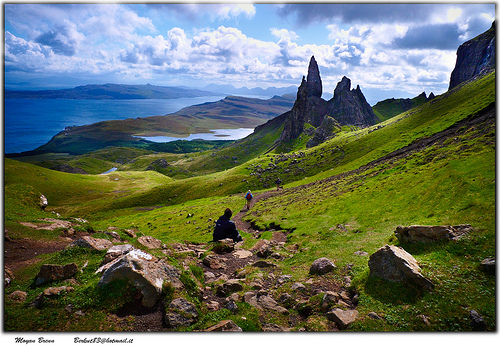
“Hiraeth is in the mountains where the wind speaks in many tongues and the buzzards fly on silent wings. It’s the call of my spiritual home, it’s where ancient peoples made their home…high on a hill, where saints bathed sore feet in a healing spring and had a cure….Hiraeth – the link with the long-forgotten past, the language of the soul, the call from the inner self. Half forgotten – fraction remembered. It speaks from the rocks, from the earth, from the trees and in the waves. It’s always there.
Yes, I hear it.
Yes, I understand what hiraeth means.”
As do I.
So, here’s my strategy. While you sit, happily dunking something forbidden and delicious in your coffee, I’m going to prattle on a bit about this concept in a new series of blog posts designed to help get us, okay me, to the pleasantries of shared experience. And, although I’ve written about this thing before, I need to keep doing so. I hope this exercise is more like Michelangelo’s hammer and chisel finding David in the stone than the endless pounding of the chain gang pick on the rubble pile.
It was 1970. I was under-ripe, but hoping for the best at 7 years old. My Dad was developing the basement in our tiny 1000 square foot bungalow in Calgary, Alberta. Part of that process was building my own bedroom (let applause dwindle before carrying on). I was elated. During part of the process I was sick and recall sleeping on a movable cot in an unfinished room into which my parents had brought a TV that I could watch while convalescing. Poor me, I don’t know how I managed under such rigorous conditions.
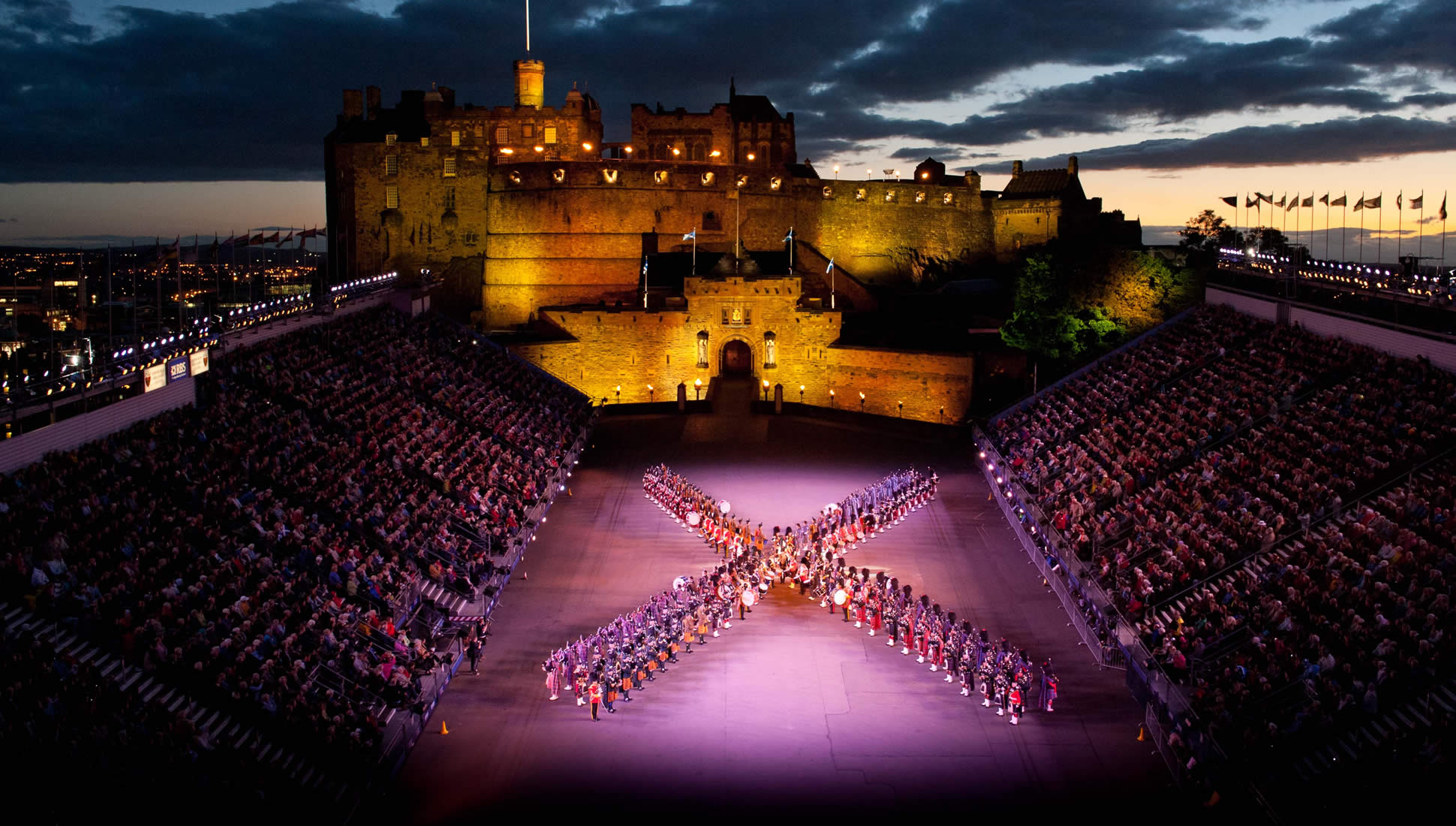
My life forever changed one evening upon watching a live presentation of the Edinburgh Military Tattoo from Edinburgh Castle. I was smitten.
Edinburgh Military Tattoo
I had encountered something so pristine and wild that I told my parents the next morning I wanted to learn to play the bagpipes. Instead of the response generally expected, perhaps even advisable, for any parents, mine were intrigued and supportive. In less than a year I’d become part of a local Boy’s Brigade company hosted at the nearby St. Andrew’s Presbyterian Church where I would also begin my first lessons.
Perhaps the biggest discovery however was that I was becoming aware of my beginnings. My parents made it clear to me (as clear as such things can be to an eight year old) that, as the oldest of three adopted children, I came from Scottish DNA. Spooky to some. Intriguing to others. My response to this growing revelation of my biological roots was an insistence that I was finding my spiritual ‘home.’
Alongside many others through the centuries, I am one who uniquely identifies with what we believe to be true about the Celtic way of life.
I’m happiest when I’m a little sad.
Life is always better in the rain.
Green will always be the best color.
Everything is a metaphor for something else.
When I wander, I long for home. When I’m home, I long to wander (translation: whiny and impossible to live with).
Stories, music, poetry, and art are still the best way to teach anything.
Men look best wearing colorful dresses, tossing around telephone poles, and making themselves dizzy blowing ridiculously loud instruments.
Women are best when allowed equal voice in the community.
The forest may still be the best place to worship together.
Dark skies are a sign of hope more than weather.
The best life is when one day we sing together, the next we die together.
And, learning means more about living than just knowing.
What I’ve loved most about my place on the Celtic role call is that life for the Celts wasn’t neatly compartmentalized, as it is in our western, rationalist world. The idea of one’s “spiritual life,” or “physical life,” or “social life,” or “sex life” would have been quite foreign to them.
It was, quite simply, life. Everything mattered equally. Everything counted. Nothing was completely meaningless but contributed to their daily and eternal existence.
They lived very outward lives from very inward places. They spoke of “thin places;” the nexus where one could feel the outline of God’s hand touching theirs from behind the thin sheath of reality. The thin place, where transcendence meets the here and now, was where the Celts felt most comfortable.
It contributed in forging a Christianity deep enough to pray ceaselessly, strong enough to endure a pushy Roman empire and countless robust threats, and bold enough to sail into the unknown and share what they had experienced.
I like to call them “practical mystics.” They rehearsed the soul well enough to sing its song in the byways and the unforgiving wilderness. Their memory of mystical encounters with God propelled them outward to meet innumerable dangers to preach and live the Gospel.
They possessed a unique zeitgeist I like to call “shared home.” Hearth and home, food and fire, pain and process, bird and beast, wine and women, song and celebration, faith and family, God and neighbor, self and sacrifice, love, laughter and loss – all of a piece, one undivided garment of singular living. What they shared with the world they had already experienced in their daily lives.
They were perhaps one of the most genuinely whole peoples the world has ever known. I would even go so far as to suggest that they exemplified a very biblical faith. They marched to the skirl of their own bagpipes!
As a result, Rome absolutely LOVED them and offered their undying support (pry tongue from cheek here____________).
What the Celts understood is that there would be no outward “success” without honest, inward labor. The great, wide sea that would lead them to countless would be Kingdom-citizens awaiting their hopeful voice could wait long enough for them to be well acquainted with the reason for their journey. Boats easily sink when left untended for too long.
They went out boldly to see God at work in the world, but did so through the in door of communal spiritual practice. They had more than ideas to share. They took their photo albums and welcome mat with them.
The insatiable longing to belong so pervasive in the Celtic spirit changed their way of living. They willingly and consistently explored what it meant to be “home,” all the while sailing to the ends of the earth in pursuit of what they sought. In so doing, they brought the hopeful message of Jesus’ new Kingdom to those people everyone else called “barbarians.”
The Celts called them neighbors.
The Celts loved silence and the life of the soul. But they loved it too much to keep it a secret. They went out through the In door. And, with this inner treasure in tow, they sailed the great deep to change the known world.
We are their legacy.
Great Guardian of hearth and horizon, soul and sail,
I have lifted my feet in obedience to an insistent wind. I have lifted my head up above this tiny-rimmed being. I have sought again what once was too costly. I have set out once more upon a wildly restless sea.
As I deepen, glacially but surely, in the Way of Jesus I am finding freedom in the manner, frequency, and creativity of spiritual intercourse. There are a number of factors in these discoveries. I am getting older – a fact, apparently, applicable to all. The passing chronos lends a certain gravitas to the focus of kairos. And, the slow-cook crockpot of my formation adds fewer ingredients every year to an already complicated soup. Sometimes it’s not more, or even better, ingredients that are required for the quintessential meal. Sometimes it’s the right ones at the right time that leave the palette happy and wanting more.
As I’ve written numerous places, the past few years have been richly experimental in regions of contemplative prayer. Learning to love silence. Seeking out solitude. Making friends with simplicity. Studying the nuanced coup d’etat of lectio divina. Prayer walking. Being enriched through congregational liturgy. Journalling the works.
All these and more continue to contribute to whatever Rob, slightly enhanced, may be forthcoming off the stove.
But something is changing. With the increasing 20/20 available through the grace of kairos and the experience of chronos, I’m latching more and more onto the fluidity and ubiquity of unceasing prayer, specifically as it has come to be associated with who I am more than an action to which I commit. If in fact it is true that God is omnipresent, theologically, and an unceasingly constant spiritually, then it should come as no surprise that prayer can and perhaps should be, everything.
There is a state of being available to all persons everywhere that is readily found in that which most thrills the soul. For some, the ticking clock, counting the passing hours immersed in good literature. For others, it is the choir of smells united in one explosive song on a nature walk. For still others, it may be culling from the raw ingredients of the earth, something rich and flavorful with which to delight the tastebuds of friends and family.
For me, it was music and writing.
Me, roughly a millenia ago
As a teen, and a budding musician, I would often sit for hours on the front step of our house simply playing my guitar. The notes, some of them good, others lined up for the shower, collided together to produce more than just music. They created space; a kind of generous openness to whatever the universe was at the time. A particular kind of peaceful “zen” or as Thomas Merton might call it, “contemplative awareness” resulted, leaving me just where I needed to be. This was true even as I spent countless agonizing hours learning impossibly difficult melodies (I certainly thought so at the time!).
In recent months, as more conventional understandings of contemplative prayer have waned a bit, I’ve had a certain yearning to resurrect this practice. And resurrection has been the result. To plant myself on a lawn chair a few feet from my rose bushes (such as they are) and play music inspired by the same, in tune with the wind, has once again ushered in a holy Presence. It has centered me like nothing else lately.
Taken on Okanagan Lake, Kelowna, B.C., 1999
It has also brought a much cherished simplicity and deepening unification of all I am into pulsating notes, maybe not always in tune, but always tuning. Music, once again, has become for me the changing face of prayer, changing me.
He died of lymphoma on September 15th, 1985 at 10:22 pm. I was 21 years old. At that moment, a man I never really knew, passed into the aether, and was crushed tight to God’s bosom. Found by God and lost by me, he is to this day, an enigma and my regret. He was my father.
We spoke precious little while he was alive. A sense of quiet desperation peppered his disposition. A staunchly stoic individual, his upbringing in the wild, velvet foothills of Maple Creek, Saskatchewan burnished a certain leathery sheath to his already withered spirit.
Maple Creek, Saskatchewan
I saw my father cry only three times. Once, during a conflict with my younger brother, whose pained cry (he was only a kid after all) of “yea, well, you’re not my real Dad, so I don’t have to listen to you,” saw him descend into bitter weeping (all three of us are adopted). On another occasion, my Mom was reacting to my new but immature faith, a faith terribly demeaning to anyone outside the tiny club I then called Christianity. My own inability to navigate the complexities of this new life of faith had thrown a monkey wrench into the heart of our family. My Mom was hurt and let me know about it. Dad tearfully held my hand, recognizing in me his own lostness in the world and responding as he generally did, silently, but deeply.
I had driven him to Rockyview Hospital so he didn’t have to be alone when he got his biopsy results. The very fact that the doctor couldn’t tell him over the phone had already primed the pump as to what we could expect. I sat in the waiting room while he consulted with the doctor. What seemed like days passed until he finally emerged. Tears drew lines down his ashen face. It was the third, and would be the final time, I ever saw him cry. His words haunt me to this day, “well, looks like I got a touch of the cancer.”
The denial in his words bespoke a terror I had hitherto not seen on his usually emotionless face. He was genuinely afraid and communicated as much in the only way he knew: cautious deflection. Perhaps if he treated it like a bad cold it might just disappear like a bout of coughing or a snotty nose. And, as we would discover later, he had most likely lived with the growing cancer for a number of years, successfully hiding lumps even from my mother. These may have been the actions of a man too rough ‘n tumble to be bothered with such matters. More likely, they picture someone lacking the interpersonal skills necessary to build a supportive foundation upon which he could pilot these stormy waters.
He was as lost as we were.
Tom Baker Cancer Centre
In the months that followed we learned well the half hour journey from our home to the Tom Baker Cancer Center where he would be subjected to one test after another, one trial after another, one failed approach after another. He lost half his body weight and was an eerie shade of grey-green. Ultimately, he was admitted as a long-term patient. I learned how to help my own father shower and use the toilet. Any preexisting awkwardness was forced out in this new and vulnerable frontier. Old fears and presumptions fell away every time I helped pull his pants back up or helped him into pajamas before he fell, exhausted, into bed.
I was studying classical voice and choral conducting at the time and would often sit by his bedside reading and even humming pieces I was to have memorized for the following morning. From time to time I’d look up from my textbook to be sure he was still breathing, only to catch him looking back. Our words were few to none. But, to us, those looks bore volumes of communication unnecessarily crowded by such things as talk.
In the early evening of September 15th we had been made aware by the doctor that he had contracted pneumonia as a result of increasing weakness and the pure oxygen that was keeping him alive. Ironically, in so doing, it crystallized his lungs, turning them into glass shells. He was given zero chance to live off the respirator. Despite the knowledge that this day was coming, we stood like plastic dolls, unable to speak.
This reality had us cornered, and we succumbed to its horror, saying our trembling goodbyes. I bent over to kiss his forehead, whimpering quietly in his ear, ”Goodbye, Dad. I love you. I always have.” It was one of the few precious “moments” we ever enjoyed together. He would be dead two hours later.
My father was that man about whom one says, “He was someone I never knew.” I cannot say however that he wasn’t the father I needed. I was as negligent and uninterested as he was tense and unable to forge anything substantive in our father-son relationship.
They say regret is a wasted emotion. Maybe so, but few emotional triggers are more difficult to undo. It lies in wait every time we are reminded how our successes bowed to failure, our fears grew through inaction, our relationships dug themselves deep into a quicksand of mutual ignorance or naïveté.
In the years that followed, I’ve been forced to come to terms with my passivity and self-driven carelessness regarding my father. It has left me struggling with mountains of regret and the self-loathing it can generate. Left untended, regret can cloud the soul and create blockages to the inflowing of new love, new relationships, even newness in old relationships.
My Dad, Reg
With my Dad it wasn’t about forgiveness. It wasn’t even really about misunderstanding. I am ashamed to say that, for me it was, quite frankly, lack of interest. He was everything I was not but secretly wished to be: unyielding, unflaggingly committed, self-denying, self-forgetful, self-reliant, with a willingness to forego relishing in his fears in the interest of those he supported and loved.
My lack of interest and passivity crashed headlong into his inability or perhaps tentativeness to face something he’d never known himself, tenderness. The casualty? Relationship.
Since then I’ve done a poor job, although with lessening self-flagellation, at honesty and intentionality in human relationships. Friends, pastors, colleagues, and spiritual directors have all shared in this journey with me. The one message most readily cobbled together from their loving advice is this: if the gospel tells us anything it’s that there is always redress for regrets. The Way of Jesus keeps open the door that leads to new and renewed relationships, to companionship for the lonely and an anchor for souls adrift.
I miss my Dad. I regret never really getting to know him. I miss what might have been. But, the Way of Jesus, lived with courage, promises second chances for chances not taken.
In much of the incendiary debate (a generous term, frankly) surrounding matters of human sexuality in the church, one is often led to believe that there is now and has always been a single view with which all faithful souls must immediately and consistently adhere. This is an unfortunate proclivity for the prevailing church, to make assumptions out of a majority view and, on that basis, unquestioningly consider it biblical.
When my wife and I first moved to the U.S. from Canada (at the time of writing, almost fourteen years ago). I recall numerous conversations that went something like this, “oh, you’re a Christian. So, you must be pretty happy about getting a Republican in office then, huh?” Now, given that we are not American citizens and cannot vote, and wouldn’t automatically vote one way or the other dependent on a party name, this still strikes me as disingenuous at best, dangerously misinformed at worst.
The Church has disagreed on almost everything since Pentecost. Even the big stuff. The great Councils helped build a consensus, not a unanimity on matters of deepest concern to the gospel. Even the very scriptures from whence we derive our most treasured theology was a canon of strife and woe until well into the fourth century C.E. There is not even universal agreement to this day on what books even belong in the canon!
Perhaps the most diverse “rag-tag fugitive fleet” of souls ever assembled were the original twelve. Levi/Matthew, a materialistic, corporate yes-man on one end and Simon, the Zealot, a leftist revolutionary on the other. It certainly was not ideology that united these two apprentices of Jesus! It was their Rabbi, and the self-giving love he exemplified that cut through to the core of all matters.
Since the Reformation, something I see increasingly as The Giant Overreaction, the church has fractured into 40,000 denominations, more or less, most claiming sola scriptura of one form or another. Hence for me, the question becomes not if sola scriptura but whose? It leads us to ask the yet bigger questions related to the spirit in which we disagree on secondary matters. Is there room for loving disagreement, or “faithful dissent” as my colleague would say?
Despite the fact I’ve spent my entire Christian experience in that narrow hallway of Protestant enterprise, in at least one of those 40,000 denominations, the Evangelical Covenant Church (ECC), I’m finding hope that, in the LGBTQ discussion at least, there may be room for such faithful dissent. And it is here where Dr. Clifton-Soderstrom is at her best, bringing home her point within that shared context where we both live, move and have our being.
This has been a threefold exercise for me in stretching my spiritual legs a bit. It is a rarity for me to engage in these, shall we say delicate, matters on a blog designed more to journal my journey than document my ideas. That said, I can think of few better to assist me as I stick my head out of my cell long enough to sniff around and discover places suited to engage the world with what I’m learning down there.
You can find her final installment here. I did, and Dr. M…it’s been an honor.
Dr. Michelle Clifton-Soderstrom is Professor of Theology & Ethics at North Park University in Chicago, Illinois where she has served since 2002.
My first contribution in this short series suggested that we, as the church of Jesus Christ, are in an ongoing cycle of retuning; a self-correction, sometimes almost subconscious, that reverses excesses and unhealthy trends. Further, I hinted at a kind of misgiving in posting a series of this kind, given the nature of Innerwoven as primarily a place for reflection and growth in Christian spirituality, not a clearing house for theological hot-topic-du-jour.
This is how I’ve come to terms with this: sometimes we must rouse ourselves from the beautiful silence and push out into the dark once more with light gained from those quiet spaces most abuzz in the presence of God. For me right now, this is that.
If we are willing to be completely honest, it is common, especially in all things theological/existential, to suffer a certain degree of cognitive dissonance; a rift so to speak between what we think we know, what we actually know, and what we want to know. Our heads and our hearts, like pieces of a broken mirror, struggle to find their place such that a pretty picture may emerge.
For example, if one can say with clear conscience, (or for that matter, a straight face) that one understands the incarnation, the trinity, or the hypostatic union, then there exists more self-induced deception than any real desire for broader understanding through a willing “unknowing” – a fancy way of saying, humility. Such a one is not even ready for this discussion. They have far too many ‘answers’ when in fact a truer posture before such numinous matters should produce more ‘questions,’ questions that often remain ‘answer-less.’
The LGBTQ issue as it relates to Christian formation, a faithfully biblical exegesis, and equally faithful local church ministry (specifically in the Evangelical Covenant Church, the denomination I share with my guest contributor) is one of those cognitive dissonance issues for me. Years of teaching and background in one direction have collided with more years of rethinking, spiritual formation, and reconsidering this issue, coupled with my actual experiences with beloved LGBTQ sisters and brothers, have left me torn and looking for fresh thinking and a way forward.
Dr. Clifton-Soderstrom is helping me in this regard. I believe she can help you as well. As she encourages, “When we are in over our hearts and over our heads, the habit of befriending and the exercise of freedom around God’s word can only take us where the Spirit leads — toward renewal.” If you trust her as I do, go here.
Dr. Michelle Clifton-Soderstrom is Professor of Theology & Ethics at North Park University in Chicago, Illinois where she has served since 2002.
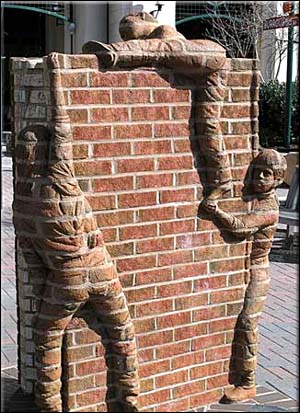
It is a relatively common occurrence for self-correctives to follow the theological-ethical-liturgical life of the Church. Such things have been part of our corporate spiritual journey since Pentecost. What’s more challenging to pin down is what exactly is being “corrected,” why, and into what. And, more importantly, whether any current push toward that correction is considered right, wrong, or even advisable by those on opposing sides.
For example, one of the greatest “correctives” in Church history was of course the Reformation. Arguably, it brought some of the most central tenets of our contemporary Christian faith into sharp relief against the abuses of a Catholic church, run amok. Protestants celebrate this corrective. Catholics decry it. Those like me who straddle it, do both.
As I make my way forward with this blog, it has often been challenging how best to engage with the topics most at the head of our ecclesiastical-cultural parade. Since Innerwoven is intended primarily as a place of reflection and consideration of the inner life – the life of God in me and others – does this mean I should remain silent on hot topic matters? Wouldn’t it be best to keep things more corralled for the purposes of our own solitude? In the interest of attaining a sense of inner balance and proximity with God, is it more advisable to avoid the stress of incendiary and divisive talk that denies such balance? Is that always to be the case? When does interest only in contemplation without its corollary of redemptive justice become an exercise in narcissistic stasis birthed of fear?
Paul, in addressing the Romans offers the following advice: “Let us then pursue what makes for peace and for mutual upbuilding” (14:19 NRSV). He advises an avoidance of matters most poisonous to the fellowship of believers and the common life of faith. Jesus, too, makes clear time and again that it is not our ideas that matter as much as the end and reason for those ideas (for example, see his 7 woes to the Pharisees in Matthew 23). He blesses the peacemakers who themselves are blessed. But he also tells Peter that, in faithfully following the Way, a time is coming when he will be taken where he does not want to go. It is now and has always been more about who we are becoming than what we should be thinking; about righteousness more than rightness.
About love.
With such a long set up, here’s my punchline: sometimes we must rouse ourselves from the beautiful silence and push out into the dark once more with light gained from those places. Armed with the Christian spiritual tradition that in every corner teaches an active contemplation along with the hermeneutic of Jesus: love the Lord your God utterly and others as oneself, let us set out into that dark night and with hope and faith begin a conversation about…gulp, human sexuality and the Christian Way.
To help me do that is a wonderful new friend, colleague, and a rather formidable academic, Dr. Michelle Clifton-Soderstrom. Dr. M as I’ll call her, has written a series of close-to-the-vest pieces on this very topic published at Sojourners online. She writes not from behind a professor’s desk. She writes as a faithful follower of Christ, who happens to be a scholar, about her personal struggle with our present lock-horns topic of “LGBTQ inclusion,” specifically as it relates to faithful Church ministry, and unity in diversity. The context is also of commissioned and blessed involvement under present Evangelical Covenant Church protocols (a denomination we both share and love) on the subject and what “faithful dissent” might look like. Her first submission is my starting place. As such, I leave you in her more capable hands.
With this hornet’s nest awhirl around us, are we in a time of ecclesial self-correction? Just sparring over the issue-du-jour? Both or neither? This reblogged series is evidence of my own yearning for a place of love and commonality wherein all might land and still call one another sister, brother, friend. To that end, I send you here. I humbly encourage you to engage her there and me here, or both. Either way, let’s seek to engage for the purpose of common understanding and love. Why? Because out of the deepest inner silence come the most convincing voices of compassion.
Even so, come Lord Jesus.
Dr. Michelle Clifton-Soderstrom is Professor of Theology & Ethics at North Park University in Chicago, Illinois where she has served since 2002.
There are precious few in every generation to whom the forces of transformation and awareness may credit their shifting and change. Women and men whose singular focus, ideological clarity and personal courage helped guide them to be the salmon spawning upstream. They inspired us to become who we already are, to shine more brightly, think more rigorously, love more passionately, die more readily.
For me and countless others, Thomas Merton was one such person. Today marks the one hundredth anniversary of his birth. Rather than offer biography, retrospective or ideological dialogue, I’ll let him speak in the language he knew best: prayer.
“My Lord God, I have no idea where I am going. I do not see the road ahead of me. I cannot know for certain where it will end. Nor do I really know myself, and the fact that I think that I am following your will does not mean that I am actually doing so. But I believe that the desire to please you does in fact please you. And I hope I have that desire in all that I am doing. I hope that I will never do anything apart from that desire. And I know that if I do this you will lead me by the right road though I may know nothing about it. Therefore will I trust you always though I may seem to be lost and in the shadow of death. I will not fear, for you are ever with me, and you will never leave me to face my perils alone.”
Polio had left him a garbled mess, wheelchair-borne, twisted and gnarled. But those ropy hands pushed faders, gain controls, EQ settings, among other things for a band I toured with in the mid-eighties, wait for it…Sonshine. Yup. No metaphor here. Just git ‘r done with classic cheesie Christianeasy. We spent most weekends traveling among the tiny wheat and cattle, grain elevator towns that dot the Alberta prairies. A dozen songs, a thousand laughs, and one almighty potluck at a time, Gerry guided us, gear and all, to wherever was next. He and his wife, Rose, hosted my fiancee and I for dinner, fellowship, Bible study, and prayer once a week. As is my pattern in everything I took copious notes, which I have to this day. I lost touch with Gerry many years ago.
I could use his voice these days.
1979. Halifax, Nova Scotia. I was on tour with Clan MacBain Pipe Band of Calgary. I’d been the youngest member in the band’s history, taking my place among the ranks at age twelve. My stage-parents, ever eager to secure my quickly expanding horizons, thought it a fine idea to let a twelve year old kid who looked nineteen sit among hardened whiskey ‘n beer maniacs in places too dark to see clearly the shenanigans of such ne’er do wells. Although unwise for personal reasons, it was one of the best opportunities afforded this pre-teen bagpiper for, on this particular day (I was then sixteen) I participated with the massed pipes and drums put in place to appropriately welcome Queen Elizabeth the Queen Mother as she presented the colors to Canada’s Maritime Command. She later opened the International Gathering of the Clans of which our less than stellar collective proudly represented the MacBain Clan. I was barely sober enough to remember.
But I was there.
Later that same year I was on staff as bagpipe instructor for the Fort San Summer School of the Arts in Fort Qu’Appelle, Saskatchewan. The Fort as it is called is the closest thing Saskatchewan might boast as a “resort” village. It was my seventh consecutive summer at the camp and my second as instructor, the youngest they’d ever had (illegally so, since I was too young to receive a “salary”). What made this year so unique was that I had the honor to sit under the tutelage of one of the greatest bagpipers in history, the late Donald MacLeod, M.B.E. It was like taking voice lessons from Freddy Mercury but someone half his height and twice his age. A two pack a day guy and hard drinker, Donald was also a man of genteel demeanor and humble affectation, despite his cosmic reputation among highland bagpipers. To sit in the audience and listen to this little giant perform for us was akin to sitting on Santa’s lap as a kid.
But with much deeper rewards.
Even before we’d been married a year, my wife Rae and I spent a few months living and working among a hearty and devoted group of Scottish Baptists in Edinburgh, Scotland. The year was 1989. We had barely managed to figure out how to live together under one roof let alone successfully navigate the complexities of hormone-crazed teenagers beside a large body of water. For, on this cool, blustery afternoon we decided it would be fun to be outside rather than stuffed in our flat. A couple of suburban Calgary kids who grew up in the foothills of the Rocky Mountains were no match for the beloved hooligans now under our charge. Things fell apart quickly as a deplorable lack of communication between Rae and I regarding game rules left us shouting “fuck you” at each other. So, while half of them refused to follow the confusing rules of a made up game, the other half were tossing each other into the ocean. What started as a delightful Baptist youth event quickly became a free for all wet t-shirt contest. Bouts of seawater-induced lung infections, allegations of inappropriate boy-girl interactions, and numerous angry phone calls later and…lesson learned.
She was slightly chubby with a pinkish, round face, and dancing eyes that squinted a bit when she smiled. She had a way about her that was at once bracing and dangerous while at the same time hospitable and kind. She felt…comfortable. Our afternoons were often spent talking about all manner of shared interests: music, art, nature, beauty – often while lying side by side under our crabapple tree in the backyard gazing at the summer sky. It was heavenly. We held hands. We kissed. Often.
We were ten.
I was elated. It was summer. It was hot, and I was slicing through cool, choppy wake churned up by the boat behind which I was waterskiing – upright – for the first time in my life. My friend Darrin was driving, his dad beside him, and his younger brother watching me in case I came into difficulty. Silly, thought I. What could possibly go wrong? As is often the case with cocky, self-assured fourteen year olds, with over-confidence I over-compensated for over-reaching and found myself suddenly bouncing headlong over waves (surprisingly hard while cheese-grating along their ragged tops at forty miles an hour). By the time I finally pulled myself up from under the smug water, I was out of breath, bleeding from my side and completely naked.
It was exhilarating.
I saw my ever stoic and unyielding father cry only three times. Once during a heated exchange with my younger brother in which he loudly proclaimed that dad was an imposter (all three of us were adopted). Once, when my mother screamed at me so violently it made me cry out all manner of things I now wish I hadn’t. His hand, placed over mine at the kitchen table, is etched forever in the not-to-forget section of my memories. And once when he got back his biopsy results. I had driven him to Rockyview Hospital so that someone was with him should the news not be good. It wasn’t. At all. He came out of the room, face a pall of grey, and trembled out a few words in his roughneck Saskatchewan farm boy manner, “well, looks like I got a touch of the cancer.”
I miss him still.
I looked out the airplane window to a sight I’d waited seventeen years to see. The tightly woven, ancient and ragged hills of Scotland, huddled together in green beyond imagination danced a jig before me. If there’d been a seat on the wing, I’d have taken it in a heartbeat just to be that much closer to the land of my soul. Although Canadian born and raised, I have always been Celt to the core. My genes are kilted, my blood tartan, and my chromosomes play bagpipes proudly, up and down the hallways of my DNA. Best of all, I was there with my Welsh-Canadian wife of less than a year. Two Celts touched ground in Prestwick on a chill April day in 1989 and have never been the same.
“O flower of Scotland…”
The din was almost deafening. Bagpipes everywhere. It was August, 1991. Bellahouston Park in Glasgow. It was a “second first” related to this place. A bagpiper from the age of eight, I’d dreamed of making my way there to compete with the world’s finest since barely in double digits. Now, as head instructor for an up and coming junior pipe band, I was again on old country soil. This time, for the World Pipe Band Championships. To say it was dreamlike would be understatement akin to calling Mt. Everest a quaint, country bump. We were called up to the line. The pipe major barked his command, “by the right, quick march!” Two three-stroke rolls from the snare drums, drones, chanters, then – seven minutes of music, practiced and polished for two years.