To our heart’s delight

In a recent post I began to meditate a bit on what the Psalmist may have been on about in 37:4 when he adjures us to “Take delight in the Lord, and he will give you the desires of your heart.”

To press into the paradox of these words is to discover two interrelated things. In pursuing those things, ideas, persons we believe to be most satisfying to our egos, the shallow water before getting to the sea of soul, we suffer the law of diminishing returns. We attain, receive, pursue, and sometimes steal in order to buttress an icy happiness that laughs at us mere moments after the fact.

We held in our hands what is now farther away.

The result? Turn up the heat of our pursuit and call it “dedication” or “hard work” or “sacrifice.” The process begins again in earnest, to a fool’s detriment.

Conversely, it means something much odder still. To walk away from delight itself and toward the God of all delight is to forego the very need of desires for which we were previously straining. It is God’s cheeky bait ‘n switch.

To one drowning in desire, grasping hold of the first thing to bear us up is a natural action. But that desire blinds us to the life boat yards away in favor of a shark’s fin inches away. We are saved, but only until it becomes clear the price we pay.

In this season of competing allegiances and dueling narratives, all sparring for our attention, let us journey together on the longer road, bringing an end to all lesser desire, and follow after he whose self-denial gifts us with what we never thought was lost. 

Let us risk the farther star; the gift which requires us to keep our heads up lest we trip on our own pursuing feet.

journey-of-the-magi.jpg!BlogPainting by James Tissot, found here


That in which we delight

“Take delight in the Lord,” says the Psalmist, “and he will give you the desires of your heart.”

iggy-necklace-carThis is a deceptively easy passage. The fog of western, individualist consumerism however urges us to read this as God simply handing us whatever we want, regardless of its origin, intent, or wisdom in the attainment thereof.

Indeed, God does give us what our hearts desire. But, the beauty and deft insight of this verse is that the heart changes in accordance to what brings delight. As it becomes more centered in the Divine, it leans more readily toward the faces who line the hallways of our lives.

We soften toward their plight, and glow with pride in the accomplishments of others. It begins to shatter for the things that shatter the heart of God, in whom we delight.

And even suffering begins to make some small sense as it becomes contextualized against the larger picture of God’s redemptive enterprise, an enterprise into which we are invited, baptized, and transformed. It is out of that transformation which come the heart’s deepest desires, doubts, despair, dreams, and destiny.

The next time we quote this marvelous gem, especially during this holiday season, let us attend to its more ultimate direction. Let us lean into the God who, in Christ, becomes all our desire and through whom our deepest desires, plunged into the raging love of God’s heart, are fully satisfied.

cropped-dsc_0059.jpg

Car photo found here

Communion photo taken at Yakima Covenant Church (where I am proud to serve as music director)

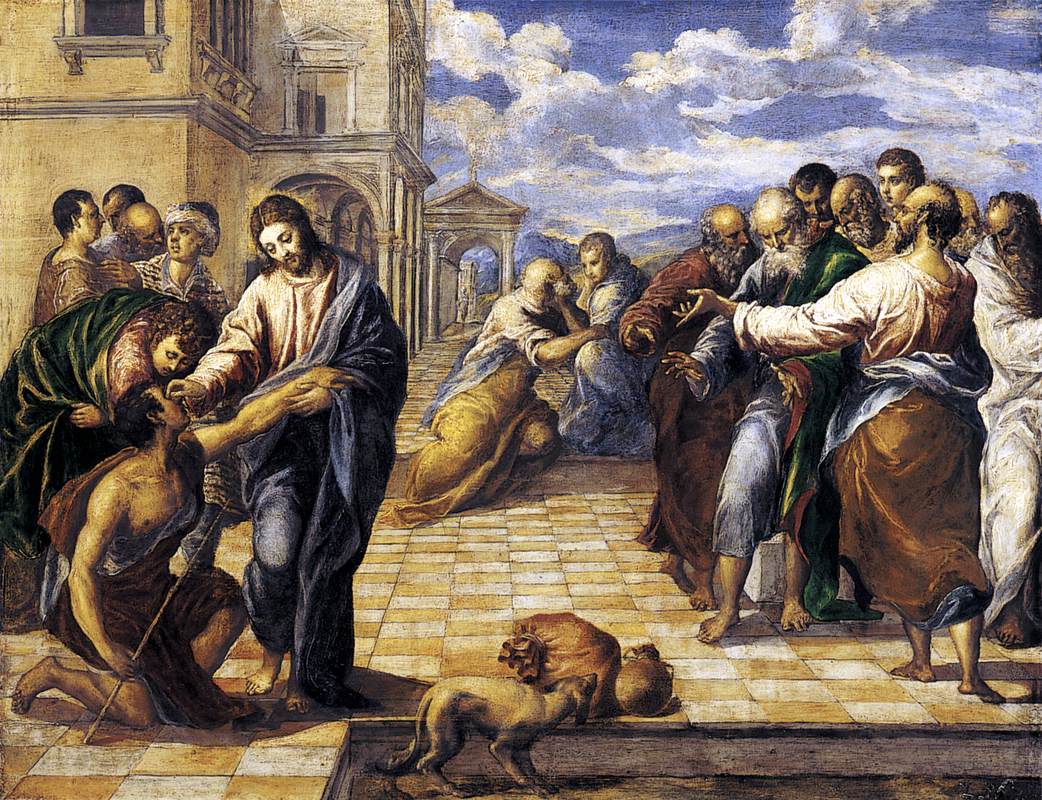
“Do you want to be healed?”

“Do you want to be healed?”

For the longest time I had attributed it to the insistent paradigm of the poet’s logic, the lover’s unrequited dreams, the shifting clouds of the philosopher’s quest – all searching for something – a reality as numinous and perfect as it is deceptively secret and stubbornly resistant to conquest.

An ever-present sense of melancholy, a numbing ache, an unnameable yearning – desolation even – has draped my consciousness for many years. It seems I am a walking advertisement for mood enhancing substances and the pharmaceutical drug trade (or, maybe just self-pity?)

Sometimes, and inexplicably, my soul is shot through with little darts of light – suggestions of heaven, of how things truly are. They come unbidden mostly as ghostly sojourners, inhabitants of a more perfect realm come to slake my wheezing soul with wine, bread, and perhaps a song or two.

In recent days, this ubiquitous, verbose Demon of Grey Souls has gnawed at me for so long that it seems, by virtue of that fact, to have overplayed its hand. The hide ‘n seek after contentment, so long now the haunt of my days, has been smoldering behind its best hiding places under new rays of sun. I had willingly become a pawn in a cat and mouse game and my overseer has grown too fat to hide well.

New light, still diffuse and weak, but less coy or troublesome, is asking me a question; the ironic question Jesus once posed to some poor bugger by the Jerusalem Sheep Gate: do you want to be healed?

On the surface it’s a question as ridiculous as asking two young lovers, separated by time and circumstance, whether they’d like to make love. Upon reflection however, it reveals shear genius and a profound knowledge of the human psyche. In asking such a question, Jesus becomes more than just miracle-worker, more than a first-century doctor. He becomes psychologist and spiritual director.

He gazes beyond the obvious malady to which this fellow is chained and sees something else. His question is aimed at the man’s fear, not of remaining ill, but of the unknown world that might just open to him in the face of his healing. To be healed is to rejoin society. It is to refuse the Hogwart’s sorting hat from placing you once again into the House of Sufferin’. It is to relinquish the comfortable role of pitied and pitiful, dependent on the succoring cries of others, and take up one’s place responsibly as contributor and co-builder of a just and compassionate world.

The Spirit of God is revealing to me just how long I have sat beside my own Beth-zatha (see Jn. 5:2ff) with the expectation of healing but full of excuses for why it shouldn’t have or hasn’t yet happened. The brooding and mysterious artist persona, complete with philosopher-poet mystique and generous helping of eyes-down, hood-up melancholy is no longer a big enough hiding place for the overwhelming presence of this question, posed by Jehovah-Rapha (God, our healer).

Perhaps it’s about timing, we must wait until our own “fullness of time” (Gal. 4:4)? Perhaps God is content, as in the case of Job, to let us sit in our sackcloth and ashes long enough to remove all doubt that we’re so buried that only another can save us? Perhaps it’s just “our turn?”

Says Marilyn Gardiner, “We sit, often for years, with our paralysis. It may not be physical paralysis, but it is just as debilitating and defeating as physical paralysis. It prevents us from truly living, from being who we are called to be.”*

Whatever the case, I am ready to answer ‘yes’ to the question of Jesus. I am ready to shed one skin, now old and overused, and don a better one.  I am ready to see what has always existed just below the surface of my murky water. 

I think I’m ready to say ‘yes.’

I’m ready to say ‘yes.’

I say, ‘yes.’

Yes.

Will you?

_________

*Excerpted from Marilyn R. Gardiner’s wonderful blog, Communicating Across Boundaries

Going Home, and the Way There

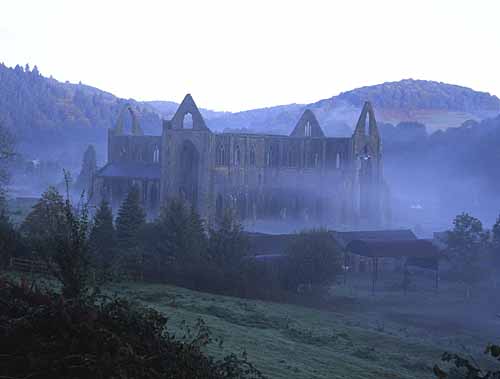
It was 1989. My wife, Rae, and I had just completed a call of duty as mission workers to youth at Granton Baptist Church, Edinburgh. We enjoyed our first anniversary on Culloden Moor, near Inverness and were now enjoying a few weeks to just explore. I recall quite fondly the first time we stood together within the ruins of Tintern Abbey, not far from her birthplace in Wales. The mystery of belonging, and the sheer weight of home was overwhelming.

Tintern Abbey, Wales

A Celt at heart, I think and write a great deal about the spirituality of ‘home‘ and the ache it engenders. The human heart is uniquely designed to yearn. It knows what it wants and diligently seeks it out – sometimes in unsavory, even desperate, ways. Our sacred procurements can quickly become what derails us from procurement of the sacred. But God knows our heart and the passions to which it is given, both good and bad.

What do you think of when you think of ‘home?’ A family room, lavishly bedecked with Christmas finery? A dining room table around which sit the people who grace your life? A certain place to which you return for solace when life goes south? For Rae, my wife of twenty-seven years, it is Britain. We both grew up in Calgary, Alberta on the uneven foothills that slowly crawl their way up the eastern slope of the Rocky Mountains. But the ancient Celtic hillsides, grey and mournful skies, and songful souls of Wales are for her, home.

Calgary, Alberta
Calgary, Alberta

We met while in mutual mourning. I had just lost my father to cancer a few months earlier. She was a girl in the throes of anguish, watching her mother waste away with the same plight. Rae is an only child, not because that was the desire of her parents, but because she was the only one to survive of numerous pregnancies. A survivor she remains to this day.

Only-children learn to be self-sustaining, imaginative, and scrappy in order to live their lives outside the interdependency of other kids in the family. With the lack of siblings, they often grow deeply independent, and extremely close to their parents, taking on signs of maturity well before others. All this is true of Rae. 

She lost her mom in August of 1986, almost a year after I lost my dad. She and her dad, now alone, forged a new life together on their own. In a sense, Rae took over many of the aspects of care and mutual friendship that previously existed between her parents. They often spent evenings simply crying together. Her father was lost without his partner, and the many tendernesses known only to lovers. His habitual journey from kitchen to bedroom every morning with tea and toast for his wife was now enjoyed by Rae. In honor of this tradition, I bring her coffee every morning. These little things help keep the big things in place.

The friendship born of the mutual bond of grief has lasted to this day. Since losing her parents, any family of origin are gone. In a sense, she is alone on this continent. To help her contextualize this and many other competing voices within her, she started writing a novel a little over three years ago. It is, of course, based in the UK.

Rae, my writer, wifey pal

Because I so keenly identify with her longing for home, and because, as a writer myself, I am her biggest fan, it has been my desire to help her return. I have developed a Giveforward crowd-based fundraising campaign to assist in getting her back to Britain where she may visit her remaining relatives, and finish research for her book.

If you feel as pulled toward home as we do, please consider making a donation, however small, to help her feet once again touch her own hallowed ground. You may do so here.

Diolch yn fawr iawn (thank you very much in Welsh)

Picture of Calgary found here

Solace outside the monastery walls

hesychasm-%20Oleg%20Korolev
“I, your priest, will make the whole earth my altar and on it will offer you all the strivings and sufferings of the world…Grant me the remembrance and the mystic presence of all those whom the light is now awakening to the new day. One by one, Lord, I see and I love all those whom you have given me to sustain and charm my life…All the things in the world to which this day will bring increase; all those that will diminish; all those too that will die; all of them, Lord, I try to gather into my arms, so as to hold them out to you in offering…” Pierre Teilhard de Chardin – from Hymn of the Universe
 
The history of Christian mysticism is peppered with rich fare, the heady extrapolations of soulish delight uniquely the territory of those fearless ascetics, monastics, hermits, and contemplatives who journal their journeys. It is the stuff of heavenly lore with heroes of inner battles fought and won, the likes of which we lay-folks can only imagine. One finds there a burning cauldron of purgation, a gleaming mirror of illumination, and the sweet rest of union. I read them lustily, with an aching expectation of tiny droplets of light for my faltering journey.
That same history is fraught with the cheap thrills of mystic wannabes, hucksters, and spiritual amateurs unsuited to such a dangerous pilgrimage. The existential nature of mystical theology makes it particularly vulnerable to either deep-diving into shallow waters or worse, shallow-diving into deep waters. And it can be hard to tell the difference. Even the Church from whence sprang these instructors of the spiritual way had difficulty determining where mysticism ended and heresy began.  
Here’s the deal. To be honest, as I read the mystics, I am struck by a number of things. Firstly, there is an undeniable courage required to mine the depths of God. From Augustine to Thomas Merton, women and men of rigorous faith coupled with a thirst for perfect union with their God, have sought to unpack their way in the Way. The literary legacy left behind has formed for us the corpus of Christian spirituality. It is the library to which I turn time and again for a way out of my tunnel and into God’s cave.
The more I read however, the more I see that they can be just as systematic and linear as academy theologians even as they describe the inner motions of the soul on its journey toward union with God. The roots are similar, but there are only so many ways to peel a banana. One has this threefold way, the other this sevenfold path, still another refuses steps altogether.
This is my struggle, one not unique to me – what is so often lacking is a clear connection between the complexities of the soul’s journey to God and the equal challenges of the dusty and broken world that is the home for all souls under construction. Inordinate amounts of time and energy is spent discussing their own soul’s progress in their own conversion. They almost seem to be in competition with one another as to who has experienced union with God most profoundly. There is much talk about God but turned, as it were, consistently inward.
Make no mistake, I love the mystics and will read them for the rest of my natural life. Moreover, I am usually combating the prevalent North American spiritual philosophy of ‘git ‘r done pragmatism. These matters are not generally ones that concern me to this degree. But, some questions vexing me these days: What is the relationship between the soul’s call to continual conversion and the call of the Church to be the redeemed and redeeming community? If one can discover the mysterious movements of God in the deepest parts of one’s own soul, what use do we have of one another? Of liturgy? Of Word and Sacrament? Of the Moral Law? How does all of this translate to the peasant farmer with far too little extra time on his hands to even be concerned about the threefold way, or the thirteen steps of Marguerite of Porete or anything close to an Interior Castle? Not everyone has the benefit of monastic solitude, a spiritual director, access to helpful resources, perhaps the ability to read the same(!), or a brother/sisterhood of likeminded seekers intent on finding their souls. Without that clear connection, it would seem to be too similar to the program of gnostic therapeutic dualism of contemporary evangelicalism.
The Gospel has both an inner and an outer intent. The aim of the Gospel is the ongoing restoration of the cosmos, souls and all. And the cruciformity of the Gospel calls us, nourished or not, whole or not, unified or not, in sacred ecstasy or not, into a world that badly needs these discoveries. Everyone must learn to find solace outside the monastery walls, mystic and lay person alike.
The above piece by Pierre Teilhard de Chardin gives me a peek into that kind of active contemplation. It speaks of offerings and gatherings, of sustaining grace amid the sufferings of the world. My soul cries out for the depths of the contemplative life (“as a deer pants for flowing streams…”). But my heart cries just as loud to share what I see with those around me who have no frickin’ idea what I’m talking about, but who long for it all the same.
Does that make sense? What do you think? Help a guy out, will ya?
* * *
homeless-people-26
Image 1, “Hesychast”, by Oleg Korolev, found here
Image 2 found here

Hiraeth – making peace with our longing, conclusion

contemplation

“Our longing is an echo of the divine longing for us. Our longing is the living imprint of divine desire. This desire lives in each of us in that ineffable space in the heart where nothing else can satisfy or still us” -John O’Donohue, Eternal Echoes

Throughout our series I’ve sought to define the Celtic concept of hiraeth in the following way: “a longing, a homesickness for a home to which one can never return. It is the unrequited hope that produces ever more unanswered longing. It is a grieving for the lost places and moments of one’s past – a sense of loss for loving moments and places, fondly remembered. It sits in the dream world where longing, belonging, home, and wanderlust meet.” 

We’ve looked at the necessity of metaphor in our efforts to understand this, or any, spiritual concept. I’ve invited people into my own personal salve, applied generously on my own longing – writing. We’ve discussed how the spirit of childhood and its built-in mysticism (Jesus called this childlikeness or, humility) is our truest home and the perfect allegory for our own longing – the return to that elemental time of wonder and chaotic delight; to mystery. Finally, we’ve adopted Ronald Rolheiser’s idea that our spirituality is what we do with our longing, the end of which can lead us to God’s greatest gift: self-knowledge.

Longing, as rooted in hiraeth, is a double-edged sword. It pricks us with the sting of yearning while simultaneously acting as a reminder of our finitude. We long for what we most want but which we so often least require. In this way, Hiraeth can be a longing for longing itself. Except, when we return, we discover WE have changed. Capturing even the essence of something is then an impatient storming of the gates of the reality itself. We chase a shadow as though it were the substance of the shadow.

Shadows

So, where does this leave us? This enigmatic Welsh word seeks to describe an idea without clear English equivalent. But it’s a start. It gets us somewhere. It has helped me grapple with an incessant gnawing thirst within me, never completely satisfied. And, as is the case with so many of our bugaboos, healing often comes with the process of articulation.

There is still a deeper level to which I am drawn as an apprentice of Jesus, for if anyone understood the exile of hiraeth it was the Son of God. It is here that I diverge from hiraeth in order to turn my attention to longing as understood and experienced in the harbor of Christ. 

All our discontinuities, our divestments, and disenfranchisement are subsumed into Christ Jesus, the exiled One. In the contemporary evangelical mind at least Jesus belonged anywhere but where he willingly chose to come. His truest “home” was within the eternal Trinity, that mystical scaffolding for all human relationships. If indeed one believes Jesus to be the image of the Divine Essence we call God, then his enfleshment becomes that much more jaw-dropping.

Prior to the Incarnation of God in Christ, the archetypal longing in the human soul was crooned in the poetry of the Psalms:

“My soul is consumed with longing for your ordinances at all times” (Psalm 119:20). “My soul languishes for Your salvation; I hope in your word” (Psalm 119:81). “Whom have I in heaven but you? And there is nothing on earth that I desire other than you.” (Psalm 73:25). “My soul thirsts for God, for the living God. When shall I come and behold the face of God?” (Psalm 42:2). “O God, you are my God, I seek you, my soul thirsts for you; my flesh faints for you, as in a dry and weary land where there is no water” (Psalm 63:1). “I stretch out my hands to you; my soul thirsts for you like a parched land” (Psalms 143:6).

Biblically, it is an ubiquitous concept. And, with the coming of Jesus, who understood the exile of longing better than anyone, we’re introduced to the promise of a never-ending thirst that is always and never slaked. It is the fulfillment of what hiraeth begins. The richer vein from which we draw means that boring underneath the irascible sea of our lives is an Artesian Well of nourishment. Jesus spoke often of the possibility of satiation found in the existential oneness we experience with God in his name:

“Jesus answered and said to her, “Everyone who drinks of this water will thirst again; but whoever drinks of the water that I will give him shall never thirst; but the water that I will give him will become in him a well of water springing up to eternal life”” (John 4:13-14). “Jesus said to them, “I am the bread of life; he who comes to Me will not hunger, and he who believes in Me will never thirst”” (John 6:35). “Do not work for the food which perishes, but for the food which endures to eternal life, which the Son of Man will give to you, for on Him the Father, God, has set His seal” (John 6:27). “Now on the last day, the great day of the feast, Jesus stood and cried out, saying, “If anyone is thirsty, let him come to Me and drink”” (John 7:37).

From these sacred words we’re given a glimpse into what lies at the root of all our longing – the need to know and be known, to love and be loved; to be one with the One whose roots alone bring the nourishment from which we will capably thrive in our world fraught with the ache of hiraeth.

well-w-bucket

I anticipate much more thirst to come. But my life will never be without water.

Series image found here

Shadows image found here

Bucket and well image found here

Hiraeth – making peace with longing, part 5

contemplation

“The hunger to belong is at the heart of our nature” – John O’Donohue, Eternal Echoes

At the beginning of chapter one of The Holy Longing: The Search for a Christian Spirituality, Catholic theologian, Ronald Rolheiser‘s pivotal work, he implants the following poem by Johann Wolfgang von Goethe:

“The Holy Longing”

Tell a wise person, or else keep silent,

Because the massman will mock it right away.

I praise what is truly alive,

what longs to be burned to death.


In the calm water of the love-nights,

where you were begotten, where you have begotten,

a strange feeling comes over you

when you see the silent candle burning.


Now you are no longer caught

in the obsession with darkness,

and a desire for higher love-making

sweeps you upward.


Distance does not make you falter,

now, arriving in magic, flying,

and finally, insane for the light,

you are the butterfly and you are gone.


And so long as you haven’t experienced

this: to die and so to grow,

you are only a troubled guest

on the dark earth.

Goethe voices something Rolheiser explores very well in his book. It is what we’ve been examining these past weeks: longing. Rolheiser maintains that longing, or desire as he calls it, is our primary dis-ease. He submits that “there is within us a fundamental dis-ease, an unquenchable fire that renders us incapable, in this life, of ever coming to full peace” (p. 3). In fact, he believes desire to be stronger than the satisfaction for which it yearns. And everyone desires – longs – and our spirituality is what we do with that unrest.

Rolheiser goes on to say however that, although we all suffer deep longing, not everyone addresses it in the same way. He compares Janis Joplin’s longing, lived out in the erratic and scattered desires that ultimately led to her untimely death with the more focused and singular desire of Mother Teresa that allowed her a healthy integration and more restful existence. This of course recalls Kierkegaard’s definition of sainthood – someone who can will the one thing.

Stated another way, our spirituality is “about how we channel our eros…what we do with the spirit that is within us” (p. 11). This is for me the greatest challenge since I have so many competing and overpowering inner voices, all clamoring for supremacy. Indeed, willing the one thing first requires the monkeys to quit swinging in the mental tree (thank you Henri Nouwen!). It is also why desire and longing have, for me, been so intimately tied to identity: my is-ness.

I believe this concept is utilized best when determining the growth pattern of our inner lives, specifically our emotions. It does not deny the tiger claw tears in the fabric of our hearts that rich memories can bring. It invites us however to live there in a liminality of time and space, with one eye on the object of our longing, who in fact dwells comfortably where our elevator originates; Christ at our foundation.

And that is where our discussion will ultimately lead us. For now I want to explore longing as it pertains to the soul’s need for self-knowledge. And, at the root of self-knowledge is self-love that can find itself anywhere because it belongs everywhere. As an adoptee and one who has seldom truly felt “at home” anywhere, this can be a daunting, even depressing idea since it points to a (be)longing that, again, is never really be satisfied.

Numerous spiritual directors, almost all my friends, my therapist, and of course my wife, tell me I am my own worst enemy. I can talk myself out of anything. I will consistently deny the gifts apparent to others that elude me. I will be a willing martyr in order to delay or defuse conflict and, in my tireless efforts at ensuring my belonging in any crowd, will osmose into their particular zeitgeist like a chameleon in a tree. “Yup, I can fit here. Hmm, I can make this group work. Wow, this feels good. Now, who the hell am I?”

The result is that I have lived many lives, none of them my own. It makes me a blast at parties, a generally affable guy; the one you want to have sit at your table. It also means I am someone always willing to help change your tire, hear your story, or sing you a song of encouragement when you most need it.

But it can also have more sinister tones.

The loneliness and stress of living in the constant search for the “real me” often drives a relative blindness to boundaries as I push my way into everyone’s acceptance. It means the elaborate construct that has become my life lacks foundation and could all too easily topple into disarray, and often does. I wonder sometimes if it’s the adult version of the kid constantly tugging at the sleeve, “Mom, Mom, Mom, Mom, Mom…” Eeewww.

So, you see my dilemma. The hard path ahead is finding acceptance without expecting it, exercising self-love without bounding over other people’s personal space, and learning to live, contented, in tension when none of it works all the time as I think it should. For me as for others, the longing I experience is most likely the soul’s vocal cries to express the deepest, truest self; the self that is free even in prison, safe even in danger, content even in deep darkness.

We find the satisfaction to our longing once we know we belong. We belong in God’s ongoing cosmological project. We belong to the broader family of beings with whom we co-inhabit this spinning little ball of wonder. We belong wherever we presently are. It means everywhere can be home. It means we never truly have to live as exiles in our own domains.

We are most home when we come home to ourselves.

Hiraeth – Making peace with longing, part 4

contemplation

“Longing is the deepest and most ancient voice in the human soul” – John O’Donohue, Eternal Echoes

I’ve written much about longing; of home and exile and the mystical realities available to me as a child that seem these days so elusive. And I suppose I’m just Freudian enough to believe that it’s no coincidence. I write of these things because, in a very real way, I long for longing itself. And even C. S. Lewis would agree that often the sweetest longing of all is unrequited longing tinged in hope.

For me, to feel is to live. To live is to experience that life in magical, almost indescribable ways. A lofty goal considering the numerous inconsistencies, injustices and unpredictability of it all! In fact, I believe many of the issues that have troubled me in my adult years have been my unrelenting, but futile attempts to return to places I have been, or may have been, or perceived myself to have been.

Hiraeth.

When I was younger I never had to look far for the sheer magic of life to come to me. It just came, powerfully and often. I remember feeling exceptionally safe as a boy, smothered in the sun-drenched kindness the God of my understanding allowed into my young life. Although it is hard for me to determine the veracity of many of those experiences, given my penchant for romanticism, there are a few memories that return faithfully every time.

Staring out our front room window into a snow-pocked night sky, heavy flakes of snow floated effortlessly past the streetlights on our street performing dances of joy on their way down. I was transfixed. I cannot remember if I was alone or if my Dad was in the room, but it is a memory that has stubbornly stayed with me. Other instances include the simple joys of hunting for unique rocks in our back alley to add to my growing collection. Or, perhaps sitting on our living room floor playing with my dinosaurs, rockets, or reading my favorite “Book of Knowledge.”

The concept of hiraeth is one that has been part of my experience since I was a boy. I just didn’t know it at the time. It is inexplicable really but is most readily compared to that feeling of homesickness for a place to which one can no longer return. It’s not just physical space or actual friends. It is a state of being.

Finding the true home for my entire being has been difficult. Either my geography is wrong or I have the right address but my soul is off-center and the address is lost in an ardent cry that both will find each other. But thankfully, “Location, location, location,” for the mystic, means something decidedly broader.  The soul needs so much more than just a return address.

Think of a place and time when your life was particularly magical. Then, return there five years later. The place remains the same. Many of the same people may still be there, in similar capacities, even living in the same homes. But, as good as it can be, one’s experience can never be the same.

Growing up a mystic was challenging. First of all, I cannot properly define a mystic now, let alone that of my childhood. Oddly satisfying experiences of the eternal goodness of things would wash over me, leaving me almost breathless in their weight. For a few moments, all was remarkably well and as it “should” be. Nothing changed particularly, but what was normally benign and unremarkable, became perfectly “right” somehow. I saw the world as it was meant to be seen. Then, nothing.

It would vanish as inexplicably as it came. Sometimes I would cry afterward from the sheer beauty of it all and would wish for it to return.

Hiraeth.

With age comes the aspect of nostalgia. With chronology of course we gain the benefit of hindsight, experience and, hopefully, wisdom. More of our lives are behind us than ahead of us. We can become whimsical about the richness of past experiences, faces, places, etc. However, as good as it can be reliving them, the exact same experience will forever elude us because WE are different and are therefore incapable of perfectly replicating what we FIRST knew.

It is the “glory days” twenty-five year old still hanging out at high school parties. It is the “rose-colored glasses” mentality in which every memory, even of circumstances bad at the time, is a warm bath. It is the “everything was better when I was young” headspace, something empirically unverifiable but emotionally undeniable.

Hiraeth.

“Our bodies know that they belong; it is our minds that make our lives so homeless,” says O’Donohue. And, there it is, a key to those like me who experience some sense of ongoing dis-location. We are all much more “home” than we realize. Perhaps we stand at the edge of God’s great sea of promise, the shore of possibility, but do so with hands covering our eyes. Our mind has somehow convinced our eyes to remain tightly sealed against all that lives before us as we cry out for what we think is yet to appear.

After all, what really is longing if not the soul’s insatiable desire for communion and reunion with God, with others, with oneself? And, simply being awakened to its presence is the first step toward its fulfillment in real terms, and to joy. He concludes: “The sacred duty of being an individual is to gradually learn how to live so as to awaken the eternal within oneself.”

For now, that’s good enough.

Hiraeth – making peace with longing, part 3

contemplation

“The voice comes from your soul. It is the voice of the eternal longing within you, and it confirms you as a relentless pilgrim on the earth” -John O’ Donohue, Eternal Echoes

It can be like nailing jello to the wall to truly understand this elusive concept. Thankfully, it’s more like catching a butterfly in the net to uncover healing words, made available at the exact moment they are needed. For me, writing is the net that captures and strives to observe the flitting beauty that, if only briefly, bows to the effort. And longing is a subject ill-suited to casual conversation. It submits better to the broader pulchritude of artistic or literary narrative.

Hence, this series.

Indirectly, I owe these moments to my anam cara, John O’Donohue, no longer hiraeth-ing, but singing with the angels. “The human heart is a theater of longing,” he insists, “There is a divine restlessness in the human heart [but]…the heart is an eternal nomad. No circle of belonging can ever contain all the longings of the human heart” (John O’Donohue, Eternal Echoes).

Soooooo, in other words, don’t expect it to just fix itself or simply go away anytime soon.

O’Donohue, a Celtic mystic like myself, has uniquely and masterfully captured hiraeth. And longing may well be my greatest gift and most insistent Achilles Heel! Since it is an ubiquitous and stubborn ‘friend,’ the drunk uncle of the soul that never knows when to shut up, slurs a lot, and then disappears behind something, how does one learn to embrace and control it? Is such an effort possible? Is it even advisable? How do I make friends with something that so often feels like an enemy? Why does this seem never to touch so many others in the same way it does me?

Longing is a form of suffering. And every great spiritual writer would urge us to make peace with our sufferings; to come to terms with their eventuality, their persistence and complexity; their chaos. To those outside a conscious spiritual journey this can seem like madness, even masochism! It is especially baffling to those given over to the American gospel of therapeutic Deism with a generous helping of Jesus-my-boyfriend yumminess. Simply pursue your dreams in a can-do attitude and a good work ethic and let America do the rest.

The dreams mantra may claim to have answers, but they are for those with a clear sense of what their dreams actually are. My dream is to come out of sleep long enough to see with my own eyes what’s around me instead of drowning in an overly bloated Rob’s-little-dream-world. It’s how to deal with this ever-present yearning that sometimes just gets too heavy to hold.

In this sense, hiraeth can be unhelpful as it acts like a cloak of mourning over life’s common colds, the things we all must bear. Yearning without any hope of the substance of that yearning.

Instead, let me learn to see first so I can make sense of my dreams.

Photography by Laura Aldridge

Hiraeth – making peace with longing, part 2

contemplation

“Longing is the deepest and most ancient voice in the human soul” – John O’Donohue, Eternal Echoes

Fellow poet-mystics understand how gratifying metaphors can be. They build a much bigger backdrop upon which to mess about and articulate those things that defy such articulation.

Hiraeth is most helpful here. It is an older word from an older culture at a younger time. It has the thickness of time-honored usage by countless others just as curious and longing as I.

Admittedly, at times when I really should be listening intently to our pastor preach his stellar sermons I find myself writing in my journal instead. These times are often quite fruitful. Perhaps it’s just the delight in foregoing the reality right in front of me for the one I keep trying to build in my head! Och weel, be that as it may…

A fatigue so deep has set in that I’m calling it depletion. The river has run dry and much of what I’ve done for years feels more like duty than vocation. A restless, ceaselessly searching spirit has been my lot for as long as I’ve been breathing. So, the light of experience tells me that quick and easy answers are not on the menu.

No, this must be borne quietly while I discern alongside it what’s to be done, if anything, to find some inner dampness again.

Hiraeth – the spiritual weight of longing. It’s how I would imagine a 10-mile portage through dense forest carrying a 90-pound canoe might be like. And, without the aid of a decent compass, readable map, or clear reason for the journey in the first place.

Some things just kind of creep up on a person – age, anger, addiction, fatigue, desire, love. They boast a surprising stealth, deftly dodging every conscious attempt at control or even self-understanding. But, perhaps the hardest to pin down is that of longing. It is the most elusive. Like humility of character, it’s the greased pig of spiritual experience. Wrangling it successfully with anything close to keen insight, all with a growing weariness, is like the vain admission of one’s own humility. It’s elusive as it is ironic.

In the morning I glance in the mirror and see a 6’1″, grey-haired, green-eyed Libra with surprising levels of energy and two pages of life goals. At lunch, the same mirror reveals an older, albeit content and generally successful man, happy for a measure of stability. As evening comes however, it brings an uncertainty. The image is still recognizable with all the right stuff in all the right places.

But the mirror has changed.

It seems farther away somehow, and murky, like soaped up windows in the carwash. The fingerprints could be mine. But, if so, I can no longer tell and, worst of all, I no longer care. What are mirrors good for anyway beyond advancing one’s own skewed self-image? Gawk into one as long as you like and one is none the wiser – only more vain, and sometimes increasingly less satisfied, with a penchant for forgetting what one has just seen.

Self-understanding is the greatest of God’s ‘under the sun’ gifts. But it comes at a high price. And it comes indirectly, peripherally, sneaking up on us from behind. And its deepest insights generally come at the expense of pain, loss and suffering. It also comes only in proportion to the willing clarity of a long, loving gaze into the eyes of the Self of all selves; the I Am, the ever-existing font of all personhood and is-ness.

God is stirring. I believe it is why I’m suddenly paying attention rather than affixing to it some scripture on faithfulness that, though informative, speaks at cross purposes to yet others yelling at me to slow down.

I can’t breathe. But God is my aim. And, so, I am once again looking for God.

Photography by Laura Aldridge