“Trip to Bountiful” – part 8

Our trip to bountiful has taken a decided turn the past few days. Rae and I parted company last week so she could meet a fellow writer at a writing retreat near Bath. This meant the rental car is all mine, as were the Highlands and best of all, the Isle of Skye. This brings a couple very real dilemmas. First, I have the monumental task of reproducing in tiny, insufficient words, the vast and haunting beauty that is the Scottish Highlands and Skye. Second, and rather crucially, I will not have my human GPS (SatNav as they call it here) to help guide me on my way.

This portion of my journey began with a visit to Pitlochry where live two of our best friends. They moved there from Edinburgh over ten years ago, believing it to be the most central route for their high travel jobs.

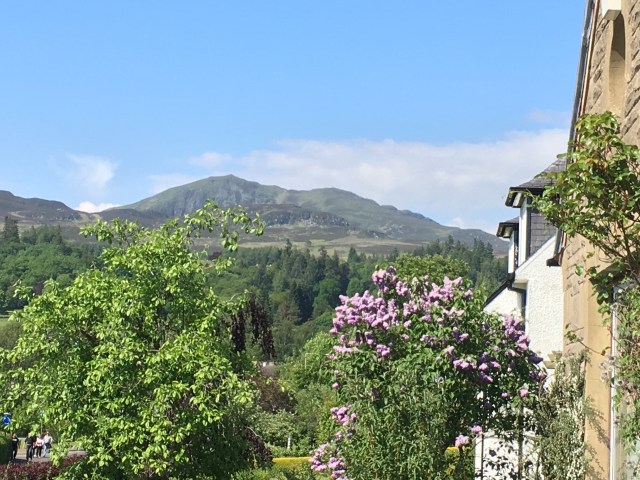
I do not know whether this is an “official” title but I could easily call Pitlochry the gateway to the Highlands. In that regard, it is not unlike Calgary, who foists herself on the Rockies by means of the foothills. Similarly, Pitlochry is nestled in the ever-growing hills, poised in stately fashion beneath Ben Vrackie.


McLaren's 2.jpg
Ben Vrackie as seen from the front yard of our friends’ home in Pitlochry

From here I ventured north to Dalwhinnie through the swelling hillsides of scruffy reforestation in the Grampian Mountains. It lies on the western edge of the starkly beautiful Cairngorms. Then, on to Invergarry, a stone’s throw from the southern tip of Loch Ness, through lonely miles on tiny roads we in North America might call glorified driveways.

Into the Highlands 10.jpg
Into the Highlands


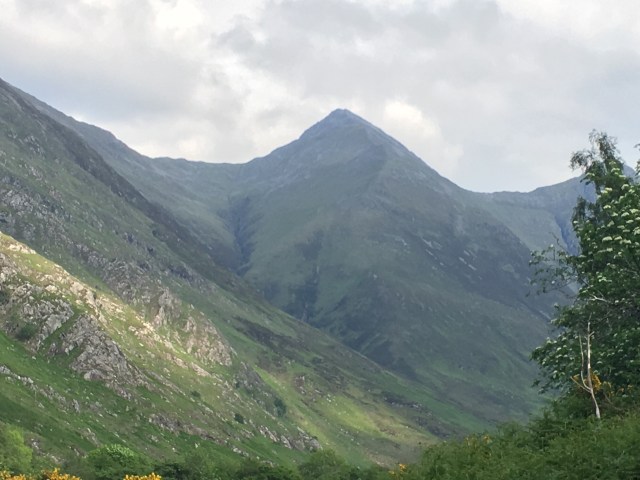
At Invergarry one has options. To head northeast is to travel along the western shores of Loch Ness toward Inverness or, as I did, head northwest past Eilean Donan castle, the Five Sisters of Kintail, and Glen Shiel to cross the Skye Bridge at Kyle of Lochalsh.

Into the Highlands 11.jpg
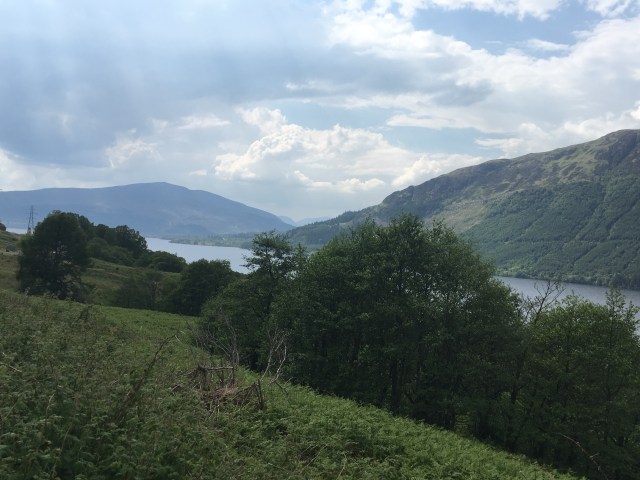
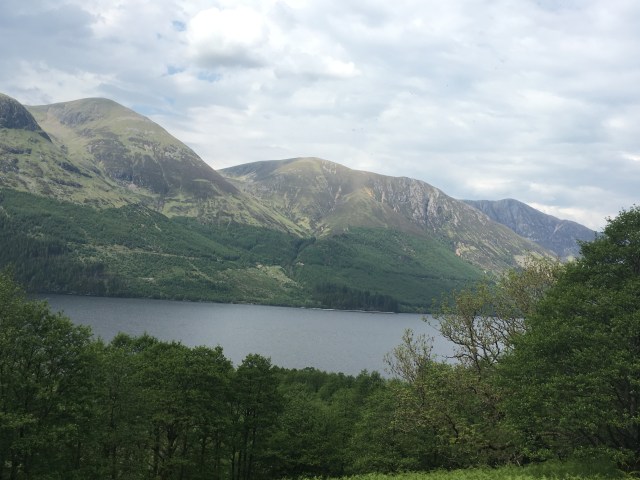
Lilting heights grace lazy lochs

The multi-shadowed, green-velvet Highlands rise to dizzying heights as one approaches closer to Skye. As if it were possible to find any other choices of green, they offer more than their fair share of the same. Countless tufts of yellow Gorse, also called Broom, grace these sloping giants. That, and a sense that the light playing upon the mountains is really the presence of sinister ghosts from Scotland’s bloody past.


Into the Highlands 28.jpg
Near Kyle of Lochalsh

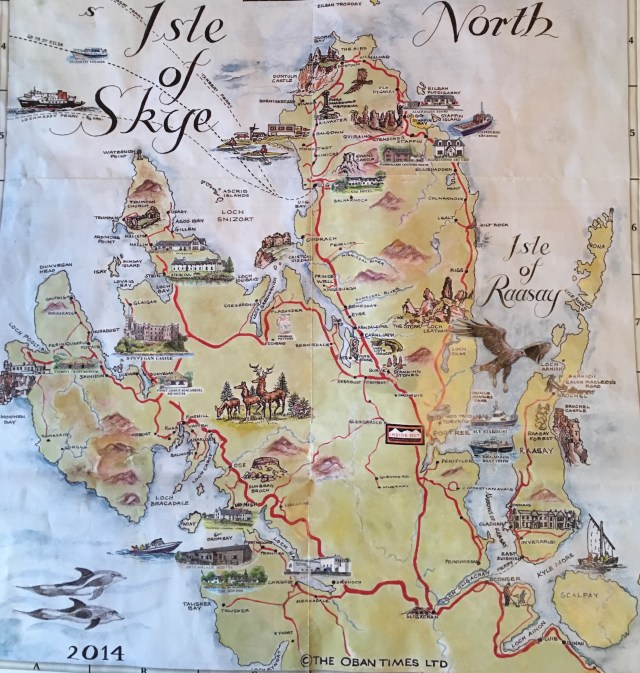
Skye is one of the more sizable islands off the west coast of Scotland with many secrets and much scenery one might not see anywhere else. It was one of a number of hiding places for Bonny Prince Charlie when fleeing the English, bent on his demise. Because my experiences on the island are many and complex, another post or two will be necessary to unpack them.

Isle of Skye Map.jpg
My tourist map of Skye

Suffice it so say, I have felt the spiritual topography of my soul humming the well-sung songs of Scotland as I enter the realm of fairies, goblins, and fiercely protective highlanders wielding overly large swords.

These days of exploration offer more than their fair share of soulish considerations. We have in mind what we most want to see in ourselves. Road leads to hill leads to loch leads to yet other roads. And, all the while, we journey without fully knowing what comes around each new turn.

What I can safely say however is it is all good. It is all very, very good.

“Trip to Bountiful” – part 7

Edinburgh writing haunt.jpg
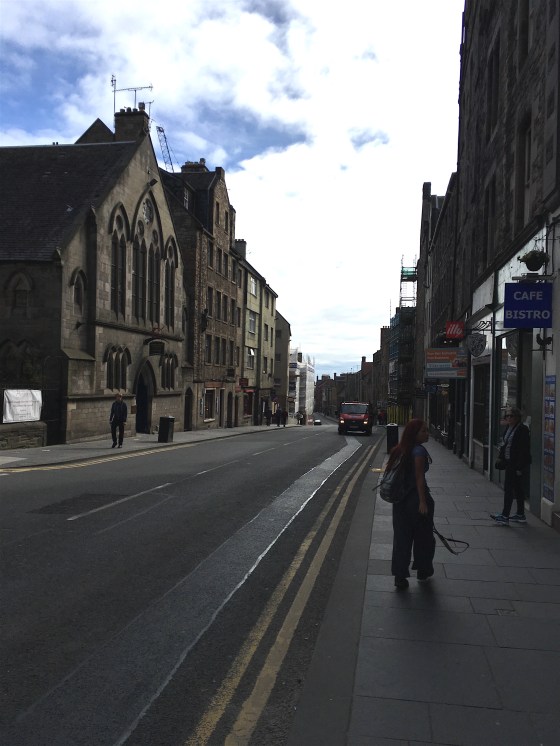
Downtown Edinburgh, from whence I wrote this piece

Block after block of grey, stoic flats flit past to converge with still others in a parade past my train window. An aging reflection gazes back reminding me I need a haircut. The broom-covered, volcanic hills stand guard against a broadening horizon of uncommonly blue Edinburgh sky, and I am pensive.

My wife, as I have described her at least, is a tempest in a teacup. Actually, human hurricane was the term as I recall.

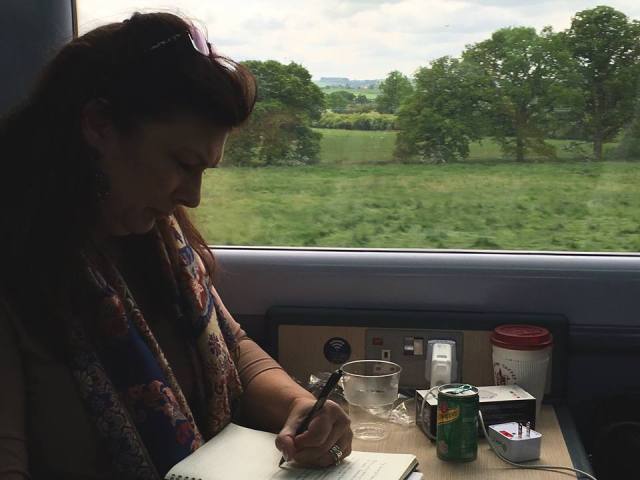
Rae writing on the train to Wales.jpg
My wife and fellow partner in words, curiously quiet

She is the poster child for extraverts, an off-the-charts go getter with a zest for life and love for adventure. It’s fun but rather exhausting! I accompany her downtown from Brunstane to Waverly Station where she caught the morning train to a writer’s retreat near Bath.

After seeing her off, I indulge in another quick jaunt up Princes Street. I trip into a trendy Edinburgh café (there are gazillions) for a third, perhaps fourth, coffee and obligatory Facebook check-in. James Blunt sings to me through café speakers, “how I wish I could walk through the doors of my mind; hold memory close at hand, help me understand the years.”

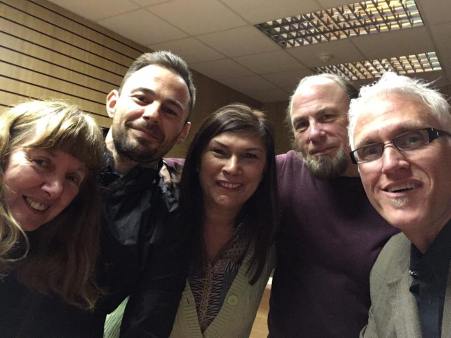
We’re well past halfway in our 2016 “Trip to Bountiful.” A journal and a full heart loudly pester me for a few reflections. At a reunion party last evening, my wife and I were reminded how central relationships are in our lives. Many photo albums and now an iCloud full of photos give evidence of a full life, lived fully.

But, although places and experiences fill much of our memory hard drive, it is the faces of those whose voices still sing loudly in us that best help us to “hold memory close at hand.” It is they who can most capably help us “understand the years.” 

In another post, I share some thoughts from the tale end of our time spent among the good people at Granton Baptist Church, Edinburgh.Granton Baptist.jpg

Scarcliffes.jpg
Pastor Andy, Moira, and Adam Scarcliffe
Grant Cunningham
Grant Cunningham
Fiona Aitken.jpg
Fiona Aitken
Joan Cunningham.jpg
Joan Cunningham

There is much I could say about the few months spent among these dear souls. To do so would require some fierce self-editing. First, because our memories are many and detailed. But, secondly, because we weren’t always the best influence despite our lily-white, suburban-Canadian, preppie exteriors.

Life is handed to us often in haphazard basketfuls of beauty and complexity and chaos. The best bits are those we live by accident, the unplanned moments of grace which splash upon us, baptizing us in their freshness. We can no more execute them than plan for them. They simply show up and we do the best we can with what we’ve got.

Stephen Scarcliffe and Angela.jpg
Stephen Scarcliffe and his girlfriend, Angela Murray (oh, and Nookie!)

Like the time my boys’ group talked me out of Sunday School in favor of a football game (soccer to North Americans) at the park. It was an effort requiring a lad or two to be stuffed unceremoniously in the boot (trunk) of the car for the journey.

Perhaps the time my wife and her coworker decided a girls’ sleepover the perfect time to discuss procreational geometry to middle school girls with the aid of balloon phallic symbols? Perhaps the seaside games night in which my wife and I, so exasperated with each other, shouted “fuck you” in the presence of innocent, Baptist kids? The rest had long before given up and were shoving each other into the sea. Perhaps the time we danced at a church-wide ceilidh (party) and a young boy affixed himself to my leg all evening and wee Calum became the namesake for our eldest son, now 25.

Yes, all these and many more besides provide the yellowing pages of our memories. These folks have shaped our lives, glutted our hearts, and colored our memories. And so we find ourselves back here in Edinburgh at a café get together arranged for the purpose.

We may have been the ones to uproot and replant for a time at 73 Inverleith Row in the land of bagpipes, blood pudding, and pasty skin, but it is they who have walked us through the doors of our mind, holding memories close at hand.

And, yes Mr. Blunt, most definitely have they helped us understand our years. More than they will ever know.


“Trip to Bountiful”- part 6

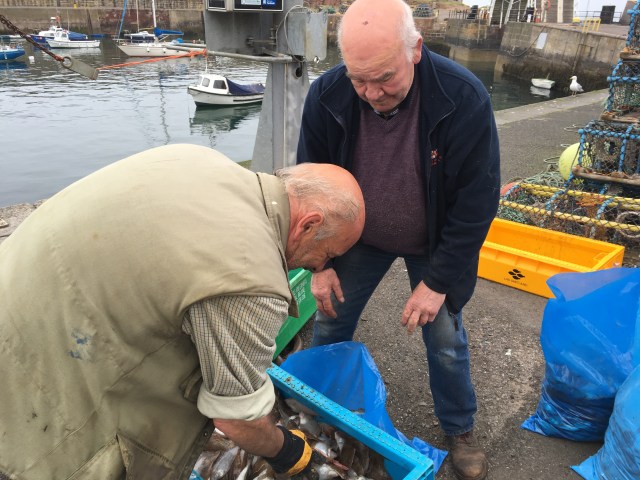
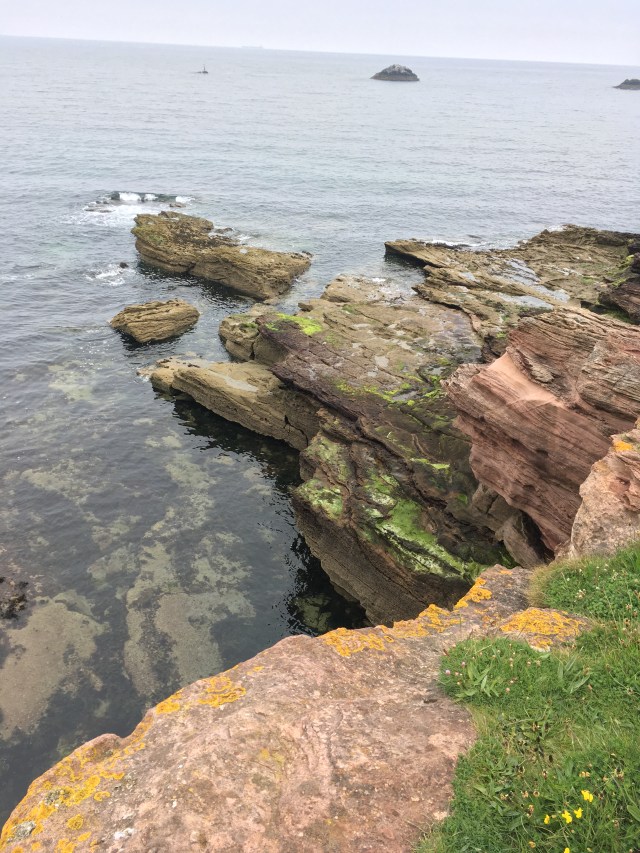
Dunbar Harbour. A tiny nook of land nestled tightly against the North Sea. The horizon shoulders in equal measure a ghostly, white mist and the slowness of morning sea. Waves of amber grey taste the red rocks of Scotland’s southeast shoreline. And the timid shores trade their sins for the secrets of the deep, betrothed in waves of forgiveness. Pink-cheeked seamen toss buckets of fish as bate into lobster traps readying for the day’s catch. There’s a sharpness to this low tide air, the sea’s pungent reminder of her abiding presence.

Dunbar fishermen.jpg
Fishermen in Dunbar Harbour prepare the lobster traps

A lit-geek to the core, I doffed my book-bag complete with eyeglass cleaner, multiple writing implements, not one but two journals, half a dozen books and of course, my laptop. One always hopes the effort of lugging around an extra twenty-five pounds of geekery will pay off on some seaside park bench. Thereupon will I compose the next great American novel or T.S. Eliot’s long awaited Fifth Quartet, or even just the sequel to 50 Shades of Grey.

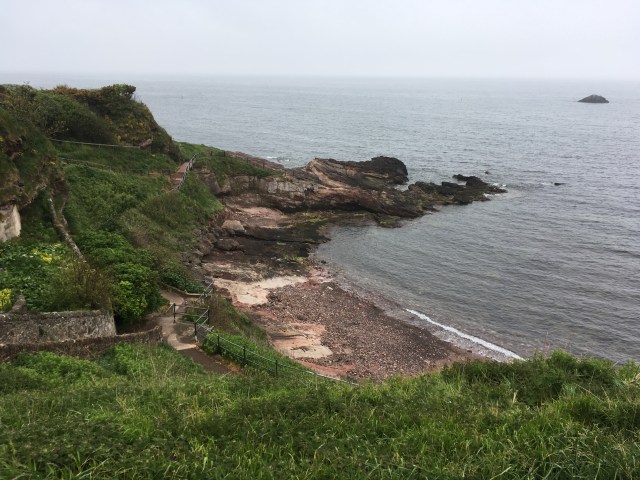
Instead, it became a large security blanket that added beats per minute to my heartrate and a rather sore neck. That said, my own journey this morning included a leisurely stroll beside these kelp-lined shores. I saw an interesting strand of beach to my right, southward down the coast and began walking in its direction.

A few steps in however and I glanced back. My view was given much better capital in the other direction. So, I redirected myself and walked northward through the ample streets lining the shore. It was to provide some rather rewarding eye candy and even more soul food.

If God is my father, the sea is my mother, and Scotland her teat upon which I gratefully suckle. In all my yearning for a sense of harbour – a deeper certainty of my soul’s DNA – these moments come closest.

Dunbar Harbour 4.jpg
A rocky beach

So much of life is lived in a sea of perceptions. A few of those are based on reality. Some are not. Like this morning, they come upon me by way of hint, innuendo, suggestion. They leave the potential of other things yet to come. It is the gentle, sideways life that doesn’t leave me breathless, but simply curious.

Dunbar Harbour 13.jpg
Walking along Dunbar Harbour walkway

At other times, without warning, I find myself stranded on a tiny isthmus that is no guarantee that I won’t be swept away in the insistent, foaming anger of my changing tide. Either way, it is how we must all live.

Our perceptions of the world are, for us, what really is, in spite of what may actually be true. This sneaky truth is the reason why we must always be in pursuit of whatever is true, or good, or noble as St. Paul suggests in his letter to the church at Philippi.

Dunbar Harbour 17.jpg
The North Sea as seen from Dunbar Harbour

I’ve been to these shores often enough to recognize the layers of what I see. There is the Scotland of history, the one with sharp wounds cut deep in her skin of stone. There is the Scotland of my imagination, the mythology of Celtic knowing and bardic mysticism.

But there is the Scotland that just is. It is traffic horns and coffeeshops and Tandoori restaurants and cell phones. It is a collection of wiry old sea dogs, self-absorbed businessmen and dark-haired, haggard looking moms. It is a clash of class, struggle, and culture like anywhere else.

Mostly, like everywhere else, it is a place where people simply live.

And, it is this discovery that has blessed me on this trip more than any other. Any of my previous fanciful notions of the place have been chipped away. What remains is an unadorned appreciation for what my senses perceive. And, in fact, as I am further removed from any need to either sanctify or romanticize it, I receive the deeper gifts available from just keeping my eyes open.

Well, either that, or I’m finally adulting (at 52!).

These moments help escort me away from the rocky shoals of misperception that are so damaging. And, even as the healing presence of Scotland’s broad sea, green vest, and briny aftershave grace my steps this afternoon, I can internalize all this to take with me when we return.

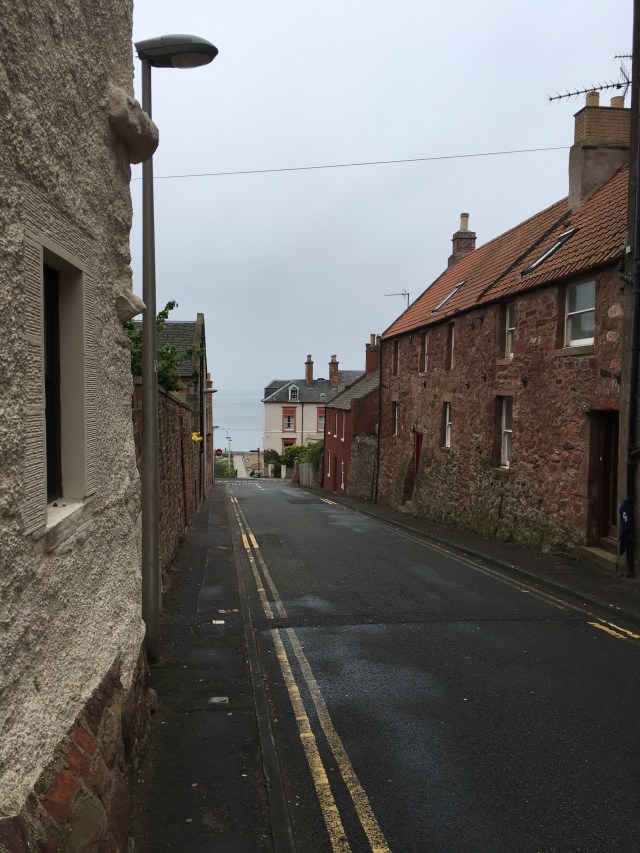
Dunbar.jpg
Street leading to the sea

The deftness of wind, strength of stone, and the broad belly of sea will speak their secrets in my lesser moments. I can share what I’ve heard of God’s voice with the dear souls to whom I return.

And, when the unforgiving summer sun in Yakima valley steals the breath from my lungs, I can put in its place what I have today experienced. Perceptions can, for a moment at least, be what is true.

And in that moment, the truth will set me free.

“Trip to Bountiful” – part 5


My writing perch Ambleside.jpg
My writing perch this morning, Ambleside

August, 1989. My wife and I were the grateful recipients of Scottish largesse and enjoying a robust, five-course meal at Edinburgh’s George Hotel. The meal was spectacular. The entertainment? Lounge cheese. Nevertheless, down went venison, roast vegetables, fresh salads of varying kinds, nips ‘n tatties, roast beef and, of course, haggis. We were by far the youngest at our table, mere months after celebrating our first anniversary on Culloden Moor. It was pure magic.

I suppose this added a bit to our sense of naïveté and childlike wonder. We had just completed our time at Granton Baptist Church, Edinburgh as youth ministry “missionaries” and were spending some ramble time in the Highlands and England. We were, as a result, the wrong people to hear the travesty of screw-the-world chest-puffing comments that followed.

Seated across the table from us were two of the most arrogant ass holes the world ever produced. God was in the toilet when these two popped up whole out of the ground somewhere. The husband made the ass-tute observation, “aaah, ya see one cathedral, ya’ve seen ‘em all.” Delightful. She went on to add, “good Lord, what a California developer could do in the Highlands. Glencoe absolutely needs condos.”

As I suspected, your reaction was the same as mine.

The Lake District 11 copy.jpg

Lake District 6 copy.jpg
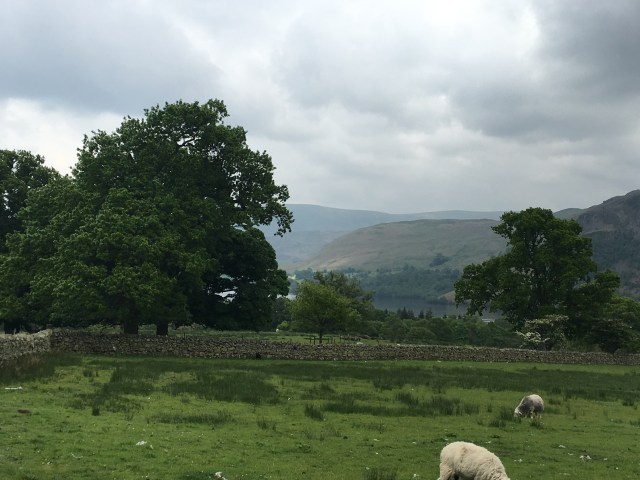
Grasmere, in the Lake District

I breathed in deeply trying not to portray my disgust, wondering to myself why it’s necessary for some people to reproduce when this is the best we can get. I consoled myself with the fact that they’d die before their time. Okay, so maybe I only thought it. I repented (kinda) and moved on.

In the lifelong pursuit of all that I’d call ‘home’, deep in the stone guts of a thousand-year-old cathedral or castle somewhere in Britain is as close as it gets. Even as a young boy my predilection toward all things old and musty presented itself regularly. This was constantly disappointed growing up in Canada. As deeply Canadian as I am, it was still never old enough to satisfy my longing for anything older still.

As I write I do so in a corner window overlooking the high street in Ambleside, one of many perfect Lake District towns. It is made to order for writers. It’s not much of a stretch to imagine why that has been the case for so many writers (real ones, that is): Beatrix Potter, William Wordsworth, Samuel Taylor Coleridge. It has inspired countless others since then, Shelley, Keats, and Robert Burns, to name but a few.

Ambleside 11.jpg
Near Ambleside

My point is, to find the deepest reserves of one’s creative and spiritual taproot, one must be willing to explore and discern what that actually means. The whole point of the spiritual enterprise is to be ‘home’ everywhere. It is to be completely comfortable in all places at all times under all circumstances. Says St. Paul, “I have learned to be content in all circumstances.”

My wife and I have come to Britain for a host of reasons. Hers are similar but different to my own. I am here to reconnect with my spiritual DNA. My helix is uniquely interwoven with that of the ancient, storied hills of Scotland. The latter part of our journey allows me some alone time, with the rental car, in the Highlands and then to Skye. I shall suffer this unbearable burden with God’s abiding strength (stupid emoticon here). I shall also offer more pontifications then.

Until then, I pray you never suffer the indignity of meeting the toilet-water-buffoons with whom we shared a table in Edinburgh.

“Trip to Bountiful” – part 4

The view to end all views.jpg
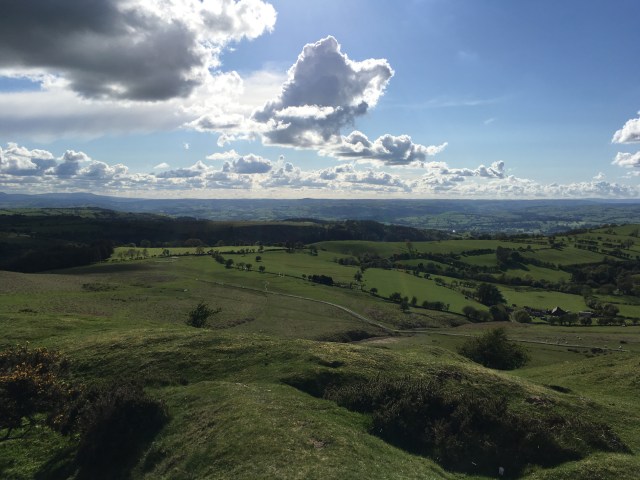
Hay, Monmouthshire – the view I’ve been waiting for

I have, for the first time, truly experienced the devastating wonder that is Wales. It is as though God made Britain first and then, everything else from spare parts (not that I can speak from context, or experience, or knowledge of any kind really). From the broad-shouldered Brecon Beacons, to the literary orgasm that is Hay-on-Wye, the city of bookshops.

Hay-on-Wye bookstore:cafe.jpg
A bookshop. A café. In Hay-on-Wye. What’s not to love?

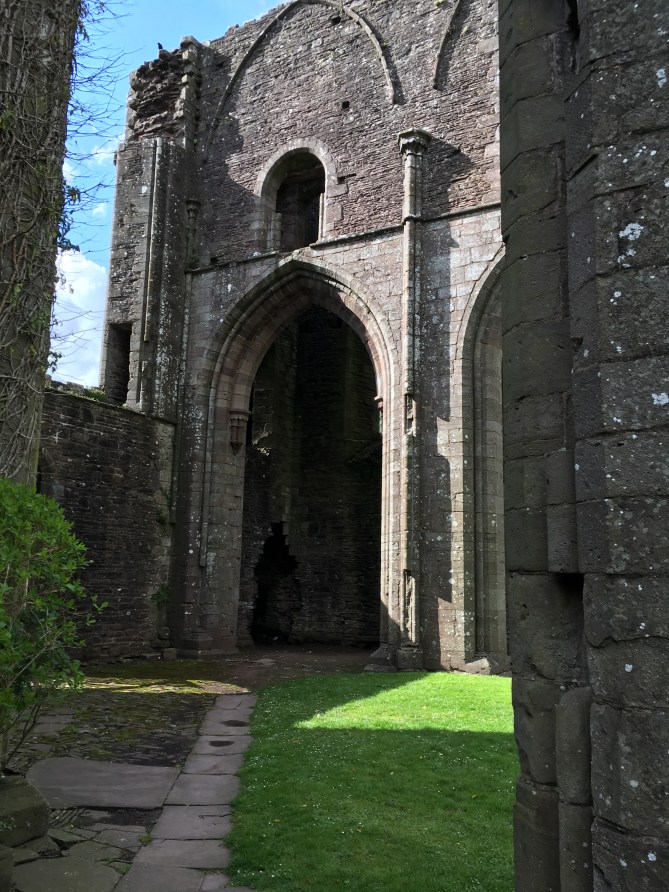
From the Cistercian monastery ruins at Tintern Abbey to equally haunting and beautiful Llanthony Priory. From the seaside riches of Harlech and Llanbedr to the rough ‘n tumble Dolgellau.
From a fifteenth century teahouse in Ty Hwnt I’r Bont near Llanwrst to Snowdonia National Park in Beddgelert, Wales is a place of countless treasures. 

I’ve been here before, but not this close to the bone. I’ve learned what it means not just to drive a car but navigate it like a big ship through a tiny canal. I’ve heard horror stories of those possessing significantly superior driving skills to myself pissing themselves from stress on the very Welsh “highways” I’ve just driven. Now, to be fair, I changed before writing this and how would you know anyway?

More Welsh countryside copy.jpg
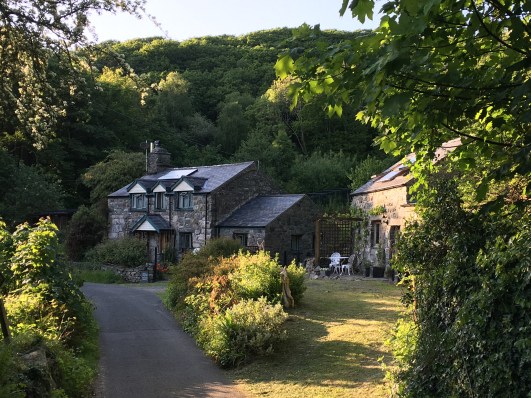
Beudy Bach, our perfect stay in Llanbedr, near Harlech

In addition, to drive a car in a place so utterly complex is to forego any certainty of directions, ETAs, the logical movement of traffic, expectation of driver largesse, and frequency of toilets. Throughout the UK, the puritan American spirit must learn to contend with the lack of excretory euphemisms.


Llanthony Priory 18.jpg
Llanthony Priory


A tiny thumbnail of a country it boasts as long a history as anywhere in Europe. Today, we said goodbye to Wales, and find ourselves in another enchanting part of Britain – Ambleside, in the Lake District. We stop here to catch our breath, drink a ton of coffee and write.

In the days that follow, our travels will take us east and north to Dunbar and Edinburgh. The deep connection I have to Scotland will require a host of other blog posts. Hence, for now, with Wales in our rearview mirror, I think poetry is the only song that will work. I hope you enjoy, and thanks for joining us on this ride.

Down in the throat of Wales

In the throat of Wales,

where light is sparse, then it is best.

This land of green trousers with grey hat,

hair coiffed in bluebells, tulips,

and yellow daffodils.

She is held in frames of arbour, where bristle-faced hills

are bred for poetry – Coleridge, Thomas, Wordsworth.

Down in the throat of Wales.


In the throat of Wales,

we pass the standing stones, God’s elder brothers,

and their eyes follow us.

Rain falls like sweat from the coal miner’s brow

while praying hands of hedgerow herald peace on every side.

A bleating sheep choir beckons eyes up to the watching hills.

Down in the throat of Wales.


In the throat of Wales,

down, down the Brecon Beacons beckon, swallowed down

where the green things live – down in the throat of Wales.

At the Blue Boar Pub, regulars and weekend

intellectuals hold out town secrets.

Practiced tongues wag in dark corners, breathing out suds

and gossip and recycled stories with fresh laughter.

Down in the throat of Wales.


In the throat of Wales,

at Hay-on-Wye – these streets are full of pages,

ten thousand dog-eared voices

tucked away on shelves and tables,

under arms and coat pockets.

American streetlights bow to clock towers, cheery pubs,

and weary stones. Long-drawn lines of primogeniture sing

the songs everyone still knows. And, the many-throated

happy-hour jubilee of a thousand years gone by

still steeps in the glow of candles,

wine-bright eyes, and cell phones.

Down in the throat of Wales.


In the throat of Wales,

the hills stand guard, where stone and memory bleed

the colours of the ancestors,

drawing their long and bloody shadows over Beddgelert.

The River Colwyn, host to muddy boots and hooves and paws –

I pause to imprint her banks of sleep.

Down in the throat of Wales.


In the throat of Wales,

Harlech’s stiff-shouldered castle juts out a jarring face

into Cardigan Bay, catching salt kisses

blown from the cold, grey sea.

Oh, where to wander in this wild and brooding land,

where friend is stranger – stranger, friend –

and all that ever wrung true hangs tightly

to the soft skeleton of a land made

from the stoutest stone, the strongest sheep, the swollen stories

of hearts that glow brighter than the smiles of children?

Down in the throat of Wales.


In the throat of Wales,

I place my ear next to her breast

to hear the consonantal tongue

make love to songs as old and wise as she –

where still, of all sad souls,

the blind man is poorest.


Down in the throat of Wales.


“Trip to Bountiful” – part 3


13238898_10208106960346130_397416527787693528_n.jpg
Rae and I on the train to Wales

Here, in the lavish, lazy valleys of South Wales one can smell the old, taste the green. To the mystic’s palette it is chateau briand for the soul. The harmonious voices of stocky, Welsh coalminers blend with the buoyant tongue of an ancient language to stoke the most experienced fires.

Too bad they drive like shit. Well, one can’t have everything.

Our brief foray in the UK takes a turn from the sleek, overly preened mien of London to the clumpy, sodden town of Newport, Gwent, South Wales. It is a place as equally devoid of panache as it is pretention. The people are as unremarkable as they are genuine. Note to self: read that line again later.

River Usk.jpg
The muddy banks of the Usk

The River Usk upon which this town is built looks like one long bowel movement running through the center of town. To hear them speak with pride for something so utterly un-notable is in equal measure quaint and unnerving. The last time we were here a few years ago, I joked with my wife, for whom this is her birthplace, that Newport was the only ugly place in all of Wales.

Beyond the obvious revitalization enjoyed by this city, I repent of such ignorant, North American bluster. Besides, the passing years have replaced my previous eyes with new ones. I see now something quite different. The grey, spongy demeanor of the place is easily eclipsed by a deep and knowing spirit – a kind of relaxed ennui, without a hint of self-pity.

I must learn from this.

When the soul moves past its incessant need for the spiritual X-factor, it then can see the better coal beneath the monochromatic surface of its own shallow intentions. The beauty of Newport isn’t found in its breathless joie-de-vivre, the jaunty rollercoaster of soulish affixations we often call spirituality. It is somewhere down under. It lies beneath all of that, in the bedrock of older soil breeding nourishment over luxuriance.

In exploring here, I am struck by how difficult it is to amuse the over-stimulated American psyche. By contrast, the British are delighted by small pleasures. The sheer joy of a few hours before the fire with a stiff cup of tea, a biscuit and conversation is all they require to feel human and whole. As our spirits chase after ever more lusty extravagances, Newport reminds me that the best things come in the unbidden grace of simple, genteel moments.

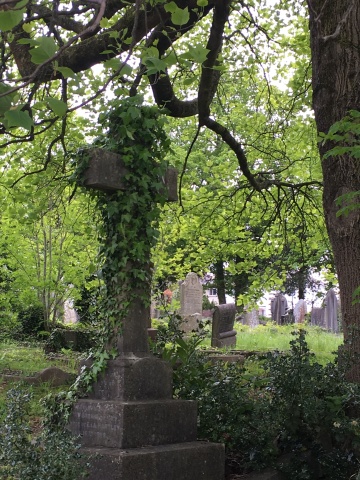
Cemetery 3
A visit to the St. Woollos Cemetery

Today, I am a tourist in the most non-tourist town I’ve yet seen. Better still, I’m a pilgrim where once I was a tourist.

And, I am seeing the beauty that lies beneath.


“Trip to Bountiful” – part 2

As endless underground tube stops, countless footsteps to and from every possible sight, packed unimaginably into what amounts to an hourglass on my wife’s schedule I am, of course, café bound. Two very full days of touristing the hell out of London with a view to advancing my wife’s novel descriptors has left me washed out. She’s a veritable whirlwind in a thimble, a human hurricane of never-ending activity and world-wonder.

My wife, the human hurricane.jpg
My wife, the human hurricane

As a self-described artsy, bookish mystic, I’m sure you understand my reasons for writing. Besides, I’m sure she’s glad to be rid of me for a few hours. Who needs a needy poet on their back when there’s a world to conquer?

The morning started with a leisurely walk along the Thames through, first, an industrial district and later, through rows of prim, stately flats. Every time I see the Thames I am instantly reminded of how contextual our histories are. To hear Londoners speak of “the mighty Thames” after having lived beside the Columbia for a few years is quaint to the point of hyperbole.

It is however a river that has seen more history in a lunch hour than many others in their long, sweeping careers. At once lazy and overworked, her rippled, brown back shoulders international industry and commerce hard to rival.

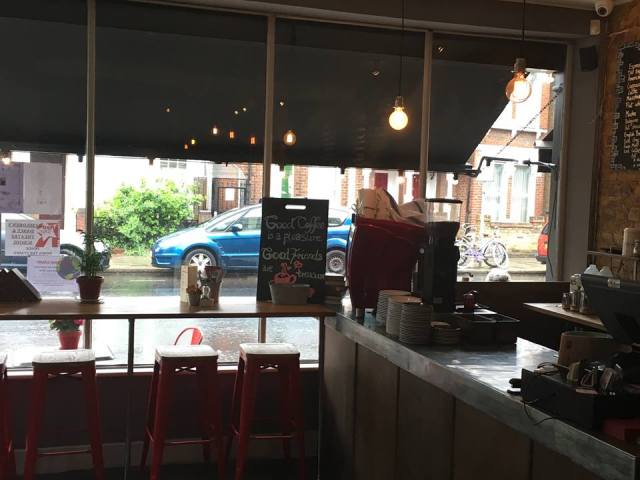
It also makes for a lovely morning walk; a walk that has landed me in this very café.

Putney Cafe.jpg
The Putney Café, Wansworth

My wife’s novel, now on perhaps its fourth title, provides much of the backdrop for this journey. She began writing this story almost four years ago. It has gone through many iterations, edits, rewrites, lapses – a great working metaphor for our lives generally.

As described in my first piece of this series I am here for reasons hard to name, hence the elusive title of “Trip to Bountiful.” If ever a story points well to the Celtic idea of hiraeth, it is this one. Contextualized in twentieth century Houston, it is in many ways a timeless tale of escape from an unpleasant present to the friendlier familiar where one hopes to find a reality more amenable to the longings of the heart. It is both escape and discovery. It is reality versus perception of reality. 

The broken places of my present seek out the healing that can come from places connected to my psyche even deeper than my own short history. In the play, an aging Carrie Watts, living unhappily with family, dreams of escape from a claustrophobic Houston existence back to spacious Bountiful where she was raised. 

The longer I explore this idea of ‘home’ and ‘longing’ and ‘be-longing’ the more I am skeptical of easy answers. The incarnational realities of daily existence in our physicality are demeaned by an over-spiritualized romanticism. We are a rooted people. We have a ‘where’ as much as a ‘why’ or ‘how.’ Conversely, the unnameable yearnings resident in every soul are never fully realized by placement in easy familiarities of youth and proclivity.

As ‘hiraeth’ suggests, we may at once long for what can never be again. But, as the even broader, more pervasive gospel narrative insists, in Christ we are everywhere, fully, ‘at home’ – even as exiles in a strange land – the often stifling realities of temporary displacement, geographically or otherwise. 

Hence, even as I gaze out the window of this quaint café onto the rain-washed streets of London I do so sad that I must soon return to a familiar geography with an unfamiliar spiritual DNA, but do so completely happy.

Besides, it’s raining, and the coffee’s good here.

“Trip to Bountiful” – part 1

mobile_h_photo.jpg

The words I’m about to write are the first I’ve written about this. Not because I am ashamed of it. Nor am I trying to hide anything. Quite simply, I’m still trying to understand it all.

I had an emotional breakdown early in the new year. I hit a wall that would have intimidated Goliath. I was wiped out, gutted; truly at the end of my emotional capital. I laid curled up in a ball, weeping uncontrollably on a hotel room floor, a tsunami of thoughts raging in my skull. My soul was in a vice, and my interior life was squeezed beyond recognition.

Quite simply, I had nothing left.

In the middle of that I received a text from a close friend and colleague. Rather cryptically (and not without humor), it said, “what the f**k is up with you? I keep getting woken up to pray for you.”

Okay God, you have my attention.

In the space of an hour, I went from despair to utter calm. The room remained dark and cheerless. My soul however felt swept somehow. Not elated. Not blissful per se. Just quiet and pensive. I was for the first time in distant memory, without anxiety. It was a state I would enjoy for about twelve days.

And, although the anxiety would return, in the window of time gifted to me I made numerous life decisions that have offered great riches ever since. What I discovered in that time was remarkable. When anxiety is removed one becomes surprising lucid, focused, confident, and decisive. 

I put my ordination process on hold. Ordination is the right decision. It’s just the wrong time. I removed myself from a number of writing projects, if only for a time. I gave up my music students (shamefully, I only teach for the money anyway). I felt a desire to perform more often and to dig into gardening (the pun is easier than the gardening). I had an overwhelming desire to turn my sights toward fixing things around our home. I saw more clearly the necessity of relationships and the blessing of stability (thank you, St. Benedict).

Most importantly, it became clear to me that I must join my wife on what was originally her, not our, vacation. 

By God’s grace and if the creek don’ rise, my wife and I board an aircraft for Britain on Saturday evening. It’s been twelve years since we last stood on this sacred ground. The archaeology of our lives readily reveals itself at these moments; moments ripe with joyful anticipation, with curiosity, small misgivings of varying kinds, and simple impatience.

2016-03-26 16.32.40.jpg
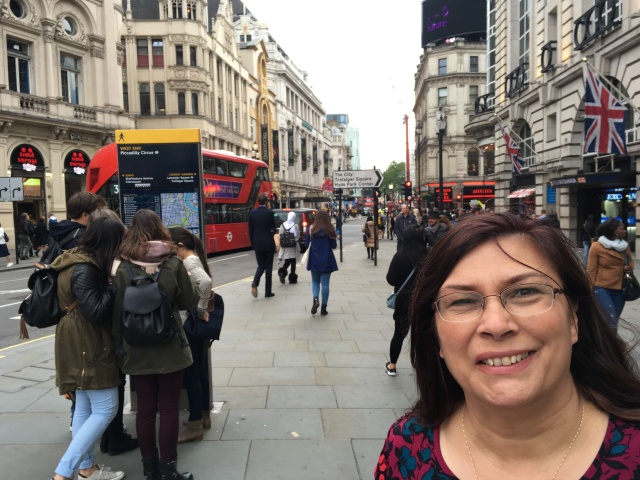
Rae and I

We are grateful in such deep ways. We are aware that as we depart, we do so with people and responsibilities we leave behind. In God’s loving hands they are held. But, as everyone knows, the best thing to fix a computer is usually a simple restart. Although we go for different reasons, my requirements are 1) to flush my mental hard drive, 2) to restart my emotional computer, 3) upload fresh life experiences to enhance my spiritual monitor, and 4) set foot again on holy ground.

Ultimately, I am unsure what all of this will mean to me, to us. But, I am a man squarely in a mode of rebuilding my mental-emotional infrastructure. May God have mercy. And, may God go before us on this, our trip to bountiful.

Pix found here and my iPhone!


When pages turn…

Hirst, Claude Raguet-553332.jpgWhen it comes to the spiritual enterprise, I’ve always found delight in the iconic metaphor of wandering. My best guess is that it most capably represents my propensity for being lost in places even blind people navigate with ease – a hallway to the bathroom, the distance from upright to nosedive, or retracing my steps from mall to parking lot. 

It has found its way into my songs for years. 

There are innumerable metaphors employed by the writer’s pen to describe transition, or passaging, as I like to call it. We “turn over a new leaf” or perhaps move from “night into day,” “turn on a light” or some such thing. Such metaphors reach for the deeper comparisons within us between what was, what is, and what is yet to come. 

But this is different. Wandering isn’t the right metaphor here. This feels less like seeking something out than coming to terms with what is; a new normal. In that way, it is more the turning of a page in a book with more chapters read than yet to read. 

I begin with a few words I wrote upon turning 50 a couple years ago:

“Our lives are a series of passages. One tributary leads to another, which in turn yields to something else on its way to waterfall or harbor, estuary or eddy. At times we are stuck, unmoving. Or so it seems. To be stuck can actually be a decision not to decide something. Perhaps it’s a slow, deep spot before being sucked back out into the rapids where we easily lose our sense of direction and the not unreasonable expectation that we’ll fly ass over tea kettle into the frothy spray. There are even times when our boat slows almost to a crawl and we find ourselves in the enchantments of a Pirates of the Caribbean style rendezvous with delight.”

In the chapter that is my work at Yakima Covenant Church, specifically with friend and colleague Duncan A. MacLeod, a page has turned. A new estuary has emerged requiring caution and intentionality, things I am not always known for. Like me, he too is passaging, seeking to ford new streams of possibility with their own risk and reward. He is writing a new chapter in a book yet unfolding (and a rather smelly, farm-y type one at that!). 

“Whatever the case may be it should be our goal to passage well. That is, when faced with life’s bone-chilling decisions, we learn to listen for the most gracious, compassionate means by which to navigate such. Bad transitions lead to less than adequate skills needed for the yet more difficult passages to come. They also create a sinkhole of insecurity since we’ll just have to face similar rapids again later but with one more failure to our credit….I want to say goodbye well, with class, grace and compassion. A goodbye that puts a Gospel period at the end of a glorious sentence.”

Learning to passage well has many rewards. Fewer regrets I suppose might be one. But, more than that, in the ever-expanding journal of our meandering lives, a clarity of chapter markings brings a satisfaction to the sojourner of adequate closure before moving on to another part of their story. It expresses a sense of poise and, ultimately, denouement to our lives that those whose eyes watch us for signs of the Divine are longing to see. More than anything else, how we transition through the passages of our lives reveals the level of our trust in the unseen God making Godself seen – through us. Through you. Through me.

So, then, with the same trembling, inadequate faith with which I’ve typically faced these passages, I do so now once more. Who knows, perhaps this time I’ll have matured enough, even sub-atomically, to the point where I can help lead others in the same challenges?

But, then again, that would be faith in faith, not in God.


Picture found here


A Piper Toots His Own Horn

For forty plus years I have submitted myself to being assaulted by a screaming five-legged octopus wearing tartan underpants. To the lay person – I am a bagpiper. It is, under any circumstances, an instrument that, like a crying baby on an airline (or me), demands center stage. It is a sound that captured me even as a boy of seven years old.

Calgary, 1971
I grew up in a tiny bungalow in Calgary, Alberta the adopted son of a brewery worker and his wife, my mother. As I, along with my younger brother and sister, continued to grow, it became abundantly apparent that our consistent brushing of shoulders would only lead to heartbreak. My father set about building me a bedroom in our not-quite-finished basement. For some fifteen years to follow it would be my sanctuary – my monastery – the place where I found music, booze, girls (keep that bit a secret, they only know about the first one), and years later, Jesus.

The spring before my eighth birthday I moved in. Kismet. Changing channels one afternoon I happened upon a presentation of the Edinburgh Military Tattoo, filmed live at Edinburgh Castle. It is an annual display of pomp, circumstance, bright lights, booming cannons and bagpipes – lots of bagpipes. I was hooked. I begged my parents to let me learn to do what I had just seen, but thought I had dreamed.

A love affair had begun.

Christmas, 1974
All other parcels had been destroyed and gutted of their contents by panting, over-wrought children. My Mom turned to my Dad and asked, “is that everything then?” (Oddly, in recent years, we’ve found ourselves performing such non-Shakespearean works with our own children…sigh). They went into a bedroom and reached under the bed, pulling out one final, unopened, present. As kids do, I skinned it in seconds only to discover contents that set me reeling (no extra charge for the bad pun) for an hour afterwards.
I owned my first set of bagpipes.

Okotoks, Alberta, 1992
Those bagpipes became a close friend. Extensive traveling, piping for dignitaries and royalty, numerous television and radio appearances, and two piping albums later, and our lives found us church planting in the urban-cowboy sleeper-community of Okotoks, Alberta, south of Calgary. It was idyllic. Rae worked for a local travel agency. I worked as an industrial painter for my father-in-law’s painting company.

As the call to ministry grew too loud to ignore we found ourselves scrambling to get our affairs in order for a move to Vancouver, B.C. where I was enrolled at Regent College. Bills were paid, scores settled, ‘t’s crossed and ‘i’s dotted as we made preparations. In a move I thought noble at the time but which now seems utterly foolhardy I sold those pipes to help pave the way toward ministry and the next chapter of our lives.

I have regretted it ever since…and I never did attend Regent College.

A Serendipity
I have taught for many years at Bagpiping Seminars, Celtic Performing Arts Schools and the like. A dear colleague and one of my best friends is a man named René Cusson. Not only is he one of the world’s great pipers but he is a collector of instruments. Knowing me to be bagpipeless, he selflessly loaned me a set he’d picked up from a garage sale for $75. A keen eye, some research, and a sacred serendipity revealed them to be a rather famous set of MacDougall of Aberfeldy bagpipes probably made in the late 1890s, ultimately finding themselves to a legendary bagpiper killed in WWII.

For 25 years, from 1992 until September of this year, I played those bagpipes.

A Request
René’s daughter, Ceitinn is a champion Highland Dancer. But, as is the case with many purveyors of Highland arts, one skill is never enough. She wanted to begin bagpipe lessons and follow in her father’s footsteps. This of course meant a message to me that, although not unexpected, stopped me in my tracks. He would need those pipes back for his daughter to have something upon which to learn.

The process began of disassembling and packaging them for transport to their home on Vancouver Island. In September 2015, at the Greyhound Bus Station in Nelson, B.C., I said farewell to a comfortable friend and began a life of bagpipelessness once again.

Thankfully, as a piping instructor, I’ve been blessed to borrow student’s bagpipes as required.

Christmas Eve, a Good Time for Miracles
Selling bagpipes my parents bought for me is only one of many regrets. But it’s a big one. In spite of having had a set to play all these years, that memory is not easily erased. And I may yet be a novice in this whole Christian enterprise but I know this much, God delights in reversing the irreversible; in repairing the seemingly irreparable damages of our past.
In Gospel terms, regret is a wasted emotion.

To my surprise, shock, and delight I was gifted with a brand new set of McCallum bagpipes at our Celtic Christmas Eve service this year. Completely unknown to me, pastor Duncan and ??? colluded in a series of conversations and scheming, phone calls and plotting, sideways glances and squishy secrets to research, obtain, prepare, and gift me – publicly no less – with this amazing thing.

Best of all, my Mom and her husband, Sam were visiting us from Alberta, and were present to see it. If anyone knew just how inconceivable it is to play a bagpipe “fresh out of the box” (bagpipes are frustratingly moody and don’t follow directions well), you would understand just how gratifying it was to pipe folks out of the sanctuary with this new instrument!

I’ve played them for hours since then in a mixture of awe, tears, and bewildering joy. To say I am grateful is a woeful understatement. To say thank you just feels so utterly lame.

But let me start there…

___


A gift from dear friends