ligament [lig´ah-ment] 1. a band of fibrous tissue connecting bones or cartilages, serving to support and strengthen joints.
Already a few days in, we butt up against the tail-end of one year and make our way into another. A tail yet to wag. A tale yet to be written. This was a task best left until all the days of 2017 had been fully harvested and I could start bundling them into manageable piles.
For now, I am compelled to say that, in ways that matter most, I am grateful for 2017. On one level, I’m glad to escort its ass out the door, holding it open as it leaves (the door, that is!). However, it is gratitude that wins out over any other, lesser thing. And, as many have said so much better than I, to be grateful is to be always happy or, at least hopeful that happy will return soon enough.
This has been a year of returnings, of homecoming. I am drawn back to previous iterations of my self, albeit with the benefit of failure-bought wisdom. The overweening esotericism of the past few years is moving aside for a much more sensory guy. Less soul and more smell, feel, carry, see…hold.
I’m beginning to think our souls are much more rooted in our feet, hands, nostrils, eyes, and tastebuds than some airy-fairy nexus untouched and untouchable by we mortals. There is no division of labour. We don’t leave the world and our bodies behind in order to attend to our souls. Similarly, in a full-on, head-first dive into our world, waist-deep in shit and woe, we don’t have to leave our souls behind. They’ll get there first.
There is, simultaneously, a greater depth and immediacy to a life lived in one place at a time as a total and complete entity: body, soul, heart; sweat and spit. It buys back from the bleak, divided landscape of dualism, an holistic sense of peace and unity.
I reflected recently Jesus’ little visit to Sheol where he encouraged the prisoners, stuck in limbo, to look up for “their redemption draweth nigh.” A very physical Jesus went to the disembodied not to tell them that some ghostly, spiritual paradise awaited. The opposite actually. A great banquet with Jesus and friends in a great city was being prepared. Their souls would cough up new bodies, not the other way around.
Advent and its fruition at the Christ Mass says something utterly unique, a truth so utterly transfixing, that all the earliest characters in the drama found themselves winging it. Just a lot of gawking, and fear, and shivering with stuttered awe and wonder. In such circumstances, I dare say we would do the same.
The Christmas story says many things. But, at the front of the line is the simple idea that God is, more than anything else, profoundly physical, actual. Not just ideas to think. Right stuff to say or do. God is with us. God IS us. Conversely, it means we are like God.
There are many out there who, like me, are constantly seeking to nurture something mystical and otherworldly within ourselves as though God were somehow uninterested in the messy little details of our tiny lives. This is not to suggest that we ignore “spiritual” matters in favour of “earthly” ones. It is the growing belief that those are not two sides of the same coin. They ARE the coin. God cares as much about my health, relationships, and the overall physicality of my existence as he does the height of my goosebumps when I pray.
In Jesus, God came not to save our souls. He came to save US. You and me. Body, soul, spirit. In Jesus, God came to realign our past, present, and future into one single unity. He religamented (re-ligion) the disembodied and as such disempowered parts of our humanity. Jesus came that we might become MORE human, not less. And, contrary to what contemporary evangelicalism might have us believe, he came not with some revivalist message of the sweet by ‘n by.
He came to heal our bodies, our memories, our broken bits. To remind us of what we truly are: beloved but broken, loved but lost. Why?
I’ve been stung. Poisoned. Nothing flora or fauna. By a book. The Poisonwood Bible by Barbara Kingsolver. It’s got me thinking again about our notions of ‘home.’
Tuesday, December 26th. Boxing Day. It’s strange, just saying those words can produce such intense homesickness. A progressive, Canadian family living in a regressive, Trumpian America. Similarly, Nathan and Orleanda Price and their children, Rachael, Leah, Adah, and Ruth May – in equal measure, a family displaced; a little collective of courage and fear, lived in a world of nothing but frontier. Their only certainties were the uncertainties of daily survival in a world that cared little either way.
Their meager, not even daily, meals of eggs or mash, perhaps some chicken if someone took pity on them, removed any vestiges of the stolen or manufactured expectations as whites in a black world. They were equals among those who typically served their every whim, seen or unseen; an unexpected balance that would save them from their own extinction. Hmm, something to heed here I think.
Were they there because of some high calling of the gospel? Was it their great Christian frontier where, in their own stumbling way, they could add to the Roll Called Up Yonder? Or, was it something deeper, more primal? Were they there to befriend the enemy? To make peace with the devil? With their devils? With their gods? With God?
The complexities of their call beckon me to consider my own. Like the Prices, I am a man equally displaced, despite possessing a shared border and the lack of intermediary ocean. I have asked the question, precariously and ad nauseam, where do I fit? We all do at some point.
With no small shame, I spent an entire childhood fearing and hating this place, giant land of giants. America, the baffling. In my estimation, she never lived up to her own press. But she sure loved to talk about herself, unendingly, all with a suspicious eye on the unprepared listener’s awaited response of teary-eyed gratitude. Anything less was travesty or treason. For what exactly? Was I the lucky recipient of her gracious light or should I hide with the others in her long shadow cast over a pathetic world who, apparently, needs her?
Now, some seventeen years later – a generation, a lifetime, and I am faced with questions the answers to which would have been clearer back then. Frankly, I don’t know that I ever really knew the answers. Hell, I don’t think I remember the questions. And, even if I did, to have answers at all render such questions glib and facile.
Instead, I’m left trying to decide whether my “answers” are to be found in the questions themselves. Perhaps I am meant to find better questions? Like that one. Perhaps the answers to any question is the the readiness to ask anything at all? How thoroughly cliché. How unsatisfying.
Perhaps.
Like the Prices’ life in Kilanga, Congo, do we follow whatever calling, intuition, demons, indigestion, lead us to believe in anything beyond ourselves? How pure is anyone’s rationale in the final analysis? At times even the animals seem well beyond us. No complaining. No seeking, and therefore, no disappointments. Just Live. Survive. Reproduce. Die. Repeat.
Simpler, but rather bleak, don’t you think?
The Price’s, like everyone, made decisions birthed of the complex hubris of their psyches. The geography of soul can be most difficult to navigate at the best of times. They discovered this in as many ways as there are opportunities to offset obstacles. Their choices reflect the long, disjointed road that seems to lead nowhere. But, in the end, leads right back to who they are, who they became. Who they never were.
After the ignominious cross, Jesus even dwelt among the dead in Hades, not to gloat over their bad choices, but to boast of their good fortunes. To give a two-thumbs-up where one might not have expected as much. If it were a movie, it was that moment when the dungeon door flew open and a rescuer reaches out a hand, “come with me if you want to live.” Or something like that.
They were as much ‘home’ as all the lucky buggers still topside and playing cards. Their long, grey waiting room had more than old magazines to keep them company. It had their own journals in which had been written, “all is well, my good grace always wins over bad living.” What’s more inviting than that? Perhaps if we remain small enough, with hearts like sponge, minds like children, and souls in tattered need, Love will meet us even in our worst places?
The mystics, who swim here, would shit to hear me speak in such ways. I think I hear them whispering under their breath, “This is good. We ask these same questions every day. But, isn’t life that much richer for asking them in the first place? The gospel has shown us that everywhere is equally our home. We just don’t know it yet.”
In times past, my life here in the land of win-at-all-costs would have felt much more Poisonwood than promise. But, in the growing light of age and calmer spiritual water it is no longer an exile. It is merely my environment in which I internalize my experience. That alone is so much more than those among whom the Prices lived knew, where surviving and thriving meant the same thing.
Now, whenever I’m tempted to bemoan my sad disenfranchisement, I consider the ramifications of the gospel of freedom. The Price. We’re all in God’s living room, which is everywhere seen and unseen.
The most foundational lessons common to us all come by means of story.
Story and poetry and song and art and humour.
It seems almost counter-intuitive really, given the magnitude of the stuff we’re supposed to understand, the high stakes of living together in some form of harmony. I mean, who thought it a good idea to convince wayward souls of the need to love their neighbours as ourselves with those tricky parables? Why tell children nursery rhymes? Why not wait until they can read and just give them the case notes? More efficient I would imagine. As is the expectation of our logic-bound culture, shouldn’t these things be done in a classroom somewhere with textbook-tomes the size of small cars? Surely the importance of such a message should require all of us to ace a mid-term somewhere?
Looking out over the immensity of human history, replete with bardic tales of joy and woe, love and war, pillage and propriety, the answer would seem to be a resounding, NO.
Instead, they painted pictures on cave walls. They built cathedrals of stone, marble, and gold. They painted canvases with colours too rich to mention. They wove seeking and curiosity into epic stories of sea journeys, fleeing oppressors, screwing other men’s wives, cutting strong men’s hair, or building floating shit-filled boats to avoid worldwide floods. They composed titanic symphonies with notes crashing like waves against each another, all of it tumbling together to cry out in singular voice – here we are!
Even the most agrarian of cultures, trapped as they were in the often bone-crushing cycles of poverty and loss, were inspired enough to tell their tales in ink, chalk, acrylic, wood and stone. Indeed, every culture that has ever existed has in some way spoken of its ebb and flow, triumphs and tragedies in these ways. From Ethiopia to Egypt, Peru to Palestine, Canaan to China, Ireland to Iceland. Gilgamesh, Homer, Chaucer, wilderness-wandering Israel – it’s always about journey framed in epic story.
Gua Tewet (Tree of Life), Borneo, Indonesia
Most of the Hebrew Scriptures, or the Christian Old Testament, is one great narrative. Stuff from no stuff (creation). Nation from nothing (Israel). A 40-year long desert hike (Israel’s wilderness wanderings). War, pillage, rape, judgement, restoration, repeat (the rest of it). Far and away the best-loved book of the Bible, is a collection of poetry and songs, both happy and sad (The Psalms).
Jesus is as well known for telling good stories as he is for his grudging participation in the theological stew we’ve renamed ‘faith.’ We attribute to him not just a cross and a resurrection, but turning water to wine at some dude’s wedding reception. Creating feast from frantic in the loaves and fishes. A weird story about the wrong guy doing all the right stuff in the good Samaritan. Farmers sowing seeds in places both good and not so good, and fig-trees, and virgins, and tax collectors, and gardens, lilies, landowners, religious teachers, and the list goes on.
With his questionable choice of teaching methods, it’s arguable whether he’d find a position as a substitute teacher in the rough part of town, let alone Saviour of the world. But, there it is.
If the Bible tells us anything at all it is this – learn to love stories. Learn to love telling them, hearing them, remembering them, finding ourselves in them, retelling them. The sense of childlike wonder, the anticipation of what comes next, the page-turning expectation is so much better, so much more formative, than cracking open a textbook better used to sit on while hearing a story.
Something about arresting our senses in the beauty of which we’re capable points to Something/Someone beyond our under-the-sun existence. Only hushed awe and the reverence of a good story well told is sufficient to hold the sacredness of our lives.
The king of Vegas rockabilly, Elvis Presley, once sang this refrain, “we’ll have a blue, blue, blue, blue Christmas.” He was one of a number of artists to sing it. I mention it because it is a song of unrequited love, specifically at Christmas time.
If ever there were an emotionally heavy-handed time of year it is Christmas. As early as September we begin to see the familiar commodified images of sleek, effeminate reindeer, suspiciously rosy-cheeked Santas, Hallmark this ‘n that, and the tsunami of stuff we’re meant to buy to help us feel how we’re meant to feel.
It’s a construct and we know it. Well, at least the shiny baubles, taut packages ‘n bows part. But, lest I find myself on the receiving end of Scrooge-comments, let me say that I’ve loved this time of year my entire life, in spite of working outrageous hours as a church music director. I love the ambience. Sometimes I don’t even mind its rom-com, syrupy-saccarine motif falsely imaged and poured over us like a jolly-happy goo.
The whole thing smacks of an out of control Norman Rockwell painting, replete with the expectations that we all play along with the happy themes. We’re supposed to be joyful, full of gratitude and happy family times, with family-dog-stealing-roast-beef-off-the-counter type fun. Why wouldn’t we, right?
Quite often, it’s not that simple. For those who have lost a loved one, a parent, a friend, a pet, heaven forbid, a child – this can be an especially difficult time indeed. The ache of loss still fresh in their mind pinches their guts and narrows their emotional field of vision. It can almost feel like an insult. All these happy faces everywhere and not a hint of respite from their pain on the horizon.
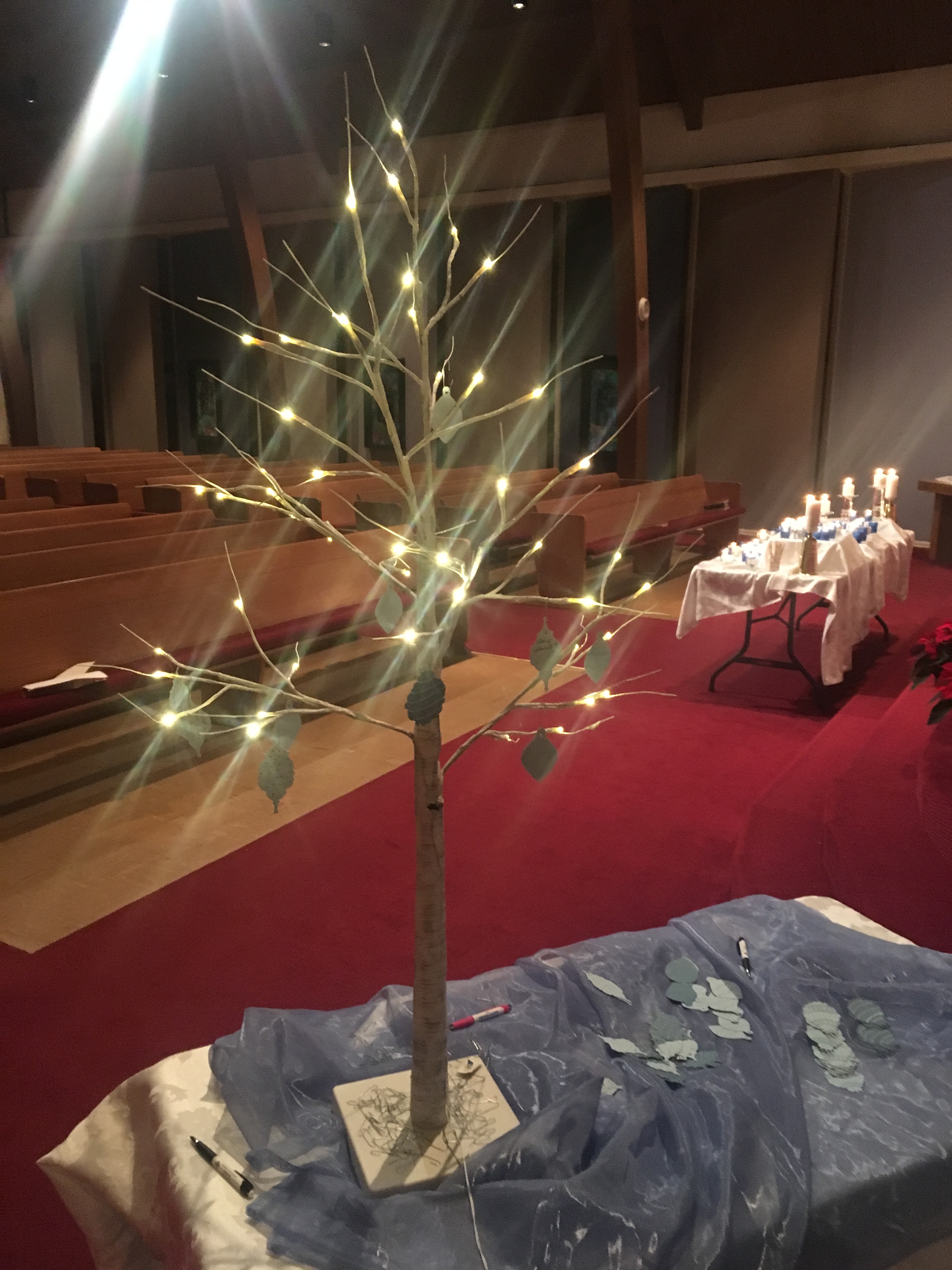
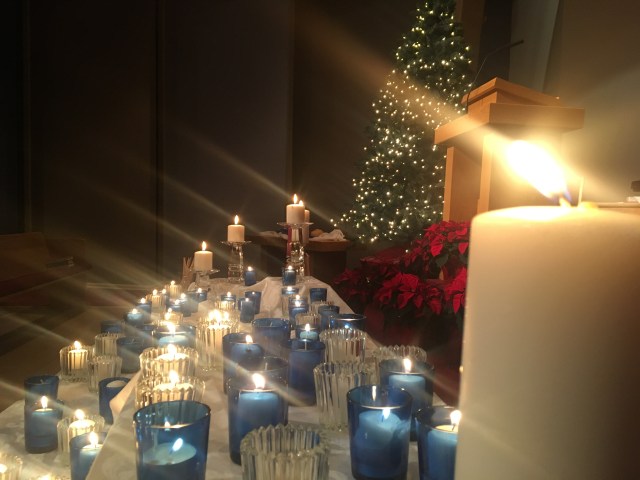
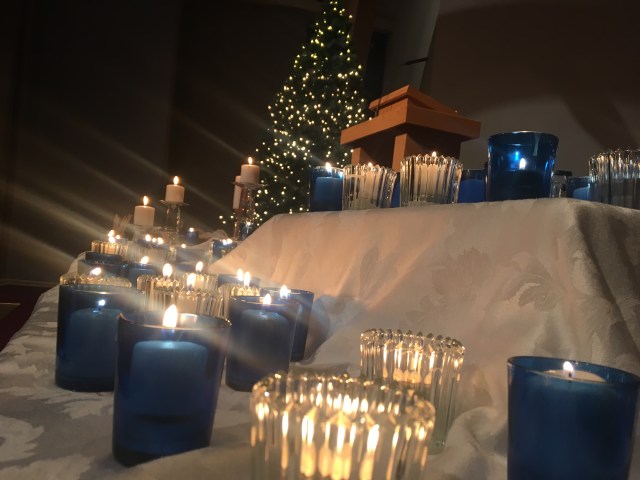
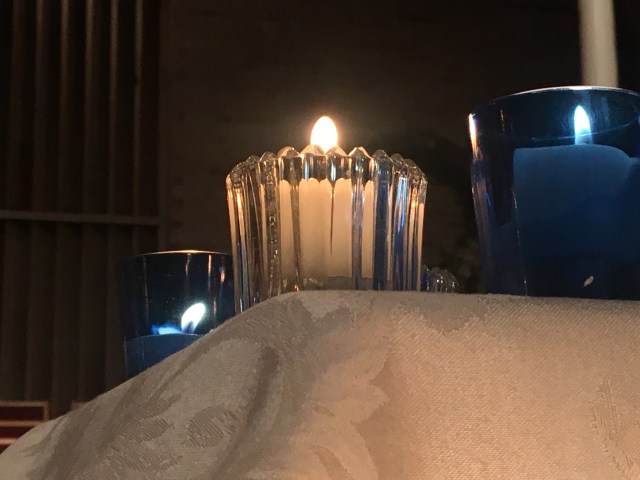
Tonight, our congregation chose to remember these people, to bring a light into dark places this Advent-Christmas. More metaphor than Elvis, we called it, quite simply, Blue Christmas.
Rather than barrel through the weekly lighting of Advent candles, special readings and prayers and favourite songs we thought it best to stop. Stop, to remember those faces no longer in our crowds. The missing pictures on our mantelpieces. Our family gathering a little less Rockwell and a little more Orwell. We spent silent time memorializing them, lighting a candle in their honour. Maybe crying just a little.
Wherever you are in your journey, maybe spend a few moments this season just quietly remembering those no longer there to taste your grandma’s apple pie or mom’s Yorkshire Pudding.
Thank God I am breathing so much easier these days. Thank God there is not the same anvil of dysfunction and dystopia crushing down upon my chest. Thank God that, with each passing day, it grows clearer how the addictive consciousness has robbed me of confidence and joy. And, thank God, in the clearer light of day, has come an emerging contentment, fragile but inextinguishable. It appears to be smiling at me.
As the days roll into weeks of years, the tick-tocking of time becomes more precious and, simultaneously, of vital importance. If fifty-four years can sneak past this easily, I had better stay awake to and aware of God’s presence and activity! I don’t want to miss a single thing.
One cannot help but attest to the wisdom in the pursuit of stability, constancy, simplicity, rootedness and, most of all, gratitude. The more rooted, awake and contented we are, the more supple, compliant, effective, and portable we become. We are learning to carry such attributes brought about in us through these values out into a world utterly gagging for them.
Ironically, the happier we are where we are the readier we become to uproot and transplant our grateful presence elsewhere. It is at once paradoxical and antithetical to how I have lived so much of life.
Unhappy? I look for it out there. Somewhere else.
Dissatisfied? I blame it on circumstances. Coworkers. Geography. The weather. Indigestion.
Unfulfilled? I blame my employer. My shitty decision-making skills, spiritual blindness. My job, so obviously unfit and small for one as grandiose and important as I!
Through all the blaming and escapism (the answer to which was drinking myself into oblivion), I never learned the deep contentment of gratitude, the satisfaction of awareness; the fulfillment of presence, all of which, ultimately, promise peace.
A book that has always been among my top fifty, the kind of book that needs to be reread every few years, is Surprised by Joy by C.S. Lewis. Here, Lewis was not just the Oxford don, the professor, the intellectual, or famous author. He was instead, a fellow sojourner. An atheist become Jesus follower. A doubter become dreamer.
It is his most personal book. A spiritual memoir. A biographical retrospective. A conversion narrative. A soul mirror. In it he describes the imaginative, albeit escapist, means by which he endures the difficult challenges of family life as a young boy.
Lewis constructed a vast imaginary playground he called “Boxen.” There, he could hide from the soul-crushing realities beyond his ken. There, he found a measure of joy and a respite from all that troubled him. His pursuit of an elsewhere, a better place in which to abide, resonated with me in profound ways. But, in later years, while confronting his cognitive dissonance with the Christian faith enterprise, he found it wasn’t intellectual satisfaction that coming to faith brought.
It was a personal joy that most surprised him.
For me, as for C.S. Lewis, acquiescing to the wooing voice of God, has brought with it the simple voice of love, tucked in a story of grace. And, in spite of devils still shadow-boxing in the back rooms of my life, I am in a place of great contentment these days.
Sober. Settled. Satisfied.
All of it reeking of the transformative power of a God who loves to show off His/Her penchant for inundating lives in delirious grace.
Such a sad irony given the need to remember when I recall so little so much of the time. But, I remember as much as I need to for right here. Right now.
I remember all that I’ve been given – and I smile.
I remember that I get to sleep with someone who loves to be with me, who chooses to share my life, even the dark places – and I smile.
I remember, through that same love, two babies, now young men, came into the world if for no other reason than to taunt my lesser joys with still greater ones – and I smile.
I remember the man I call brother, the woman I call sister, the man now dead we call father, the woman upon whose shoulders and within whose heart we all dwell, we call mother – and I smile.
I remember that I’ve been entrusted with notes, lines, hands, and voice, and then charged and blessed to engage in it, both as a living and as hobby – and I smile.
I remember the sight of candles burning, a dark and peaceful sanctuary full of singing voices, and the strains of “Silent Night” – and I smile.
I remember that I am given poetry and words to share with the weary world, much of it published, and fulfilling whatever destiny for which it has been prescribed – and I smile.
I remember the incredible home we called our own, poised handsome and stoic on a proud hillside where it stands year after year, waiting for the valley to breathe in and out each new season – and I smile.
I remember that, as a man now fifty-seven, I am healthy enough to run miles in double digits – and I smile.
I remember the touch of cold hands in mine as she congratulates my choice of hymns, the hearty back slap as he celebrates “this young man” – and I smile.
I remember the ache of loss for faces of those once bright and full, now gone and buried, the sound of tears, the taste of mourning, the honour of sharing it – and I smile.
I remember the seraphic sound of my choir as they collude together in happy voice to mirror the world’s unreasonable beauty – and I smile.
I remember the one God of One in Three; eternal, but who once had an address, now forever bearing the scars of his coming, who is my friend – and I smile.
And, though I never knew their names, I remember their sacrifice, caught in whirlwinds not of their choosing. Sometimes they were sent by selfish kings to do the bidding of empire.
They went anyway.
Sometimes, they were thrust out to defend the lack lustre and apathetic against the threat of unknown horrors.
They went anyway.
Mostly, they went because they believed it to be their best legacy. This I remember – and I smile.
This is a little story about the value of time. Or, perhaps the timing of value. Either way, here goes.
The numerous eccentricities that sequin this life of mine would not, to the uneducated stranger, seem to include punctuality. Spend just a few minutes with me and you’ll wonder how I manage to dress myself every morning, let alone have a driver’s license, or be allowed to procreate. But, in contradistinction to everything else one might know of me, I’m a stickler for being on time. To everything. Always. It is a point of pride. More so, it’s an exercise in lessening anxiety.
Friday, November 3rd. The Highland Dancing competition that provides the opportunity for this little sojourn takes place in Portland, Oregon, a mere three and a half hours south of us. It offers one of the most stunning drives one could ask for. And today is that day.
A leisurely drive over Satus Pass, stopping at my favourite monastery (like I have so many) for their legendary coffee and spanakopita. The Orthodox nuns who run the joint do so with friendly smiles and winsome personalities. And, they run a pretty tight ship. They’re a credit to their tradition.
Once over the pass, I descend the golden hillsides of Eastern Washington and cross the Columbia River Bridge. Then, it’s through the green, rain-soaked, monolithic tunnel o’ rock otherwise known as the Columbia Gorge. It snakes along Interstate 84, hugging one of the world’s biggest rivers. To my right, the Columbia, deep and slow and deceptively dangerous. To my left, the tufted ancient rock formations thrust up over millions of years that now frame this idyllic little meander.
Columbia Gorge, seen from the Washington side
A pain-free, largely traffic-free, Google-guided route to one of those perfectly perfect Portland neighbourhoods, more trees than people. Just as it should be. I park without difficulty right outside the B ‘n B where I’m to be staying. Then, in an effort toward appropriate courtesy, I stand for some time outside the door, searching my email history for the owner’s phone number. To call first means avoiding that uncomfortable walk onto someone else’s deck or anywhere a family might not want such interruption.
It was an unnecessary concern since another occupant opened the door just as I reached for the buzzer. Australian guy I think. The home owner – let’s call him Roger – greets me at the kitchen door with a look of confused amusement on his face. Confusement? Amusion? He is already scrolling through his Air BnB phone records looking to secure what, to him, is apparently a surprise.
“Um, it seems there is a bit of a mix-up here,” he says, face super-glued to his cell phone screen. His thumb scrolls over face after face. It suggests a tidy little business he’s got here. But, none of them appear to be mine. He gives one more healthy swipe of the thumb and up pops my profile Gravatar, making its embarrassing appearance.
A Gravatar that showed up in the wrong place
Now, as I’ve mentioned, punctuality is a point of pride for me. But this was precedent setting, even by my exacting standards. Roger is a cheerful enough chap, professional and gregarious. He probes a little further.
“Well, this is a rather unique situation,” he offers. “It appears you’re booked for next Friday evening.”
My dumb numbness, framed by my gawking, is matched only by his look of pity. He can afford it. He has a place to sleep tonight! I squint my eyes in disbelief at the reality staring at me from his phone. Sure enough. I’m booked for the following week.
I could have feigned a look of personal incredulity. But, alas, this is not exactly precedent setting for me and I’d be anything but convincing. The best I can manage, “well, shit.” This however acts also as my admission of guilt in this matter. It effectively relieves him of any wrongdoing.
He thus forges ahead. “No matter. Obviously, you need a bed for the night, and finding anything on a Friday night at 5:00pm won’t be fun.” Pause. “I’ll need to check with my wife. You know, whether she’d feel comfortable with this…”
Great setup I thought, for the kind but awkward punchline that followed.
“We actually have another room upstairs we don’t normally rent since it’s right next to our bedroom.”
My gut clenches a little as I consider all the uncomfortable scenarios that might make this not such a great idea. Two adult males, mentally circle, both grasping for enough manhood not to appear either retarded or lacking control of the situation. Mercifully, he steps outside to begin the negotiations with his wife.
No use trying to “man-up” with this mix-up. Instead (and instinctively I might add) I do what I normally do and call my wife. She knows these calls. Really well. She’s had lots of them and is well practiced in the art of the de-pickle, quite like the one in which I presently find myself.
I agree with her immediate assessment. “You need to let me make your reservations from now on.” Normally, such statements would seem an affront to my masculinity (a bit shaky right now), hinting at an inability to tie my own shoes. Given the circumstances, and how good she is at these correctives, I hand it over to her capable contrivance.
Within seconds I had cancelled my hastily-made reservation and she’d booked me a hotel room nearby. This was a huge sigh of relief since Roger was still nervously pacing back and forth outside in obvious negotiations with his wife. I smile. I know those conversations. I bid farewell and made a hasty exit, allowing him respite from whatever deliberations were underway. Roger, you’re welcome.
The moral of this little tale?
Who cares. Life isn’t merely a collection of “teachable moments.” But, since we’re on the subject.
More often than not life is, quite simply, about life. We live it, trip over it, and usually love it. It comes to us as is, unadorned, but real, unpredictable. And, all the better for it.
Failure is a promise (to some more than others). Embrace it. I’m getting pretty good at it. Well, really good if you must know.
Independence is not a biblical principle. Dependence is (God). Interdependence is (each other).
God is good. Theology lesson over.
I’m well rested (albeit at a financial loss).
Roger is once again snuggled safely in his world none the worse for wear.
My wife, as much an expert in unexpected chaos as I, once more proves her worth as booking agent, social convener, and non-judgmental partner.


 Story and poetry and song and art and humour.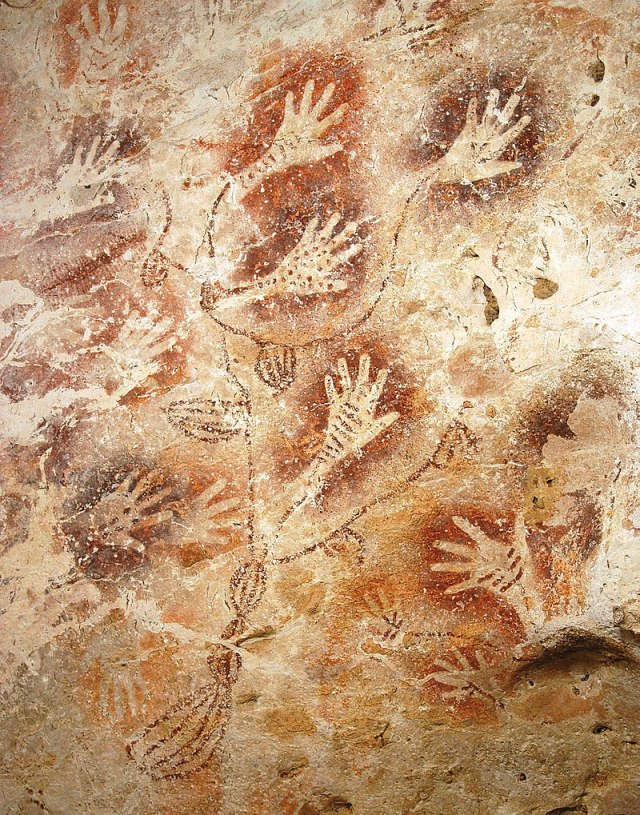





 innerwoven