Out Through the In Door

01

It was 1970. I was under-ripe, but hoping for the best at 7 years old. My Dad was developing the basement in our tiny 1000 square foot bungalow in Calgary, Alberta. Part of that process was building my own bedroom (let applause dwindle before carrying on). I was elated. During part of the process I was sick and recall sleeping on a movable cot in an unfinished room into which my parents had brought a TV that I could watch while convalescing. Poor me, I don’t know how I managed under such rigorous conditions.

My life forever changed one evening upon watching a live presentation of the Edinburgh Military Tattoo from Edinburgh Castle. I was smitten.

Edinburgh Military Tattoo

I had encountered something so pristine and wild that I told my parents the next morning I wanted to learn to play the bagpipes. Instead of the response generally expected, perhaps even advisable, for any parents, mine were intrigued and supportive. In less than a year I’d become part of a local Boy’s Brigade company hosted at the nearby St. Andrew’s Presbyterian Church where I would also begin my first lessons.

Perhaps the biggest discovery however was that I was becoming aware of my beginnings. My parents made it clear to me (as clear as such things can be to an eight year old) that, as the oldest of three adopted children, I came from Scottish DNA. Spooky to some. Intriguing to others. My response to this growing revelation of my biological roots was an insistence that I was finding my spiritual ‘home.’ 

Alongside many others through the centuries, I am one who uniquely identifies with what we believe to be true about the Celtic way of life.

I’m happiest when I’m a little sad.

Life is always better in the rain.

Green will always be the best color.

Everything is a metaphor for something else.

When I wander, I long for home. When I’m home, I long to wander (translation: whiny and impossible to live with).

Stories, music, poetry, and art are still the best way to teach anything.

Men look best wearing colorful dresses, tossing around telephone poles, tossing the caberand making themselves dizzy blowing ridiculously loud instruments.

Women are best when allowed equal voice in the community.

The forest may still be the best place to worship together.

Dark skies are a sign of hope more than weather.

The best life is when one day we sing together, the next we die together.

And, learning means more about living than just knowing.

What I’ve loved most about my place on the Celtic role call is that life for the Celts wasn’t neatly compartmentalized, as it is in our western, rationalist world. The idea of one’s “spiritual life,” or “physical life,” or “social life,” or “sex life” would have been quite foreign to them.

It was, quite simply, life. Everything mattered equally. Everything counted. Nothing was completely meaningless but contributed to their daily and eternal existence.

They lived very outward lives from very inward places. They spoke of “thin places;” the nexus where one could feel the outline of God’s hand touching theirs from behind the thin sheath of reality. The thin place, where transcendence meets the here and now, was where the Celts felt most comfortable.

It contributed in forging a Christianity deep enough to pray ceaselessly, strong enough to endure a pushy Roman empire and countless robust threats, and bold enough to sail into the unknown and share what they had experienced.

I like to call them “practical mystics.” They rehearsed the soul well enough to sing its song in the byways and the unforgiving wilderness. Their memory of mystical encounters with God propelled them outward to meet innumerable dangers to preach and live the Gospel.

They possessed a unique zeitgeist I like to call “shared home.” Hearth and home, food and fire, pain and process, bird and beast, wine and women, song and celebration, faith and family, God and neighbor, self and sacrifice, love, laughter and loss – all of a piece, one undivided garment of singular living. What they shared with the world they had already experienced in their daily lives.

They were perhaps one of the most genuinely whole peoples the world has ever known. I would even go so far as to suggest that they exemplified a very biblical faith. They marched to the skirl of their own bagpipes!

As a result, Rome absolutely LOVED them and offered their undying support (pry tongue from cheek here____________).

What the Celts understood is that there would be no outward “success” without honest, inward labor. The great, wide sea that would lead them to countless would be Kingdom-citizens awaiting their hopeful voice could wait long enough for them to be well acquainted with the reason for their journey. Boats easily sink when left untended for too long.

They went out boldly to see God at work in the world, but did so through the in door of communal spiritual practice. They had more than ideas to share. They took their photo albums and welcome mat with them.

The insatiable longing to belong so pervasive in the Celtic spirit changed their way of living. They willingly and consistently explored what it meant to be “home,” all the while sailing to the ends of the earth in pursuit of what they sought. In so doing, they brought the hopeful message of Jesus’ new Kingdom to those people everyone else called “barbarians.”

The Celts called them neighbors.

The Celts loved silence and the life of the soul. But they loved it too much to keep it a secret. They went out through the In door. And, with this inner treasure in tow, they sailed the great deep to change the known world.

We are their legacy.

Great Guardian of hearth and horizon, soul and sail,

I have lifted my feet in obedience to an insistent wind.
I have lifted my head up above this tiny-rimmed being.
I have sought again what once was too costly.
I have set out once more upon a wildly restless sea.

And found what was looking for me.


The changing face of prayer

As I deepen, glacially but surely, in the Way of Jesus I am finding freedom in the manner, frequency, and creativity of spiritual intercourse. There are a number of factors in these discoveries. I am getting older – a fact, apparently, applicable to all. The passing chronos lends a certain gravitas to the focus of kairos. And, the slow-cook crockpot of my formation adds fewer ingredients every year to an already complicated soup. Sometimes it’s not more, or even better, ingredients that are required for the quintessential meal. Sometimes it’s the right ones at the right time that leave the palette happy and wanting more.

As I’ve written numerous places, the past few years have been richly experimental in regions of contemplative prayer. Learning to love silence. Seeking out solitude. Making friends with simplicity. Studying the nuanced coup d’etat of lectio divina. Prayer walking. Being enriched through congregational liturgy. Journalling the works.

All these and more continue to contribute to whatever Rob, slightly enhanced, may be forthcoming off the stove.

But something is changing. With the increasing 20/20 available through the grace of kairos and the experience of chronos, I’m latching more and more onto the fluidity and ubiquity of unceasing prayer, specifically as it has come to be associated with who I am more than an action to which I commit. If in fact it is true that God is omnipresent, theologically, and an unceasingly constant spiritually, then it should come as no surprise that prayer can and perhaps should be, everything.

There is a state of being available to all persons everywhere that is readily found in that which most thrills the soul. For some, the ticking clock, counting the passing hours immersed in good literature. For others, it is the choir of smells united in one explosive song on a nature walk. For still others, it may be culling from the raw ingredients of the earth, something rich and flavorful with which to delight the tastebuds of friends and family.

For me, it was music and writing.

MASFL Pix 009 copy
Me, roughly a millenia ago


As a teen, and a budding musician, I would often sit for hours on the front step of our house simply playing my guitar. The notes, some of them good, others lined up for the shower, collided together to produce more than just music. They created space; a kind of generous openness to whatever the universe was at the time. A particular kind of peaceful “zen” or as Thomas Merton might call it, “contemplative awareness” resulted, leaving me just where I needed to be. This was true even as I spent countless agonizing hours learning impossibly difficult melodies (I certainly thought so at the time!).

In recent months, as more conventional understandings of contemplative prayer have waned a bit, I’ve had a certain yearning to resurrect this practice. And resurrection has been the result. To plant myself on a lawn chair a few feet from my rose bushes (such as they are) and play music inspired by the same, in tune with the wind, has once again ushered in a holy Presence. It has centered me like nothing else lately. 

Rob-singing on Okanagan Lake
Taken on Okanagan Lake, Kelowna, B.C., 1999

 It has also brought a much cherished simplicity and deepening unification of all I am into pulsating notes, maybe not always in tune, but always tuning. Music, once again, has become for me the changing face of prayer, changing me.

The bricks in our walls, chapter 4

brickwall1She was slightly chubby with a pinkish, round face, and dancing eyes that squinted a bit when she smiled. She had a way about her that was at once bracing and dangerous while at the same time hospitable and kind. She felt…comfortable. Our afternoons were often spent talking about all manner of shared interests: music, art, nature, beauty – often while lying side by side under our crabapple tree in the backyard gazing at the summer sky. It was heavenly. We held hands. We kissed. Often.


We were ten.


I was elated. It was summer. It was hot, and I was slicing through cool, choppy wake churned up by the boat behind which I was waterskiing – upright – for the first time in my life. My friend Darrin was driving, his dad beside him, and his younger brother watching me in case I came into difficulty. Silly, thought I. What could possibly go wrong? As is often the case with cocky, self-assured fourteen year olds, with over-confidence I over-compensated for over-reaching and found myself suddenly bouncing headlong over waves (surprisingly hard while cheese-grating along their ragged tops at forty miles an hour). By the time I finally pulled myself up from under the smug water, I was out of breath, bleeding from my side and completely naked.


It was exhilarating.


I saw my ever stoic and unyielding father cry only three times. Once during a heated exchange with my younger brother in which he loudly proclaimed that dad was an imposter (all three of us were adopted). Once, when my mother screamed at me so violently it made me cry out all manner of things I now wish I hadn’t. His hand, placed over mine at the kitchen table, is etched forever in the not-to-forget section of my memories. And once when he got back his biopsy results. I had driven him to Rockyview Hospital so that someone was with him should the news not be good. It wasn’t. At all. He came out of the room, face a pall of grey, and trembled out a few words in his roughneck Saskatchewan farm boy manner, “well, looks like I got a touch of the cancer.”


I miss him still.


I looked out the airplane window to a sight I’d waited seventeen years to see. The tightly woven, ancient and ragged hills of Scotland, huddled together in green beyond imagination danced a jig before me. If there’d been a seat on the wing, I’d have taken it in a heartbeat just to be that much closer to the land of my soul. Although Canadian born and raised, I have always been Celt to the core. My genes are kilted, my blood tartan, and my chromosomes play bagpipes proudly, up and down the hallways of my DNA. Best of all, I was there with my Welsh-Canadian wife of less than a year. Two Celts touched ground in Prestwick on a chill April day in 1989 and have never been the same.


“O flower of Scotland…”


The din was almost deafening. Bagpipes everywhere. It was August, 1991. Bellahouston Park in Glasgow. It was a “second first” related to this place. A bagpiper from the age of eight, I’d dreamed of making my way there to compete with the world’s finest since barely in double digits. Now, as head instructor for an up and coming junior pipe band, I was again on old country soil. This time, for the World Pipe Band Championships. To say it was dreamlike would be understatement akin to calling Mt. Everest a quaint, country bump. We were called up to the line. The pipe major barked his command, “by the right, quick march!” Two three-stroke rolls from the snare drums, drones, chanters, then – seven minutes of music, practiced and polished for two years.


Ask a bagpiper to define heaven.

A Celt in a kilt and the beautiful mundane

This was originally posted as a guest post on a favorite website of mine, Abbey of the Arts (thank you Christine Valters-Paintner!). What a delight to be given opportunity to share one’s life among kindred spirits in the grand dance that is our eternal redemption.

Please, please, please, if you haven’t already done so, be sure to visit Christine and the rest of us Monk-Artists at the Abbey. Come visit/like the Facebook page as well. You’ll be so glad you did. I promise.

__________________________________________________________

A Celt in a Kilt and the Beautiful Mundane

I-You-Holy Ground
By Robert Alan Rife

I am the dusty ground, low and dry
thirsty for the imprint of holy feet.
Despoil with radiant prints, this virgin ground.

You are the rain, falling deftly
upon my brown soil. Now is left
your footprint on this ground.

I am the ashen leaves, curling and broken
awaiting but a whisper. For only then
can I fall on solid ground.

You are the soundless wind, howling, still.
You creep up behind me and
exhale me to the ground.

I am the snow, disembodied worlds of cold
and chance encounters with hand, or tongue,
eye-lash or palm needing ground.

You are the frozen air in which I am held
aloft, drawn slowly down
to meet with others on the frozen ground.

I am the waning autumn death
soon to give way to the long silence-when one Voice
becomes the loudest ground.

You are the Voice that speaks
heard best in dying, power given for
rising from this shivering ground.

I am the distant hours, the midnight passing-
the refusing minutes, trapped in hours,
running from the years of ancient ground.

You are the many, and the one, and all time
and nothing and everything from nothing
where time has no ground.

I am the weeping, the squalid groaning,
the unrequited miseries of misery’s company
laying crippled and diffused in the ground.

You are the end of tears and years, the question
and the answer, the sutured nerve of joy, not suggested
but present, here, on this Holy Ground.

________________________________________

For me, the term ‘monk’ used to mean ‘one safely cloistered away from the cares of normal life in dimly lit, echoing stone hallways where hooded men sing hauntingly beautiful music and basically float just a bit off the ground. A single, piercing glance from their crystalline eyes means healing, they have superpowers, can read your thoughts, never need to eat, and speak once a year whether they need to or not.

Since leaving behind my roots in evangelicalism for headier waters elsewhere I’ve since discovered that monks often have the sauciest senses of humor, the bawdiest stories and, not surprisingly, the deepest delight in the world around them. My kinda fellas. They’re as non-dualistic as they come; a life to which I aspire. Apophatic meditation one moment. Bodily noises the next. Welcome to my world.

I am a dreamer; a philosopher-poet capable of romanticizing even the most mundane banalities. To a guy like me, cutting the grass has the potential to be a portal into the nether regions of the universe, awash in liminality, where mythic faeries ride unicorns on their way to Celtic slumber parties. But, I’ve been known to overstate a little.

Clearly, I’m a favorite among type-A corporate headhunters (tongue super-glued to cheek). Rather, stereotypical songwriters, tree-huggers, poets, unfocused A.D.D. artsy-fartsies, and contemplatives love to love me. They’re my peeps. My homies. They know my psychic address.

These overly romanticized sensibilities haven’t always promised smooth sailing for me. In fact, more often than not they’ve brought more than their fair share of woe and disillusionment. The world has precious little patience for those like me, preferring instead the multi-tasking, power-doers with ambitions larger than the moon upon which they hang their coats (but generally not their egos). It’s a challenge in our super-charged, winner-take-all culture to prove real value in lighting candles and pursuing silence when time is money and money is god and god keeps shrinking or running away.

My earliest recollections of spiritual awareness contained the following simple elements: surprised by joy moments, generally unasked for and seldom expected; a sudden awareness that the world was not really as it seemed – that from God’s perspective all was well. Specifically, I was drawn to all things ancient, mystical and Celtic. As a bagpiper/Irish whistle player who has toured extensively it makes sense that, for me, the world is seen through green colored glasses, smells just a little peaty, telephone poles were meant for tossing, and “ladies” is misspelled on the restroom door (insert look of shock and consternation here).

Although a mystic from a very early age, despite a decided lack of language to articulate such things, my fate was forever sealed when, for the first time I heard the Great Highland Bagpipe. I was seven years old. I was gobsmacked. Mere weeks later, in the basement of St. Andrews Presbyterian Church, I started learning to play the pipes. I have played ever since.

Something else happened however. It christened a liminal journey of my inner mystic and forever sealed my fate as a lover of all things Celtic, monastic and artistic. It also began an almost unassuagable thirst for the monastic realities of thin-place living. Puddles become holy water. All time, whether singing, snoring or snacking, can be wrapped up in a ball of quivering holiness. It is the essence of Celtic spirituality. It is my essence (especially if we had haggis the night before).

Now, a gazillion years and as many prayers later, to be an artist, a mystic and a monastic-wannabe is for me to see myself less as a dreamer and more as a waking dream. Life is to find the holy in the banal; the glorious mundane. The perfect, daily moments of nothing-special that, simply by virtue of noticing them, become possibilities of inherent wonder. The greatest gift I’ve received in the past few years, something particularly attributable to the Celts, is that of awakening to these shimmering possibilities in the blasé and dull. How brightly they shine under the light of the God of order and magnificent delights.

Conversing Through Conversations, part 3

Here is my Conversations Journal post for March of this year. In it I touch on a favorite discussion: the spirituality of home. I’d love to hear some of your own thoughts and yearnings on this most powerful of topics.

Conversations-Journal-Logo

Reflections on faith and art – Going Back to Move Forward: Da Capo al Fine

moraine lake

As a boy I loved to hike in the Rocky Mountains not far from where I grew up in Calgary, Alberta. Fourteen year old boys are known for many things. A steady, focused willingness to properly read a map is not one of them. On more than one occasion I got lost. Colossally lost. Front page news lost.

Now, getting lost in the hood is one kind of nervous. Getting lost on some back road is another. But, getting lost in the Rockies, well known as treacherous, moody, bear-infested and snow-smothered is something else altogether. Bears do their best grocery shopping among these unpredictable rocks, boulders and ancient back-scratched geography where over confident lads provide them ready access to fresh food.

A group of stolid and hardy lads in which I was involved, the Boy’s Brigade of St. Andrew’s Presbyterian Church, enjoyed numerous such excursions into this high altitude, western paradise each year. I, in fact, was a group leader, having achieved the illustrious honor of Lance Corporal (it sounded cooler then than now). Part of my duties involved rallying chaotic, testosterone-laden infusions of pre-manhood into some semblance of order; a kind of teenage yellow rope.

Boys Brigade image

Our destination? Alberta’s unrivaled Moraine Lake hidden artfully among The Valley of the Ten Peaks.

It is a space of unparalleled breadth and relatively young, but stoic guardians of Banff National Park. By comparison, the tiny, peanut shaped lake, covering barely a fifth of a square mile, is sister to numerous other glacier lakes squatting majestically in the Rockies, including Lake Louise. It is of a color impossible to accurately describe. Suffice it to say that the wildly turquoise hue of the crystalline water announces itself with an overstated elegance well suited to its heroic surroundings.

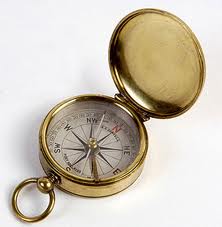
That was our setting. This was our set up: about twenty over-confident, wildly exuberant man-boys oozed out of two vans, dutifully fart-infested, noise-experienced and travel weary (it is a two hour drive after all), at the main parking lot at the base of the valley. From there a host of hiking trails, well trod and well signed, could be promptly ignored by our troop of bawdy adventurers. We were perfectly capable of navigating the complexities of the labyrinthine Rocky Mountains armed with a compass or two, a twenty-minute basic survival training video and our three fearless leaders (I’d include myself, but I helped forge the debacle).

One would think that our conservative Presbyterian environment might have created a more…human tribe. But, alas, as is the predicate of our gender, our bombastic tales of woe and  fabled exploits with mystery women, always surprisingly willing to succumb to our passionate advances, filled the summer wind; a wind mixed well with our own teenage gaseous effluent. As father to two strapping lads of my own, I am often privy to the baffling rampage of boastful male oddities foisted on an unsuspecting, eye-rolling public. Yes, I was one of those. Lord, have mercy. But, more than our strutting demeanors might suggest, we were severely lacking in either outdoor prowess or the wisdom of experience, let alone the common sense generally considered an asset in the Canadian wilderness.

compassIn just over twenty-four hours we were fabulously lost. The question burning in one’s mind at this point might be, how does one get lost when one goes hiking in an area so distinctively obvious as an azure-blue lake punctuated by ten rather large, easy to count, mountain peaks? Good question. We asked the same one, numerous times, each time with greater panic. Every cut line, every scree, every grove of pine trees all looked annoyingly similar. And with each wrong turn, our confidence waned. And, as our confidence waned, so did our supplies. The unwanted guest? Panic.

When life hits the place of panic and confidence has escaped out the back door, we will often put our heads down, flip our collars to “the cold and damp” and soldier on. We think that faithfulness to our present course is best since we can throw so many juicy scriptures to support it. Besides, we just need faith and to “man up.” Right?

As it is when lost on a hiking trip, so it is in life. Sometimes it is just best to pause for a moment, take a breath and then retrace one’s steps to the last recognizable place before starting up again. However, to one who is lost, once recognizable things seem foreign. As a result, we are forced to trust the more tried and true accoutrements of trodden path, compass and map. Our ending place, though seeming as though unguaranteed, is more assured in light of an intentional return to what we know best.

Go back to the beginning until you find the end – da capo al fine – is a musical term used to circumscribe large pieces of music that would otherwise prove too unwieldy and long. It also offers listeners an opportunity to experience again the musical strains that first captivated, re-opening doors to the sublime. It is also designed to bring a satisfying musical journey to a final, glorious end. And, it describes well the course of action best suited to the dilemma of lost-ness.

To heedlessly plow ahead regardless of consequences on some vague notion of finding one’s way by sheer determination will, more often than not, lead to disappointment…or worse. dc al fineTo stop, breathe in deeply the air that still surrounds us, and then prayerfully return to a foundational place, is always the wiser choice. Of course, this doesn’t guarantee we’ll find our place of origin on the journey quickly or easily. What we may find, however, is the still, small voice spoken just behind our ear encouraging us to follow the voice, not just our gut. That said, how fun to hear an orchestra take a stab at a symphony birthed out of the same bravado and self-assured swagger long vanished from our sorry troop and replaced with the unsteady panic of facing a vast forest with no clear sense of direction!

We did find our way home…well, with the help of RCMP helicopters and small army of distraught parent volunteers. D.C. al fine – back to go forward – forward back home. Our place of beginning, the spot where adventure and beauty became tears for fears (no, the real one) began, looked all the more beautiful for having taken the long way home.

BB picture: www.blogs.nottingham.ac.uk  (Check out more on the Boys Brigade movement here)

dc al fine: www.mikesmusicpages.com

compass: www.seanoakely.com

Art As A Work Of Life: A Guest Post by Janet C. Hanson

It’s not that I’m a snob, although some might disagree. Nor is it that I’m lazy, although others might disagree. I simply haven’t had guest posts as often as I should. With this offering by blogger, Janet C. Hanson, I’d like to change that. When she posted this and it found its way into the internet aether, it was pounced upon quickly like hungry birds to a free meal, tossed around, shared and shared again. She’s insightful and warm and wise and witty. You know, kinda like me (as I am in my bios).

Originally posted on April 30, 2013 by Janet Hanson

A l’oevre on reconnâit l’artisan. You can tell an artist by his handiwork. ~French proverb

painting-of-woman-writing

“You can make art or make a product. The two are very different.”

My art teacher, Randy Blasquez, shared the quote on her blog. The context was art and love. “Why doesn’t love come across when you look at a painting? Because it wasn’t put into the painting! The artist was pleasing the gallery or trying to sell.”

How much of your life is spent trying to please the gallery?

The books on writing, the books on art, the books on living life to the full, all agree: Skill matters, but love is essential in any work of art.

I think you would like my writer’s group. Around the word-slinging circle you’ll find a Whitman’s Sampler of styles. We take turns being the discouraged, remind me why I am doing this member, or, less often, the poster child for astounded success. I’ve learned by watching these women wrestle with their art. Things like,

  • A good writer is generous. They bleed their fears, doubts and delights all over the page, with nothing held back for later.
  • A good writer refreshes. They peer into the fog and refuse to blink until they notice a reason for hope.
  • A good writer lights the way. With words gripped by ink-stained fingers they draw us from the dark.

Bad writing may sell books, but readers are left in shadow. A bad life may look successful, but the world is left just as dim.

Art As A Work Of Life

For we are God’s masterpiece. He has created us anew in Christ Jesus, so we can do the good things he planned for us long ago. Ephesians 2:10

Together, we are God’s handiwork.

Does your story prove that it’s true?

Generous, refreshing, bearer of light, are we changed by the reading of you?

Every day, we’re given a choice–to be just another product, shaped by the world, or let God shape his image in us.

Where have you noticed God’s artistry at work in your life?

Find out more about Janet and her wonderful material here.

Reflections on faith and art – Earworms of Grace: Leitmotiv

Like everyone else, I love Fridays. tgifIt was Friday. Friday is my day off. It also happens to be my Sabbath. I’m rather possessive of Fridays since they have become so reconstructive to my psyche, such as it is. Yet, ironically, if there is ever a day I feel more stressed about “wasting” free time, it’s Friday.

I have a fixation with fixations: an idea, a besetting issue, relational matters, missing car keys or, God forbid, a misplaced book bag. Whenever an idea, either good or bad, finds a perpetual return, I can get stuck in what the French call an idée fixe, a fixed idea. It’s something that, good or bad, refuses to go away; a kind of paralysis.

stressed

My brain and my soul spar over time served, with neither winning. I should be working harder at not doing something significantly insignificant. It’s a bit like standing in front of a wet paint sign and sensing an overpowering need to touch something, just to be sure. “Don’t think about sex,” the deacon tells the unsuspecting youth group and, for the next half hour, boys have a dreamy look in their eyes with one eyelid partially closed and crossing their legs. Ha! As if they’re fooling anyone.

I love to practice silence and contemplative prayer on these days and deal with distractions about the same as anyone else – poorly. But of all the distractions with which I’d prefer not to do battle during contemplative prayer, some trite, facile, mind-numbingly repetitive song would top the list. It just keeps showing up no matter how hard I try to redirect or quell the noise. You know that thing where, at sixteen, you finally get a chance to lean in for the long awaited kiss but start laughing instead because of the impressive fart joke your jackass buddy told you earlier that day? It just keeps showing up at the worst moments. Or, when you’re trying to find the Zen of vacuuming the stairs but the only thing that incessantly hammers away at your brain is that ditty from the ghastly used car commercial that sounds like it was written by angry zombies on a bad acid high.

I’ve heard this phenomenon described as an earworm. earwormI have no idea who first coined the phrase but it is very appropriate to my point. Sometimes my mental needle gets stuck and can’t move on (for those younger than I, that is a reference to ancient, black discs that magically play music when rotated clockwise and scratched by a needle on a stick). Such earworm annoyances can make a sorry mess of what might otherwise have been a nice day.

But maybe that recurring ditty from the horrible TV ad, vis a vis, idea-fly constantly buzzing around inside my head isn’t half bad. Even if it is a universal experience, I have to wonder whether it can somehow be redeemed, retooled from a shitty tune to some richer fare, something even…redemptive. Perhaps it’s possible to redirect such things and, in so doing, make for better internal music.

The Germans, not to be outdone, have a term, delightfully fun to say, referring to a short, constantly recurring musical phrase: the leitmotiv. It means literally, “leading motif” and is conceived as a guiding idea around which larger pieces of music revolve. This idea may be a short melodic phrase, harmonic statement or rhythmic figure that hides and flits about within a larger work. It morphs and changes according to musical or plot needs. Sometimes new ones are added, granting even more interest and mystery to the piece. Leitmotifs can help to bind a work together into a coherent whole, and also enable the composer to relate a story without the use of words, or to add an extra level to an already present story.

Think old movies. The piano accompaniment was used to enhance action, delineate one character from another, create atmosphere or just build a fun backdrop against which the characters could capably caper. Still closer to home, the Star Wars Theme continually reappears throughout an entire series of movies that, in its subtly changing demeanor, evokes equally subtle changes in characters, moods, settings, relationships.

Back to Fridays. I am coming, albeit slowly, to accept and even embrace these Sabbath earworms, these recurring dramas that play out in my overactive brain. Jesus said such cool stuff like “people were not made for the Sabbath but the Sabbath for people” (Rife Armchair Translation). This tells me a lot. It tells me a lot about Jesus and the kind of person he was and is. This is a statement primarily about grace. It is an indication of the kind of gift-giving God I seek to serve. The gift of Sabbath suggests that no amount of bad earworm ditties need steal what is always pure gift. To relax into guilt free nothingness is the best non-thing ever on a non-day to non-do.
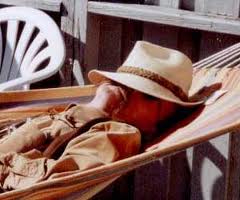
sleep in hammockThese days, I love to try and fool these earworm triggers by writing long to-do lists, placing them on my lap during prayer and then crumpling them up while I go off to take a nap. Let ‘em come I say, these leitmotivs, since in God’s playground, they are diminished into earworms of grace. In a Spirit-borne rest, even distractions become holy. I might even find myself singing the nasty little buggers ‘cause, you know, if you can’t beat ‘em…

TGIF picture: www.runningcirclesaroundtheturtles.com

Earworm picture: www.blogs.davenportlibrary.com

Man in hammock: www.psypost.org

Reflections on faith and art – Stop in the Name of Love: Fermata’s Gift of Pause

It was a strange time in his life. He had been many things, experienced many things, perceived many things in as many ways, fought and lost many battles, won still others. But, never in all that time would he ever have used the term, stable. Young, handsome, energetic? Maybe, once. Bright, eager? Still, albeit tempered. Passionate? Sure, but with a more nuanced meaning. Confident? Perhaps, maybe…not sure. Focused? Well, let’s not get ahead of ourselves.

Stable is an odd word, one best used to describe a table or toilet seat sufficient to the task of supporting their respective burdens with certainty and ease. Give them your worst and what comes out bruised is ego, not the thing itself. They’re…trustworthy.

Trustworthy! Eeeww, how unsexy. He had hoped for a word more like solid or chill. Probably, the word that best illustrated his present life was rest. The overwhelming feelings of inadequate job performance, deadline anxiety, friendship uncertainties, identity questions, and fears of many kinds, including those of “right” doctrine or “biblical” theology (whatever that means) were all beginning to fade into the background.

The experimental days of project du jour held less fascination for him than previously. Instead, the growing appeal of quieter, simpler ventures held sway over the quickly passing days. He yet harbored dreams and aspirations, the hopes of any person with a heartbeat. However, they were rather less…insistent, less bothersome somehow, full of timeline-laden expectation and anxiety.

bluemassgroup.comHis trajectory fifteen years earlier had been one of skyrocketing up the ecclesiastical ladder of success (you better believe there’s such a thing). He had begun this upward career-clamoring by means of big, glittery, evangelical worship leadership. His growing bevy of names to drop, gloat-able experiences, and boast-able accomplishments all kept astride his equally rising ego…and the accompanying stress.

But there was a problem. His thirsty soul was getting in the way. When it appeared there was nowhere to go but up, his soul shouted Stop! in the name of love; let’s go down instead. It was barking louder every day, refusing to be ignored. A spiritual thirst had taken hold coupled with a theological crisis of epic proportions, denying the upward mobility to which his career seemed to be pointing.

In a few short years, he had gone from the music staff of a large, well-healed, hard to ignore big-box church in a wealthy, resort town to a much smaller, über-educated, College town church to a still smaller but diverse one stuck in a semi-arid, fruit growing valley in the middle of, quite literally, nowhere. Here there were no names to drop because people with “names” tended not to live there. Gone were the multiple monthly, high profile gigs that promised regional notoriety and decent pocket cash. Gone was the euphoric environment proffered by the diversity, youthful panache, ideological smorgasbord, and creative playground of a College town. Gone were the long, rainy days so conducive to his creative process and emotional make-up.

Taking its place was residence in a small city known more for its slow drivers, monster truck rallies, poverty, gang violence, county fair, and conservative politics. Where would such a man as he find kindred spirits in such a place? God’s faithfulness however, even in an environment seemingly hostile to his personal mode de vie seemed to emerge serendipitously as a fine dust collecting on the windshield of his spiritual bus.

In his ever-mutating thoughts on the matter one thing occurred to him as a central feature of his life over the past few years. He had learned to stop. If ever there was a singular gift to a healthy spiritual life it is Shabbat, Sabbath, holy pause.

The idea is beautifully mirrored in the fermata. rogerbourland.comLooking a bit like a beady-eyed Cyclops with bad hair it is the musical symbol that, like the crossing guard, tells all ongoing traffic to pause indefinitely while other, more important matters, may be addressed. It holds things back, avoiding danger and confusion.

To pause suggests a willingness to stop indefinitely and count one’s steps. The days of our lives (no relation) hurtle through time and space at a frightful tempo. We are often blind to this fact (as was he) largely because we become hypnotized by how much momentum and power we pick up along the way. But, despite their apparent beauty and order, without sufficient space for pause, they begin to sound more like an unwieldy stampede of bucking, snorting notes headed for unseen cliffs of cacophony (think Lucille Ball after too much Scotch singing Schubert).

The fermata is the Sabbath of music. It shows up not as regularly but performs a similar function. In music, as in life, are surprise, delight, order, disorder and angst…beauty. As any composer will tell you however, music is made even more magnificent against the backdrop of its own silences. Rests are the music of silence. The fermata is the rest of exhalation. It holds things in place, defusing the potentially damaging effects of kinetic energy. Rather than something wonderful ending up a steam train careening over a cliff, the musical Sabbath of fermata puts the brakes on. theoildrum.comSabbath secures us to the manuscript where the Composer’s grace and skill can adjust potential weak spots and lovingly dote on us. Our music can cool down, let off some steam, and regroup before beginning its forward movement again. Music is made more beautiful through its silences, its pauses. God makes us more beautiful in exactly the same way. As we pause long enough to take care of overused musical sentences, our emerging symphony is writ large across our life manuscript where all may experience its beauty.

He yearned to say that advancing age had brought the wisdom he craved. He’d had his moments. But ironically, some of his most egregious errors, lapses in judgment and felony mishaps had occurred smack dab in his late middle age. Chronos is never a guarantee of kairos. boards.cruisecritic.comSubsequent time and reflective pauses however had brought a sense of perspective that fanned out behind him like an ever-growing wake, revealing his course, in a sea more than half traveled. The music was slowly beginning to make sense.

These considerations allowed him pause (pun intended) to reflect on some of the reasons for his place in life. Although not without pain and challenge, the idea of stability no longer seemed so…tedious. No, it was a gift, a grace lovingly massaged into the music of his life.

Maybe it wasn’t such a strange time after all.


Photos courtesy of www.bluemassgroup.com, www.rogerbourland.com,

www.theoildrum.com, and www.cruisecritic.com, respectively.


Reflections on faith and art – Addicted to Melancholy: Life as a Major Seventh Chord

The impossibly orange morning sky mocks my melancholy and seeks to repeal my commitment to a sober day. The feathered fingers of precocious light embroider a morning otherwise condemned to generous helpings of over-thinking and under-living. Like passive-aggression to a psyche better suited to hiding than fighting, I brace myself for the full welcome of morning and, coffee in hand, steep in my self-righteous adherence to less than full inclusion in the happy chatter. If another somber, artsy day of writing and pain-mining was truly what I was after, then why the open laptop at the center table of my local Starbucks? Dear God, am I becoming “that guy”- the artsy, Mac-toting, liberal coffee snob?

at the coffee shop

Those like me are typically well-versed in the finer points of self-pity and overwrought, dilapidated prisons of Freudian fear wed to Jungian collective consciousness, albeit devoid of the intended mutuality to which it points (or much consciousness for that matter, either). The artistic temperament, housed in most musicians, writers, painters and the like, excels at emotional dumpster diving for those occasional jewels found at the bottom of a whole lot of shit. For some strange reason, it contributes to the creative process, for me at least. The smelly job of wading through my fly infested felch gives a certain twisted pleasure if the reward is a gleaming bit of writing or lyric or melody.

Even as I write these words I can’t help thinking to myself, is it any wonder type-As generally hate guys like me?! Growing up, I was that kinerdsd who was either so preoccupied with his own swirling world of imagination that I could just as easily walk into walls as find my desk or whose swashbuckling stories of whim and woe – many of them stolen – regaled whatever girl was most likely to buy into it. In fact, a gift with words (my parents and friends called it bullshit) from an early age made finding friends an easy task, especially girls. This was not because I was particularly good-looking but more so because I was a skilled navigator of whatever self-projections were the most captivating. One might say I was a bit like a buzzard who scavenged tidbits of social detritus suitable to any given moment but who prettied them up with the fineries of clever, droll turns of phrase.

There’s a problem with this however. It has meant that a pleasant, even-tempered melancholy, peppered liberally with witty banter instead of good, old-fashioned hard work and embracing failures, have propped up my life artificially. I’m smart enough to have talked my way out of being wise. And now, at nearly 50, I realize just how little I really know; how little I’ve truly lived. It would have been better to shut-up until I actually had something worthwhile to say!

Now, lest I begin wallowing in self-pity and regret, let me assure you that this demeanor, although prevalent, is not an entirely accurate picture of my modus operandi. I suppose the most apt metaphor I can find for my life is that of the Major Seventh chord.

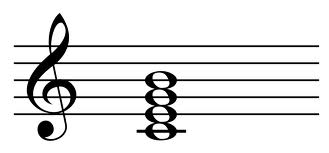
The Major Seventh chord is non-definitive, unlike the Dominant Seventh chord that pushes its way around until it gets what it wants: resolution. The Dominant Seventh chord is the spoiled child that has never had a need go unmet. Ever. And we get to hear about it regularly and insistently. It needs ground zero to be happy and is pissed off when it must hang around for any length of time without that resolution. It’s like the guy standing at the urinal but forgetting to put stuff away before walking out of the restroom. It’s unsightly, largely unnecessary (unless you’re from Australia) and, well, kinda stupid.

In musical terms, the Major Seventh chord has a raised seventh degree of the scale. She has moved past the standard seventh to a higher plane of consciousness less impacted by the need to settle everything but still yearning after something else. It is still built on a good foundation of a root, followed by a strong and happy major third, and another minor third on top of that. All the building blocks are in place to produce something of strength and beauty. To add the seventh is to add something uncertain, even unstable. The number of notes begins to feel crowded like too many people on a bus after taco night at the pub. Something has to give.

The Dominant Seventh says, in essence, fuck you, this is my show and you bloody well better serve up my demands for a trip back to home plate. The Major Seventh chord has a higher sensibility about it. She never demands anything. She suggests something, something angst ridden and indefinable. Her top note signifies searching, longing. The seventh note of an eight-note diatonic scale is what musicians call a leading tone because it’s leading us back “home” wherever “home” happens to be. However, in her case, there is a kind of contentment with the in-between liminality of a bossy Dominant and a restful Tonic. A quaint story of dubious origin tells of Mozart’s father, Leopold who, in his final attempt to get Wolfie out of bed, went to the piano and played the first seven notes of a diatonic scale, leaving it unresolved. Within seconds, feet were heard flying down the stairs to play the final note. To a musician, it’s a sin akin to lighting the curtains on fire and then walking away.major 7 chord

Major Seventh chords practically defined the 1970s’ Adult Contemporary music scene. Artists such as Bread, America, Gordon Lightfoot and Don MacLean built entire careers on them. They’re perfect for songs about lover’s triangles with the loser singing. They reek of the melancholy I’m so in love with.

And that is my point. Those of us condemned to live in the spongy greyness of our own articisms can ill afford too fine a definition of who we are. We don’t want to be too pinned down, boxed up or, God forbid, understood. And yet, deep within, there remains a fervent longing for just that: to be known, heard, experienced. If I am to find my best self, I’ll have to settle for the delicate balance of sadness and hope enshrined in the Major Seventh chord. It is life in the rain, an honest addiction to melancholy.

Frankly, it has served me well.