possibilities…

It was 4:00 am and, at the tail end of a recording project, I was desperate for a title track. I had already named the CD, “be that as it may.” Whimsical? Yes. Obtuse? Perhaps. But it was exactly the title that had reverberated in my head for months. That was what it was to be. However, I only had one more day of recording left both on the clock and on the dollar. I was frantic.

Then, a “chance” look across the table of my producer’s kitchen helicoptered my eyes to a picture. It was an image that would provide the muse from which the title song was about to come…in the space of 20 minutes. A solitary figure of a girl, not quite a woman. A girl longing for womanhood. She looks pensively, a little fearfully, into an attic mirror  afraid of what she might see; of what she might not see. She is a girl yearning for something else, something yet to come, just like she whose mirror it was in front of which she now sat might have thought years before.

The print spoke more than I could possibly write. It haunts me to this day. The following is the lyric from the song she inspired (and is downloadable on iTunes, by way of shameless plug).

be that as it may

Words & Music by Robert Rife

©10/16/98

Like roses hung from cellar walls,

Hints of words unspoken fall –

Suggestions of the fragrant fall,

Be that as it may.

When she’s sure there’s no one there

A young girl in a mirror stares

Welcomed in the arms of grandma’s rocking chair –

Be that as it may.


Be that as it may

Don’t let it be that we would stay

In waters of a winter’s day,

In the warmth of heaven’s glow we’ll say –

Be that as it may.


Hand to face, the touch of love

In bashful eyes, the look of love;

Gives to aching hearts a gentle shove,

Be that as it may.


Hiding in their living room

The fire’s warm but ends too soon;

At least it leaves two hearts in a swoon,

Be that as it may.


Be that as it may

Don’t let it be that we would stay

In waters of a winter’s day,

In the warmth of heaven’s glow we’ll say –

Be that as it may.


Life is like a cul-de-sac

We think we’ve grown, we’ve just come back

To where we were but with a few more facts,

Be that as it may.


Be that as it may

Don’t let it be that we would stay

In waters of a winter’s day,

In the warmth of heaven’s glow we’ll say –

Be that as it may.

Be that as it may.

Be that as it may…

conservatory, cellists and the blessing of un-cool

“…the glory of art is in receipt more than critique.”

Good friend and fellow blogger, Barbara Lane, has directed me to some very cool online places for inspiration, laughs, and encouragement. One site that has particularly seized my attention is Art House America. It is the brainchild of record producer, Charlie Peacock and his wife, Andi Ashworth and is staffed by more than a few stellar writers, Barb being among them as an intern. A few months ago, blogger Jennifer Strange submitted a piece entitled “Pride and Play”, which outlined her life as a classical violinist. The piece struck a chord (groan) with me. What follows is a fleshier version of my response to it.

“Brava! I, like you, have lived on the edges of un-cool. I was just acceptable enough to be part of the horde of “normal” kids but too artsy and quirky to dwell among the immortals. By the time I got to high school, I was popular but certainly no A-lister. My insistent intensity wed to a host of personal oddities denied entrance among the luminaries. Who cares? I thought. I had plenty of friends and hangers on, enough to get me through the harrowing hell that high school can be. My feigned demeanor as a Bohemian philosopher-poet, indy-intellectual-wannabe coupled with low blood pressure worked against me. I was a good faker, though, and learned to converse well among those of the socialite nosebleed section.

Being a musician helped. The sense of humor bought some street cred, too. These discoveries, although transient and unstable, at least provided me sufficient groundwork upon which to build a shaky cabin of self-esteem. But, unlike many of them, I was no male debutante-in-training. Instead, I was a gangly singer adopted by a blue-collar brewery worker and housewife into a 900 square foot bungalow in oil ‘n redneck rich Calgary, Alberta.

I’m especially grateful that none of the above provided enough of an obstacle to obtaining a full scholarship to Mount Royal College Conservatory where, as a Vocal Performance major, I studied art song, oratorio, opera and the dreamy female cellists in the symphony. And, since most of our professors were symphony musicians, we would get free tickets to almost anything they played – from Faure to Brahms, Shostakovich to Prokofiev, Schoenberg to Beethoven. It was all so heady and…cool…well, except for the part where my buddies and I would fight for the best seats high above the orchestra where the best sight lines were for staring down the daring, black gowns of the cellists in question. But I digress.

I can think of no reason to regret the loss of elitist membership in favor of the sublime connection to the world’s great music. Moreover, music was the backdrop for my awakening to Christian faith after graduation from high school. For this, and your piece reminding all of us of the uniting and redemptive power of music, I can be forever grateful. Besides, why do they always get to decide what’s cool?”

Yours in recitative, R

Writerly stuff: the gift of non-spoken words

Yesterday, I attended my first ever writer’s workshop. Well, ‘work’ for her, more ‘shop’ for me. I was reintroduced to the power of the perfect verb, and then lured away from over-use of rich, saucy, jaunty, or sultry adjectives (no extra charge for the built in analogy) and ultimately warned against falling in love with our own words.

Crap.

Just as juicy was my education in the necessity of nixing unnecessary words that simply tumble off the pen in a mottled ramshackle verbosity more for my own prideful perusal than to either advance the craft itself or, God forbid, get better at said craft.

See what I mean? Yeah, that’s why I went.

Lois Keffer, award winning author, editor and educator (I was not paid for the shameless plug) sat patiently through what, for her, seemed elementary, elemental; foundational. For us, it was the educational equivalent of a satiating a drunk’s need for naughty nectar. Her presence was steady without being stuffy and a quiet patience followed equally encouraging words. I’m not quite as strutty with my own material now, as I was the day before yesterday.

Again, crap.

Writing is not something I sat down to do one day because there was nothing good on the Comedy channel (although one certainly can help the other). Writing as art or leisure was once a foreign concept. And, although I’ve always loved wordy stuff, it never really crossed my mind before last year that writing was that and more besides.

It is prayer.

The act of dotting pages with jots and tittles becomes more captivating with each page. Despite the fact that the pages I write do not always titillate like good words should, it is becoming contemplative space for me; a non-lingual thin place. To speak too often is to bloat the air with noise, unlearned, opinionated or simply unneeded. Unless one has had the experience of silent retreat, words spoken will continue to dominate our daily experience robbing us of the larger intervals between them. Those are the places with gifts to give. They might otherwise tease us out of lethargy or pain if given the opportunity. Silence gives us pause to listen to no words and to more words. Different words. Holy words. Perhaps even healing words.

To write is not to speak. Not to speak means we must listen. To listen promises new gifts of love and insight. To write what we hear brings others into the dance with us.

Maybe that’s why I went.

Why the world needs the Celts

When one thinks of the term Celt or Celtic what images spring to mind? Is it the Pictish war-paint donned by William Wallace in Braveheart as he prepares to take Scottish troops into yet another conflagration with England? Is it the Military Tattoo at Edinburgh Castle where hundreds of overly plumed peacock pipers and drummers march to and fro in a celebration of Scotland’s warring past? Is it the drunken party at the local pub as it becomes abundantly apparent that you’ve walked into some secret society, all of whom are experts on their instruments, can drink more than any human should be capable of but with whom you feel completely welcome? Is it the great standing crosses of Ireland? Is it Larry Bird?

Whatever one may think of the Celts, one thing is sure: they were a people absolutely unique in history and centuries ahead of their time. They were an oral culture, a bardic people of story, song, poetry and mythology. As such there exists a great deal of misunderstanding regarding their exact history. In fact, they seem quite simply to have passed out of existence like a fisherman’s boat sailing into the morning mist.

One example of this relates to something I play on the bagpipes: Piobaireachd. Let me tell you how that is spelled: P I O B A I R E A C H D. It was never their intention to leave any letters for anyone else. Piobaireachd is the comingling of 2 Scots Gaelic words: piobaire, or piping with eachd meaning music. Hence, piped or piping music. Piobaireachd is the classical music of the highland bagpipe and is loosely based on the musical idea of a theme and variations. It was most likely developed by a highland clan dynasty of the MacCrimmons. But since there remains so little written evidence of the clan and their history, many believe them and their development of piobaireachd to be the fanciful fabrications of folklore.

There is plenty that we do know that can benefit us, however. The Christianity that emerged in Ireland, Cornwall, Brittany, Gaul, Isle of Man, Scotland and Wales possessed some valuable gifts. I list but a few.

The Celtic Christianity that thrived, undivided, from roughly the fifth through the twelfth centuries, is as deeply influenced by the culture in which it was birthed as the culture that was transformed by it. It is the child of the pagan culture that preceded it. We rationalists squirm a little at this idea.

We need the Celts because of their love for the poetic imagination and artistic creativity, building on a rich tradition of bards who sang the shared stories and exploits of her kin.

We need the Celts because of their similar love for kinship, relations and the warmth of a hearth. Their love of hearth and kinship translated in spiritual terms to what they called “anam cara” or “soul friends”, those with whom they shared their deepest joys, fears, sins, hopes, dreams.

The Celts were forever at odds with Mother Rome. To my mind, this equates to a paradox or at least to a willing suspension of seeming opposites. On one hand they were as profoundly Catholic as any other sect of Medieval Christendom. In the wearing of the tonsure they were the Nascar, permed mullet crowd. They yearned to be part of the larger Christian family. That is the Celtic way. On the other, they ever marched to the beat of their own drum – a Catholicism swimming in the quasi-pagan, swarthier style of the brooding Celts. They were both in and out.

We need the Celts because they insisted on the equality of all people in the eyes of God. They celebrated an egalitarianism in everything even allowing women to perform the Mass, a heresy of the first order even in contemporary, post Vatican II Catholicism! While worshippers throughout Europe frequented any number of great cathedrals, the Celts preferred smaller, homemade altars around which they would celebrate a deeply intimate Eucharist. Especially irksome to Rome was their liturgical calendar taken more from Druidic astrology than the accepted Church calendar. They were rogue in every imaginable way!

We need the Celts because of the monastic communities that flowered in Britain and elsewhere that became centers of classical education and learning, even possessive of literature outlawed by the Holy Roman Empire. As such, it can be said without exaggeration that the Celts kept knowledge alive and growing throughout the Middle Ages.

We need the Celts for their great love for the natural world and for preaching a God who loved it, too. They attached particular significance to particular animals, numbers, places and natural objects. Their spirituality was mystical in character, bathed in silence and solitude but rooted squarely in the everyday. It was a rich blend of the immanence and transcendence of God.

We need the Celts because of their unquenchably adventurous spirits, well known as explorers and/or missionaries to many places. Some have suggested that they may have been some of the earliest explorers to South America where Peruvian artwork mimics Celtic knot work.

We need the Celts to broaden our sense of time. They had an understanding of time that was less chronological than kairotic. In other words, they were not especially linear in their approach to life, love, faith and relationships. They valued the cyclical dimension of time, believing that by immersing themselves in the seasons of the year and uniting their lives with the liturgical seasons of the church, they could more effectively celebrate their journey through the sacredness of time.

We need the Celts for a further distinctive, related to their concept of time; their appreciation of ordinary life. Theirs was a spirituality characterized by gratitude, and in their stories we find them worshipping God in their daily work and very ordinary chores. We, as they, can see our daily lives as a revelation of God’s love.

We need the Celts since their spirituality has great ecumenical value, transcending the differences, which have divided Christians in the East and the West since before the Reformation.

We need the Celts because, unlike we who are often more interested in what to believe than Who to follow, their Christianity was a way of life, a spirituality lived gratefully each day, one day at a time.

Finally, we need the Celts because they give us reason and opportunity to party in the presence of the God who loves us. I’m in.

Airplane chatter

What began as a mild curiosity in childhood evolved into a warm literary fascination through grade school, which in turn blossomed into a full-blown creative passion post grad school. The sound and shape, texture and nuance of words and phrases with their multitudinous meanings now provide hours of catharsis. Airplanes are a great place to explore this need for alphabetic euphoria.

Although the literary pursuit does not produce an euphoria akin to a good Scotch, the smokey taste in a dry mouth comes pretty close to the exhale of a sexy sentence. There’s a refreshing frothiness to a passable poem or satisfying turn of phrase that delights as does a good cigar. Words writ well (or that feel good at least) burn slow and warm in the mouth and fill the senses in similar fashion. I suppose it’s rather counter intuitive then, given the time required to relish a good cigar with friends, to spew out a few words crammed between two, probably delightful, people on a long flight.

Hypocrite? Maybe.

Wordy wannabe? Sure.

The wait needed to brew the perfect pot of tea, make an omelette and even set the table for one is the same tender, doting patience asked to erect the perfect poem, or at least forage for the perfect word in an imperfect poem.

So then, one airplane seat, made slightly less uncomfortable by pen and journal, a barely passable cup of coffee and time on my hands and vive la libre et bien écrire!

Rimrock retreat – a day at Ghormley Meadows

The day after Holy Week. It is bittersweet. Bitter, because all that the week promises in its wealth of life-giving news and hints of transformation is gone for another year. Sweet, because such a grand narrative is never over. It is always just beginning.

For National Poetry Month and to honor a most delightful day at a local Christian camp, I offer the following:


Rimrock retreat – a day at Ghormley Meadows


Rimrock, rustic and real with space

to contain all that’s empty.

The rugged road cast before feet apace

where moon outshines the sun’s identity-

but loses out to one yet brighter.


Pillaged, austere and raw this one comes

bent and spent he went round

and there to see tomb unmanned, he’d won

what spillage, spewed, is spared, fixed and found.

I was blind but now have sight, or


is all that sees as blind or lost

as one whose eyes are just downcast?

For just to see is not to walk, wind-toss’d

and free from nature’s slighted past.

Between the stones of each one’s road


grow wild, still, evidences of strangely new

that mix with voices old to taunt

and vie for the once-free. But they, too

must retreat or be removed like mustard-mount

seeds of faith renewed, of hope, sowed


to keep and deepen the promised field

of unswept dreams and unkept pains;

detritus of lesser gods gives way to peals

of forest bells and words and Word unstain’d

This one’s tale of a Tale once and forever told.

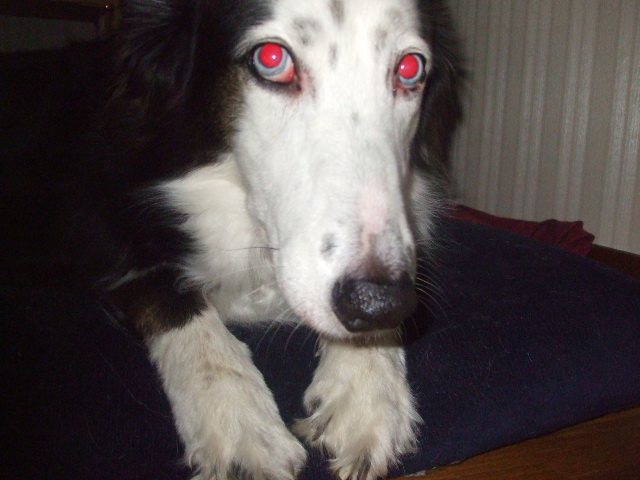
There was this dog

To honor those who endure the loss of any dear, family pet.

For Skittles (and…)


Sullen cries, all joy despise

when blind even All-Seeing eyes –

there was this dog.


Turbid seas, invited see

what men in better times might be –

there was this dog.


Gathered moss, a grey-green toss

of silt and muck and sun-less loss –

there was this dog.


Darkened days, all hope a haze

delight could spare no time nor trace –

there was this dog.


When fortune called, new joy installed,

instead of dark, did grace befall –

there was this dog.


Unnerving sounds, made still hearts pound,

her swift, sharp sound brought courage found –

there was this dog.


Children’s songs, if one or thronged

her faithful joy to them belonged –

there was this dog.


Days alone, unwelcome won,

kisses, wet, when we got home –

there was this dog.


Time has come, when pipe and drum,

ne’er fully celebrates this one –

there was this dog.


There is this dog.

Finding my way with words…

What a strange thing, this struggle finding something to write. Life is never empty and always full of at least enough interest to fill a paragraph or two. It continually amazes me when someone can render readable jewels from the dungish fodder life tosses their way. I suppose such narrative prowess belongs to the realm of poets, novelists, troubadours and storytellers. I’ve been a willingly geeked-out participant in their literary entourage my entire life. Perhaps only as admiring onlooker, but from time to time venturing into their territory – cautiously, with reticence, but always possessing an eagerness to be acknowledged in their illustrious company.

Many journeys have I keenly undertaken as some writer, deft of phrase and swift of word, has led me into places both simple and strange, dark and macabre, airy and transforming. My own meager, quaint words are a stuttering effort toward unlocking similar doors for others to enter.

As I’ve stated elsewhere, I’ve had a love affair with language since I can remember anything at all. Words, like the clink of ice and water in a frosty glass, assuage my gnawing thirst for the beauty, passion, or meditative pause they offer. As chilled water rushes down a parched gullet cleansing and renewing along the way, words nimbly used bring similar rejuvenation to my spiritual throat.

I’ve had friends along the way who have helped nurture this love for language. The great poets have helped seal the deal in my pursuit of words and their meanings. John Donne with his inimitable “three person’d God” or the unforgettable Wordsworth, whose Romantic era pontifications opened to us the rooted origins of wisdom brought us

The Child is father of the Man;

And I could wish my days to be bound each to each by natural piety.

Emily Dickson holds second place to no preacher with such prophetic words as these:

Behind Me — dips Eternity –


Before Me — Immortality –


Myself — the Term between –

Gerard Manley Hopkins takes first place for me. It’s hard to top such lyrically perfect sentences as “He fathers forth whose beauty is past change” or The world is charged with the grandeur of God.” Closest to many hearts might be “the Lord is my shepherd, I shall not want…”

I’m well aware that I’m not alone in this love. Many fellow writers and bloggers share the giddy, geeky excitement of a well-turned phrase, well-placed modifier, well-spoken sentence and well-written story. I am always challenged and delighted by the work of these friends on this journey of words (prepare for shameless plugs). Barbara Lane, whose approachable, touching and personal tales always delight, Lesley-Anne Evans, a fellow poet and Canadian, Christianne Squires, who writes deeply on the spiritual life, and Seymour Jacklin, poet and master storyteller introduced to me by Barbara, to name but a few. All of these and more have provided a backdrop full of letters, words and sentences that have moved me beyond all reckoning.

Marilyn Chandler McEntyre proffers intentional steps in reclaiming and reinvigorating language from its present morass in her book Caring for Words in a Culture of Lies. She asks all the right questions, premier among them being, why worry about words? Her answers have had me glued to this book as she butters my lexical toast with rich, creamy goodness (should I have chosen a different metaphor here?).

The reclarification and reinvigoration of language is necessary in order for it to once again communicate, heal, unite, instruct, and draw us into mystery. She even goes so far as to suggest that our protection of language is a moral issue in that it has become so entangled in corporate and war-speak as to be largely impotent in regular conversation. Language has been effectively retrofitted to serve the causes of dominance and conquest. Good conversation is like wool on the spinning wheel, creating something of warmth and substance, drawing us to comfort and community.

I will save the rest of my thoughts on Ms. McEntyre’s wonderful book for another time. Suffice it to say, words are my friends, or at least acquaintances with whom I hope to be on the waiting list to be invited into that great feast of letters, subtleties, and the whirling dervish of dancing metaphor – a veritable stew of yummy lingual goodness.

If I can get in the door, I’m hoping to get an autograph.


Journal vs. Blog – why less is more

As I’ve written elsewhere, I love to journal. I’ve been doing so, poorly, since about 1985. As such, it has not been an uncommon thing to receive new journals at Christmas or for birthdays. It’s especially meaningful when my boys buy new journals for me. My younger son, Graeme, bought my last one. It is now full of my life; spillings of poetry, life musings and assorted literary brick-a-brack. I used a bookmark he once made for my wife that, along with his delightful pre-pubescent picture on it also contains the words “I love you Mom!” How could that not be life changing?

What follows is a typical example of what I might write in any given journal, especially a new one. And, as you shall see, there is no small irony in the sharing thereof.

“I wonder how many times I’ve had the experience of pen on paper, the brand new journal? Most notable is that both my sons have purchased new journals for me; Graeme a few years ago and now, this Christmas, mere hours ago, my older son, Calum. It is beautiful, leather bound and handmade in India (I guess, in the interest of appreciation for the thoughtfulness of my son, I’ll temporarily suspend my moral suspicion as to who may have constructed it!).

My spotty, irregular journalling discipline would be a poor picture indeed of how deeply meaningful it is for me. Yet, in spite of that fact I know so little about the art of creative chronicling one’s life journey. The greatest benefit of journalling is also its greatest challenge: slowing down long enough to consider, carefully and lovingly, one’s pilgrimage with God and others. It is one thing to write about life events. It is quite another to probe and record one’s thoughts assiduously, faithfully, prayerfully.

Even blogging, something else I enjoy immensely, is fast-paced by comparison, hampered only by the pace of my not inconsiderable typing skills. The sheer number of available words per minute on computer may in fact be counter-intuitive to the deeper interiority asked of me in writing out those same words.

What is it about our contemporary, Western mindset that demands such unsustainable productivity? Even as I write this I find myself thinking how much less efficient it is to write these words only to type them again an hour later for the benefit of my blog. Moreover, I can only surmise at the diminished capacity for memory and ongoing, dynamic interaction with my own interior life because of the ease of a ‘save’ button.

To sit quietly for long periods of time with small things, few words or simple thoughts is vanishing quickly from our cultural milieu. For our experience of time and space to provide enough interest it must be liberally peppered with constant stimuli, a veritable banquet of over-the-top sensory memorabilia. We are both products and victims of our own infantile detritus.

Anyway, I must now move on as this entry has taken much longer to write than the length of time it would take me to mindlessly watch a sit-com, fast forwarding through the commercials…

From pen to tea and back again

Fairly consistently, since about 1985, I’ve kept a journal. Well, I write in them. I write the stuff that happens to me in them, the stuff happening in and around me. It’s cathartic in one sense, having the cleansing effect of affecting a greater “soulishness” about the way I live and relate to my world. The visceral feel of pen on paper gives an immediate reminder of my mortality and the deeply sensory way God moves in us.

These days, however, I do most of my “writing” on computer and my pen is rusty, dulled through inactivity. It has sat, bored and undemanding, awaiting my return to saner pastures where the literary stream of consciousness I call writing gives voice once more to the complex confines of my inner circus. It is a life that always needs the light of day to prevent it from becoming just another cavernous, uninteresting drone of pedantic inactivity. Still, it acts as worthy opponent to any temptation toward self-aggrandizement. Try reading, honestly, your journalistic exploits twenty years after the fact and one is speedily confronted with the fact that the same shit I dealt with then is pretty much the same now, only with a few added layers of sophistication. This probably makes them more insidious since it is a common reality among us all to live out our lives, more or less, as the same person from start to finish. Our dissatisfaction with this reality dwells in kahoots with God’s unending desire to find us. The result is what we commonly call spiritual formation.

This morning’s exercise in stretching my spiritual muscles comes in the form of a feisty, deeply intelligent nun, sister Alice St. Hilaire. She is my friend, a fellow Ignatian and my spiritual director. If anyone can see through my often blinding hypocrisy it’s sister Alice. I have come to depend on this valuable insight lovingly offered. This is most likely because I live in a pretty consistent fog; a mushy, grey pudding of sleepy ambiguity and lack of focus all peppered liberally with self-doubt. There are always questions – so many questions, all of which become annoyingly absent the moment I sit down to sip tea and share God-talk with sister Alice.

She is never bothered by what bothers me. Am I to be intrigued or insulted by this? To be sure, it can be disconcerting whenever someone hears the most vulnerable bits of our lives and offers back ne’er a blink. It’s as though she is thinking, “alright, is that it, then? You’re all worked up about that?” A good spiritual director is one who listens to the story behind the story, ably stripping away the layers of our experience like Shrek’s onion. “Ogres have layers” he quips. If he only knew! They are adept at sensing where God might be in our unfolding narrative and never seem to be in a hurry to suggest broad, sweeping changes that might make things all better.

If I didn’t already have at least some rudimentary awakening to the things of God, such mental vapidity would seem cruelly disappointing. Of this one thing I am certain, God does not intrude upon our journey to provide certainty and a laundry list of perfectly satisfactory answers to all our queries. Countless souls, significantly greater than myself have discovered this long before me, Job being chief among them. If Job’s experience can be considered normative in any contemporary sense, we should take away the abiding idea that God does not exist to provide us with answers. Instead, God gives us better questions.

Every time I step into sister Alice’s quaint living room, the presence of God is thick in the place, literally dripping from the walls and windows and oozing out of the carpet. It smells faintly of whatever modest breakfast was consumed earlier and bears the years of humble struggle to survive in Yakima’s tough downtown, providing shards of light in the darkness there. Where my family and I dwell comfortably in “suburgatory” (thank you ABC) in our multi-bedroom home with our multi-vehicle mobility, she chooses to live in a quiet, unobtrusive peace in the midst of the despairing milieu of Yakima’s poor and destitute.

Sister Alice is fond of saying that the ways by which God has revealed Godself to me becomes who I am and paves the way for whatever may be next. If she is any indication of the ramifications of this statement, then I need to make the journey from pen to tea and back again. It is a trip exponentially greater than the sum of the miles involved. It is a foray into the heart of God.