Adventia, day 1

No, the above is not meant as some cheap attempt at a New Joizy accent with the word adventure. Let’s just call it the purposeful amalgamation of Advent and Fragmentia. Let it be a place where the illumination of God’s in-breaking into our world found in the Advent narratives unites with the fragments of literature and faith and life seeking to bring us to deeper understanding of it all.

Advent is upon us once more. With it comes a barrage of books and practices all aimed at helping us get the most from the experience. Last year I chose to post a daily poetic reflection on my poetry website. This year I’d like to do something similar here on innerwoven. It gives me opportunity to dive deep into some of the best words about the best time of the year; the beginning of the church’s calendar at Advent. These poems are both old and new and are found in various places.

For Advent, day 1 we begin with a gorgeous piece by Sally Thomas, which I saw first on a favourite Instagram channel, #realpoetsdaily 

Here is “First Sunday” by Sally Thomas ( @sallytnnc )

Morning’s Morning

Seeds of Grace

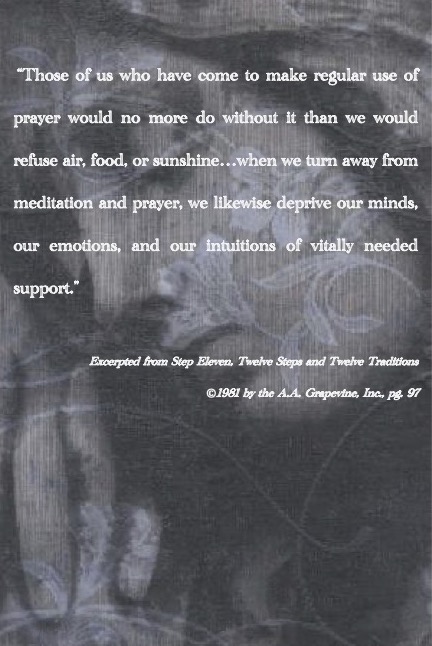
I’ve been quite open about my struggle with alcoholism and subsequent recovery. Perhaps it is because, through my association with the program and community of A.A. I’ve rediscovered the loving, trustworthy God I once knew. That God somehow got lost along the way, despite my practices of faith, my role as a “professional Christian,” and a radical conversion experience at eighteen.

These days, my faith is simpler. It is not so cliché-ridden, expectation-laden, preconceived notions-driven. It is one of basics: learning humility, self-love, and the practices necessary to maintain and nourish the same. Along the way, I read everything I can get my hands on to assist in that journey. This is a short excerpt from my Seeds of Grace: A Nun’s Reflections on the Spirituality of Alcoholics Anonymous by Sister Molly Monahan (pseudonym).

Prayer Is Air

Prayer and belonging

Until my song comes here

Our Europe Team for Serve Globally, the mission organization we serve through our denomination (Evangelical Covenant Church), recently met for our annual retreat (two and a half year COVID delay notwithstanding) at Le Lazaret in Sète, France. For my wife and I, it was only our second such experience. Our first was in October, 2019 and acted as a kind of “reconnaissance mission” as we explored God’s call.

This beloved team is a collective of singular passion, unwavering commitment to justice and reconciliation, enviable humour, rich fellowship, boundless creativity, and endless capacity for joy. We would take a bullet for any one of them.

Our speaker and guide for the retreat was none other than Al Tizon, former Executive Minister for Serve Globally, missiologist, teacher, writer, prophet, and friend. His upcoming book, Christ Among the Classes, shaped our discussions.

By way of understatement, these were not easy conversations! We engaged in matters best left alone unless one wants to face the convicting issues of wealth, the Gospel to and among the poor, our complicity, knowing or unknowing, in perpetuating systems of greed and disenfranchisement and how all of that intersects with the gospel of Jesus Christ.

Dr. Al Tizon

It can be equally stirring and unnerving to discuss one’s place in a world given to championing the rich and powerful at the expense of the poor, while not demonizing the rich. What does that even look like? Is such socio-economic righteousness even an attainable goal? When does it cross the line from kingdom equality to political radicalism? Is there a difference? If so, what?

The questions arising from such discussions are as dizzyingly complex as are the issues from which they derive. But, it is our calling as followers of Jesus, himself a friend of the poor, and sinners, and children. We, by association, are to befriend the outcast, emancipate the leper du jours; even love our enemies. This includes those we are most quick to either dismiss or demonize.

Al (he’s not one for the fineries of title!) painted a picture of the transformation of heart toward equanimity by way of downward mobility, an increasing identification with the poor. This starts first with an awakening to our own relative privilege and wealth. To be “born again” is to see anew, or perhaps for the very first time, our place in the broader world; our individual and collective sin and how it has affected us and those around us.

We journeyed through a series of steps along the way toward the ultimate goal of befriending and advocating for the poor. The rich are not of the devil. Nor are they to be eschewed, pooh-pooh’d, or railroaded out of access to grace. But, Jesus makes clear that they will have a much more difficult time when it comes to the attitude of mind and heart necessary to befriend those who, by definition, require something from them, whether that is as benign as their time or as challenging as their resources.

I like to keep things simple. I take my cue from Wendell Berry who recognized the need for every song we compose to be fully accessible to all. If not, we still have work to do…

Doors

“A picture is worth a thousand words,” once proclaimed advertising executive, Fred R. Barnard.

Like so many of you, I love picture. Metaphor. Symbol. Illustrations as it were of the lives we lead that, themselves, mirror the confluence of flesh and fire, body and spirit, life and eternity. Occasionally, I post something that is a tip of the hat to such metaphors.

Door is a favourite such metaphor. They are something we must open ourselves but which, at times, are opened for us. Often, I open doors just for me, but most doors are communal, allowing others to go through with me, before me, instead of me, or even in spite of me. Once open, we’re faced with a decision: stand and gaze, or walk through and take an existential risk of faith mixed with trust. Once through, we gain the elation of having taken that risk and our view opens to be exponentially more expansive than it was before.

Speaking about prayer, Jesus made a remarkable promise to his disciples, “Knock, and the door will be opened for you.” He also said, “I am the door. If anyone enters through me, he will be saved, and will come in and go out, and find pasture.”

Such a profound, but mysterious, invitation!

Whatever the circumstance, in Christ, all such doors lead inward to friendship with God and outward to the riches of a universe being restored, renewed in God’s image. All of it an act of grace.

Come, let’s dare to walk through together.

The art of words, eleven years on

On January 31st, 2011, I posted my very first piece on this blog. After much consideration I chose the name innerwoven because it seemed to capture what I believe to be true about all of us – we are beloved creatures kneaded into the dough of earth and eternity by God. An often-nasty business requiring much punching and bending and mucking about that constantly shapes our raw material into something warm and nourishing to be served up to a world starving for its goodness. And, although true spirituality is a two-way street – impulses and experiences, ideas and trouble, ecstasy and environments – moving in and out of us, the work of God is largely an inner one. God, at the very center of us, pushing His/Her way out like radiating circles of magma to the mouth of our volcano, ready to burst out upon the world.

This blog then was originally designed to be a catch-all spiritual notepad upon which I could scribble a few ideas about the nature of the soul, the shape of my emerging life, and in so doing, build a little community. Writing about all that required poetry which is what happens when words make love. They impregnate the page with something remarkably sweet and real. Robslitbits became the creative writing arm of the blog which I later portioned into a separate entity. At first, however, it was all right here.

To celebrate eleven years, I repost one of my earliest blog entries. This one was originally early February, 2011, but it still says the kind of thing I’d typically say. Thanks to all of you for taking this journey of spirituality and literature with me. You make life fun, interesting, and just…better!

* * * * * * 

Gerard Manley Hopkins. John Donne. Wm. Shakespeare. Christina Rosetti. Emily Dickinson. Paul Simon. Bono. Since I was a very young lad growing up in Calgary, Canada, I’ve had a love affair with language; specifically the art of words. Words spoken. Words written. Words read and re-read, like ingesting food for the eyes that gets digested in the heart.

In the holistic sense of the term, words are sensual. They are meant for more than simply corralling ideas or channelling information. They can and should be beautiful for their own sake. Carefully chosen and meted out in gradual succession like adding the correct ingredients in proper order to the perfect meal, words are part of the whole and greater than the sum of their parts. They massage meaning into our spiritual skin, perking up our inner ears to hear what our unseen lover whispers in our unguarded moments.

The Christian life is more poetry than prose; more a wild garden than suburban lawn. To that end I share this brief poem:

Photo by R. A. Rife, Edinburgh, Scotland

Thanks, Bruce…

67474583_10158586894473709_2369543928333467648_n.jpg

“All through my life I have embraced and questioned the night, and loved its random light: the aurora borealis, the starry reaches of the cosmos, streetlight ricochet off car metal and darkened windowpanes…the light of friends and lovers.
 
We are on a great journey, through darkness and dawn, across time, though sometimes I fear that our journey is about to end. We must not succumb to fear or avarice; we must continue to embrace life, seek light, and gather in the charity of night. This is what God wants from us and for us. Mirrors of the past shine with the hue of unborn days, just as stars glitter in the dark night to light our way.”
 

I love metaphor. I appreciate the multitudinous ways it invites us to consider really big stuff. Night and day, dark and light, doorways and highways – all of it in pursuit of understanding that which can be never be fully understood. 

Longing, as I’ve written many other places, is a condition most endemic of the hungry human spirit. If we are anything as humans, we are spiritually starving. Like the blessing of pain to a body out of joint is that of longing to the soul under duress, or even just at rest. We long not because we’re broken necessarily, but because we want either to be unbroken, or, in my case, to experience the proximity of God as God when last I WAS broken.

However, there’s a danger implicit in longing for its own sake. It can easily become an obsession, a drug without which we feel we can never really be whole. For too many years, in the name of contemplation, I lived in what could only be described as wallowing. It was often a cottage industry of self-pity in the guise of discerning depth; “look at me suffer and enjoying it” rather than the healthier pursuit of gratitude-in-darkness while praying for light. Persona incognito.

I’ve learned since then to notice the subtle differences which exist between genuine longing and a self-imposed spiritual subterraneanism posing as such. Nowadays, whenever longing arises within me, a few questions arise with it. First, where is this coming from? Why is it there and what is it telling me? Is this genuine heartsickness or just indigestion?  Does my spirit need something or am I falling into addictive thinking once again? 

As beautiful, daring, mystifying, and thirsty as the human soul can be, it is also fickle and will play tricks on us. What presents as darkness might just be ennui, the listlessness which is part of being human. What presents as sadness might better be described as an insufficient attention to the light of Christ always burning in our deepest places.

The Bible and, by extension, the great tradition of Christian spirituality have aligned the parallel barrels of mystery and metaphor as their formational crosshairs. The immense enterprise of God’s program of cosmic reclamation remains unsuited to the quaint and glib prognostications of “systematic theology”, or as I like to see it, the detached mechanics of straining eternity through an eye-dropper. Protestantism in general, evangelicalism in particular, are guilty of this diminution.

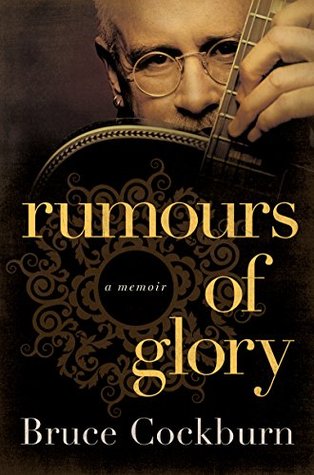
All of the above has been the experience of my hero, Bruce Cockburn. I recently finished his memoir. A favourite person. My favourite genre. The chance to devour, even absorb, the fascinating lives of fascinating people. My life grows from the experience, every time. What’s not to love? Ah, but this is not just any memoir. 
18498533

It is impossible to understate the impact Cockburn has had on me. My music. My approach to the guitar. My songwriting. My ongoing love for literature and words. Especially, my spirituality, infused with longing as it has been. Even my personality exudes a certain whiff of Cockburnesque mystique, much of it intentional.

He doesn’t know it (yet), but I credit him in large measure for my career in music, songwriting, and for my journey of faith. While he was still pursuing something beyond the pale for himself, he speaks of “the speech of stones.” It was probingly pagan but sufficiently poetic to peak my interest. There was something out there worthy of seeking.

Bruce (may I call you that?), if it’s good enough for you, it’s good enough for me.

It still is.

Light from Darkness – a prayer

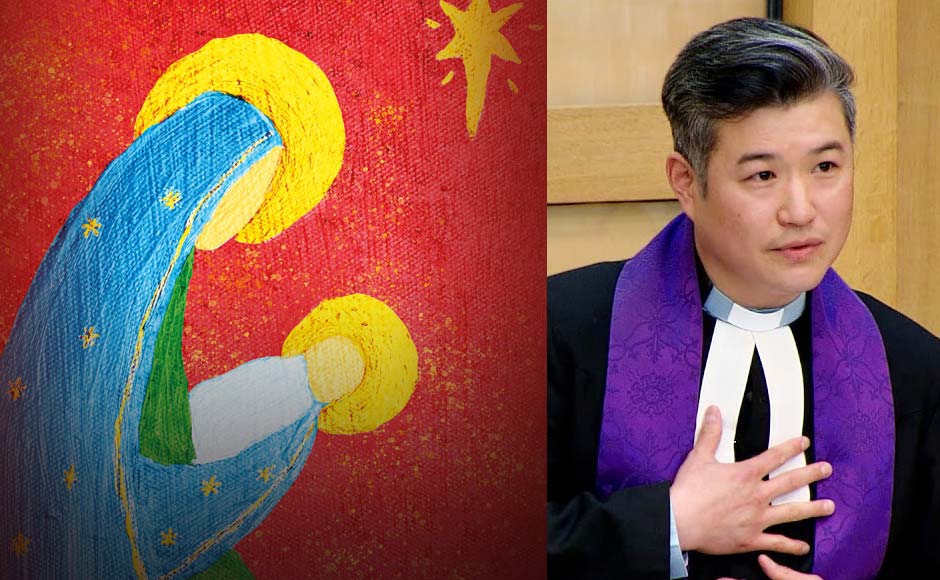
I love this prayer by Church of Scotland minister, Sang Cha. Read it. Pray it. Read and pray it again – alone, or with others, this Advent season.

Rev Sang Cha, the minister at St Mungo’s Parish Church in Alloa, Scotland

Lord,
thank You for the darkness.
Thank You for letting us sit in the darkness.
For in the darkness, in the silence, we know that You are God.
For You have taught us through Your servants in ages past that a god who always answers is an idol.

In every darkness, You have brought the light of Your one Word.
Just a simple Word.
Your Word feels like sitting under the Sun.
Through this Word,
You remind us that our incomplete light shines brightest when we are lit from behind by the light of God.
That our light shines brightest when nothing but You can sustain it.

In these winter months, with the absence of light,
remind us again that absence creates a presence.
So, we thank You as poets thank the coming of spring.
Everything begins anew with You.
Always and again.
Amen.