A poetic walk through the Passion

Friends, if you have not taken opportunity to visit my other blog: http://www.robslitbits.com, I humbly invite you to do so as I post a poem a day through Triduum (Three Days) and Easter. Let’s take this journey together and see where it leads.

Grace and Peace, R

Jesus nailed to the cross

http://robslitbits.com/

Reflections on faith and art – Earworms of Grace: Leitmotiv

Like everyone else, I love Fridays. tgifIt was Friday. Friday is my day off. It also happens to be my Sabbath. I’m rather possessive of Fridays since they have become so reconstructive to my psyche, such as it is. Yet, ironically, if there is ever a day I feel more stressed about “wasting” free time, it’s Friday.

I have a fixation with fixations: an idea, a besetting issue, relational matters, missing car keys or, God forbid, a misplaced book bag. Whenever an idea, either good or bad, finds a perpetual return, I can get stuck in what the French call an idée fixe, a fixed idea. It’s something that, good or bad, refuses to go away; a kind of paralysis.

stressed

My brain and my soul spar over time served, with neither winning. I should be working harder at not doing something significantly insignificant. It’s a bit like standing in front of a wet paint sign and sensing an overpowering need to touch something, just to be sure. “Don’t think about sex,” the deacon tells the unsuspecting youth group and, for the next half hour, boys have a dreamy look in their eyes with one eyelid partially closed and crossing their legs. Ha! As if they’re fooling anyone.

I love to practice silence and contemplative prayer on these days and deal with distractions about the same as anyone else – poorly. But of all the distractions with which I’d prefer not to do battle during contemplative prayer, some trite, facile, mind-numbingly repetitive song would top the list. It just keeps showing up no matter how hard I try to redirect or quell the noise. You know that thing where, at sixteen, you finally get a chance to lean in for the long awaited kiss but start laughing instead because of the impressive fart joke your jackass buddy told you earlier that day? It just keeps showing up at the worst moments. Or, when you’re trying to find the Zen of vacuuming the stairs but the only thing that incessantly hammers away at your brain is that ditty from the ghastly used car commercial that sounds like it was written by angry zombies on a bad acid high.

I’ve heard this phenomenon described as an earworm. earwormI have no idea who first coined the phrase but it is very appropriate to my point. Sometimes my mental needle gets stuck and can’t move on (for those younger than I, that is a reference to ancient, black discs that magically play music when rotated clockwise and scratched by a needle on a stick). Such earworm annoyances can make a sorry mess of what might otherwise have been a nice day.
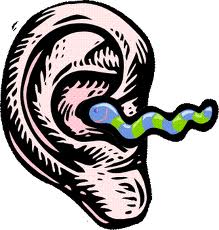
But maybe that recurring ditty from the horrible TV ad, vis a vis, idea-fly constantly buzzing around inside my head isn’t half bad. Even if it is a universal experience, I have to wonder whether it can somehow be redeemed, retooled from a shitty tune to some richer fare, something even…redemptive. Perhaps it’s possible to redirect such things and, in so doing, make for better internal music.

The Germans, not to be outdone, have a term, delightfully fun to say, referring to a short, constantly recurring musical phrase: the leitmotiv. It means literally, “leading motif” and is conceived as a guiding idea around which larger pieces of music revolve. This idea may be a short melodic phrase, harmonic statement or rhythmic figure that hides and flits about within a larger work. It morphs and changes according to musical or plot needs. Sometimes new ones are added, granting even more interest and mystery to the piece. Leitmotifs can help to bind a work together into a coherent whole, and also enable the composer to relate a story without the use of words, or to add an extra level to an already present story.

Think old movies. The piano accompaniment was used to enhance action, delineate one character from another, create atmosphere or just build a fun backdrop against which the characters could capably caper. Still closer to home, the Star Wars Theme continually reappears throughout an entire series of movies that, in its subtly changing demeanor, evokes equally subtle changes in characters, moods, settings, relationships.

Back to Fridays. I am coming, albeit slowly, to accept and even embrace these Sabbath earworms, these recurring dramas that play out in my overactive brain. Jesus said such cool stuff like “people were not made for the Sabbath but the Sabbath for people” (Rife Armchair Translation). This tells me a lot. It tells me a lot about Jesus and the kind of person he was and is. This is a statement primarily about grace. It is an indication of the kind of gift-giving God I seek to serve. The gift of Sabbath suggests that no amount of bad earworm ditties need steal what is always pure gift. To relax into guilt free nothingness is the best non-thing ever on a non-day to non-do.
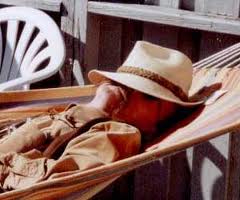
sleep in hammockThese days, I love to try and fool these earworm triggers by writing long to-do lists, placing them on my lap during prayer and then crumpling them up while I go off to take a nap. Let ‘em come I say, these leitmotivs, since in God’s playground, they are diminished into earworms of grace. In a Spirit-borne rest, even distractions become holy. I might even find myself singing the nasty little buggers ‘cause, you know, if you can’t beat ‘em…

TGIF picture: www.runningcirclesaroundtheturtles.com

Earworm picture: www.blogs.davenportlibrary.com

Man in hammock: www.psypost.org

Reflections on faith and art – Stop in the Name of Love: Fermata’s Gift of Pause

It was a strange time in his life. He had been many things, experienced many things, perceived many things in as many ways, fought and lost many battles, won still others. But, never in all that time would he ever have used the term, stable. Young, handsome, energetic? Maybe, once. Bright, eager? Still, albeit tempered. Passionate? Sure, but with a more nuanced meaning. Confident? Perhaps, maybe…not sure. Focused? Well, let’s not get ahead of ourselves.

Stable is an odd word, one best used to describe a table or toilet seat sufficient to the task of supporting their respective burdens with certainty and ease. Give them your worst and what comes out bruised is ego, not the thing itself. They’re…trustworthy.

Trustworthy! Eeeww, how unsexy. He had hoped for a word more like solid or chill. Probably, the word that best illustrated his present life was rest. The overwhelming feelings of inadequate job performance, deadline anxiety, friendship uncertainties, identity questions, and fears of many kinds, including those of “right” doctrine or “biblical” theology (whatever that means) were all beginning to fade into the background.

The experimental days of project du jour held less fascination for him than previously. Instead, the growing appeal of quieter, simpler ventures held sway over the quickly passing days. He yet harbored dreams and aspirations, the hopes of any person with a heartbeat. However, they were rather less…insistent, less bothersome somehow, full of timeline-laden expectation and anxiety.

bluemassgroup.comHis trajectory fifteen years earlier had been one of skyrocketing up the ecclesiastical ladder of success (you better believe there’s such a thing). He had begun this upward career-clamoring by means of big, glittery, evangelical worship leadership. His growing bevy of names to drop, gloat-able experiences, and boast-able accomplishments all kept astride his equally rising ego…and the accompanying stress.

But there was a problem. His thirsty soul was getting in the way. When it appeared there was nowhere to go but up, his soul shouted Stop! in the name of love; let’s go down instead. It was barking louder every day, refusing to be ignored. A spiritual thirst had taken hold coupled with a theological crisis of epic proportions, denying the upward mobility to which his career seemed to be pointing.

In a few short years, he had gone from the music staff of a large, well-healed, hard to ignore big-box church in a wealthy, resort town to a much smaller, über-educated, College town church to a still smaller but diverse one stuck in a semi-arid, fruit growing valley in the middle of, quite literally, nowhere. Here there were no names to drop because people with “names” tended not to live there. Gone were the multiple monthly, high profile gigs that promised regional notoriety and decent pocket cash. Gone was the euphoric environment proffered by the diversity, youthful panache, ideological smorgasbord, and creative playground of a College town. Gone were the long, rainy days so conducive to his creative process and emotional make-up.

Taking its place was residence in a small city known more for its slow drivers, monster truck rallies, poverty, gang violence, county fair, and conservative politics. Where would such a man as he find kindred spirits in such a place? God’s faithfulness however, even in an environment seemingly hostile to his personal mode de vie seemed to emerge serendipitously as a fine dust collecting on the windshield of his spiritual bus.

In his ever-mutating thoughts on the matter one thing occurred to him as a central feature of his life over the past few years. He had learned to stop. If ever there was a singular gift to a healthy spiritual life it is Shabbat, Sabbath, holy pause.

The idea is beautifully mirrored in the fermata. rogerbourland.comLooking a bit like a beady-eyed Cyclops with bad hair it is the musical symbol that, like the crossing guard, tells all ongoing traffic to pause indefinitely while other, more important matters, may be addressed. It holds things back, avoiding danger and confusion.

To pause suggests a willingness to stop indefinitely and count one’s steps. The days of our lives (no relation) hurtle through time and space at a frightful tempo. We are often blind to this fact (as was he) largely because we become hypnotized by how much momentum and power we pick up along the way. But, despite their apparent beauty and order, without sufficient space for pause, they begin to sound more like an unwieldy stampede of bucking, snorting notes headed for unseen cliffs of cacophony (think Lucille Ball after too much Scotch singing Schubert).

The fermata is the Sabbath of music. It shows up not as regularly but performs a similar function. In music, as in life, are surprise, delight, order, disorder and angst…beauty. As any composer will tell you however, music is made even more magnificent against the backdrop of its own silences. Rests are the music of silence. The fermata is the rest of exhalation. It holds things in place, defusing the potentially damaging effects of kinetic energy. Rather than something wonderful ending up a steam train careening over a cliff, the musical Sabbath of fermata puts the brakes on. theoildrum.comSabbath secures us to the manuscript where the Composer’s grace and skill can adjust potential weak spots and lovingly dote on us. Our music can cool down, let off some steam, and regroup before beginning its forward movement again. Music is made more beautiful through its silences, its pauses. God makes us more beautiful in exactly the same way. As we pause long enough to take care of overused musical sentences, our emerging symphony is writ large across our life manuscript where all may experience its beauty.

He yearned to say that advancing age had brought the wisdom he craved. He’d had his moments. But ironically, some of his most egregious errors, lapses in judgment and felony mishaps had occurred smack dab in his late middle age. Chronos is never a guarantee of kairos. boards.cruisecritic.comSubsequent time and reflective pauses however had brought a sense of perspective that fanned out behind him like an ever-growing wake, revealing his course, in a sea more than half traveled. The music was slowly beginning to make sense.

These considerations allowed him pause (pun intended) to reflect on some of the reasons for his place in life. Although not without pain and challenge, the idea of stability no longer seemed so…tedious. No, it was a gift, a grace lovingly massaged into the music of his life.

Maybe it wasn’t such a strange time after all.


Photos courtesy of www.bluemassgroup.com, www.rogerbourland.com,

www.theoildrum.com, and www.cruisecritic.com, respectively.


Reflections on faith and art – Addicted to Melancholy: Life as a Major Seventh Chord

The impossibly orange morning sky mocks my melancholy and seeks to repeal my commitment to a sober day. The feathered fingers of precocious light embroider a morning otherwise condemned to generous helpings of over-thinking and under-living. Like passive-aggression to a psyche better suited to hiding than fighting, I brace myself for the full welcome of morning and, coffee in hand, steep in my self-righteous adherence to less than full inclusion in the happy chatter. If another somber, artsy day of writing and pain-mining was truly what I was after, then why the open laptop at the center table of my local Starbucks? Dear God, am I becoming “that guy”- the artsy, Mac-toting, liberal coffee snob?

at the coffee shop

Those like me are typically well-versed in the finer points of self-pity and overwrought, dilapidated prisons of Freudian fear wed to Jungian collective consciousness, albeit devoid of the intended mutuality to which it points (or much consciousness for that matter, either). The artistic temperament, housed in most musicians, writers, painters and the like, excels at emotional dumpster diving for those occasional jewels found at the bottom of a whole lot of shit. For some strange reason, it contributes to the creative process, for me at least. The smelly job of wading through my fly infested felch gives a certain twisted pleasure if the reward is a gleaming bit of writing or lyric or melody.

Even as I write these words I can’t help thinking to myself, is it any wonder type-As generally hate guys like me?! Growing up, I was that kinerdsd who was either so preoccupied with his own swirling world of imagination that I could just as easily walk into walls as find my desk or whose swashbuckling stories of whim and woe – many of them stolen – regaled whatever girl was most likely to buy into it. In fact, a gift with words (my parents and friends called it bullshit) from an early age made finding friends an easy task, especially girls. This was not because I was particularly good-looking but more so because I was a skilled navigator of whatever self-projections were the most captivating. One might say I was a bit like a buzzard who scavenged tidbits of social detritus suitable to any given moment but who prettied them up with the fineries of clever, droll turns of phrase.

There’s a problem with this however. It has meant that a pleasant, even-tempered melancholy, peppered liberally with witty banter instead of good, old-fashioned hard work and embracing failures, have propped up my life artificially. I’m smart enough to have talked my way out of being wise. And now, at nearly 50, I realize just how little I really know; how little I’ve truly lived. It would have been better to shut-up until I actually had something worthwhile to say!

Now, lest I begin wallowing in self-pity and regret, let me assure you that this demeanor, although prevalent, is not an entirely accurate picture of my modus operandi. I suppose the most apt metaphor I can find for my life is that of the Major Seventh chord.

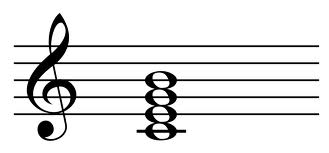
The Major Seventh chord is non-definitive, unlike the Dominant Seventh chord that pushes its way around until it gets what it wants: resolution. The Dominant Seventh chord is the spoiled child that has never had a need go unmet. Ever. And we get to hear about it regularly and insistently. It needs ground zero to be happy and is pissed off when it must hang around for any length of time without that resolution. It’s like the guy standing at the urinal but forgetting to put stuff away before walking out of the restroom. It’s unsightly, largely unnecessary (unless you’re from Australia) and, well, kinda stupid.

In musical terms, the Major Seventh chord has a raised seventh degree of the scale. She has moved past the standard seventh to a higher plane of consciousness less impacted by the need to settle everything but still yearning after something else. It is still built on a good foundation of a root, followed by a strong and happy major third, and another minor third on top of that. All the building blocks are in place to produce something of strength and beauty. To add the seventh is to add something uncertain, even unstable. The number of notes begins to feel crowded like too many people on a bus after taco night at the pub. Something has to give.

The Dominant Seventh says, in essence, fuck you, this is my show and you bloody well better serve up my demands for a trip back to home plate. The Major Seventh chord has a higher sensibility about it. She never demands anything. She suggests something, something angst ridden and indefinable. Her top note signifies searching, longing. The seventh note of an eight-note diatonic scale is what musicians call a leading tone because it’s leading us back “home” wherever “home” happens to be. However, in her case, there is a kind of contentment with the in-between liminality of a bossy Dominant and a restful Tonic. A quaint story of dubious origin tells of Mozart’s father, Leopold who, in his final attempt to get Wolfie out of bed, went to the piano and played the first seven notes of a diatonic scale, leaving it unresolved. Within seconds, feet were heard flying down the stairs to play the final note. To a musician, it’s a sin akin to lighting the curtains on fire and then walking away.major 7 chord

Major Seventh chords practically defined the 1970s’ Adult Contemporary music scene. Artists such as Bread, America, Gordon Lightfoot and Don MacLean built entire careers on them. They’re perfect for songs about lover’s triangles with the loser singing. They reek of the melancholy I’m so in love with.

And that is my point. Those of us condemned to live in the spongy greyness of our own articisms can ill afford too fine a definition of who we are. We don’t want to be too pinned down, boxed up or, God forbid, understood. And yet, deep within, there remains a fervent longing for just that: to be known, heard, experienced. If I am to find my best self, I’ll have to settle for the delicate balance of sadness and hope enshrined in the Major Seventh chord. It is life in the rain, an honest addiction to melancholy.

Frankly, it has served me well.

When bleeds the sky

when bleeds the skyThe moments of our days are unpredictable, holding out little prescience as to their pending gifts or challenges. What faces us can only be guessed at. Most often, in terms of our under-the-sun perspective, life can feel a bit like a craps shoot. To many, such a heavenly closed door policy is anything but comforting. We prefer instead the more attainable light of tightly Franklin-Planner arranged days. Without casting aspersions on such a wise care of time, I’d like to suggest that even our best planning can ill-prepare us to encounter God’s mysterious visitations.

I speak not of those fantastic Old Testament stories of flying chariots, burning pillars, swooping angels, Angel of the Lord appearances and the like. I speak instead of the small, almost imperceptible invasions of the Holy upon our otherwise lack lustre days. That moment of awareness, of…recognition wherein the universe, if only for a moment, makes sense. It can often be accompanied by a clear and calming peace, even joy, which allows all else to fade into the background. Occasionally, a particularly ominous, albeit centering, “fear” frames these times, lending the profound insight into…something.

In these spacious moments of grace, God allows us a front row seat; not of the apocalyptic kind where we hope to see whose side wins, but of the more existential kind. As we go about the numbing minutiae of our days, God comes and taps us on the shoulder. It’s a touch so gentle and unassuming that we do not spin around as we might when a meddlesome younger sibling might have done when we were children. Instead, we are invited to lift up our heads from their place, buried in the details of daily life, and wait.

The pause we feel is not merely some ripple in time like one might experience on the Starship Enterprise but something more, subtle, more…intentional. Then, as we wrest ourselves from the preoccupation with ourselves and manage an inward glance, God who, in Christ, has taken up residence within, causes condensation to appear on our souls; hints of God’s warming Presence. Contemplation is the act by which we wipe away this condensation and, behind the fogged mirror of our being, we see the face of Christ, opaque and slightly blurry, but unmistakable.

We let our eyes meet and he points us upward to where we mistakenly aim our prayers and shows us a sky that is cracked and unsure, but behind which leak strands of red-hued light, made that way as truth shines through blood-stained beauty and we are changed from shadow to brilliance.

* * * * * * * * * *

When bleeds the sky, the heav’ns drawn taut,

we feast our eyes on what fades not;

and God’s way dawns on nighted hearts

in sweet refrains God’s love imparts.

______________________________

When righteous hands stretch’d out to die

the broken world and heaven cried,

but God stayed not in dreary tomb,

but rose again to life anew.

_______________________________

When souls draw nigh to find their place,

in glory’s glow, sin leaves no trace;

now live we in God’s bosom rest

and there, secure what’s true and best.


(Text: Robert Rife ©2013; Tune: Traditional English melody)

Photo @ www.phombo.com

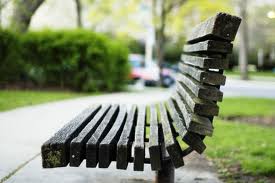
Park bench Jesus

A while back I posted a piece entitled Laundry Day Jesus. It was a tip of the hat to a favorite doctrine of the Incarnation. This is a second attempt at the same…

park bench

Just having an empty page and pen in hand does not guarantee a lucid exchange of journal-thoughts, accurate reminiscences or profound epiphanies. What it does freely give is some open, lined space in which to articulate, albeit poorly, the state of my guts.

I cannot say from whence come the complex, oft competing impulses that so shoddily guide me through my days. The cracked, grey skies of the winter months hide well the last gasp of spring, but generally offer a steel-blue repose for artsy contemplatives like me. Conversely, the giggly swagger of summer lays out the easy welcome mat of joy and frivolity for most. I, on the other hand, struggle with an uneasiness that taunts me into believing I should feel and behave similarly.

I am often depressed in summer. The rather mystifying collage of incoherency that is my life refuses to pay attention to the obvious. With people laughing, dogs barking, frisbees flying, lovers kissing, one would think these the prelude to perfect afternoons. But my stubbornly individualistic mystic-whimsy makes unreasonable demands of me. It says pretentious things like “this is all too obvious; there is no sense of the obliqueness and nuance of the later seasons to satisfy this needy soul.” With such utterly ridiculous, almost morose sensibilities, is it any wonder that I so easily lose my way in other things?

Relationships baffle me. They frighten me while simultaneously providing hope. For too many years my relationships have been more responses to the gaping holes in my psyche than the proactive contributions of reciprocity. It makes me wonder how many times those I call friends were quite happy to see my ass on the way out the door. It also makes me wonder what others’ perceptions are of me. Further, it forces hard questions – questions that ask the deeper concerns of motivations, neglect, apathy, loneliness, desperation…even subtle hostility.

Do I leave friendships better than I found them? Do I take away more hope than I bring? Do I engender trust and ease or the tension of interpersonal unknowns? Would I be the hurting person’s first line of defense? If I make people laugh is it to bring them joy or me recognition?

At the risk of crudely undertaken and ill-advised self analysis, I poke my nose into this new calendar year. Knowing what I know (or think I know) of myself, I would not be easily given to hope. What I cling to instead is this crazy idea that, in Christ, God has sought us out; sought me out. Jesus is God’s jacketed dream for the confused and confusing, whimsical and uncritically romantic person like me.

Therefore, when I otherwise might be inclined toward a pewter-grey hopelessness, I need only notice the hooded Savior seated on the park bench of my soul. From there he feeds my questioning birds with the manna of presence he keeps hidden in his coat pocket. It doesn’t always satisfy right away. But it keeps me hanging around for more.

And he doesn’t seem intent on leaving anytime soon.

Picture at www.foodfashionandflow.blogspot.com

The show must go on

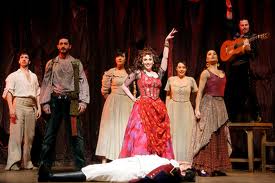
zimbio.comOnce upon a time, there was a wealthy theatre owner who said, rather inauspiciously, “well, the show must go on.” The actors had learned their lines. The sets were complete, dazzling in their allure and exactitude. The news was spread far and wide of the coming of this great spectacle. All was ready. But, if this was so, why the hint of shrugged shoulder skepticism in this phrase?

Anyone who has ever had the delight and electricity of live performance knows the unspoken pressures of day-to-day rehearsals against a backdrop of innumerable unseen dangers. What if the lead takes ill? What if her understudy also takes ill? What if the set designers or lighting coordinators or musicians’ union decides to picket the whole affair? What if the venue goes into receivership three days before opening curtain? What if? What if? What if…?

But then the lights dim. There is a moment of silence. The air is palpably more solid and we struggle to breathe, awaiting…something. Then, the orchestra swells with timpani crescendo as the first characters stride onto the stage. The thing we had been waiting so long to see unfolds before us in an explosion of color and swirl and dashing costumes. If only for an hour or two, we become pirates, animals of the forest or gods of mythology. For us, it is worth the wait just for these spine-tingling moments when our simple, cardboard lives are invited into a larger than life story.

As an enthralled audience, we often have little idea of the many strange and stressful tornadoes that beset the stories that move us. All we know is that we love what we see. We tell our friends. We are all a-twitter (yup, pun intended) about our experience that becomes ever greater in the telling thereof.

We are often spectators of our own lives. We give ourselves stage cues and arrange the sets for maximum impact. We choose our characters and assign actors carefully lest we become less than believable. We resign ourselves to a show-must-go-on attitude and then, against all odds, burst onto the stage where others get caught up in our orbit.

But we’re left empty somehow. Our post-performance lull in the backstage dressing room can boast nothing more than a tired, sweaty, makeup mess on a face we do not know. We’ve acted well. We know our lines. We’ve become one with our character. But the character has become symbiotic with what lies beneath it. The mirror shoves back a stranger in our face.

What kind of story have we constructed for our own audiences? Who have we hired to perform the most admirable parts of our stage-play characters? From where do we glean our deepest inspiration to shape our personas? A story is an ongoing pleasure, one meant to reveal ever-deeper treasures of delight, surprise, awe or fear with every turning page. But unless we have a commitment to unmask and expand our story beyond the stage and, with courage, risk the critics’ page, we never make it out of our dressing rooms.

A new year has dawned. The curtain has opened once more upon a new stage with different lights, an updated script, actors both old and new and an audience that awaits us. We alone are aShakespeareware of the maelstroms that have brought us to this place. We are the ones who now stand before our audience and decide whether or not to remove our makeup, leave our script behind and let the lights show us for who we really are. Said that greatest of all playwrights, Shakespeare, “All the world’s a stage, and all the men and women merely players: They have their exits and their entrances; and one man in his time plays many parts….”

But if we are willing participants in the Kingdom narrative, we’re given help with our lines, the cast has been selected to shape our character for maximum delight and impact, hope and excitement can replace dread of opening day and our only real audience already knows how great this performance will be. He has used us to write the script. We are in fact co-writers.

So, in spite of everything, let the show go on. Our audience of one will be cheering. The critics have little to say on this one.

Dates on a calendar do not determine our stories.

We do.

Stage pictures from www.zimbio.com

Christmas, a transforming chaos

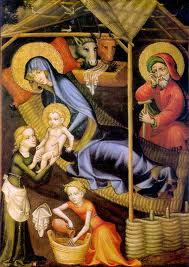
imagesA fire makes its heartening presence known, tucked under the hearth upon which hang individual stockings and an antique clock I inherited from my Dad. A delightfully chaotic looking tree, augmented with bobbles made by the growing dexterity of my boys’ fingers – the accumulated little-boy detritus of Christmas past – stands guard at another window gazing out on a trusted neighbor’s house. Snow falls without sound or pretense just past living room windows that shield us from the oblique, grey winter, and all I can think is this: if Christmas, I.e. the incarnation, God with us, means anything at all, it must mean more than the Thomas Kinkade painting I’ve just described. It must have the same insidious undercurrent, rife with danger, of the stable. It must reek of real life spread out over a table of ambiguity and hopelessness scrounging for scraps of hope. It must mean that God is longing to burst forth into our own souls, finding enough room to receive the gifts of our own inner Magi. It must be genuine, like the rough and tumble character of a once-upon-a-time, ramshackle stable.

It was messy and scary and uncertain, but the perfect crucible in which to illustrate all that is truly important: the broken, smelly manger of human hearts made ready to receive the only thing powerful enough to draw them out of pain and darkness, God himself. And, apparently, God loves children. Enough to become one.

Not a soldier.

Not a business man.

Not a political revolutionary.

A crying child laying somewhere so shocking that he would be handily removed from us by social services. Understand that this was God’s chosen means of getting our attention, then study the faces of your frail, trusting and needy children and read the story again.

Yeah, it’s like that.

O come, o come, Emmanuel…

Where earth meets sky – the beginning of the end of the beginning

It was quite possibly the longest, most awkward car ride either of them had ever endured. Pastor Kent drove him home from the conference and used it as an opportunity to voice, loudly and repeatedly,  his overwhelming sense of disappointment, hurt, humiliation, betrayal and just plain mess. Now, his would be the role of fielding nosy calls, inquiring as to the dramatic change in the music minister or “something I just heard.” His would be the task of chairing those ever-so-delightful follow up meetings with the church board at which his plan for healing and reconciliation would be mapped out. His would be the unwelcome experience of eating crow in the face of board members who were among those who voted not to hire him in the first place.

His anger was ripe, raw and very real. But, his victim willingly succumbed to the verbal whipping since he had already experienced life-changing realities too big to ignore; too broad to dampen his spirit. First of all, he still had a job. In spite of everything, he was returning to a place to call his own where he could begin working out the kinks of his new found sobriety. In community. With a paycheque. Secondly, for the first time in decades he had (re)discovered that he was actually gifted in his calling and that emotional resources already placed there by God were available on demand, without the added measure of drowning his desperation in drunkenness.

Like a heavy coagulation of rancid oatmeal, one thought remained in his psyche, however. He already knew to what he was returning. He was much less certain to whom. Would his wife and boys still be there? Had they chosen to jump ship, cut their losses and move back to Canada? Would he ever have opportunity to tell them of his first triumphant, alcohol free weekend? If so, would it make any difference this late in the game?

Though it was true that his situation hosted a complex set of factors that had contributed to his behavior over the years, insofar as the family was concerned, some key choices needed to be made. His lover had been the bottle, not her. His children had pop-tops and came in packs of six. His home was delirium and euphoria, not the cozy Oregon rancher that housed them all.

Her weekend journey had been anything but smooth or simple. There had been some resolution however to the gnawing questions she still harbored about their present situation. Although their lives outwardly were shrapnel, in order to have at least some peace of mind, she took Judy’s advice and drew up a family contract for him to read and sign when he got home.  The gist of it was simple. He could stay with the simple proviso that he must sign the contract stating his intention to change lovers. If he decided that alcohol would not be his mistress and willingly pursued every lifeline already tossed to him by family, colleagues and friends, then there was still a place for him. If not, then not. He would lose everything, including custody of their boys.

To the uninitiated it might sound harsh. To the ears of a broken man whose feet still had the smell of prodigal pig shit on them, it was a symphony of grace beyond all reckoning. That day was Sunday, October 20th, 2002. It was the beginning of the end of the beginning. There are no old beginnings. Only new ones.

Today, slightly more than twenty years later, that man sits in sobriety before his laptop sharing a tale that never gets easier with the telling. He has never had a drop of alcohol since that hideous week, the week he almost lost everything. Instead, he gained the whole world.

And the world tastes good…

Hi, I’m Rob and I’m an alcoholic.

Surprised by Healing

From time to time I am given the honor of guest blogger. This month I shared a piece with Conversations Journal on the crucial topic of healing and wholeness. It looks back to my accident of two and a half years ago with fresh eyes. I hope it is meaningful, especially to other skeptics.

http://conversationsjournal.com/2012/11/surprised-by-healing/