A Celt in a kilt and the beautiful mundane

This was originally posted as a guest post on a favorite website of mine, Abbey of the Arts (thank you Christine Valters-Paintner!). What a delight to be given opportunity to share one’s life among kindred spirits in the grand dance that is our eternal redemption.

Please, please, please, if you haven’t already done so, be sure to visit Christine and the rest of us Monk-Artists at the Abbey. Come visit/like the Facebook page as well. You’ll be so glad you did. I promise.

__________________________________________________________

A Celt in a Kilt and the Beautiful Mundane

I-You-Holy Ground
By Robert Alan Rife

I am the dusty ground, low and dry
thirsty for the imprint of holy feet.
Despoil with radiant prints, this virgin ground.

You are the rain, falling deftly
upon my brown soil. Now is left
your footprint on this ground.

I am the ashen leaves, curling and broken
awaiting but a whisper. For only then
can I fall on solid ground.

You are the soundless wind, howling, still.
You creep up behind me and
exhale me to the ground.

I am the snow, disembodied worlds of cold
and chance encounters with hand, or tongue,
eye-lash or palm needing ground.

You are the frozen air in which I am held
aloft, drawn slowly down
to meet with others on the frozen ground.

I am the waning autumn death
soon to give way to the long silence-when one Voice
becomes the loudest ground.

You are the Voice that speaks
heard best in dying, power given for
rising from this shivering ground.

I am the distant hours, the midnight passing-
the refusing minutes, trapped in hours,
running from the years of ancient ground.

You are the many, and the one, and all time
and nothing and everything from nothing
where time has no ground.

I am the weeping, the squalid groaning,
the unrequited miseries of misery’s company
laying crippled and diffused in the ground.

You are the end of tears and years, the question
and the answer, the sutured nerve of joy, not suggested
but present, here, on this Holy Ground.

________________________________________

For me, the term ‘monk’ used to mean ‘one safely cloistered away from the cares of normal life in dimly lit, echoing stone hallways where hooded men sing hauntingly beautiful music and basically float just a bit off the ground. A single, piercing glance from their crystalline eyes means healing, they have superpowers, can read your thoughts, never need to eat, and speak once a year whether they need to or not.

Since leaving behind my roots in evangelicalism for headier waters elsewhere I’ve since discovered that monks often have the sauciest senses of humor, the bawdiest stories and, not surprisingly, the deepest delight in the world around them. My kinda fellas. They’re as non-dualistic as they come; a life to which I aspire. Apophatic meditation one moment. Bodily noises the next. Welcome to my world.

I am a dreamer; a philosopher-poet capable of romanticizing even the most mundane banalities. To a guy like me, cutting the grass has the potential to be a portal into the nether regions of the universe, awash in liminality, where mythic faeries ride unicorns on their way to Celtic slumber parties. But, I’ve been known to overstate a little.

Clearly, I’m a favorite among type-A corporate headhunters (tongue super-glued to cheek). Rather, stereotypical songwriters, tree-huggers, poets, unfocused A.D.D. artsy-fartsies, and contemplatives love to love me. They’re my peeps. My homies. They know my psychic address.

These overly romanticized sensibilities haven’t always promised smooth sailing for me. In fact, more often than not they’ve brought more than their fair share of woe and disillusionment. The world has precious little patience for those like me, preferring instead the multi-tasking, power-doers with ambitions larger than the moon upon which they hang their coats (but generally not their egos). It’s a challenge in our super-charged, winner-take-all culture to prove real value in lighting candles and pursuing silence when time is money and money is god and god keeps shrinking or running away.

My earliest recollections of spiritual awareness contained the following simple elements: surprised by joy moments, generally unasked for and seldom expected; a sudden awareness that the world was not really as it seemed – that from God’s perspective all was well. Specifically, I was drawn to all things ancient, mystical and Celtic. As a bagpiper/Irish whistle player who has toured extensively it makes sense that, for me, the world is seen through green colored glasses, smells just a little peaty, telephone poles were meant for tossing, and “ladies” is misspelled on the restroom door (insert look of shock and consternation here).

Although a mystic from a very early age, despite a decided lack of language to articulate such things, my fate was forever sealed when, for the first time I heard the Great Highland Bagpipe. I was seven years old. I was gobsmacked. Mere weeks later, in the basement of St. Andrews Presbyterian Church, I started learning to play the pipes. I have played ever since.

Something else happened however. It christened a liminal journey of my inner mystic and forever sealed my fate as a lover of all things Celtic, monastic and artistic. It also began an almost unassuagable thirst for the monastic realities of thin-place living. Puddles become holy water. All time, whether singing, snoring or snacking, can be wrapped up in a ball of quivering holiness. It is the essence of Celtic spirituality. It is my essence (especially if we had haggis the night before).

Now, a gazillion years and as many prayers later, to be an artist, a mystic and a monastic-wannabe is for me to see myself less as a dreamer and more as a waking dream. Life is to find the holy in the banal; the glorious mundane. The perfect, daily moments of nothing-special that, simply by virtue of noticing them, become possibilities of inherent wonder. The greatest gift I’ve received in the past few years, something particularly attributable to the Celts, is that of awakening to these shimmering possibilities in the blasé and dull. How brightly they shine under the light of the God of order and magnificent delights.


The bricks in our walls – chapter 2

brickwall1

Her name was Susan. She was my first “official” girl friend. I was 13. She was tall and shapely and smart with the sexiest braces I’d ever seen. Her reddish brown hair careened off her shoulders like a gentle waterfall. She, like me, was caught in that strange vortex of too-smart-to-be-cool-but-too-cool-to-be-a-nerd. It made her good company. Besides, she was as awkward as I at this whole “going steady” thing. Our conversations were peppered by silences and repeated questions, more silence, then making out. I mean, what better to fill a gaping Junior High School silence? Our romance lasted an epic five weeks.

His name was Rob. That’s where the commonalities ended. He and his family had moved from somewhere in South Dakota to Calgary, into a house a couple blocks from us. He was a rough and tumble kinda guy. I hated how he could always get me to do stuff I wouldn’t normally do. Egg houses. Give wedgies. Terrorize neighborhood pets. Pull out plants and bushes. All manner of man-boy evil. He holds the record for most days missed from any school year at our Junior High. In twelve years of public education, I skipped school, on purpose, twice. I was caught both times. Both times were with Rob. I kind of miss the silly bastard.

It was my first practice with the Beaumont Pipe Band in Calgary. I saw her from across the gymnasium among a crowd of her peers. Her blue-green eyes could have split atoms and her gentle curves, spiky blond hair, and pointy, Joe Jackson shoes (it was 1982) settled that this was a girl to know. I guess I had been staring a little too long and she looked up and saw me. A gleaming smile framed in blood red lipstick against her pale, white skin sealed the deal. I was smitten. We knew then we’d be close. Close enough that, four years later, we were engaged and poised to send out our wedding invitations.

We didn’t. Her name was Vanessa. She died of bone cancer in 1992.

I always thought he had the coolest name. Lazarus Cornelius was East Indian. He was a dapper ladies man and an amazing guitarist. We were friends at College where we sought to study both of the former along with regular classes we stuffed in the cracks of our busy social calendars. He came from numerous generations of pastors from Mussoorie in the northern Indian province of Uttarakhand. Even though he was thoroughly Canadianized (meaning primarily he was a hockey fan, knew the lingo, cared little for politics and bitched about Americans) I thought it cool to have an Indian friend. It made me feel…cosmopolitan and a little chic.

And when you lived in a cow town like Calgary, that was saying something.


Picture found here

The bricks in our walls

brickwall1

1974. I remember Burkandt, my Turkish friend with legs that barely worked. His eyebrows, far too bushy for a kid of ten, swept upward in a wave, not unlike his thick, brown, curly hair. It was as though his facial hair just wanted to point us to God. The accent was only an obstacle if someone wasn’t really interested in talking to him. Despite his physical handicap, he was remarkably fast and shockingly strong. I laugh to myself as I recall the piss poor way he’d stumble through telling jokes. He never did understand that a joke is best told with the punch line at the end. At least he tried. He was fascinating. He was my friend.

Jamie-Lee Andrews (pseudonym) cowered in a smelly corner of the schoolyard. She thought herself safer there from the abuse she suffered at the hands of my schoolmates. An only child, she lived with her parents in a house even tinier than the 900 square foot bungalow we called home. Whenever an unholy hoard would surround her with arrowed words and painful jabs, I’d hide away like a coward so as to protect my “conscience” from involvement. If I hadn’t been so horrified of the potential social fallout, she too could have been my friend. Not a soul seemed to like, let alone befriend, her. I ached for her.

My sister’s First Nations friend, Olive Redfoot (also a pseudonym) lived between worlds, caught on an unenviable tightrope of a predominantly white professional community in which her father was a lawyer, and no life at all on the reservation where the other unmentionables were stowed. It was not uncommon for either natives or non-natives to egg their house, showering them in sticky disapproval. She was a beautiful girl with long double-braided hair that flowed, wild but disciplined, past her derrière. My sister loved her. I kind of did, too.

Saturday mornings were best. It was a time I looked forward to with stomach-rumbling anticipation every week. My parents would drive me the fifteen miles from our home for bagpipe lessons. At the time it was in the town of Midnapore, well beyond the extreme south end of my home town of Calgary, where we lived. Nowadays, the entire journey is one elongated shopping extravaganza with hardly a green space to be found. We would pass at least half a dozen grain elevators, innumerable cattle, and a train station (it used to run within a stone’s throw of our home). From 9:00 a.m. until noon, the smell of elk-hide pipe bags, cobbler’s wax, cane reeds, Mr. Reed’s coffee, and a room full of young boys would map themselves into my nasal memory.

Dana was my best friend. He lived four houses down from me. We used to pretend we were WWF wrestlers, dinosaurs or superheroes, and trade NHL hockey cards. Fights were inevitable given his insistence upon championing the Black Hawks when the Montreal Canadiens were the betting man’s choice. We’d walk to school with my other friend, Darrell, who lived across the street from us, and just be troublesome, generally speaking. One day we were lighting farts behind his house and a flame came out of Dana’s flaming air-trap that burned the paint off the side of his parent’s trailer. We were a classy lot.

I wish these were more than just a random collection of disparate memories in a middle-aged guy’s sketchy recall. Sometimes, they push their way to the front of a crowded reminiscence and I can still touch their faces, like bricks in my wall; walls not meant to guard, but to support and frame.


Picture found here

To thine own self…

Spiritualk-Maturity

My DNA, such as it is, swims in the veins of two amazing young men – my sons, Calum – 23 and Graeme – 18. Each morning, looking back from the bathroom mirror is a reminder that a percentage of my younger self dwells in their lives. To some degree, when they see their own reflections, they are seeing me. As they experience fear, pain, remorse or joy, they do so in ways similar to my own. Their responses, either good or bad, to the involuntary stimuli thrown out from a quivering universe will be reminiscent of my own. Whatever I’ve been able to cobble together as my present ‘self’, God and I struggling together, is what they too must face. It will be their challenge as they overcome in themselves my numerous knotted patterns of being that, sometimes, can strangle or eviscerate. But it is also their gift, implanted in their psyches to help guide them in those mirky moments that will require whatever small intuition was gifted me.

Watching my younger son graduate from high school last Thursday night (6/5/14) was pause enough to sing the praise of both these men. I cannot claim to be half the man I need to be for them. Indeed, I cannot always claim I’ve been a man at all to them. What I can say with a clear conscience and not inconsiderable pride is how much I wish I were more like them. That more of them might be seen in me. My life, my energy, the very blood in my veins, belongs to them.

Their calling now is to find their calling; to find their truest selves; to be their most passionate selves for a very needy world that awaits them, and needs who they are (thanks Mr. Buechner). Precious few would I trust to write what they should most hear. Today, I entrust this sacred task into the hands of the late John O’Donohue…

For the Unknown Self

So much of what delights and troubles you

Happens on a surface

You take for ground.

Your mind thinks your life alone,

Your eyes consider air your nearest neighbor,

Yet it seems that a little below your heart

There houses in you an unknown self

Who prefers the patterns of the dark

And is not persuaded by the eye’s affection

Or caught by the flash of thought.


It is a self that enjoys contemplative patience

With all your unfolding expression,

Is never drawn to break into light

Though you entangle yourself in unworthiness

And misjudge what you do and who you are.


It presides within like an evening freedom

That will often see you enchanted by twilight

Without ever recognizing the falling night,

It resembles the under-earth of your visible life:

All you do and say and think is fostered

Deep in its opaque and prevenient clay.


It dwells in a strange, yet rhythmic ease

That is not ruffled by disappointment;

It presides in a deeper current of time

Free from the force of cause and sequence

That otherwise shapes your life.


Were it to break forth into day,

Its dark light might quench your mind,

For it knows how your primeval heart

Sisters every cell of your life

To all your known mind would avoid,


Thus it knows to dwell in you gently,

Offering you only discrete glimpses

Of how you construct your life.


At times, it will lead you strangely,

Magnetized by some resonance

That ambushes your vigilance.


It works most resolutely at night

As the poet who draws your dreams,

Creating for you many secret doors,

Decorated with pictures of your hunger;


It has the dignity of the angelic

That knows you to your roots,

Always awaiting your deeper befriending

To take you beyond the threshold of want,

Where all your diverse strainings

Can come to wholesome ease.

____________________________

Picture found here

Becoming Our Own Horizons

Horizon


A new page.

Turning over a new leaf.

Hitting re-set.

Born again.

We use many terms that say essentially the same thing. Whatever lame or insufficient metaphor we choose to throw at the numinous mystery we call “life” sometimes offers its own prophetic tribute to the new reality to which it points. Sadly, there are times in my life where, upon deeper reflection, it comes to light just how dark I can be. Just when things begin to feel a bit more swept up and tidy, I find more nasty shards of the shiny mirror I misunderstood to be my life. A broken window is perhaps more accurate.

It is disconcerting at best, fractious and maddening at worst, when one is given a shocking awakening, at once freeing and burdensome; welcome, as it is unbidden. Such moments of epiphany, although rare, provide stark backdrop against which to see more clearly the indefinable truths by which we seek to live well. Just when there appears to be some small forward motion in the dangerous journey of formation, I am rudely reminded of the exponentially growing need for that very process. Although not entirely without joy or hope in bite-sized chunks, it reveals itself as the Law of Diminishing Returns.

Like the horizon, always moving at the same pace I am, coming to terms with my need for change and the slippery slope of progress toward it, never gets any closer. By definition, one never gets closer to the horizon (well, unless you are a theoretical physicist, existential nihilist, or Hallmark card). Beyond this one are countless others just the same. Only the scenery changes, never the distance. It will always be, in mystical (and, in my case, practical) terms at least, unreachable. What we can say definitively however is we have more miles on our spiritual odometers.

In the enigmatic, mostly squishy, process of sanctification, merely having more miles and less tread does not automatically make us wiser. It may only make us older and more run down, with less resale value. Even, at times, assigned to the ditch. It’s not in the miles alone. It’s in the degree to which we pay attention to whatever road is opening before us; wherever that road may be leading (if we can even know that much.)

“Are we there, yet?”

“How much farther?”

“I’m bored.”

These are the kinds of questions we ask as juveniles who, lacking a mature ability to remain patient, merely await the destination. The journey itself is something to get through as quickly as possible. It is most unfortunate that this is where most contemporary evangelicalism has grown wearily stuck. We miss the largest part of the gospel in our frantic need for geographical clarity post mortem. We speak often of going to heaven but seldom of waiting for heaven in us.

That said, the relative safety afforded us in the knowledge of ultimate blessedness in Christ allows for colossal failure along the way. Our journey to the destination allows the richly ubiquitous love of God to drive us, lead us and await us on the journey “there.” And, what of “there” anyway? In the Christian enterprise are many “theres” and yet one “there.” In every case, our “arrival” is guaranteed by grace, at least in an ultimate sense. In kingdom terms, even if not yet real ones, we stand where we are, looking at ourselves at the edge of our own horizons.

We no longer need to fear whether we may miss where we’re going. That is secured by grace, once and always. Our many mini-arrivals, though, still met with grace, are less certain this side of heaven – whatever that is. But, in spite of the many ambiguities of, and forks in, the roads we’re given, it is always and forever our arising to those roads that, in themselves, become our horizon. As those greater than I like to say, we are both on the way and already there.

In the gospel, we become our own horizon.

Horizon of dreams

Images from here and here


Eyes for the Alley

ashes

The journey of Lent starts in ashes and ends at Easter’s empty tomb. The leftovers of our charred and dying selves have been replanted in ground upon whom walks, impossibly, someone newly alive. Our ashes, only the carbon possibility of something else, leads instead to some One else. Emptiness, spent and without purpose, leads to emptiness, welcome and full of promise.

If we manage to let the entire Lenten journey of self-inspection do its work in us, we will not only benefit from the two ends of the equation but will have as our journey the very steps of the One whose ignominious death ended in glorious life. The Jesus Way becomes our ‘way’ with ‘forever’ thrown in as a bonus.

Easter has come and gone leaving both questions and answers in its wake. We’ve risen along with Christ, and all that means. In the backwater stench of our lives, those void, stale places, we still wonder how such a humungous mystery could possibly shape us.

How this Lenten road, the arena of spiritual formation thereby, and the lost ones we find on the shoulder has been the subject of our inquiry. We have titled this series, “Eyes in the Alley.” This signifies a need for honesty and vulnerability in the midst of our precarious, sometimes sinister lives. Whatever language a person uses to describe their experience of the Holy, combined with the mess and mystery of our own experience, leads us to ask the primary questions; questions that might, in turn, lead us to the streetlight of hope and safety. To Jesus.

empty-tomb

We who are “the convinced” have ready access to centuries of holy dictionary and sacred stage upon whom great men and women have acted out their influential lives. We have learned to find comfort in the theological work of our forebears even as we engage in our own. But, as is so often the case, we can quickly “Pharisee-ize” this good stuff to such a degree that it becomes insurmountable to the very souls most in need of its Jesusy nutrients. Without our even recognizing it, we turn the language of freedom and rescue into the insider language of church potlucks, the monastery, or the country club. Although often unintended, where bridges are needed, we build gates. Instead of a boat, we offer an anchor.

Christianne Squires helped us do this by learning to see, along with her, Jesus hanging out in “the dark and dingy places…Jesus with his back against our wall.”

The meandering faith journey of Bob Holmes resulted in his deepest discovery: the love of a God who is love.

Valerie Hess reminds us of the deep restoration to be found in the Gospel by means of confessing our powerlessness, similar to the life-changing experience of those in A.A. She equates the resulting freedom to hitting a re-do button, birthing for us a new beginning.

That very love, made fully human in real time, enters an extraordinary conversation with an unexpected woman by a well. Her humble responses to his unexpected questions leave her empowered and rejoicing. Dr. Elaine Heath recognizes just how purposeful and powerful such a story can be for women even today whose sense of shame and rejection can overwhelming.

Tara Owens’ story reminds us, once our fences come down, we discover grass really is greener on the other side since it involves the lawn of someone else, just as lonely as we are. Where there are no obstacles, either real or imagined between us, friendship and community result. Complacent proximity becomes warm friendship.

Much of what I have been struggling to say about what we struggle to say is the subject of Giff Reed’s piece. In it he makes the important observation, “The problem comes when the same language that created the space begins to define its boundaries of in ways that deny ‘outsiders’ the ability to understand, engage, and embrace the God we are attempting to talk about in the first place.” His conclusion is an apt one, “God’s grace is grand enough to make up for any deficiency of description.”

A fitting denouement to our Lenten exploration is found in Valerie Dodge Head’s heartwarming story of finding Jesus in a homeless man, whose presence allowed her and her granddaughter to be ‘present’ to him. For them, laying a blanket on a smelly, hungry, tired stranger became the Eucharist. “It felt as if the three of us had just shared the Eucharistic feast together, on Holy Thursday, at the park, in ordinary life. God had awakened me to something so good, so true and so beautiful.”

Whatever we don’t readily understand, we submerge under the waters of our safe controls. To gaze into a night sky, exploded in the shrapnel of light year stars, is to have our tiny selves contextualized rightly. We are given perspective that leaves us wondering more than calculating, praying more than dissecting. The same is true when we gaze at the mysteries of Easter.

As I see it, our task as people of faith is to help another’s jaw fall agape, like our own, in the humble fear that accompanies awe. This gives birth to…something; faith perhaps, or longing; perhaps even seeking. Our theology, our orthodoxy, our language, our shared values-all of these is important. But, a beautiful life lived fully and well brings more glory to God and more souls to the table than all of the above combined.

Therefore, armed with the very love of God in Christ Jesus, let us strive to enter into the Gate, named Jesus, with that love writ large upon our lives. It will be the most convincing Gospel argument for those for whom mystery means darkness, the cloud of unknowing feels like the smog of unseeing and lectio divina just means homework. If that is the result of our Eastertide, then “I believe that God the Father, almighty, maker of heaven and earth, will keep them coming…until we all wake up.”*

May it be so.

Gate of love

____________________________

*Valerie Dodge Head

Ashes photo here.

Tomb photo here.

Eyes in the Alley – When Easter Meets Us in the Margins


Homeless Man

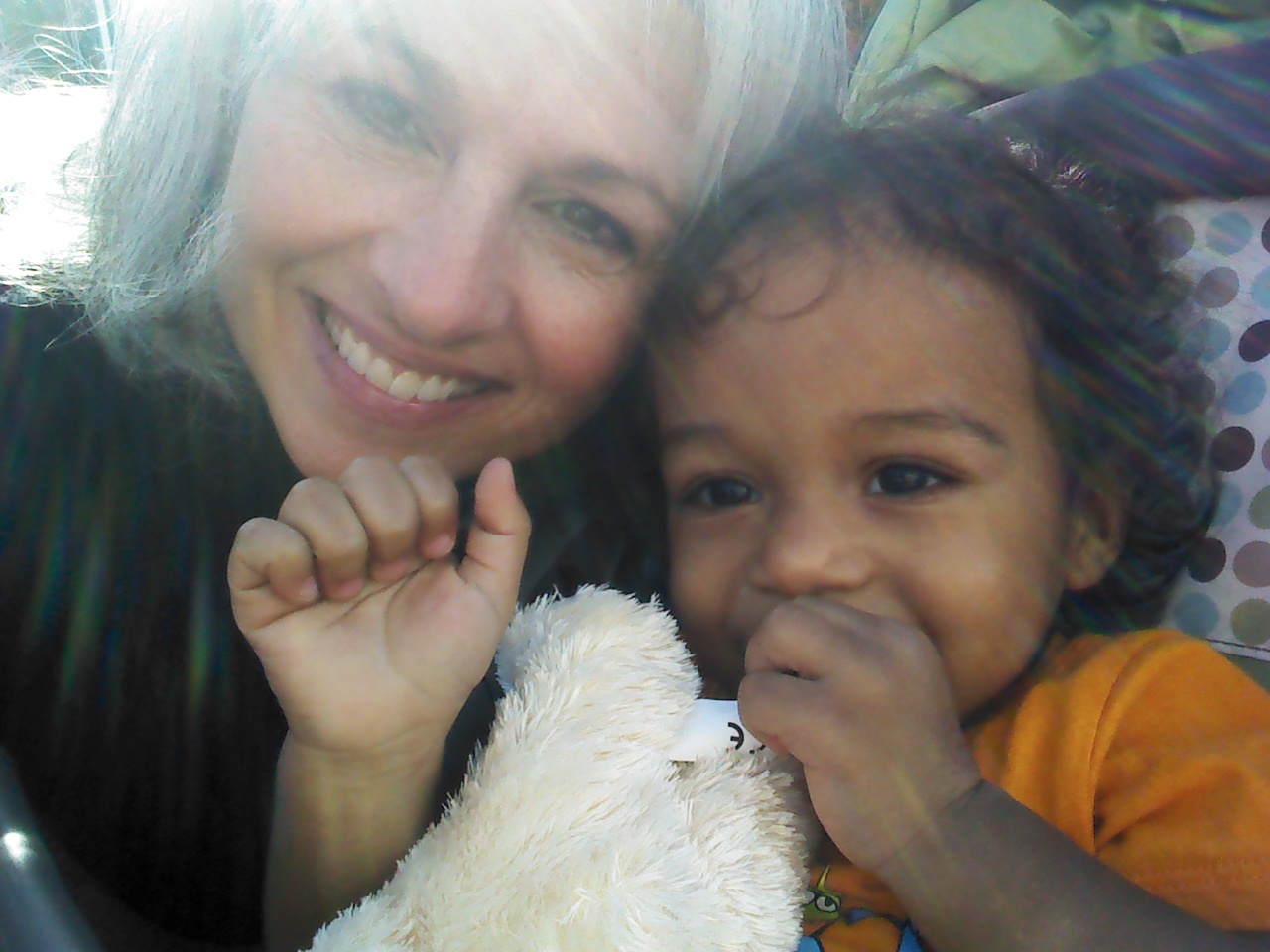
I had every intention of attending the Triduum during Holy Week this year. At the beginning of the week I received a call from a single mother who happens to be my daughter. She needed child-care on the same evening as Holy Thursday, which meant I would need to take my grandson with me to a very long Mass. I decided to help her while keeping my reluctance to myself. Thursday afternoon came and after having experienced the precarious mood of a crabby two-year old, I discouragingly gave up the idea of going to Mass. My lament started giving birth to mounting negative thoughts. I know well that when I give my own pity parties a welcome mat, it almost always turns into a mudroom of resentment. So with everything I could muster, I tried to let go of the fact that I felt gypped out of a holy practice in which I longed to engage.   Though the thought of it “felt unholy”, I decided to take my grandson to the Children’s Museum.

We drove over, walked in and paid our entrance fee. My grandson watched intently as the curator stamped both our hands with green turtles. I rolled the stroller into the exhibit area where my grandson made a sweeping gaze across the giant hall of wonder. His curly lashes blinked slowly over his brown eyes, now as big as saucers.

That is when I was invited into a sacred space.

The dance in his eyes made a great leap into my heart with a very clear invitation, “Grandma, let’s play right here, right now!” He grabbed my hand and in the wake of his screaming delight, we were flying to the first station.Val and Ezayiah 2

After a lot of hard and fun play, we bid our farewell until next time and started walking toward the car. On the way over we saw a man whose disheveled head was lying on the cold ground with his coat covering only half his body. There was some leftover food next to him all bound up in a wad of used tin foil.

The resentful heart I had donned earlier that day was no less hardened than the ground on which was laid this precious man’s head. I sat next to him while my grandson watched silently. The sleeping man was completely stripped down to the very depth of his nakedness. It really moved me.

Softened through the sacred act of play, my heart broke open like an alabaster jar.

That is when I entered into a sacred space.

In grief, I felt so deeply connected to him. Whatever he lost had now exposed a shame that was obvious to the whole city. This was no different than the way I feel when my morals and my efforts to be “holy” are not covering me – like missing Mass on Holy Thursday.

That was the holy moment I had longed for earlier. I thought I would find it at Mass, but God led me instead to a child, and through a shared brokenness with a homeless man. In that broken place, both of us had missed the very message that Jesus died to give us.

That….

we are shining like the sun even when we don’t know it.

we live in shame though God sees us whole.

our true selves lie beneath our shame.

we need to die to that shame so we can be resurrected.

I strolled my grandson to my car and fetched a blanket out of my trunk. With blanket in hand we walked back to the homeless man and we covered his dignity.

It felt as if the three of us had just shared the Eucharistic feast together, on Holy Thursday, at the park, in ordinary life. God had awakened me to something so good, so true and so beautiful.   In a strange way, this moment felt even more holy than going to Mass.

There is no doubt that the traditional Christian story of the Lenten journey always lands on resurrection. Yet, without a personal experience of true resurrection, these Easter stories, heard over and over, eventually become like pennies wasted in our wishing wells. Not every Easter resurrects.

Maybe one of the best places to find resurrection is in the margins of life. This seems to be a way that God brings us into union with Godself and others. This is where all lines are erased. This is where we can see the unseen. This is where we find our brokenness and our connectedness.   I believe it is also where Jesus secretly sets his table and calls us all to dine together.

I believe that Easter is less about our sins and the coming day of our salvation than it is about waking up right here and right now. I believe Easter is about resurrecting our deepest intuition. That life with God is as good as we hope it to be (those things we are too afraid to name). Jesus’ death and resurrection became the inaugural Lenten journey and Easter of many more to come.

I believe that God the Father, almighty maker of heaven and earth, will keep them coming…

until we all wake up.

So be it!

Image of homeless man found here

__________________________________________________________________________________


Val and little Ezayiah

Val Dodge Head, M.A., lives in Grand Rapids, MI, and serves on the CenterQuest staff and board.  A trained spiritual director, she will be entering into a year long residency program to become a chaplain in the Fall of 2014.  Val’s favorite roles in life are that of mother, mother-in-law and especially being a grandmother to a two-year old boy and a 2 month old girl.  She loves to build bridges between the good and bad and to envelop herself in various forms of contemplation, all of which have helped her see God in all things good, true and beautiful, wherever and in whomever it leads.  You can find her on the CenterQuest blogInstagram and Pinterest.  

Eyes in the Alley – Seen and Known (or, why I’m not concerned with the language of spiritual formation)

“Do you have time to get together and talk?”

I haven’t kept track of the number of times I have heard that question in recent years. There were seasons when its frequency seemed to ramp into overdrive, filling up my days with numerous meetings that had been initiated with that one extremely vague and ominous question.

I don’t think I ever said, “No.”

Sitting down to discover why the question was asked has been, in large part, what I’ve done for the past six years. Not quite knowing into what I was being invited was equal parts terrifying and invigorating. It forced (and I really do mean forced) me to have a stronger trust in the Holy Spirit’s ability to actually lead us into Truth instead of my own ability to fix someone’s problem.

It was a beautiful season. Yet, something happened during that time I did not anticipate. I started developing a lexicon that was unique to me, and others started picking up on it. Before long, people knew how I was going to approach them. They knew my perspective. They knew my values and convictions. They even knew the words I would use to describe all of these things.

In and of itself this isn’t a bad thing!

Communities that have easily recognizable language to surround and embody admittedly nuanced theological thoughts often create a comfortable space where people can open up and be vulnerable about the raw interworking of their spiritual lives. These are rare and beautiful communities – the type of thing that you can’t ‘un-know.’

The problem comes when the same language that created the space begins to define its boundaries of ‘in’ – ways that deny ‘outsiders’ the ability to understand, engage, and embrace the God we are attempting to talk about in the first place.

This is when the good, the true, and the beautiful can become cliché. I’m sure you can think of numerous examples, but for our purpose here, suffice it to say, if it has been made into a ‘Christian’ bumper sticker, then it is probably that to which I refer.

Clichés are difficult to avoid. We humans crave an easily-digested certainty. They are difficult to avoid because they don’t start out as cliché. They begin as good, true and beautiful descriptions of an indescribable God.

Clichés are clichés not because they aren’t true, but because, at least at one point, they were SO true that they became an over-used, overly-recognizable slang, which drew boundary lines between the ‘insiders’ and the ‘outsiders.’ I’m not suggesting that we stop using language to talk about God. It was God who gave us language in the first place and it would be a denial of a good gift to throw it out simply because we can’t fully capture our subject with words.

Let’s just come to terms with the fact that using words to characterize the divine is akin to putting a leash on a lion. Then, let’s keep using words wisely, intentionally, and carefully, but not anxiously, fearfully, or tentatively. My guess is that God’s grace is grand enough to make up for any deficiency in description.

All of this highlights our predicament.

What does it look like to leave the already tired language behind while doing our best not to create a new one moving forward? My guess is that this is why many of us are drawn to the language that embodies spiritual formation. I love the language that spiritual formation is giving the Church. I love it so much that I want to steward it well in order to retain its vitality. This is why, when I’m talking with people who have a thirst for Christ (which is everyone, whether they know it or not), I’m not concerned with using it much at all.

Instead, I want people to have a deep, maybe even indiscernible, sense that they are ‘seen and known.’

Seen and known for who they are – invaluable creations who have the image of God imprinted on their souls, at the core of their beings.

Seen and known regardless of where they have been, what they have done, or what they are facing in the moment of our relational collision.

My hope is that this communicates a love that transcends our own capacity to show love. My hope is that this points people, even if only slightly, in the direction of Jesus. That it causes a subtle rupture in our souls, and opens our posture to the Spirit’s movement in our lives a bit more.

There will be always be appropriate times to speak of the ‘reason for the hope that we have,’ but we no longer live in a world where ears and eyes and hearts are receptive to an acknowledgement of God’s grace found in Christ without first developing a relational foundation of mutual trust. If people don’t feel, and have evidence of being, truly seen and truly known, then they simply don’t believe that we (or Jesus) have much of anything valuable to share with them.

C.S. Lewis wrote, “It may be possible for each to think too much of his own potential glory hereafter; it is hardly possible for him to think too often or too deeply about that of his neighbor. The load, or weight, or burden of my neighbor’s glory should be laid daily on my back, a load so heavy that only humility can carry it, and the backs of the proud will be broken” (The Weight of Glory).

However we define ‘neighbors’ – be they our roommates, classmates, co-workers, or even our children or spouses – they have a desire to be seen and known. God desires for us to be the conduit through which they are introduced to and nurtured in relationship with the One who fully sees them, fully knows them, and fully loves them.

This is part of what it looks like for the Kingdom to come ‘on earth as it is in heaven.’

This is good news.

______________________________________________________________________________________________

Giff and family, Nov. 2013

Giff Reed is a husband, father, and friend. He is one of the pastors at Red Door Church in Bloomington, IN, and founded a college-aged ministry, theCanvas, six years ago. He works in Career Services for the College of Arts and Sciences at Indiana University. Giff enjoys his wife (Lilly), his ruggedly handsome sons (Quincy and Abraham), good bourbon, Indiana Basketball, and many other holy and sacred things.

Eyes in the Alley – Fences and Good Neighbors

It started when the fence blew down.

We’d been casual acquaintances with our next door neighbors for some years at the time, close enough to chat in the driveway when we saw each other, but not intimate enough to know the inevitable struggles and joys that went on after the garage door slid closed. We knew they had dogs, saw them walking them, so when it came time for us to adopt a rescue dog of our own, they were supportive and kind.

Then, during one fairly typical windy Colorado afternoon, the fence between our backyards blew down.

As typical house owners, we gathered over the wreckage and mumbled about how much it would cost to replace the fence, what kind of work it would take, what an eyesore it was. My husband and Rob* tore the flimsy remnants down and as the dogs frolicked over their newly doubled territory we came to a realization: we didn’t need a fence between us, after all.

So, instead of rebuilding, we chopped the weathered wood into usable pieces, and flung it into their backyard fire pit. We sat long into the night over beverages and fence, watching the barrier burn.

Years ago, I would have seen this burning as Jesus’ invitation to evangelism, a clear path to converting my neighbors to our way of relating and being with God. Years ago, I would have seized this “opportunity” as evidence that their souls needed to be saved, and that I was the one meant to do the saving. (Evangelical hero complex, anyone?)

Today, as with the day the fence blew down, I only see the invitation to learn to love more, and more deeply. Instead of seeing souls to be saved, I saw God asking me to share space in a way that most suburbanites don’t do, their properties protected by privacy fences and gated communities. Instead of a mission field, God was beckoning me out into my own backyard.

Over time, the torn down fence became symbolic of tearing the walls of relational intimacy between us. We learned more of their story, and they, more of ours. Hurts and illnesses, celebrations and losses were shared over our newly spacious shared ground. When they went out of town, we readily looked after their pooches, marched across our elongated backyard and into their home in pajamas and boots for morning feedings and late night rescue missions. They returned the favor. We built a few raised beds for vegetables, and shared both the watering and the crops as the years went by. Eventually, they installed a dog door, and each morning our eager pup makes his way from our living room into their kitchen to say good morning over a cup of coffee. We jokingly refer to our arrangement as a “dog co-op.”

This new neighborliness didn’t come without its cost. As an introvert, I like to power down when I get home, to crawl into my much-needed cave of solitude and silence. The wham-bam-thank-you-ma’am theology of converting my neighbors instead of loving them sometimes felt simple and appealing on the nights when I’d had a long day at the office only to come home to Lisa* sitting silently by the fire pit, clearly in need of an ear and a friend. But the call of love is always louder than the call of convenience, and I would wander out to see if she needed company, sitting to listen and talk even when dinner would have to wait. Like the monastics, I began learning that stability in community brings out the rough edges not in the other, but in me. The ground that I’ve covered interiorly over this time is much larger than the length of our combined back yards. I’m not proud enough that I can’t admit there are still days when I see one of them crouching over the veggies and step back from the windows so they can’t see that I’m home. I’m not perfect at loving, and I don’t get it right all the time. But I’m learning to love both of them (and their dogs) as I would love Christ.

Rob and Lisa and their two dogs have taught me to love when it’s not convenient to me, theologically or emotionally. Today, they are dear friends for whom I could ask for a cup of sugar or a pound of flesh. When either they or we are in crisis, we end up in each other’s kitchens, talking it through over a cup of tea. They know we love Jesus, and they respect our faith. When other factions of our politically conservative town cause them to scratch their heads or, worse, break their hearts, we end up back at the fire pit, talking through the way of Love.

A few years ago, Lisa returned from a vacation with a gift of wine and a thank you note for once again caring for their furry twosome. Lisa grew up in a Christian home, and we’ve had more than one conversation about how crazy the conservative Christian culture makes her, how little she wants to do with those ways ever again. I can’t say I blame her.

This evening, though, as she leaned against the back of our couch, she misted up slightly at the reality of our shared space and shared lives.

“You know,” she said haltingly, “I’ve never understood that ‘Love your neighbor’ verse until you guys.”

Me, neither, I thought quietly to myself. Me, neither.

*Not their real names.

_____________________________________________________________________________________________

Tara Owens
Tara Owens

Tara M. Owens, CSD is a spiritual director and supervisor with Anam Cara Ministries, where she accompanies people in their journeys of faith. She’s also the Senior Editor of Conversations Journal, a spiritual formation journal founded by Larry Crabb, David Benner and Gary Moon. She’s looking forward to the publication of her first book, Embracing the Body: Finding God In Our Flesh and Bone, through InterVarsity Press in December 2014. She is honored to steward a thriving spiritual community on Facebook here, and you can follow her on Twitter here and here. Tara is a fan of Dr. Who, red velvet cupcakes and warm thunderstorms. She, her husband Bryan, and their rescue dog, Hullabaloo, live in Colorado.

Eyes in the Alley – Learning Love from “Loose” Women

dark_alley_big

It was a sweltering summer day. I wiped perspiration from my face while I made my way to the church. The topic I was about to address was hot, too, as in controversial. I had begun preaching a series entitled “Men, Women and God” in a congregation in the Ohio River Valley, a region with unusually high rates of violence against women.[1] My goal in the sermon series was to introduce the congregation to deeper levels of the healing and liberating power of the gospel.  I also hoped to give voice to the suffering of many who experienced sexual abuse and domestic violence in our city.  This is tricky in any church, introducing a tough topic like this in a way that opens people’s hearts and minds, challenges the status quo, and yet doesn’t alienate everyone.

So it was that on this Lord’s day, several weeks into the series in which I had already established a biblical foundation for gender equality, I talked about sexual abuse.  I named its presence among Christians, its relationship to patriarchy and how the church that could help to prevent and heal this form of violence instead often perpetuates it.

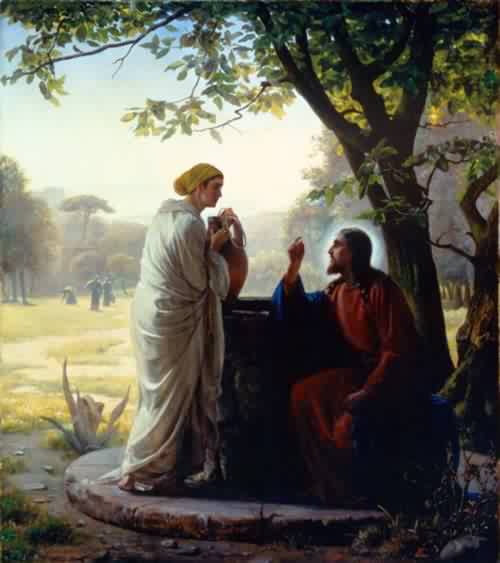
My biblical text was the story of the woman at the well in John 4. I have heard this woman described by preachers in many pulpits over the years, almost always with mild contempt. They referred to her multiple broken marriages as her problem, her issue, and something she instigated. She was tainted. Impure. Unclean. A joke. They treated her like a Samaritan Hollywood celebrity, ditching her latest conquest for someone younger. Today would be my chance to offer a very different view.

The congregation was unusually quiet, listening intently as I described the woman’s worth in God’s eyes. Jesus asked to drink from her cup, breaking cultural taboos on many levels, I said. She was a despised Samaritan, a woman who, because she might be on her monthly cycle, was automatically unclean and untouchable. She was alone at the well at noon, meaning she was an outcast from all the other women of the village who went to the well in the cool of early morning. She was everything that bigots in Jesus’ culture and her own people loved to hate. Yet, neither sexualized nor objectified her. He asked to drink from her cup, an unspeakable transgression of cultural norms.

Her series of rejections as an adult could very well have been the outcome of the wounds of childhood sexual abuse, I suggested.  There were aspects of her adult life, I said, that are often found in survivors. She lived a narrative of broken boundaries that kept moving from bad to worse. In her culture men, not women, initiated divorce. Women couldn’t even bear witness in a court of law. Every time this woman experienced another divorce, another loss of home at the hands of a husband she became an easier target for predators. By the time Jesus met her she had reached the bottom. Now, she just lived with someone without the protection of marriage. In Jewish culture at the time this was crime, punishable by death. Here was a woman with deep wounds, living as an outcast.

Carl-Heinrich-Bloch-xx-Woman-at-the-Well-xx-Public-collection

So, instead of looking at her story as just one more example of an immoral woman, I said to a congregation that was absolutely silent and listening, what if we thought about the kind of childhood experiences that can move a person toward this much chaos as an adult.  This familiar story from the gospels was a way to ease into a very difficult subject as we considered some of the consequences of childhood sexual abuse for adult survivors. As I spoke of the struggle with perfectionism and anxiety and other consequences of sexual abuse I noticed several people had tears in their eyes.

Bringing the message to a close, I reiterated the systemic layers of oppression that burdened this woman, isolating her from her own people and religious community, linking the sin of childhood sexual abuse to the larger systemic issue of patriarchy.  The good news, I concluded, the wondrous truth, is that this woman became the first evangelist in the gospel of John. Because of her words, the entire town came to listen to and trust in Jesus and what he taught. This happened without her saying “I am a sinner, please forgive me,” or Jesus saying anything at all about sin. He did not say to her, “Go, and sin no more.” He did mention that she had had many husbands and was now living with someone. He was, as they say, naming the elephant in the room (or at the well) as to why she was outcast. I imagine him laughing and waving to her as she ran off mid-sentence to tell all the people who loved to hate her, about Jesus.

Here’s the thing. She had always wondered about God, but who could she talk to about such things? So, Jesus talked to her at length. Not about sex or her checkered past, but about the nature of God; the problem of thinking we can lock God into a religious box, and the meaning of authentic worship. This was a conversation Jesus had not had with anyone else. He spoke to the woman—an outsider on every level—as he would speak to one of his disciples—insiders. Jesus trusted her, wanted to drink from her cup, was willing to be seen with her. This woman was not her living situation. She was not her history of rejection. If indeed she was a survivor of childhood sexual abuse, she was not her abuse, either. She was a human being made in the image of God, someone for whom Jesus was happy to break lots of cultural rules. That is how she found her own voice, and with it led others to the one who set her free.

After the service I stood as usual, shaking hands at the door of the church. An older woman*, tall and dignified, thanked me for my sermon. It was the first sermon she had ever understood, she said. And she’d been a church person her entire life. Leaning close she said to me quietly, “I was raped when I was a child. I never told anyone before.” That day was the beginning of her healing.

Over many years as a pastor and theologian what I have learned is that the church and the world are full of people who need to hear the Bible interpreted by survivors of sexual abuse—those who are healing well and like the woman at the well, are doing our theological homework. We bring a different perspective. We get it about shame, how it destroys every aspect of life. We see through patriarchy in the name of religion, because it’s obvious to us that it is a road to hell. We know that straight doesn’t mean good and gay doesn’t mean bad. We think of sexual sin more in terms of violence.  We also know how evil it is to be treated as a sex object because we bear in our bodies, memories, and stories the scars of that abuse. So, we are unwilling to victimize people because of their sexuality.

Today, I honor the woman at the well for her chutzpah, and Jesus for his transgression of cultural norms. Together they beckon all of us to look at our brokenness and our neighbor’s dysfunction through a different lens.

*Her identity has been obscured in the interest of privacy.

Adapted from We Were the Least of These: Reading the Bible with Survivors of Sexual Abuse (Grand Rapids: Brazos, 2011).

_____________________________________________________________________________________________

[1] The statistics for abuse for both genders are staggering. While both men and women are victims of sexual abuse and domestic violence, 95 percent of domestic violence is against women.  Twice as many girls as boys are victimized by sexual abuse, with one out of three girls and one out of six boys experiencing sexual abuse before the age of 18.   “Q&A” Faith Trust Institute, http://www.faithtrustinstitute.org/. Rape Victim Advocacy Program, “Myths and Facts—Child Sexual Abuse,” http://www.rvap.org/pages/myths_and_facts_about_child_sexual_abuse . “Domestic Violence in the Workplace Statistics,” American Institute on Domestic Violence, http://www.aidv-usa.com/Statistics.htm; “Domestic Violence Facts,” National Coalition Against Domestic Violence, http://www.ncadv.org/files/domesticviolencefacts.pdf.

 Painting: “The Woman at the Well” by Carl Heinrich Bloch found here

______________________________________________________________________________________________

Rev. Dr. Elaine A. Heath

Elaine A. Heath is the McCreless Professor of Evangelism at Perkins School of Theology, and is an ordained Elder in the United Methodist  Church.  She is the co-founder of the Missional Wisdom Foundation (www.missionalwisdom.com), which administers New Day, the Epworth Project, and The Academy for Missional Wisdom, an experimental network of missional, new monastic faith communities in historic mainline traditions.  Elaine has provided retreat and seminar leadership in spiritual formation, leadership development for clergy, and the missional church for many years and is a highly sought after preacher, teacher and lecturer.  Among her research interests are the new monasticism, emergence and the church, spirituality and evangelism, and gender and evangelism.

Blog: elaineaheath.wordpress.com

Publications include:

Missional.Monastic.Mainline. co-authored with Larry Duggins (Eugene: Cascade, 2013). We Were the Least of These: Reading the Bible with Survivors of Sexual Abuse (Grand Rapids: Brazos, 2011); The Gospel According to Twilight: Women, Sex, and God (Louisville: Westminster/John Knox, 2011); Longing for Spring: A New Vision for Wesleyan Community, co-authored with Scott Kisker, (Eugene, OR: Cascade, 2010); Naked Faith: The Mystical Theology of Phoebe Palmer, Princeton Theological Monograph Series(Eugene, OR: Pickwick Publications, 2009); The Mystic Way of Evangelism: A Contemplative Vision for Christian Outreach (Grand Rapids: Baker Academic, 2008); and More Light on the Path (Grand Rapids: Baker Book House, 1998), co-authored with David W. Baker.

Elaine holds a BA in English from Oakland University, an MDiv from Ashland Theological Seminary, and a PhD in theology from Duquesne University. She and her husband Randall live in Garland, Texas and are the parents of two adult daughters. Favorite activities include hiking, camping, bicycling, canoeing, exploring small towns, music and watching movies.