“Trip to Bountiful” – part 3


13238898_10208106960346130_397416527787693528_n.jpg
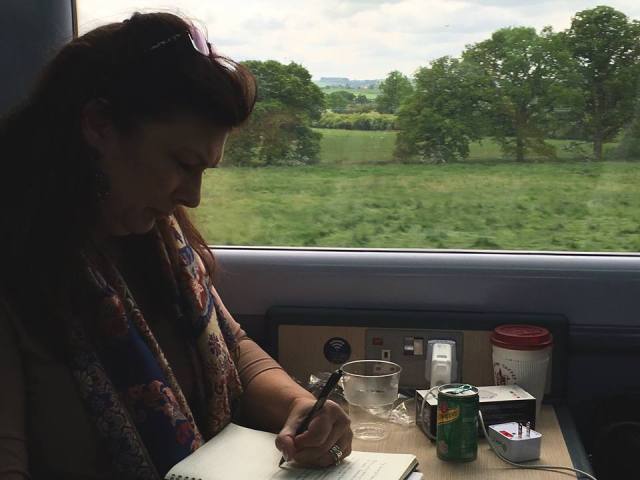
Rae and I on the train to Wales

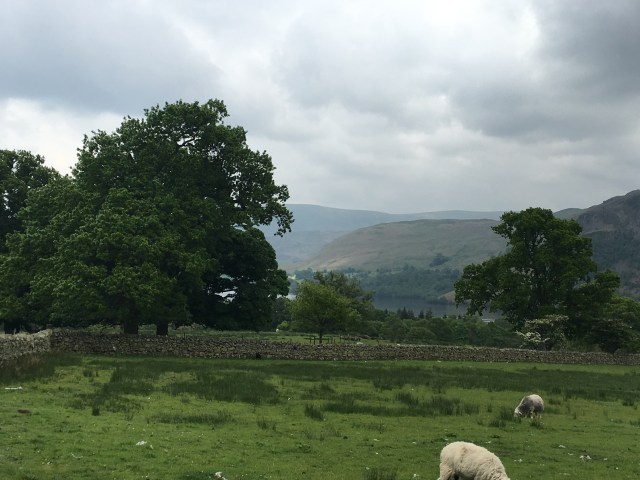
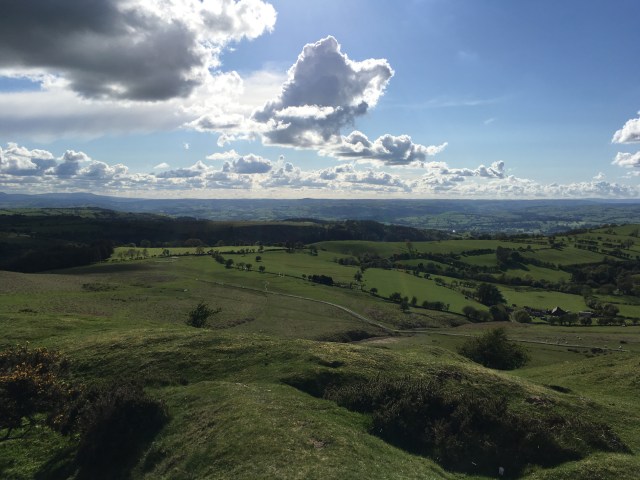
Here, in the lavish, lazy valleys of South Wales one can smell the old, taste the green. To the mystic’s palette it is chateau briand for the soul. The harmonious voices of stocky, Welsh coalminers blend with the buoyant tongue of an ancient language to stoke the most experienced fires.

Too bad they drive like shit. Well, one can’t have everything.

Our brief foray in the UK takes a turn from the sleek, overly preened mien of London to the clumpy, sodden town of Newport, Gwent, South Wales. It is a place as equally devoid of panache as it is pretention. The people are as unremarkable as they are genuine. Note to self: read that line again later.

River Usk.jpg
The muddy banks of the Usk

The River Usk upon which this town is built looks like one long bowel movement running through the center of town. To hear them speak with pride for something so utterly un-notable is in equal measure quaint and unnerving. The last time we were here a few years ago, I joked with my wife, for whom this is her birthplace, that Newport was the only ugly place in all of Wales.

Beyond the obvious revitalization enjoyed by this city, I repent of such ignorant, North American bluster. Besides, the passing years have replaced my previous eyes with new ones. I see now something quite different. The grey, spongy demeanor of the place is easily eclipsed by a deep and knowing spirit – a kind of relaxed ennui, without a hint of self-pity.

I must learn from this.

When the soul moves past its incessant need for the spiritual X-factor, it then can see the better coal beneath the monochromatic surface of its own shallow intentions. The beauty of Newport isn’t found in its breathless joie-de-vivre, the jaunty rollercoaster of soulish affixations we often call spirituality. It is somewhere down under. It lies beneath all of that, in the bedrock of older soil breeding nourishment over luxuriance.

In exploring here, I am struck by how difficult it is to amuse the over-stimulated American psyche. By contrast, the British are delighted by small pleasures. The sheer joy of a few hours before the fire with a stiff cup of tea, a biscuit and conversation is all they require to feel human and whole. As our spirits chase after ever more lusty extravagances, Newport reminds me that the best things come in the unbidden grace of simple, genteel moments.

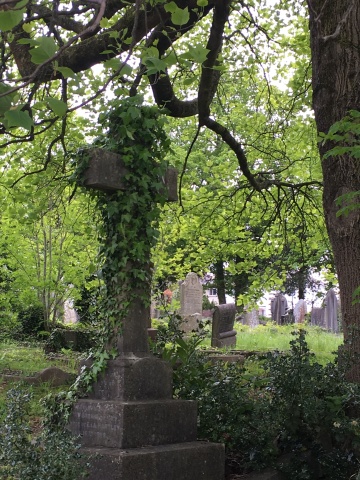
Cemetery 3
A visit to the St. Woollos Cemetery

Today, I am a tourist in the most non-tourist town I’ve yet seen. Better still, I’m a pilgrim where once I was a tourist.

And, I am seeing the beauty that lies beneath.


“Trip to Bountiful” – part 2

As endless underground tube stops, countless footsteps to and from every possible sight, packed unimaginably into what amounts to an hourglass on my wife’s schedule I am, of course, café bound. Two very full days of touristing the hell out of London with a view to advancing my wife’s novel descriptors has left me washed out. She’s a veritable whirlwind in a thimble, a human hurricane of never-ending activity and world-wonder.

My wife, the human hurricane.jpg
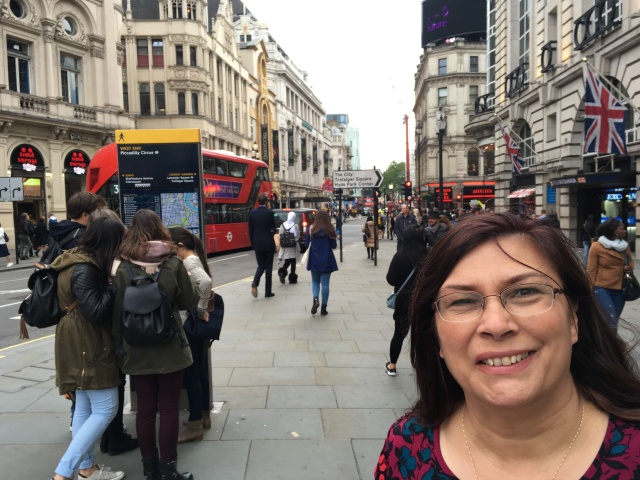
My wife, the human hurricane

As a self-described artsy, bookish mystic, I’m sure you understand my reasons for writing. Besides, I’m sure she’s glad to be rid of me for a few hours. Who needs a needy poet on their back when there’s a world to conquer?

The morning started with a leisurely walk along the Thames through, first, an industrial district and later, through rows of prim, stately flats. Every time I see the Thames I am instantly reminded of how contextual our histories are. To hear Londoners speak of “the mighty Thames” after having lived beside the Columbia for a few years is quaint to the point of hyperbole.

It is however a river that has seen more history in a lunch hour than many others in their long, sweeping careers. At once lazy and overworked, her rippled, brown back shoulders international industry and commerce hard to rival.

It also makes for a lovely morning walk; a walk that has landed me in this very café.

Putney Cafe.jpg
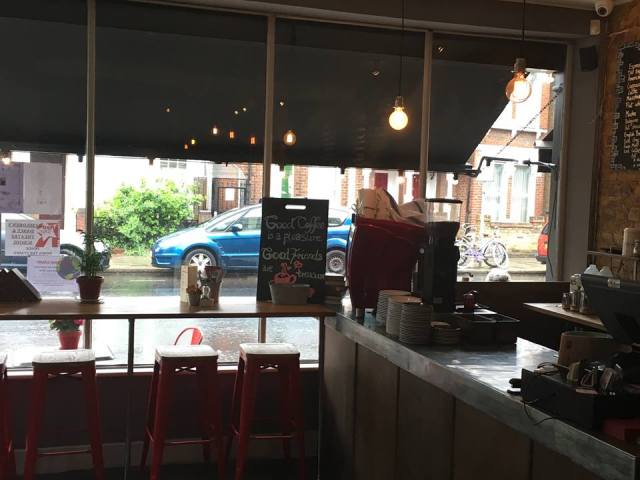
The Putney Café, Wansworth

My wife’s novel, now on perhaps its fourth title, provides much of the backdrop for this journey. She began writing this story almost four years ago. It has gone through many iterations, edits, rewrites, lapses – a great working metaphor for our lives generally.

As described in my first piece of this series I am here for reasons hard to name, hence the elusive title of “Trip to Bountiful.” If ever a story points well to the Celtic idea of hiraeth, it is this one. Contextualized in twentieth century Houston, it is in many ways a timeless tale of escape from an unpleasant present to the friendlier familiar where one hopes to find a reality more amenable to the longings of the heart. It is both escape and discovery. It is reality versus perception of reality. 

The broken places of my present seek out the healing that can come from places connected to my psyche even deeper than my own short history. In the play, an aging Carrie Watts, living unhappily with family, dreams of escape from a claustrophobic Houston existence back to spacious Bountiful where she was raised. 

The longer I explore this idea of ‘home’ and ‘longing’ and ‘be-longing’ the more I am skeptical of easy answers. The incarnational realities of daily existence in our physicality are demeaned by an over-spiritualized romanticism. We are a rooted people. We have a ‘where’ as much as a ‘why’ or ‘how.’ Conversely, the unnameable yearnings resident in every soul are never fully realized by placement in easy familiarities of youth and proclivity.

As ‘hiraeth’ suggests, we may at once long for what can never be again. But, as the even broader, more pervasive gospel narrative insists, in Christ we are everywhere, fully, ‘at home’ – even as exiles in a strange land – the often stifling realities of temporary displacement, geographically or otherwise. 

Hence, even as I gaze out the window of this quaint café onto the rain-washed streets of London I do so sad that I must soon return to a familiar geography with an unfamiliar spiritual DNA, but do so completely happy.

Besides, it’s raining, and the coffee’s good here.

“Trip to Bountiful” – part 1

mobile_h_photo.jpg

The words I’m about to write are the first I’ve written about this. Not because I am ashamed of it. Nor am I trying to hide anything. Quite simply, I’m still trying to understand it all.

I had an emotional breakdown early in the new year. I hit a wall that would have intimidated Goliath. I was wiped out, gutted; truly at the end of my emotional capital. I laid curled up in a ball, weeping uncontrollably on a hotel room floor, a tsunami of thoughts raging in my skull. My soul was in a vice, and my interior life was squeezed beyond recognition.

Quite simply, I had nothing left.

In the middle of that I received a text from a close friend and colleague. Rather cryptically (and not without humor), it said, “what the f**k is up with you? I keep getting woken up to pray for you.”

Okay God, you have my attention.

In the space of an hour, I went from despair to utter calm. The room remained dark and cheerless. My soul however felt swept somehow. Not elated. Not blissful per se. Just quiet and pensive. I was for the first time in distant memory, without anxiety. It was a state I would enjoy for about twelve days.

And, although the anxiety would return, in the window of time gifted to me I made numerous life decisions that have offered great riches ever since. What I discovered in that time was remarkable. When anxiety is removed one becomes surprising lucid, focused, confident, and decisive. 

I put my ordination process on hold. Ordination is the right decision. It’s just the wrong time. I removed myself from a number of writing projects, if only for a time. I gave up my music students (shamefully, I only teach for the money anyway). I felt a desire to perform more often and to dig into gardening (the pun is easier than the gardening). I had an overwhelming desire to turn my sights toward fixing things around our home. I saw more clearly the necessity of relationships and the blessing of stability (thank you, St. Benedict).

Most importantly, it became clear to me that I must join my wife on what was originally her, not our, vacation. 

By God’s grace and if the creek don’ rise, my wife and I board an aircraft for Britain on Saturday evening. It’s been twelve years since we last stood on this sacred ground. The archaeology of our lives readily reveals itself at these moments; moments ripe with joyful anticipation, with curiosity, small misgivings of varying kinds, and simple impatience.

2016-03-26 16.32.40.jpg
Rae and I

We are grateful in such deep ways. We are aware that as we depart, we do so with people and responsibilities we leave behind. In God’s loving hands they are held. But, as everyone knows, the best thing to fix a computer is usually a simple restart. Although we go for different reasons, my requirements are 1) to flush my mental hard drive, 2) to restart my emotional computer, 3) upload fresh life experiences to enhance my spiritual monitor, and 4) set foot again on holy ground.

Ultimately, I am unsure what all of this will mean to me, to us. But, I am a man squarely in a mode of rebuilding my mental-emotional infrastructure. May God have mercy. And, may God go before us on this, our trip to bountiful.

Pix found here and my iPhone!


When pages turn…

Hirst, Claude Raguet-553332.jpgWhen it comes to the spiritual enterprise, I’ve always found delight in the iconic metaphor of wandering. My best guess is that it most capably represents my propensity for being lost in places even blind people navigate with ease – a hallway to the bathroom, the distance from upright to nosedive, or retracing my steps from mall to parking lot. 

It has found its way into my songs for years. 

There are innumerable metaphors employed by the writer’s pen to describe transition, or passaging, as I like to call it. We “turn over a new leaf” or perhaps move from “night into day,” “turn on a light” or some such thing. Such metaphors reach for the deeper comparisons within us between what was, what is, and what is yet to come. 

But this is different. Wandering isn’t the right metaphor here. This feels less like seeking something out than coming to terms with what is; a new normal. In that way, it is more the turning of a page in a book with more chapters read than yet to read. 

I begin with a few words I wrote upon turning 50 a couple years ago:

“Our lives are a series of passages. One tributary leads to another, which in turn yields to something else on its way to waterfall or harbor, estuary or eddy. At times we are stuck, unmoving. Or so it seems. To be stuck can actually be a decision not to decide something. Perhaps it’s a slow, deep spot before being sucked back out into the rapids where we easily lose our sense of direction and the not unreasonable expectation that we’ll fly ass over tea kettle into the frothy spray. There are even times when our boat slows almost to a crawl and we find ourselves in the enchantments of a Pirates of the Caribbean style rendezvous with delight.”

In the chapter that is my work at Yakima Covenant Church, specifically with friend and colleague Duncan A. MacLeod, a page has turned. A new estuary has emerged requiring caution and intentionality, things I am not always known for. Like me, he too is passaging, seeking to ford new streams of possibility with their own risk and reward. He is writing a new chapter in a book yet unfolding (and a rather smelly, farm-y type one at that!). 

“Whatever the case may be it should be our goal to passage well. That is, when faced with life’s bone-chilling decisions, we learn to listen for the most gracious, compassionate means by which to navigate such. Bad transitions lead to less than adequate skills needed for the yet more difficult passages to come. They also create a sinkhole of insecurity since we’ll just have to face similar rapids again later but with one more failure to our credit….I want to say goodbye well, with class, grace and compassion. A goodbye that puts a Gospel period at the end of a glorious sentence.”

Learning to passage well has many rewards. Fewer regrets I suppose might be one. But, more than that, in the ever-expanding journal of our meandering lives, a clarity of chapter markings brings a satisfaction to the sojourner of adequate closure before moving on to another part of their story. It expresses a sense of poise and, ultimately, denouement to our lives that those whose eyes watch us for signs of the Divine are longing to see. More than anything else, how we transition through the passages of our lives reveals the level of our trust in the unseen God making Godself seen – through us. Through you. Through me.

So, then, with the same trembling, inadequate faith with which I’ve typically faced these passages, I do so now once more. Who knows, perhaps this time I’ll have matured enough, even sub-atomically, to the point where I can help lead others in the same challenges?

But, then again, that would be faith in faith, not in God.


Picture found here


A Piper Toots His Own Horn

For forty plus years I have submitted myself to being assaulted by a screaming five-legged octopus wearing tartan underpants. To the lay person – I am a bagpiper. It is, under any circumstances, an instrument that, like a crying baby on an airline (or me), demands center stage. It is a sound that captured me even as a boy of seven years old.

Calgary, 1971
I grew up in a tiny bungalow in Calgary, Alberta the adopted son of a brewery worker and his wife, my mother. As I, along with my younger brother and sister, continued to grow, it became abundantly apparent that our consistent brushing of shoulders would only lead to heartbreak. My father set about building me a bedroom in our not-quite-finished basement. For some fifteen years to follow it would be my sanctuary – my monastery – the place where I found music, booze, girls (keep that bit a secret, they only know about the first one), and years later, Jesus.

The spring before my eighth birthday I moved in. Kismet. Changing channels one afternoon I happened upon a presentation of the Edinburgh Military Tattoo, filmed live at Edinburgh Castle. It is an annual display of pomp, circumstance, bright lights, booming cannons and bagpipes – lots of bagpipes. I was hooked. I begged my parents to let me learn to do what I had just seen, but thought I had dreamed.

A love affair had begun.

Christmas, 1974
All other parcels had been destroyed and gutted of their contents by panting, over-wrought children. My Mom turned to my Dad and asked, “is that everything then?” (Oddly, in recent years, we’ve found ourselves performing such non-Shakespearean works with our own children…sigh). They went into a bedroom and reached under the bed, pulling out one final, unopened, present. As kids do, I skinned it in seconds only to discover contents that set me reeling (no extra charge for the bad pun) for an hour afterwards.
I owned my first set of bagpipes.

Okotoks, Alberta, 1992
Those bagpipes became a close friend. Extensive traveling, piping for dignitaries and royalty, numerous television and radio appearances, and two piping albums later, and our lives found us church planting in the urban-cowboy sleeper-community of Okotoks, Alberta, south of Calgary. It was idyllic. Rae worked for a local travel agency. I worked as an industrial painter for my father-in-law’s painting company.

As the call to ministry grew too loud to ignore we found ourselves scrambling to get our affairs in order for a move to Vancouver, B.C. where I was enrolled at Regent College. Bills were paid, scores settled, ‘t’s crossed and ‘i’s dotted as we made preparations. In a move I thought noble at the time but which now seems utterly foolhardy I sold those pipes to help pave the way toward ministry and the next chapter of our lives.

I have regretted it ever since…and I never did attend Regent College.

A Serendipity
I have taught for many years at Bagpiping Seminars, Celtic Performing Arts Schools and the like. A dear colleague and one of my best friends is a man named René Cusson. Not only is he one of the world’s great pipers but he is a collector of instruments. Knowing me to be bagpipeless, he selflessly loaned me a set he’d picked up from a garage sale for $75. A keen eye, some research, and a sacred serendipity revealed them to be a rather famous set of MacDougall of Aberfeldy bagpipes probably made in the late 1890s, ultimately finding themselves to a legendary bagpiper killed in WWII.

For 25 years, from 1992 until September of this year, I played those bagpipes.

A Request
René’s daughter, Ceitinn is a champion Highland Dancer. But, as is the case with many purveyors of Highland arts, one skill is never enough. She wanted to begin bagpipe lessons and follow in her father’s footsteps. This of course meant a message to me that, although not unexpected, stopped me in my tracks. He would need those pipes back for his daughter to have something upon which to learn.

The process began of disassembling and packaging them for transport to their home on Vancouver Island. In September 2015, at the Greyhound Bus Station in Nelson, B.C., I said farewell to a comfortable friend and began a life of bagpipelessness once again.

Thankfully, as a piping instructor, I’ve been blessed to borrow student’s bagpipes as required.

Christmas Eve, a Good Time for Miracles
Selling bagpipes my parents bought for me is only one of many regrets. But it’s a big one. In spite of having had a set to play all these years, that memory is not easily erased. And I may yet be a novice in this whole Christian enterprise but I know this much, God delights in reversing the irreversible; in repairing the seemingly irreparable damages of our past.
In Gospel terms, regret is a wasted emotion.

To my surprise, shock, and delight I was gifted with a brand new set of McCallum bagpipes at our Celtic Christmas Eve service this year. Completely unknown to me, pastor Duncan and ??? colluded in a series of conversations and scheming, phone calls and plotting, sideways glances and squishy secrets to research, obtain, prepare, and gift me – publicly no less – with this amazing thing.

Best of all, my Mom and her husband, Sam were visiting us from Alberta, and were present to see it. If anyone knew just how inconceivable it is to play a bagpipe “fresh out of the box” (bagpipes are frustratingly moody and don’t follow directions well), you would understand just how gratifying it was to pipe folks out of the sanctuary with this new instrument!

I’ve played them for hours since then in a mixture of awe, tears, and bewildering joy. To say I am grateful is a woeful understatement. To say thank you just feels so utterly lame.

But let me start there…

___


A gift from dear friends

To our heart’s delight

In a recent post I began to meditate a bit on what the Psalmist may have been on about in 37:4 when he adjures us to “Take delight in the Lord, and he will give you the desires of your heart.”

To press into the paradox of these words is to discover two interrelated things. In pursuing those things, ideas, persons we believe to be most satisfying to our egos, the shallow water before getting to the sea of soul, we suffer the law of diminishing returns. We attain, receive, pursue, and sometimes steal in order to buttress an icy happiness that laughs at us mere moments after the fact.

We held in our hands what is now farther away.

The result? Turn up the heat of our pursuit and call it “dedication” or “hard work” or “sacrifice.” The process begins again in earnest, to a fool’s detriment.

Conversely, it means something much odder still. To walk away from delight itself and toward the God of all delight is to forego the very need of desires for which we were previously straining. It is God’s cheeky bait ‘n switch.

To one drowning in desire, grasping hold of the first thing to bear us up is a natural action. But that desire blinds us to the life boat yards away in favor of a shark’s fin inches away. We are saved, but only until it becomes clear the price we pay.

In this season of competing allegiances and dueling narratives, all sparring for our attention, let us journey together on the longer road, bringing an end to all lesser desire, and follow after he whose self-denial gifts us with what we never thought was lost. 

Let us risk the farther star; the gift which requires us to keep our heads up lest we trip on our own pursuing feet.

journey-of-the-magi.jpg!BlogPainting by James Tissot, found here


That in which we delight

“Take delight in the Lord,” says the Psalmist, “and he will give you the desires of your heart.”

iggy-necklace-carThis is a deceptively easy passage. The fog of western, individualist consumerism however urges us to read this as God simply handing us whatever we want, regardless of its origin, intent, or wisdom in the attainment thereof.

Indeed, God does give us what our hearts desire. But, the beauty and deft insight of this verse is that the heart changes in accordance to what brings delight. As it becomes more centered in the Divine, it leans more readily toward the faces who line the hallways of our lives.

We soften toward their plight, and glow with pride in the accomplishments of others. It begins to shatter for the things that shatter the heart of God, in whom we delight.

And even suffering begins to make some small sense as it becomes contextualized against the larger picture of God’s redemptive enterprise, an enterprise into which we are invited, baptized, and transformed. It is out of that transformation which come the heart’s deepest desires, doubts, despair, dreams, and destiny.

The next time we quote this marvelous gem, especially during this holiday season, let us attend to its more ultimate direction. Let us lean into the God who, in Christ, becomes all our desire and through whom our deepest desires, plunged into the raging love of God’s heart, are fully satisfied.

cropped-dsc_0059.jpg

Car photo found here

Communion photo taken at Yakima Covenant Church (where I am proud to serve as music director)

“Do you want to be healed?”

“Do you want to be healed?”

For the longest time I had attributed it to the insistent paradigm of the poet’s logic, the lover’s unrequited dreams, the shifting clouds of the philosopher’s quest – all searching for something – a reality as numinous and perfect as it is deceptively secret and stubbornly resistant to conquest.

An ever-present sense of melancholy, a numbing ache, an unnameable yearning – desolation even – has draped my consciousness for many years. It seems I am a walking advertisement for mood enhancing substances and the pharmaceutical drug trade (or, maybe just self-pity?)

Sometimes, and inexplicably, my soul is shot through with little darts of light – suggestions of heaven, of how things truly are. They come unbidden mostly as ghostly sojourners, inhabitants of a more perfect realm come to slake my wheezing soul with wine, bread, and perhaps a song or two.

In recent days, this ubiquitous, verbose Demon of Grey Souls has gnawed at me for so long that it seems, by virtue of that fact, to have overplayed its hand. The hide ‘n seek after contentment, so long now the haunt of my days, has been smoldering behind its best hiding places under new rays of sun. I had willingly become a pawn in a cat and mouse game and my overseer has grown too fat to hide well.

New light, still diffuse and weak, but less coy or troublesome, is asking me a question; the ironic question Jesus once posed to some poor bugger by the Jerusalem Sheep Gate: do you want to be healed?

On the surface it’s a question as ridiculous as asking two young lovers, separated by time and circumstance, whether they’d like to make love. Upon reflection however, it reveals shear genius and a profound knowledge of the human psyche. In asking such a question, Jesus becomes more than just miracle-worker, more than a first-century doctor. He becomes psychologist and spiritual director.

He gazes beyond the obvious malady to which this fellow is chained and sees something else. His question is aimed at the man’s fear, not of remaining ill, but of the unknown world that might just open to him in the face of his healing. To be healed is to rejoin society. It is to refuse the Hogwart’s sorting hat from placing you once again into the House of Sufferin’. It is to relinquish the comfortable role of pitied and pitiful, dependent on the succoring cries of others, and take up one’s place responsibly as contributor and co-builder of a just and compassionate world.

The Spirit of God is revealing to me just how long I have sat beside my own Beth-zatha (see Jn. 5:2ff) with the expectation of healing but full of excuses for why it shouldn’t have or hasn’t yet happened. The brooding and mysterious artist persona, complete with philosopher-poet mystique and generous helping of eyes-down, hood-up melancholy is no longer a big enough hiding place for the overwhelming presence of this question, posed by Jehovah-Rapha (God, our healer).

Perhaps it’s about timing, we must wait until our own “fullness of time” (Gal. 4:4)? Perhaps God is content, as in the case of Job, to let us sit in our sackcloth and ashes long enough to remove all doubt that we’re so buried that only another can save us? Perhaps it’s just “our turn?”

Says Marilyn Gardiner, “We sit, often for years, with our paralysis. It may not be physical paralysis, but it is just as debilitating and defeating as physical paralysis. It prevents us from truly living, from being who we are called to be.”*

Whatever the case, I am ready to answer ‘yes’ to the question of Jesus. I am ready to shed one skin, now old and overused, and don a better one.  I am ready to see what has always existed just below the surface of my murky water. 

I think I’m ready to say ‘yes.’

I’m ready to say ‘yes.’

I say, ‘yes.’

Yes.

Will you?

_________

*Excerpted from Marilyn R. Gardiner’s wonderful blog, Communicating Across Boundaries

Going Home, and the Way There

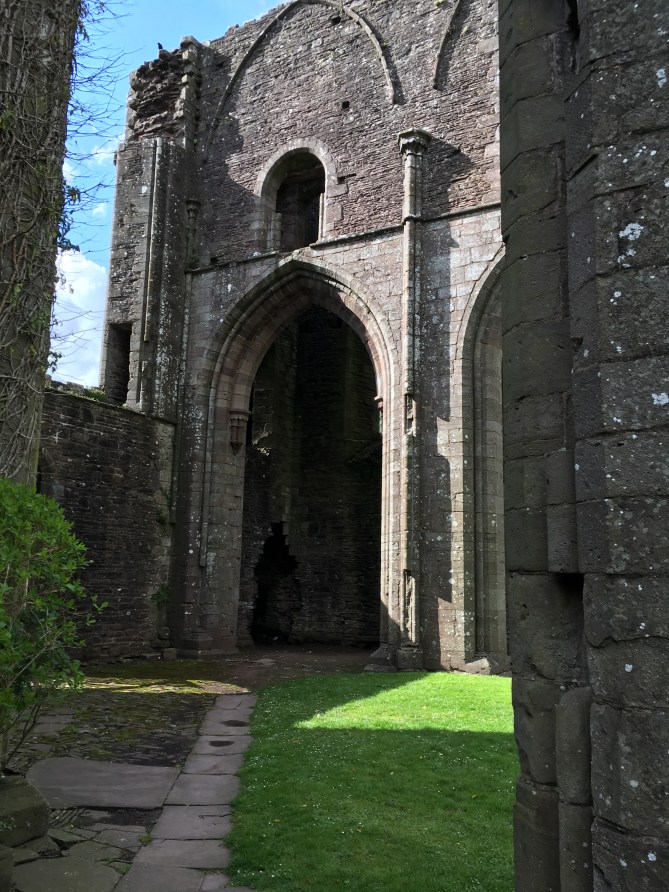
It was 1989. My wife, Rae, and I had just completed a call of duty as mission workers to youth at Granton Baptist Church, Edinburgh. We enjoyed our first anniversary on Culloden Moor, near Inverness and were now enjoying a few weeks to just explore. I recall quite fondly the first time we stood together within the ruins of Tintern Abbey, not far from her birthplace in Wales. The mystery of belonging, and the sheer weight of home was overwhelming.

Tintern Abbey, Wales

A Celt at heart, I think and write a great deal about the spirituality of ‘home‘ and the ache it engenders. The human heart is uniquely designed to yearn. It knows what it wants and diligently seeks it out – sometimes in unsavory, even desperate, ways. Our sacred procurements can quickly become what derails us from procurement of the sacred. But God knows our heart and the passions to which it is given, both good and bad.

What do you think of when you think of ‘home?’ A family room, lavishly bedecked with Christmas finery? A dining room table around which sit the people who grace your life? A certain place to which you return for solace when life goes south? For Rae, my wife of twenty-seven years, it is Britain. We both grew up in Calgary, Alberta on the uneven foothills that slowly crawl their way up the eastern slope of the Rocky Mountains. But the ancient Celtic hillsides, grey and mournful skies, and songful souls of Wales are for her, home.

Calgary, Alberta
Calgary, Alberta

We met while in mutual mourning. I had just lost my father to cancer a few months earlier. She was a girl in the throes of anguish, watching her mother waste away with the same plight. Rae is an only child, not because that was the desire of her parents, but because she was the only one to survive of numerous pregnancies. A survivor she remains to this day.

Only-children learn to be self-sustaining, imaginative, and scrappy in order to live their lives outside the interdependency of other kids in the family. With the lack of siblings, they often grow deeply independent, and extremely close to their parents, taking on signs of maturity well before others. All this is true of Rae. 

She lost her mom in August of 1986, almost a year after I lost my dad. She and her dad, now alone, forged a new life together on their own. In a sense, Rae took over many of the aspects of care and mutual friendship that previously existed between her parents. They often spent evenings simply crying together. Her father was lost without his partner, and the many tendernesses known only to lovers. His habitual journey from kitchen to bedroom every morning with tea and toast for his wife was now enjoyed by Rae. In honor of this tradition, I bring her coffee every morning. These little things help keep the big things in place.

The friendship born of the mutual bond of grief has lasted to this day. Since losing her parents, any family of origin are gone. In a sense, she is alone on this continent. To help her contextualize this and many other competing voices within her, she started writing a novel a little over three years ago. It is, of course, based in the UK.

Rae, my writer, wifey pal

Because I so keenly identify with her longing for home, and because, as a writer myself, I am her biggest fan, it has been my desire to help her return. I have developed a Giveforward crowd-based fundraising campaign to assist in getting her back to Britain where she may visit her remaining relatives, and finish research for her book.

If you feel as pulled toward home as we do, please consider making a donation, however small, to help her feet once again touch her own hallowed ground. You may do so here.

Diolch yn fawr iawn (thank you very much in Welsh)

Picture of Calgary found here

Solace outside the monastery walls

hesychasm-%20Oleg%20Korolev
“I, your priest, will make the whole earth my altar and on it will offer you all the strivings and sufferings of the world…Grant me the remembrance and the mystic presence of all those whom the light is now awakening to the new day. One by one, Lord, I see and I love all those whom you have given me to sustain and charm my life…All the things in the world to which this day will bring increase; all those that will diminish; all those too that will die; all of them, Lord, I try to gather into my arms, so as to hold them out to you in offering…” Pierre Teilhard de Chardin – from Hymn of the Universe
 
The history of Christian mysticism is peppered with rich fare, the heady extrapolations of soulish delight uniquely the territory of those fearless ascetics, monastics, hermits, and contemplatives who journal their journeys. It is the stuff of heavenly lore with heroes of inner battles fought and won, the likes of which we lay-folks can only imagine. One finds there a burning cauldron of purgation, a gleaming mirror of illumination, and the sweet rest of union. I read them lustily, with an aching expectation of tiny droplets of light for my faltering journey.
That same history is fraught with the cheap thrills of mystic wannabes, hucksters, and spiritual amateurs unsuited to such a dangerous pilgrimage. The existential nature of mystical theology makes it particularly vulnerable to either deep-diving into shallow waters or worse, shallow-diving into deep waters. And it can be hard to tell the difference. Even the Church from whence sprang these instructors of the spiritual way had difficulty determining where mysticism ended and heresy began.  
Here’s the deal. To be honest, as I read the mystics, I am struck by a number of things. Firstly, there is an undeniable courage required to mine the depths of God. From Augustine to Thomas Merton, women and men of rigorous faith coupled with a thirst for perfect union with their God, have sought to unpack their way in the Way. The literary legacy left behind has formed for us the corpus of Christian spirituality. It is the library to which I turn time and again for a way out of my tunnel and into God’s cave.
The more I read however, the more I see that they can be just as systematic and linear as academy theologians even as they describe the inner motions of the soul on its journey toward union with God. The roots are similar, but there are only so many ways to peel a banana. One has this threefold way, the other this sevenfold path, still another refuses steps altogether.
This is my struggle, one not unique to me – what is so often lacking is a clear connection between the complexities of the soul’s journey to God and the equal challenges of the dusty and broken world that is the home for all souls under construction. Inordinate amounts of time and energy is spent discussing their own soul’s progress in their own conversion. They almost seem to be in competition with one another as to who has experienced union with God most profoundly. There is much talk about God but turned, as it were, consistently inward.
Make no mistake, I love the mystics and will read them for the rest of my natural life. Moreover, I am usually combating the prevalent North American spiritual philosophy of ‘git ‘r done pragmatism. These matters are not generally ones that concern me to this degree. But, some questions vexing me these days: What is the relationship between the soul’s call to continual conversion and the call of the Church to be the redeemed and redeeming community? If one can discover the mysterious movements of God in the deepest parts of one’s own soul, what use do we have of one another? Of liturgy? Of Word and Sacrament? Of the Moral Law? How does all of this translate to the peasant farmer with far too little extra time on his hands to even be concerned about the threefold way, or the thirteen steps of Marguerite of Porete or anything close to an Interior Castle? Not everyone has the benefit of monastic solitude, a spiritual director, access to helpful resources, perhaps the ability to read the same(!), or a brother/sisterhood of likeminded seekers intent on finding their souls. Without that clear connection, it would seem to be too similar to the program of gnostic therapeutic dualism of contemporary evangelicalism.
The Gospel has both an inner and an outer intent. The aim of the Gospel is the ongoing restoration of the cosmos, souls and all. And the cruciformity of the Gospel calls us, nourished or not, whole or not, unified or not, in sacred ecstasy or not, into a world that badly needs these discoveries. Everyone must learn to find solace outside the monastery walls, mystic and lay person alike.
The above piece by Pierre Teilhard de Chardin gives me a peek into that kind of active contemplation. It speaks of offerings and gatherings, of sustaining grace amid the sufferings of the world. My soul cries out for the depths of the contemplative life (“as a deer pants for flowing streams…”). But my heart cries just as loud to share what I see with those around me who have no frickin’ idea what I’m talking about, but who long for it all the same.
Does that make sense? What do you think? Help a guy out, will ya?
* * *
homeless-people-26
Image 1, “Hesychast”, by Oleg Korolev, found here
Image 2 found here