Hiraeth – making peace with longing, part 2

contemplation

“Longing is the deepest and most ancient voice in the human soul” – John O’Donohue, Eternal Echoes

Fellow poet-mystics understand how gratifying metaphors can be. They build a much bigger backdrop upon which to mess about and articulate those things that defy such articulation.

Hiraeth is most helpful here. It is an older word from an older culture at a younger time. It has the thickness of time-honored usage by countless others just as curious and longing as I.

Admittedly, at times when I really should be listening intently to our pastor preach his stellar sermons I find myself writing in my journal instead. These times are often quite fruitful. Perhaps it’s just the delight in foregoing the reality right in front of me for the one I keep trying to build in my head! Och weel, be that as it may…

A fatigue so deep has set in that I’m calling it depletion. The river has run dry and much of what I’ve done for years feels more like duty than vocation. A restless, ceaselessly searching spirit has been my lot for as long as I’ve been breathing. So, the light of experience tells me that quick and easy answers are not on the menu.

No, this must be borne quietly while I discern alongside it what’s to be done, if anything, to find some inner dampness again.

Hiraeth – the spiritual weight of longing. It’s how I would imagine a 10-mile portage through dense forest carrying a 90-pound canoe might be like. And, without the aid of a decent compass, readable map, or clear reason for the journey in the first place.

Some things just kind of creep up on a person – age, anger, addiction, fatigue, desire, love. They boast a surprising stealth, deftly dodging every conscious attempt at control or even self-understanding. But, perhaps the hardest to pin down is that of longing. It is the most elusive. Like humility of character, it’s the greased pig of spiritual experience. Wrangling it successfully with anything close to keen insight, all with a growing weariness, is like the vain admission of one’s own humility. It’s elusive as it is ironic.

In the morning I glance in the mirror and see a 6’1″, grey-haired, green-eyed Libra with surprising levels of energy and two pages of life goals. At lunch, the same mirror reveals an older, albeit content and generally successful man, happy for a measure of stability. As evening comes however, it brings an uncertainty. The image is still recognizable with all the right stuff in all the right places.

But the mirror has changed.

It seems farther away somehow, and murky, like soaped up windows in the carwash. The fingerprints could be mine. But, if so, I can no longer tell and, worst of all, I no longer care. What are mirrors good for anyway beyond advancing one’s own skewed self-image? Gawk into one as long as you like and one is none the wiser – only more vain, and sometimes increasingly less satisfied, with a penchant for forgetting what one has just seen.

Self-understanding is the greatest of God’s ‘under the sun’ gifts. But it comes at a high price. And it comes indirectly, peripherally, sneaking up on us from behind. And its deepest insights generally come at the expense of pain, loss and suffering. It also comes only in proportion to the willing clarity of a long, loving gaze into the eyes of the Self of all selves; the I Am, the ever-existing font of all personhood and is-ness.

God is stirring. I believe it is why I’m suddenly paying attention rather than affixing to it some scripture on faithfulness that, though informative, speaks at cross purposes to yet others yelling at me to slow down.

I can’t breathe. But God is my aim. And, so, I am once again looking for God.

Photography by Laura Aldridge

Hiraeth – making peace with longing

contemplation

“The human heart is a theater of longing” -John O’Donohue (Eternal Echoes)

The Celts have a concept, Hiraeth (here-eyeth). It is a Welsh word, about as difficult to define as it is to pronounce.

Let’s try.

It might be defined as a longing, a homesickness for a home to which one can never return. It is the unrequited hope that produces ever more unanswered longing. It is a grieving for the lost places and moments of one’s past – a sense of loss for loving moments and places, fondly remembered. It sits in the dream world where longing, belonging, home, and wanderlust meet.

I’ve lived my entire life in this terrible, wonderful, aching place, rarely able to make sense of it but never able to escape it. I like to think I’m a complex mystic. Others I’m sure simply dismiss it as the cross-eyed musings of a artsy moron. But, I digress…

In a 2003 interview with Val Bethell we get a particularly poignant description of this elusive idea.

“Hiraeth is in the mountains where the wind speaks in many tongues and the buzzards fly on silent wings. It’s the call of my spiritual home, it’s where ancient peoples made their home…high on a hill, where saints bathed sore feet in a healing spring and had a cure….Hiraeth – the link with the long-forgotten past, the language of the soul, the call from the inner self. Half forgotten – fraction remembered. It speaks from the rocks, from the earth, from the trees and in the waves. It’s always there.

Yes, I hear it.

Yes, I understand what hiraeth means.”

As do I.

So, here’s my strategy. While you sit, happily dunking something forbidden and delicious in your coffee, I’m going to prattle on a bit about this concept in a new series of blog posts designed to help get us, okay me, to the pleasantries of shared experience. And, although I’ve written about this thing before, I need to keep doing so. I hope this exercise is more like Michelangelo’s hammer and chisel finding David in the stone than the endless pounding of the chain gang pick on the rubble pile.

Join me?

Photograph by Laura Aldridge

Out Through the In Door

01

It was 1970. I was under-ripe, but hoping for the best at 7 years old. My Dad was developing the basement in our tiny 1000 square foot bungalow in Calgary, Alberta. Part of that process was building my own bedroom (let applause dwindle before carrying on). I was elated. During part of the process I was sick and recall sleeping on a movable cot in an unfinished room into which my parents had brought a TV that I could watch while convalescing. Poor me, I don’t know how I managed under such rigorous conditions.

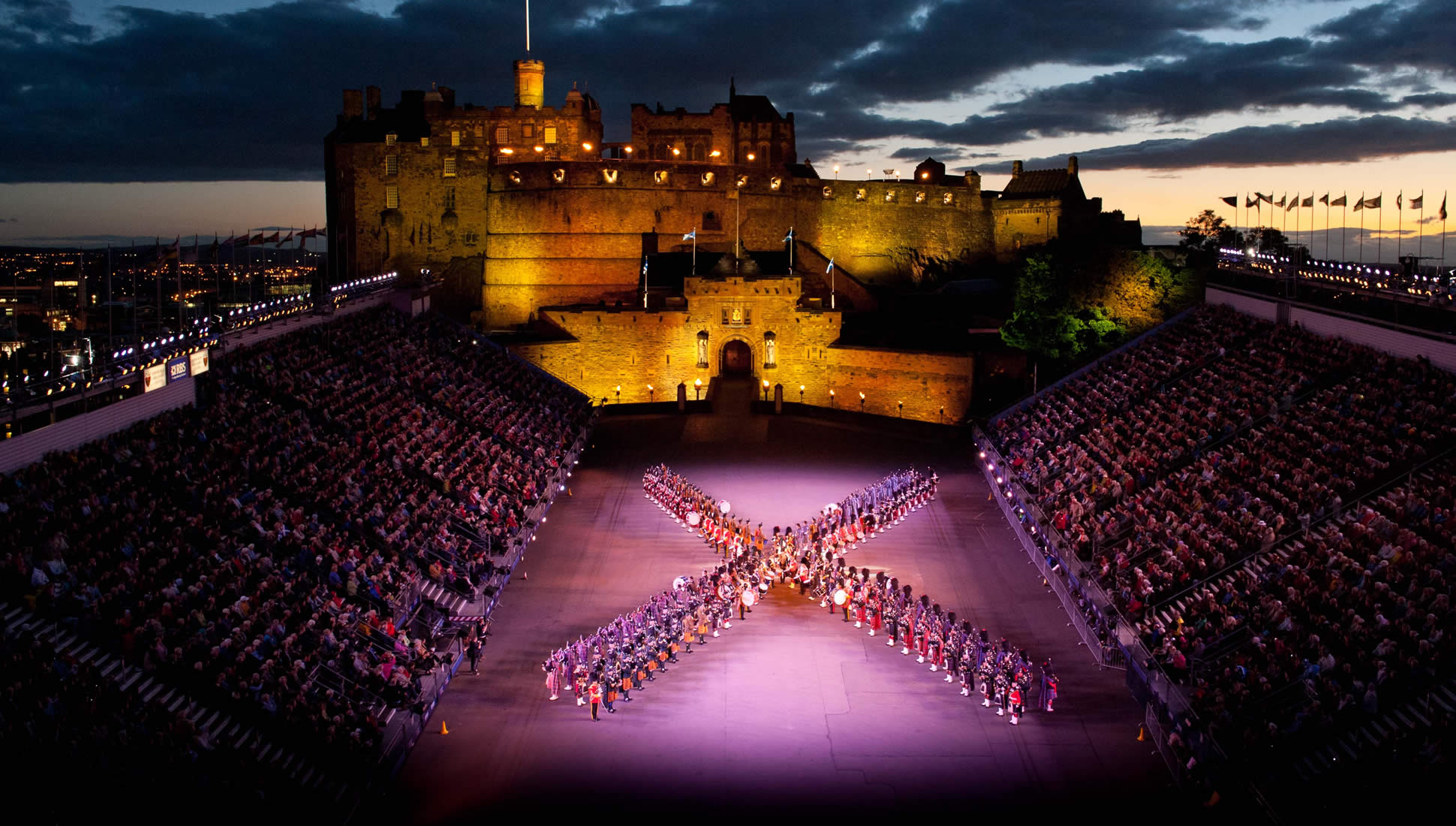
My life forever changed one evening upon watching a live presentation of the Edinburgh Military Tattoo from Edinburgh Castle. I was smitten.

Edinburgh Military Tattoo

I had encountered something so pristine and wild that I told my parents the next morning I wanted to learn to play the bagpipes. Instead of the response generally expected, perhaps even advisable, for any parents, mine were intrigued and supportive. In less than a year I’d become part of a local Boy’s Brigade company hosted at the nearby St. Andrew’s Presbyterian Church where I would also begin my first lessons.

Perhaps the biggest discovery however was that I was becoming aware of my beginnings. My parents made it clear to me (as clear as such things can be to an eight year old) that, as the oldest of three adopted children, I came from Scottish DNA. Spooky to some. Intriguing to others. My response to this growing revelation of my biological roots was an insistence that I was finding my spiritual ‘home.’ 

Alongside many others through the centuries, I am one who uniquely identifies with what we believe to be true about the Celtic way of life.

I’m happiest when I’m a little sad.

Life is always better in the rain.

Green will always be the best color.

Everything is a metaphor for something else.

When I wander, I long for home. When I’m home, I long to wander (translation: whiny and impossible to live with).

Stories, music, poetry, and art are still the best way to teach anything.

Men look best wearing colorful dresses, tossing around telephone poles, tossing the caberand making themselves dizzy blowing ridiculously loud instruments.

Women are best when allowed equal voice in the community.

The forest may still be the best place to worship together.

Dark skies are a sign of hope more than weather.

The best life is when one day we sing together, the next we die together.

And, learning means more about living than just knowing.

What I’ve loved most about my place on the Celtic role call is that life for the Celts wasn’t neatly compartmentalized, as it is in our western, rationalist world. The idea of one’s “spiritual life,” or “physical life,” or “social life,” or “sex life” would have been quite foreign to them.

It was, quite simply, life. Everything mattered equally. Everything counted. Nothing was completely meaningless but contributed to their daily and eternal existence.

They lived very outward lives from very inward places. They spoke of “thin places;” the nexus where one could feel the outline of God’s hand touching theirs from behind the thin sheath of reality. The thin place, where transcendence meets the here and now, was where the Celts felt most comfortable.

It contributed in forging a Christianity deep enough to pray ceaselessly, strong enough to endure a pushy Roman empire and countless robust threats, and bold enough to sail into the unknown and share what they had experienced.

I like to call them “practical mystics.” They rehearsed the soul well enough to sing its song in the byways and the unforgiving wilderness. Their memory of mystical encounters with God propelled them outward to meet innumerable dangers to preach and live the Gospel.

They possessed a unique zeitgeist I like to call “shared home.” Hearth and home, food and fire, pain and process, bird and beast, wine and women, song and celebration, faith and family, God and neighbor, self and sacrifice, love, laughter and loss – all of a piece, one undivided garment of singular living. What they shared with the world they had already experienced in their daily lives.

They were perhaps one of the most genuinely whole peoples the world has ever known. I would even go so far as to suggest that they exemplified a very biblical faith. They marched to the skirl of their own bagpipes!

As a result, Rome absolutely LOVED them and offered their undying support (pry tongue from cheek here____________).

What the Celts understood is that there would be no outward “success” without honest, inward labor. The great, wide sea that would lead them to countless would be Kingdom-citizens awaiting their hopeful voice could wait long enough for them to be well acquainted with the reason for their journey. Boats easily sink when left untended for too long.

They went out boldly to see God at work in the world, but did so through the in door of communal spiritual practice. They had more than ideas to share. They took their photo albums and welcome mat with them.

The insatiable longing to belong so pervasive in the Celtic spirit changed their way of living. They willingly and consistently explored what it meant to be “home,” all the while sailing to the ends of the earth in pursuit of what they sought. In so doing, they brought the hopeful message of Jesus’ new Kingdom to those people everyone else called “barbarians.”

The Celts called them neighbors.

The Celts loved silence and the life of the soul. But they loved it too much to keep it a secret. They went out through the In door. And, with this inner treasure in tow, they sailed the great deep to change the known world.

We are their legacy.

Great Guardian of hearth and horizon, soul and sail,

I have lifted my feet in obedience to an insistent wind.
I have lifted my head up above this tiny-rimmed being.
I have sought again what once was too costly.
I have set out once more upon a wildly restless sea.

And found what was looking for me.


The changing face of prayer

As I deepen, glacially but surely, in the Way of Jesus I am finding freedom in the manner, frequency, and creativity of spiritual intercourse. There are a number of factors in these discoveries. I am getting older – a fact, apparently, applicable to all. The passing chronos lends a certain gravitas to the focus of kairos. And, the slow-cook crockpot of my formation adds fewer ingredients every year to an already complicated soup. Sometimes it’s not more, or even better, ingredients that are required for the quintessential meal. Sometimes it’s the right ones at the right time that leave the palette happy and wanting more.

As I’ve written numerous places, the past few years have been richly experimental in regions of contemplative prayer. Learning to love silence. Seeking out solitude. Making friends with simplicity. Studying the nuanced coup d’etat of lectio divina. Prayer walking. Being enriched through congregational liturgy. Journalling the works.

All these and more continue to contribute to whatever Rob, slightly enhanced, may be forthcoming off the stove.

But something is changing. With the increasing 20/20 available through the grace of kairos and the experience of chronos, I’m latching more and more onto the fluidity and ubiquity of unceasing prayer, specifically as it has come to be associated with who I am more than an action to which I commit. If in fact it is true that God is omnipresent, theologically, and an unceasingly constant spiritually, then it should come as no surprise that prayer can and perhaps should be, everything.

There is a state of being available to all persons everywhere that is readily found in that which most thrills the soul. For some, the ticking clock, counting the passing hours immersed in good literature. For others, it is the choir of smells united in one explosive song on a nature walk. For still others, it may be culling from the raw ingredients of the earth, something rich and flavorful with which to delight the tastebuds of friends and family.

For me, it was music and writing.

MASFL Pix 009 copy
Me, roughly a millenia ago


As a teen, and a budding musician, I would often sit for hours on the front step of our house simply playing my guitar. The notes, some of them good, others lined up for the shower, collided together to produce more than just music. They created space; a kind of generous openness to whatever the universe was at the time. A particular kind of peaceful “zen” or as Thomas Merton might call it, “contemplative awareness” resulted, leaving me just where I needed to be. This was true even as I spent countless agonizing hours learning impossibly difficult melodies (I certainly thought so at the time!).

In recent months, as more conventional understandings of contemplative prayer have waned a bit, I’ve had a certain yearning to resurrect this practice. And resurrection has been the result. To plant myself on a lawn chair a few feet from my rose bushes (such as they are) and play music inspired by the same, in tune with the wind, has once again ushered in a holy Presence. It has centered me like nothing else lately. 

Rob-singing on Okanagan Lake
Taken on Okanagan Lake, Kelowna, B.C., 1999

 It has also brought a much cherished simplicity and deepening unification of all I am into pulsating notes, maybe not always in tune, but always tuning. Music, once again, has become for me the changing face of prayer, changing me.

A Celt in a kilt and the beautiful mundane

This was originally posted as a guest post on a favorite website of mine, Abbey of the Arts (thank you Christine Valters-Paintner!). What a delight to be given opportunity to share one’s life among kindred spirits in the grand dance that is our eternal redemption.

Please, please, please, if you haven’t already done so, be sure to visit Christine and the rest of us Monk-Artists at the Abbey. Come visit/like the Facebook page as well. You’ll be so glad you did. I promise.

__________________________________________________________

A Celt in a Kilt and the Beautiful Mundane

I-You-Holy Ground
By Robert Alan Rife

I am the dusty ground, low and dry
thirsty for the imprint of holy feet.
Despoil with radiant prints, this virgin ground.

You are the rain, falling deftly
upon my brown soil. Now is left
your footprint on this ground.

I am the ashen leaves, curling and broken
awaiting but a whisper. For only then
can I fall on solid ground.

You are the soundless wind, howling, still.
You creep up behind me and
exhale me to the ground.

I am the snow, disembodied worlds of cold
and chance encounters with hand, or tongue,
eye-lash or palm needing ground.

You are the frozen air in which I am held
aloft, drawn slowly down
to meet with others on the frozen ground.

I am the waning autumn death
soon to give way to the long silence-when one Voice
becomes the loudest ground.

You are the Voice that speaks
heard best in dying, power given for
rising from this shivering ground.

I am the distant hours, the midnight passing-
the refusing minutes, trapped in hours,
running from the years of ancient ground.

You are the many, and the one, and all time
and nothing and everything from nothing
where time has no ground.

I am the weeping, the squalid groaning,
the unrequited miseries of misery’s company
laying crippled and diffused in the ground.

You are the end of tears and years, the question
and the answer, the sutured nerve of joy, not suggested
but present, here, on this Holy Ground.

________________________________________

For me, the term ‘monk’ used to mean ‘one safely cloistered away from the cares of normal life in dimly lit, echoing stone hallways where hooded men sing hauntingly beautiful music and basically float just a bit off the ground. A single, piercing glance from their crystalline eyes means healing, they have superpowers, can read your thoughts, never need to eat, and speak once a year whether they need to or not.

Since leaving behind my roots in evangelicalism for headier waters elsewhere I’ve since discovered that monks often have the sauciest senses of humor, the bawdiest stories and, not surprisingly, the deepest delight in the world around them. My kinda fellas. They’re as non-dualistic as they come; a life to which I aspire. Apophatic meditation one moment. Bodily noises the next. Welcome to my world.

I am a dreamer; a philosopher-poet capable of romanticizing even the most mundane banalities. To a guy like me, cutting the grass has the potential to be a portal into the nether regions of the universe, awash in liminality, where mythic faeries ride unicorns on their way to Celtic slumber parties. But, I’ve been known to overstate a little.

Clearly, I’m a favorite among type-A corporate headhunters (tongue super-glued to cheek). Rather, stereotypical songwriters, tree-huggers, poets, unfocused A.D.D. artsy-fartsies, and contemplatives love to love me. They’re my peeps. My homies. They know my psychic address.

These overly romanticized sensibilities haven’t always promised smooth sailing for me. In fact, more often than not they’ve brought more than their fair share of woe and disillusionment. The world has precious little patience for those like me, preferring instead the multi-tasking, power-doers with ambitions larger than the moon upon which they hang their coats (but generally not their egos). It’s a challenge in our super-charged, winner-take-all culture to prove real value in lighting candles and pursuing silence when time is money and money is god and god keeps shrinking or running away.

My earliest recollections of spiritual awareness contained the following simple elements: surprised by joy moments, generally unasked for and seldom expected; a sudden awareness that the world was not really as it seemed – that from God’s perspective all was well. Specifically, I was drawn to all things ancient, mystical and Celtic. As a bagpiper/Irish whistle player who has toured extensively it makes sense that, for me, the world is seen through green colored glasses, smells just a little peaty, telephone poles were meant for tossing, and “ladies” is misspelled on the restroom door (insert look of shock and consternation here).

Although a mystic from a very early age, despite a decided lack of language to articulate such things, my fate was forever sealed when, for the first time I heard the Great Highland Bagpipe. I was seven years old. I was gobsmacked. Mere weeks later, in the basement of St. Andrews Presbyterian Church, I started learning to play the pipes. I have played ever since.

Something else happened however. It christened a liminal journey of my inner mystic and forever sealed my fate as a lover of all things Celtic, monastic and artistic. It also began an almost unassuagable thirst for the monastic realities of thin-place living. Puddles become holy water. All time, whether singing, snoring or snacking, can be wrapped up in a ball of quivering holiness. It is the essence of Celtic spirituality. It is my essence (especially if we had haggis the night before).

Now, a gazillion years and as many prayers later, to be an artist, a mystic and a monastic-wannabe is for me to see myself less as a dreamer and more as a waking dream. Life is to find the holy in the banal; the glorious mundane. The perfect, daily moments of nothing-special that, simply by virtue of noticing them, become possibilities of inherent wonder. The greatest gift I’ve received in the past few years, something particularly attributable to the Celts, is that of awakening to these shimmering possibilities in the blasé and dull. How brightly they shine under the light of the God of order and magnificent delights.

Conversing Through Conversations, part 3

Here is my Conversations Journal post for March of this year. In it I touch on a favorite discussion: the spirituality of home. I’d love to hear some of your own thoughts and yearnings on this most powerful of topics.

Conversations-Journal-Logo

Glimpses, part II – the spirituality of place.

Where a person is can be as important to one’s spiritual development as what they believe. Long have spiritual masters proclaimed the benefits of sacred places. The Hebrew scriptures are replete with God’s directions to Israel to mark out territories prescribed by God that would both demonstrate God’s faithfulness and Israel’s special role in God’s redemptive economy. From the irrigated, verdant hills dotting the landscape around his hometown of Galilee, Jesus would spend countless hours with his Father. From such wilderness haunts he would find nurture, tenacity, strength, succor, and, frankly…answers.

So much of who we are and what we are becoming is directly attributable to the places that have graced us (rhyme subliminal but entirely intentional). In the comparative spiritual laissez faire of Constantine’s newly Christianized Rome, Abba Antony of Egypt started a mass exodus into the deserts of Egypt, those who would become known as the Desert Fathers and Mothers. The barrenness and desperation of the desert mimicked a similar cry deep within the hearts of these enigmatic souls. What is the obvious lesson? When there isn’t anything to titillate the senses, one might as well deal with the soul!

As a result of their foray into geographical nothingness, they became everything. They became the fullness that lies beneath the surface of what one misses when only seeing the desert sand.

The Celts, well known for their keen kinship with their environment, made much of this desire. Not unlike the Native populations of the US and Canada, not a feather of wing-ed bird, nor bark of tree, nor single trickle of rainwater escaped their notice. All carried within it some morsel of meaning for them.  Because everything received notice, nothing got wasted and this outer kinship found expression through inner resolve and great spiritual creativity.

My own holy places, the cairns of my wanderings, are generally old, rather solid, often drafty and poorly insulated, but full of the memory of stones that have long cried out to their Maker. Long have I had an historical and spiritual affinity for those stuffy, rarely air-conditioned chapels that never cease to draw me elsewhere…to the great Other. Let me share just a few.

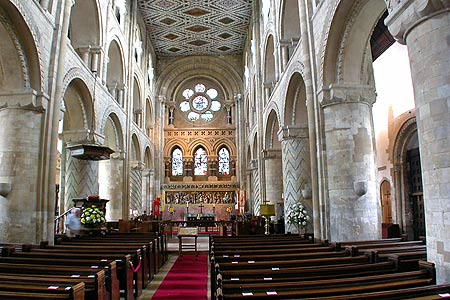
St. Saviour’s Anglican Church sanctuary in Nelson, British Columbia where for a number of years I taught at a Highland Bagpiping School (a place where other strange souls like myself learn to tame a five-legged creature designed to rouse neighbors and destined to arouse suspicions). Connections in the community opened the door figuratively and, in this case, literally, to spend as much time as I wanted in the church sanctuary after everyone else had gone home. I was given a key and carte blanche run of the place.

Most evenings after a long day of bagpipe students, some whiny, some lazy, all of them noisy, I would retire to the sanctuary with my pipes. For an hour or so I would simply play, enjoying the epic reverberance of the sound bouncing off the hard stone walls, and finding no sonic respite from the hardwood floor. It was, for me, the closest I had yet been to what I might have then described as heaven. At times it was 2:00 am before finally getting back to my room.

The hospital chapel in the same city was another such place. I was falling apart after a recent break-up with a girl to whom I had been engaged. My shattered interior was gradually reintegrated in that little chapel where I would weep and pray for hours, listening to John Michael Talbot, or the Monks of the Weston Priory sing beautifully doleful refrains. It was for me, through gallons of heart-crushing tears, the perfect requiem to my stubbornly elusive peace of mind. It would become the Introit to a new place of healing and restoration, albeit gradually.

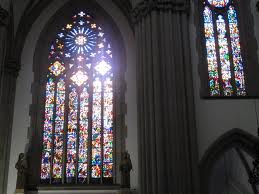
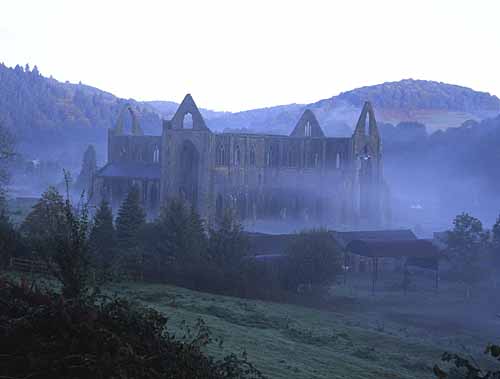
Tintern Abbey in Wales, the place I believe could be boasted by angels as heaven’s waiting room, the lobby to eternity. My first experience of this roofless wreck of holiness was following a six month sojourn as a missionary to youth in Edinburgh’s rough Pilton district with my new wife of a year. We were tired and needed time to traipse about the land of our ancestors (and her relatives) before returning to Canada, unsure of what awaited us there. The warm, lazy day infused with the angular light of Fall caressed the ancient stone walls easily visible from almost anywhere. The pointed gables of apse and nave bespoke a darker but simpler time. All we could do was sit and pray.

Less than two years later a picture of Tintern Abbey would help pull her through a terrible first pregnancy with our son, Calum. The same photo performed this function five years later as our second son, Graeme, reluctantly succumbed to womb-ed pressure and left his humble abode to make his premier. However, it is difficult to compete with William Wordsworth whose words best complete this picture:

While with an eye made quiet by the power

Of harmony, and the deep power of joy,

We see into the life of things…

And somewhat of a sad perplexity,

The picture of the mind revives again:

While here I stand, not only with the sense

Of present pleasure, but with pleasing thoughts

That in this moment there is life and food

For future years. And so I dare to hope…(Wordsworth on Tintern, 1798)

Everyone can point to at least one place where something important, even seminal occurred and they sense something is different. There it is that our life has been forever changed, perhaps only incrementally, but transformed just the same.

I believe it is God’s way of playing spatial peek-a-boo.

Think deeply of a place or two that have been places of rest and reconstruction. Picture that place in your mind. Now let that picture juggle your heart.

As you do so, re-member the pieces of you that may have been broken or lost in that place. Quietly give thanks to the God who loves to find us where we’re least looking or at least looking the other way.

Glimpses, part I: awakening to the indescribable

I want to take a stab at describing what cannot adequately be described. As a contemplative and a musician, I have met, from time to time, with mystical experiences that beggar explanation. I do not have anything close to adequate categories or temporal understanding for such things. In seeking them out, I must simply share and hope for the best.

I will be doing so in a short series of posts under the general heading, “Glimpses.” A little unoriginal I admit. However, I trust that my faltering attempts at self-revelation will prompt your own journeys of inner discovery and that, together, we may find God’s deep reservoir of grace.

At the foundation of Christian spirituality (and others) is the very basic principle of awakening or awareness. It comes in many different packages, under numerous ideologies, representative of a host of approaches, all with practices that lend themselves to one’s emerging spiritual life.

To become aware is to wake from some form of slumber, sleep or sloth. One of the mysteries of spiritual awareness is that one does not awaken naturally. We are prodded awake by the loving work of God upon the sleeping soul. It requires this nudge from God upon our shoulder before any meaningful process of receptivity and relationship can occur. In order for us to embrace this work, basically to ‘awake to our awakening’, we must intuit God’s whisper, speaking grace into the spiritual ear of our understanding.

I do not speak so much of the prophetic proclamation to “arise, shine; for your light has come.” No, before we can be so attuned to the prophet’s voice calling us to faithfulness and righteousness, we must first hear the voice of the Lover calling us to succumb to this wooing for which our only response can be, “I am my beloved’s and my beloved is mine.”

As comforting and romantic as that sounds, however, upon awakening to the first primal strains of the song of God, there comes a dissonance amidst the lilting notes. We awaken to beauty and begin to see that for which we have always yearned but of which we were unaware; blind. This, however, can often be a fearful and groggy experience. Cobwebs invade our minds unaccustomed to such sharpness of color. Ears that have been plugged up suddenly pop as our inner altitude changes. It is as disorienting as it is invigorating.

I remember places, glimpses into…something; an awareness that hints at a proximity to the indefinable, numinous presence of God. These are never easy things to describe, but there is a delight in the attempt for, in so doing, I am taken back to some of those places. For me, it was often some old, stone church or monastery; most often at night, alone.

Yet, not alone.

As I have since come to believe, they were, as the Celts called them, thin places where a barely perceptible sheath surrounds the holy otherness of God and where comes a mystical awareness of God so immanent that one feels she can literally smell God’s breath, touch God’s skin. These experiences have often made the hair on the back of my neck stand up.

Ironically, they used to happen often when I was a boy, long before I had any faith lexicon or tidy systematic theology with which to scrub them up and describe them away. I recall one particular time as I lay on our living room floor. I was probably eight or nine years old and, as I did every year, was watching the first snowfall of winter. Enormous frozen flakes dove in random, disciplined lines, dancing past the streetlight that stood outside our home. The glistening goodness provided a panacea against which the world was complete and all was one, if only for a time. In those moments, gilded and encased in childhood wonder, I became curiously aware of a haunting peace that arrested my sensibilities and held me spellbound in what I can only describe as ‘rightness.’ The cosmos and I were one. God, as I now understand God, was lying beside me on the living room floor that night, whispering wordless words to me, convincing me of my place in it all, be it ever so miniscule.

This is a story best left unfinished…

This week, consider quietly and prayerfully, the ways in which you may have heard these awakening whispers of God.

Journal them. How did they occur? Under what circumstances? What, if anything, changed in you as a result?

What are ways you may be invited by God to enter even more deeply into these places of awakening and transformation? Agree, humbly and with resolve, to enter into them with the God of grace to guide you.

Feel free to share what you and God have been up to in your journey together.

Of Lent and Bagpipes: Lean Over Loud in the Spiritual Life

Lent is that time in the Church calendar historically set aside for an “under the hood” diagnostic of those things most needful for the optimization of our lives in Christ. It is a rich time, not for mere maintenance, but for the introspective dialogue with one’s own inner voice that, in concert with God’s voice, guides us to “practice resurrection” as Wendell Berry so eloquently advises.

Allow me to clarify with a story.

I’ll never forget the day I first told my bewildered parents that I wanted to learn how to play the bagpipes. I was seven. I had just watched a televised Edinburgh Military Tattoo replete with color-laden, swinging kilts, swashbuckling pipers, and swishing notes all clammering for attention under the bright lights of a night-lit Edinburgh Castle. From the first humming drone and pinched gracenote to the final cannon blast salute I was forever hooked. A seed was planted that has matured into a forty year career of performing, accompanying, competing, composing, judging and recording with this enigmatic instrument.

Under most circumstances, when one’s child shows even the slightest interest in music, it is generally accompanied by proud winks of acknowledgement, cackled whispers of “I always knew he had it in him” and blustery coffee room comments like “it was only a matter of time” or “our family has always been musical.”

At the risk of understatement, this was different.

Any parent hopes their groomed and dapper ten year old will be playing Chopin on the piano in the mall with the other bright and shining stars. With this announcement, those hopes were dashed. Instead, my parents (and poor, unsuspecting neighbors) would be forced to endure the long, loudly awkward learning curve the instrument promises all student comers. It most likely involved having to apologize to neighbors only pretending to be patient as some overly confident ten year old insists on playing, poorly, in the backyard.

On Sunday…night…late.

They did all this with patience and pride.

Similarly, a doting, jealous God waits like a holy panther ready to pounce on any sign of our awakening to God’s romances kissed in our direction. Patient and crouched, hopeful and proud, our Holy Parent, yearns for all that is best in our human lives. From first light of spiritual birth to the brighter light of eternity in us, God waits to discover, or uncover, our intentions toward God.

What does this mean? Will he stick with it only long enough to tire of it and move onto something else, despite the considerable expenditures of cash and time? Or will he seek to express a complex nature through an equally complex instrument designated for oatmeal-savage mystics whose love for center stage is well serviced here?

To parents, it simply does not matter.

For a bagpipe to function optimally it must have at least three things. It must be utterly airtight, with no chance whatsoever for the not-so-easily-blown instrument to lose any of its chief operating component, air. The only allowable air should be that in service to the four reeds dependent upon a steady stream of the same, and all at a highly regulated psi. Likewise, the best Lenten practices lend themselves to tightening up any holes in our spiritual lives, perceived or not. We must place ourselves willingly at the behest of a God who tugs at the cords holding our varied parts together in order to ensure the least “leakage” of the precious commodities of abundance and hope. In so doing, we relinquish our ownership over all we think to be primary for the singular goal of obtaining God alone. A heartily resonant helping of “lov[ing] the Lord your God with all your heart, with all your soul, and with all your strength” will do nicely here.

Secondly, it must possess the best reeds available (4 in all) in order for all energy expended to be done in service of a quality sound. It will only be as good as the weakest link in the complex chain of piping accoutrements. An unfortunate side effect of sin is our willingness to settle for counterfeit grace, for the short-term fix we think will provide quick, spiritual benefit but which, in the end, only multiplies our sorrows. All that we strive to do, at whatever level and for whatever reason in our pursuit of God will ultimately lead us astray unless we see it as pure grace; as gift. God’s purposes in us will always guide us to “whatever is true, whatever is honourable, whatever is just, whatever is pure, whatever is pleasing, whatever is commendable…any excellence and…anything worthy of praise” (Phil. 4:8).

Finally, all of its constituent parts of wood, bag and reeds are to be kept as impervious to excess moisture as possible – moisture that can foul the best reeds and, in worst-case scenarios, shut them down entirely. As with most mouth-blown instruments, outside influences of weather, barometric pressure, humidity and temperature have profound impact on whatever sounds are forthcoming. The via negativa of the spiritual life is to renounce anything that adversely affects one’s progress in the Way. John Calvin believed that self-denial lay at the heart of all spiritual transformation. To the degree we keep ourselves impervious, or at least well resourced, against the worst that life will most certainly throw at us, we will remain progressively more immune to outside influences that cause cracks to appear in our deepest parts where we need it to be well-contained and whole. The sage in Proverbs encourages us to “keep [our] heart with all vigilance, for from it flow the springs of life.”

It is a standard faux pas of pipers to assume that the biggest, fattest reeds will automatically proffer the biggest, fattest sound – an important and coveted feature of the instrument. At issue here is the fact that, the bigger the reed, the bigger the effort required in playing it.

The dilemma is one of physics. Sometimes trying harder with bigger than normal reeds simply forces a law of diminishing returns. In the young piper, less familiar with those physics and more inclined to early onset frustration with an already mystifying instrument, this can be daunting to say the least. As one grows in knowledge of bagpipe physics it becomes apparent that the best sound production isn’t merely one of effort. It is primarily one of the integrated and streamlined functioning of all the factors necessary to make the instrument the beautiful experience, and sound, it can be.

Similarly, the spiritual life, like the Highland Bagpipe, works optimally when we can see the big picture; how each element fits into the whole and, as a result, produces what we will ultimately become. God’s intentions in us include all elements of our existence, our choices, our conversations, relationships, experiences both good and bad, love gained and lost, anger welcomed and spurned, pain suffered and healed…everything.

The seasoned piper learns that a tightly-fitted, well-maintained, thoughtfully set up instrument makes for the best possible sound. Then, what at first can be a most, let’s say…unfortunate, sound ultimately becomes something of beauty that actually produces a bigger sound with greater resonance, nicer pitch and less energy. Good discernment and skill leads to something leaner that is, in turn, louder but also sweeter to the ear.

This is the magic of the Lenten gift of grace. We are better poised to usher a generally gangly, uncomfortable instrument into places of sweetness, strength and otherworldliness. That is how a bagpipe should sound. That is how I’ve heard it sound.

I think you know what I mean.

St. Patrick’s Day – Why the world needs the Celts

Today is Saint Patrick’s Day. A guy has to be a press-ready, crowd-pleasing commodity to get his own day. But, perhaps I’m just jealous. Besides maybe Saint Columba, he’s our best known Celt. And, in honour of his Celtic lineage, I share the following.

When one thinks of the term Celt or Celtic what images spring to mind? Is it the Pictish war-paint donned by William Wallace in Braveheart as he prepares to take Scottish troops into yet another conflagration with England? Is it the Military Tattoo at Edinburgh Castle where hundreds of overly plumed peacock pipers and drummers march to and fro in a celebration of Scotland’s warring past?

Edinburgh Military Tattoo.jpg
Edinburgh Military Tattoo, Edinburgh Castle

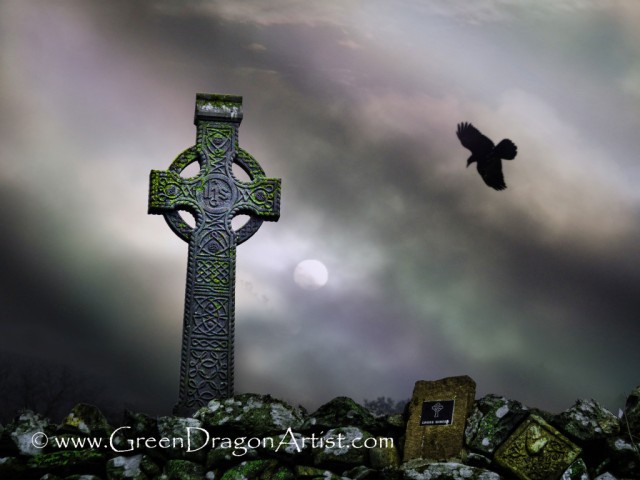
Is it the drunken party at the local pub as it becomes abundantly apparent that you’ve walked into some secret society, all of whom are experts on their instruments, can drink more than any human should be capable of but with whom you feel completely welcome? Is it the great standing crosses of Ireland? Is it Larry Bird?

IMG_0902-1024x768.jpg
Picture found here

Whatever one may think of the Celts, one thing is sure: they were a people absolutely unique in history and centuries ahead of their time. They were an aural culture, a bardic people of story, song, poetry and mythology. As such there exists a great deal of misunderstanding regarding their exact history. In fact, they seem quite simply to have passed out of existence like a fisherman’s boat sailing into the morning mist.

One example of this relates to something many bagpipers, including myself, play on the bagpipes: Piobaireachd. Let us review that spelling, shall we?

P I O B A I R E A C H D.

It was never their intention to leave any letters for anyone else. Piobaireachd is the co-mingling of 2 Scots Gaelic words: piobaire, or piping with eachd, music. Hence, piped or piping music. Piobaireachd is the classical music of the highland bagpipe and is loosely based on the musical idea of a theme and variations. It was most likely developed by a highland clan dynasty of the MacCrimmons, ancestral pipers to the MacLeod clan on the Isle of Skye. But since there remains so little written evidence of the clan and their history, many believe them, and their development of piobaireachd, to be the fanciful fabrications of folklore.

There is plenty that we do know that can benefit us, however. The Christianity that emerged in Ireland, Cornwall, Brittany, Gaul, Isle of Man, Scotland and Wales possessed some valuable gifts. I list here but a few.

The Celtic Christianity that thrived, undivided, from roughly the fifth through the twelfth centuries, is as deeply influenced by the culture in which it was birthed as the culture that was transformed by it. It is the child of the pagan culture that preceded it. We rationalists squirm a little at this idea.

We need the Celts because of their love for the poetic imagination and artistic creativity, building on a rich tradition of bards who sang the shared stories and exploits of her kin.

We need the Celts because of their similar love for kinship, relations and the warmth of a hearth. Their love of hearth and kinship translated in spiritual terms to what they called “anam cara” or “soul friends”, those with whom they shared their deepest joys, fears, sins, hopes, dreams.

The Celts were forever at odds with Mother Rome. To my mind, this equates to a paradox or at least to a willing suspension of seeming opposites. On one hand they were as profoundly Catholic as any other sect of Medieval Christendom. They yearned to be part of the larger Christian family. That is the Celtic way. On the other, they ever marched to the beat of their own drum – a Catholicism swimming in the quasi-pagan, swarthier style of the brooding Celts. They were both in and out.

How quintessentially Celtic.

We need the Celts because they insisted on the equality of all people in the eyes of God. They celebrated an egalitarianism in everything even allowing women to perform the Mass, a heresy of the first order even in contemporary, post Vatican II Catholicism! While worshippers throughout Europe frequented any number of great cathedrals, the Celts preferred smaller, homemade altars around which they would celebrate a deeply intimate Eucharist. Especially irksome to Rome was their liturgical calendar taken more from Druidic astrology than the accepted Church calendar. Rogues to the core, what’s not to love?

We need the Celts because of the monastic communities that flowered in Britain and elsewhere that became centers of classical education and learning, even possessive of literature outlawed by the Holy Roman Empire. As such, it can be said without exaggeration that the Celts kept knowledge alive and growing throughout the Middle Ages.

We need the Celts for their great love for the natural world and for preaching a God who loved it, too. They attached particular significance to particular animals, numbers, places and natural objects. Their spirituality was mystical in character, bathed in silence and solitude but rooted squarely in the everyday. It was a rich blend of the immanence and transcendence of God.

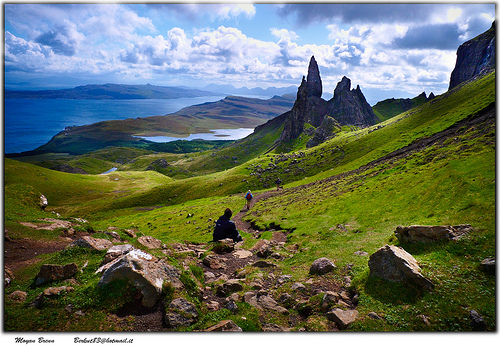
Skye 57.jpg
Quiraing Ridge, Skye. With this as inspiration, who wouldn’t see the sacred everywhere?

We need the Celts because of their unquenchably adventurous spirits, well known as explorers and/or missionaries to many places. Some have suggested that they may have been some of the earliest explorers to South America where Peruvian artwork mimics Celtic knot work.

We need the Celts to broaden our sense of time. They had an understanding of time that was less chronological than kairotic. In other words, they were not especially linear in their approach to life, love, faith and relationships. They valued the cyclical dimension of time, believing that by immersing themselves in the seasons of the year and uniting their lives with the liturgical seasons of the church, they could more effectively celebrate their journey through the sacredness of time.

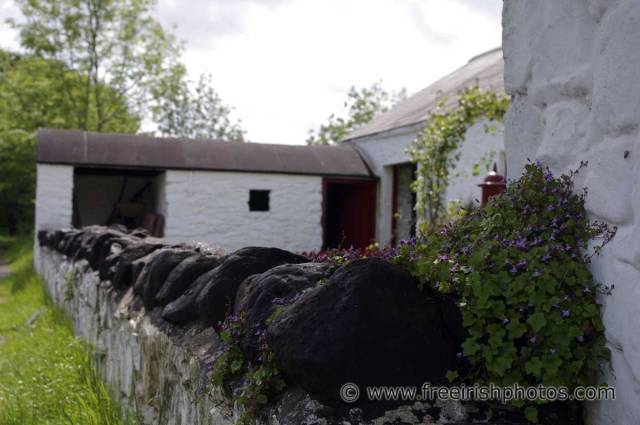
We need the Celts for a further distinctive, related to their concept of time; their appreciation of ordinary life. Theirs was a spirituality characterized by gratitude, and in their stories we find them worshipping God in their daily work and very ordinary chores. We, as they, can see our daily lives as a revelation of God’s love.

old_farm_2.jpg
Irish farm


_76438198_croftrunnerup.jpg
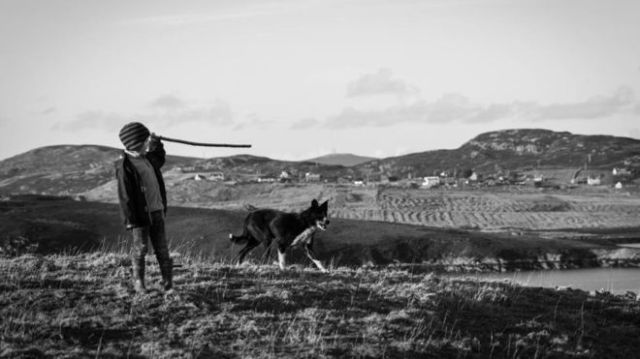
Rural Celtic life. Picture found here.

We need the Celts since their spirituality has great ecumenical value, transcending the differences, which have divided Christians in the East and the West since before the Reformation.

We need the Celts because, unlike we who are often more interested in what to believe than Who to follow, their Christianity was a way of life, a spirituality lived gratefully each day, one day at a time.

Finally, we need the Celts because they give us reason and opportunity to party in the presence of the God who loves us.

I’m in!