I have spent the better part of my life as a professional musician. Primarily, that has meant the fun and challenging world of church music. Most recently, I have transitioned out of my role as worship and music director for Yakima Covenant Church, Yakima, Washington to global service in Edinburgh, Scotland. I'm a singer-songwriter, liturgist, poet, and writer. I love words. I love to read them. I love to write them. Most of all, I love the many intersections, like a sacramental tapestry, of life, liturgy, literature, the arts, and spiritual formation...oh, and I love haggis.
I stumbled upon this one as I was looking for something else. Isn’t that always the case? Either way, I thought it a good idea to post here in case you find yourself here somewhere.
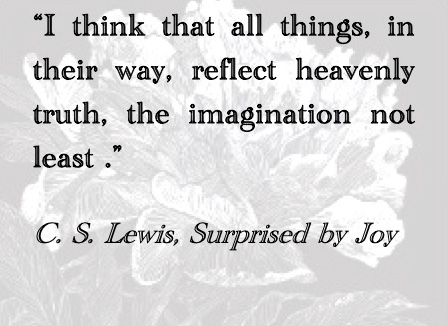
I am reading, for the fourth time, Surprised by Joy, the enigmatic memoir of Clive Staples Lewis; Jack to his friends. By his own admission, a “prig”, an intellectual snob, Lewis was also a little boy lost in the numinous worlds of creativity and imagination. He was a deeply thoughtful conservative when such terms weren’t so counterintuitive used together. In this, we differ. But, in so many of the ways closest to my own heart, we are kindred spirits; ‘are’ not ‘were’ because, through his writings and faith he lives on still…
It’s the last day of the year. ‘Finally’, say some. ‘Big deal’, say others. We seem to really love these arbitrary chronologies; new leaf-page turns, as it were. Any opportunity, either actual or manufactured by which to measure ourselves against the cosmic yardstick of success. “Let’s see how we did,” we tell ourselves, “with the three hundred and sixty five chances we were just given.”
Were we good enough? Did our decisions prove correct enough, or at least useful enough? Are we “better off” now than we were when last we stood at this threshold? Aren’t these the same questions we asked this time last year.
Well, s**t.
Whatever one believes about New Year celebrations and the random significance we may or may not foist upon them, allow me to share a few clear reliables.
However one may feel about one’s place in the world comparative to last year, our belovedness remains unchanged. God, apparently (and sometimes, on our off days, with little reason), is rather fond of us. Each one is deeply loved and cherished. As much now as last year. Have hope.
Whatever chaos, cares, or calamities we faced in 2024, with the coming year there are still the kernels of hope planted deep in the soil of grace. God’s abiding presence with all of us does not change on the altar of a Roman calendar. It is always total, unchanging, and calendarless. Have hope.
Whatever plans we made, course we charted, intentions we implemented (or not) that came to naught, our worth is determined by things much less measurable than platitudes, promises, plans, or productivity. We are forever children of God, loved unreasonably well and with unseasonable consistency. Have hope.
Similarly, as one well-versed in shoulding all over myself on a pile of ripe could-would, whatever resolutions I make for the coming year may, no, will reflect the light of Christ in me, not some perceived darkness into which I may trudge, knowingly or unknowingly, willingly or not. We are all so much more than resolutions made or broken, promises made and kept (or not), hopes realized or dashed. Have hope.
So then, having just finished my final cappuccino of 2024, I sit before my journal not with the pen of guilt, embarrassment, or self-abasement but with joy, gratitude, and expectation happily swimming in the blessing and presence of God. That is the spirit in which I choose to bid adieu to this year.
I crane my neck and shove my not-so-inconspicuous nose forward into whatever 2025 smells like. And, whatever it is I smell is not for me to say. Instead, it is for me – for us, simply to breathe in, greeting it all with gratitude and a whispered prayer for those who will never have opportunity to do the same.
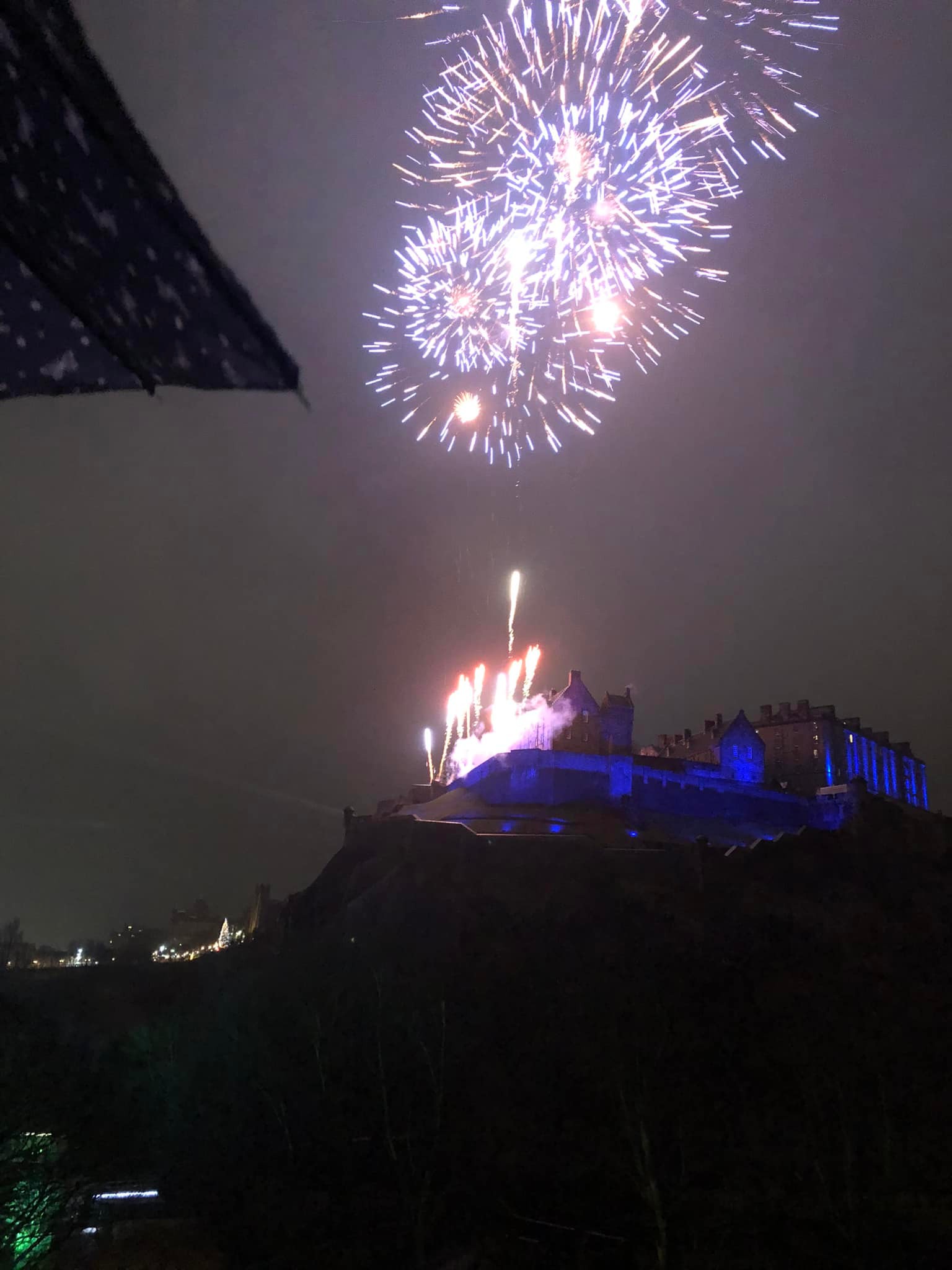
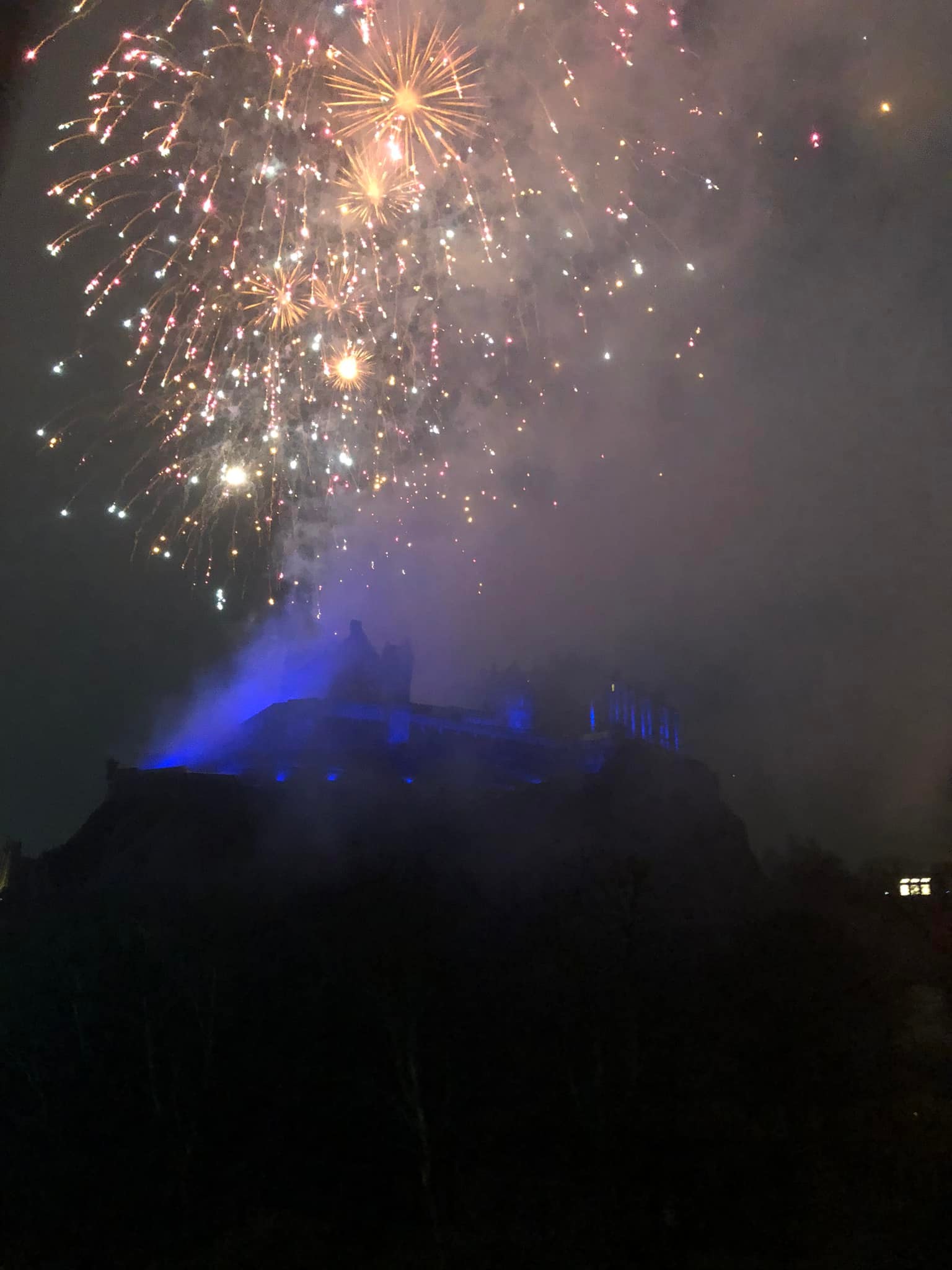
Here’s to Hogmanay hopefulness and a happy, and honest, 2025.
Poetry is a great love of mine. I’ve maintained a literary-poetics website for years. But, I’m aware poetry isn’t everyone’s cuppa. “Just give it to me straight” some might say. “No more u’ them goofy met-what-fers and twisted talk.”
Our complex, gloriously chaotic cosmos has rarely been straight forward. Nothing is really as it seems. What we see isn’t just what we see but a thousand other things unseen, unimagined, unrealized, unforgotten, and undertaken. The thing is never just the thing. Every thing houses, pictures, reflects, spawns other things beyond itself. Look at a sandwich from directly above and one sees a slice of bread. Take a slow look downward and to the side and the rest of the picture comes into delicious, three-dimensional view. What starts as rather dull becomes kaleidoscopic in the searching. One thing becomes many new, and colourful things.
If clear, simple, logical, non-symbolic language is what you’re after, avoid the Bible. Close to a third of its contents is versified in some fashion, poetry and allegory and metaphor. A great deal of it is narrative, eternal truths and values conveyed by means of story.
I conclude with a poem I composed a couple years ago that was recently highlighted on one of my favourite websites. It plays with the idea of more from less as described above. Thanks for being here with me and, until then, may the Advent spirit of expectation and preparedness capture you.
Advent
Cup before the pour, cocoa, or tea.
Clouds, rain-swollen, before taking their moment.
Hearts before words, warm and rightly spoken.
Page before pen, story pushing out to meet its maker.
Inside, a child gazes out at virgin snow.
Child, new and eyes closed, before the first embrace.
Car, keys jangling in shaky hands, before first welcome.
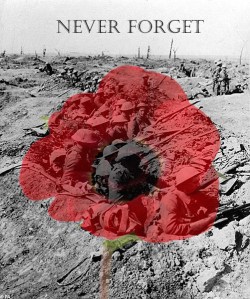
I’ve posted this a couple times before. Remembrance Day. Armistice Day. November 11 or, here in the UK, 11 November is a memoriam to those who fought for freedoms possessed and cherished. Obviously, the numbers don’t quite add up anymore. I’m now 61, not 57. But the spirit is the same.
As is the gratitude.
November 11. Remembrance Day.
Such a sad irony given the need to remember when I recall so little so much of the time. But, I remember as much as I need to for right here. Right now.
I remember all that I’ve been given – and I smile.
I remember that I get to sleep with someone who loves to be with me, who chooses to share my life, even the dark places – and I smile.
I remember, through that same love, two babies, now young men, came into the world if for no other reason than to taunt my lesser joys with still greater ones – and I smile.
I remember the man I call brother, the woman I call sister, the man now dead we call father, the woman upon whose shoulders and within whose heart we all dwell, we call mother – and I smile.
I remember that I’ve been entrusted with notes, lines, hands, and voice, and then charged and blessed to engage in it, both as a living and as hobby – and I smile.
I remember the sight of candles burning, a dark and peaceful sanctuary full of singing voices, and the strains of “Silent Night” – and I smile.
I remember that I am given poetry and words to share with the weary world, much of it published, and fulfilling whatever destiny for which it has been prescribed – and I smile.
I remember the incredible home we called our own, poised handsome and stoic on a proud hillside where it stands year after year, waiting for the valley to breathe in and out each new season – and I smile.
I remember that, as a man now fifty-seven, I am healthy enough to run miles in double digits – and I smile.
I remember the touch of cold hands in mine as she congratulates my choice of hymns, the hearty back slap as he celebrates “this young man” – and I smile.
I remember the ache of loss for faces of those once bright and full, now gone and buried, the sound of tears, the taste of mourning, the honour of sharing it – and I smile.
I remember the seraphic sound of my choir as they collude together in happy voice to mirror the world’s unreasonable beauty – and I smile.
I remember the one God of One in Three; eternal, but who once had an address, now forever bearing the scars of his coming, who is my friend – and I smile.
And, though I never knew their names, I remember their sacrifice, caught in whirlwinds not of their choosing. Sometimes they were sent by selfish kings to do the bidding of empire.
They went anyway.
Sometimes, they were thrust out to defend the lack lustre and apathetic against the threat of unknown horrors.
They went anyway.
Mostly, they went because they believed it to be their best legacy. This I remember – and I smile.