That in which we delight

“Take delight in the Lord,” says the Psalmist, “and he will give you the desires of your heart.”

iggy-necklace-carThis is a deceptively easy passage. The fog of western, individualist consumerism however urges us to read this as God simply handing us whatever we want, regardless of its origin, intent, or wisdom in the attainment thereof.

Indeed, God does give us what our hearts desire. But, the beauty and deft insight of this verse is that the heart changes in accordance to what brings delight. As it becomes more centered in the Divine, it leans more readily toward the faces who line the hallways of our lives.

We soften toward their plight, and glow with pride in the accomplishments of others. It begins to shatter for the things that shatter the heart of God, in whom we delight.

And even suffering begins to make some small sense as it becomes contextualized against the larger picture of God’s redemptive enterprise, an enterprise into which we are invited, baptized, and transformed. It is out of that transformation which come the heart’s deepest desires, doubts, despair, dreams, and destiny.

The next time we quote this marvelous gem, especially during this holiday season, let us attend to its more ultimate direction. Let us lean into the God who, in Christ, becomes all our desire and through whom our deepest desires, plunged into the raging love of God’s heart, are fully satisfied.

cropped-dsc_0059.jpg

Car photo found here

Communion photo taken at Yakima Covenant Church (where I am proud to serve as music director)

The day renders well her light to cast

The day renders well her light to cast,

comes, with hopeful glance, her tidings bring –

haunting dark, like some unholy past

soon yields his woe to this better thing.


Alone, but for his pale, waning grin,

he staggers backward in view of her;

never have his shaking knees remained

full upright. Now they buckle, unsure.


A formal respite, east is yearning,

stolen glances, her scent is bringing

laughter for those whose wild discerning

feeds upon this freshness glad, singing


songs, and dancers too are gathering,

all but mirth and cheerfulness disdains.

Soon, the fretful past’s unprompted sadd’ning,

forced to flee, and only light remains.


As daylight parts dark mystery’s curtain,

there, with courage, we must take our stand;

e’er the burden of mis’ry certain,

comes to pummel, firm, our heart’s command.


Still, with faith, our prayerful souls blazing,

God shall come to squelch what brings our fall;

must flee the night, our spirits’ hazing,

departed, then goodness we recall.


Now, cacophonous voice, full deafened,

silenced is the darkly strident pull

of that which, lying, steals our heaven –

God, his faithfulness, our promise, full.

We are eucharist

You and I – we are eucharist.

We are the slow quench and

burn of wine made well from

flaming water.


We are from yeast – all that nourishes

made perfect in a moment,

but only after stealing a well-oiled

gaze into the mouth of dreams.


We are the holy cloth, drawn lightly

upon the lip of the cup, still damp

from shared spittle and wine-made blood.

It is the kiss of the saints

blended well in silver,

refined, reflective.


In the comfortable day, boasting

hours poured into containers shaped by

mystery, there can be no other.

Only a thin breeze of moments –

under your fingers.

_____________

Dedicated to my lover and friend of almost 30 years – my wife, Rae Kenny. 

Pushing breath from blue

By Valerie Dodge Head

We push out, breath from blue,

like the breaking waves, alone with their thoughts,

and catch ourselves among the reeds.

Passing alone through districts of enchanting knowledge,

we cough up our meal of bones, still hungry to drown

inside a conundrum bigger than our shoes.

______

Our little oceans, best of our times, rimmed ‘round

with shortening days, the noose of our shrinking

humanity; allure, the currency of dreams.

Still, one swims in what one drinks and drinks

what washes down and around all that looks

for more horizon. Let the four-quartered moon

sing what is only heard when deafness prevails.

______

The tragedy of the good, the irony of evil, foisted

upon hearts ill-suited for the journey in.

So it seems that the only way to bleed to life

is in the unmooring of our punctured ships.

There is more room to bleed when splintered lie

our longings, long held, and drawn and bloodied

souls buoy once more upon

______

the silent, soothing sea.


Special thanks to dear friend and colleague, Valerie Dodge-Head for her masterful artwork which inspired this piece. 

Life lessons at Starbucks

It’s okay to let the terry-cloth

wind blow itself through your thinning hair.

When the leaves fly past

your brow in that dismissive way they leave

a glint of naiveté, a good benchmark of

personhood. Only then are you safe

from their burden of proof. It tells me you’re just passing

through these moments without

the careless disregard you hear in the stifling

words of the never-enoughs.


They bounce in like clumps of collagen sadness and

pose at the Starbucks long enough to trumpet

their middle-age gym accomplishments. They lust

after glances but disdain the stares as somehow

presumptuous. In their strategic peripherals, table

reflections, and body language, they burn up

the fuel of appreciation. They like

to look at everyone but speak to no one,

especially the ruse in front of them just

hoping to lock eyes even once.


One skin shed in favor of a second, otherwise known

as yoga pants, they reign supreme

while supplies last of crunches, collagen, and

the deceitful quagmire of wealth. Maybe

there still lay rumors of rootedness deeper

than the soles of their Nikes. If no one looks,

do they disappear? But these stolen sideways glances come

in the luster of indulgence cloaked

in the risk of diminishing returns. Gawks become stares,

then looks, then glances, then indifference,

soon to fade in the diminishment of

apathy. The well-fitted tools of acceptance

turn to mock an unpracticed self-respect.


He runs his own Internet business. We’ve heard him

talk about it through his phone from across

the room in his well-thought out random attire.

An overly helpful demeanor, especially as door-man for

elderly ladies, helps with the compassion capital needed

to seal the deal: successful, built, kind – what more

could one ask? His secrets perhaps. How his wife’s

breath always smells a bit like mint and gin.


The one on her own stages

a similar performance, from the adoring

glare of her iPhone. It buys us all

an invitation to look without penalty, the detached

appreciation she’s come to know as attention.

The bubblegum ennui fools no one. In this tiny

15 minute window, short bursts of indulgence, the silent

praise of others passes for friendship. Maybe release can

happen soon, but through the derailments of a life

forced to surface through pain. Then, instead of adoring stares,

she can see back into the blinded eyes of another,

and finally exhale.


(Please do not adjust your sets. This is just a //ws-na.amazon-adsystem.com/widgets/q?ServiceVersion=20070822&OneJS=1&Operation=GetAdHtml&MarketPlace=US&source=ac&ref=tf_til&ad_type=product_link&tracking_id=wrenrecommend-20&marketplace=amazon&region=US&placement=B000HAS7NU&asins=B000HAS7NU&linkId=3a5050aa11bcc238acd7a24343d8c47a&show_border=false&link_opens_in_new_window=false&price_color=333333&title_color=0066c0&bg_color=ffffff” target=”_blank” rel=”noopener”>test)

Or, try this

Or, even this

Life in the Ground

Precious little of our lives in Yakima reminds me of life in Calgary. Not that it should. I’m just a comparison kinda guy.

Calgary in winter
Calgary in winter

In Calgary, we’ve had snow every month of the calendar year. Even August. Here, we’re lucky to get snow at all. When we do however, life becomes unlivable. Not the kind of unlivable that has one kicking the dog or hoarding the Communion wine. It’s more a slush-ridden slide of faith down valley hills on tires never sufficient to the task. The dampness of Pacific Northwest snow makes it heavier than the objects upon which it falls. Plants cower under the weight, almost like Atlas bending under a muscle-twitching burden. Roofs have been known to collapse. More people own snow blowers than shovels in this valley, since even body-builder knees buckle shoveling this snow.

Sauer-Pic-Valley
Photo by Mike Sauer

In spite of endless sunshine, most often appreciated by lizards and sun worshipers, I’m most miserable during the Yakima summer. My Canadian blood, trained by a temperate climate promises a hazy kind of heat-induced droopiness that drags on endlessly when parts of you are sweating that never did before. I suppose it’s the opposite of S.A.D. (Seasonal Affective Disorder). While most Yakimites keep a loaded revolver in the glove box just in case winter’s grey leaves them overwrought, I whine like a banshee without enough rain and grey skies. I should probably have that checked out.

A Calgary heat wave usually meant a few days of low to mid 90s that promised bitchy parents. Drivers and pedestrians alike grew more aggressive than usual, and tempers got shorter than the summers themselves. As kids growing up in the not-so-balmy regions of Alberta’s grasslands, such unreasonable temperatures meant longer days for exploring and defining ourselves against the shenanigans of our troublesome friends.

Make it through the super-heated Yakima summer however and flaunted lavishly before us is a superlative fall, beautiful to the point of garish. Leaves change more slowly here. The sage green and spittle browns of summer are swapped out for yellow, auburn, orange, and other colors I can’t even begin to name. 

The historic Barge-Chestnut neighborhood in the Fall.

A Calgary Fall came quickly and with a vengeance. The colors were there one day, gone the next. Winter was the only decisive time of year. Calgary’s favorite color is the peaty-brown grass that climbs its gentle slopes and clings to her Rocky Mountain-shadowed foothills. Stands of poplars, deciduous minority brothers in the more ubiquitous pine forests further west into the mountains, groped for sunshine, teasing each other beside the Bow and Elbow Rivers.

Elbow River, Calgary

From there, the Rainbow Trout, Steelhead, Sturgeon, and ample Pike taunted many a fly-fishing line and studied the undersides of canoe and kayak meandering their way down her rippling spine. Besides, if the fish weren’t biting, the mosquitoes most certainly were.

Bishop Grandin High School, 1 block from my street
Bishop Grandin Catholic High School, one block from my street

Life in the Calgary of the sixties and seventies was decidedly more pasty and wan than it is now in a sprawling cosmopolitan soup of oil-nouveau-rich yuppies. Before Bishop Grandin High School was built in the early seventies, we could look out our kitchen window and see the animals frittering about on Harry Hays’ farm a block away. In fact, our street was almost the southern most boundary of the city proper. For my parents to drive me for bagpipe lessons in Midnapore, then a separate town, now one of many annexed communities, required high beams and good suspension on dark, bumpy back roads.

A Calgary winter could be the most indecipherable mess of meteorological phenomena. Her geography has her cupped in the palm of a significant mountain range but with her head tucked in the nape of the foothills that ridge her neck. Some have compared it to Denver in this regard. It was not uncommon to scrape our windshields one day, after twenty minutes of pre-warming the car in -30 degree weather only to ditch our down jackets for windbreakers the next day as Chinook winds brought temperatures even into the 50s (10+ degrees Celsius of course). It was the meteorological equivalent of multiple personality disorder – about as complicated, but less fun.

A favorite part of Calgary life for me was the continuous rivalry between Calgary and Alberta’s capital city of Edmonton, a couple hundred miles north. CFL (Canadian Football League) teams, the Calgary Stampeders vied for supremacy against the Edmonton Eskimos (Canadians are allowed to use this word because I think we invented it) in clashes a lot less polite than is typically attributed to the Canadian demeanor. Betting was fierce. Petty, verbal jabs even more so. Broken ribs and missing teeth most common of all.

The Calgary Flames
The Calgary Flames

What did I care? I loved hockey, a sport as definitive of Canadian citizenship as God Bless the Troops bumper stickers in the States. Even before the Atlanta Flames became the Calgary Flames in 1980, I knew every player on every team. I even knew first round draft picks and the names of a few general managers. Ask me the most obvious question about anything football and the blank stare will tell you what you suspected all along.

The far too many uprootings in my family wake has made me grateful for the stability we’ve known here in Yakima. It’s surprising how God’s vitals become more pronounced when one isn’t always out of breath and one’s heart isn’t pounding in the ears. It makes inner silence and listening so much easier.

God has found me here. I may not always feel the same sense of DNA-level familiarity with my environment, I may be living in the U.S. but Canadian as the day is long, I may not appreciate all the cultural inside jokes or regional quirks, but I’ve heard God’s heart beating. It’s quite soothing. There has certainly been life in the drifts, but there’s more life in the ground, buried and out of sight, that nourishes and stirs dead things to life.

I’ll still whine from time to time about ‘home’ (whatever that is). I’ll still cringe whenever I see the Trumpster or the Palin-doll in “the news.” I will never understand the correlation between guns and “freedom.” I may not feel as connected or authentic when stumbling through the American national anthem. My friendships may barely exceed a decade. But God has planted me in a distant soil to bring me and mine closer to the deepest harvest, that of the heart.

Until then, I’ll keep bitching all through Yakima summers in the knowledge that seasons change. Like all of us.

I know, it’s annoying, but I kinda like it that way.

___________________

Yakima Valley pic found here

Calgary in winter pic found here

Bishop Grandin pic found here

Calgary Flames pic found here

Yakima in Fall pic found here

“Do you want to be healed?”

“Do you want to be healed?”

For the longest time I had attributed it to the insistent paradigm of the poet’s logic, the lover’s unrequited dreams, the shifting clouds of the philosopher’s quest – all searching for something – a reality as numinous and perfect as it is deceptively secret and stubbornly resistant to conquest.

An ever-present sense of melancholy, a numbing ache, an unnameable yearning – desolation even – has draped my consciousness for many years. It seems I am a walking advertisement for mood enhancing substances and the pharmaceutical drug trade (or, maybe just self-pity?)

Sometimes, and inexplicably, my soul is shot through with little darts of light – suggestions of heaven, of how things truly are. They come unbidden mostly as ghostly sojourners, inhabitants of a more perfect realm come to slake my wheezing soul with wine, bread, and perhaps a song or two.

In recent days, this ubiquitous, verbose Demon of Grey Souls has gnawed at me for so long that it seems, by virtue of that fact, to have overplayed its hand. The hide ‘n seek after contentment, so long now the haunt of my days, has been smoldering behind its best hiding places under new rays of sun. I had willingly become a pawn in a cat and mouse game and my overseer has grown too fat to hide well.

New light, still diffuse and weak, but less coy or troublesome, is asking me a question; the ironic question Jesus once posed to some poor bugger by the Jerusalem Sheep Gate: do you want to be healed?

On the surface it’s a question as ridiculous as asking two young lovers, separated by time and circumstance, whether they’d like to make love. Upon reflection however, it reveals shear genius and a profound knowledge of the human psyche. In asking such a question, Jesus becomes more than just miracle-worker, more than a first-century doctor. He becomes psychologist and spiritual director.

He gazes beyond the obvious malady to which this fellow is chained and sees something else. His question is aimed at the man’s fear, not of remaining ill, but of the unknown world that might just open to him in the face of his healing. To be healed is to rejoin society. It is to refuse the Hogwart’s sorting hat from placing you once again into the House of Sufferin’. It is to relinquish the comfortable role of pitied and pitiful, dependent on the succoring cries of others, and take up one’s place responsibly as contributor and co-builder of a just and compassionate world.

The Spirit of God is revealing to me just how long I have sat beside my own Beth-zatha (see Jn. 5:2ff) with the expectation of healing but full of excuses for why it shouldn’t have or hasn’t yet happened. The brooding and mysterious artist persona, complete with philosopher-poet mystique and generous helping of eyes-down, hood-up melancholy is no longer a big enough hiding place for the overwhelming presence of this question, posed by Jehovah-Rapha (God, our healer).

Perhaps it’s about timing, we must wait until our own “fullness of time” (Gal. 4:4)? Perhaps God is content, as in the case of Job, to let us sit in our sackcloth and ashes long enough to remove all doubt that we’re so buried that only another can save us? Perhaps it’s just “our turn?”

Says Marilyn Gardiner, “We sit, often for years, with our paralysis. It may not be physical paralysis, but it is just as debilitating and defeating as physical paralysis. It prevents us from truly living, from being who we are called to be.”*

Whatever the case, I am ready to answer ‘yes’ to the question of Jesus. I am ready to shed one skin, now old and overused, and don a better one.  I am ready to see what has always existed just below the surface of my murky water. 

I think I’m ready to say ‘yes.’

I’m ready to say ‘yes.’

I say, ‘yes.’

Yes.

Will you?

_________

*Excerpted from Marilyn R. Gardiner’s wonderful blog, Communicating Across Boundaries

acedia

We live life as no more than

the half-shrugged shoulder of

of a sleeping giant.

Let the wasp sting,

the filth stay,

the rodents gnaw

upon last year’s dinner,

prepared by another.


All has become

nature’s disavowal of its own

existence, the slowly turning

roots of black.


Flowers remain half-open,

squinting their heavy eyes

at the persistent sun.

Happy birds – I think they’re happy –

singing desperate songs

of unbidden encouragement,

scratch, scrawl, and howl,

like every happy voice – persistent, annoying,

useless, like a dare to a dead man.


Everything is good.

Is anything good?

What is anything but everything in reverse?

Oh, this melancholy, cottage

industry of romantics, poets, and

those with everything better to do

and no desire for it.


Life is good,

or so I’m told.

Going Home, and the Way There

I’m trying to get my wife back home to Britain where she may visit her remaining relatives (she has none on this continent), and complete research on her novel, based in the UK.

robertalanrife's avatarinnerwoven

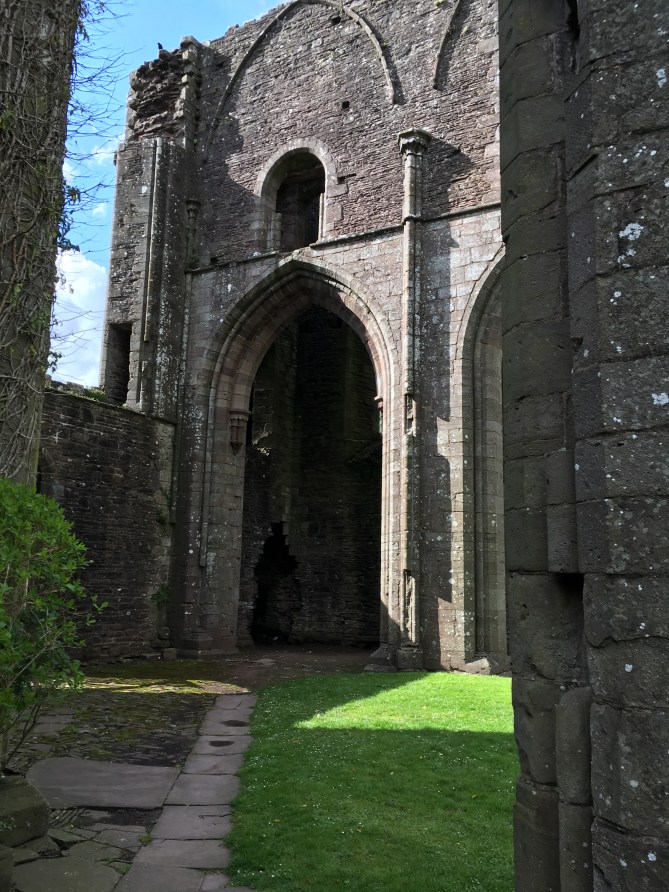
It was 1989. My wife, Rae, and I had just completed a call of duty as mission workers to youth at Granton Baptist Church, Edinburgh. We enjoyed our first anniversary on Culloden Moor, near Inverness and were now enjoying a few weeks to just explore. I recall quite fondly the first time we stood together within the ruins of Tintern Abbey, not far from her birthplace in Wales. The mystery of belonging, and the sheer weight of home was overwhelming.

A Celt at heart, I think and write a great deal about the spirituality of ‘home‘ and the ache it engenders. The human heart is uniquely designed to yearn. It knows what it wants and diligently seeks it out – sometimes in unsavory, even desperate, ways. Our sacred procurements can quickly become what derails us from procurement of the sacred. But God knows our heart and the passions…

View original post 509 more words

Going Home, and the Way There

It was 1989. My wife, Rae, and I had just completed a call of duty as mission workers to youth at Granton Baptist Church, Edinburgh. We enjoyed our first anniversary on Culloden Moor, near Inverness and were now enjoying a few weeks to just explore. I recall quite fondly the first time we stood together within the ruins of Tintern Abbey, not far from her birthplace in Wales. The mystery of belonging, and the sheer weight of home was overwhelming.

Tintern Abbey, Wales

A Celt at heart, I think and write a great deal about the spirituality of ‘home‘ and the ache it engenders. The human heart is uniquely designed to yearn. It knows what it wants and diligently seeks it out – sometimes in unsavory, even desperate, ways. Our sacred procurements can quickly become what derails us from procurement of the sacred. But God knows our heart and the passions to which it is given, both good and bad.

What do you think of when you think of ‘home?’ A family room, lavishly bedecked with Christmas finery? A dining room table around which sit the people who grace your life? A certain place to which you return for solace when life goes south? For Rae, my wife of twenty-seven years, it is Britain. We both grew up in Calgary, Alberta on the uneven foothills that slowly crawl their way up the eastern slope of the Rocky Mountains. But the ancient Celtic hillsides, grey and mournful skies, and songful souls of Wales are for her, home.

Calgary, Alberta
Calgary, Alberta

We met while in mutual mourning. I had just lost my father to cancer a few months earlier. She was a girl in the throes of anguish, watching her mother waste away with the same plight. Rae is an only child, not because that was the desire of her parents, but because she was the only one to survive of numerous pregnancies. A survivor she remains to this day.

Only-children learn to be self-sustaining, imaginative, and scrappy in order to live their lives outside the interdependency of other kids in the family. With the lack of siblings, they often grow deeply independent, and extremely close to their parents, taking on signs of maturity well before others. All this is true of Rae. 

She lost her mom in August of 1986, almost a year after I lost my dad. She and her dad, now alone, forged a new life together on their own. In a sense, Rae took over many of the aspects of care and mutual friendship that previously existed between her parents. They often spent evenings simply crying together. Her father was lost without his partner, and the many tendernesses known only to lovers. His habitual journey from kitchen to bedroom every morning with tea and toast for his wife was now enjoyed by Rae. In honor of this tradition, I bring her coffee every morning. These little things help keep the big things in place.

The friendship born of the mutual bond of grief has lasted to this day. Since losing her parents, any family of origin are gone. In a sense, she is alone on this continent. To help her contextualize this and many other competing voices within her, she started writing a novel a little over three years ago. It is, of course, based in the UK.

Rae, my writer, wifey pal

Because I so keenly identify with her longing for home, and because, as a writer myself, I am her biggest fan, it has been my desire to help her return. I have developed a Giveforward crowd-based fundraising campaign to assist in getting her back to Britain where she may visit her remaining relatives, and finish research for her book.

If you feel as pulled toward home as we do, please consider making a donation, however small, to help her feet once again touch her own hallowed ground. You may do so here.

Diolch yn fawr iawn (thank you very much in Welsh)

Picture of Calgary found here