I have spent the better part of my life as a professional musician. Primarily, that has meant the fun and challenging world of church music. Most recently, I have transitioned out of my role as worship and music director for Yakima Covenant Church, Yakima, Washington to global service in Edinburgh, Scotland. I'm a singer-songwriter, liturgist, poet, and writer. I love words. I love to read them. I love to write them. Most of all, I love the many intersections, like a sacramental tapestry, of life, liturgy, literature, the arts, and spiritual formation...oh, and I love haggis.
This time last year my wife and I were frolicking around the UK, reconnecting with our roots. By way of reminiscence and to honour that time together, I’m going to reblog my entries. This was post 1. I hope you enjoy…
The words I’m about to write are the first I’ve written about this. Not because I am ashamed of it. Nor am I trying to hide anything. Quite simply, I’m still trying to understand it all.
I had an emotional breakdown early in the new year. I hit a wall that would have intimidated Goliath. I was wiped out, gutted; truly at the end of my emotional capital. I laid curled up in a ball, weeping uncontrollably on a hotel room floor, a tsunami of thoughts raging in my skull. My soul was in a vice, and my interior life was squeezed beyond recognition.
Quite simply, I had nothing left.
In the middle of that I received a text from a close friend and colleague. Rather cryptically (and not without humor), it said, “what the f**k is up with you? I keep getting woken up to pray for you.”
A hotel bathroom mirror struggles to squeeze in both of us – primping, priming, prepping. The struggle ensues to strike the balance between post-modern cool and age appropriateness (whatever the hell that means). Final touches, a stupid-slow elevator, and an underground tram ride find us deep in the heart of Washington State’s coolest city. Her oceanside tongue beckons us deeper down her salty throat.
In a quirky irony, a street preacher screeches through a megaphone, “REPENT AND BE SAVED FROM THE COMING WRATH.” Frankly, he seems mad enough for all of us. He shouts himself hoarse, pointing us to some tiny, angry “god” – while we wait to hear from a different God – In the name of love.
We are perched high above a stage that renders everything on it no bigger than our thumbs. From this height, everything seems atomic. Only the stadium is large. There is a palpable expectancy in the aether. Other grey hairs like me mix with kids much younger than our own – a testament to artistic legacy.
The stage is dark except for a few peripheral lights. What seems like hours for an event we’ve waited a lifetime to experience dispels in smoke as a tiny figure makes an appearance. He walks slowly, deliberately and sits at his drum kit. The crowd numbering in the gazillions boils over the brim in collective excitement. A kick drum and snare shots with military precision thunder in the dark. It is one of the most recognizable riffs of a generation. Sunday, Bloody Sunday. I weep in gratitude…
This day is ours, it is our Sunday, blessed Sunday.
May 14, 2017.
The wife of my youth.
Twenty-nine years married.
Seattle.
U2.
With Rae Kenny, my fellow lover for 29 years and fellow U2 fan
It is a small handful of events or experiences that earn the well-used primer: “I remember where I was when…” I remember where I was when the Berlin Wall became a gate, the Soviet Union became just a bad dream, when the U.S. dumped “shock and awe” on Iraq. When twin towers of glass and steel crumpled like paper on 9/11.
And I remember the first time I heard the mythic cries of Bono. Raw and pleading. He preached heaven and justice to the world’s hell and woe.
I would never be the same.
Every person can point to at least one thing, one person, book, place, experience that has so deeply touched them they’d not be the same person were it not for that thing. To describe, we use words like impactful, influential, unforgettable, foundational, formative. We say, “I am the person I am today, because of….” Our hearts brim at every remembrance. Conversations always veer in that direction. We return to it again and again rebooting it in our emotional hard-drives.
As a musician and writer, my influences bleed, albeit imperceptibly, onto every page or song I write. Words get strained through my inspirations: Gerard Manley Hopkins, John O’Donohue, Mary Oliver, Thomas Merton, Kathleen Norris – even as I sing in the shadows of Bruce Cockburn, The Chieftains, Dan Fogelberg, Stan Rogers, Paul Simon, and – you guessed it – U2.
Centurylink Field, Seattle – The Joshua Tree Tour, 2017
Their musical impact is undeniable. Masters of melody, nuance, and the prophetic power of poetic art done well, I am pried open, exposed. Their un-theology is more impassioned activism than easy-to-swallow hallmark messages wrapped in bumper-sticker Christianity. I am the hungry canvas, they my nourishing paint.
Precious few cultural icons are so readily accessible as U2. But they represent much more than memorable music. Their message is not for the faint of heart. It yearns for the alternate reality of what is possible in a red letter arena; the dangerous stage of self-sacrificial love. They are wick to a candle burning brightly in praise of peace and justice, one that cannot blow out. They are cornerstone of a movement that pictures a world better than the one into which we were born.
This is not just the message of a generation played on guitars. This is a message for all time; ever new, always fresh, never-ending – Good News as it was always intended. My throat, tightened from tears, hoarse from singing anthems to peace, will only find rest when I find what I’m looking for. With my life partner beside me, the girl whose heart-strings are also touched by these same forces, I am closer than ever before.
Until then, I want to run in the name of love, in God’s country, where the streets have no name.
Perhaps the most unwelcome passage through which all ships must pass is that of death. To be the impotent observer at the bedside of someone in the throes of death can seem the greatest of all insults. One must fight the battle between a desire to see wellness return with the growing awareness that such a return might not be either possible or in the person’s best interests. It is as poignant as it is horrifying.
“I’m afraid there’s nothing more we can do.” Lonelier words were never spoken.
I too have faced this burden of human experience with grandparents and my own father who died from complications to his cancer treatment. Most recently, on Saturday morning, April 22nd at 3:00am, my step-father drifted into eternity. The lasso keeping him tethered to the dusty ground released him into much bigger pasture. One without fences.
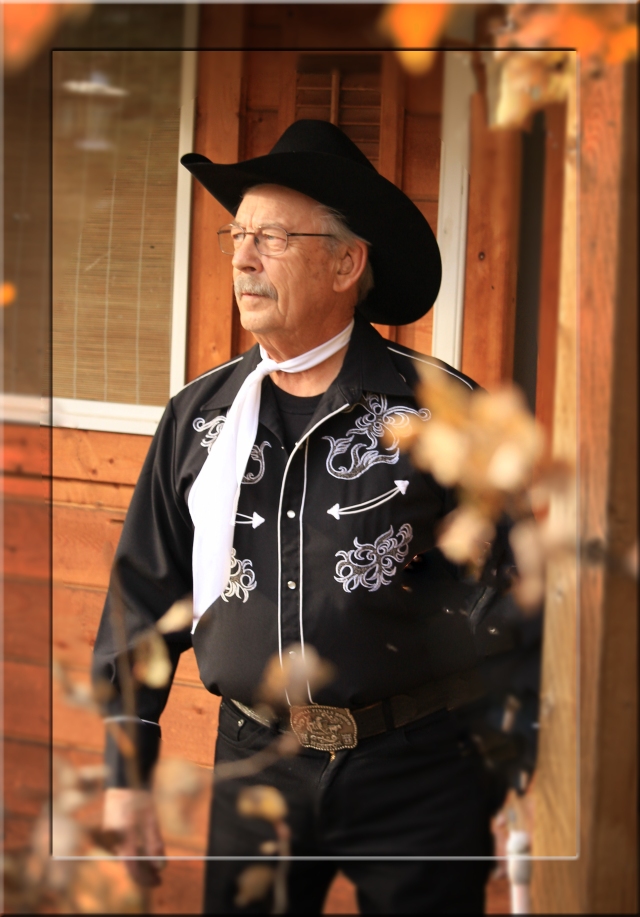
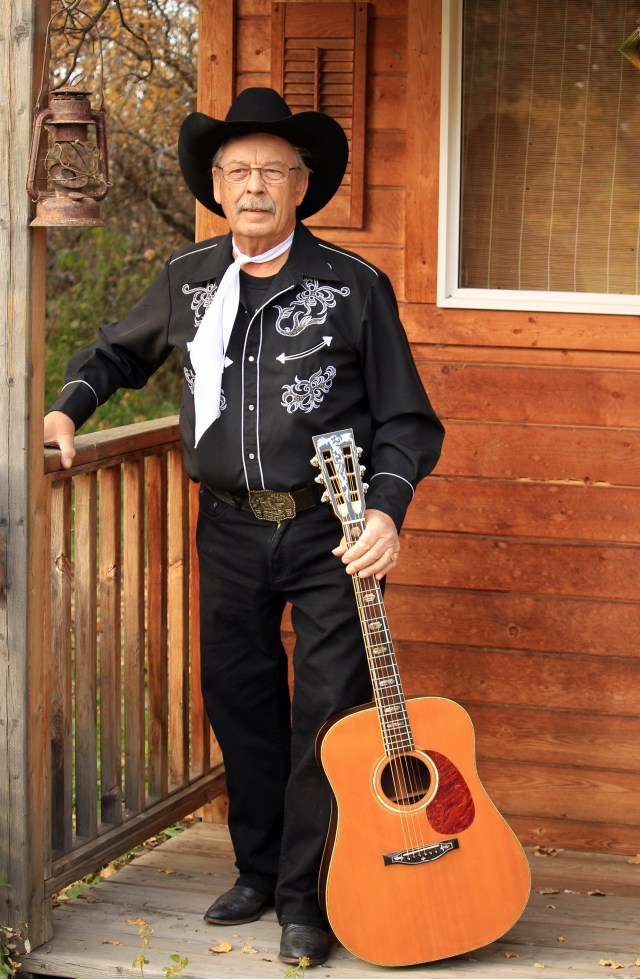
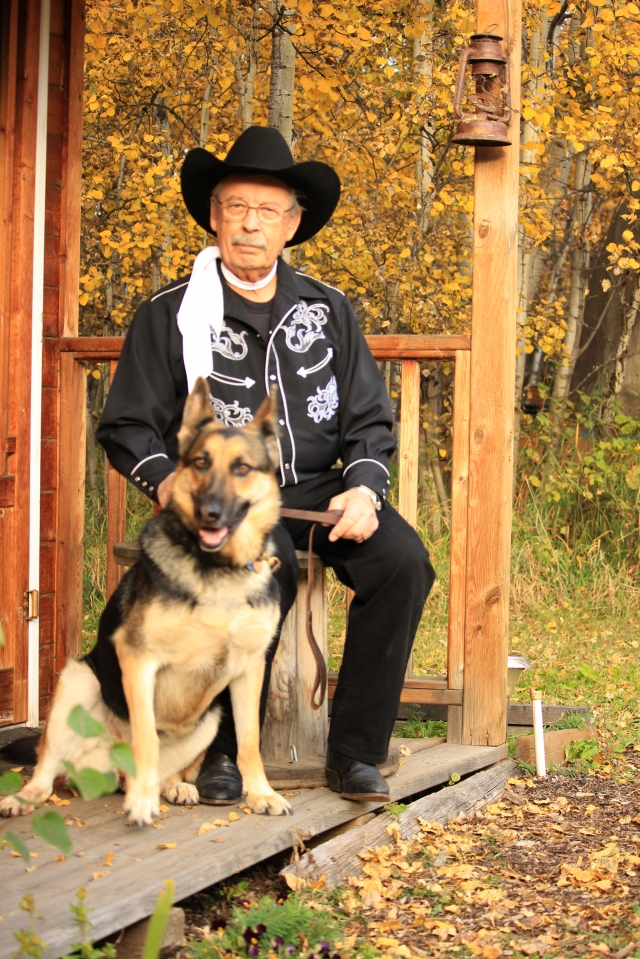
Papa Sam was a cowboy, Métis (may-tee)* to be exact. Born Samuel Maurice Young in the austere, rambling flatlands around Birch Hills, Saskatchewan he was quick to adapt to the rough and tumble ways of the Canadian prairies. The youngest of three boys with a younger sister, they were the bluegrass version of the von Trapps. His brother Stan on fiddle, another brother, Gordon, on banjo, together with Sam on guitar would join their Dad or uncle, both fiddle players, to fill the house on prairie nights with the music of the farm.
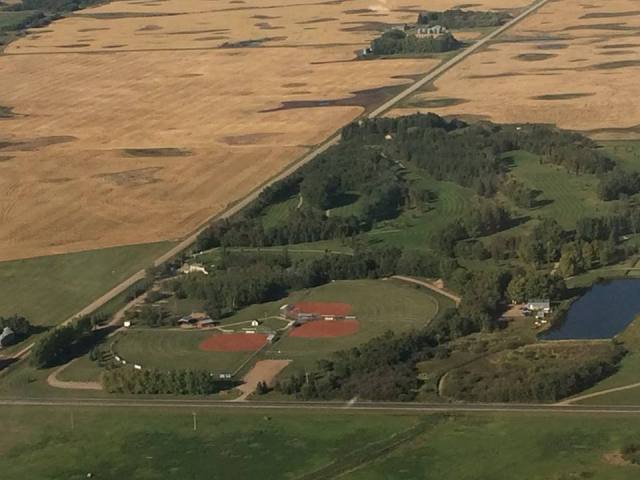
Saskatchewan sunsetBirch Hills – an aerial viewBirch Hills grain elevator
A young farm hand, Sam, at the green age of 10, played his first dance with his Dad, promptly returning his earnings of a quarter to the Red Cross. A similar largesse would follow him for his next 72+ years.
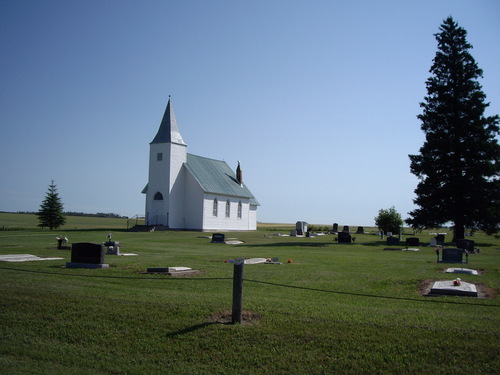
Brancepeth United Church, where lie most of Sam’s familyPrairie Sunset
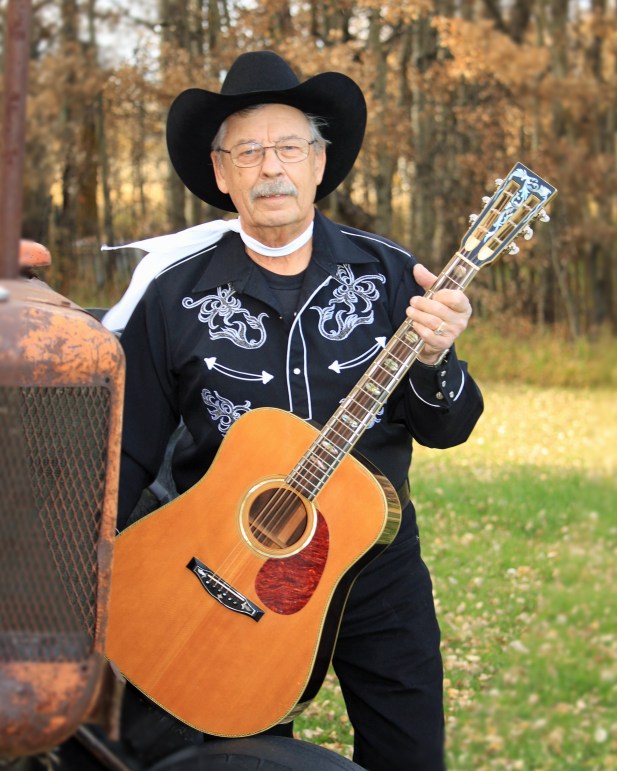
Sam was inseparable from the cowboy fare he loved. A cowboy action shooter for many years, he collected guns and formed an indissoluble connection to the frontier life of the wild West. Old-time country dance music, played the old-time way on old-time instruments characterized the spirit of this small, big-hearted man. Numerous dance bands, including his own, The Calgary Playboys (fitting, given his rep as a ladies’ man), made the rounds in the Calgary scene for over 30 years. It would provide the context in which he would first meet Doris, his beloved wife – my mother.
Her life had not exactly been characterized by rose petals and wine. She lost her husband, my father, in September of 1985 when he was merely 55 years old; her senior of 13 years.
Mom was a widow at 42.
She played the role of dutiful wife and mother well, shuttling us hither, thither, and yon with tireless dedication and far too little gratitude. She shouldered the biting loneliness of a stolid, unflinchingly reserved man in my dad while acting as umpire to our numerous family squabbles, many of which revolved around my own self-centered peccadillos.
Dad’s passing kicked her feet out from under her. Even for one as strong and independent as she, the shock of being alone in the world was overwhelming. Nights full of angry tears eventually settled into steely resolution to reintegrate and reenergize by doing what she loved best, serving.
Much of the time, that meant some part to play in the Royal Canadian Legion, an organization to which our entire family had been attached for many years. One such role was in working as president of the senior’s dances at Ogden Legion in southeast Calgary. She helped plan the weekly dances and hired the bands for these events. Sam’s band was one of those.
It was 1997.
Sam Young – a cowboy to the core
A major surgery pulled Mom out of commission for a while. Sam was quick to notice her absence and asked about her regularly. He’d call her just to talk and to check on her well-being. Upon her return to the Legion, she was the lucky recipient of a big hug and rather public kiss. His charm, cowboy swagger, and crooning country voice ultimately proved too much to resist and Mom and Sam moved in together.
For the next 3 years, they lived happily side by side in my childhood home in Calgary. But the draw to the country proved too urgent to ignore. In October 2000, they sold the house and moved into their idyllic new digs near the hamlet of Kelsey, Alberta. Golden Spur Ranchetta, as they named it, became their new home and, together, they made the dream of Canadian frontier life their reality.
Long days spent clearing land, pulling out wayward trees, retooling outbuildings, dealing with renters in an adjoining house, nurturing horses, cattle, cats, and dogs, was their daily lot. It fit them like a hand in a glove. I had never seen my mother so alive, so full of vigorous determination, so…happy.
Sam was seldom without a guitar in hand
In October 2005, they were returning from Calgary, along Highway 21. Sam turned to her, saying rather baldly, “I think we should. I think it’s time.” In as matter of fact and unpretentious a manner as one can expect from a Canadian prairie cowboy, he had just asked my mother to marry him. This they did in a small ceremony held in Forestburg, Alberta on New Year’s Eve, 2005. For the first time since she had become a Rife over 40 years earlier, my mother had a different name.
Together, Mom and Sam weathered well the uncertainties of ranch life in an often-harsh central Alberta landscape. They made many new friends, most of them musicians of one kind or another. Like a loose belt, their lives spread out amid country music jams, reenactment wild West gun shootouts, mosquito-laden summers, and fireside nights under the vast Alberta stars. I watched my mom transform from an anxiety-laden, late-middle-age housewife into a buoyant, self-confident woman. It was delightfully disconcerting.
Ten years later, in December 2015, I was blessed to offer a renewal of vows service at Yakima Covenant Church. I had never done such a thing before and was proud that this event, of all things, was my first.
Mom and Sam at their renewal of vows ceremony, Yakima Covenant Church, December 2015
In May of last year, a combination of doctor’s visits, followed by unwelcome phone calls sharing even less welcome news became their lot. The ‘C’ word had taken root as infidel in Sam’s lungs. It would ultimately have the last word.
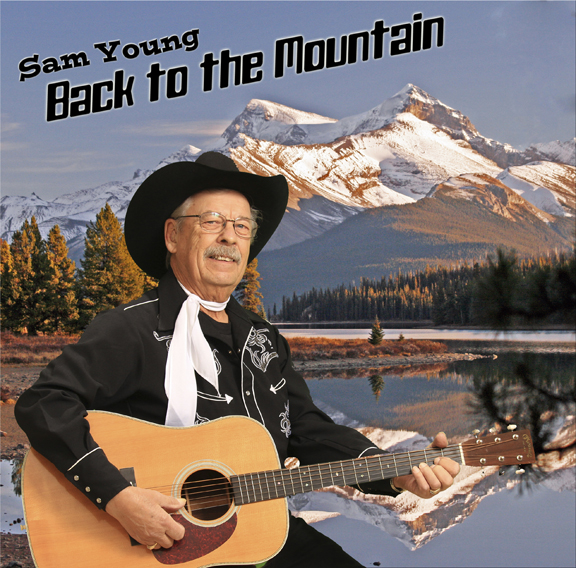
But the final notes were always his to sing. He lives on in memory and song. His CD, Back to the Mountain, released when he was 80, reminds us that music never grows old. It pulls us along our dusty trails on wooden wheels of hope. It is a small part of a big legacy, served up fresh, and ever new.
Now, Papa Sam sings harmony with his ancestors, leaning up against heaven’s gate – rough-sawn, split pine, and barbed wire in his case – playing his favourite guitar. The Great Spirit (Jesus to me) sits nearby in plaid shirt, jeans and a ball cap, playing spoons and a washboard. A gentle country waltz fills the perfect air, and bristles with the high-stepping joy of heaven’s jamboree.
Farewell, cowboy. Farewell.
___________________
*Métis originally referred to Francophone and Cree-speaking descendants of the French-Catholic Red River Métis in Manitoba. They are one of three recognized aboriginal peoples of Canada, descendants of marriages of Cree, Ojibwa, Saulteaux, and Menominee aboriginal people with French-Canadians, Scots, and English settlers.
This is a recording of Sam’s title track, Back to the Mountain, a song I was blessed to co-author.
The more I read the Gospels, the more I am convinced that we would be the first to condemn Jesus and pin him to a cross all over again. That, in spite of two thousand years of knowledge, and canon, and religious conversations, and catacombs, and persecutions, and the dawn of “Christ-ianity.”
To read the Gospels honestly is to place oneself in dangerous places indeed. It is the readiness to identify as a sheep or a goat; as a disciple or a Pharisee or a religious teacher or a widow or wheat or weeds. We have so objectified the good news into our neat, neo-Platonic categories that we’ve rendered ourselves incapable of being seekers; the very posture required by Jesus to see – God, others, even oneself.
If the Gospels tell us anything they tell us how easy it is to build an impenetrable club of pretense and walls of preconception around our faith. The Pharisees did it and Jesus was forever pissed off with them. The biggest challenge to conversion is the belief that one is already converted and without any further need. It becomes poisonous to the very humility that would otherwise find us deeper in grace and living more abundantly.
It is the great proclamation of the convinced.
Richard Rohr calls this what it is: idolatry. It is the worship and protection of the means to an end rather than the journey toward the beginning. He tells us, “religions should be understood as only the fingers that point to the moon, not the moon itself” (Everything Belongs, p. 51). He believes, and has built a career upon, the notion that all true spirituality is about seeing and letting go in order to see still more.
I have found that it is often to my benefit that I am both A.D.D. and a mystic. That way, when I begin to ramble (a common occurrence!) and someone tells me to “just get to the bottom line,” I can retort with the same refusal Jesus used in such instances. He cared little for such things and besides, it is the misguided idol of a success-driven culture built on information and accumulation rather than instruction and awareness.
I’m aware how much this frustrates my type A friends. For naysayers however, more often than not, they don’t ask again!
Says Rohr, “preoccupation with exchange value and market value tends to blind us almost totally to inherent value…Everything becomes priceless if it is sacred. And everything is sacred if the world is a temple” (Ibid, p. 56). To expect life to produce some kind of “bottom line” is the demand for Jesus to offer a sign. Like the Pharisees, we insist, “just get to the point” and do so in a way that impresses me, asks nothing of me, gives me answers rather than better questions, perpetuates my misguided presuppositions, assures me I’m in and you’re not, and never invites me to step out and journey. Moreover, it promises more darkness and blindness and no actual change. I will still see what and how I want complete with all my preexisting opinions and skepticism.
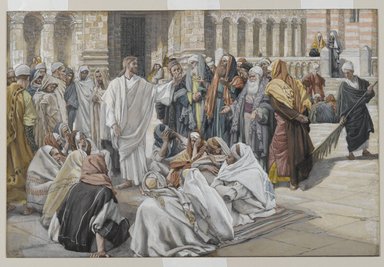
The Pharisees Question Jesus – James Tissot (1836-1902)
To see is the one great gift of all true spirituality. Jesus spent a lot of time healing blind people and a lot of time blinding self-proclaimed seers. When all we crave are answers, solutions, and the pragmatics of control, then it is we who stand in need of a raised voice from Jesus. We become the gatekeepers. We become those who, alone, claim to know the Way, the Truth, the Life. We are those possessing the Words of life but in restrictive, mechanical ways upheld in our own Sanhedrins.
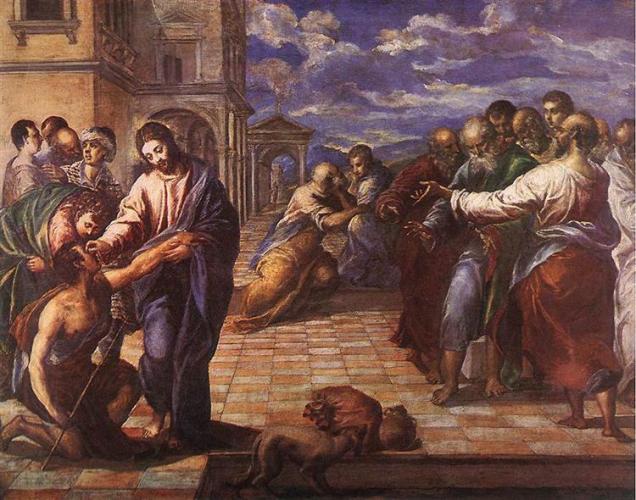
Christ healing the blind man – El Greco, 1560
And that is what makes us the most ready to feel we need nothing more. We, the converted, stand most in need of conversion. Jesus spent a lot of time in an already protracted ministry window healing blindness. This I believe was no accident. He was particularly drawn to this because of it’s wonderfully metaphorical teaching platform. And I’m sure that someone healed of their blindness would be most deeply grateful; most readily loving.
To see therefore, is to love. And to love is the heart of the Gospel message. Until we love as Jesus loved, we may yet stand in need of conversion. To say otherwise reveals a spiritual smugness, a theological self-satisfaction bent more on winning arguments than whispering prayers.
These days, I rest secure in the knowledge that the same grace offered to the pimps, whores, and swindlers is offered to the converted and the righteous. Jesus spent more time arguing with one and partying with the other.
As I’ve shared elsewhere, I have a “star-crossed lovers” relationship with the written word. A young Capulet and Montague stare with longing at one another from across the room, and wonder what the next step is. We’ve always managed to work things out, but not without long and moody periods of dust and dearth. It’s always advisable, and spiritually healthy, to change up our routines from time to time if only to shake off the cobwebs of inactivity or apathy. But, my relationship with holy writ often stands in contradistinction to their typical handling.
Throughout all ages, the most common topic which has occupied singers, philosophers, poets, and people in general has been…love, of course. The sheer ubiquity of love songs, poetry, painting, sculpture, and pining readily attests to its centrality in our human experience. If you can easily describe your first kiss, the appearance of your first child, the terror of a dead spouse, or pride at the accomplishments of your spawn, you have yet to truly experience love.
Similarly, if you can easily and with absolute confidence ascribe hermeneutical perfection and interpretational clarity to a collection of writings such as the Bible, you are either deluded, or you’ve been reading something else. It is a library with which to contend because, in it, are found treasures worth the battle. The Covenant Community Bible Experience has, for me at least, drawn me to the scriptures in some new and alluring ways; ways that have helped reinvigorate my intention to let them find me and turn me up once more like clotted soil.
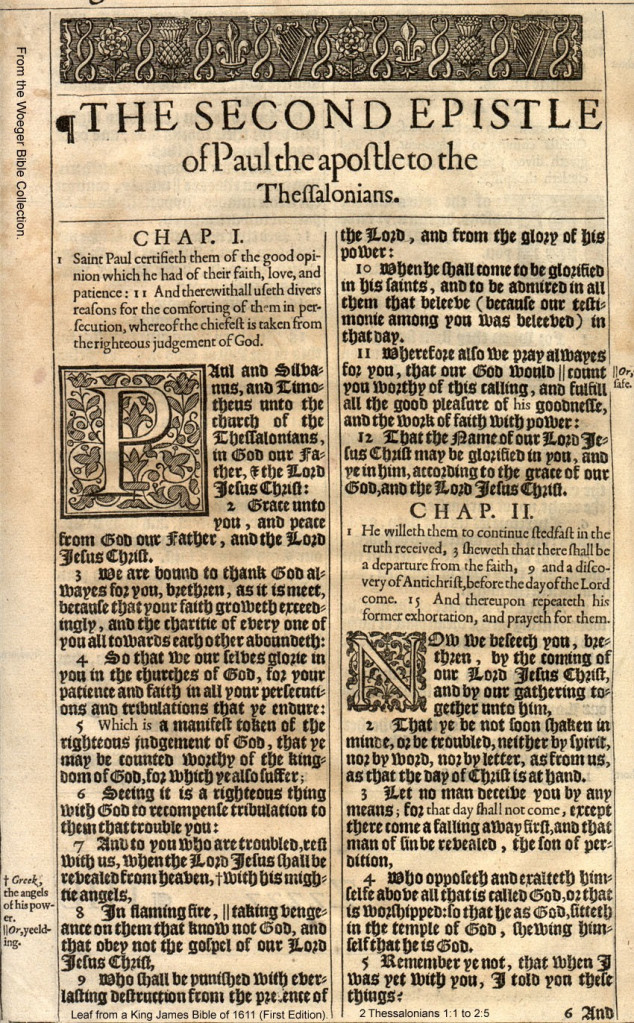
We lost as much at the Reformation as we gained. The bible as story is one of those. Against Luther’s best intentions, we ended up with a bible widely available (eventually) but indistinguishable from any other field of inquiry. Bible in the brain, rather than Christ in the soul. The forces set in motion even before the Reformation poured ideological gasoline over centuries of Christian reflection and practice.
To many in contemporary evangelicalism today the church started not at Pentecost, but at the Reformation. Hence, we are given the unfortunate impression that God was somehow completely lost and confused for fifteen hundred years. Suffice it to say, the corrections that needed to be made in the existing church occurred, but in ways impossible to foresee or worse, control. The scriptures came to be seen in ways even they would shudder to contemplate. As the freight train of reforms reached fever pace, it outstripped the ability of people to embed the scriptures into their own lives. Right belief trumped right behaviour. Theology and spirituality parted company.
The Reformed Tradition and, more recently, Evangelicalism, claim that sola scriptura saved the church from the ecclesiastical clutches of a vast hierarchical juggernaut which had all but replaced the bible with magisterium. This has some merit, but they further claim that, with the bible safely in the hands of all, knowledge derived from those same scriptures is readily available and plentiful.
I beg to differ.
The saints of the Medieval Ages and Renaissance knew more, not less, scripture than those who followed. Why? Because their entire lives, their holy-days, their ecclesiastical feasts, their communities, their families, and their places of gathering swam in the stories, prophecies, and songs of the Bible. It was not the absence of the Scriptures in the hands of the common folk that saw them suffer in the almost guaranteed poverty of subjugated peoples. It was that much of the poverty they experienced was because of a church in league with the halls of power.
Merely having the Scriptures in our possession does not guarantee their power in our day to day lives. At times, it may well be the opposite. There is a sense in which familiarity has bred contempt. Or at least apathy. We chose control over wonder, intellectual mastery over mystical formation, trading a holistic library of inspired writing for a flat, rational document for our ownership and dissection. As the church has become increasingly fractured, the possibility of common worship experiences built upon shared and regular experiences of listening and participation in those same Scriptures it so ardently defends has become challenging indeed.
Our buddy Jesus, complete with graphic t-shirt, sleeve tats, skinny jeans, and sideways ball cap points to a similarly cavalier handling of the book in which is enshrined his coming, character, teaching, and sacrifice. We need to recomplexify the Scriptures, not in order to obfuscate, but for the purpose of elevating them to the mystical, existential, literary heights in which it was conceived.
All that to say, I have warmed to the written word once again, largely because of this most recent biblical encounter undertaken by our congregation and denomination. And now that a reintroduction has taken place, we can stop peeking at one another across the Junior High school dance floor, shuffling and coughing. We can take steps across the room toward each other.
Ash Wednesday has come round again to spill forth her penitent goodness. I first posted this last year on Ash Wednesday. Let’s walk the Lenten road together.
Begins again this Springward journey;
rebirthing all that once lived.
Trickle again once fickle brook and stream
sickle sighs yet in repose, sleeping still.
Earth, sore and Winter-stiff, seeks, sighs
stretches out skinny arms of want.
Her cold, hard bosom births not what soon will come
Last month we began a conversation; a tête à tête if you will about our relationship to the Bible – something we may not know as well as we think we do. And, because so much is riding on our relationship to this library of writings, it behooves us to dig as deeply as we can.
With the help of Glenn Paauw’s masterful book, Saving the Bible from Ourselves: Learning to Read & Live the Bible Well, I have sought to make the case that, in seeking to make the Bible “approachable” we have instead neutered it, making it less transformational. The Scriptures call us to faith, not certainty. Modernity has sought to erase the unpredictability of faith with scientific verifiability. “The bare text is difficult to control. The modernist turn in culture led the keepers of the Bible to transform it into something precise, punctual, calculable, standard, bureaucratic, rigid, invariant, finely coordinated, and routine…This is a Bible that needs to be saved” (p. 37). We have all heard the adage that “less is more.” It holds true in many areas of life. For example, my wife tells me that much of her editing process involves carving away the literary dross from her manuscript in order to leave the best kernels of story that will keep the reader engaged. She wrote her book in under a year, but has spent over three more in the arduous task of proofing, hacking, chopping, and honing. Michelangelo stated that his masterpiece sculpture of David was “discovered” by simply chipping away all that was not David. It has been scientifically proven that the clutter of too many road signs and instructions cause drivers to disengage, the very thing such signs are designed to avoid. Less is more. With the many additions and “improvements” to the Bible, aimed at helping us pay attention, we have ostensibly removed its beautiful “surface simplicity that [could] open up for us the inherent and immensely interesting good complexity that lies deep within…The Elegant Bible will reflect the wisdom that form and content always belong together in God’s good creation. Form is part of the content of things” (p. 39). We must always begin with the questions, what is the Bible and how can we honor what that is? Paauw suggests that we are badly in need of an “extreme Bible makeover” wherein we can undo its fractured format that only leads to fractured reading and commensurately fractured lives. Part of that process will be to learn how to adopt the practice of referencing passages by context and content rather than by isolated chapters and verses. As is apparent in the rather unique Covenant Community Bible Experience in which our fellowship is presently engaging, Paauw advocates for a Bible less encumbered by the artificiality that has been foist upon it by means of chapter and verse numbers that pull us out of a narrative and broad reading of its contents; section headings that are ultimately interpretive by nature; page layouts which hide from us the diversity of literary forms employed in our original manuscripts; and, particularly, study Bibles that can actually mitigate against the deep, transformative, non-agenda-driven reading that can best draw us into the dangerous place of spiritual formation rather than mere information. We need to view the Bible more as poetry, which demands exactitude of form as much as content. What a poem “looks like” is intended to speak as loudly as the words themselves. Form and content alike form our understanding of a thing. We have inherited more of a cultural creation than the Bible that was originally intended. Says Paauw, “to save the Bible from ourselves, we must begin to trust once again its ancient ways of saying things…The path to restoring our Bible begins with chipping away at everything that doesn’t belong there” (p. 50). Our love for God demands no less than an equal love of the Scriptures as they were first delivered. Those with ears to hear, let them hear…


 The words I’m about to write are the first I’ve written about this. Not because I am ashamed of it. Nor am I trying to hide anything. Quite simply, I’m still trying to understand it all.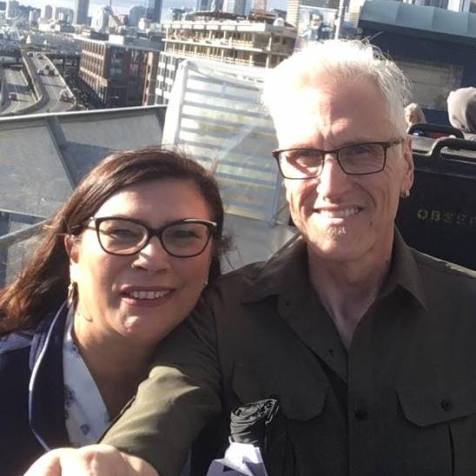





 Together, Mom and Sam weathered well the uncertainties of ranch life in an often-harsh central Alberta landscape. They made many new friends, most of them musicians of one kind or another. Like a loose belt, their lives spread out amid country music jams, reenactment wild West gun shootouts, mosquito-laden summers, and fireside nights under the vast Alberta stars. I watched my mom transform from an anxiety-laden, late-middle-age housewife into a buoyant, self-confident woman. It was delightfully disconcerting.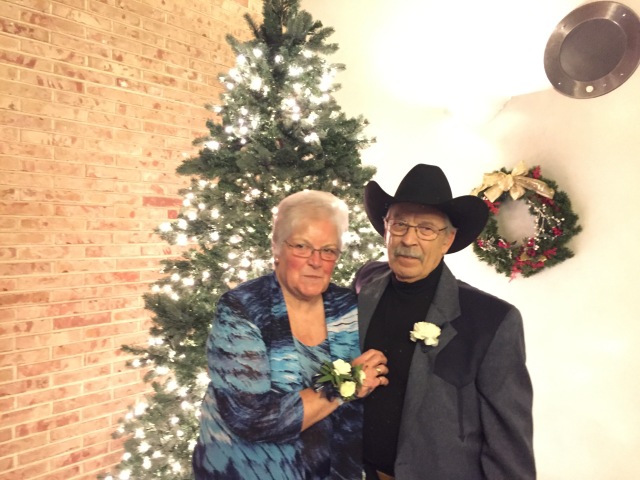


 innerwoven