Eyes in the Alley – Seen and Known (or, why I’m not concerned with the language of spiritual formation)

“Do you have time to get together and talk?”

I haven’t kept track of the number of times I have heard that question in recent years. There were seasons when its frequency seemed to ramp into overdrive, filling up my days with numerous meetings that had been initiated with that one extremely vague and ominous question.

I don’t think I ever said, “No.”

Sitting down to discover why the question was asked has been, in large part, what I’ve done for the past six years. Not quite knowing into what I was being invited was equal parts terrifying and invigorating. It forced (and I really do mean forced) me to have a stronger trust in the Holy Spirit’s ability to actually lead us into Truth instead of my own ability to fix someone’s problem.

It was a beautiful season. Yet, something happened during that time I did not anticipate. I started developing a lexicon that was unique to me, and others started picking up on it. Before long, people knew how I was going to approach them. They knew my perspective. They knew my values and convictions. They even knew the words I would use to describe all of these things.

In and of itself this isn’t a bad thing!

Communities that have easily recognizable language to surround and embody admittedly nuanced theological thoughts often create a comfortable space where people can open up and be vulnerable about the raw interworking of their spiritual lives. These are rare and beautiful communities – the type of thing that you can’t ‘un-know.’

The problem comes when the same language that created the space begins to define its boundaries of ‘in’ – ways that deny ‘outsiders’ the ability to understand, engage, and embrace the God we are attempting to talk about in the first place.

This is when the good, the true, and the beautiful can become cliché. I’m sure you can think of numerous examples, but for our purpose here, suffice it to say, if it has been made into a ‘Christian’ bumper sticker, then it is probably that to which I refer.

Clichés are difficult to avoid. We humans crave an easily-digested certainty. They are difficult to avoid because they don’t start out as cliché. They begin as good, true and beautiful descriptions of an indescribable God.

Clichés are clichés not because they aren’t true, but because, at least at one point, they were SO true that they became an over-used, overly-recognizable slang, which drew boundary lines between the ‘insiders’ and the ‘outsiders.’ I’m not suggesting that we stop using language to talk about God. It was God who gave us language in the first place and it would be a denial of a good gift to throw it out simply because we can’t fully capture our subject with words.

Let’s just come to terms with the fact that using words to characterize the divine is akin to putting a leash on a lion. Then, let’s keep using words wisely, intentionally, and carefully, but not anxiously, fearfully, or tentatively. My guess is that God’s grace is grand enough to make up for any deficiency in description.

All of this highlights our predicament.

What does it look like to leave the already tired language behind while doing our best not to create a new one moving forward? My guess is that this is why many of us are drawn to the language that embodies spiritual formation. I love the language that spiritual formation is giving the Church. I love it so much that I want to steward it well in order to retain its vitality. This is why, when I’m talking with people who have a thirst for Christ (which is everyone, whether they know it or not), I’m not concerned with using it much at all.

Instead, I want people to have a deep, maybe even indiscernible, sense that they are ‘seen and known.’

Seen and known for who they are – invaluable creations who have the image of God imprinted on their souls, at the core of their beings.

Seen and known regardless of where they have been, what they have done, or what they are facing in the moment of our relational collision.

My hope is that this communicates a love that transcends our own capacity to show love. My hope is that this points people, even if only slightly, in the direction of Jesus. That it causes a subtle rupture in our souls, and opens our posture to the Spirit’s movement in our lives a bit more.

There will be always be appropriate times to speak of the ‘reason for the hope that we have,’ but we no longer live in a world where ears and eyes and hearts are receptive to an acknowledgement of God’s grace found in Christ without first developing a relational foundation of mutual trust. If people don’t feel, and have evidence of being, truly seen and truly known, then they simply don’t believe that we (or Jesus) have much of anything valuable to share with them.

C.S. Lewis wrote, “It may be possible for each to think too much of his own potential glory hereafter; it is hardly possible for him to think too often or too deeply about that of his neighbor. The load, or weight, or burden of my neighbor’s glory should be laid daily on my back, a load so heavy that only humility can carry it, and the backs of the proud will be broken” (The Weight of Glory).

However we define ‘neighbors’ – be they our roommates, classmates, co-workers, or even our children or spouses – they have a desire to be seen and known. God desires for us to be the conduit through which they are introduced to and nurtured in relationship with the One who fully sees them, fully knows them, and fully loves them.

This is part of what it looks like for the Kingdom to come ‘on earth as it is in heaven.’

This is good news.

______________________________________________________________________________________________

Giff and family, Nov. 2013

Giff Reed is a husband, father, and friend. He is one of the pastors at Red Door Church in Bloomington, IN, and founded a college-aged ministry, theCanvas, six years ago. He works in Career Services for the College of Arts and Sciences at Indiana University. Giff enjoys his wife (Lilly), his ruggedly handsome sons (Quincy and Abraham), good bourbon, Indiana Basketball, and many other holy and sacred things.

spring’s impregnation

spring flowers


like lead on paper the tactile scratch

of winter rakes her rusty back


dusting each day for fingerprints

our only hint that somewhere near


she hides. like water in the well

down under, below within


where the moist and rich grows

before making its appearance, sacheting


across a dark-soiled stage where

dirt crawls up her dress and


spreads her limbs, surrounds her cracking skin,

pushing until she explodes in climax of more


but for now, shivering haunches huddle

encased in dead and dying promises


night and dark have outwrestled

her brighter self, denying ascension


in her tomb of untouched virginity

she longs in unrequited passion


and, donning the satin sash of evening,

the smoky grey of night blows her tender kiss


to the shameless, bright day

and whispers, “adieu.”

Eyes in the Alley – Fences and Good Neighbors

It started when the fence blew down.

We’d been casual acquaintances with our next door neighbors for some years at the time, close enough to chat in the driveway when we saw each other, but not intimate enough to know the inevitable struggles and joys that went on after the garage door slid closed. We knew they had dogs, saw them walking them, so when it came time for us to adopt a rescue dog of our own, they were supportive and kind.

Then, during one fairly typical windy Colorado afternoon, the fence between our backyards blew down.

As typical house owners, we gathered over the wreckage and mumbled about how much it would cost to replace the fence, what kind of work it would take, what an eyesore it was. My husband and Rob* tore the flimsy remnants down and as the dogs frolicked over their newly doubled territory we came to a realization: we didn’t need a fence between us, after all.

So, instead of rebuilding, we chopped the weathered wood into usable pieces, and flung it into their backyard fire pit. We sat long into the night over beverages and fence, watching the barrier burn.

Years ago, I would have seen this burning as Jesus’ invitation to evangelism, a clear path to converting my neighbors to our way of relating and being with God. Years ago, I would have seized this “opportunity” as evidence that their souls needed to be saved, and that I was the one meant to do the saving. (Evangelical hero complex, anyone?)

Today, as with the day the fence blew down, I only see the invitation to learn to love more, and more deeply. Instead of seeing souls to be saved, I saw God asking me to share space in a way that most suburbanites don’t do, their properties protected by privacy fences and gated communities. Instead of a mission field, God was beckoning me out into my own backyard.

Over time, the torn down fence became symbolic of tearing the walls of relational intimacy between us. We learned more of their story, and they, more of ours. Hurts and illnesses, celebrations and losses were shared over our newly spacious shared ground. When they went out of town, we readily looked after their pooches, marched across our elongated backyard and into their home in pajamas and boots for morning feedings and late night rescue missions. They returned the favor. We built a few raised beds for vegetables, and shared both the watering and the crops as the years went by. Eventually, they installed a dog door, and each morning our eager pup makes his way from our living room into their kitchen to say good morning over a cup of coffee. We jokingly refer to our arrangement as a “dog co-op.”

This new neighborliness didn’t come without its cost. As an introvert, I like to power down when I get home, to crawl into my much-needed cave of solitude and silence. The wham-bam-thank-you-ma’am theology of converting my neighbors instead of loving them sometimes felt simple and appealing on the nights when I’d had a long day at the office only to come home to Lisa* sitting silently by the fire pit, clearly in need of an ear and a friend. But the call of love is always louder than the call of convenience, and I would wander out to see if she needed company, sitting to listen and talk even when dinner would have to wait. Like the monastics, I began learning that stability in community brings out the rough edges not in the other, but in me. The ground that I’ve covered interiorly over this time is much larger than the length of our combined back yards. I’m not proud enough that I can’t admit there are still days when I see one of them crouching over the veggies and step back from the windows so they can’t see that I’m home. I’m not perfect at loving, and I don’t get it right all the time. But I’m learning to love both of them (and their dogs) as I would love Christ.

Rob and Lisa and their two dogs have taught me to love when it’s not convenient to me, theologically or emotionally. Today, they are dear friends for whom I could ask for a cup of sugar or a pound of flesh. When either they or we are in crisis, we end up in each other’s kitchens, talking it through over a cup of tea. They know we love Jesus, and they respect our faith. When other factions of our politically conservative town cause them to scratch their heads or, worse, break their hearts, we end up back at the fire pit, talking through the way of Love.

A few years ago, Lisa returned from a vacation with a gift of wine and a thank you note for once again caring for their furry twosome. Lisa grew up in a Christian home, and we’ve had more than one conversation about how crazy the conservative Christian culture makes her, how little she wants to do with those ways ever again. I can’t say I blame her.

This evening, though, as she leaned against the back of our couch, she misted up slightly at the reality of our shared space and shared lives.

“You know,” she said haltingly, “I’ve never understood that ‘Love your neighbor’ verse until you guys.”

Me, neither, I thought quietly to myself. Me, neither.

*Not their real names.

_____________________________________________________________________________________________

Tara Owens
Tara Owens

Tara M. Owens, CSD is a spiritual director and supervisor with Anam Cara Ministries, where she accompanies people in their journeys of faith. She’s also the Senior Editor of Conversations Journal, a spiritual formation journal founded by Larry Crabb, David Benner and Gary Moon. She’s looking forward to the publication of her first book, Embracing the Body: Finding God In Our Flesh and Bone, through InterVarsity Press in December 2014. She is honored to steward a thriving spiritual community on Facebook here, and you can follow her on Twitter here and here. Tara is a fan of Dr. Who, red velvet cupcakes and warm thunderstorms. She, her husband Bryan, and their rescue dog, Hullabaloo, live in Colorado.

You’ve walked this way before

You’ve walked this way before,

aloof, spendy in compliments mirror-bound.

It helps you face a faceless day,

reflected back at you,

with nose in your face.

The trouble came when you looked for

the first time

and saw only smoke,

a haze of unknowing.

It perplexed and fascinated, stunned and

silenced the breath yet to draw.

Then you turned away

just long enough to guess at what you saw.

20080212174814_condensation


Picture found here


Eyes in the Alley – Learning Love from “Loose” Women

dark_alley_big

It was a sweltering summer day. I wiped perspiration from my face while I made my way to the church. The topic I was about to address was hot, too, as in controversial. I had begun preaching a series entitled “Men, Women and God” in a congregation in the Ohio River Valley, a region with unusually high rates of violence against women.[1] My goal in the sermon series was to introduce the congregation to deeper levels of the healing and liberating power of the gospel.  I also hoped to give voice to the suffering of many who experienced sexual abuse and domestic violence in our city.  This is tricky in any church, introducing a tough topic like this in a way that opens people’s hearts and minds, challenges the status quo, and yet doesn’t alienate everyone.

So it was that on this Lord’s day, several weeks into the series in which I had already established a biblical foundation for gender equality, I talked about sexual abuse.  I named its presence among Christians, its relationship to patriarchy and how the church that could help to prevent and heal this form of violence instead often perpetuates it.

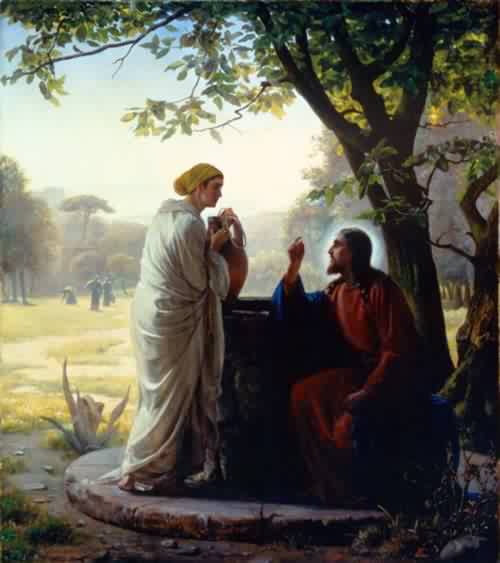
My biblical text was the story of the woman at the well in John 4. I have heard this woman described by preachers in many pulpits over the years, almost always with mild contempt. They referred to her multiple broken marriages as her problem, her issue, and something she instigated. She was tainted. Impure. Unclean. A joke. They treated her like a Samaritan Hollywood celebrity, ditching her latest conquest for someone younger. Today would be my chance to offer a very different view.

The congregation was unusually quiet, listening intently as I described the woman’s worth in God’s eyes. Jesus asked to drink from her cup, breaking cultural taboos on many levels, I said. She was a despised Samaritan, a woman who, because she might be on her monthly cycle, was automatically unclean and untouchable. She was alone at the well at noon, meaning she was an outcast from all the other women of the village who went to the well in the cool of early morning. She was everything that bigots in Jesus’ culture and her own people loved to hate. Yet, neither sexualized nor objectified her. He asked to drink from her cup, an unspeakable transgression of cultural norms.

Her series of rejections as an adult could very well have been the outcome of the wounds of childhood sexual abuse, I suggested.  There were aspects of her adult life, I said, that are often found in survivors. She lived a narrative of broken boundaries that kept moving from bad to worse. In her culture men, not women, initiated divorce. Women couldn’t even bear witness in a court of law. Every time this woman experienced another divorce, another loss of home at the hands of a husband she became an easier target for predators. By the time Jesus met her she had reached the bottom. Now, she just lived with someone without the protection of marriage. In Jewish culture at the time this was crime, punishable by death. Here was a woman with deep wounds, living as an outcast.

Carl-Heinrich-Bloch-xx-Woman-at-the-Well-xx-Public-collection

So, instead of looking at her story as just one more example of an immoral woman, I said to a congregation that was absolutely silent and listening, what if we thought about the kind of childhood experiences that can move a person toward this much chaos as an adult.  This familiar story from the gospels was a way to ease into a very difficult subject as we considered some of the consequences of childhood sexual abuse for adult survivors. As I spoke of the struggle with perfectionism and anxiety and other consequences of sexual abuse I noticed several people had tears in their eyes.

Bringing the message to a close, I reiterated the systemic layers of oppression that burdened this woman, isolating her from her own people and religious community, linking the sin of childhood sexual abuse to the larger systemic issue of patriarchy.  The good news, I concluded, the wondrous truth, is that this woman became the first evangelist in the gospel of John. Because of her words, the entire town came to listen to and trust in Jesus and what he taught. This happened without her saying “I am a sinner, please forgive me,” or Jesus saying anything at all about sin. He did not say to her, “Go, and sin no more.” He did mention that she had had many husbands and was now living with someone. He was, as they say, naming the elephant in the room (or at the well) as to why she was outcast. I imagine him laughing and waving to her as she ran off mid-sentence to tell all the people who loved to hate her, about Jesus.

Here’s the thing. She had always wondered about God, but who could she talk to about such things? So, Jesus talked to her at length. Not about sex or her checkered past, but about the nature of God; the problem of thinking we can lock God into a religious box, and the meaning of authentic worship. This was a conversation Jesus had not had with anyone else. He spoke to the woman—an outsider on every level—as he would speak to one of his disciples—insiders. Jesus trusted her, wanted to drink from her cup, was willing to be seen with her. This woman was not her living situation. She was not her history of rejection. If indeed she was a survivor of childhood sexual abuse, she was not her abuse, either. She was a human being made in the image of God, someone for whom Jesus was happy to break lots of cultural rules. That is how she found her own voice, and with it led others to the one who set her free.

After the service I stood as usual, shaking hands at the door of the church. An older woman*, tall and dignified, thanked me for my sermon. It was the first sermon she had ever understood, she said. And she’d been a church person her entire life. Leaning close she said to me quietly, “I was raped when I was a child. I never told anyone before.” That day was the beginning of her healing.

Over many years as a pastor and theologian what I have learned is that the church and the world are full of people who need to hear the Bible interpreted by survivors of sexual abuse—those who are healing well and like the woman at the well, are doing our theological homework. We bring a different perspective. We get it about shame, how it destroys every aspect of life. We see through patriarchy in the name of religion, because it’s obvious to us that it is a road to hell. We know that straight doesn’t mean good and gay doesn’t mean bad. We think of sexual sin more in terms of violence.  We also know how evil it is to be treated as a sex object because we bear in our bodies, memories, and stories the scars of that abuse. So, we are unwilling to victimize people because of their sexuality.

Today, I honor the woman at the well for her chutzpah, and Jesus for his transgression of cultural norms. Together they beckon all of us to look at our brokenness and our neighbor’s dysfunction through a different lens.

*Her identity has been obscured in the interest of privacy.

Adapted from We Were the Least of These: Reading the Bible with Survivors of Sexual Abuse (Grand Rapids: Brazos, 2011).

_____________________________________________________________________________________________

[1] The statistics for abuse for both genders are staggering. While both men and women are victims of sexual abuse and domestic violence, 95 percent of domestic violence is against women.  Twice as many girls as boys are victimized by sexual abuse, with one out of three girls and one out of six boys experiencing sexual abuse before the age of 18.   “Q&A” Faith Trust Institute, http://www.faithtrustinstitute.org/. Rape Victim Advocacy Program, “Myths and Facts—Child Sexual Abuse,” http://www.rvap.org/pages/myths_and_facts_about_child_sexual_abuse . “Domestic Violence in the Workplace Statistics,” American Institute on Domestic Violence, http://www.aidv-usa.com/Statistics.htm; “Domestic Violence Facts,” National Coalition Against Domestic Violence, http://www.ncadv.org/files/domesticviolencefacts.pdf.

 Painting: “The Woman at the Well” by Carl Heinrich Bloch found here

______________________________________________________________________________________________

Rev. Dr. Elaine A. Heath

Elaine A. Heath is the McCreless Professor of Evangelism at Perkins School of Theology, and is an ordained Elder in the United Methodist  Church.  She is the co-founder of the Missional Wisdom Foundation (www.missionalwisdom.com), which administers New Day, the Epworth Project, and The Academy for Missional Wisdom, an experimental network of missional, new monastic faith communities in historic mainline traditions.  Elaine has provided retreat and seminar leadership in spiritual formation, leadership development for clergy, and the missional church for many years and is a highly sought after preacher, teacher and lecturer.  Among her research interests are the new monasticism, emergence and the church, spirituality and evangelism, and gender and evangelism.

Blog: elaineaheath.wordpress.com

Publications include:

Missional.Monastic.Mainline. co-authored with Larry Duggins (Eugene: Cascade, 2013). We Were the Least of These: Reading the Bible with Survivors of Sexual Abuse (Grand Rapids: Brazos, 2011); The Gospel According to Twilight: Women, Sex, and God (Louisville: Westminster/John Knox, 2011); Longing for Spring: A New Vision for Wesleyan Community, co-authored with Scott Kisker, (Eugene, OR: Cascade, 2010); Naked Faith: The Mystical Theology of Phoebe Palmer, Princeton Theological Monograph Series(Eugene, OR: Pickwick Publications, 2009); The Mystic Way of Evangelism: A Contemplative Vision for Christian Outreach (Grand Rapids: Baker Academic, 2008); and More Light on the Path (Grand Rapids: Baker Book House, 1998), co-authored with David W. Baker.

Elaine holds a BA in English from Oakland University, an MDiv from Ashland Theological Seminary, and a PhD in theology from Duquesne University. She and her husband Randall live in Garland, Texas and are the parents of two adult daughters. Favorite activities include hiking, camping, bicycling, canoeing, exploring small towns, music and watching movies.


Wind Artist

I’ve been treating myself lately to as much John O’Donohue as I can get my hands on. And, since he was hospitable and richly forthcoming with his output, it is readily available and just, oh, so, nourishing. Please read slowly. Read again and again. I did. It’s so worth it. Enjoy…

Wind Artist

For Ellen Wingard

Among the kingdom of the winds,

Perhaps, there is one of elegant mind

Who has no need to intrude

On the solitude of single things.

A wind at ease with the depth

Of its own emptiness, who knows

How it was in the beginning,

Before the silence became unbearable

And space rippled to dream things.

A wind who feels how an object strains

To be here, holding its darkness tight

Against the sever of air, ever eager

To enter, and with a swell of light

Dissolve the form in its breathing.

A wind from before memory

Whose patience will see things become

Passionate dust whorled into sighs

Of ghost-song on its wings.

One of my poetic muses

Eyes in the Alley – Where’s the “re-do” button?

“Where is the “re-do” button on my life?” I have wondered that more than once. My computer has a restore point that, when the all else fails to fix the mess, I can take my computer back to where it was a day ago, a week ago, even longer. How many times have I wanted a link to click on that will take me back several decades.

The problem is I want to take the lessons I have learned up to this point with me. I don’t want to go back to where I was without the hard-won truths I now possess. I’m not even sure that Steve Jobs could have figured out an app for that one.

There is hope, though: God restores our souls and the re-set button God uses has a fancy term called the “discipline of confession.” It really is a fresh start. By saying the truth of who you are and what you have done, without any excuses or rationalizations, we open the door to God to hit the “restore” link in our souls.  The 12-steps in A.A. and its affiliates say it this way:

  1. We admitted we were powerless over alcohol (or food or sex or lying or drugs or fake religiosity hypocrisy or [fill in the blank]—that our lives had become unmanageable.
  2. Came to believe that a power greater than ourselves [I am using the word God in this essay but call him/her/it what you want; see next point] could restore us to sanity.
  3. Made a decision to turn our will and our lives over to the care of God as we understood Him.
  4. Made a searching and fearless moral inventory of ourselves. [The Church calls this the “discipline of confession:” no excuses, no rationalizations, just straight-up talk about how wrong we were in all kinds of ways.]
  5. Admitted to God, to ourselves, and to another human being the exact nature of our wrongs.
  6. Were entirely ready to have God remove all these defects of character.
  7. Humbly asked Him to remove our shortcomings.

As we open up our lives, we partner with God-as-we-understand-him/her/it, allowing God to hit the “restore” link in our life. Next, we show ourselves and others that the mess really is being dealt with and not swept under the rug. [The Church calls this “penance.”] The next steps shows us how to begin to make that happen:

  1. Made a list of all persons we had harmed, and became willing to make amends to them all.
  2. Made direct amends to such people wherever possible, except when to do so would injure them or others.

The need to hit “restore” happens more than once:

  1. Continued to take personal inventory, and when we were wrong, promptly admitted it.

We then seek to move forward, creating less destruction and havoc with ourselves and others:

  1. Sought through prayer and meditation to improve our conscious contact with God as we understood Him, praying only for knowledge of His will for us and the power to carry that out.

We return to the practice of these steps regularly:

  1. Having had a spiritual awakening as the result of these steps, we tried to carry this message to alcoholics, and to practice these principles in all our affairs.

The Church calls the yearly springtime process of doing this intentionally as a group “Lent.” It is a time of invitation to people, whether they can admit to others in a group their deep brokenness or not, to stop running and hit the “restore” button in their lives. Unfortunately, the Church does not always facilitate or explain this process well to its people. At times, the Church needs the folks in the 12-Step groups to show it how to do this more effectively.

That doesn’t mean that the idea of Lent with its invitation to fasting, almsgiving [hospitality and care for others] and confession are wrong or useless. People can and do mis-use a 12-Step program by lying to themselves and their sponsors, having remorse only over being caught and cornered into a program. That doesn’t make A.A. any less effective.

And so it is with the way God works through the Church to restore souls. Just because people who consider themselves Christians can be mean, small-minded, bigoted, hateful, unloving, lacking in generosity and hospitality, and/or unrepentant for really bad things, does not render God’s good gift useless or ineffective.

We all need to get back on the wagon, no matter which wagon we were riding on when we fell off. The Church calls that “daily repentance.” It is what Lent is all about. Think of it as a six-week long A.A. meeting with restoration [or Resurrection] at the end.

__________________________________________________________________________________

Valerie Hess

Valerie Hess is an author, instructor in the Spring Arbor University’s Master of Arts in Spiritual Formation and Leadership (MSFL) program, retreat speaker, musician, mother and pastor’s wife. She does a weekly blog at www.valeriehess.com and has written numerous articles, mostly on the themes of spiritual formation through the spiritual disciplines and church music. She has written three books: Habits of a Child’s Heart: Raising Your Kids with the Spiritual Disciplines (co-authored with Dr. Marti Watson Garlett), Spiritual Disciplines Devotional: A Year of Readings and The Life of the Body: Physical Well-Being and Spiritual Formation” (co-authored with Lane M. Arnold). Her husband is an Associate Pastor at First Presbyterian Church in Boulder, CO. She has two daughters.

Let Go the Moon

In the spirit of John O’Donohue, my Celtic mystic muse…

Let go the moon, you floating,

bloated fragments of dust

in puffy folds of grey garment.


A moth-like attraction awaits

slow-dancing lovers, awakening to

their sash of freedom, dipped in dreams.


Perform for us your indigo dance,

your crescendo voice, psalming, and

outsing our shadows, our climbing hopes.


Now you are but jesting,

your perfect belly aglow in purpose-

to hunt for keepers of secrets.


If we crack your mystery too soon,

your tricks are complete, your secrets lost,

and we miss joy-filled jaws, agape.


So, let go the moon, silly fools,

if only that she may this once boast

her naked story.

Eyes in the Alley – Captured by Love

dark_alley_big

I stopped by to tell you a story. I remember the last time I saw New York City. It was from the cold floor in the back of a dirty New York City bus station, through heroin eyes. And I remember the spring morning I ate peyote in a self-directed Native American rite. I was looking for a real supernatural God.

Among church folk, I stopped telling these stories years ago, because the wilder and crazier story you could tell, the more approval and attention it could win. It wore thin.

What I do want to tell you is a different type of story. Not the story of coming out of a drug hazed culture, or out of Buddhism, or Native American shamanism, but of the person who led me out.

And why I followed him.

You see I’ve got a Spiritual Guide, and it’s called the Holy Spirit. And I’ve got a Spiritual Master who walks beside me, and his name is Jesus. And the reason I follow him is not because of who he is or what he’s done, but why he did it. And why he did it for you, too.

Dumbfounded

When I look at what Jesus did and what he went through for you and me, I’m startled. Not so much by what he did, but why he did it. His love baffles me. I can’t grasp it. It’s beyond me.

We all do things for love that we would never do for any other reason.

In my lifetime, I’ve sacrificially done things for my wife and children that I might never have done for myself. Love calls me further than I’m willing to go. Its then I find that my ‘line in the sand’ is behind me. Nothing is too great for the extravagance of love. It will go anywhere. Love will do whatever it takes for the object of its affection.

Because of love, God sent Jesus to make a way where there was no way.

When Scripture tells us that love is as strong as death, Jesus proved it. In fact, he shows us that our Father God’s love for us is stronger than death and hell, and anything else. Jesus broke through death and hell because he loves you and wants you and me to feel his love and acceptance. Jesus, “for the joy set before him, endured the cross, scorning its shame.” Love broke through.

It startles me. It baffles me. It captures my heart. It’s a love that’s overflowing with joy and peace. Such love is beyond human beings.  It’s because of this love that the God of all creation would carry the brokenness of all creation in his human body, ending it on the cross. It dumbfounds me.

Jesus could have come, and just shown us the way to God. He could have come and simply spoke of truth.  Instead, he comes and says, “I Am God, come to rescue you.” So he comes under us, to lift us up. He comes to fill us with eternal life. But more than that, He comes to sit down beside us as a friend. Some who knows what we’ve been through, and loves us just the same.

It’s crazy that he doesn’t ask us to change anything. But he knows we really can’t. Our brokenness is embedded in our DNA, a hundred generations deep. So, instead of asking us to change, he does the exact opposite. Jesus asks us to receive him. He says “Come to me,” and then begins the change that changes everything that is. “Jesus un-wounds evil bit by bit” as he heals our lives from the inside out.

He says, “Come to me, all who are worn out and broken down, and I will give you rest.” And then he tells us how he’s going to do it.  “Take my yoke upon you and learn from me, for I’m gentle with a humble heart. You’ll find rest for your souls because my yoke is easy and my burden is light.”

The beauty of surrendering into the arms of love is that we can do it a thousand times a day, because we’ll need too.

When I stop and turn my eyes to what God has done for us, I see love that dumbfounds me and captures my heart all over again.

When I was in Buddhism, I reached a point where I thought, “Wait a minute, God wouldn’t make it so hard to reach him. God would make a way for the sick and the diseased and the mentally handicapped to come to him, and it wouldn’t take a thousand reincarnations to get there.”

I was hearing the call of love. I hope you hear it, too.

____________________________________________________________________________________

Bob Holmes
Bob Holmes

Hi, I’m Bob Holmes. I came to Jesus during the Jesus Movement and I haven’t recovered yet. I’m a professional Grower who’s an Anglican Franciscan Postulant. You can find me writing at Contemplative Monk, or hanging out on Facebook and Twitter.

Contemplative Monk: http://contemplativemonk.com

Facebook: https://www.facebook.com/bob.holmes

Twitter: https://twitter.com/BobHolmes


The future came and went

Is time dependent on that which we invent to measure it? Or is it merely how it is perceived? Is it what we build in, around, through and in spite of it? How different, really, are the past, present and future if we embrace none of them?

clock

The future came and went far

too quickly to be remembered.

It left me with my foot stuck

in a borrowed door, jimmying

a lock on a broken chain

draped loosely over the sloping shoulders of

today. It ran past me backwards and

jokes still waiting for punchlines, mouthing words not yet spoken, songs still unsung,

How odd to see your own head from

behind. How disconcerting it is to

build wasted efforts, futile undertakings when

outcomes are clearer than their inspirations.

Mistakes made shame the steps

yet untaken. How lonely to stop

singing notes yet uncomposed in

company unmet with hands still

red from clapping out rhythms never danced to.

_______________

I want to think back with delight

on the future, lived, loved and

remembered in the mirror of these

moments spent writing of others spent,

yet to come – the moments reconstructing yesterdays.

But, alas, such is not our lot;

a die caught and counted before the cast.

Final pages on stories told

make little sense pasted in

the wrong book. Words, once read,

cannot be unread, only forgotten.

Horizons, once past, only open up more of the same,

yet to come. Horizons look the same

from every direction, once we awaken to

the great vast blue that envelopes us.

________________

Only when we’re drowning is any shore

a welcome shore.

numbers

Pictures found here and here, respectively