The Promise

Gratitude

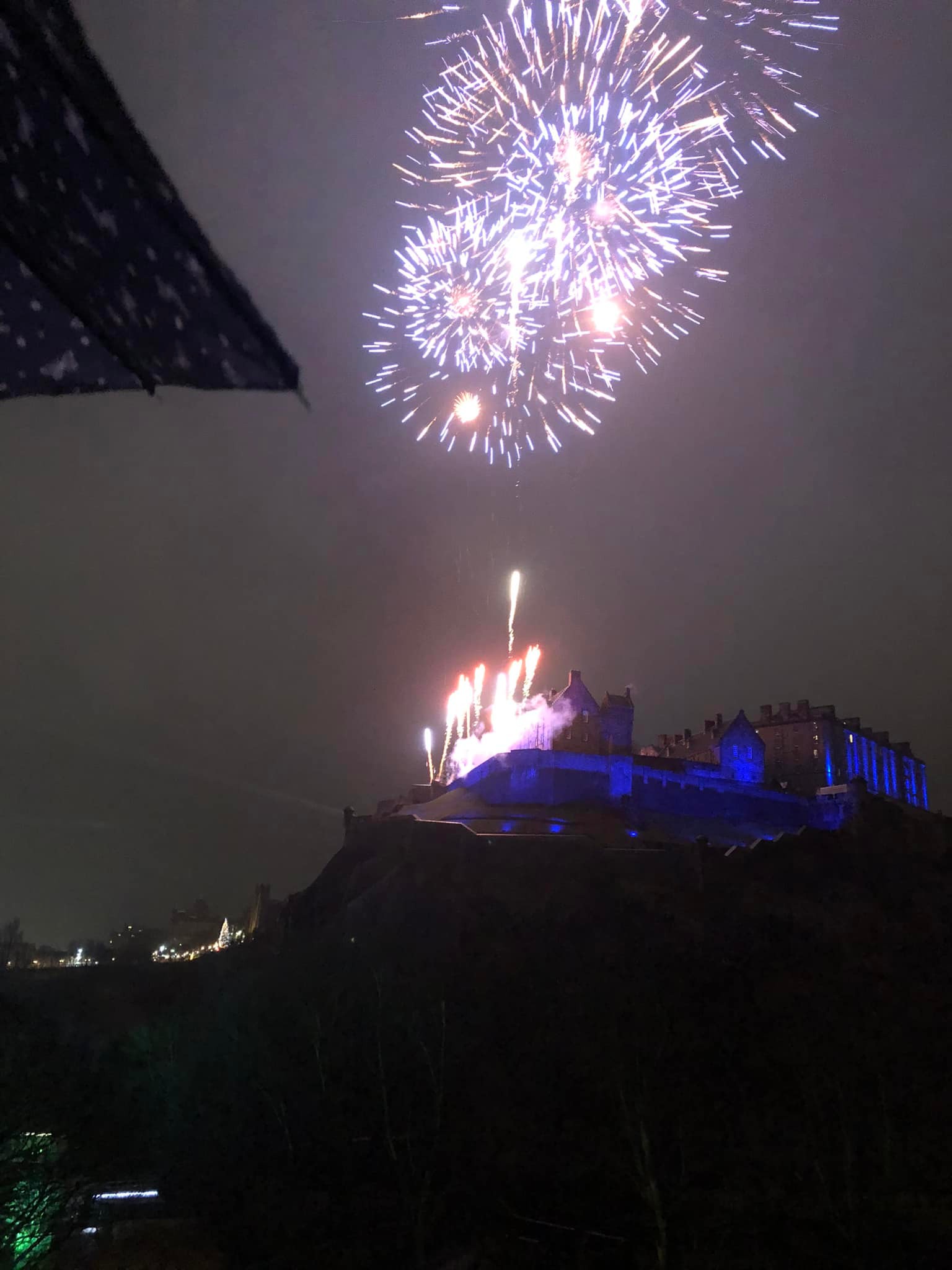
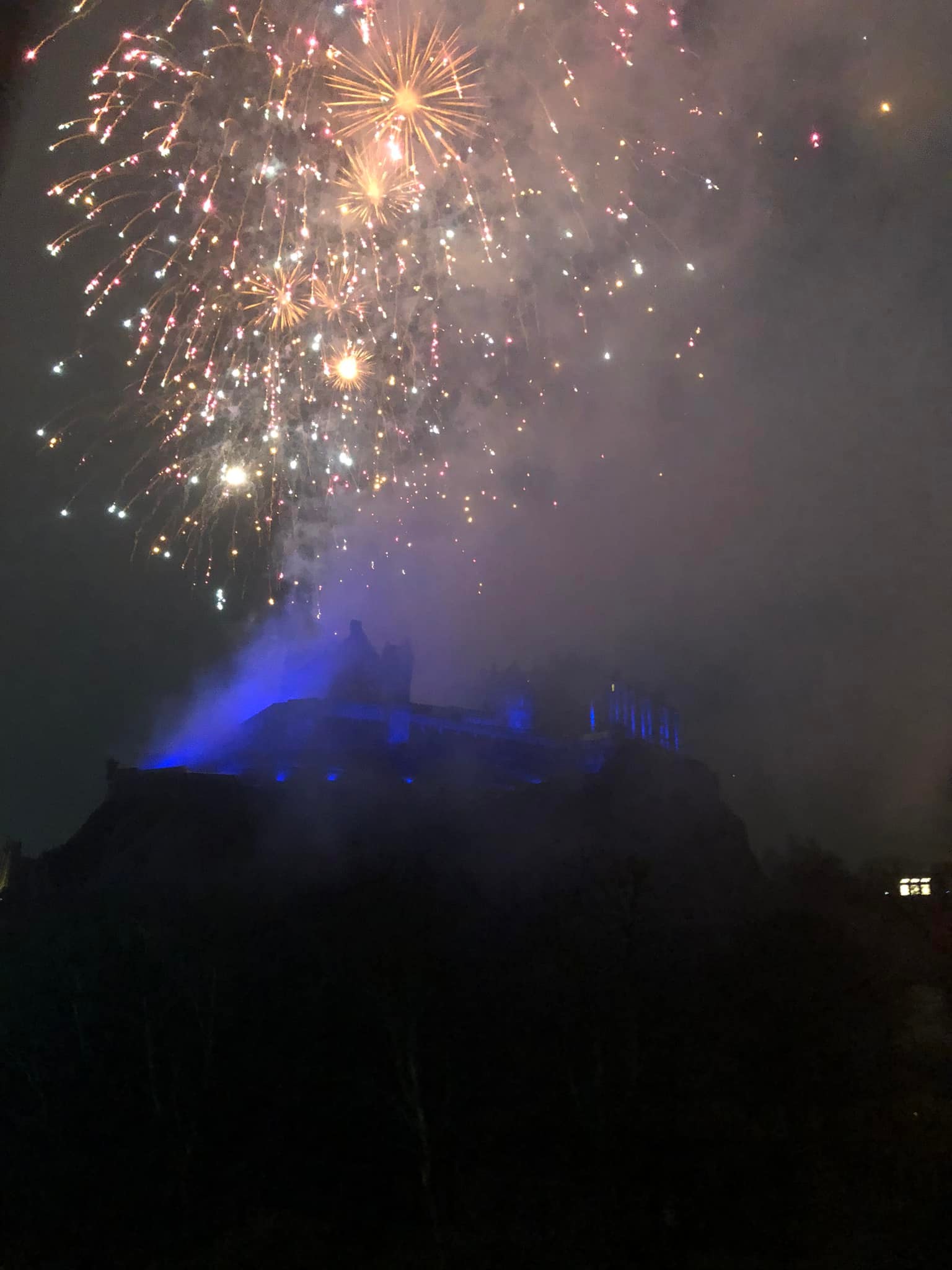
Hogmanay Hopefulness

It’s the last day of the year. ‘Finally’, say some. ‘Big deal’, say others. We seem to really love these arbitrary chronologies; new leaf-page turns, as it were. Any opportunity, either actual or manufactured by which to measure ourselves against the cosmic yardstick of success. “Let’s see how we did,” we tell ourselves, “with the three hundred and sixty five chances we were just given.”

Were we good enough? Did our decisions prove correct enough, or at least useful enough? Are we “better off” now than we were when last we stood at this threshold? Aren’t these the same questions we asked this time last year.

Well, s**t.

Whatever one believes about New Year celebrations and the random significance we may or may not foist upon them, allow me to share a few clear reliables.

  1. However one may feel about one’s place in the world comparative to last year, our belovedness remains unchanged. God, apparently (and sometimes, on our off days, with little reason), is rather fond of us. Each one is deeply loved and cherished. As much now as last year. Have hope.
  2. Whatever chaos, cares, or calamities we faced in 2024, with the coming year there are still the kernels of hope planted deep in the soil of grace. God’s abiding presence with all of us does not change on the altar of a Roman calendar. It is always total, unchanging, and calendarless. Have hope.
  3. Whatever plans we made, course we charted, intentions we implemented (or not) that came to naught, our worth is determined by things much less measurable than platitudes, promises, plans, or productivity. We are forever children of God, loved unreasonably well and with unseasonable consistency. Have hope.
  4. Similarly, as one well-versed in shoulding all over myself on a pile of ripe could-would, whatever resolutions I make for the coming year may, no, will reflect the light of Christ in me, not some perceived darkness into which I may trudge, knowingly or unknowingly, willingly or not. We are all so much more than resolutions made or broken, promises made and kept (or not), hopes realized or dashed. Have hope.

So then, having just finished my final cappuccino of 2024, I sit before my journal not with the pen of guilt, embarrassment, or self-abasement but with joy, gratitude, and expectation happily swimming in the blessing and presence of God. That is the spirit in which I choose to bid adieu to this year.

I crane my neck and shove my not-so-inconspicuous nose forward into whatever 2025 smells like. And, whatever it is I smell is not for me to say. Instead, it is for me – for us, simply to breathe in, greeting it all with gratitude and a whispered prayer for those who will never have opportunity to do the same.

Here’s to Hogmanay hopefulness and a happy, and honest, 2025.

Elephants & Skeletons

The Creative Recovery Initiative is a labour of love I’ve developed over the past couple years living with my wife in Edinburgh, Scotland as global personnel with Serve Globally, our denomination‘s mission wing. I don’t pretend to be a professional vlogger, influencer, or documentarian. I don’t even own fancy equipment. What I have however is an iPhone, a story, a Saviour, and a desire to tell that story to as many who might benefit from hearing it.

Perhaps you’ll find yourself here in some way? Perhaps someone you know might find hope from the stories I tell here? Either way, I invite you into this space to join me in the telling. In so doing, we’ll find healing and build community, together.

Peace to you all…R

“Elephants & Skeletons”

“Remembering Elle”

Life as an addict/alcoholic, whether in recovery or not, is treacherous. Fraught with sandbars, rocky shoals, and gale-force winds forever obstructing any forward motion. Shore could be in sight, hopes elevated, and one’s ship gets dashed against the rocks of the unexpected, uninvited, and unwelcome. Sadly, many do not survive. This is the story of one such soul.

We shall miss you, Elle.

The Creative Recovery Initiative, Episode 1

Doorkeepers of a better kind

There are those among us upon whose shoulders we stand when looking for ways out of the claws of darkness. Women and men who have peace and glory in equal measure tattooed upon their souls, waiting to help others across the finish line of pain to peace, chaos to glory. They are often unassuming and hard to spot in a crowd, their humility hiding their heroism. Bill W. (William Wilson (1895 – 1971), Dr. Bob (Robert Holbrook Smith 1879 – 1950), and Rev. Samuel Moor Shoemaker III (1893 – 1963), collectively, the architects of Alcoholics Anonymous. Says Bill of Rev. Shoemaker, “early AA got its ideas of self-examination, acknowledgement of character defects, restitution for harm done, and working with others straight from the Oxford Group and directly from Sam Shoemaker.”*

I Stand at the Door
by Rev. Sam Shoemaker of The Oxford Group

I stand by the door.
I neither go to far in, nor stay to far out.
The door is the most important door in the world –
It is the door through which men walk when they find God.
There is no use my going way inside and staying there,
When so many are still outside and they, as much as I,
Crave to know where the door is.
And all that so many ever find
Is only the wall where the door ought to be.
They creep along the wall like blind men,
With outstretched, groping hands,
Feeling for a door, knowing there must be a door,
Yet they never find it.
So I stand by the door.

The most tremendous thing in the world
Is for men to find that door – the door to God.
The most important thing that any man can do
Is to take hold of one of those blind, groping hands
And put it on the latch – the latch that only clicks
And opens to the man’s own touch.

Men die outside the door, as starving beggars die
On cold nights in cruel cities in the dead of winter.
Die for want of what is within their grasp.
They live on the other side of it – live because they have not found it.

Nothing else matters compared to helping them find it,
And open it, and walk in, and find Him.
So I stand by the door.

Go in great saints; go all the way in –
Go way down into the cavernous cellars,
And way up into the spacious attics.
It is a vast, roomy house, this house where God is.
Go into the deepest of hidden casements,
Of withdrawal, of silence, of sainthood.
Some must inhabit those inner rooms
And know the depths and heights of God,
And call outside to the rest of us how wonderful it is.
Sometimes I take a deeper look in.
Sometimes venture in a little farther,
But my place seems closer to the opening.
So I stand by the door.

There is another reason why I stand there.
Some people get part way in and become afraid
Lest God and the zeal of His house devour them;
For God is so very great and asks all of us.
And these people feel a cosmic claustrophobia
And want to get out. ‘Let me out!’ they cry.
And the people way inside only terrify them more.
Somebody must be by the door to tell them that they are spoiled.
For the old life, they have seen too much:
One taste of God and nothing but God will do any more.
Somebody must be watching for the frightened
Who seek to sneak out just where they came in,
To tell them how much better it is inside.
The people too far in do not see how near these are
To leaving – preoccupied with the wonder of it all.
Somebody must watch for those who have entered the door
But would like to run away. So for them too,
I stand by the door.

I admire the people who go way in.
But I wish they would not forget how it was
Before they got in. Then they would be able to help
The people who have not yet even found the door.
Or the people who want to run away again from God.
You can go in too deeply and stay in too long
And forget the people outside the door.
As for me, I shall take my old accustomed place,
Near enough to God to hear Him and know He is there,
But not so far from men as not to hear them,
And remember they are there too.

Where? Outside the door –
Thousands of them. Millions of them.
But – more important for me –
One of them, two of them, ten of them.
Whose hands I am intended to put on the latch.
So I shall stand by the door and wait
For those who seek it.

‘I had rather be a door-keeper
So I stand by the door.

So then, Mr. Wilson, Dr. Bob, and Rev. Sam, this recovering alcoholic thanks you.


See Wikipedia

Where poets learn to see

Grey ash, dead-branch-dim

d

e

s

c

e

n

d

s

into corpses, exhumed-verse to still worse fate –

apathy.

Words, once ample-ripe, now winter-sparse,

hunt, cock-ear’d, lungs-flatten’d, for somewhere

to land, to inhale.

Dust-grey soundings lay coiled, like the end of a painter’s day,

wrestling out colours, lines, faces –

not bothered anymore with looking beyond what is seen.

Just the clamouring fool’s last-call for the quick and easy.

These

lazy

letters, unfinished sen

Like changing tires on rusted farm trucks mired in tired dirt,

we muck about in quicksand of distraction, disappointment, deadlock,

the oppressive weight of art.

As needful distraction, we gather up the prosaic, pretentious, polemical,

in fits of laughing stems knit to notes, clinging tight to daylight’s end.

Throats worn from croaking long-forgotten songs of drunken men and laughing children.

Why not dare, instead, to probe the unentered caves where live

the furies, the forbidden, the fortuitous?

That prodigious, crowing dark –

where poets learn to see.

Prayer

We press the world between pointed palms,

where the weary stretch for heaven’s notice.

Our best vision, through closed eyes – steps

weightless

on scabbed knees, waiting.

Wine-soaked, bread-fed words squeeze

themselves through parched lips to

arrange with dancing in mind. But first,

they must learn the art of walking naked, blindfolded

through haunted alleys,

danger-gripped, clammy with doubt.

We stretch out long necks, seeking only glimpses, emancipation.

But, the lecherous bully of shame spends all his time

butchering the still,

small voices of light that sneak

in through backdoors where hope still keeps

windows open.

Tragic, is it not, how shades pull tight against wayward shards

of sun, the down-payment for our breath?

Like running in snow, our legs just get heavier –

too much weight tossed about over time.

A leering fatigue replaces what’s left of inadequate strength –

thickness filling muscles too weak to move past their own demise.

Still, hope is what came, long after our tight-

cinched belt of faith lost its grip

and hungry shame gave way to

garden surrender.

Only then does our Amen make sense.

Lines from a French Train

Composed on a train somewhere between Paris and Montpellier, October, 2019

Sometimes, it is easier to find the whimsy

when there is no memory of a place.

Sharp jagged edges can polish themselves

out in conversations with fellow travellers.

Their questions are better than

my unqualified answers.

Laughter jumbles out, jostling about in

the accidental chaos of shared days –

days made strong in the looking

away from the timekeepers and toward

their owners. Remember,

we must all live our lives on our heels

sometimes. Then, we unburden our-

selves in the company of strangers.

I don’t assume the elbow room was mine.

This kicking straight of cramping

knees was not an action reserved for

my taxable legs.

I don’t pretend to know the steps to a dance

composed without my song, by other tribes.

Their rainbow isn’t signed by my god.

Nor is the stretching road built with

me in mind.

I don’t expect my expectations to equal

the readiness of others to serve them.

I don’t believe, even for a minute, the whisperings

of my inserted presence, that my voice

gets top billing, priority, and loudest.

My tongue is not the first or strongest, the purest,

or even necessary.

It is only,

mine.