the art of wasting perfume

There are smart people out there with books and articles and quotes intimating that the wick of the worship wars flame has burned to a stump. Now, only sticky wax remains out of which we may safely pull something shapely and useful. Whether that is true or not I can’t really say. But, we’ve been sailing post-modern seas long enough to have emerged in a somewhat better place regarding shared worship practices. What interests me most however lies much deeper than mere ritual.

So much of our corporate experience of ecclesiastica these days is about efficiency, effectiveness and euphoria (no extra charge for the cute alliteration). Even big box churches like Saddleback and Willow Creek are recognizing that it’s much easier to draw crowds than deepen congregations. Spend enough money in the right places, position the right people in your dream team staff and learn the angles (this, apparently, means relevance or some such thing) and success is all but guaranteed.

A scourge, not just of contemporary faith and practice, but of early New Testament times as well, is that of pragmatism; visible, quantifiable, “helpful” theology. If some practice of faith doesn’t yield measurable results it is considered suspect, superfluous; even useless. Dead-weight. Dross. The average church building boasts classrooms for every grade, meeting rooms for everything from Ladies’ Teas to A.A. to Family Ministries. Closet space is dedicated to coats, robes, wedding paraphernalia, soup bowls and Christmas decorations. Signs in the Narthex (lobby, foyer) proudly point to these rooms, giving visitors the impression that this is a church on the move. Look at us, we’re not idle. We’re doin’ stuff. Good stuff. Lotsa stuff. It’s exhausting just to consider the dizzying possibilities, let alone dive in.

In our culture, if an idea or practice isn’t immediately and continually beneficial for coffers, volunteers, or givers, it is suspect at best, anathema at worst.

I committed my life to Jesus while driving home to Calgary from a pub gig in Edmonton. A creeping loneliness blending with a troubled psyche was replaced by a lightness of mind and heart I can only describe as…good. Really, really good. I was barely eighteen and living at home. That very evening, my own gratitude and joy spilled over to my Mom, who became the surprised recipient of a fifty-dollar bill for doing my laundry. There is nothing quite like the joy of lavish waste in the name of thanksgiving. Well, and the look of delightful surprise with concerned consternation on someone’s face on the receiving end of such magnanimity.

As I’ve been discovering ever since, such acts are nothing new. Happy hearts become ready harbors for such ships of gratitude, over-laden with desire to be offloaded onto the object of their affection. The Gospel is all about waste and abundance in the name of love; the praise of those who get what it means to be seen. To be known. If you don’t believe me, ask your wife if the time spent making love might not be better spent painting the guest room. I dare say it might be a venture that just prepped your new sleeping quarters. The scriptures are replete with examples of extravagance in the name of love.

I am rather fond of a seedy picture of a woman, obviously swooning in gratitude for the courteous and loving attention of a well-known Rabbi casually saunters over and basically pours her beer on Jesus. Well, actually super expensive perfume. Like, way expensive. A rather sexual act by any standard, it alone deserves volumes for it speaks of much more than simple extravagance. Jesus affixes theological significance to the act. And, of course, the pragmatists in the crowd, thinking themselves in-sensed out of high ideals jump all over it.

Of course, as we can always expect under such lavish displays of unadorned praise offered inappropriately to the wrong person at the wrong time in the wrong way, self-proclaimed keepers of the moral gates then, as now, cry foul. They either spit out their tea or drop their knitting needles. By the way, have you ever wondered where those sneaky bastards always come from? They’re positively creepy in their ubiquity as though finding crevices behind rocks, under the dining room table, or behind the rhododendrons.

The scriptures are replete with such acts of selfless wastefulness. Joseph of Arimathea, one of Jesus’ wealthier followers, became his post-mortem patron in the form a top tier burial plot. Not the magnanimity one would generally prefer, but there it is; another example of a heart needing to express itself in wealthy waste. King David craves water be brought him while facing the brutal Philistines but decides instead to pour out the most valuable currency in the desert back to the desert. He too knew the art of worshipful waste.

Although an overused example, it serves to illustrate my point here; if this woman by her act has openly laid bare her heart, swollen in the ache of gratitude, then she shows us what worship truly is. What it means to adore someone. And her risky act of risqué devotion mirrors God’s own character. Jesus is God’s wasted perfume. Jesus understands her because he understands his own journey into the dark abyss of broken humanity. It is a pilgrimage of pain, not the pain of the cross primarily, but the pain of loss and loneliness.

She mirrors the heart of God who knows only too well the art of wasting perfume.

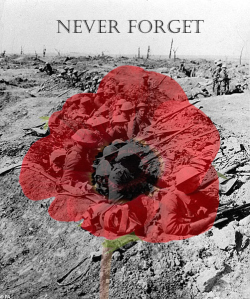
Silence; a Sonnet for Remembrance Day

As Remembrance, or Armistice Day, approaches, I felt a few thoughts to be in order. Malcolm Guite’s, not mine. Please, enjoy, and…reflect.

malcolmguite's avatarMalcolm Guite

As we approach Remembrance Day I am reposting this sonnet about the two minutes silence, which is now published in my book Sounding the Seasons.  I’m posting it a few days early so that any one who wishes to can use it in services or events either on remembrance Sunday or on Remembrance day itself. As you will see from the little introduction below, I wrote it in response to the silence on Radio 4, and last year it was featured on Radio 4’s Remembrance Sunday Worship.

So her is how it came to be written. On Remembrance Day I was at home listening to the radio and when the time came for the Two Minutes Silence. suddenly the radio itself went quiet. I had not moved to turn the dial or adjust the volume. There was something extraordinarily powerful about that deep silence from a ‘live’ radio, a…

View original post 251 more words

When the raw things sing

cloud-08


When the raw things sing, it sounds

like piano keys, struck and hammered


down into shapes of peaceful oblivion.

It hides like so much gold bullion, culled from


its darkened corners. The reverberant tones

refresh the song, renewed in its own


useless glow. But, only the fondest

things find place among the stars.


When the raw things sing, goodness comes

unfettered from the whipping posts, where


splinters of music protrude from the broad

skin of our places. Its volume grows


with each stroke of note and stem.

Lines, heavy with light, take space


among dreams and laughter of clouds.

I guess it only looks for seeing ears,


and the urge to sing.


Picture found here

First Kiss

First Kiss


It was a moment, pulled taut

against an aching clock.


Oh, the smoothness of dairy speech

thrown long upon its patience, losing.


Forever in a cup, glances placed

softly on fingerprinted skin.


Eyes, twinned and pinned like

fridge magnet promises, align.


Whatever passed as ancient minutes

lumbered through their cast-iron fog


until they gave up waiting –

and removed their shoes.


Picture found here

Finding light in dark faith

Sometimes writers are confronted with unique opportunities to write; that is of course if one dwells, as I do, among lit-nerds and poetry-geeks. One of the best places of which I’m presently aware, exploring the intersection of faith and the arts, is Transpositions UK. It is based at St. Andrew’s University in Scotland. For those like me, who seek a deeper understanding of this crossroads, it simply does intriguing work.

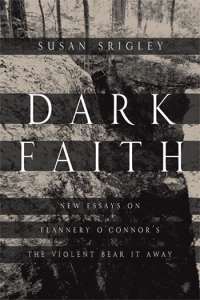
P01519-200x300My first published book review for this organization may be found here. In it I spend time interacting with the wrestling of others who do so with Flannery O’Connor’s enigmatic and richly metaphoric novel, “The Violent Bear It Away.”  If you’ve never had the dark pleasure of reading O’Connor’s novel, do it as soon as possible. Then, pursue “Dark Faith: New Essays on Flannery O’Connor’s The Violent Bear It Away” as a resource for a broader, more tactile understanding of it’s dark depths. And you thought you wouldn’t have homework. Ha!

At such moments of personal celebration I might otherwise have been enjoying a Scotch and a good cigar. But, alas, as a teetotaler now for over twelve years, I shall head to the kitchen for my third cup of coffee and some Cheerios instead.

Cheers, R

Maybe if you just dust up?

Dusty room

Maybe if you just dust up

the linen places, warp of whim,

woof of faceless ignorance –

the spaces forgotten and forlorn –

this closet could breathe again

its four season’d air?

Maybe if the hanging things of dappled hue

were reminiscent of something more than

Draconian memory, stuck in reverse

but high-waying and fog-heavy?

Maybe if those picture frames were big

enough to house more than a single

face? Now, they just huddle in face-

less corners, waiting for the life-

giving noose.

Maybe if the epaulets on those padded,

big-girl shoulders were strong

enough to bear more than their own

weight? At least that’s what the closet

partners say. Instead, those renegade

fabric funsters greedily march the other

way while mold builds, where moth lives and rusty

hinges of busy-body clocks got

too pushy.

Maybe if you let the clocks forget

the time they’d have more company?

Maybe you just need a better broom?

Picture found here

On the back roads of heaven

Back roads from Cascades

Sometimes when the wind shifts

and the denouement of the drive

awakens us to other roads left

unexplored, a kind of sadness 

descends on the journey. This one

road upon which the gravitas of

grace spreads out long and lavish,

leads to lost places;

corridors of corruption,

alleyways of dreams,

aborted or forgotten, lanes of

loneliness, streams of sadness.

In their ditches of dread we find them,

hiding from the obvious, oblivious

to all that lay before them. Some

roads only appeared once they were

needed but quickly disappeared once

taken. It is then we kick

open the passenger door, deeply

dented and dusty from the drive, and

offer sojourn-solace on

the back roads of heaven.

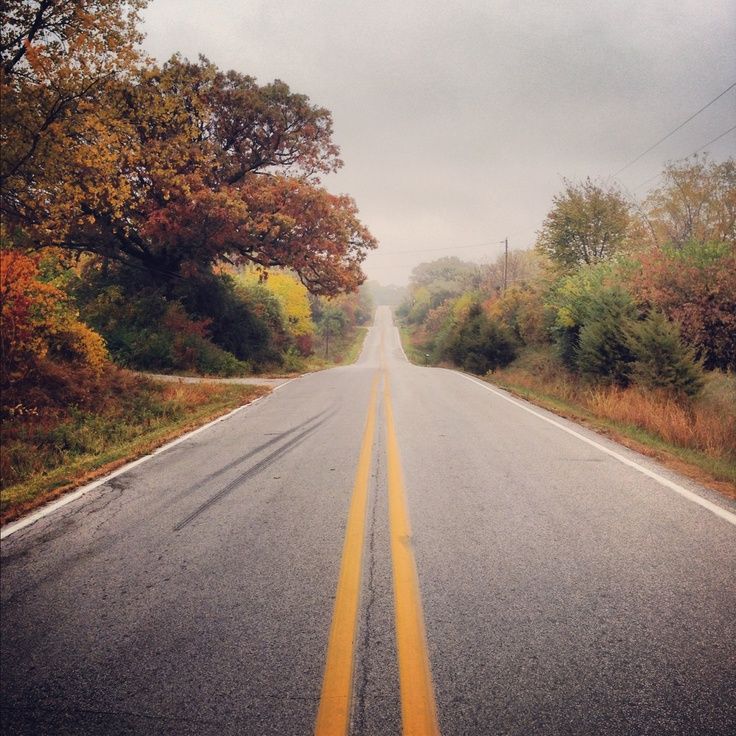
Photo taken by me on a back roads trip in Washington State, October 2014

Without the hoopla

geese_2622145b


A band plays while geese sachet

across a sodden lawn forget-

ful of their own ridiculous demean-

or. Such raucous creatures so divinely

inspired to annoy. Though, there is a care-

free story in anything mind-

less enough to shit 

while walking with friends.

Perhaps they know something we do not.


Image found here

Last of the summer, leaves

Down the road of change

I watch while the last of the summer leaves

the last of the summer leaves,

cornered by color, bullied by wind,

pushed from their tenuous

one-finger perches. Dangling

from hope, they yet cling to what was.

To what can never be again.


Buttressed now by stealth and stain,

the trees hold their breath and, in bloated hues,

leave behind what could never have been kept.

The molten days of August, now

Eastward creeping, cannot match

the closer dawn of winter’s darker agenda.

Change waits for no one.


Our frightened but fawning fraternity,

grips the once-dangling inside jokes. 

But our song-sick companionship, bends

to sight and chance and change.

Beyond the clutch and ken of

drowning dreams, old stories, made young

again in the telling, sleep in

the quiet choirs of shared experience.


Love, always trumpeting her own exploits,

is writ larger against the dim and shrinking page.

Huddling for warmth against the inevitability

of inevitability crouches the promise of the new,

ripped and wrapped in golden heaps of trust.


Grasp too tightly to the branch and nothing

comes to shape what shadow left behind.

Trading form for frame, green for gold,

gone for glow, tired specters of older

days return to their places to sleep,

and dream of dreams.

The pledge of change.


What is left after un-leaving

stays bleak but for a moment.

Soon, the barren skin of dawn

must shed to bear and bare what only

death could bring.


Everything.

ALTARWORK dot calm

These are those delightful, though humbling serendipities that add such a glow of grace to life. Please check out this wonderful initiative of which I am honored to be a part…

ALTARWORK is delighted to present a sample of Rob’s poetry – eight poems in all. Rob has a unique voice and style – eclectic, uniquely profound – and is unafraid to stray beyond convention with regards to his subject matter, point of view, and wordplay. Rob is a highly enjoyable read.”

— Jason Ramsey, ALTARWORK Founder/Editor